

News
Finding the Perfect Volunteer Opportunity for You

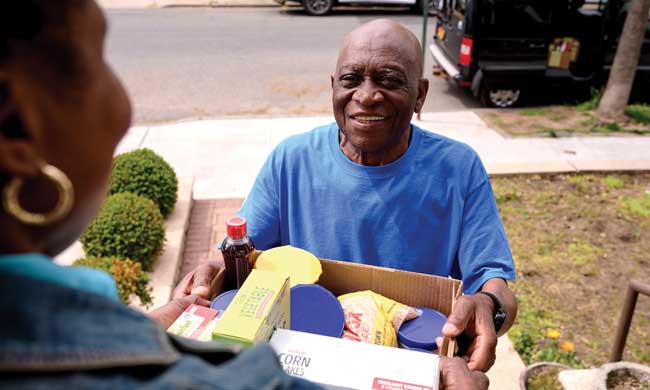
(Family Features) Tom Thousand spent many years helping low-income residents with home repairs. After retirement, he knew he wanted to continue helping people in his free time.
To Proudly Volunteer
He answered the call to serve through AmeriCorps Seniors RSVP. Since 2010, he has volunteered to deliver meals to those in need, transported donated food to food pantries and captained boats on a nearby lake for group trips. Thousand was there when his neighbors needed rides to medical appointments and the Red Cross needed help delivering blood in his community.
All across the country, AmeriCorps Seniors connects people aged 55 and older with opportunities to volunteer in their communities. The program matches each volunteer’s interests and skills with local non-profit organizations. More than 140,000 older Americans serve their communities yearly through three core programs – the RSVP Program, the Foster Grandparent Program and the Senior Companion Program.
Many older adults look for variety, flexibility and benefits when searching for a way to volunteer.
“Since it was established in 1971, our RSVP program has been one of the nation’s largest older adult volunteer programs,” said Atalaya Sergi, national director, AmeriCorps Seniors. “The program has a wide variety of service opportunities that allow volunteers to help address our nation’s most pressing challenges. For our volunteers, RSVP takes the guesswork out of choosing how and where to volunteer their time and energy.”
Opportunities vary by city and state, but the RSVP program offers volunteers diverse ways to serve through local organizations. Examples include packaging meals for people with disabilities or other older adults, working in a call center for fraud victims, coordinating poetry workshops at a community center to stimulate the minds of those participating or transporting cancer patients to medical appointments. Service could also involve workforce development and job training or providing disaster preparedness assistance.
There are even select programs specifically designed to support veterans.
Mark Piscatelli volunteers at veterans’ coffeehouses. Coordinated through his local AmeriCorps Seniors RSVP program, the coffeehouses allow veterans to gather and socialize with each other and with volunteers. The social setting creates a safe space, fostering community and stability for everyone involved. Guest speakers frequently visit and provide new and updated information to attendees on local and national veterans’ services.
“AmeriCorps Seniors has created a wonderful opportunity for me to learn about veterans, veterans’ issues, what they’ve experienced, what they currently experience and what some of their concerns are going forward,” Piscatelli said.
David Langlois, a fellow volunteer, concurs.
“I really think that the bottom line is to support our veterans,” he said.
Older adults need volunteer programs that fit their lifestyles and allow them to choose how, where and the frequency of their service. Commitments range from a few hours to 40 hours per week. This flexibility allows Piscatelli and his fellow volunteers to participate without feeling overwhelmed by time obligations.
Volunteering is more than a way to fill time, however. Research from sources such as the National Institute on Aging suggests that older adults who are engaged in social and community activities maintain mental and physical health longer than those who are not.
“After one year of service, 88% of our volunteers reported a decrease in feelings of isolation,” Sergi said. “Plus, 78% of volunteers felt less depressed. That uplifts spirits and significantly impacts and benefits people’s lives.”
Yolanda Dave is an example of the positive impact of volunteering on the community and the volunteers themselves. She started volunteering more than 20 years ago because helping her community with hunger, isolation and literacy issues empowered her to be part of the solution. It’s more than that, though. She also benefits from the experience.
“I love volunteering,” Dave said. “You meet wonderful people of all ages. I get to share my skills, my experience. It keeps me active, mentally and physically, which is very healthy.”
Volunteers like Thousand, Piscatelli, Langlois and Dave support people in need and strengthen their communities and neighborhoods. If you’re 55 or older and looking for the right volunteer opportunity, visit AmeriCorps.gov/YourMoment to explore opportunities near you.
SOURCE:
AmeriCorps Seniors
The Bridge is a section of the STM Daily News Blog meant for diversity, offering real news stories about bona fide community efforts to perpetuate a greater good. The purpose of The Bridge is to connect the divides that separate us, fostering understanding and empathy among different groups. By highlighting positive initiatives and inspirational actions, The Bridge aims to create a sense of unity and shared purpose. This section brings to light stories of individuals and organizations working tirelessly to promote inclusivity, equality, and mutual respect. Through these narratives, readers are encouraged to appreciate the richness of diverse perspectives and to participate actively in building stronger, more cohesive communities.
https://stmdailynews.com/the-bridge





Automotive
Slate Truck Gets Real: First Experience Center Opens Ahead of Planned Deliveries
Slate Auto’s first permanent Experience Center gives consumers an up-close look at its customizable electric truck ahead of planned customer deliveries.

Slate Auto’s new Chicago location gives prospective buyers a permanent place to see the minimalist electric pickup, explore customization options and learn about demo opportunities—but it is not yet proof that customer deliveries have begun.
CHICAGO — October 20, 2026 — The Slate Truck is moving out of computer renderings and temporary roadshow stops and into a permanent retail setting. Slate Auto opened its first Experience Center on October 15 at 1053 W. Grand Avenue in Chicago, giving consumers a year-round location to get an up-close look at the company’s highly anticipated electric pickup.
The Near West Side facility occupies a former Tesla location and includes showroom, retail and garage space, along with electric-vehicle charging infrastructure. For Slate, the opening represents an important step in turning strong online interest into a more tangible buying experience as the startup works toward launching its first vehicle.
Visitors can examine the truck’s compact dimensions, deliberately simple cabin and accessory-driven design in person. The center also showcases Slate’s personalization strategy, including exterior wraps, add-on accessories and digital design tools intended to let owners configure the truck around their needs.
Slate has also promoted demonstration opportunities connected with the location, although availability may be limited or appointment-based as the company continues to prepare its fleet. Early media access included passenger rides rather than unrestricted customer test drives, so prospective visitors should confirm current availability before making a special trip.
Why the Chicago opening matters
Until now, most consumers have encountered the Slate Truck through online reservations, media coverage or temporary appearances. A permanent showroom gives buyers a chance to judge details that are difficult to evaluate on a screen, including seating position, bed access, cabin materials and the overall size of the vehicle.
That is especially important for a product built around an unconventional value proposition. Slate is promoting a basic two-seat, two-door electric truck with manual crank windows and no factory-installed infotainment screen or stereo. The company’s strategy is to keep the starting price low and let buyers add features later through accessories and conversion kits.
The physical location also gives Slate a place to explain that approach directly. Rather than presenting the truck as an unfinished vehicle, the company can demonstrate how its modular accessories, wraps and planned SUV-style conversion components are meant to expand the vehicle’s usefulness over time.
Chicago is a logical first market for that effort. The city offers access to a large Midwestern customer base and is within the broader region of Slate’s planned manufacturing operation in Warsaw, Indiana. Reusing a former Tesla store also gives the startup a space already suited to displaying and servicing electric vehicles.
The roadshow continues beyond Chicago
The Experience Center is opening as Slate expands its public demonstration schedule. The company’s events calendar lists a Boston-area demo ride event from October 21 through October 25 at The Shops at Chestnut Hill, followed by an appearance at RADwood in Alameda, California, on October 24 and a New Jersey demo ride event in Freehold from October 28 through October 31.
Slate also lists future stops in Washington, D.C., Raleigh, Atlanta, Miami and Orlando. Together, the permanent Chicago center and the traveling events suggest the company is moving into a broader customer-education phase ahead of planned deliveries.
What has—and has not—changed
The showroom opening does not change Slate’s headline pricing or range claims. The truck is still advertised with a base price of $24,950 before taxes, registration and destination charges. With the currently listed $1,450 destination fee, the entry price would be approximately $26,400 before other costs or optional equipment.
Slate also continues to advertise an estimated range of up to 205 miles. That figure remains an estimate rather than a final EPA-certified rating.
Most importantly, Slate has not publicly confirmed that regular customer production has started or that the first retail deliveries have occurred. Limited deliveries have been reported as possible before the end of December 2026, while many reservation holders may receive later delivery windows in 2027. The Chicago opening is therefore a commercialization milestone, not a manufacturing milestone.
For customers and industry observers, the next major signals will be the start of production at the Warsaw factory, final specifications and EPA range ratings, and confirmed handoffs to paying buyers.
The bottom line
Slate Auto now has a permanent place where consumers can see and evaluate its unusually simple electric truck. That makes the product feel more real and gives the company a platform to explain a customization-heavy business model that may be unfamiliar to traditional truck buyers.
Still, the biggest questions remain unanswered. Opening a showroom demonstrates progress in marketing and customer engagement; producing vehicles at scale, holding the promised price and delivering a 205-mile truck to reservation holders will determine whether Slate can convert enthusiasm into a viable automotive business.
Sources and more information
- Slate Auto events and demo schedule
- Electrek: Slate opens its first Experience Center in Chicago
- Autoblog: Slate opens its first U.S. showroom
- Slate Auto
Category: Consumer Corner / Automotive

Forgotten Genius Fridays
Octavia E. Butler: The Black Woman Who Helped Change Science Fiction
Discover how Octavia E. Butler transformed science fiction, explored Black identity, and helped shape Afrofuturism through her groundbreaking novels.
Forgotten Genius Friday | The Knowledge | STM Daily News
Octavia E. Butler: The Woman Who Reimagined the Future
When we think about science fiction, we often picture spaceships, robots, alien civilizations, and futuristic technology. But what happens when science fiction becomes a way to explore racism, inequality, human survival, and the consequences of our choices?
That is exactly what Octavia E. Butler brought to the genre.
Long before Afrofuturism became a widely recognized cultural movement, Butler was creating extraordinary stories that placed Black characters—especially Black women—at the center of imagined futures.
Her work challenged conventional ideas about who could be a hero, whose experiences mattered, and what science fiction could accomplish.
A Young Girl With a Powerful Imagination
Octavia Estelle Butler was born on June 22, 1947, in Pasadena, California.
Raised primarily by her mother and grandmother after her father’s death, Butler grew up shy and found comfort in books and storytelling.
Her mother worked as a domestic employee, and Butler sometimes accompanied her to work. Those experiences exposed her to the racial and economic inequalities that would later influence her fiction.
As a child, Butler loved science fiction, but she noticed something missing: people who looked like her.
Rather than accepting that absence, she began creating stories of her own.
She would eventually become one of the most influential writers in speculative fiction.
Breaking Barriers in Science Fiction
During the 1970s, mainstream American science fiction was largely associated with white male writers and protagonists.
Butler entered that literary world with a different perspective.
Her first published novel, Patternmaster, appeared in 1976. It introduced readers to a world shaped by extraordinary mental abilities, social hierarchies, and struggles for power.
Butler continued developing complex stories that explored humanity’s relationship with authority, identity, biology, and survival.
In 1979, she published one of her best-known novels, Kindred.
The book follows Dana, a Black woman living in 1970s California who is repeatedly transported back to a Maryland plantation before the Civil War.
Through Dana’s experiences, Butler forced readers to confront the brutality of American slavery and its continuing influence on the present.
Rather than treating history as something safely confined to the past, Kindred makes that history immediate and deeply personal.
Imagining the Future—and Warning Us About It
In 1993, Butler published Parable of the Sower, a novel set in a collapsing American society struggling with economic inequality, environmental destruction, violence, and weakened institutions.
Its central character, Lauren Olamina, is a young Black woman who develops a philosophy called Earthseed while searching for a way to survive and build a community.
The novel takes place beginning in 2024, making its imagined future particularly striking to modern readers.
Butler followed it with Parable of the Talents in 1998, continuing her examination of social instability, religious extremism, authoritarianism, and the struggle to create a better future.
Her novels were not literal predictions. They were works of speculative fiction that used recognizable social trends to ask difficult questions about where humanity might be headed.
Octavia Butler and Afrofuturism
Afrofuturism brings together African and African diasporic experiences with science fiction, technology, history, mythology, and imaginative visions of the future.
While artists such as Sun Ra and George Clinton explored cosmic identity through music, performance, and futuristic imagery, Butler used literature to investigate power, history, and humanity’s possible futures.
Her novels frequently placed Black women in situations where they had to navigate extraordinary challenges and reshape the societies around them.
Butler’s work is widely discussed within Afrofuturist scholarship, although her literary contributions also extend beyond any single cultural label.
She demonstrated that Black people did not have to remain secondary characters in someone else’s vision of the future.
They could be the architects of entirely new worlds.
Recognition and a Lasting Legacy
Butler received some of science fiction’s most significant honors, including Hugo and Nebula Awards.
In 1995, she became the first science-fiction writer to receive a MacArthur Fellowship, often called a genius grant.
Her work also included the Xenogenesis trilogy, later collected as Lilith’s Brood, which explored humanity’s encounter with an extraterrestrial species and raised questions about consent, adaptation, identity, and survival.
Butler died on February 24, 2006, at age 58.
Yet her influence has continued to grow.
Her novels are studied in classrooms, discussed by scholars, and embraced by new generations of readers and creators interested in science fiction, social justice, and Afrofuturism.
A Genius Who Made Us Think Differently About Tomorrow
Octavia E. Butler was more than a science-fiction author.
She was a visionary storyteller who understood that imagining the future also meant examining the past and questioning the present.
Her stories asked readers to consider how power operates, how communities survive, and how human beings might change.
And perhaps her greatest contribution was demonstrating that the future belongs in the imagination of everyone.
Why Octavia E. Butler Belongs in Forgotten Genius Friday
At STM Daily News, our Forgotten Genius Friday series celebrates extraordinary individuals whose ideas, innovations, and accomplishments helped shape our world, even if their stories aren’t widely known. Octavia E. Butler fits that mission perfectly. Although she received prestigious literary awards and recognition during her lifetime, her influence extends far beyond science fiction. Like the inventors, scientists, and trailblazers we’ve featured in this series, Butler challenged barriers, defied expectations, and opened doors for future generations. Through her imagination, she helped redefine who could tell stories about humanity’s future—and who could be at the center of those stories. Her inclusion in Forgotten Genius Friday reminds us that genius isn’t limited to laboratories and inventions. Sometimes, it begins with a pen, a powerful imagination, and the courage to envision a different world.
Sources and fact-checking
The Huntington Library holds Butler’s literary archive and confirms the chronology of her major novels, awards, and career. The MacArthur Foundation independently documents her 1995 fellowship.
- Official Octavia E. Butler biography
- The Huntington — Octavia E. Butler Papers
- MacArthur Foundation — Octavia Butler
- The Huntington — Telling My Stories exhibition
For more stories about overlooked innovators, writers, scientists, and visionaries who changed our world, explore The Knowledge and Forgotten Genius Friday at STM Daily News.
recipes
Cozy Up with Comforting Soups and Stews
Comforting Soups and Stews: As temperatures drop, few meals warm you from the inside out quite like Beef Stew with Rice or Hearty Rice Minestrone Soup. These comforting favorites deliver delicious flavor to the family table, and better yet, they don’t require much time in the kitchen, making them particularly practical for busy weekdays.

Cozy Up with Comforting Soups and Stews
(Feature Impact) As temperatures drop, few meals warm you from the inside out quite like a hearty bowl of soup or stew. These comforting favorites deliver delicious flavor to the family table, and better yet, they don’t require much time in the kitchen, making them particularly practical for busy weekdays.
With a few convenient staples on hand, like Minute Instant White Rice, you can prepare satisfying meals in a cinch. This rice is known for its light, fluffy texture; short, easy prep; and quick cook time.
It’s made with one simple ingredient – USA-grown rice – then precooked and dried with nothing added but convenience, making it a practical addition to this classic Beef Stew and Rice recipe. Bursting with tender beef and hearty vegetables, this filling stew offers a classic option that’s both quick and comforting, ideal for saving time after school and a day in the office as the pressure cooker does the work for you.
For another cozy meal that’s pressure-cooked to perfection, Hearty Rice Minestrone Soup brings together beans, tomatoes and spices in a rustic Italian-inspired dish. It’s pure comfort and warmth in a bowl, requiring just 30 minutes total for an approachable dinner when you’re in a pinch.
An aromatic touch is added from Minute Instant Jasmine Rice, known for its distinctive scent, perfect texture and delicious taste. Sweet and buttery, it’s fast, fragrant and flavorful to help you on your mission to make quick meals so you can spend less time cooking and more time enjoying with loved ones.
Find more comforting meal ideas by visiting MinuteRice.com.
Beef Stew with Rice
Prep time: 10 minutes
Cook time: 40 minutes
Servings: 4
- 1 tablespoon olive oil
- 1 pound beef chuck, cut into 1-inch cubes
- 1 onion, chopped
- 2 cloves garlic, minced
- 2 medium potatoes, diced
- 2 carrots, sliced
- 4 cups beef broth
- 1 teaspoon salt
- 1 teaspoon pepper
- 1 cup Minute Instant White Rice
- fresh parsley, for garnish
- In bottom of pressure cooker, heat oil over medium-high heat. Brown beef cubes on all sides. Remove and set aside.
- In same pot, add onion and garlic. Saute about 2 minutes.
- Return beef to pot. Add potatoes, carrots and beef broth. Season with salt and pepper.
- Close lid and set valve to sealing. Select pressure cook or manual and set timer for 35 minutes. Once cooking time is up, let pressure release naturally about 10 minutes then carefully switch valve to venting to release remaining pressure.
- Prepare rice according to package directions.
- Open lid, stir cooked rice into stew and adjust seasoning, if necessary. Garnish with parsley.

Hearty Rice Minestrone Soup
Prep time: 10 minutes
Cook time: 20 minutes
Servings: 8
- 2 tablespoons olive oil
- 1 carrot, chopped
- 1 stalk celery, chopped
- 1 onion, chopped
- 3 garlic cloves, minced
- 1 tablespoon finely chopped fresh thyme
- 1/2 teaspoon dried oregano
- 1/4 teaspoon salt
- 1/4 teaspoon black pepper
- 5 cups chicken broth
- 1 can (14 ounces) diced tomatoes
- 1 can (19 ounces) cannellini beans, drained and rinsed
- 4 cups chopped kale
- 1 cup Minute Jasmine Rice
- 1/3 cup finely grated Parmesan cheese
- 1/4 cup thinly sliced basil
- 1/4 teaspoon red chili flakes
- Set pressure cooker to saute setting over high heat. Heat oil. Add carrot, celery, onion, garlic, thyme, oregano, salt and pepper; cook 3-5 minutes, or until starting to soften. Stir in broth and tomatoes.
- Lock lid and move pressure valve to sealing. Select pressure cook on high 10 minutes. Once cooking is complete, manually release pressure according to manufacturer’s instructions. Carefully remove lid.
- Set pressure cooker to saute setting over high heat; bring to boil. Stir in beans and kale; cook 2 minutes, or until softened.
- Stir in rice. Set pressure cooker to warm setting. Cover and let stand 5 minutes.
- Stir in Parmesan, basil and red chili flakes.
Substitutions: Use Romano beans for cannellini beans. Make vegetarian by substituting vegetable broth for chicken broth.
SOURCE:




