

Tech
GIGABYTE Brings Supercomputer Power to Your Desktop with AI TOP ATOM
GIGABYTE launches AI TOP ATOM on October 15th—a compact personal AI supercomputer powered by NVIDIA Grace Blackwell GB10. Delivers 1 petaFLOP performance for on-premises AI development, supporting models up to 200B parameters on your desktop.

Last Updated on October 15, 2025 by Daily News Staff
Global Launch Set for October 15th as Tech Giant Democratizes AI Development
GIGABYTE is making a bold move to put enterprise-level AI computing power directly into the hands of developers, researchers, and students. The company’s latest innovation, AI TOP ATOM, launches globally on October 15th, promising to transform how we think about on-premises AI development.
Desktop Supercomputing Becomes Reality
What makes AI TOP ATOM remarkable isn’t just its specs—though those are impressive—it’s the promise of bringing supercomputer performance into a compact form factor that fits on your desk. Powered by NVIDIA’s Grace Blackwell GB10 Superchip, this personal AI supercomputer delivers up to 1 petaFLOP of FP4 AI performance. To put that in perspective, we’re talking about the kind of computational muscle that can handle large-scale models with up to 200 billion parameters right in your office.
The system comes equipped with 128GB of unified system memory and supports up to 4TB SSD storage, giving users the resources they need for serious AI workloads without the traditional infrastructure headaches.
Scale When You Need It
Here’s where things get interesting for power users: GIGABYTE designed AI TOP ATOM with scalability in mind. Need to tackle even larger models? Connect two units using the built-in NVIDIA ConnectX-7 NIC, and you can handle models up to 405 billion parameters. It’s like having a modular supercomputer that grows with your ambitions.
Software That Actually Makes Sense
Hardware is only half the story. AI TOP ATOM ships with NVIDIA’s complete AI software stack preinstalled—the full suite of tools, frameworks, and libraries designed specifically for generative AI workloads. But GIGABYTE didn’t stop there. They’ve integrated their exclusive AI TOP Utility, which provides an intuitive interface for the tasks that matter most: model fine-tuning, inference, and deployment across large language models (LLMs), large multimodal models (LMMs), and modern machine learning applications.
This approach addresses one of the biggest pain points in AI development—getting everything configured and working together. With AI TOP ATOM, you’re ready to start prototyping and developing from day one.
Who’s This For?
GIGABYTE is positioning AI TOP ATOM as a solution for anyone serious about AI development, from individual developers and academic researchers to students and educational institutions. The compact chassis means it works in environments where traditional server infrastructure simply isn’t practical—dorm rooms, small offices, research labs with limited space.
The “personal AI supercomputer” concept represents a significant shift in accessibility. What once required cloud computing budgets or dedicated data center space can now happen on-premises, giving developers more control over their data, faster iteration cycles, and potentially lower long-term costs.
The Bigger Picture
As AI development continues to accelerate across industries, tools like AI TOP ATOM signal an important trend: the democratization of high-performance AI computing. When powerful AI development tools become more accessible, innovation happens in unexpected places—and that’s exactly what GIGABYTE seems to be betting on.
AI TOP ATOM launches globally on October 15th. For complete specifications, pricing, and availability in your region, visit the official GIGABYTE website.
Source: GIGABYTE.com
Welcome to the Consumer Corner section of STM Daily News, your ultimate destination for savvy shopping and informed decision-making! Dive into a treasure trove of insights and reviews covering everything from the hottest toys that spark joy in your little ones to the latest electronic gadgets that simplify your life. Explore our comprehensive guides on stylish home furnishings, discover smart tips for buying a home or enhancing your living space with creative improvement ideas, and get the lowdown on the best cars through our detailed auto reviews. Whether you’re making a major purchase or simply seeking inspiration, the Consumer Corner is here to empower you every step of the way—unlock the keys to becoming a smarter consumer today!
https://stmdailynews.com/category/consumer-corner
Author

Discover more from Daily News
Subscribe to get the latest posts sent to your email.


CropX Technologies has launched CropX Vision, a new AI-powered vineyard monitoring solution designed to help growers measure vine water stress using a single canopy image.
The new tool uses computer vision and agronomic modeling to estimate leaf water potential from a smartphone photo, giving growers and agronomists a faster and more scalable way to assess plant stress across entire vineyard blocks. The company says the goal is to support better irrigation decisions throughout the growing season.
CropX Vision is available globally on both iOS and Android. The platform is also integrated into the broader CropX application, allowing users to combine canopy-based stress insights with other agronomic data in one place.
According to CropX, the technology offers an in-season alternative to traditional pressure chamber measurements, which can be more time-consuming and limited in sampling range. Instead of relying on specialized equipment, growers can capture a single image in the field and receive plant-level water stress insights.
The product builds on technology originally developed by Tule Technologies, a California-based precision irrigation company acquired by CropX in 2023. Tule’s canopy sensing technology has already been used in California vineyards, and CropX is now expanding that capability to growers worldwide.
CropX says the global release reflects its continued focus on data-driven tools that help growers improve productivity while managing water more efficiently.
CropX Vision is now available for download via the app stores:
- iOS: https://apps.apple.com/nl/app/cropx-vision/id6756921607?l=en-GB
- Android: https://play.google.com/store/apps/details?id=com.cropx.cropx_vision&pcampaignid=web_share
For more information, visit CropX Vision.
Visit the Food and Drink section on STM Daily News for the latest food news, beverage trends, restaurant stories, seasonal recipes, culinary events, and community-driven lifestyle coverage.
Discover more from Daily News
Subscribe to get the latest posts sent to your email.
Consumer Corner
Unilever, Google Cloud Strike Five-Year AI Partnership to Reshape Consumer Goods Marketing


Unilever and Google Cloud have announced a five-year partnership aimed at accelerating the consumer goods giant’s digital transformation through AI, cloud infrastructure, and data modernization.
The deal centers on helping Unilever strengthen brand discovery, marketing measurement, and AI-driven customer engagement across its global portfolio, which includes Dove, Vaseline, and Hellmann’s. A major focus is the rise of conversational and agentic commerce, where consumers increasingly discover and shop for products through AI-powered interactions rather than traditional search and browsing.
As part of the agreement, Unilever will migrate its integrated data and cloud platform to Google Cloud, creating what the companies describe as an AI-first digital backbone. That system is intended to help Unilever move faster on demand generation, turn data into actionable insights, and respond more quickly to shifts in the market.
The partnership is built around three pillars:
- Agentic commerce and marketing intelligence
- An integrated data and cloud foundation
- Advanced AI adoption across the business
Unilever leadership framed the move as part of a broader shift in which technology is becoming central to value creation in the fast-moving consumer goods sector. Google Cloud said the collaboration will use advanced AI models, including Gemini, to help modernize business processes and improve agility.
Unilever said it generated €50.5 billion in sales in 2025, operates in more than 190 countries, and reaches 3.7 billion people every day.
What to watch for
- How “agentic commerce” changes consumer brand discovery
- Whether other major CPG companies follow with similar AI-cloud partnerships
- How AI-backed marketing measurement impacts ad efficiency and conversion
Source: PR Newswire / Google Cloud
Welcome to the Consumer Corner section of STM Daily News, your ultimate destination for savvy shopping and informed decision-making! Dive into a treasure trove of insights and reviews covering everything from the hottest toys that spark joy in your little ones to the latest electronic gadgets that simplify your life. Explore our comprehensive guides on stylish home furnishings, discover smart tips for buying a home or enhancing your living space with creative improvement ideas, and get the lowdown on the best cars through our detailed auto reviews. Whether you’re making a major purchase or simply seeking inspiration, the Consumer Corner is here to empower you every step of the way—unlock the keys to becoming a smarter consumer today!
https://stmdailynews.com/category/consumer-corner
Authors


Discover more from Daily News
Subscribe to get the latest posts sent to your email.
Artificial Intelligence
As OpenAI attracts billions in new investment, its goal of balancing profit with purpose is getting more challenging to pull off

Last Updated on March 23, 2026 by Daily News Staff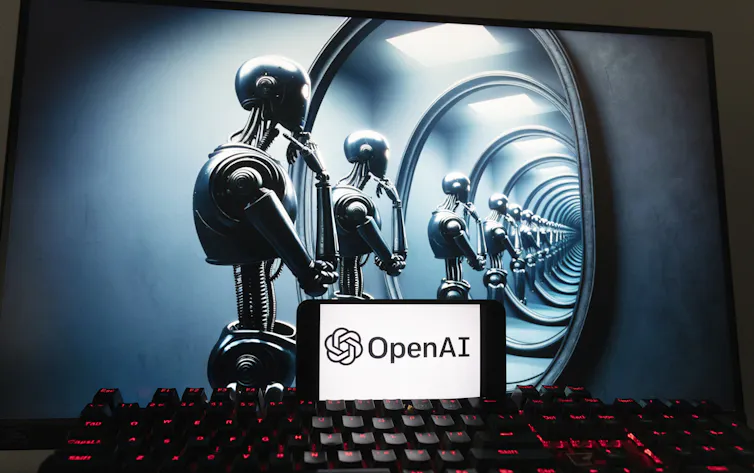
Alnoor Ebrahim, Tufts University
OpenAI, the artificial intelligence company that developed the popular ChatGPT chatbot and the text-to-art program Dall-E, is at a crossroads. On Oct. 2, 2024, it announced that it had obtained US$6.6 billion in new funding from investors and that the business was worth an estimated $157 billion – making it only the second startup ever to be valued at over $100 billion.
Unlike other big tech companies, OpenAI is a nonprofit with a for-profit subsidiary that is overseen by a nonprofit board of directors. Since its founding in 2015, OpenAI’s official mission has been “to build artificial general intelligence (AGI) that is safe and benefits all of humanity.”
By late September 2024, The Associated Press, Reuters, The Wall Street Journal and many other media outlets were reporting that OpenAI plans to discard its nonprofit status and become a for-profit tech company managed by investors. These stories have all cited anonymous sources. The New York Times, referencing documents from the recent funding round, reported that unless this change happens within two years, the $6.6 billion in equity would become debt owed to the investors who provided that funding.
The Conversation U.S. asked Alnoor Ebrahim, a Tufts University management scholar, to explain why OpenAI’s leaders’ reported plans to change its structure would be significant and potentially problematic.
How have its top executives and board members responded?
There has been a lot of leadership turmoil at OpenAI. The disagreements boiled over in November 2023, when its board briefly ousted Sam Altman, its CEO. He got his job back in less than a week, and then three board members resigned. The departing directors were advocates for building stronger guardrails and encouraging regulation to protect humanity from potential harms posed by AI.
Over a dozen senior staff members have quit since then, including several other co-founders and executives responsible for overseeing OpenAI’s safety policies and practices. At least two of them have joined Anthropic, a rival founded by a former OpenAI executive responsible for AI safety. Some of the departing executives say that Altman has pushed the company to launch products prematurely.
Safety “has taken a backseat to shiny products,” said OpenAI’s former safety team leader Jan Leike, who quit in May 2024.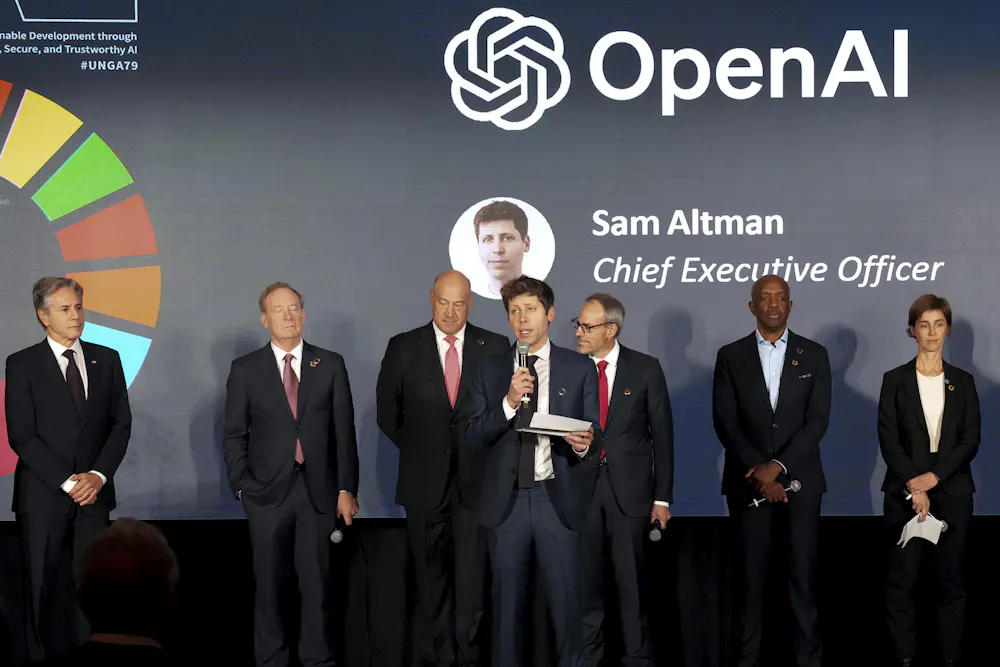
Why would OpenAI’s structure change?
OpenAI’s deep-pocketed investors cannot own shares in the organization under its existing nonprofit governance structure, nor can they get a seat on its board of directors. That’s because OpenAI is incorporated as a nonprofit whose purpose is to benefit society rather than private interests. Until now, all rounds of investments, including a reported total of $13 billion from Microsoft, have been channeled through a for-profit subsidiary that belongs to the nonprofit.
The current structure allows OpenAI to accept money from private investors in exchange for a future portion of its profits. But those investors do not get a voting seat on the board, and their profits are “capped.” According to information previously made public, OpenAI’s original investors can’t earn more than 100 times the money they provided. The goal of this hybrid governance model is to balance profits with OpenAI’s safety-focused mission.
Becoming a for-profit enterprise would make it possible for its investors to acquire ownership stakes in OpenAI and no longer have to face a cap on their potential profits. Down the road, OpenAI could also go public and raise capital on the stock market.
Altman reportedly seeks to personally acquire a 7% equity stake in OpenAI, according to a Bloomberg article that cited unnamed sources.
That arrangement is not allowed for nonprofit executives, according to BoardSource, an association of nonprofit board members and executives. Instead, the association explains, nonprofits “must reinvest surpluses back into the organization and its tax-exempt purpose.”
What kind of company might OpenAI become?
The Washington Post and other media outlets have reported, also citing unnamed sources, that OpenAI might become a “public benefit corporation” – a business that aims to benefit society and earn profits.
Examples of businesses with this status, known as B Corps., include outdoor clothing and gear company Patagonia and eyewear maker Warby Parker.
It’s more typical that a for-profit business – not a nonprofit – becomes a benefit corporation, according to the B Lab, a network that sets standards and offers certification for B Corps. It is unusual for a nonprofit to do this because nonprofit governance already requires those groups to benefit society.
Boards of companies with this legal status are free to consider the interests of society, the environment and people who aren’t its shareholders, but that is not required. The board may still choose to make profits a top priority and can drop its benefit status to satisfy its investors. That is what online craft marketplace Etsy did in 2017, two years after becoming a publicly traded company.
In my view, any attempt to convert a nonprofit into a public benefit corporation is a clear move away from focusing on the nonprofit’s mission. And there will be a risk that becoming a benefit corporation would just be a ploy to mask a shift toward focusing on revenue growth and investors’ profits.
Many legal scholars and other experts are predicting that OpenAI will not do away with its hybrid ownership model entirely because of legal restrictions on the placement of nonprofit assets in private hands.
But I think OpenAI has a possible workaround: It could try to dilute the nonprofit’s control by making it a minority shareholder in a new for-profit structure. This would effectively eliminate the nonprofit board’s power to hold the company accountable. Such a move could lead to an investigation by the office of the relevant state attorney general and potentially by the Internal Revenue Service.
What could happen if OpenAI turns into a for-profit company?
The stakes for society are high.
AI’s potential harms are wide-ranging, and some are already apparent, such as deceptive political campaigns and bias in health care.
If OpenAI, an industry leader, begins to focus more on earning profits than ensuring AI’s safety, I believe that these dangers could get worse. Geoffrey Hinton, who won the 2024 Nobel Prize in physics for his artificial intelligence research, has cautioned that AI may exacerbate inequality by replacing “lots of mundane jobs.” He believes that there’s a 50% probability “that we’ll have to confront the problem of AI trying to take over” from humanity.
And even if OpenAI did retain board members for whom safety is a top concern, the only common denominator for the members of its new corporate board would be their obligation to protect the interests of the company’s shareholders, who would expect to earn a profit. While such expectations are common on a for-profit board, they constitute a conflict of interest on a nonprofit board where mission must come first and board members cannot benefit financially from the organization’s work.
The arrangement would, no doubt, please OpenAI’s investors. But would it be good for society? The purpose of nonprofit control over a for-profit subsidiary is to ensure that profit does not interfere with the nonprofit’s mission. Without guardrails to ensure that the board seeks to limit harm to humanity from AI, there would be little reason for it to prevent the company from maximizing profit, even if its chatbots and other AI products endanger society.
Regardless of what OpenAI does, most artificial intelligence companies are already for-profit businesses. So, in my view, the only way to manage the potential harms is through better industry standards and regulations that are starting to take shape.
California’s governor vetoed such a bill in September 2024 on the grounds it would slow innovation – but I believe slowing it down is exactly what is needed, given the dangers AI already poses to society.
Alnoor Ebrahim, Thomas Schmidheiny Professor of International Business, The Fletcher School & Tisch College of Civic Life, Tufts University
This article is republished from The Conversation under a Creative Commons license. Read the original article.
The science section of our news blog STM Daily News provides readers with captivating and up-to-date information on the latest scientific discoveries, breakthroughs, and innovations across various fields. We offer engaging and accessible content, ensuring that readers with different levels of scientific knowledge can stay informed. Whether it’s exploring advancements in medicine, astronomy, technology, or environmental sciences, our science section strives to shed light on the intriguing world of scientific exploration and its profound impact on our daily lives. From thought-provoking articles to informative interviews with experts in the field, STM Daily News Science offers a harmonious blend of factual reporting, analysis, and exploration, making it a go-to source for science enthusiasts and curious minds alike. https://stmdailynews.com/category/science/
Discover more from Daily News
Subscribe to get the latest posts sent to your email.





