

Community
HBCUs Do More Than Boost Opportunity — Research Suggests They Can Also Help Reduce Incarceration Risk
Historically Black colleges and universities (HBCUs) play a crucial role in supporting Black students’ educational and socioeconomic advancement. By providing affordable education and mentorship, HBCUs help reduce crime rates among graduates. Despite funding challenges, their impact includes higher graduation rates and economic mobility, which help break cycles of poverty and incarceration.

Last Updated on March 8, 2026 by Daily News Staff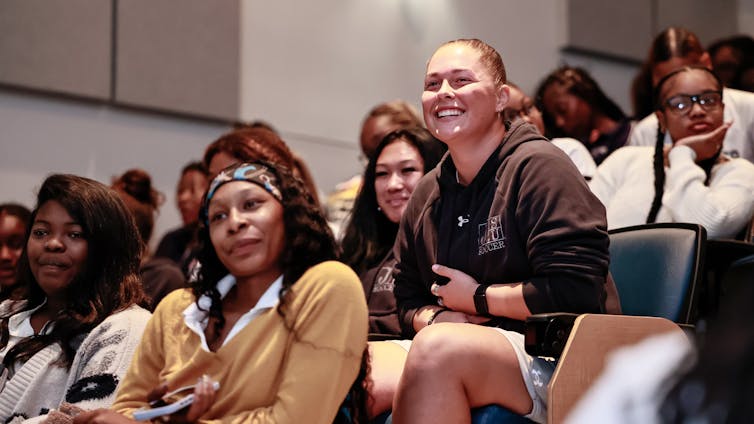
Historically Black colleges and universities do more than offer Black youths a pathway to opportunity and success – I teach criminology, and my research suggests another benefit
Andrea Hagan, Loyola University New Orleans
Historically Black colleges and universities, often known as HBCUs, are well known for their deep roots in U.S. higher education and proven effectiveness at graduating Black students who go on to become professionally successful.
HBCUs are colleges and universities that were established before 1964, with the mission of educating Black Americans, though now anyone can attend.
As a criminology instructor who has spent 13 years studying the relationship between educational trajectories and criminal justice – and a Black woman who grew up in the South and attended an HBCU – I believe that HBCUs offer another often overlooked benefit.
They give young people, especially Black people, a pathway in higher education that they might not otherwise receive. By opening doors to education, jobs and mentorship, HBCUs disrupt the conditions that can cause young people – especially Black people – to get lost in the criminal justice system.
The U.S. incarcerates approximately 1.6 million people. Black Americans are locked up at five times the rate of white Americans. This disparity starts young: Black teenagers are 5.6 times more likely to be placed in juvenile detention than white teenagers, and people who are incarcerated as juveniles are nearly four times more likely to be incarcerated as adults. Overall, the vast majority of Black people are not incarcerated.
Attending a HBCU, or any other university, does not guarantee a stable financial future. And not graduating from high school or college certainly does not not mean that someone will become incarcerated.
But research shows that education, especially a college degree, is closely linked to lower crime rates. College graduates who do commit crimes reoffend at rates below 6%, while people who drop out of high school return to prison at rates around 75%.
This is why I believe HBCUs in particular have an important role to play in helping young Black people avoid this path.
Understanding HBCUs
Today, there are roughly 100 HBCUs in 19 states, as well as the District of Columbia and the U.S. Virgin Islands. The schools are a mix of public schools and private, nonprofit colleges and universities.
HBCUs make up just 3% of the country’s colleges and universities. But their graduates include 40% of Black engineers, 50% of Black lawyers and 70% of Black doctors in the United States.
Most HBCUs are located in Southern and mid-Atlantic states – a legacy of when segregation barred Black students from attending most colleges and universities.
Many HBCUs are also located in rural Southern communities, in particular. Residents of these areas tend to live in poverty and have limited educational opportunities.
Attending a local HBCU is often one of the most practical ways these prospective students can get a degree – in part because HBCUs are often more affordable than other four-year college options.
The average annual tuition for an in-state student at a public HBCU is roughly US$7,700 per year – well below the national average, which ranges from $12,000 at public schools to $45,000 at private schools. Some public HBCUs charge as little as $1,000 in annual tuition for in-state students.
Schools like Coppin State University in Baltimore and the University of Maryland Eastern Shore also offer in-state rates to out-of-state students from places that do not have HBCUs nearby.
Despite their focus on Black students, HBCUs are increasingly diverse.
In 2022, non-Black students made up 24% of the student population at HBCUs. By comparison, 15% of non-Black students made up HBCU populations in 1976.
HBCUs also enroll low-income students, regardless of race, at three times the rate that predominantly white colleges do.
Upward mobility
Research shows completing high school reduces arrest rates by 11% to 12% for both property and violent crimes, regardless of race or economic background.
College takes this effect further.
Studies have found that college enrollment helps young people with histories of delinquency to stop committing crimes. Completing a four-year degree reduces the likelihood of criminal behavior by 43% to 48%, compared to those who started college but did not finish.
A few long-recognized reasons help explain this pattern. Education increases earning potential, making crime a riskier and less attractive option for people with a degree. Education also encourages long-term thinking, strengthens ties to employers and communities, and builds problem-solving skills that help people navigate challenges.
I have seen firsthand, through my own experiences growing up in the South and teaching students, how HBCUs can help move Black students out of poverty. These schools stand out among other colleges in terms of how effectively they graduate low-income Black students and move them into the middle class, outcomes that research links to reduced criminal behavior.
When researchers rank colleges by whether and how their students improve their socioeconomic status, income and wealth over time, more than half of the highest-performing schools are HBCUs.
Black students who attend HBCUs are 30% more likely to earn a degree than Black students who attend colleges that are not HBCUs. Black HBCU graduates are also likely to earn more money than Black non-HBCU college graduates.
This matters because poverty is one of the strongest predictors of whether someone will commit a crime.
When colleges and universities graduate students who earn middle-class incomes, they help break what researchers call the cycle of intergenerational poverty and incarceration. This pattern describes how children of incarcerated parents are six times more likely to end up in the justice system.
An ongoing money problem
Despite their benefits, HBCUs have chronically struggled with funding. In recent decades, state governments have not given Black land-grant universities – meaning public colleges originally created through federal legislation to serve Black students during segregation – at least $12.8 billion the federal government said they were owed.
Recent federal support for HBCUs has been mixed, as the Trump administration has made widespread cuts to many universities and colleges.
In April 2025, President Donald Trump signed an executive order renewing the White House Initiative on HBCUs, a federal effort to help support these schools. At the time, he said that Black colleges had no reason to fear cuts.
But days later, Trump’s proposed 2026 budget included $64 million in cuts to Howard University, one of the oldest HBCUs.
In September 2025, the Trump administration redirected $435 million to HBCUs by cutting funds from grant programs that had supported Hispanic-serving institutions and other colleges that have a large proportion of Hispanic or other minority students.
The context that matters
The U.S. criminal justice system disproportionately affects Black people at every stage – from arrests to incarceration. Black Americans make up about 13% of the U.S. population but account for roughly 37% of all people in U.S. jails and prisons.
According to the National Academies of Sciences, the lifetime risk of imprisonment for Black men born between 1975 and 1979, and with less than a high school education, was about 68% – meaning nearly 7 in 10 in that group experienced incarceration at least once.
I have seen firsthand that when Black students from low-income backgrounds enroll at HBCUs, they become more likely to complete a degree and achieve the kind of financial stability that research shows helps reduce the risk of becoming caught up in the criminal justice system.
Andrea Hagan, Instructor of Criminology & Justice, Loyola University New Orleans, Loyola University New Orleans
This article is republished from The Conversation under a Creative Commons license. Read the original article.
The Bridge is a section of the STM Daily News Blog meant for diversity, offering real news stories about bona fide community efforts to perpetuate a greater good. The purpose of The Bridge is to connect the divides that separate us, fostering understanding and empathy among different groups. By highlighting positive initiatives and inspirational actions, The Bridge aims to create a sense of unity and shared purpose. This section brings to light stories of individuals and organizations working tirelessly to promote inclusivity, equality, and mutual respect. Through these narratives, readers are encouraged to appreciate the richness of diverse perspectives and to participate actively in building stronger, more cohesive communities.
https://stmdailynews.com/the-bridge
Author

Discover more from Daily News
Subscribe to get the latest posts sent to your email.


The Bridge
Hard Rock International and Coca-Cola Launch ‘Women Empower’ Series for International Women’s Month

Last Updated on March 15, 2026 by Daily News Staff

Hard Rock International is teaming up with long-time partner Coca-Cola to spotlight women shaping the music business with a new content initiative and a month-long slate of events.
Announced Feb. 26, 2026, the collaboration introduces “Women Empower,” a micro-documentary series rolling out throughout March as part of Hard Rock’s annual International Women’s Month celebrations. Alongside the video series, Hard Rock says it’s aiming to host 1,000 live music and special events globally across its Cafes, Hotels, Casinos and Live venues.
A micro-documentary series focused on women across the industry
Rather than focusing only on performers, “Women Empower” highlights women working in a range of roles across music and media. Hard Rock notes that less than 5% of music and media creators are women, and the series is designed to put more faces—and job titles—into the public conversation.
The six featured women include:
- Janelle Abraham — Director/Film Producer
- Kat Luna — Singer/Songwriter
- Minami Minami — Composer/Dancer/Singer
- Claire Murphy — Guitar Tech
- Mayna Nevarez — CEO & Founder, Nevarez Communications
- Wendy Ong — Co-President/CMO, TaP Music
Elena Alvarez, Senior Vice President of Marketing and Brand Partnerships at Seminole Gaming and Hard Rock International, said the brand is using International Women’s Month to “lift the curtain” on the series while tying the celebration back to Hard Rock’s music-first identity and philanthropic work.
$100,000 donation to Women in Music
Hard Rock Heals Foundation®, Hard Rock’s charitable arm, is donating $100,000 to Women in Music, supporting the nonprofit’s education and empowerment efforts.
Nicole Barsalona, President of Women in Music, said the campaign highlights diversity on stage and “the wide range of roles across the music business—and the women behind the scenes whose work drives our industry forward.”
Limited-time Coca-Cola menu items at participating Hard Rock Cafes
Throughout March, participating Hard Rock Cafes will offer a limited-time Coca-Cola-inspired menu tied to the regions represented in the series.
Specialty drinks include:
- Passionfruit Splash — passionfruit beverage with Minute Maid Lemonade, Sprite and cranberry juice
- Mango Guava Chiller — mango and guava-flavored drink with Sprite, pineapple and lime juice
- Spiced Yuzu Soda — spiced brown sugar, yuzu and Coca-Cola blend
Food items include:
- Fattoush Chicken Caesar Salad — romaine with grilled chicken, mint, vegetables, fried naan and red wine Caesar dressing
- Mahi Sandwich — mahi filet with remoulade, lettuce, tomato and shoestring onions, served with seasoned fries
- Dulce de Leche Brownie — brownie with chocolate sauce, vanilla ice cream, dulce de leche and whipped cream
Hard Rock Hotels: curated listening experiences honoring female artists
Hard Rock Hotels will also highlight women in music through live performances, curated playlists and themed listening experiences using the brand’s Sound of Your Stay® program. Hard Rock says guests can expect music-themed amenities such as limited-edition vinyl, memorabilia highlights and playlists centered on female artists—both iconic names and emerging talent.
Events worldwide + Rock Shop merch
Hard Rock says it will host women-led performances, networking events, brunches and other community-driven experiences across its global footprint throughout March.
Hard Rock’s official International Women’s Month T-shirts are available at Rock Shop® retail locations and online.
For the full list of International Women’s Month activations, visit https://www.hardrock.com/women.
The Bridge is a section of the STM Daily News Blog meant for diversity, offering real news stories about bona fide community efforts to perpetuate a greater good. The purpose of The Bridge is to connect the divides that separate us, fostering understanding and empathy among different groups. By highlighting positive initiatives and inspirational actions, The Bridge aims to create a sense of unity and shared purpose. This section brings to light stories of individuals and organizations working tirelessly to promote inclusivity, equality, and mutual respect. Through these narratives, readers are encouraged to appreciate the richness of diverse perspectives and to participate actively in building stronger, more cohesive communities.
https://stmdailynews.com/the-bridge
Authors


Discover more from Daily News
Subscribe to get the latest posts sent to your email.
Community
Arizona Scholarships 2026: $1,500 Awards + Free ACF Virtual Workshops
Arizona scholarships 2026: Arizona scholarships are open through ACF: one application for 160+ awards, plus ARAC’s $1,500 Ashby-Herring scholarships due April 6, 2026.

Last Updated on March 11, 2026 by Daily News Staff
Arizona Scholarships 2026: $1,500 Awards + Free ACF Virtual Workshops
Scholarship season moves fast, and for a lot of Arizona families, the hardest part isn’t writing the essay or gathering transcripts—it’s simply finding the right opportunities in time.
The Archer Ragsdale Arizona Chapter (ARAC), Tuskegee Airmen, Inc. is encouraging students and the community to take advantage of scholarship resources through the Arizona Community Foundation (ACF), including an easy online application that can match applicants with 160+ scholarships—plus virtual workshops where students can get help directly from ACF’s scholarship team.
Whether you’re a high school senior, a current college student, or an adult re-entry student, ACF’s scholarship portal is designed to meet people where they are.
The Big Picture: One Application, 160+ Scholarships
According to the flyer, ACF awarded $6.3 million in scholarships last year, with over 160 scholarships available through a single, easy application.
- Application opens: January 1
- Most deadlines: March and April
- Where to start: https://azfoundation.org/scholarships
- ACF scholarship email: scholarship@azfoundation.org
What to watch for: Even if a student is only targeting one scholarship, completing the ACF application can surface additional matches they didn’t know existed.
ARAC Tuskegee Airmen Scholarship: Ashby-Herring Scholarships ($1,500) — Deadline April 6, 2026
ARAC (Tuskegee Airmen, Inc.) awards two or more scholarships to deserving Arizona students who are college-bound. The flyer highlights the Ashby-Herring scholarships, named in honor of late founding ARAC members who were original Tuskegee Airmen.
Award: Two Ashby-Herring scholarships (each $1,500)
Deadline:April 6, 2026
Apply here:https://www.azfoundation.org/archer-ragsdale
Eligibility:
- Graduating high school senior from Arizona
- Attending a 2-year or 4-year college/university
- African-American
- 3.0 GPA or higher
- Demonstrated financial need
Free Virtual Workshops (Zoom): Get Help With Your Application
If you’ve ever watched a student stall out halfway through an application, these workshops are a smart fix: they’re designed so applicants can work on their scholarship application with support from ACF’s scholarship team.
Workshop dates (Zoom):
- February 12, 2026 — 4:00 to 5:00 p.m.
- March 5, 2026 — 4:00 to 5:00 p.m.
- March 26 — 4:00 to 5:00 p.m. (date listed on flyer; confirm year when registering)
Register here:https://acf.cventevents.com/acfscholarships2026
View the flyer here: https://stmdailynews.com/wp-content/uploads/2026/03/Deadline-updated-12.29.2025-Archer-Ragsdale-Flyer-FINAL.pdf
Download Flyer (PDF)
What to watch for: Register for the dates you can attend and come prepared with what you already have (basic info, activities list, questions). One hour of guided progress can save days of procrastination.
Why This Matters (and Why Sharing Helps)
The Tuskegee Airmen legacy is rooted in excellence, discipline, and breaking barriers—and scholarships tied to that legacy are meant to elevate futures for the next generation.
If you’re a parent, teacher, coach, mentor, or neighbor, consider this your nudge: forward the link, post it in a group chat, or share it with a student who might qualify. Deadlines hit quickly, and the easiest scholarship to win is often the one you actually apply for.
View the press release: https://stmdailynews.com/wp-content/uploads/2026/03/FOR-IMMEDIATE-RELEASE.pdf
Related Links:
- https://azfoundation.org/scholarships
- https://acf.cventevents.com/acfscholarships2026
- https://www.azfoundation.org/archer-ragsdale
College Life
College isn’t just classes and credits — it’s learning how to manage your time, money, health, and relationships while you build a future that actually fits. In our College Life coverage, STM Daily News shares practical, real-world guides for students and families: campus living tips, study and productivity habits, career prep, budgeting basics, mental wellness check-ins, and smart ways to make the most of college in Arizona and beyond.
Expect quick reads, useful takeaways, and “what to do next” advice — whether you’re a first-year student, a transfer, or heading back to school.
Discover more from Daily News
Subscribe to get the latest posts sent to your email.
The Bridge
Scrappy, campy and unabashedly queer, public access TV series of the 1980s and 1990s offered a rare glimpse into LGBTQ+ life
Last Updated on March 10, 2026 by Daily News Staff
“Hello to all you lovely lesbians out there! My name is Debbie, and I’m here to show you a few things about taking care of your vaginal health.”
So opens the first “Lesbian Health” segment on “Dyke TV,” a lesbian feminist television series that aired on New York’s public access stations from 1993 to 2006.
The half-hour program focused on lesbian activism, community issues, art and film, news, health, sports and culture. Created by three artist-activists – Cuban playwright Ana Simo, theater director and producer Linda Chapman and independent filmmaker Mary Patierno – “Dyke TV” was one of the first TV shows made by and for LGBTQ women.
While many people might think LGBTQ+ representation on TV began in the 1990s on shows like “Ellen” and “Will & Grace,” LGBTQ+ people had already been producing their own television programming on local stations in the U.S. and Canada for decades.
In fact my research has identified hundreds of LGBTQ+ public access series produced across the country.
In a media environment historically hostile to LGBTQ+ people and issues, LGBTQ+ people created their own local programming to shine a spotlight on their lives, communities and concerns.
Experimentation and advocacy
On this particular health segment on “Dyke TV,” a woman proceeds to give herself a cervical exam in front of the camera using a mirror, a flashlight and a speculum.
Close-up shots of this woman’s genitalia show her vulva, vagina and cervix as she narrates the exam in a matter-of-fact tone, explaining how viewers can use these tools on their own to check for vaginal abnormalities. Recalling the ethos of the women’s health movement of the 1970s, “Dyke TV” instructs audiences to empower themselves in a world where women’s health care is marginalized.
Because public access TV in New York was relatively unregulated, the show’s hosts could openly discuss sexual health and air segments that would otherwise be censored on broadcast networks.
Like today’s LGBTQ content creators, many of the producers of LGBTQ+ public access series experimented with genre, form and content in entertaining and imaginative ways.
LGBTQ+ actors, entertainers, activists and artists – who often experienced discrimination and tokenism on mainstream media – appeared on these series to publicize and discuss their work. Iconic drag queen RuPaul got his start performing on public access in Atlanta, where “The American Music Show” gave him a platform to promote his burgeoning drag persona in the mid-1980s. https://www.youtube.com/embed/hab5HrnfEZk?wmode=transparent&start=0 RuPaul appears on a 1985 episode of ‘The American Music Show.’
The producers often saw their series as a blend of entertainment, art and media activism.
Shows like “The Gay Dating Game” and “Be My Guest” were tongue-in-cheek satires of 1950s game shows. News programs such as “Gay USA,” which broadcast its first episode in 1985, reported on local and national LGBTQ news and health issues.
Variety shows like “The Emerald City” in the 1970s, “Gay Morning America” in the 1980s, and “Candied Camera” in the 1990s combined interviews, musical performances, comedy skits and news programming. Scripted soap operas, like “Secret Passions,” starred amateur gay actors. And on-the-street interview programs like “The Glennda and Brenda Show” used drag and street theater to spark discussions about LGBTQ issues.
Other programs featured racier content.
In the 1980s and ‘90s, “Men & Films,” “The Closet Case Show” and “Robin Byrd’s Men for Men” incorporated interviews with porn stars, clips from porn videos and footage of sex at nightclubs and parties.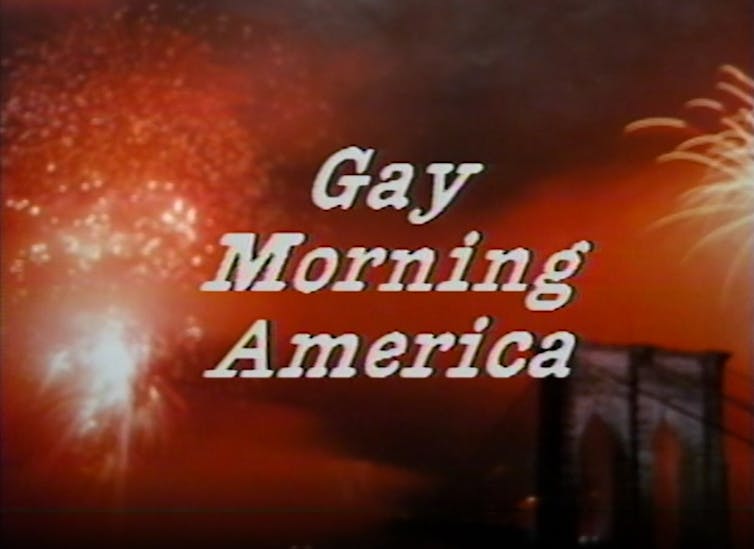
Skirting the censors
The regulation of sex on cable television has long been a political and cultural flashpoint.
But regulatory loopholes inadvertently allowed sexual content on public access. This allowed hosts and guests to talk openly about gay sex and safer sex practices on these shows – and even demonstrate them on camera.
The impetus for public access television was similar to the ethos of public broadcasting, which sought to create noncommercial and educational television programming in the service of the public interest.
In 1972, the Federal Communications Commission issued an order requiring cable television systems in the country’s top 100 markets to offer access channels for public use. The FCC mandated that cable companies make airtime, equipment and studio space to individuals and community groups to use for their own programming on a first-come, first-serve basis.
The FCC’s regulatory authority does not extend to editorial control over public access content. For this reason, repeated attempts to block, regulate and censor programming throughout the 1970s, 1980s and 1990s were challenged by cable access producers and civil liberties organizations.
The Supreme Court has continually struck down laws that attempt to censor cable access programming on First Amendment grounds. A cable operator can refuse to air a program that contains “obscenity,” but what counts as obscenity is up for interpretation.
Over the years, producers of LGBTQ-themed shows have fiercely defended their programming from calls for censorship, and the law has consistently been on their side.
Airing the AIDS crisis
As the AIDS crisis began to devastate LGBTQ+ communities in the 1980s, public access television grew increasingly important.
Many of the aforementioned series devoted multiple segments and episodes to discussing the devastating impact of HIV/AIDS on their personal lives, relationships and communities. Series like “Living with AIDS”, “HoMoVISIONES” and “ACT UP Live!” were specifically designed to educate and galvanize viewers around HIV/AIDS activism. With HIV/AIDS receiving minimal coverage on mainstream media outlets – and a lack of political action by local, state and national officials – these programs were some of the few places where LGBTQ+ people could learn the latest information about the epidemic and efforts to combat it.
The long-running program “Gay USA” is one of the few remaining LGBTQ+ public access series; new episodes air locally in New York and nationally via Free Speech TV each week. While public access stations still exist in most cities around the country, production has waned since the advent of cheaper digital media technologies and streaming video services in the mid-2000s.
And yet during this media era – let’s call it “peak public access TV” – these scrappy, experimental, sexual, campy and powerful series offered remarkable glimpses into LGBTQ+ culture, history and activism.
Lauren Herold, Visiting Assistant Professor of Gender & Sexuality Studies, Kenyon College
This article is republished from The Conversation under a Creative Commons license. Read the original article.
The Bridge is a section of the STM Daily News Blog meant for diversity, offering real news stories about bona fide community efforts to perpetuate a greater good. The purpose of The Bridge is to connect the divides that separate us, fostering understanding and empathy among different groups. By highlighting positive initiatives and inspirational actions, The Bridge aims to create a sense of unity and shared purpose. This section brings to light stories of individuals and organizations working tirelessly to promote inclusivity, equality, and mutual respect. Through these narratives, readers are encouraged to appreciate the richness of diverse perspectives and to participate actively in building stronger, more cohesive communities.
https://stmdailynews.com/category/the-bridge
Author
Discover more from Daily News
Subscribe to get the latest posts sent to your email.





