

STM Daily News
HGTV Unveils the HGTV Dream Home 2026: A $2.4M+ Lake Wylie Retreat Near Charlotte
HGTV unveils the Dream Home 2026 on Lake Wylie near Charlotte, NC—a 3,000+ sq.-ft. waterfront retreat. Enter daily through Feb. 13, 2026.


HGTV just pulled back the curtain on its HGTV® Dream Home 2026—a newly built, fully furnished waterfront escape set on a secluded peninsula along Lake Wylie near Charlotte, North Carolina. And yes, the stakes are big: the sweepstakes winner takes home a grand prize package valued at more than $2.4 million, including the home plus $100,000 cash.
Designed to feel equal parts “weekend getaway” and “forever home,” the property leans hard into lake life—panoramic water views, warm natural finishes, and outdoor spaces built for slow mornings and long sunsets.
A lakeside home built for views (and actual living)
Spanning more than 3,000 square feet, HGTV Dream Home 2026 includes three bedrooms and three-and-a-half bathrooms, with a layout intentionally oriented to capture Lake Wylie views from nearly every angle.
HGTV describes the home as a calm, curated retreat—where indoor comfort and outdoor beauty are basically in constant conversation. The design palette is rooted in the landscape: earth tones, organic materials, hand-laid stone, custom millwork, classic furnishings, and vintage collectibles that keep the vibe warm and timeless rather than overly trendy.
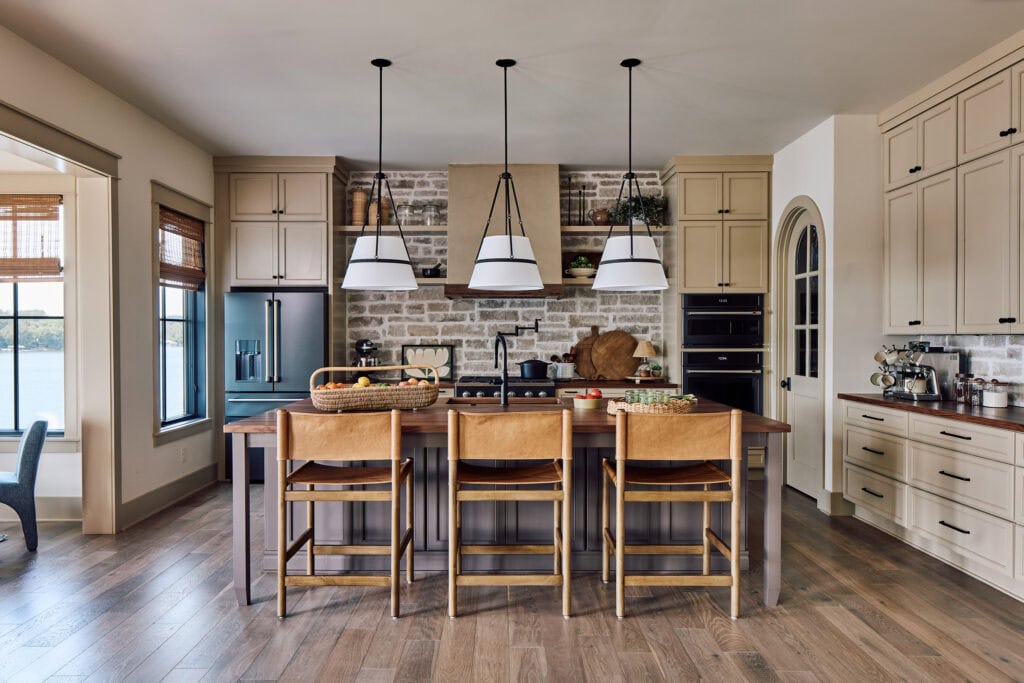

Some of the standout interior features include:
- A central great room anchored by a reclaimed-wood mantle
- A welcoming dining space with a café-style door
- A chef-style kitchen featuring an over-grouted stone backsplash
- A morning room for casual coffee-and-light moments
- A garage with pantry access plus a dedicated pet wash
- A main bedroom suite with sweeping lake views and a spa-like bath, plus a closet that includes an all-in-one washer/dryer
Outdoor living takes center stage—hello, two-story dock
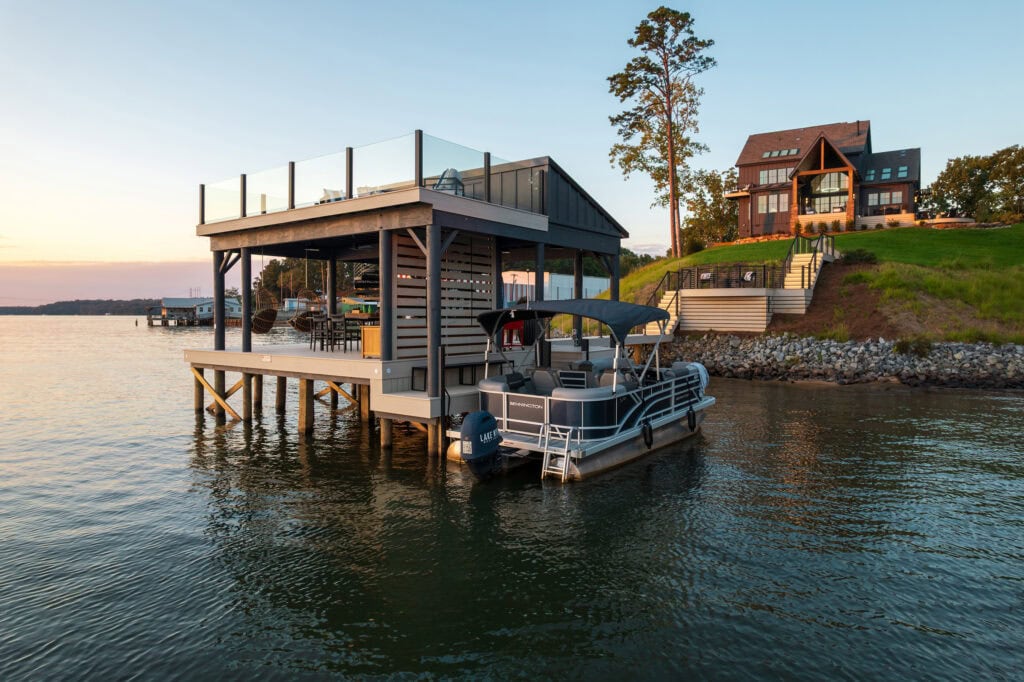
If the inside is designed for comfort, the outside is designed for the lifestyle. HGTV’s Dream Home 2026 leans into relaxed waterfront living with natural landscaping, laid-back outdoor furnishings, and a pebbled pathway leading to what might be the showstopper: a spectacular two-story dock.
It’s the kind of feature HGTV fans will immediately picture in use—sunrise coffee, sunset watching, and full-on lake days without leaving your property line.
Why Lake Wylie? Location meets laid-back Southern charm
Lake Wylie sits across the North Carolina–South Carolina border and is known for calm waters and an outdoors-first pace. HGTV highlights the lake’s 300+ miles of shoreline and its reputation as a haven for water activities—boating, paddling, and everything in between.
The location also hits that sweet spot of “peaceful but not remote”: it’s about 20 minutes from downtown Charlotte, and within easy reach of nearby towns like Belmont and Fort Mill.
The team behind the build and design
The home was built by Knotts Builders, with interior design led by Brian Patrick Flynn, who said he aimed to reflect Lake Wylie’s natural beauty while keeping the home “warm, inviting, and effortlessly livable.”
HGTV’s Howard Lee, Chief Creative Officer & President, US Networks, added that the home showcases the lifestyle of the Lake Wylie destination—and invited viewers to explore and enter for a chance to make it their own.
Sponsors featured throughout the home
HGTV Dream Home projects are also a showcase for sponsor products integrated into the build and lifestyle experience. This year’s lineup includes:
- Spectrum (connectivity)
- HGTV Home® by Sherwin-Williams (paint palette)
- Husqvarna (lawn tools)
- SimpliSafe (home security)
- Snuggle (laundry products)
- Stanley Steemer (cleaning)
- Trex (decking/outdoor materials)
- VELUX (skylights and sun tunnels)
- Wayfair (furniture, décor, appliances)
How to enter the HGTV Dream Home 2026 giveaway
The official entry window runs from 9 a.m. ET Tuesday, Dec. 16, 2025 through 5 p.m. ET Friday, Feb. 13, 2026. Eligible fans can enter daily at:
- HGTV.com
- FoodNetwork.com
HGTV notes that both sites will include full details, official rules, and additional home features.
When to watch the HGTV Dream Home 2026 special
Viewers can tune into the one-hour special HGTV Dream Home 2026 on Tuesday, Jan. 1, 2026 at 8 p.m. ET on HGTV, with streaming availability on Max and discovery+ the same day.
For fans who want a closer look right now, HGTV also has a dedicated Dream Home hub and photo tours online.
Sources:
- https://www.multivu.com/warner_bros_discovery/9364151-en-hgtv-dream-home-2026-sweepstakes
- https://www.hgtv.com/sweepstakes/hgtv-dream-home
- https://www.hgtv.com/sweepstakes/hgtv-dream-home/2026/tour-hgtv-dream-home-2026-pictures
If you tell me which outlet this is for (STM Daily News vs. another publication), I can tighten the lede and SEO it to match that site’s voice (headline options + meta description + suggested tags).


Local News
Maricopa Boil Water Advisory Lifted After Negative E. Coli Tests
Maricopa boil water advisory lifted: Global Water–Santa Cruz Water Company customers in Maricopa can resume normal tap water use after follow-up testing found no E. coli.

MARICOPA, Ariz. — A precautionary boil water advisory for Global Water–Santa Cruz Water Company customers in the city of Maricopa was lifted Thursday, October 8, after repeat testing found no E. coli in water samples. The utility announced the cancellation at approximately 2 p.m. Arizona time.

The advisory was issued October 7 after two preliminary tests indicated possible contamination. Customers were temporarily instructed to use bottled water or boil tap water for at least one minute before drinking it or using it for food preparation.
With follow-up results negative, affected customers no longer need to boil water for drinking, cooking, making ice, brushing teeth or washing dishes, according to the utility.
The advisory affected the utility’s customers in the city of Maricopa, located in Pinal County. It was not a countywide warning for Maricopa County or Phoenix.
Residents can visit Global Water Resources’ official notice page for updates or call 866-940-1102 with questions.
STM Daily News
Woman Charged With Felony Animal Cruelty in Santa Ana Puppy Killing
Santa Ana Puppy Killing: Prosecutors have filed felony charges against a 75-year-old Anaheim woman accused of deliberately running over and killing her puppy, Blackey, in Santa Ana.

Last Updated on October 3, 2026 by Daily News Staff
SANTA ANA, Calif. — A 75-year-old Anaheim woman accused of deliberately running over and killing her puppy on a Santa Ana street has now been formally charged with felony animal cruelty, marking a major development in a case that drew widespread attention after surveillance video was released by police.
The Orange County District Attorney’s Office announced Friday, October 2, that Hanh Minh Nguyen, 75, of Anaheim, has been charged with one felony count of animal cruelty, one felony count of animal abuse by a caretaker, and a felony enhancement alleging the personal use of a weapon — a vehicle — to kill the animal.
Nguyen was arrested by Santa Ana police on Thursday, October 1, after investigators used automated license plate reader technology to identify the green Honda Odyssey seen in surveillance footage from the September 8 incident. Police subsequently located Nguyen and found the minivan at her Anaheim residence.
According to the District Attorney’s Office, Nguyen was released from custody after posting $20,000 bail. She is scheduled to appear at the Central Justice Center in Santa Ana on November 2, 2026, in Department C55.
Surveillance video led to investigation
The case began on September 8 at approximately 9:15 a.m., when Santa Ana Animal Services officers responded to a report of a dead black-and-white male pit bull-mix puppy on West Park Lane.

Surveillance footage obtained during the investigation showed a woman removing the puppy from a minivan and placing food near the driver’s side of the vehicle. Authorities allege the woman then slowly drove forward as the puppy approached the food, running over the animal with the vehicle’s rear tire before leaving the scene.
The puppy, identified by authorities as Blackey, died.
The District Attorney’s Office describes Blackey as a 9-week-old puppy. Earlier statements and local news reports described him as approximately 9 months old.
Santa Ana police released surveillance footage of the incident on September 30 and appealed to the public for help identifying the driver.
Within a day, investigators said automated license plate reader technology helped them trace the Honda Odyssey to Nguyen. Police found the vehicle in her garage and took her into custody.
Police previously said Nguyen acknowledged owning and abandoning Blackey. According to the Los Angeles Times, a Santa Ana Police Department spokesperson said Nguyen told detectives she had left the puppy because he had been annoying her boyfriend by biting his shoes and belongings. Police said she acknowledged abandoning the dog but did not admit to intentionally running him over.
Prosecutors file felony charges
The filing of felony charges moves the case beyond the initial police investigation and into the Orange County court system.
Orange County District Attorney Todd Spitzer condemned the alleged killing in announcing the charges and said his office intends to prosecute acts of violence against animals.
Deputy District Attorney Danica Drotman of the Orange County District Attorney’s Animal Cruelty Unit is prosecuting the case.
Nguyen is accused of the offenses and has not been convicted. The allegations against her will now be addressed through the court process.
Her next scheduled court appearance is November 2.
STM Daily News will continue following the case and provide updates as additional information becomes available.
Source and Related Links
- Orange County District Attorney — October 2 charging announcement
- The DA’s release is the strongest source for this update. It provides case number 26CF4923, the exact charges, $20,000 bail, November 2 court date and the prosecutor assigned to the case. Orange County District Attorney
- For corroborating coverage, CBS Los Angeles reports the arrest, use of automated license-plate readers and the subsequent felony charges. CBS News
- CBS Los Angeles — arrest and charges update
- NBC Los Angeles — felony charges update
Local News
Santa Ana Police Seek Woman Accused of Intentionally Running Over Puppy
Santa Ana police are asking for the public’s help identifying a woman accused of intentionally running over and killing a puppy with a minivan on September 8.
Last Updated on September 30, 2026 by Daily News Staff
SANTA ANA, Calif. — Santa Ana police are asking for the public’s help identifying a woman accused of deliberately running over and killing a puppy after leaving the animal in a residential street earlier this month.
The disturbing incident occurred at approximately 9:15 a.m. on September 8, 2026, in the 900 block of West Park Lane, near 926 W. Park Lane. Police said the dog, described as a pit bull mix puppy, was later found dead in the street.
Investigators subsequently obtained home-surveillance footage showing an older-model green or blue Honda Odyssey minivan stopped along the street.
According to police, the female driver opened the vehicle’s door and placed the puppy on the ground. The puppy went underneath the minivan, and the woman then allegedly placed food on the street near the driver’s side of the vehicle.
As the puppy approached the food, the driver moved the minivan forward. Police said the vehicle’s rear driver’s-side tire went over the puppy and that the minivan remained stopped on the animal for approximately 15 seconds before the driver drove away.
A nearby resident later told officers that they had seen the minivan in the area and believed the puppy had been deliberately run over. Police and animal services personnel spent several weeks canvassing the neighborhood and eventually located surveillance footage that authorities said corroborated the witness’s account.
Police searching for driver
Investigators have not been able to obtain a readable license plate from the surveillance footage.
As of September 30, Santa Ana police were seeking information that could help identify either the woman or the older green or blue Honda Odyssey seen in the video.
Anyone with information about the case is being asked to contact Santa Ana police at 714-245-8378.
The case comes two years after another highly publicized animal-cruelty incident in Santa Ana involving a woman accused of intentionally running over a 2-month-old Rottweiler puppy in August 2024. In that case, the puppy survived after emergency treatment, and the suspect subsequently turned herself in to police.
STM Daily News will update this story if authorities announce an identification, arrest or charges in the case.
Sure and Related Links
Los Angeles Times — “Santa Ana Police search for woman who appears to deliberately run over puppy in disturbing video”
Los Angeles Times report
CBS Los Angeles — “Santa Ana police seek minivan driver who allegedly intentionally ran over puppy”
CBS Los Angeles report
NBC Los Angeles — “Female driver wanted for ‘intentionally’ running over a puppy in Santa Ana”
NBC Los Angeles report
MyNewsLA — “Santa Ana Police Seek Help Woman Who Fatally Struck Puppy”
MyNewsLA report




