

Consumer Corner
Honda Revives the Iconic Prelude: A Thrilling Return to the Sport Coupe Scene

Last Updated on December 17, 2024 by Daily News Staff
Exciting news for car enthusiasts! Honda Motors has officially announced the return of a beloved nameplate: the Prelude. Making its comeback in the U.S. market in late 2024, the sixth-generation Prelude is set to advance the joy of driving into the electrified future with Honda’s award-winning two-motor hybrid powertrain.


The Honda Prelude
Originally introduced in November 1978, the Prelude quickly became a favorite among driving enthusiasts, known for its sporty looks and dynamic performance. Honda is set to honor this legacy by integrating innovative features into the new model, including the revolutionary Honda S+ Shift. This sophisticated drive mode enhances Linear Shift Control to ensure an engaging and responsive driving experience—perfect for both longtime fans and new drivers.
Jessika Laudermilk, Assistant Vice President of Honda Auto Sales, stated, “The return of the Honda Prelude as a hybrid-electric sports model demonstrates our continued commitment to offer a variety of exhilarating products to meet the needs of our customers.” With the Prelude joining the ranks of the iconic Civic and Accord, Honda is reuniting its classic lineup, all backed by hybrid technology.
This news arrives at a momentous time, as Honda celebrates 25 years of hybrid sales in America, proudly introducing the nation’s first hybrid-electric model, the Honda Insight, in 1999. Today, Honda is pushing further on its electrification strategy, striving for all battery-electric and fuel cell electric vehicles to make up 100% of their sales by 2040. Hybrids are a crucial part of this journey, and Honda has already achieved impressive milestones, with electrified vehicles accounting for over a quarter of their total sales in 2024.
The Prelude will make its North American debut following its global unveiling at the 2023 Japan Mobility Show, where it captured the hearts of many. Honda’s commitment to innovation is clear in the Prelude’s design and features, from introducing groundbreaking technologies like four-wheel steering and torque vectoring systems in its earlier iterations to the hybrid-electric capabilities of this new generation.
As Honda continues to pave the way for its electrified future with products like the Honda Prologue electric SUV and the forthcoming Honda 0 Series models, the return of the Prelude signifies not just a nostalgic revival but also a new era of exhilarating driving experiences.
Fair warning to enthusiasts: excitement is building as the Prelude prepares to hit the roads again, promising a blend of classic sports coupe design and the cutting-edge technology that defines Honda’s future. Keep your eyes peeled for more updates and prepare to embrace the joy of driving like never before!
Stay tuned for more updates and feel free to share your thoughts on the return of the Prelude below!
For more information on Honda next-generation technologies, click here.
About Honda
Honda offers a full line of clean, safe, fun and connected vehicles sold through more than 1,000 independent U.S. Honda dealers. The award-winning Honda lineup includes the Civic and Accord, along with the HR-V, CR-V, Passport, Prologue and Pilot sport utility vehicles, the Ridgeline pickup and the Odyssey minivan. The Honda electrified vehicle lineup, representing more than a quarter of total sales in 2024, includes the all-electric Prologue SUV, hybrid-electric Accord, CR-V, and Civic, and Fuel-Cell-electric CR-V e:FCEV, with a hybrid Prelude set to join the lineup in late 2025.
Honda has been producing automobiles in America for over 40 years and currently operates 18 major manufacturing facilities in North America. In 2023, more than 99% of all Honda vehicles sold in the U.S. were made in North America, with about two-thirds made in America, using domestic and globally sourced parts.
More information about Honda is available in the Digital FactBook.
Welcome to the Consumer Corner section of STM Daily News, your ultimate destination for savvy shopping and informed decision-making! Dive into a treasure trove of insights and reviews covering everything from the hottest toys that spark joy in your little ones to the latest electronic gadgets that simplify your life. Explore our comprehensive guides on stylish home furnishings, discover smart tips for buying a home or enhancing your living space with creative improvement ideas, and get the lowdown on the best cars through our detailed auto reviews. Whether you’re making a major purchase or simply seeking inspiration, the Consumer Corner is here to empower you every step of the way—unlock the keys to becoming a smarter consumer today!
https://stmdailynews.com/category/consumer-corner
Discover more from Daily News
Subscribe to get the latest posts sent to your email.


Consumer Corner
Spruce Up Your Home for St. Patrick’s Day
Spruce Up Your Home: Spring is just around the corner, and there are few better ways to freshen up your home than with a wee bit of St. Patrick’s Day decor.

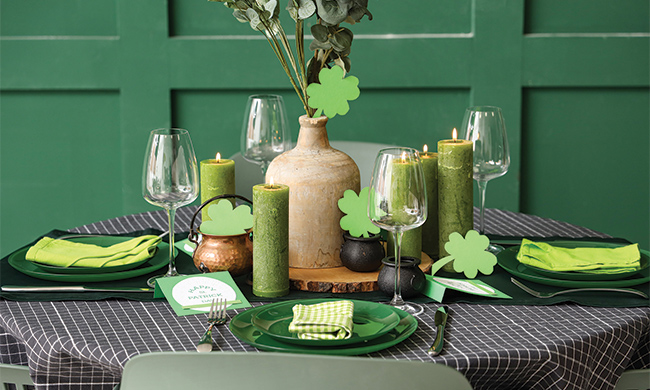
(Feature Impact) Spring is just around the corner, and there are few better ways to freshen up your home than with a wee bit of St. Patrick’s Day decor.
Spruce Up Your Home for St. Patrick’s Day
A Splash of Green and a Sparkle of Gold
Whether you love emerald, lime, sage or leafy green shades, simply adding a pop of a new-to-you hue can infuse your home with some St. Paddy’s fever. Check craft stores for reusable greenery to place in a pot or vase, or get crafty and dot pinecones with glue before dusting them with green glitter and placing them in a glass bowl to make a festive display worthy of a leprechaun’s seal of approval. Get Ready for Spring and Shop New Arrivals to Refresh Your Space!
Scent of the Season
Lighting a candle not only creates a festive vibe, but the aroma from a scented candle can remove any staleness in the air and bring some ambiance to your home. Any earthy scent will do – from juniper to fir, pine, sandalwood or amber. Woodsy choices infuse a room with comfort and warmth. Decorative elements like metal charms, beads and crystals (in bright green or gold) add a pop of whimsy to your candle, too.
Shape a Shamrock
Holidays are ideal times to flex your creative muscles and give your home a little artsy edge. Scour the shelves at dollar stores or thrift shops for things like green clay or modeling dough, colored paper, wooden shamrocks, stickers and inexpensive paint sets. Set your artistic side free with paintings or drawings of shimmery rainbows, mischievous leprechauns and shamrocks in various sizes.
Coins, Clover and Centerpieces
One of the easiest ways to add a little Celtic cheer to your home is with joyful table decor. Add some gold shimmer to your dining room table with sparkly ribbons, a bright runner and gold-flecked napkin rings. A fancy glass filled with green baubles and pebbles can be both subtle and festive. A scattering of faux gold coins and rainbow napkins can make the space feel merry and magical.
Find more ideas to get your home ready for St. Patrick’s Day at eLivingtoday.com.
Photo courtesy of Shutterstock
SOURCE:
Welcome to the Consumer Corner section of STM Daily News, your ultimate destination for savvy shopping and informed decision-making! Dive into a treasure trove of insights and reviews covering everything from the hottest toys that spark joy in your little ones to the latest electronic gadgets that simplify your life. Explore our comprehensive guides on stylish home furnishings, discover smart tips for buying a home or enhancing your living space with creative improvement ideas, and get the lowdown on the best cars through our detailed auto reviews. Whether you’re making a major purchase or simply seeking inspiration, the Consumer Corner is here to empower you every step of the way—unlock the keys to becoming a smarter consumer today!
https://stmdailynews.com/category/consumer-corner
Discover more from Daily News
Subscribe to get the latest posts sent to your email.
toys and kids electronics
DUNGEONS & DRAGONS Questers: Basic Fun! and Hasbro Bring D&D to Gen Alpha in July 2026
Basic Fun! has partnered with Hasbro to launch DUNGEONS & DRAGONS Questers™, a collectible action figure line aimed at kids aged 5 to 8, debuting in July 2026. Designed to foster imagination and storytelling, these customizable figures will feature blind packing and include a D20 die, creating an engaging experience for young adventurers.

Basic Fun! is rolling a natural 20 on nostalgia-meets-next-gen play.
In a Feb. 10, 2026 announcement, the global toy company revealed a worldwide licensing agreement with Hasbro (through Wizards of the Coast) to launch DUNGEONS & DRAGONS Questers™, a new collectible action figure line built specifically to introduce Gen Alpha to the world of D&D. The line is expected to hit major toy retailers worldwide in July 2026, targeting kids ages 5 to 8.
What is DUNGEONS & DRAGONS Questers?
Questers is Basic Fun!’s take on translating the spirit of the World’s Greatest Roleplaying Game™ into something tactile, collectible, and kid-friendly—without losing the fantasy DNA longtime fans recognize.
The pitch is straightforward: imagination-led play, world-building, and storytelling—packaged in a format that matches how kids play today: personalization, discovery, and surprise.
Questers is also positioned as a bridge between generations. It’s designed not only for kids discovering fantasy for the first time, but also for fan parents looking for a hands-on way to share D&D’s creatures, heroes, and archetypes with their children.
Built for collecting, customizing, and creating stories
Basic Fun! says the Questers line will feature three collectible scales:
- Creatures
- Adventurers
- Monsters
Each figure will be:
- Blind-packed (surprise-style collectibles)
- Fully buildable
- Designed with interchangeable parts so kids can mix, match, and customize
And the D&D tie-in isn’t just a logo on the box. Each figure will come with:
- A D20 die
- A storystarter prompt to encourage kids to create adventures with their collection
That combination—collectability + customization + storytelling prompts—signals exactly what the brand is aiming for: repeat play that feels different every time.
Why D&D, and why now?
D&D’s cultural footprint has been expanding across entertainment, publishing, and digital platforms, and the press release points to a clear shift: Gen Alpha gravitates toward play patterns rooted in personalization, discovery, and world-building.
Questers is designed to meet that moment by turning D&D’s iconic fantasy elements into a “discovery-driven” toy experience—one that doesn’t require reading a rulebook, building a character sheet, or learning game mechanics to start having fun.
In other words: it’s D&D energy, scaled to the toy aisle.
What the companies are saying
Dan Westcott, Senior Vice President of Global Brand Marketing at Basic Fun!, framed Questers as an on-ramp into the franchise:
- Approachable, creative, and fun for young adventurers
- A meaningful way for fan parents to share a universe they already love
Kara Kenna, Franchise Creative Director for D&D at Wizards of the Coast, emphasized the “hands-on” fantasy exploration angle—positioning Questers as a way for kids to engage imagination and play in a physical format.
Release timing and what to watch for
The big headline for retailers and parents: Questers debuts in July 2026, with a worldwide rollout planned at major toy retailers.
What to watch for as the launch gets closer:
- Character/creature reveals (and how deep they go into classic D&D lore)
- Price points and pack formats (single packs vs. multipacks)
- How the “storystarter” system works across the different scales
- Whether the line ties into broader D&D content (books, digital, or entertainment releases)
The takeaway
DUNGEONS & DRAGONS Questers is shaping up to be a smart, modern entry point into fantasy play—one that blends classic D&D storytelling with today’s collectible toy trends.
For longtime fans, it’s another sign that D&D’s influence keeps widening. For kids, it’s a new way to build heroes, mash up monsters, roll a D20, and start telling stories—no dungeon master required.
Source: Basic Fun! press release distributed via PRNews
Welcome to the Consumer Corner section of STM Daily News, your ultimate destination for savvy shopping and informed decision-making! Dive into a treasure trove of insights and reviews covering everything from the hottest toys that spark joy in your little ones to the latest electronic gadgets that simplify your life. Explore our comprehensive guides on stylish home furnishings, discover smart tips for buying a home or enhancing your living space with creative improvement ideas, and get the lowdown on the best cars through our detailed auto reviews. Whether you’re making a major purchase or simply seeking inspiration, the Consumer Corner is here to empower you every step of the way—unlock the keys to becoming a smarter consumer today!
https://stmdailynews.com/category/consumer-corner
Discover more from Daily News
Subscribe to get the latest posts sent to your email.
Consumer Corner
What to Know Before You Remodel Your Home
Planning a home remodel involves defining goals, setting a budget, gathering inspiration, planning a timeline, selecting a contractor, finalizing design choices, and preparing the home. A clear plan helps manage costs and expectations, allowing for a smoother renovation process while minimizing stress for the household.
Last Updated on March 9, 2026 by Daily News Staff
What to Know Before You Remodel Your Home
(Family Features) Planning a home remodel is as much about your vision as it is your preparation. With a thoughtful plan, you can refresh your living space, stay on budget and enjoy the process without feeling overwhelmed.
Consider these steps to get the process started:
- Define your goals
Decide what you’re looking to accomplish with your remodel, whether it’s improved functionality, updated style, higher resale value or a combination. Make a simple list of “must-haves” and “nice-to-haves” so you can prioritize upgrades if costs start to climb too high.
- Set a realistic budget
Determine how much you’re comfortable spending then add a cushion of 10-20% for additional material costs and any surprises behind walls or under floors. Get rough price ranges for materials and labor, which allows you to adjust the scope of your project before the work begins, if necessary, instead of mid-project.
- Gather ideas and inspiration
Collect photos, paint colors and product ideas in a single place, such as a digital folder or photo album on your smartphone. Pay attention to recurring themes in your inspiration – such as cabinetry, flooring and fixture styles and colors – so it’s easier to choose finishes when the time comes.
- Lay out the project timeline
Think about the best time for your household to live through construction, especially if kitchens or bathrooms will be out of commission during the renovation. Talk with potential contractors about timing for each phase so you can plan for temporary living arrangements, if necessary.
- Choose the right construction crew
Interview a variety of potential contractors, being sure to ask for references and verify licenses and insurance. Once you’ve narrowed your list, request written estimates that include labor and material costs, timelines and payment schedules so expectations are clear before choosing a service provider and signing an agreement.
- Finalize design details and materials
Make as many design decisions as possible before demolition, including choosing fixtures, appliances, flooring, tile, paint, hardware and other details. Ordering key items early can help avoid delays and keep the project on schedule once work begins.
- Prep your home and family
Before construction begins, clear areas where work will be completed of furniture and decor, covering anything that cannot be moved out of the room with plastic sheeting. So everyone knows what to expect while your home is in transition, talk with family members about the impending noise and dust, and make necessary schedule changes to avoid interrupting work.
Visit eLivingtoday.com for more resources and home renovation guidance.
Photo courtesy of Shutterstock
SOURCE:
Discover more from Daily News
Subscribe to get the latest posts sent to your email.





