

Food and Beverage
Jump-Start Success at School with Wellness at Home

Last Updated on July 14, 2024 by Daily News Staff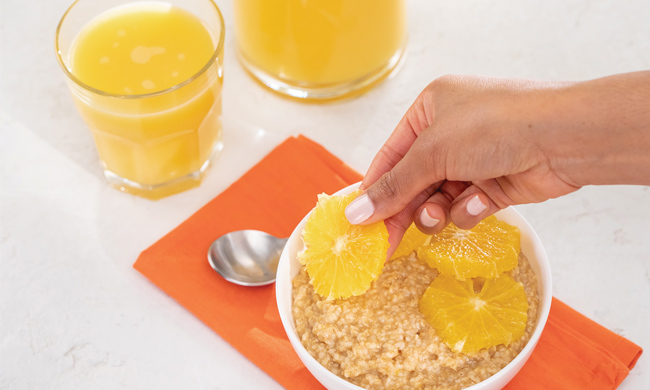
(Family Features) Setting the stage for success in the classroom starts with reliable morning routines the whole family can depend on. Establishing a plan for each day before heading off for work or school is beneficial for staying on time and organized, and many families’ mornings start with a nutritious breakfast.
This school year, add better-for-you breakfast recipes like Orange Oatmeal or an Orangeberry Smoothie to the menu. These morning meals are powered by 100% orange juice, a delicious option that helps fuel the body with essential nutrients that support a healthy immune system and overall diet quality with no added sugar.
“A growing number of research studies has revealed children who regularly drink 100% orange juice have higher intakes of key nutrients, higher quality diets and may have healthier lifestyle habits, like greater physical activity levels, than children who do not drink OJ,” said Dr. Rosa Walsh, director of scientific research at the Florida Department of Citrus. “Study after study confirms that 100% orange juice not only has a place in the diets of children, but it can also serve as an easy way for parents to provide key nutrients without fear of adverse effects on body weight when served in moderation.”
Consider these nutritional benefits of Florida Orange Juice, “The Original Wellness Drink.”
Diet Quality
Because 1 cup of 100% orange juice counts as 1 cup of fruit, it’s an easy way to contribute to your children’s fruit intake. As a kid-favorite, it’s a nutrient-dense beverage that helps increase the intake of key nutrients including vitamin C, folate, thiamin, magnesium, potassium and, in fortified juices, vitamin D and calcium.
Immune Support
When paired with a healthy lifestyle, Florida Orange Juice has vitamin C, vitamin D (in fortified juices) and phytonutrients (naturally occurring plant compounds) and may help support a strong immune system.
- Vitamin C – Commonly associated with helping maintain and strengthen a healthy immune system by protecting cells and promoting the production and function of cells. One 6-8-ounce glass of OJ is an excellent source.
- Vitamin D – Plays an important role in regulating immune response and helps cells fight off bacteria and viruses that get into the body. One 6-8-ounce glass of fortified OJ is a good source.
- Plant Compounds, Flavonoids and Colorful Carotenoids – Work to support the immune system by helping to fight inflammation and helping cells communicate with each other, which can help strengthen immune response when encountering infection.
No Added Sugar
Unlike foods and beverages that contain added sugars, the natural sugar in 100% orange juice contains vitamins, minerals and phytonutrients. As one of nature’s nutrient-rich foods, OJ is a convenient way to enhance whole fruit intake and reach daily recommendations. Plus, it can be used as a substitute for nutrient-poor foods and beverages, such as sugar-sweetened beverages, in the diets of children and adults.
Find more information and recipe inspiration at FloridaCitrus.org/OJ.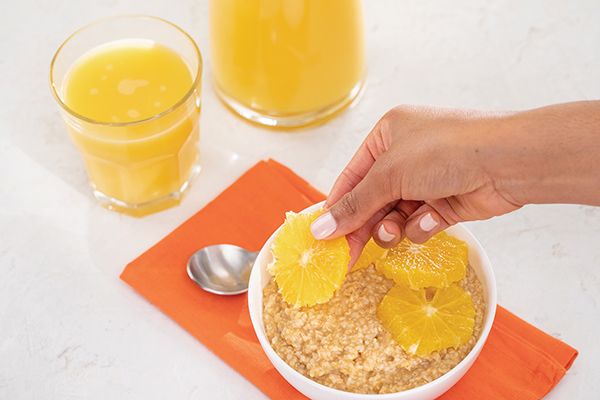
Orange Oatmeal
Servings: 4
- 1 1/2 cups water
- 1 cup Florida Orange Juice
- 1 cup quick cooking steel-cut oats
- 1 Florida Orange, peeled and diced
- 1 tablespoon agave nectar or honey
- 1/4 teaspoon cinnamon
- 1/4 teaspoon salt
- In medium saucepan over high heat, bring water and orange juice to boil.
- Add oats to boiling liquids.
- Return to boil then reduce to medium heat and cook uncovered 5 minutes, stirring frequently.
- Mix in orange, agave nectar, cinnamon and salt. Remove pan from heat; let stand 1 minute before serving.
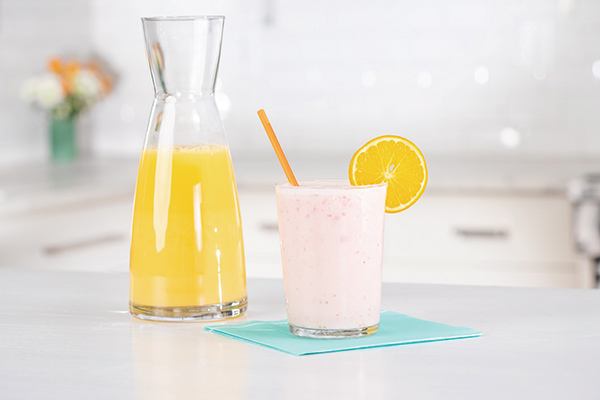
Orangeberry Smoothie
Servings: 1
- 1 cup Florida Orange Juice
- 1/2 cup frozen strawberries
- 4 ounces strawberry Greek yogurt
- 1/4 cup milk
- ice cubes
- 1 Florida Orange, sliced
- In blender, blend orange juice, strawberries, yogurt, milk and ice, as needed to reach desired consistency, until smooth.
- Pour into glass and garnish with orange slice.
SOURCE:
Florida Department of Citrus
At our core, we at STM Daily News, strive to keep you informed and inspired with the freshest content on all things food and beverage. From mouthwatering recipes to intriguing articles, we’re here to satisfy your appetite for culinary knowledge.
Visit our Food & Drink section to get the latest on Foodie News and recipes, offering a delightful blend of culinary inspiration and gastronomic trends to elevate your dining experience.
https://stmdailynews.com/category/food-and-beverage
You can also find food and beverage-related videos on our YouTube channel, where we regularly post new content and share tips, recipes, and demonstrations. https://youtube.com/playlist?list=PLEhXBupt8tVynuUhpQZMxQt4lvPmOiAtQ&si=InDwc7YaB0KIwmxy
Author


Food and Beverage
Ferrero Survey Says Adults Are Reclaiming Easter Candy Traditions
A new Ferrero survey finds adults are embracing Easter candy traditions, from building their own baskets to buying premium treats and raiding the kids’ stash.


Easter Is for Adults Now, Too
Ferrero’s latest survey suggests the holiday candy aisle is no longer just about kids. It is also about nostalgia, self-indulgence, and adults openly claiming a place in traditions they were once expected to outgrow.
At some point, adults stopped pretending they were only buying Easter candy for the kids.
Ferrero North America’s latest Easter Candy Survey leans hard into that reality, arguing that the “Adultoween” energy the company has been tracking around Halloween has now fully crossed into spring. According to the survey, 66% of North American adults say they deserve an Easter basket just as much as children do. If that sounds less like a shocking revelation and more like a formal acknowledgment of what has already been happening in grocery store checkout lines for years, that is probably because it is.
The bigger story here is not just that adults like candy. Of course they do. It is that brands are becoming much more comfortable marketing nostalgia, ritual, and seasonal indulgence directly to grown-ups. Easter, once framed mostly as a family holiday centered on children, is increasingly being recast as a shared cultural event where adults are not just participating politely. They are fully in it.
The Easter Bunny Has Entered the Group Chat
Ferrero’s survey of 1,000 adults in the United States and Canada paints a picture of Easter as a holiday that now comes with brunch plans, premium baskets, personal candy stashes, and a surprising amount of competitive behavior. Seventy percent of respondents said Easter is the best time of year for both adults and kids to indulge in candy together. Nearly half said they are likely to host or attend an adult Easter brunch, party, or gathering.
Then there are the confessions, which are really the heart of the whole thing. More than one in three adults said they have eaten their children’s Easter candy without telling them. More than one in four said they have competed with their own kids to find Easter eggs first. Eighteen percent admitted to cheating to win.
None of this is exactly noble, but it is revealing. The modern holiday experience is less about adults facilitating magic from the sidelines and more about everyone wanting in on the fun. Ferrero is smart to recognize that. Seasonal candy marketing has traditionally leaned on childhood wonder. What it is leaning on now is something slightly different: the idea that adulthood is stressful, nostalgia sells, and nobody really wants to age out of joy.
Candy as Culture, Not Just Confection
The survey also suggests that adults are not treating Easter candy as an afterthought. More than half of respondents said they would pay extra for a premium Easter basket, spending an average of $23 on a chocolate bunny or specialty treat. Dark chocolate, peanut butter candy, and chocolate eggs topped the wish lists. More than half also said Easter candy tastes better than Halloween candy, which feels like the kind of claim that could start arguments at a family gathering.
What matters more than the specific rankings, though, is what they signal. Holidays are increasingly being marketed as lifestyle moments rather than fixed traditions. The basket is no longer just for children. It is a seasonal self-care package, a joke, a nostalgic ritual, and a low-stakes luxury purchase all at once.
That shift says something broader about consumer culture. Adults are being invited to reclaim the symbols of childhood not because society has become less serious, but because modern life often feels serious all the time. A chocolate bunny is cheap therapy. A private stash of mini eggs is a coping mechanism with pastel packaging.
Why This Trend Matters
It would be easy to dismiss all of this as clever branding wrapped around survey data, and to be fair, Ferrero clearly knows how to turn consumer behavior into a seasonal narrative. But the company is tapping into something real. The line between kids’ traditions and adult participation has been softening for a while, whether that shows up in Halloween, themed merchandise, collectibles, or holiday food culture.
Easter now appears to be joining that list. Not because adults suddenly discovered candy in 2026, but because they are increasingly willing to admit that these rituals still mean something to them. Not everything has to be optimized, productive, or age-appropriate in the most boring sense of the phrase. Sometimes people just want the basket.
Ferrero’s Easter lineup this year includes products from Butterfinger, CRUNCH, Ferrero Rocher, Kinder, Nutella, Mother’s Cookies, Keebler, and Tic Tac, among others. The survey was conducted by Golin in partnership with Dynata between January 13 and January 27, 2026, among 1,000 respondents in the United States and Canada, with a margin of error of plus or minus 3%.
External Related Links
- Ferrero North America
- Ferrero Rocher Easter Products
- Kinder Easter Candy Collection
- Nutella Products and Brand Information
- PRNewswire Consumer Lifestyle News
Source: Ferrero North America via PRNewswire
The Food and Drink section at STM Daily News delivers fresh coverage on dining, drinks, recipes, and the food stories bringing communities together.

Last Updated on April 4, 2026 by Daily News Staff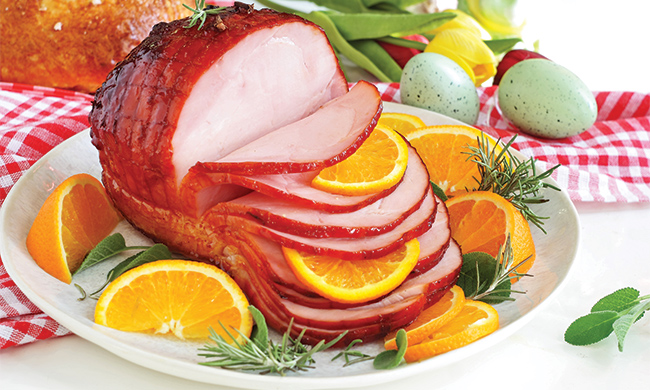
(Feature Impact) When your kitchen is full of colorful eggs, candy baskets, tempting sweets and all that comes with Easter, sometimes a holiday classic is just the answer for simplifying the season. Perfect for pairing with deviled eggs, potato salad and a traditional Sunday feast, this Maple-Glazed Easter Ham provides a hands-off approach to the main dish.
With an easily prepared glaze and your oven doing most of the work, you can keep your attention on time spent with loved ones. Visit Culinary.net to find more seasonal favorites, both classic and contemporary.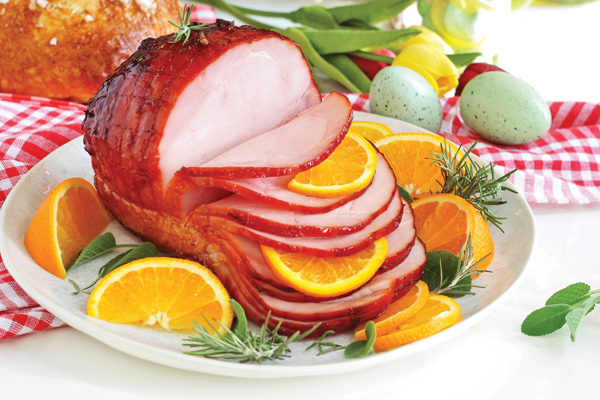
Maple-Glazed Easter Ham
Recipe adapted from Southern Living
Total time: 3 hours
Servings: 10
- 1 bone-in spiral-cut ham (8-9 pounds)
- 1 cup pure maple syrup
- 1/2 cup packed dark brown sugar
- 1/2 cup (4 ounces) bourbon
- 1/2 teaspoon grated fresh ginger
- 1/4 teaspoon ground cinnamon
- orange slices and wedges, for garnish
- fresh rosemary sprigs, for garnish
- Preheat oven to 350 F.
- Place ham in large roasting pan and fill with 1/2 inch of water. Cover pan with aluminum foil and bake about 2 hours, basting every 30 minutes with juices from pan, until meat registers 120 F at thickest portion.
- In medium saucepan over medium-high heat, stir maple syrup, brown sugar, bourbon, ginger and cinnamon; bring to boil. Cook, stirring occasionally, until thickened, 6-8 minutes. Remove from heat. Cover to keep warm and set aside.
- Remove ham from oven and discard foil. Increase oven temperature to 400 F. Using pastry brush, glaze ham with 1/3 cup maple-bourbon mixture.
- Bake ham about 30 minutes until top is lightly caramelized and meat registers 145 F at thickest portion, brushing with remaining glaze every 10 minutes.
- Remove from oven and transfer ham to serving platter. Let rest 15 minutes and garnish with orange slices, orange wedges and rosemary sprigs.
Photo courtesy of Shutterstock

SOURCE:
At our core, we at STM Daily News, strive to keep you informed and inspired with the freshest content on all things food and beverage. From mouthwatering recipes to intriguing articles, we’re here to satisfy your appetite for culinary knowledge.
Visit our Food & Drink section to get the latest on Foodie News and recipes, offering a delightful blend of culinary inspiration and gastronomic trends to elevate your dining experience. https://stmdailynews.com/food-and-drink/


If you needed a reason to celebrate your favorite wrapped meal, here it is.
National Burrito Day is observed every year on the first Thursday of April—a moving food holiday that always lands just in time to kick off spring cravings.
In 2026, National Burrito Day fell on April 2, giving burrito lovers across the U.S. the perfect midweek excuse to indulge.
A Quick Bite of History
While the burrito itself has deep roots in Mexican cuisine, the modern celebration of National Burrito Day is largely driven by restaurants and food brands that turned it into an annual event—complete with deals, giveaways, and social media buzz.
Today, it’s widely embraced by chains like Chipotle Mexican Grill and Qdoba Mexican Eats, along with local taquerías that join in the celebration.
Why It Matters (Beyond the Food)
National Burrito Day is more than just a marketing holiday—it reflects how a simple, portable dish became a staple of American food culture.
From classic bean-and-cheese to fully loaded carne asada burritos, the options are endless—and so are the reasons to celebrate.
External Related Reading
- National Day Calendar: National Burrito Day
- Smithsonian Magazine: A Brief History of the Burrito
- Chipotle Mexican Grill – Official Website
- Qdoba Mexican Eats – Official Website





