Connect with us

Activism

Kent Chamber of Commerce’s Trailblazing CEO Zenovia Harris Receives The Larry Gossett 2023 Service Award

Published

on

Last Updated on January 18, 2023 by Daily News Staff

KENT, Wash. /PRNewswire/ — The excitement continues for Zenovia Harris, who took home the Larry Gossett 2023 Service Award. As a recipient of the award, Zenovia was recognized as an individual who has made a significant contribution in the area of racial equity, social justice, and human rights. The award was given by King County in honor of Dr. Martin Luther King, Jr. Celebration, whose theme this year was “Truth, Light, and Hope.”

Zenovia 1 Facebook Horizontal
Kent Chamber of Commerce’s Trailblazing CEO Zenovia Harris Receives The Larry Gossett 2023 Service Award

The award was well-deserved for Seattle-area leader Zenovia Harris. As the only black CEO in the state of Washington, Zenovia strives to ensure economic equality remains a crucial factor for healthy communities. In 2019, Zenovia became the CEO of the Kent Chamber of Commerce, playing an instrumental role in leading the Kent Chamber in its equity work. This comes naturally for Zenovia, who also leads other Chambers throughout King County, including the Renton Chamber, Kirkland Chamber, and Seattle Southside Chamber.

Video of acceptance speech
Zenovia Harris | 2023 Larry Gossett Service Award (vimeo.com) 

Through Zenovia’s leadership, she has diversified Board Member participation and introduced a Diversity, Equity, and Inclusion Committee. To support both her own and other local chambers, Zenovia instituted equity talks, which are open to both chamber members and larger communities. By performing internal evaluations to understand where the challenges and needs are in order to meet equity goals, Zenovia’s presence as an innovative and caring leader remains steadfast.

Zenovia appeared nothing but honored and grateful upon receiving the Larry Gossett 2023 Service Award, stating “I am grateful for my tenacity to fight for others and my opportunity to sit at tables that were not designed for me but being savvy enough to extract pertinent and critical information to delineate what options are available for CBO’s, micro-businesses, home-based, and small businesses.”

About The Kent Chamber of Commerce:

The Kent Chamber of Commerce actively works to support businesses in the area by being the voice and ears of the community, bringing the business community together in a dynamic and profitable way. As the premier organization in South King County, The Kent Chamber of Commerce’s mission is to ensure a healthy, vibrant business community for all.

Support The Kent Chamber of Commerce’s work by becoming a member today: https://info.kentchamber.com/member/newmemberapp/

SOURCE The Kent Chamber of Commerce

Advertisement
Get More From A Face Cleanser And Spa-like Massage

Author


Discover more from Daily News

Subscribe to get the latest posts sent to your email.

Continue Reading
Advertisement Sports Research

Entertainment

Brigitte Bardot defined the modern woman and defied social norms

Published

on

Brigitte Bardot defined the modern woman and defied social norms
Herbert Dorfman/Corbis via Getty Image

Brigitte Bardot defined the modern woman and defied social norms

Ben McCann, University of Adelaide Brigitte Bardot’s death, at the age of 91, brings to a close one of the most extraordinary careers in post-war French cultural life. Best known as an actress, she was also a singer, a fashion icon, an animal rights activist and a symbol of France’s sexual liberation. Famous enough to be known by her initials, B.B. symbolised a certain vision of French femininity – rebellious and sensual, yet vulnerable. Her impact on beauty standards and French national identity was profound. At her peak, she rivalled Marilyn Monroe in global fame and recognition. Simone de Beauvoir, France’s leading feminist writer, famously wrote in 1959 that Bardot “appears as a force of nature, dangerous so long as she remains untamed”.

A star is born

Bardot was born in 1934 to a well-off Parisian family. Raised in a strict Catholic household, she studied ballet at the Conservatoire de Paris with hopes of becoming a professional dancer.
Bardot en pointe.
Brigitte Bardot, pictured here in 1946, studied ballet as a child. Roger Viollet via Getty Images
Her striking looks led her to modelling. By 14, she was appearing in Elle magazine, catching the eye of director Roger Vadim, whom she married in 1952. She began acting in the early 1950s and her appearance as Juliette in Vadim’s And God Created Woman (Et Dieu… créa la femme, 1956) put her on the map. Bardot was instantly catapulted to international stardom. Vadim presented his wife as the ultimate expression of youthful, erotic freedom that both shocked and captivated French audiences. Watching this relatively tame film today, it’s difficult to imagine just how taboo-breaking Bardot’s performance was. But in sleepy Catholic, conservative 1950s France, it set new norms for on-screen sexuality. The film became a global phenomenon. Critics loved it, but censors and religious groups grew nervous.

An 60s icon

Bardot’s lack of formal training as an actress paradoxically became part of her appeal: she adopted a spontaneous acting approach, as much physical as verbal. She was stunning in Contempt (Le Mépris, 1963), Jean-Luc Godard’s masterpiece about a crumbling marriage. Godard used her beauty and fame both as spectacle and critique. The film’s most famous sequence was a 31-minute conversation between Bardot and her co-star Michel Piccoli. Bardot was never better. In Henri-Georges Clouzot’s intense courtroom drama The Truth (La Vérité, 1960), she showcased her dramatic range playing a young woman on trial for the murder of her lover.
Bardot in a bed.
Bardot in a poster for The Truth, 1960. LMPC via Getty Images
In 1965, she co-starred with Jeanne Moreau in Louis Malle’s Long Live Maria (Viva Maria), a rare female buddy film that blended comedy and political satire. Bardot’s anarchic energy remains a dazzling feat. A Very Private Affair (Vie privée, 1962) saw her portray a woman consumed by fame and chased by the media. The plotline was eerily predictive of Bardot’s own future. She popularised fashion trends like the choucroute hairstyle and ballet flats. The Bardot neckline – off-the-shoulder tops and dresses – was named after her. She even wore pink gingham at her 1959 wedding.

Allure and provocation

Bardot’s star appeal lay in her contradictions. She appeared simultaneously natural and provocative, spontaneous and calculated. Her dishevelled glamour and effortless sexuality helped construct the archetype of the modern “sex kitten”. She famously said “it is better to be unfaithful than to be faithful without wanting to be”. Throwing off the shackles of bourgeois morality, Bardot epitomised a commitment to emotional and sexual freedom. Her turbulent love life was a case in point. She was married four times, with dozens of stormy relationships and extra-marital affairs along the way. Forever immortalised as a free-spirited ingénue, Bardot was a muse for filmmakers, artists and musicians, from Andy Warhol to Serge Gainsbourg. Later on, Kate Moss, Amy Winehouse and Elle Fanning mentioned Bardot as an inspiration. Famously, Bardot never succumbed to cosmetic surgery. As she once noted:
Women should embrace ageing because, at the end of the day, it’s much more beautiful to have a grandmother with white hair who looks like an elderly lady than to have a grandmother who’s bleached, dyed, and […] who looks much older but also really unhappy.

Life after the movies

Bardot retired from acting in 1973, aged only 39, citing disillusionment with fame. “It suffocated and destroyed me”, she said, about the film industry. She shifted her attention to animal rights, founding the Brigitte Bardot Foundation in 1986. She became an uncompromising, vocal activist, campaigning against animal cruelty, fur farming, whaling and bullfighting. But Bardot courted controversy from the mid-1990s for her far-right political views, remarks about Islam and immigration and repeated convictions for inciting racial hatred. She publicly defended disgraced actor Gérard Depardieu and pushed back on the #MeToo movement in France. Such statements damaged her reputation, especially outside France, and created a troubling image: the once-liberating sex symbol now associated with nationalist conservatism. While she never identified as a feminist, her unapologetic autonomy, early retirement and outspoken views led some to re-evaluate her as a figure of proto-feminist rebellion. France gradually began to turn against Bardot, bothered by her outspoken views. But some applauded her couldn’t-care-less attitude and unwillingness to play by the rules. Ultimately, by rejecting fame on her own terms, she parlayed her 50s free-spiritedness into a bold stand against conformity and societal norms. Late in life, she told Danièle Thompson, the writer-director of the 2023 mini-series about her career, “I don’t understand why the whole world is still talking about me”. The answer is simple – Bardot continues to fascinate us, flaws and all. Ben McCann, Associate Professor of French Studies, University of Adelaide This article is republished from The Conversation under a Creative Commons license. Read the original article.
Hollywood to Pickleball: Joseph’s Inspiring Journey!
Link: https://stmdailynews.com/hollywood-to-pickleball-josephs-inspiring-journey/

Author

Want more stories 👋
"Your morning jolt of Inspiring & Interesting Stories!"

Sign up to receive awesome articles directly to your inbox.

STM Coffee Newsletter 1

We don’t spam! Read our privacy policy for more info.


Discover more from Daily News

Subscribe to get the latest posts sent to your email.

Continue Reading

Sports

Hulk Hogan and the unraveling of worker solidarity

Published

on

Last Updated on August 29, 2025 by Daily News Staff

Hulk Hogan
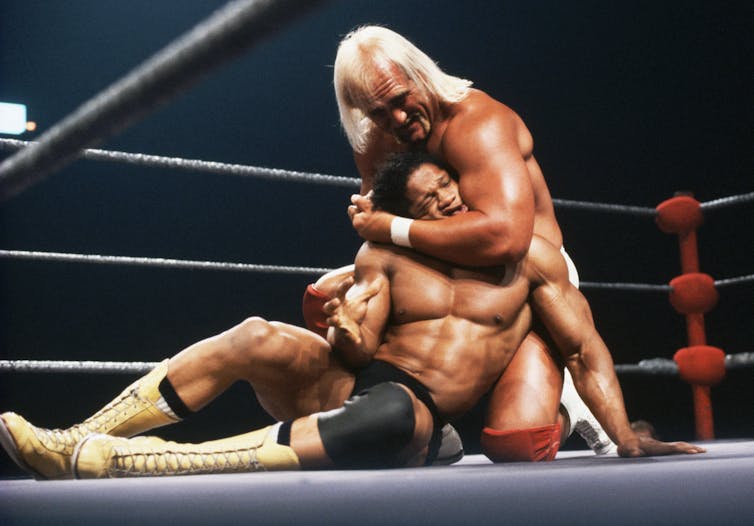
Hulk Hogan was arguably WWE’s biggest star in the 1980s. Wally McNamee/Corbis via Getty Images

Hulk Hogan and the unraveling of worker solidarity

Brian Jansen, University of Maine Hulk Hogan’s death by heart attack at age 71 came as a shock to many fans of the larger-than-life wrestler who’d earned the nickname “The Immortal.” But in many respects, the real surprise was that Hogan, born Terry Gene Bollea, lived as long a life as he did. Despite the staged nature of its combat, professional wrestling is a notoriously dangerous career. Studies rank it among the riskiest professions. Wikipedia even maintains a comprehensive list of premature wrestler deaths. The reasons for professional wrestling’s dangers are largely tied up in the industry’s working conditions. And part of Hogan’s legacy may be his complicity in those conditions. In 1986, he allegedly played a key role in undercutting a unionization effort – arguably the closest pro wrestling has come to unionizing.

‘The Body’ sticks his neck out

WWE’s first WrestleMania was held in 1985. The pay-per-view event was enormously successful and established the company – then known as WWF – as the nation’s preeminent wrestling promotion. During the buildup to WrestleMania 2 the following year, wrestler Jesse “The Body” Ventura understood that performers had more leverage than they’d ever had. He began advocating behind the scenes for a wrestling union. The story, as recounted by Ventura, goes like this: An acquaintance of Ventura’s in the NFL encouraged him to start organizing behind the scenes. WWE was behind the ball: In 1956, the NFL became the first American pro sports league to have its union recognized. It was followed by the NBA in 1957, MLB in 1966 and the NHL in 1967. It helped that Ventura had little to lose. He’d be appearing in the forthcoming “Predator” film; should he get blackballed from wrestling for trying to form a union, he could probably earn a living as an actor. (Few could have predicted that he would go on to be elected governor of Minnesota in 1998.) As Ventura brought together his peers to hash out the details of what a pro wrestling union might look like, he also included the promotion’s reigning champion, Hogan, with the thinking that the support of the WWF’s biggest star would boost the cause and insulate others from retaliation. Instead, WWF owner Vince McMahon got wind of the effort and called his performers individually, threatening their jobs. The unionization effort sputtered, and McMahon eventually pushed Ventura out of wrestling.
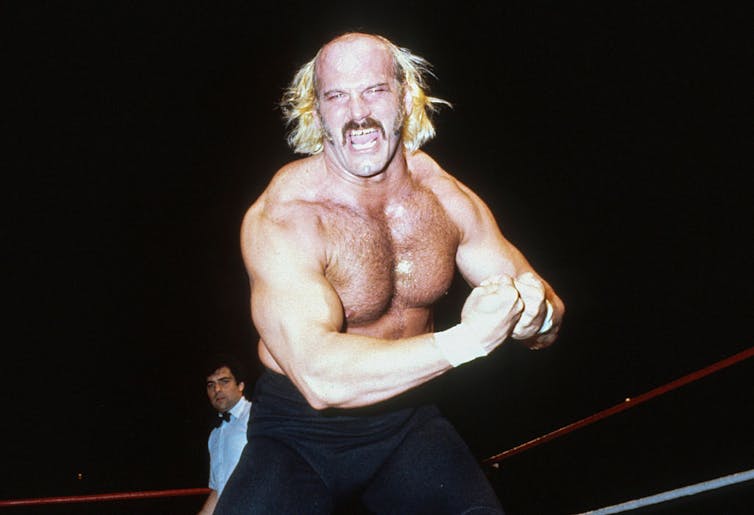
Balding man with huge muscles flexes and screams.
After Jesse ‘The Body’ Ventura tried to unionize his fellow wrestlers, WWE owner Vince McMahon caught wind of the effort – and nipped it in the bud. WWE/Getty Images
Ventura went on to sue the WWF over unpaid royalties. During the discovery process, Ventura testified that he had learned it was Hulk Hogan who snitched to McMahon and effectively sabotaged the union drive. Hogan never publicly admitted to telling McMahon about the rumblings of a union. The WWE has never confirmed nor denied the series of events. Either way, there have been no unionization campaigns in professional wrestling since then.

‘Do the job’

Today’s WWE performers are legally classified as “independent contractors.” They’re responsible for their own travel, training, costuming and insurance, even as their employer owns their likeness and is indemnified from liability due to injury or death. One of pro wrestling’s paradoxes is that the top promotion’s wrestlers aren’t unionized, even as its audience has historically skewed low income and blue collar. Wrestling has long been a family business, and most wrestlers are part-timers working additional jobs – often in blue-collar, union positions. Many of them are truck drivers and warehouse employees, construction workers and bouncers. Wrestler-turned-scholar Laurence de Garis has written about how the language of wrestling is rich with references to labor. A “work” in wrestling is a staged storyline; to “do the job” is to lose a match. The goal of many performers is to be considered a “good worker” by peers, and WWE performers wrestle as many as 300 nights per year. The company has no offseason. The steroid, painkiller and alcohol abuse that has been endemic to the industry may well stem from pressures on wrestlers to perform night after night, even if they’re in pain, for fear of losing their position. In the 1990s, Hogan himself confessed to extensive steroid use, which is known to contribute to heart disease. You’d think that these harsh working conditions would make wrestlers ripe for a union. Why that hasn’t happened is up for debate. WWE bought out its competition in the early 2000s; perhaps its status as the last remaining major wrestling promotion in the nation has weakened the leverage of wrestlers. Or maybe the testosterone-driven, masculine nature of the sport makes solidarity seem like weakness.

Workers left holding the bag

The story of Ventura’s failed unionization bid is a story of what could have been. But in some sense, I see the story of the WWE as part of a broader story of the U.S. economy. After a period of relative stability after World War II, American work since the 1980s has become dominated by mergers, buyouts, deregulation and financialization. Profits are increasingly generated by financial means such as interest and capital gains instead of through offering genuine goods or services. Layoffs and precarious work have become the norm. WWE’s profits exploded in the 1990s and 2000s. The company went public in 1999 – though the McMahon family retained majority control – and dipped its toes into film production, reality television and online streaming. In 2023, WWE merged with UFC’s parent company Endeavor to form TKO Group Holdings. TKO’s revenue was more than US$2.8 billion in 2024. Meanwhile, Endeavor has been spun off as a Hollywood talent agency and was acquired by a private equity firm. The fruits of these new revenue streams and mergers haven’t trickled down to its in-ring performers. So far in 2025, WWE has laid off or released more than 30 wrestlers and at least 10 employees from the company’s corporate wing.
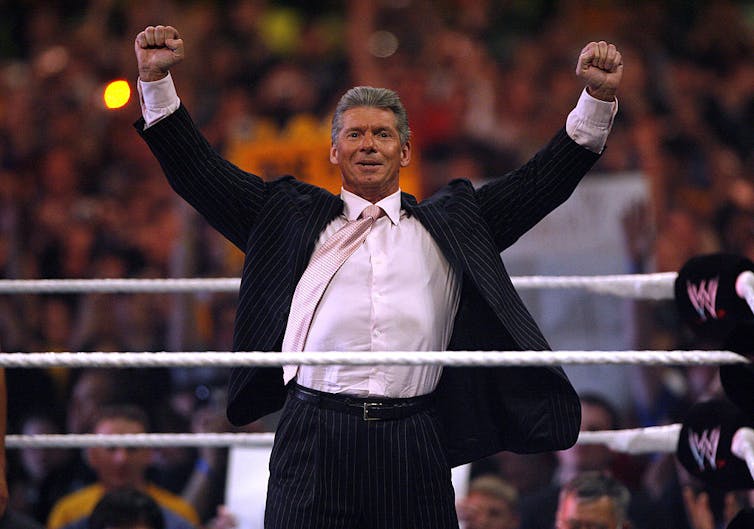
Middle-aged man with gray hair wearing a suit stands in a wrestling ring and raises both fists in celebration.
According to Forbes, Vince McMahon’s net worth is $3.1 billion. Leon Halip/WireImage via Getty Images
Much as professional wrestlers have remained independent contractors, this arrangement has become normalized in the broader American economy, with more than 36% of Americans participating in the gig economy. In 2022, Stanford researchers identified gig work as a “social determinant of health,” since most gig workers lack employer-sponsored health care, paid time off or sick days.

All for one and none for all

In today’s economy, luck or happenstance, rather than merit, seem more likely to influence who achieves financial security and who scrapes by, living paycheck to paycheck. Hulk Hogan, as professional wrestling’s biggest star for 20 years, certainly believed he earned his place at the top of the industry. But without diminishing his talents, it’s worth noting he arrived at precisely the correct moment in history to become that star. For many years, a wrestler was expected to have “shoot” skills – that is, actual wrestling expertise – should an opponent ever go rogue and turn a staged performance into a real fight. But as McMahon’s power and influence expanded, the look, the sound and the character of the wrestler became most important. How well could a wrestler perform for the camera? How well could he sell T-shirts to young fans? Despite Hogan’s limitations as a technical in-ring performer, his mullet, mustache and “24-inch pythons” – the nickname given to his enormous biceps – made him the right person at the right time. Hogan also succeeded because his opponents in the ring were willing to make him look like a star. They were able to “do the job” and do it safely. Another paradox of professional wrestling is that it requires performers to appear as if they are hurting one another. But their primary goal, in fact, is keeping one another safe. To me, that sounds a lot like solidarity. Brian Jansen, Assistant Professor of English and Media Studies, University of Maine This article is republished from The Conversation under a Creative Commons license. Read the original article.

Author


Discover more from Daily News

Subscribe to get the latest posts sent to your email.

Continue Reading

The Bridge

Bruce Springsteen’s ‘Born to Run’ still speaks to a nation vacillating between hope and despair

Published

on

Born to Run
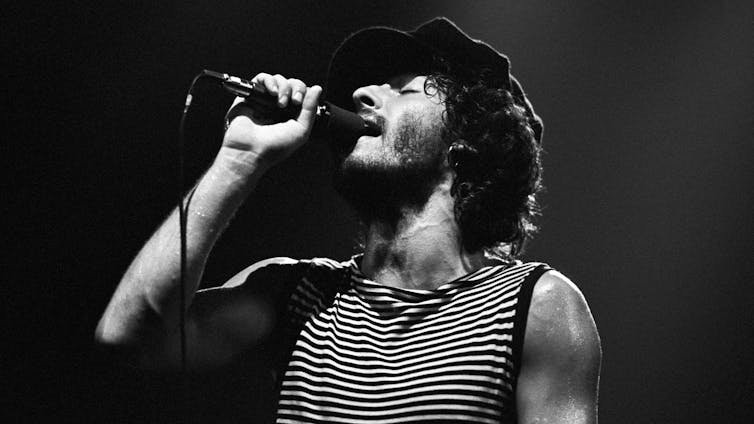
Bruce Springsteen performs in Atlanta on Aug. 22, 1975, during the ‘Born to Run’ tour. Tom Hill/WireImage via Getty Images

Bruce Springsteen’s ‘Born to Run’ still speaks to a nation vacillating between hope and despair

Louis P. Masur, Rutgers University I was 18 when Bruce Springsteen’s third album, “Born to Run,” was released 50 years ago, and it couldn’t have come at a better time. I’d just finished my freshman year in college, and I was lost. My high school girlfriend had broken up with me by letter. I had no idea what I wanted to do with my life. I was stuck back in my parents’ apartment in the Bronx. So when I dropped the record onto my Panasonic turntable and Springsteen sang, “So you’re scared and you’re thinking/That maybe we ain’t that young anymore” on the opening track, “Thunder Road,” I felt as if he were speaking directly to me. But no song moved me more than the album’s title track, “Born to Run.” How I longed for that sort of love – and how I also felt strangled by the “runaway American dream.” The song was about getting out, but also about searching for a companion. I, too, was a “scared and lonely rider” who craved arriving at a special place. Decades later, I combined the personal and the professional and wrote a book about the making and meaning of the album.

All eyes on the Boss

The album was shaped by the times, particularly the malaise of the post-Vietnam and post-Watergate American landscape. There was an energy crisis, and it wasn’t only oil that was in short supply. The excitement of the 1960s had passed, and rock ’n’ roll itself was in the doldrums. Elvis had become a Las Vegas lounge act; the Beatles had broken up; Bob Dylan had been a recluse since his motorcycle accident in 1966. The No. 1 hit in 1975 was “Love Will Keep Us Together,” by the Captain and Tennille. Obituaries to rock music appeared regularly. Springsteen went into the studio feeling the pressure to produce. His first two albums had received good reviews but sold poorly. After seeing a show in Cambridge, Massachusetts, in 1974, writer Jon Landau proclaimed Springsteen “the future of rock ’n’ roll.” Springsteen wore the label uneasily, though he had more than enough ambition to try and fulfill the prophecy: He later called “Born to Run,” “my shot at the title, a 24-year-old kid aiming at the greatest rock ’n’ roll record ever.” But in the studio, he struggled. It took him six months to record the title song. He kept rewriting the lyrics and experimenting with different sounds. He was composing epics: “Tenth Avenue Freeze Out,” “Backstreets,” “Jungleland.” And he was trying to tie it all together thematically as his characters searched for love and connection and endured disappointment and heartbreak. When Springsteen was finally done with the album, he hated it. He even threw a test pressing into a pool. But Landau, who had come on to co-produce, convinced him to release it.

Poetry for the masses

Despite Springsteen’s apprehension, the response to “Born to Run” was remarkable. Hundreds of thousands of copies flew off the shelves. Springsteen appeared on the covers of Newsweek and Time, where he was hailed as “Rock’s New Sensation.” Writing in Rolling Stone, critic Greil Marcus called it “a magnificent album that pays off on every bet ever placed on him.” There was backlash from some corners: critics who resented all the hype Springsteen had received and who thought the music bombastic. But most agreed with John Rockwell of The New York Times, who praised the album’s songs as “poetry that attains universality. … You owe it to yourself to buy this record.”

An operatic drama

The album pulsates between hope and despair. Side 1 carries listeners from the elation of “Thunder Road” to the heartbreak of “Backstreets,” and Side 2 repeats the trajectory, from the exhilaration of “Born to Run” to the anguish of “Jungleland.” I felt I knew the characters in these songs – Mary and Wendy, Terry and Eddie – and I identified with the narrator’s struggles and dreams. They all wrestled with feeling stuck. They longed for something bigger and more exciting. But what was the price to pay for taking the leap – whether for love or the open road? These lyrical, operatic songs about freedom and fate, triumph and tragedy, still resonate, even though today’s music is more likely to emphasize beats, samples and software than extended guitar and saxophone solos. Springsteen continues to tour, and fans young and old fill arenas and stadiums to hear him because rock ’n’ roll still has something to say, still makes you shout, still makes you feel alive. “It’s embarrassing to want so much, and to expect so much from music,” Springsteen said in 2005, “except sometimes it happens – the Sun Sessions, Highway 61, Sgt. Peppers, the Band, Robert Johnson, Exile on Main Street, Born to Run – whoops, I meant to leave that one out.” In fall 1975, I played “Born to Run” over and over in my dorm room. I’d stare at Eric Meola’s cover photograph of a smiling Springsteen in leather jacket and torn T-shirt, his guitar pointing out and upward as he gazes toward his companion. Who wouldn’t want to join Springsteen and his legendary saxophonist, Clarence Clemons, on their journey? That October, I went on a first date with a girl. We’ve been married 44 years, and the stirring declaration from “Born to Run” has proven true time and again: “love is wild, love is real.”
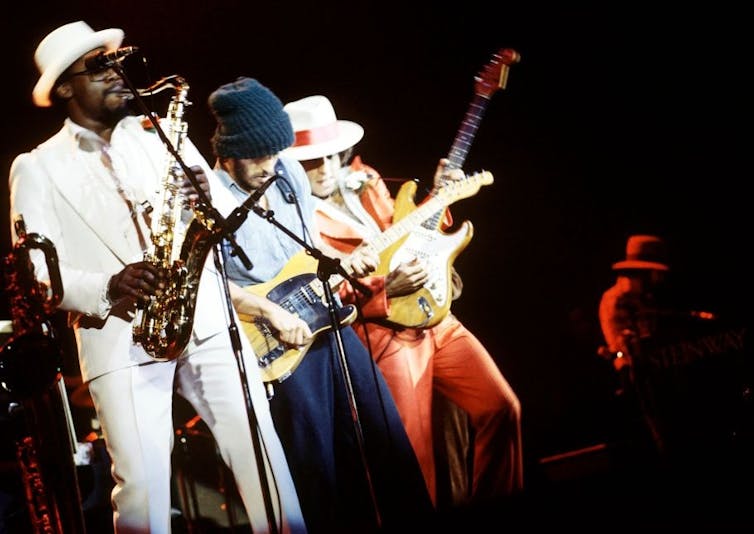
A saxophonist and two guitar players stand side-by-side as they perform on stage.
Saxophonist Clarence Clemons, Bruce Springsteen and guitarist Steven Van Zandt perform in the U.K. during the European leg of the ‘Born to Run’ tour. Andrew Putler/Redferns via Getty Images
Louis P. Masur, Distinguished Professor of American Studies and History, Rutgers University This article is republished from The Conversation under a Creative Commons license. Read the original article.
Discover more from Daily News

Subscribe to get the latest posts sent to your email.

Continue Reading

Trending