

Entertainment
‘Love Is Blind’ contestants count as employees − new US government agency finding could shake up reality TV production
Reality TV contestants lack employee rights, but the NLRB’s complaint may change their classification and pay protections.


David Arditi, University of Texas at Arlington
When members of a reality TV show’s cast sign a contract to participate in a show, they typically do so more for the exposure than the pay – and in many cases they do not earn a dime.
Employers get away with what may appear to be a violation of basic labor laws because those contestants are classified as independent contractors, not employees. In the eyes of the law, they do not have the same protections most workers get with just about any other kind of job, such as the freedom to join unions.
It also means that the National Labor Relations Board does not have jurisdiction over them. This may soon change after the government agency filed a complaint against Delirium TV and Kinetic Content, the producers of “Love Is Blind.”
The NLRB complaint states that reality TV contestants are employees and therefore have the right to join a union. Former “Love Is Blind” contestants Renee Poche and Nicholas Thompson had filed a petition requesting this action. In addition to not being able to join a union, they couldn’t even discuss the terms of their contracts due to nondisclosure agreements.
As a sociologist who studies popular culture and labor, I have argued for years that reality TV stars and musicians should be classified as employees.
Reality TV participants, including many of the stars of those shows, are essentially the unpaid interns of the entertainment industry, even though it’s their stories, personalities and talent that attract and hook viewers.
Offering contestants paltry pay
Today’s economy is saturated with precarious employment practices where many corporations classify workers as independent contractors. From musicians to influencers, people work gig jobs where there is no guarantee of pay or employment.
“Cupcake Wars,” “Love Is Blind” and other reality TV shows thrive thanks to a simple business model: They are cheap to produce. One reason for that is most participants are independent contractors who work for free or earn paltry pay under the guise of chasing their dreams or gaining exposure.
This arrangement might change after the new NLRB complaint. The NLRB was created during President Franklin D. Roosevelt’s New Deal as an independent government agency tasked with protecting and regulating workers’ rights.
One of its key responsibilities is regulating unions and determining workers’ right to strike. It determines who can join a union and whether a strike is legal.
Providing a gold mine for networks
To conduct research for my book “Getting Signed: Record Contracts, Musicians, and Power in Society,” I interviewed contestants on “The Voice.”
Former contestants repeatedly told me that the television exposure did little to help their careers.
Prior to joining the show, many of the musicians were trying to scratch out a living through touring or performing. They put their developing careers on pause to chase their dreams.
However, the show’s contracts have stipulated that contestants cannot perform, sell their name, image and likeness, or record new music while on “The Voice.”
Furthermore, viewers might not realize just how profitable these reality shows are.
Take “House Hunters.” The show follows a prospective homebuyer as they tour three homes. Homebuyers featured on the show have noted that they earn only US$500 for their work, and the episodes take three to five days and about 30 hours to film.
The show’s producers don’t pay the real estate agents to be on it.
The low pay for people on reality TV shows matches the low budget for these shows. A former participant wrote that episodes of “House Hunters” cost about $50,000 to shoot. Prime-time sitcoms, by comparison, have a budget of up to $3 million per episode.
Organizing unions within reality TV
That massive budget gap between reality TV and sitcoms is not simply due to an absence of star actors.
Many scripted television shows are based in Los Angeles, where camera crews, stunt doubles, costume artisans, makeup artists and hair stylists are unionized. But shows like “House Hunters,” which are filmed across the country, recruit crews from right-to-work states.
Employees in those places cannot be compelled to join a union or pay union dues as a condition of employment. For these reasons, unions have far less power in these states than they do in places traditionally associated with show business, such as California and New York.
I think reality TV might become the next show business labor battle. If the NLRB forces “Love Is Blind” to treat its stars and other on-screen participants as employees, it could cascade.
Reality TV production companies could someday be required to pay all contestants wages and limit the hours they work. The Screen Actors Guild-American Federation of Television and Radio Artists, the union known as SAG-AFTRA, could begin to recruit those workers as dues-paying members.
But it’s not certain that any of this will happen. There are many hearings, court cases and appeals in store before it becomes enforceable. And since President-elect Donald Trump will take office before the hearing is scheduled to occur, his appointees could change course.
Still, I think the NLRB’s action demonstrates that reality TV contestants are finally becoming recognized as workers who deserve to be treated better by their employers.
Some portions of this article first appeared in an article published on Sept. 21, 2023.
David Arditi, Professor of Sociology, University of Texas at Arlington
This article is republished from The Conversation under a Creative Commons license. Read the original article.

Entertainment
Lights, Camera, Snackers: How Aspiring Filmmakers Can Enter to Win $25,000
The director’s chair is open and the opportunity to create the next great snack-sized movie could be yours. Aspiring filmmakers and creators have the chance to turn a prewritten script into an original short film for a $25,000 prize.

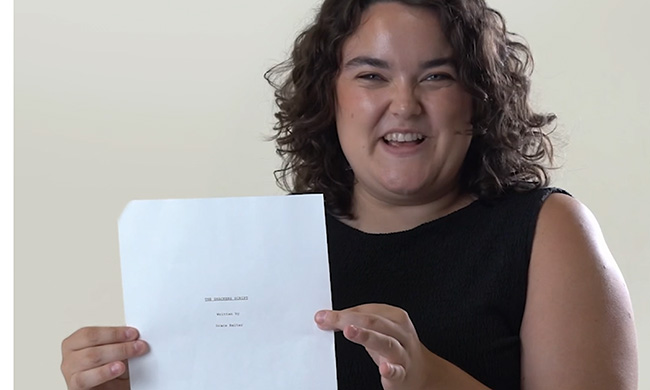
Lights, Camera, Snackers: How Aspiring Filmmakers Can Enter to Win $25,000
(Feature Impact) The director’s chair is open and the opportunity to create the next great snack-sized movie could be yours.
For the second year, Bumble Bee is bringing back its Tuna “Cans”Film Festival, giving aspiring filmmakers and creators the chance to turn a script written by comedian and actress, Grace Reiter, into an original short film starring its deliciously convenient tuna Snackers.
Watch the video to learn more!
“I love a chance to support those starting out in the film industry – and this time, I’m partnering with Bumble Bee for the Tuna Cans Film Festival to do it,” Reiter said. “Plus, I’m making it easy: I already wrote the script.”
Using Reiter’s scripted lines, creators can make the story entirely their own, bringing their vision to life through original characters, settings, music, editing and creative flair.
The creative brief is simple: The finished film must be 60 seconds or less and Bumble Bee Snackers™ need to get their moment in the spotlight.
Plus, the stakes are bigger than ever: The winning filmmaker will take home a $25,000 grand prize to help make their filmmaking dreams a reality.
Creators can submit their original short film by Oct. 23, 2026, at 11:59 p.m. PT.
The film can be funny, dramatic, unexpected or all three. The lines are already written but the order, arrangement and any additions are open to creative interpretation. Now it’s time to see what you can do with it.
Visit tunacansfilmfest.com, where you can find Reiter’s original script, submission instructions and complete contest details, to get started.
SOURCE:
Bumble Bee

Last Updated on October 9, 2026 by Daily News Staff
From haunted mazes after dark to daytime trick-or-treating with Snoopy, Knott’s offers two ways to celebrate Halloween in 2026.
BUENA PARK, Calif. — Halloween season is underway at Knott’s Berry Farm, where visitors can choose between the nighttime frights of Knott’s Scary Farm and the playful daytime activities of Knott’s Spooky Farm.
For readers planning a Southern California outing this October, the two celebrations offer different ways to get into the Halloween spirit.
Scary Farm brings new nightmares after dark
Knott’s Scary Farm runs on select nights through October 31, 2026, transforming the park with haunted mazes, scare zones, shows, and more than 1,000 creatures, according to Knott’s.
Two new mazes join this year’s lineup. Inked turns a cartoonist’s creations into a nightmare, while Unearthed sends visitors into an excavation where an ancient evil has awakened.
Also new for 2026 is Color Collect, an activity in which guests use an interactive lantern to activate pillars around the park and collect six colors.
Scary Farm requires its own paid event admission. As of October 4, online single-night tickets are advertised from $65, with taxes potentially additional. Knott’s does not recommend the event for children under 13.
Spooky Farm offers daytime Halloween fun
For families seeking a gentler celebration, Knott’s Spooky Farm takes place Thursdays through Sundays, September 24–October 31, plus October 12, according to the park’s events calendar, which lists the additional date as Columbus Day.
Children can trick-or-treat through Ghost Town, enjoy games and spooky stories with Snoopy and the Peanuts characters, and show off their Halloween outfits at Snoopy’s Spooktacular Costume Party.
Other activities include the Creepy Critters of Calico, cookie decorating in the pumpkin patch, and performances by the Bob Baker Marionette Theater. Cookie decorating carries an additional fee.
The daytime celebration gives families a chance to enjoy Halloween decorations, treats, and entertainment together before the nighttime haunt begins.
Planning your visit
Knott’s Berry Farm is located at 8039 Beach Boulevard in Buena Park, California. Before heading out, check the park’s official calendar for your chosen date, operating hours, admission options, and event policies.
Whether your Halloween plans call for a bag of candy or a trip through a haunted maze, Knott’s has a seasonal celebration to match.
Keep the fun going: Visit STM Daily News for more entertainment news, theme park updates, and stories worth sharing.
Official sources
- Knott’s Scary Farm: attractions and tickets
- Knott’s Spooky Farm: activities and entertainment
- Knott’s Berry Farm: seasonal event dates
Information checked October 4, 2026. Event schedules, offerings, and ticket prices may change.


The next round of Street Fighter is heading to the big screen. Paramount Pictures and Legendary Pictures will release the new live-action movie exclusively in theaters on October 16, 2026, bringing Capcom’s video game characters into a story built around rivalries, a dangerous tournament, and a conspiracy lurking behind the competition.
Directed by Kitao Sakurai, the film features Andrew Koji as Ryu, Noah Centineo as Ken Masters, and Callina Liang as Chun-Li, alongside an ensemble that includes Jason Momoa, Curtis “50 Cent” Jackson, and wrestling stars Roman Reigns and Cody Rhodes.
Ryu and Ken Face a Fight Beyond the Arena
Set in 1993, the movie finds Ryu and Ken estranged when Chun-Li draws them back into combat for the next World Warrior Tournament. What initially looks like a chance to test their fighting skills becomes something much more dangerous.
According to the studio’s synopsis, a deadly conspiracy puts the two fighters on a collision course, forcing them to confront both each other and unresolved struggles from their past. That setup gives the film a personal conflict to explore alongside its tournament action.
For viewers who remember gathering around an arcade cabinet, the 1993 setting offers a nostalgic hook. The studio is also promising familiar signature moves, including Hadoukens and roundhouse kicks, as the game’s combat makes the jump to live action.
A Cast Packed With Familiar Fighters
Beyond its central trio, the announced lineup brings together actors, comedians, musicians, wrestlers, and martial artists. Among the character pairings:
- Joe “Roman Reigns” Anoai as Akuma
- David Dastmalchian as M. Bison
- Cody Rhodes as Guile
- Vidyut Jammwal as Dhalsim
- Orville Peck as Vega
- Olivier Richters as Zangief
- Hirooki Goto as E. Honda
- Mel Jarnson as Cammy
- Curtis “50 Cent” Jackson as Balrog
- Jason Momoa as Blanka
The cast also includes Andrew Schulz as Dan Hibiki, Eric André as Don Sauvage, Rayna Vallandingham as Juli, Kyle Mooney as Marvin, and Alexander Volkanovski as Joe.
With so many characters sharing the screen, one question will be how the movie balances the wider roster with Ryu and Ken’s central story. The announced cast gives longtime fans plenty of familiar names to watch for.
Who Is Behind the Movie?
Paramount Pictures and Legendary Pictures present Street Fighter in association with Capcom. The Legendary Pictures production is based on the Capcom video game, with a story by Dalan Musson and Gary Dauberman and a screenplay by T.J. Fixman and Kitao Sakurai.
Producers include Mary Parent, Cale Boyter, Jason Momoa, Takayuki Nakayama, and Stefan Makhoul. The supplied production announcement notes that credits are subject to change.
Release Date and Rating
Street Fighter opens only in theaters October 16, 2026. The film is rated PG-13 for violence/action, bloody images, strong language, sexual references, partial nudity, and brief smoking, according to the supplied studio announcement.
Fans can visit Paramount’s official Street Fighter page for the trailer and film information, and follow #StreetFighterMovie for promotional updates.
Which fighter are you most excited to see in live action? Share your pick in the comments, and visit STM Daily News for more Entertainment coverage and newsletter updates.
Source: Supplied Paramount Pictures/Legendary Pictures production announcement; release date, synopsis, and selected credits checked against Paramount’s official film page. This article is a preview, not a review.





