

News
Ready for Liftoff: Boeing’s Starliner Spacecraft Prepares to Soar
Boeing’s Starliner spacecraft overcomes safety hurdles for May launch to the ISS, marking their first crewed trip. Exciting times ahead! 🚀✨ #SpaceExploration #StarlinerLaunch


After encountering numerous delays and setbacks, Boeing’s CST-100 Starliner spacecraft is finally on the brink of liftoff, targeting a launch date in May. The journey to this point has been filled with challenges for Boeing’s crew vehicle, with the most recent obstacles relating to two major safety concerns. However, during a press briefing, representatives from the company expressed confidence in the resolved issues, particularly regarding the parachutes and protective tape. Let’s delve into the remarkable journey of the Starliner as it prepares to carry NASA astronauts to the International Space Station (ISS).
Throughout its development, Boeing’s Starliner faced a series of unfortunate delays. Notably, the most recent delay was due to the discovery of two significant safety hazards on the spacecraft. The first concern involved the load capacity of the parachutes, which are crucial for the safe landing of the crew vehicle. Extensive investigation revealed that the failure load limit of the fabric sections on the parachutes was lower than expected, necessitating rectification to ensure redundancy and safety. The second concern centered around flammable protective tape used to cover wiring harnesses within the Starliner. To mitigate this risk, Boeing carefully removed the tape and implemented necessary barriers or found areas where the tape posed no threat.
Boeing’s priority has always been the safety and reliability of their crew vehicle. In response to the safety concerns, Boeing developed a new parachute system that meets NASA’s meticulous safety standards. The achievement of closing the necessary paperwork for these modifications reaffirms their dedication to providing a secure mode of transportation for astronauts. Mark Nappi, vice president and program manager of Boeing’s Commercial Crew Program, expressed readiness and confidence during the press briefing, highlighting the extensive efforts made to eliminate risks.
The upcoming launch of the Starliner spacecraft to the ISS will mark Boeing’s first crewed mission. This historic flight follows the anomaly encountered during an uncrewed test flight in May 2022 when a thruster used for orbital maneuvering unexpectedly failed. The Starliner’s inaugural uncrewed test in 2019 also faced challenges, resulting in further tests and troubleshooting to ensure the spacecraft’s reliability and performance.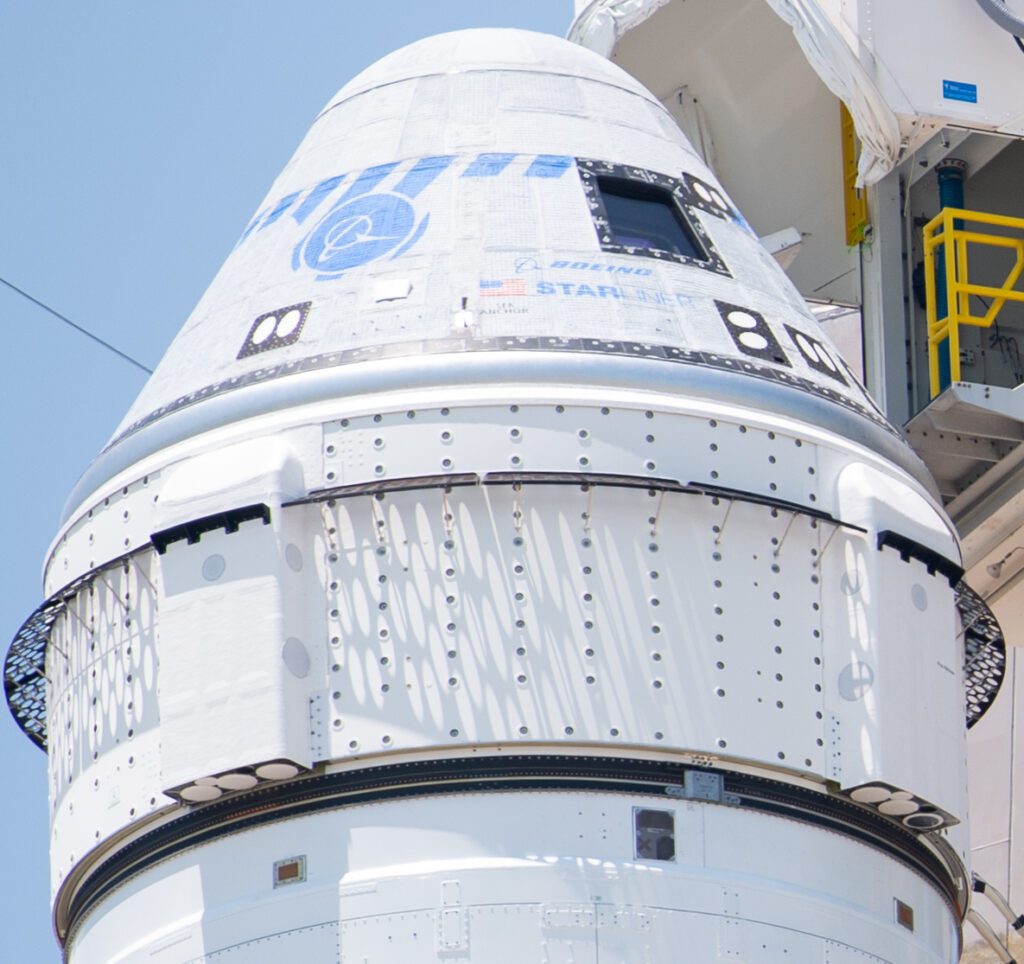
Boeing’s successful Starliner mission to the ISS will establish them as NASA’s concurrent commercial partner, joining SpaceX in providing transportation to and from the International Space Station. NASA has been primarily relying on SpaceX for crewed trips, reducing dependence on Russia’s Soyuz crew ship. This diversification of transportation options increases redundancy, safety, and autonomy for NASA. While Russia’s recent launch abort highlighted the ongoing importance of multiple commercial partners, Boeing’s readiness and ability to fulfill its role in this context positions NASA to rely on both companies for future orbital trips.
As the Starliner’s launch date approaches, the anticipation around this long-awaited mission grows. Boeing’s dedication to safety and addressing the challenges they encountered paves the way for future advancements in crewed space missions. With the commercial space industry evolving rapidly, NASA’s collaboration with multiple partners ensures reliability, innovation, and continuous progress towards exploring the mysteries of space. The imminent liftoff of the Starliner spacecraft signifies a significant milestone for Boeing, NASA, and the future of human space exploration.
What is the Starliner spacecraft?
The first of two operational Boeing CST-100 Starliner spacecraft, known as Boeing Starliner Spacecraft 2, was developed and constructed as part of NASA’s Commercial Crew Program. Initially planned for its inaugural flight during Boe-CFT, the first crewed test flight of the Starliner spacecraft, it was later rescheduled to perform the Boe-OFT-2 mission due to the partial failure of another CST-100 in Boe-OFT. Additionally, the spacecraft was reassigned to fly Starliner-1 after being originally assigned to the CFT mission.
https://en.wikipedia.org/wiki/Boeing_Starliner_Spacecraft_2
https://gizmodo.com/boeing-starliner-astronaut-flight-flammable-tape-nasa-1851359764
https://stmdailynews.com/category/science/
Author


Last Updated on April 1, 2026 by Daily News Staff
🔴 LIVE UPDATE: Artemis II has successfully launched and is now in orbit.
Last updated: April 1, 2026 – [5:10pm PST]
Artemis II Successfully Launches
CAPE CANAVERAL, Fla. — NASA has successfully launched its Artemis II mission, marking the first crewed journey toward the Moon in more than 50 years.
The powerful Space Launch System (SLS) rocket lifted off from Kennedy Space Center on April 1, carrying four astronauts on a 10-day mission around the Moon and back.
On board are Commander Reid Wiseman, Pilot Victor Glover, Mission Specialist Christina Koch, and Canadian astronaut Jeremy Hansen. The mission is already being hailed as a major milestone in NASA’s effort to return humans to deep space.
Shortly after liftoff, the Orion spacecraft successfully reached orbit and deployed its solar arrays, beginning its journey that will eventually send the crew on a translunar trajectory toward the Moon. 
Artemis II is a lunar flyby mission, meaning astronauts will not land but will travel farther from Earth than any human mission in decades while testing critical systems needed for future landings.
The mission also marks several historic firsts, including the first woman and the first person of color—Victor Glover—to travel into lunar space.
NASA says the mission is a key step toward future lunar landings and long-term plans to establish a human presence on the Moon later this decade.
🚀 What’s Next:
A critical engine burn in the coming days will send Orion out of Earth orbit and toward the Moon, continuing humanity’s return to deep space exploration.
🔗 Related External Links & Sources
For official updates and in-depth mission details, visit the following trusted sources:
- NASA: Artemis II Mission Overview
- NASA Artemis Program (Return to the Moon)
- Orion Spacecraft – Mission Details
- Space Launch System (SLS) Rocket Overview
- Kennedy Space Center – Launch Operations
- Watch NASA Live Coverage and Replays
🧾 Sources
- NASA official launch coverage and mission updates
- NASA Artemis II press materials and briefings
- NASA Kennedy Space Center launch operations updates
Stay with STM Daily News for live updates on Artemis II.
Last Updated on April 1, 2026 by Daily News Staff
Published: April 1, 2026 | By: STM Daily News
Source: NASA/John Kraus
Artemis II countdown is underway
CAPE CANAVERAL, Fla. — The countdown has officially begun for Artemis II, NASA’s highly anticipated return to crewed lunar missions, marking a historic step toward sending humans back to the Moon for the first time in more than 50 years.
At precisely 4:44 p.m. EDT, the countdown clock started ticking at Kennedy Space Center, targeting a 6:24 p.m. launch on Wednesday, April 1. The mission will be the first crewed flight of NASA’s powerful Space Launch System (SLS) rocket and Orion spacecraft. The Artemis II mission marks NASA’s first crewed journey toward the Moon since the Apollo era, using the powerful Space Launch System (SLS) rocket and Orion spacecraft.
The mission is part of NASA’s broader Artemis program, which aims to return humans to the Moon and establish a sustainable presence for future Mars exploration.
Launch operations are being conducted at Kennedy Space Center in Florida, the historic site of previous Apollo and Space Shuttle missions.
🚀 Final Preparations Underway
Inside the Rocco Petrone Launch Control Center, engineers and launch teams are actively powering up flight systems, verifying communications, and preparing for one of the most complex fueling operations ever attempted.
The rocket will be loaded with hundreds of thousands of gallons of super-cooled liquid hydrogen and liquid oxygen, a delicate process requiring precise timing and coordination.
Meanwhile, at Launch Complex 39B, crews are filling the sound suppression system—a massive water tank designed to release a high-volume deluge at liftoff, protecting the rocket from extreme acoustic energy generated during launch.
Source: NASA / Bill Ingalls
👨🚀 Crew in Quarantine Ahead of Launch
The four-person crew remains in quarantine at the Neil A. Armstrong Operations and Checkout Building, undergoing final medical checks and mission briefings.
- Reid Wiseman – Commander
- Victor Glover – Pilot
- Christina Koch – Mission Specialist
- Jeremy Hansen – Mission Specialist (Canadian Space Agency)
Glover, a Southern California native and Ontario High School graduate, is set to make history as the first Black astronaut to travel to lunar space—bringing a powerful local connection to this global mission.
The crew is following a controlled sleep and nutrition schedule while receiving continuous updates on launch conditions and spacecraft readiness.
🌤️ Weather Conditions 80% Favorable
NASA and U.S. Space Force weather teams are closely monitoring conditions ahead of fueling operations. Current forecasts show an 80% chance of favorable weather, with concerns focused on potential cloud cover and high winds.
Weather will continue to be evaluated as the countdown progresses.
📺 How to Watch the Launch Live
NASA will provide live coverage throughout launch day:
- 7:45 a.m. EDT – Tanking operations coverage begins (NASA YouTube)
- 12:50 p.m. EDT – Full launch coverage begins on NASA+
Viewers can also follow along via NASA’s official social media platforms for real-time updates.
🚀 Artemis II Mission Snapshot
- Mission: Artemis II
- Agency: NASA
- Launch Vehicle: Space Launch System (SLS)
- Spacecraft: Orion
- Launch Site: Kennedy Space Center (LC-39B)
- Mission Duration: ~10 days
- Objective: Crewed lunar flyby (no landing)
- Commander: Reid Wiseman
- Pilot: Victor Glover
- Mission Specialists: Christina Koch, Jeremy Hansen
🌕 A Mission Decades in the Making
Artemis II will send astronauts on a 10-day journey around the Moon and back, serving as a critical test flight for future lunar landings under NASA’s Artemis program.
The mission is designed to validate deep space navigation, life support systems, and spacecraft performance—laying the groundwork for Artemis III, which aims to return humans to the lunar surface.
As the countdown continues, all eyes are now on Florida’s Space Coast for what could become one of the most significant spaceflight milestones of the 21st century.
🧾 Sources & References
- NASA – Artemis II Mission Updates and Press Materials
- NASA Kennedy Space Center Launch Operations Briefings
- NASA Artemis Program Overview
- Official NASA Broadcast and Launch Coverage
For more details on NASA’s Artemis II mission and live launch coverage, explore the official resources below:
🔗 Related External Links & Sources
- NASA: Artemis II Mission Overview
- NASA Artemis Program Explained
- Kennedy Space Center Official Site
- Orion Spacecraft Details
- Space Launch System (SLS) Rocket Overview
- Watch Artemis II Live on NASA YouTube
❓ Frequently Asked Questions
What is Artemis II?
Artemis II is NASA’s first crewed mission in its Artemis program, sending astronauts on a flight around the Moon to test systems for future lunar landings.
When is the Artemis II launch?
The mission is targeting a launch on April 1, 2026, from Kennedy Space Center in Florida.
Will Artemis II land on the Moon?
No, Artemis II is a lunar flyby mission designed to test spacecraft systems before a future landing mission.
Who is Victor Glover?
Victor Glover is a NASA astronaut and Artemis II pilot who will become the first Black astronaut to travel to lunar space.
Stay with STM Daily News for continuing coverage of Artemis II and NASA’s return to the Moon.
Stay ahead of the curve with STM Daily News’ Tech section, featuring the latest on innovation, consumer technology, digital trends, startups, AI, and the stories shaping how we live and work.
Travel Advisory
Traveling to Mexico this spring? Here’s what to know about current advisories
Traveling to Mexico this spring? Visitors should be aware of state-specific travel advisories, as safety concerns in one region do not affect major resort areas like Cancun and Los Cabos, currently rated Level 2, which encourages increased caution. Monitoring official updates is essential for informed travel decisions amidst evolving conditions.

Last Updated on March 30, 2026 by Daily News Staff
Traveling to Mexico this spring? Here’s what to know about current advisories
(Tiffany Miller for ALG Vacations) For some travelers counting down to spring break, recent headlines about violence in parts of Mexico have sparked a new question: Should I cancel my trip? Travel advisors say they are seeing a surge in calls and emails from clients trying to determine whether developments in one region affect major resort areas elsewhere.
The questions follow several days of unrest in parts of Mexico after security operations targeting organized crime leaders prompted temporary flight disruptions and shelter-in-place guidance for U.S. government personnel in areas including Puerto Vallarta and Guadalajara. In this article, ALG Vacations explains what current travel advisories mean for spring break travelers heading to Mexico.
The U.S. State Department evaluates Mexico state by state, not as a single destination, and advisory levels vary by region. Many major beach destinations, including Cancun, Riviera Maya, Tulum and Los Cabos, are currently under a Level 2 advisory, which encourages travelers to exercise increased caution. It does not discourage travel.
Part of the confusion stems from geography. Puerto Vallarta, on the Pacific coast, is roughly 1,300 miles from Cancun and the Riviera Maya on the Caribbean side, about the distance between New York and Miami. Because advisories are assigned state by state, developments in one region do not automatically alter another.
In recent days, that uncertainty has translated into additional inquiries about whether specific resort areas are experiencing disruptions. U.S. Embassy security alerts issued this week indicate that temporary shelter-in-place guidance affecting Puerto Vallarta was lifted and that flight operations resumed. The advisory level for the Mexican state of Quintana Roo remains unchanged.
Some clients are asking about alternatives, advisors say, but many are continuing with their plans after reviewing official updates. Travel patterns often shift in response to breaking headlines, they add, before stabilizing as clearer information becomes available.
The State Department assigns travel advisories on a four-tier scale ranging from Level 1, exercise normal precautions, to Level 4, do not travel. While Level 2 encourages increased awareness, Level 3 and Level 4 carry stronger language discouraging or restricting travel.
Advisories are reviewed regularly and can be updated as conditions evolve. The State Department’s Mexico advisory page breaks down conditions by state, reflecting the country’s federal structure rather than issuing a single national designation. Travelers can also enroll in the State Department’s Smart Traveler Enrollment Program, which provides real-time security updates and allows U.S. officials to contact citizens in an emergency.
Embassy notices state that airports, hotels and tourism services in Quintana Roo are operating normally. Security conditions across Mexico vary widely by state, with some regions carrying higher advisories and others designated Level 1. Most destinations popular with U.S. travelers are currently classified as Level 2.
As spring break approaches, advisors say informed decision-making depends on reviewing the advisories assigned to a specific destination and monitoring official updates, rather than reacting to national headlines alone. Travel decisions ultimately depend on individual comfort levels, they add, but advisory levels are assigned regionally and should be evaluated accordingly.
Photo courtesy of Shutterstock

SOURCE:
Welcome to the Consumer Corner section of STM Daily News, your ultimate destination for savvy shopping and informed decision-making! Dive into a treasure trove of insights and reviews covering everything from the hottest toys that spark joy in your little ones to the latest electronic gadgets that simplify your life. Explore our comprehensive guides on stylish home furnishings, discover smart tips for buying a home or enhancing your living space with creative improvement ideas, and get the lowdown on the best cars through our detailed auto reviews. Whether you’re making a major purchase or simply seeking inspiration, the Consumer Corner is here to empower you every step of the way—unlock the keys to becoming a smarter consumer today!





