Twice-weekly flights operate on Thursday and Sunday; Nonstop to Las Vegas, with BreezeThru service to Hartford
SAN BERNARDINO, CA /24-7PressRelease/ — San Bernardino International Airport (SBD) now offers coast-to-coast service with Breeze Airways’ launch today of nonstop flights to Las Vegas Harry Reid International Airport (LAS), with BreezeThru service to Bradley International Airport (BDL) in Hartford, CT. Roundtrip flights on new Airbus A-220-300 aircraft seating 137 passengers—with three seat configurations sold in fare bundles called Nice, Nicer, and Nicest class—are now available each Thursday and Sunday. Book seats starting as low as $29 one way at FlySBD.com/LasVegas or flyBreeze.com.
San Bernardino International Airport (SBD) now offers coast-to-coast service with Breeze Airways’ launch today of nonstop flights to Las Vegas, NV with BreezeThru service to Hartford, CT.
Today’s launch event, headlined by Breeze Airways’ founder and CEO David Neeleman, celebrated the airline’s exciting new service connecting Inland Empire residents to Las Vegas and the East Coast through their hometown airport. LAS and BDL flights are in addition to existing nonstop service from SBD to San Francisco International Airport (SFO) with BreezeThru service to Provo Airport (PVU) in Utah, which began in August 2022.
“New flights to Las Vegas and Hartford, Connecticut, have generated a lot of excitement in the Inland Empire, and we are grateful to Breeze Airways for delivering this in-demand service to our community,” said Frank J. Navarro, SBD’s Commission President and Mayor of the City of Colton. “We are pleased to continue our successful partnership with Breeze Airways and to be a partner in their Southern California regional growth strategy.”
“Today is an exciting expansion from San Bernardino, as we add nonstop service to Las Vegas to our existing SFO nonstops,” said Neeleman. “With our BreezeThru service to both Provo, Utah and Hartford, Connecticut, we are making it cheaper and more convenient for Inland Empire residents to get where they want to go.”
In addition to Neeleman, the celebration featured Vegas-style show performers and airline and airport personnel welcoming passengers in the airport’s domestic terminal with balloons, cookies, prizes, and fun.
Travelers on arriving Flight 526 were welcomed with a water cannon salute by San Bernardino County Firefighters and received SBD-themed gift bags, while departing passengers received Las Vegas–themed gift bags. Boarding gate festivities also included event-themed sweet treats and the Vegas performers meeting, greeting, and taking photos with passengers.
Neeleman, Mayor Navarro and SBD CEO Michael Burrows shared remarks to commemorate the first departing flight to Las Vegas.
“Breeze Airways’ service at San Bernardino International Airport has been an incredible success story, with approximately 25,000 passengers served since the launch of service in August 2022,” said Burrows. “The SBD team thanks our residents and business owners for supporting Breeze service and we applaud them for recognizing the time and money saved by flying from their local airport.”
Passengers and crew on the inaugural departing Flight 527 received a hearty send off. Airline and airport staff, journalists, and Vegas performers waved from the terminal ramp and airport firefighters saluted the taxiing aircraft with a water cannon.
The San Bernardino–Las Vegas flight details follow: Flight Number City Pair Departs Arrives MX 526 LAS-SBD 10:55 a.m. 11:55 a.m. MX 527* SBD-LAS 12:30 p.m. 1:30 p.m.
Flights operate on Thursday and Sunday. All times are local. SBD-LAS flight time is 1 hour.
Advertisement
*BreezeThru service to BDL departs LAS at 2:05 p.m., arriving at 9:59 p.m. Flight time is just under 5 hours. “San Bernardino International Airport and Breeze Airways have become household names in our region, offering affordable and convenient service they can count on for their leisure and business travel needs,” said Director of Aviation Mark Gibbs. “With on-airport parking located directly across from the terminal at only $5.00 per day and the ability to pre-pay and confirm space, our customers are finding just how easy it is to travel from the Inland Empire.”
Founded by aviation entrepreneur and JetBlue founder David Neeleman in 2021, Breeze Airways focuses on connecting travelers in underserved cities with air service to the U.S. destinations they want to visit most, through efficient and affordable flights.
For more information about San Bernardino International Airport, and Breeze Airways’ flight destinations and schedules, visit FlySBD.com.
About Breeze Airways Breeze Airways began service in May 2021. One year later, it was ranked as the No. 2 U.S. best domestic airline of 2021 by Travel + Leisure World’s Best Awards. Breeze now offers 121 nonstop routes between 35 cities in 20 states. Founded by aviation entrepreneur David Neeleman, Breeze operates a fleet of Embraer 190/195 and Airbus A220-300 aircraft, with a focus on providing efficient and affordable flights between secondary airports, bypassing hubs for shorter travel times. With seamless booking, no change or cancellation fees, up to 24-months of reusable flight credit and customized flight features – including complimentary family seating – delivered via a sleek and simple app, Breeze makes it easy to buy and easy to fly. Flights are on sale at flyBreeze.com and via the Breeze app.
About San Bernardino International Airport (SBD) Located approximately 60 miles east of Los Angeles and within 30 minutes of more than two million people, the former Norton Air Force Base was converted to civilian use in 1992 and later became certified as a commercial-service airport by the FAA. Scheduled passenger service began in August 2022, with Breeze Airways’ nonstop flights to San Francisco International Airport (SFO) and one-stop, same-plane service to Provo, Utah (PVU). Expanded and coast-to-coast flights on Breeze Airways to Las Vegas Harry Reid International Airport (LAS) and one-stop, same-plane service to Bradley International Airport (BDL) in Hartford, Connecticut, started February 16, 2023. The airport also offers a full range of services and facilities to support additional domestic and international passenger airline service, air cargo operations, general aviation, and maintenance repair and overhaul (MRO) businesses. The domestic passenger terminal is located at 105 N. Leland Norton Way, San Bernardino, CA, off the I-10 and I-210 freeways. On-airport parking is only $5.00 per day. For more information, please visit FlySBD.com.
The Dodger Gondola Project: A High-Flying Transit Idea Facing Heavy Headwinds
The Dodger Gondola Project, a proposed aerial transit line between Union Station and Dodger Stadium, faces major political, legal, and community opposition in 2025. Here’s where the controversial project stands now.
Imagine credit: Aerial Rapid Transit Technologies/ LA Metro
Dodger Gondola Project Faces Major Setbacks as L.A. Leaders and Residents Push Back
For years, the Los Angeles Aerial Rapid Transit (LA ART) — better known as the Dodger Gondola Project — has been pitched as a bold, futuristic connection between Union Station and Dodger Stadium, whisking riders above traffic in a six-minute aerial trip. Supporters call it L.A.’s chance to build a cleaner, faster, iconic transit link. But as 2025 winds toward its close, the project faces more turbulence than ever.
A Quick Refresher: What the Gondola Would Be
The proposed gondola line would travel about 1.2 miles, with stations at Union Station, a stop near L.A. State Historic Park, and Dodger Stadium. Private backers connected to former Dodgers owner Frank McCourt have promoted it as a zero-emission way to move more than 5,000 passengers per hour on game days — and potentially daily for tourists, residents, and park visitors.
Why the Dream Is Stalling
In November 2025, the Los Angeles City Council voted 12–1 to formally oppose the project, urging Metro to abandon it. While the vote isn’t legally binding, it signaled a major political shift. Councilmember Eunisses Hernandez, who introduced the resolution, cited environmental and community concerns — especially the impact on Chinatown, Solano Canyon, and L.A. State Historic Park.
A California Court of Appeals ruling earlier in the year also struck down Metro’s original environmental review, forcing a supplemental EIR that reopened debates about tree removal, tower placement, noise, and neighborhood impacts. The city has additionally ordered a comprehensive traffic study, pausing key permits until it’s complete.
Communities Speak Out
Local opposition has been strong and well-organized. Residents warn the gondola would remove mature trees, alter the character of the State Historic Park, and intrude over communities that have already shouldered decades of infrastructure burdens. Advocacy groups say the project favors private interests over public need, pointing to the lack of a clear long-term funding or maintenance plan.
Not Dead — But Deeply Uncertain
Despite mounting challenges, the gondola isn’t entirely grounded. Metro is still reviewing public comments on the supplemental environmental report, and state lawmakers are debating legislation that could streamline some project requirements. Whether those efforts succeed — or whether political pressure ultimately stalls the gondola indefinitely — remains to be seen.
Advertisement
The Big Picture
The Dodger Gondola Project sits at the intersection of transit innovation, environmental justice, and the future of Los Angeles mobility. For supporters, it represents a chance to modernize travel to one of the nation’s most visited stadiums. For opponents, it’s an unnecessary experiment that risks community space and public resources.
Either way, the next year will be pivotal — and L.A.’s debate over the gondola is far from over.
Sources and links for further information
Associated Press: “Los Angeles officials seek to halt proposed Dodger Stadium gondola” — apnews.com
Los Angeles Times: “Los Angeles City Council votes 12-1 to urge Metro to halt Dodgers gondola project” — latimes.com
NBC Los Angeles: “Dodger Stadium gondola should be a no-go, LA City Council says” — nbclosangeles.com
PR Newswire (project press release): “LA ART Gondola Project Takes Next Step Forward … with Release of Draft Supplemental Environmental Report” — prnewswire.com
LAist: “Controversial Dodger Stadium gondola project gets new environmental report. Here’s how you can weigh in” — laist.com
Official Metro page: “Los Angeles Aerial Rapid Transit (LA ART)” — metro.net
Site for public comment: “Stop The Gondola – Public Comment” — stopthegondola.org
CEQA Notice of Availability: “Draft Supplemental Environmental Impact Report – LA ART Project” — ceqanet.lci.ca.gov
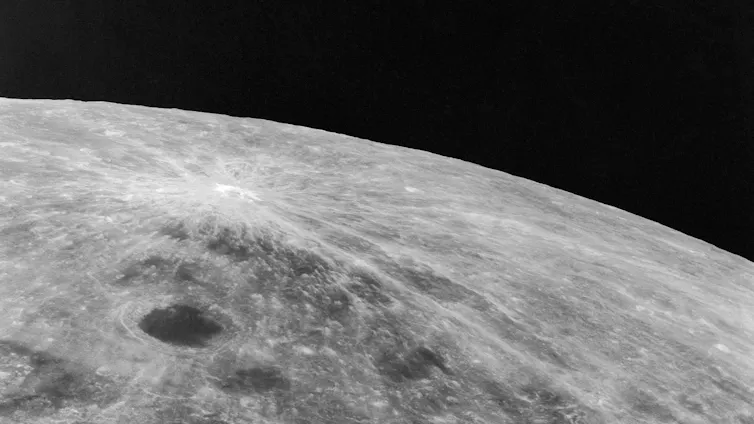
Several missions have already attempted to land on the lunar surface in 2025, with more to come. AP Photo
NASA wants to put a nuclear reactor on the Moon by 2030 – choosing where is tricky
Clive Neal, University of Notre Dame In a bold, strategic move for the U.S., acting NASA Administrator Sean Duffy announced plans on Aug. 5, 2025, to build a nuclear fission reactor for deployment on the lunar surface in 2030. Doing so would allow the United States to gain a foothold on the Moon by the time China plans to land the first taikonaut, what China calls its astronauts, there by 2030. Apart from the geopolitical importance, there are other reasons why this move is critically important. A source of nuclear energy will be necessary for visiting Mars, because solar energy is weaker there. It could also help establish a lunar base and potentially even a permanent human presence on the Moon, as it delivers consistent power through the cold lunar night. As humans travel out into the solar system, learning to use the local resources is critical for sustaining life off Earth, starting at the nearby Moon. NASA plans to prioritize the fission reactor as power necessary to extract and refine lunar resources. As a geologist who studies human space exploration, I’ve been mulling over two questions since Duffy’s announcement. First, where is the best place to put an initial nuclear reactor on the Moon, to set up for future lunar bases? Second, how will NASA protect the reactor from plumes of regolith – or loosely fragmented lunar rocks – kicked up by spacecraft landing near it? These are two key questions the agency will have to answer as it develops this technology.
Where do you put a nuclear reactor on the Moon?
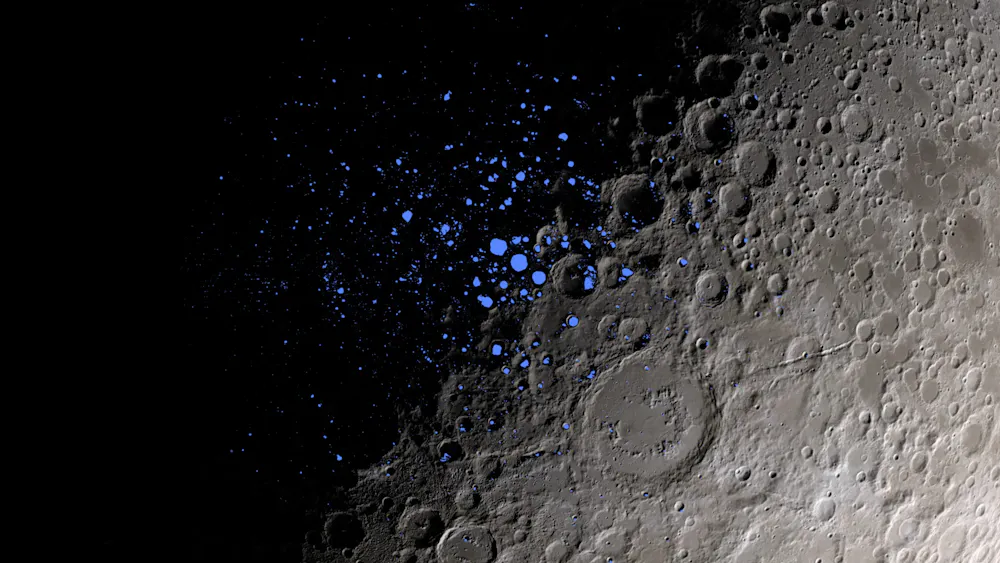
The nuclear reactor will likely form the power supply for the initial U.S.-led Moon base that will support humans who’ll stay for ever-increasing lengths of time. To facilitate sustainable human exploration of the Moon, using local resources such as water and oxygen for life support and hydrogen and oxygen to refuel spacecraft can dramatically reduce the amount of material that needs to be brought from Earth, which also reduces cost. In the 1990s, spacecraft orbiting the Moon first observed dark craters called permanently shadowed regions on the lunar north and south poles. Scientists now suspect these craters hold water in the form of ice, a vital resource for countries looking to set up a long-term human presence on the surface. NASA’s Artemis campaign aims to return people to the Moon, targeting the lunar south pole to take advantage of the water ice that is present there.Dark craters on the Moon, parts of which are indicated here in blue, never get sunlight. Scientists think some of these permanently shadowed regions could contain water ice.NASA’s Goddard Space Flight Center In order to be useful, the reactor must be close to accessible, extractable and refinable water ice deposits. The issue is we currently do not have the detailed information needed to define such a location. The good news is the information can be obtained relatively quickly. Six lunar orbital missions have collected, and in some cases are still collecting, relevant data that can help scientists pinpoint which water ice deposits are worth pursuing. These datasets give indications of where either surface or buried water ice deposits are. It is looking at these datasets in tandem that can indicate water ice “hot prospects,” which rover missions can investigate and confirm or deny the orbital observations. But this step isn’t easy. Luckily, NASA already has its Volatiles Investigating Polar Exploration Rover mission built, and it has passed all environmental testing. It is currently in storage, awaiting a ride to the Moon. The VIPER mission can be used to investigate on the ground the hottest prospect for water ice identified from orbital data. With enough funding, NASA could probably have this data in a year or two at both the lunar north and south poles.The VIPER rover would survey water at the south pole of the Moon.
How do you protect the reactor?
Once NASA knows the best spots to put a reactor, it will then have to figure out how to shield the reactor from spacecraft as they land. As spacecraft approach the Moon’s surface, they stir up loose dust and rocks, called regolith. It will sandblast anything close to the landing site, unless the items are placed behind large boulders or beyond the horizon, which is more than 1.5 miles (2.4 kilometers) away on the Moon. Scientists already know about the effects of landing next to a pre-positioned asset. In 1969, Apollo 12 landed 535 feet (163 meters) away from the robotic Surveyor 3 spacecraft, which showed corrosion on surfaces exposed to the landing plume. The Artemis campaign will have much bigger lunar landers, which will generate larger regolith plumes than Apollo did. So any prepositioned assets will need protection from anything landing close by, or the landing will need to occur beyond the horizon. Until NASA can develop a custom launch and landing pad, using the lunar surface’s natural topography or placing important assets behind large boulders could be a temporary solution. However, a pad built just for launching and landing spacecraft will eventually be necessary for any site chosen for this nuclear reactor, as it will take multiple visits to build a lunar base. While the nuclear reactor can supply the power needed to build a pad, this process will require planning and investment. Human space exploration is complicated. But carefully building up assets on the Moon means scientists will eventually be able to do the same thing a lot farther away on Mars. While the devil is in the details, the Moon will help NASA develop the abilities to use local resources and build infrastructure that could allow humans to survive and thrive off Earth in the long term. Clive Neal, Professor of Civil and Environmental Engineering and Earth Sciences, University of Notre Dame This article is republished from The Conversation under a Creative Commons license. Read the original article.
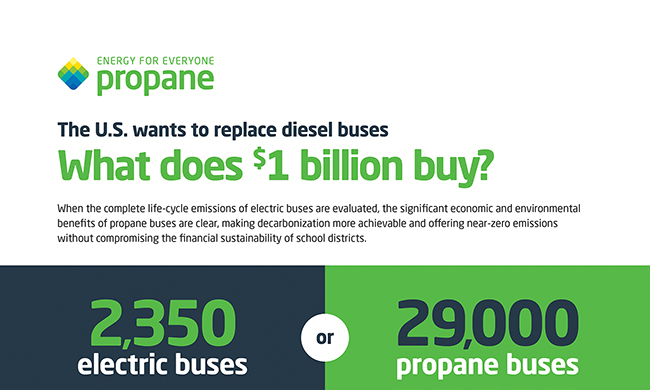
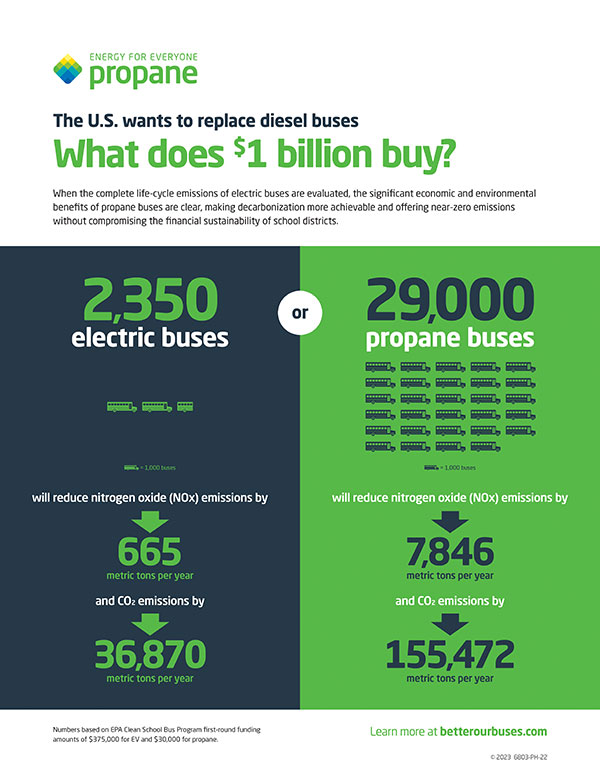
(Family Features) Diesel school buses are not only expensive to operate, they pose risks to children’s health and the environment. There are two practical energy choices for clean student transportation: propane and electric. However, when evaluating the complete life-cycle emissions and cost of electric buses, the economic and environmental benefits of propane buses are clear, according to the experts at the Propane Education & Research Council. With or without available funding, propane buses cost a fraction of electric buses, allowing school districts to replace their aging diesel fleets faster and further reduce harmful emissions. Learn more at BetterOurBuses.com.