

News
Schoolyard Social: Where Competition Builds Community

Brooklyn startup launches app that transforms local tournaments into real-world connections—and proves people are hungry for authentic experiences beyond the screen.
Remember when competition meant showing up somewhere real, not just climbing digital leaderboards from your couch? A Brooklyn-based startup is betting that nostalgia—and a growing appetite for genuine human connection—can reshape how we play, compete, and build community in 2025.
The Problem: We’re More Connected Than Ever, Yet More Isolated
Schoolyard Social launched its flagship app in October 2025 with a simple premise: technology should bring people together in person, not keep them glued to screens. In an era of endless scrolling, algorithmic friendships, and virtual everything, the platform offers something refreshingly analog—real people, real competition, real community.
“People are craving real-life ways to meet and belong,” said Win Smith, CEO and co-founder. “Competition gives you a reason to show up, and there’s less pressure to ‘click’ socially. Instead of swiping or making small talk at a bar, players build community around a shared interest.”
It’s a pitch that resonates. In just one month since going live, Schoolyard Social doubled both its revenue and number of tournaments compared to the entire previous year. From 800-player basketball tournaments at Barclays Center during the Aptos Crypto Conference to Sunday pickleball leagues sponsored by Sixpoint Brewery, the app is proving that people will show up—literally—when given the right reason.
How It Works: Tournament Tech for Everyone
Built in partnership with ISBX, the digital product agency behind work for Nike and other major brands, Schoolyard Social combines everything you need to run a tournament into one streamlined platform: hosting tools, bracketing, scoring, leaderboards, messaging, and payment processing.
The genius is in the simplicity. Anyone can organize a local, skill-based tournament—no tech background required. Whether it’s college beer pong leagues, corporate wellness competitions, neighborhood bakeoffs, or city-wide basketball brackets, the app handles the logistics so organizers can focus on creating memorable experiences.
And here’s the kicker: cash prizes. Players aren’t just competing for bragging rights; they’re getting paid for doing what they love. It’s a model that turns casual players into invested community members and one-off events into recurring traditions.
The Origin Story: Whiteboard Brackets to Venture-Backed Startup
Schoolyard Social wasn’t born in a boardroom—it was born from real demand the founders couldn’t keep up with.
“When we started, we were organizing events with whiteboard brackets and Instagram buzz,” said Harry Stanton, co-founder and COO. “The interest quickly outpaced us; venues, clubs, companies and creators all started asking us to organize their tournaments. So we built an app anyone can use to scale what hosts were already doing manually.”
The founding trio brings serious credentials to the table. Smith is a former Wesleyan University tennis captain and Sony Music executive producer. Stanton is a former NCAA lacrosse national champion and early hire at Fanatics Betting and Gaming. Peter de Saint Phalle, the third co-founder and CMO, is an experiential marketing veteran whose agency work includes global campaigns for Ogilvy and George P. Johnson.
Together, they’ve combined backgrounds in sports, technology, and brand activation to build something that feels both nostalgic and necessary—a platform that turns everyday rivalry into community.
The Brand Play: Authentic Engagement Beyond Digital Impressions
Schoolyard Social isn’t just attracting players—it’s attracting brands looking for deeper customer relationships. Sponsors including Sixpoint, vitaminwater, PaddleSmash, and Justworks are partnering to activate products and build brand awareness through live demos and in-office events.
“Just as people crave lasting connections, brands want sustainable relationships with customers,” said de Saint Phalle. “Schoolyard Social lets brands meet audiences where they play, activating products and creating real-life connections that deepen over time—not just experiential advertising or fleeting digital impressions.”
It’s a smart positioning. In a world where digital ad fatigue is real and consumers are increasingly skeptical of online marketing, brands that show up in authentic, community-driven spaces have a competitive advantage. Schoolyard Social offers that access—not through banner ads or sponsored posts, but through meaningful participation in the moments that matter to players.
What’s Next: Campus Expansion and Nationwide Growth
The company recently raised $860,000 through an oversubscribed SAFE note to accelerate growth. Expansion plans include a nationwide College Ambassador Program and collegiate events at business schools like Stanford and Columbia.
It’s a strategic move. College campuses are natural breeding grounds for competitive social experiences, and students are often the early adopters who set cultural trends. If Schoolyard Social can embed itself in campus culture, it has a shot at becoming the go-to platform for a generation that’s increasingly vocal about wanting less screen time and more real-world connection.
Why This Matters: The Post-Digital Playbook
Schoolyard Social represents something bigger than just another app. It’s part of a growing movement toward what the company calls “the post-digital age”—a recognition that while technology has connected us in unprecedented ways, it’s also left many of us feeling more isolated than ever.
The platform’s tagline says it all: “Competition tech designed to get you off your phone.”
In a media landscape dominated by endless content consumption and passive scrolling, Schoolyard Social offers active participation. In a social ecosystem built on curated personas and performative posting, it offers genuine interaction. In a world where “community” has become a buzzword stripped of meaning, it offers the real thing—people showing up, competing, connecting, and building something together.
That’s not just good business. It’s a blueprint for how technology can serve humanity instead of the other way around.
The Bottom Line
Schoolyard Social is betting that the future of social connection isn’t more sophisticated algorithms or immersive virtual worlds—it’s getting people back in the same physical space, doing things they love, with other people who share their passion.
If the early results are any indication, they might be onto something. Because at the end of the day, no amount of digital engagement can replace the feeling of showing up, competing, and belonging to something real.
Ready to turn your passion into community? Download the Schoolyard Social app on the App Store or Google Playand find your next tournament.
For more information about Schoolyard Social, visit their press kit or explore upcoming tournaments in your area.
Our Lifestyle section on STM Daily News is a hub of inspiration and practical information, offering a range of articles that touch on various aspects of daily life. From tips on family finances to guides for maintaining health and wellness, we strive to empower our readers with knowledge and resources to enhance their lifestyles. Whether you’re seeking outdoor activity ideas, fashion trends, or travel recommendations, our lifestyle section has got you covered. Visit us today at https://stmdailynews.com/category/lifestyle/ and embark on a journey of discovery and self-improvement.





Last Updated on April 2, 2026 by Daily News Staff
🕒 [UPDATE] Orion Performs Translunar Injection Burn
The spacecraft has completed its critical engine burn, sending Artemis II on a trajectory toward the Moon. This marks the official start of its deep space journey.

Artemis II Successfully Launches
CAPE CANAVERAL, Fla. — NASA has successfully launched its Artemis II mission, marking the first crewed journey toward the Moon in more than 50 years.
The powerful Space Launch System (SLS) rocket lifted off from Kennedy Space Center on April 1, carrying four astronauts on a 10-day mission around the Moon and back.
On board are Commander Reid Wiseman, Pilot Victor Glover, Mission Specialist Christina Koch, and Canadian astronaut Jeremy Hansen. The mission is already being hailed as a major milestone in NASA’s effort to return humans to deep space.
Shortly after liftoff, the Orion spacecraft successfully reached orbit and deployed its solar arrays, beginning its journey that will eventually send the crew on a translunar trajectory toward the Moon. 
Artemis II is a lunar flyby mission, meaning astronauts will not land but will travel farther from Earth than any human mission in decades while testing critical systems needed for future landings.
The mission also marks several historic firsts, including the first woman and the first person of color—Victor Glover—to travel into lunar space.
NASA says the mission is a key step toward future lunar landings and long-term plans to establish a human presence on the Moon later this decade.
🛰️ Artemis II Mission Timeline
The 10-day Artemis II mission follows a carefully planned trajectory from Earth to the Moon and back:
- Day 1: Launch and Earth orbit
- Day 1–2: Translunar injection burn
- Days 2–4: Deep space travel
- Days 4–5: Lunar flyby
- Days 5–8: Return to Earth
- Days 9–10: Reentry and splashdown
For official updates and in-depth mission details, visit the following trusted sources:
- NASA: Artemis II Mission Overview
- NASA Artemis Program (Return to the Moon)
- Orion Spacecraft – Mission Details
- Space Launch System (SLS) Rocket Overview
- Kennedy Space Center – Launch Operations
- Watch NASA Live Coverage and Replays
🧾 Sources
- NASA official launch coverage and mission updates
- NASA Artemis II press materials and briefings
- NASA Kennedy Space Center launch operations updates
Stay with STM Daily News for live updates on Artemis II.
Travel Advisory
Traveling to Mexico this spring? Here’s what to know about current advisories
Traveling to Mexico this spring? Visitors should be aware of state-specific travel advisories, as safety concerns in one region do not affect major resort areas like Cancun and Los Cabos, currently rated Level 2, which encourages increased caution. Monitoring official updates is essential for informed travel decisions amidst evolving conditions.

Last Updated on March 30, 2026 by Daily News Staff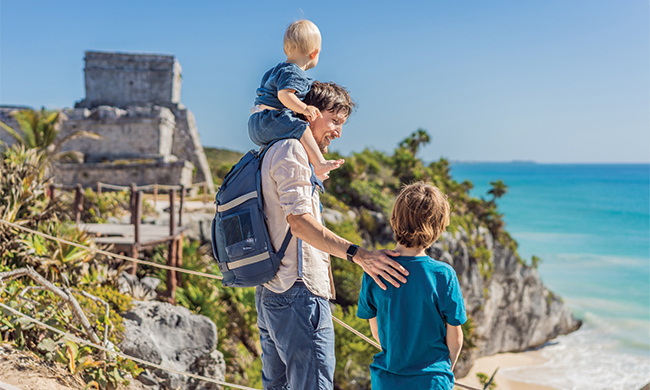
Traveling to Mexico this spring? Here’s what to know about current advisories
(Tiffany Miller for ALG Vacations) For some travelers counting down to spring break, recent headlines about violence in parts of Mexico have sparked a new question: Should I cancel my trip? Travel advisors say they are seeing a surge in calls and emails from clients trying to determine whether developments in one region affect major resort areas elsewhere.
The questions follow several days of unrest in parts of Mexico after security operations targeting organized crime leaders prompted temporary flight disruptions and shelter-in-place guidance for U.S. government personnel in areas including Puerto Vallarta and Guadalajara. In this article, ALG Vacations explains what current travel advisories mean for spring break travelers heading to Mexico.
The U.S. State Department evaluates Mexico state by state, not as a single destination, and advisory levels vary by region. Many major beach destinations, including Cancun, Riviera Maya, Tulum and Los Cabos, are currently under a Level 2 advisory, which encourages travelers to exercise increased caution. It does not discourage travel.
Part of the confusion stems from geography. Puerto Vallarta, on the Pacific coast, is roughly 1,300 miles from Cancun and the Riviera Maya on the Caribbean side, about the distance between New York and Miami. Because advisories are assigned state by state, developments in one region do not automatically alter another.
In recent days, that uncertainty has translated into additional inquiries about whether specific resort areas are experiencing disruptions. U.S. Embassy security alerts issued this week indicate that temporary shelter-in-place guidance affecting Puerto Vallarta was lifted and that flight operations resumed. The advisory level for the Mexican state of Quintana Roo remains unchanged.
Some clients are asking about alternatives, advisors say, but many are continuing with their plans after reviewing official updates. Travel patterns often shift in response to breaking headlines, they add, before stabilizing as clearer information becomes available.
The State Department assigns travel advisories on a four-tier scale ranging from Level 1, exercise normal precautions, to Level 4, do not travel. While Level 2 encourages increased awareness, Level 3 and Level 4 carry stronger language discouraging or restricting travel.
Advisories are reviewed regularly and can be updated as conditions evolve. The State Department’s Mexico advisory page breaks down conditions by state, reflecting the country’s federal structure rather than issuing a single national designation. Travelers can also enroll in the State Department’s Smart Traveler Enrollment Program, which provides real-time security updates and allows U.S. officials to contact citizens in an emergency.
Embassy notices state that airports, hotels and tourism services in Quintana Roo are operating normally. Security conditions across Mexico vary widely by state, with some regions carrying higher advisories and others designated Level 1. Most destinations popular with U.S. travelers are currently classified as Level 2.
As spring break approaches, advisors say informed decision-making depends on reviewing the advisories assigned to a specific destination and monitoring official updates, rather than reacting to national headlines alone. Travel decisions ultimately depend on individual comfort levels, they add, but advisory levels are assigned regionally and should be evaluated accordingly.
Photo courtesy of Shutterstock

SOURCE:
Welcome to the Consumer Corner section of STM Daily News, your ultimate destination for savvy shopping and informed decision-making! Dive into a treasure trove of insights and reviews covering everything from the hottest toys that spark joy in your little ones to the latest electronic gadgets that simplify your life. Explore our comprehensive guides on stylish home furnishings, discover smart tips for buying a home or enhancing your living space with creative improvement ideas, and get the lowdown on the best cars through our detailed auto reviews. Whether you’re making a major purchase or simply seeking inspiration, the Consumer Corner is here to empower you every step of the way—unlock the keys to becoming a smarter consumer today!
Community
McDonald’s First Job Confessional Turns Career Stories Into Free Meal Opportunity
McDonald’s is launching First Job Confessional, a campaign inviting fans to share first job stories for a chance to receive a $15 gift card in select cities.


First Job Confessional
McDonald’s is putting first jobs in the spotlight with a new campaign that asks fans to share the real-world skills they gained early in their working lives. Launched on National Employee Appreciation Day, the brand’s First Job Confessional invites people to reflect on how those first roles helped shape their careers — and, in some cases, earn a free meal in the process.
The campaign is built around a simple idea: first jobs often teach lasting skills that deserve more recognition. Whether someone learned problem-solving while babysitting, communication during a lunch rush, or teamwork behind a counter, McDonald’s is framing those experiences as valuable career foundations. The company says those are the same kinds of skills employers continue to prioritize as workplace demands evolve.

How the First Job Confessional Works
In select cities, McDonald’s is setting up confessional booths designed to look like ordering kiosks. But instead of placing a meal order, participants can record a story about their first job and the skills they picked up along the way. Those who take part in person will have the opportunity to receive a $15 McDonald’s gift card, while supplies last.
Fans who cannot attend in person can still join online by posting their stories using #FirstJobConfessional. McDonald’s says selected videos may also be featured on its YouTube channel, extending the campaign beyond the live events.
External Related Links
- McDonald’s corporate article: McDonald’s is Asking Fans to Get Real About Their First Job Skills in Exchange for Free Meals
- McDonald’s 1 in 8: First Job Confessional
- McDonald’s 1 in 8 home page
- Marketing Dive coverage of the campaign
- Parade coverage of the First Job Confessional tour
Source Links
- Original PRNewswire press release from McDonald’s USA, LLC
- McDonald’s official corporate story
- McDonald’s 1 in 8 First Job Confessional page
- McDonald’s 1 in 8 official website
The Bridge is a section of the STM Daily News Blog meant for diversity, offering real news stories about bona fide community efforts to perpetuate a greater good. The purpose of The Bridge is to connect the divides that separate us, fostering understanding and empathy among different groups. By highlighting positive initiatives and inspirational actions, The Bridge aims to create a sense of unity and shared purpose. This section brings to light stories of individuals and organizations working tirelessly to promote inclusivity, equality, and mutual respect. Through these narratives, readers are encouraged to appreciate the richness of diverse perspectives and to participate actively in building stronger, more cohesive communities.
https://stmdailynews.com/the-bridge





