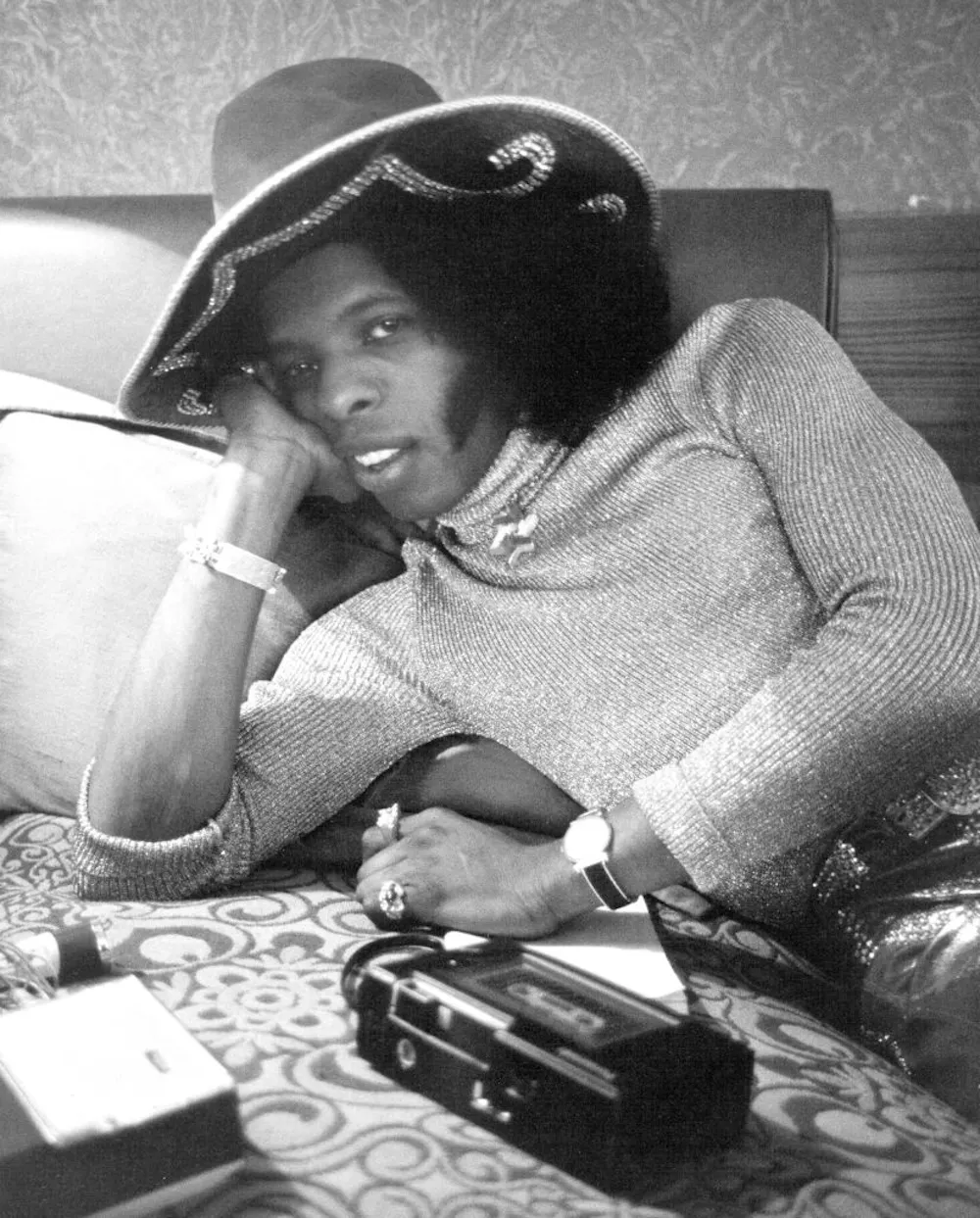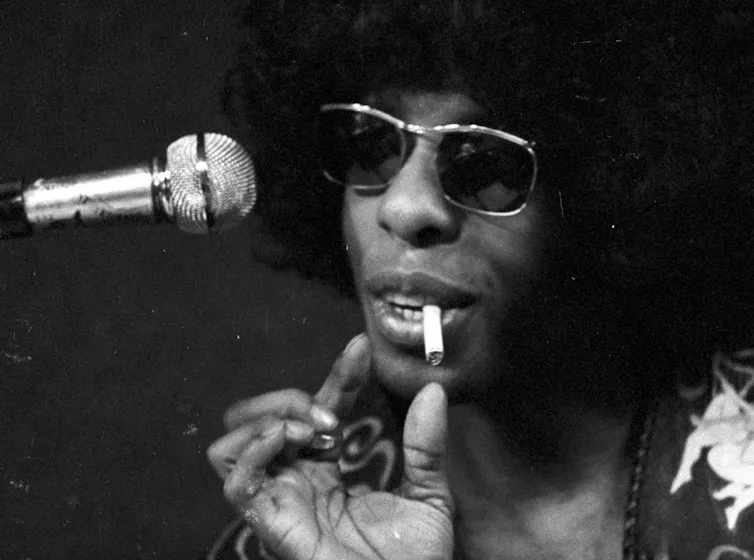
The charismatic front man of Sly and the Family Stone died on June 9, 2025, at the age of 82. Michael Ochs Archives/Getty ImagesJose Valentino Ruiz, University of Florida In the fall of 1971, Sly and the Family Stone’s “There’s a Riot Goin’ On” landed like a quiet revolution. After two years of silence following the band’s mainstream success, fans expected more feel-good funk from the ensemble. What they got instead was something murkier and more fractured, yet deeply intimate and experimental. This was not just an album; it was the sound of a restless mind rebuilding music from the inside out. At the center of it all was front man Sly Stone. Long before the home studio became an industry norm, Stone, who died on June 9, 2025, turned the studio into both a sanctuary and an instrument. And long before sampling defined the sound of hip-hop, he was using tape and machine rhythms to deconstruct existing songs to cobble together new ones. As someone who spends much of their time working on remote recording and audio production – from building full arrangements solo to collaborating digitally across continents – I’m deeply indebted to Sly Stone’s approach to making music. He was among the first major artists to fully embrace the recording environment as a space to compose rather than perform. Every reverb bounce, every drum machine tick, every overdubbed breath became part of the writing process.
From studio rat to bedroom producer
Sly and the Family Stone’s early albums – including “Dance to the Music” and “Stand!” – were recorded at top-tier facilities like CBS Studios in Los Angeles under the technical guidance of engineers such as Don Puluse and with oversight from producer David Rubinson. These sessions yielded bright, radio-friendly tracks that emphasized tight horn sections, group vocals and a polished sound. Producers also prized the energy of live performance, so the full band would record together in real time. But by the early 1970s, Stone was burnt out. The dual pressures of fame and industry demands were becoming too much. Struggling with cocaine and PCP addiction, he’d grown increasingly distrustful of bandmates, label executives and even his friends. So he decided to retreat to his hillside mansion in Bel Air, California, transforming his home into a musical bunker. Inside, he could work on his own terms: isolated and erratic, but free.Stone relied heavily on overdubbing when recording music from his home.Richard McCaffrey/Michael Ochs Archives via Getty Images Without a full band present, Stone became a one-man ensemble. He leaned heavily into overdubbing – recording one instrument at a time and building his songs from fragments. Using multiple tape machines, he’d layer each part onto previous takes. The resulting album, “There’s a Riot Goin’ On,” was like nothing he’d previously recorded. It sounds murky, jagged and disjointed. But it’s also deeply intentional, as if every imperfection was part of the design. In “The Poetics of Rock,” musicologist Albin Zak describes this “composerly” approach to production, where recording itself becomes a form of writing, not just documentation. Stone’s process for “There’s a Riot Goin’ On” reflects this mindset: Each overdub, rhythm loop and sonic imperfection functions more like a brushstroke than a performance.
Automating the groove
A key part of Stone’s tool kit was the Maestro Rhythm King, a preset drum machine he used extensively. It wasn’t the first rhythm box on the market. But Stone’s use of it was arguably the first time such a machine shaped the entire aesthetic of a mainstream album. The drum parts on his track “Family Affair,” for example, don’t swing – they tick. What might have been viewed as soulless became its own kind of soul. This early embrace of mechanical rhythm prefigured what would later become a foundation of hip-hop and electronic music. In his book “Dawn of the DAW,” music technology scholar Adam Patrick Bell calls this shift “a redefinition of groove,” noting how drum machines like the Rhythm King encouraged musicians to rethink their songwriting process, building tracks in shorter, repeatable sections while emphasizing steady, looped rhythms rather than free-flowing performances. Though samplers wouldn’t emerge until years later, Stone’s work already contained that repetition, layering and loop-based construction that would become characteristic of the practice. He recorded his own parts the way future DJs would splice records – isolated, reshuffled, rhythmically obsessed. His overdubbed bass lines, keyboard vamps and vocal murmurs often sounded like puzzle pieces from other songs. Music scholar Will Fulton, in his study of Black studio innovation, notes how producers like Stone helped pioneer a fragment-based approach to music-making that would become central to hip-hop’s DNA. Stone’s process anticipated the mentality that a song isn’t necessarily something written top to bottom, but something assembled, brick by brick, from what’s available. Perhaps not surprisingly, Stone’s tracks have been sampled relentlessly. In “Bring That Beat Back,” music critic Nate Patrin identifies Stone as one of the most sample-friendly artists of the 1970s – not because of his commercial hits, but because of how much sonic space he left in his tracks: the open-ended grooves, unusual textures and slippery emotional tone. You can hear his sounds in famous tracks such as 2Pac’s “If My Homie Calls,” which samples “Sing a Simple Song”; A Tribe Called Quest’s “The Jam,” which draws from “Family Affair”; and De La Soul’s “Plug Tunin’,” which flips “You Can Make It If You Try.”
The studio as instrument
While Sly’s approach was groundbreaking, he wasn’t entirely alone. Around the same time, artists such as Brian Wilson and The Rolling Stones were experimenting with home and nontraditional recording environments – Wilson famously retreating to his home studio during “Pet Sounds,” and the Stones tracking “Exile on Main St.” in a French villa. Yet in the world of Black music, production remained largely centralized in institutionally controlled studio systems such as Motown in Detroit and Stax in Memphis, where sound was tightly managed by in-house producers and engineers. In that context, Stone’s decision to isolate, self-produce and dismantle the standard workflow was more than a technical choice: It was a radical act of autonomy. The rise of home recording didn’t just change who could make music. It changed what music felt like. It made music more internal, iterative and intimate. Sly Stone helped invent that feeling. It’s easy to hear “There’s a Riot Goin’ On” as murky or uneven. The mix is dense with tape hiss, drum machines drift in and out of sync, and vocals often feel buried or half-whispered. But it’s also, in a way, prophetic. It anticipated the aesthetics of bedroom pop, the cut-and-paste style of modern music software, the shuffle of playlists and the recycling of sounds that defines sample culture. It showed that a groove didn’t need to be spontaneous to be soulful, and that solitude could be a powerful creative tool, not a limitation. In my own practice, I often record alone, passing files back and forth, building from templates and mapping rhythm to grid – as do millions of musical artists who compose tracks from their bedrooms, closets and garages. Half a century ago, a funk pioneer led the way. I think it’s safe to say that Sly Stone quietly changed the process of making music forever – and in the funkiest way possible. Jose Valentino Ruiz, Associate Professsor of Music Business and Entrepreneurship, University of Florida This article is republished from The Conversation under a Creative Commons license. Read the original article.
Bad Bunny Set to Make History at Apple Music Super Bowl LX Halftime Show
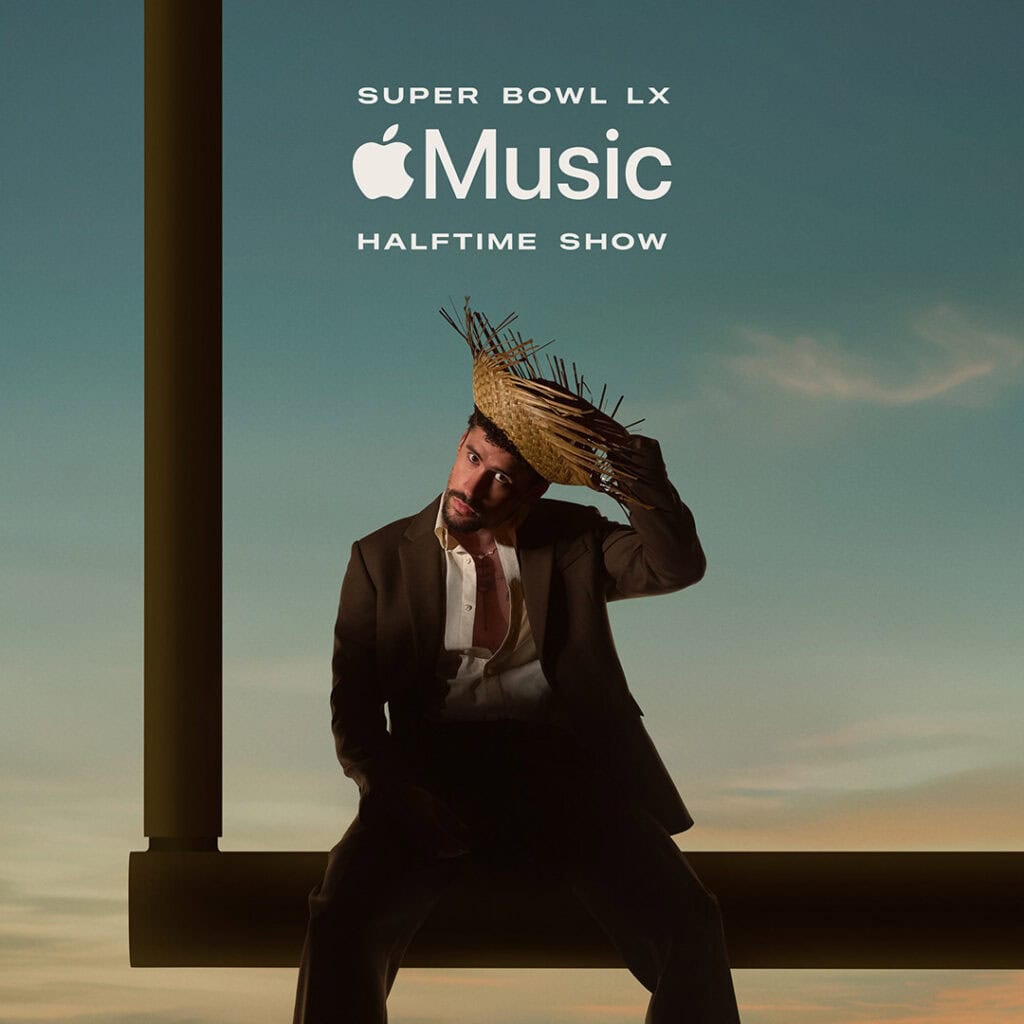
Bad Bunny will headline the Apple Music Super Bowl LX Halftime Show on February 8, 2026, at Levi’s Stadium, marking a historic moment for Latin music. Industry leaders praise his cultural impact and global influence. The event promises to deliver an unforgettable performance, celebrating Bad Bunny’s significance in today’s music scene.
Global superstar will take center stage at Levi’s Stadium in February 2026Global Sensation Bad Bunny to Perform at Apple Music Super Bowl LX Halftime Show
The NFL, Apple Music, and Roc Nation dropped major news this week that’s sending shockwaves through the music and sports worlds: three-time GRAMMY® Award-winning artist Bad Bunny will headline the Apple Music Super Bowl LX Halftime Show on February 8, 2026, at Levi’s Stadium in Santa Clara, California.
A Historic Moment for Latin Music
For Bad Bunny, this isn’t just another performance—it’s a cultural milestone. The Puerto Rican sensation expressed the profound significance of this opportunity in his own words:
“What I’m feeling goes beyond myself. It’s for those who came before me and ran countless yards so I could come in and score a touchdown… this is for my people, my culture, and our history. Ve y dile a tu abuela, que seremos el HALFTIME SHOW DEL SUPER BOWL.”
The announcement represents a watershed moment for Latin music on the world’s biggest stage, with Bad Bunny becoming one of the first Latin artists to solo headline the Super Bowl Halftime Show.
Industry Leaders Weigh In
Shawn “JAY-Z” Carter, whose Roc Nation serves as strategic entertainment advisor for the performance, praised Bad Bunny’s impact: “What Benito has done and continues to do for Puerto Rico is truly inspiring. We are honored to have him on the world’s biggest stage.”
Jon Barker, the NFL’s SVP of Global Event Production, highlighted why Bad Bunny is the perfect fit for this moment: “Bad Bunny represents the global energy and cultural vibrancy that define today’s music scene. As one of the most influential and streamed artists in the world, his unique ability to bridge genres, languages, and audiences makes him an exciting and natural choice.”
Oliver Schusser, Apple’s Vice President of Music, Sports and Beats, emphasized the artist’s cultural impact: “Few artists embody that intersection [of music and culture] more perfectly and authentically than Bad Bunny. His music has not only broken records but has elevated Latin music to the center of pop-culture.”
Tune In to the Special Announcement
Apple Music Radio is celebrating the news with a special Halftime Headliner broadcast featuring Zane Lowe, Ebro Darden, and surprise guests. The show aired Monday, September 29th at 9:30am ET across Apple Music Radio platforms.
What to Expect
The Apple Music Super Bowl LX Halftime Show will be produced by DPS, with Roc Nation and Jesse Collins serving as executive producers and Hamish Hamilton directing. The performance will air on NBC during Super Bowl LX, bringing Bad Bunny’s explosive stage presence and genre-defying music to an audience of millions.
A Winning Tradition
The Apple Music Super Bowl Halftime Show has become synonymous with excellence, racking up multiple Emmy wins in recent years. The Apple Music Super Bowl LIX Halftime Show starring Kendrick Lamar became the most-watched Super Bowl Halftime Show ever, earning four Emmy nominations and winning Outstanding Music Direction. Previous shows featuring Usher, Rihanna, and the legendary lineup of Dr. Dre, Snoop Dogg, Eminem, Mary J. Blige, and Kendrick Lamar have collectively earned dozens of nominations and awards.
Advertisement
With Bad Bunny’s proven track record of delivering unforgettable performances and his massive global fanbase, the Apple Music Super Bowl LX Halftime Show is shaping up to be one of the most anticipated musical events of 2026.
Mark your calendars for February 8, 2026—this is one performance you won’t want to miss.
What are your thoughts on Bad Bunny headlining the Super Bowl? Will you be tuning in? Let us know in the comments below, and follow Apple Music on social media for more updates as we get closer to game day.
Looking for an entertainment experience that transcends the ordinary? Look no further than STM Daily News Blog’s vibrant Entertainment section. Immerse yourself in the captivating world of indie films, streaming and podcasts, movie reviews, music, expos, venues, and theme and amusement parks. Discover hidden cinematic gems, binge-worthy series and addictive podcasts, gain insights into the latest releases with our movie reviews, explore the latest trends in music, dive into the vibrant atmosphere of expos, and embark on thrilling adventures in breathtaking venues and theme parks. Join us at STM Entertainment and let your entertainment journey begin! https://stmdailynews.com/category/entertainment/
A scene from R.A.M.B.O.’s last-ever show in Philadelphia (before a reunion in 2024) at Starlight Ballroom on May 27, 2007. Joseph A. Gervasi/LOUD! FAST! PHILLY!
How Philly anarcho-punks blended music, noise and social justice in the 1990s and 2000s
Edward Avery-Natale, Mercer County Community College While New York City is commonly considered the birthplace of American punk rock, just 100 miles south of the famous CBGB club where the Ramones and other early punk bands got their start is Philadelphia, which has had its own vibrant punk rock scene since at least 1974 – and it has persisted through the present day. I am a professor of sociology at Mercer County Community College in New Jersey, lead editor of a forthcoming edited volume titled “Being and Punk,” and author of the 2016 book “Ethics, Politics, and Anarcho-Punk Identifications: Punk and Anarchy in Philadelphia.” I’ve been a fan of punk rock music since I was 15 years old and have been an active member of punk scenes in Philadelphia and Fargo, North Dakota. I still attend punk shows and participate in the scene whenever I can. Though the “birth” of punk is always a contentious subject, it is fair to say that, with the Ramones forming in 1974 and releasing the “Blitzkrieg Bop” single in February 1976 in the U.S., and the Sex Pistols performing their first show in November 1975 in the U.K., punk is at least 50 years old. Given this milestone, I believe it’s worth looking back at the heyday of the anarchist-inflected punk scene in Philly in the 1990s and 2000s, and how the political ideology and activism – encouraging opposition to capitalism, government, hierarchy and more – is still influential today.Philly hardcore punk band Ink & Dagger performs at the First Unitarian Church, circa late 1990s.Justin Moulder
‘Not your typical rebellion’
In Philadelphia, and especially in West Philly, a number of collectively organized squats, houses and venues hosted shows, political events and parties, along with serving as housing for punks, in the 1990s and 2000s. In some cases, the housing itself was a form of protest – squatting in abandoned buildings and living cooperatively was often seen as a political action. There was the Cabbage Collectivebooking shows at the Calvary Church at 48th and Baltimore Avenue. Stalag 13 near 39th and Lancaster Avenue is where the famous Refused played one of their final shows, and The Killtime right next door is where Saves the Day played in 1999 before becoming famous. The First Unitarian Church, an actual church in Center City, still regularly puts on shows in its basement. These largely underground venues became central to the Philadelphia punk scene, which had previously lacked midsized spaces for lesser known bands. Many Philly punks during this era mixed music subculture with social activism. As one anarcho-punk – a subgenre of punk rock that emphasizes leftist, anarchist and socialist ideals – I interviewed for my book told me: “My mom … said, ‘I thought you were going to grow out of it. I didn’t understand it, and your dad and I were like, ‘What are we doing? She’s going out to these shows! She’s drinking beer!’ But then we’d be like, ‘She’s waking up the next morning to help deliver groceries to old people and organize feminist film screenings!’ We don’t know what to do, we don’t know how to deal with this; it’s not your typical rebellion.’”Philly punk band R.A.M.B.O. performs in January 2006, with Tony ‘Pointless’ Croasdale singing and Bull Gervasi on bass.Joseph A. Gervasi/LOUD! FAST! PHILLY! This quote captures the complex and ambiguous rebellion at the heart of anarcho-punk. On the one hand, it is a form of rebellion, often beginning in one’s teenage years, that contains the familiar trappings of youth subcultures: drug and alcohol consumption, loud music and unusual clothing, hairstyles, tattoos and piercings. However, unlike other forms of teenage rebellion, anarcho-punks also seek to change the world through both personal and political activities. On the personal level, and as I showed in my book, many become vegan or vegetarian and seek to avoid corporate consumerism. “I do pride myself on trying to not buy from sweatshops, trying to keep my support of corporations to a minimum, though I’ve loosened up over the years,” another interviewee, who was also vegan, said. “You’ll drive yourself crazy if you try to avoid it entirely, unless you … go live with [British punk band] Crass on an anarcho-commune.”
24 years old went away to war / High expectations of what the future holds / Wore the uniform with pride a rifle at hand / Bringing democracy to a far away land / Pregnant wife at home awaiting his return / Dependent on faith, will she ever learn? / Ignore the consequences have faith in the Lord / Ignorance is bliss until reality sets in / Never wake up again
During live performances, bands would commonly discuss what the songs were about. And at merchandise tables, they sold T-shirts and records along with zines, books, patches and pins, all of which commonly contained political images or slogans. Some bands became meta-critics of the punk scene itself, encouraging listeners to recognize that punk is about more than music. In “Preaching to the Converted,” Kill The Man Who Questions critiqued the complaints bands would receive for becoming too preachy at shows:
“Unity” the battle cry / Youth enraged but don’t ask why / They just want it fast and loud, with nothing real to talk about / 18 hours in a dying van / Proud to be your background band.
In West Philadelphia, punks also staffed the local food cooperative and organized activist spaces – like the former A-Space on Baltimore Avenue and LAVA Zone on Lancaster Avenue where groups such as Food Not Bombs and Books Through Bars, among others, would operate. I personally organized a weekend gathering of the Northeastern Anarchist Network at LAVA in 2010.Masked protesters walk away from City Hall after a march on July 30, 2000, a day before the start of the Republican National Convention in Philadelphia.Roberto Schmidt/AFP via Getty Images Punks raised money for charities and showed up to local protests against capitalist globalization and countless other causes. At the Republican National Convention in Philadelphia in the summer of 2000, black-clad punks whose faces were hidden behind masks marched in the streets along with an enormous cadre of local community organizations.
Punk not dead in Philly
Since punk’s earliest days, people have bemoaned that “punk is dead.” In Philadelphia, I’ve seen how the anarcho-punk scene of the 1990s and 2000s has changed, but also how it continues to influence local bands and the values of punk rock broadly. Many former and current members of the Philly anarcho-punk scene are still activists in various personal and professional ways. Among those I interviewed between 2006 and 2012 were social workers, labor organizers, teachers and professors, and school and drug counselors. For many, their professional lives were influenced by the anarchist ethics they had developed within the punk rock scene. And many local punks showed up at the Occupy Philly camp and protests outside City Hall in 2011, and later marched in the streets during Black Lives Matter protests following the murder of George Floyd and killing of Breonna Taylor in 2020. They also participated in the homeless encampment on the Benjamin Franklin Parkway, also in 2020. And local punks I know continue to participate in grassroots campaigns like Decarcerate PA. Anarchism and punk rock open up avenues for disaffected youth – in Philadelphia or anywhere else – to dream of a world without capitalism, coercive authorities, police and all forms of injustice. In the words of R.A.M.B.O., one of the better known hardcore punk bands of the era and who released their latest Defy Extinction album in 2022: “If I can dream it, then why should I try for anything else?”Protesters alter a flag at the Occupy I.C.E. Philly encampment at City Hall in 2018.Cory Clark/NurPhoto via Getty ImagesRead more of our stories about Philadelphia, or sign up for our Philadelphia newsletter.Edward Avery-Natale, Professor of Sociology, Mercer County Community College This article is republished from The Conversation under a Creative Commons license. Read the original article.
Teresa Teng, who died in 1995, still has legions of fans around the world. Nora Tam/South China Morning Post via Getty ImagesXianda Huang, University of California, Los Angeles Several years ago, an employee at Universal Music came across a cassette tape in a Tokyo warehouse while sorting through archival materials. On it was a recording by the late Taiwanese pop star Teresa Teng that had never been released; the pop ballad, likely recorded in the mid-1980s while Teng was living and performing in Japan, was a collaboration between composer Takashi Miki and lyricist Toyohisa Araki. Now, to the delight of her millions of fans, the track titled “Love Songs Are Best in the Foggy Night” will appear on an album set to be released on June 25, 2025. Teng died 30 years ago. Most Americans know little about her life and her body of work. Yet the ballads of Teng, who could sing in Mandarin, Cantonese, Japanese and Indonesian, continue to echo through karaoke rooms, on Spotify playlists, at tribute concerts and at family gatherings across Asia and beyond. I study how pop music has served as a tool of soft power, and I’ve spent the past several years researching Teng’s music and its legacy. I’ve found that Teng’s influence endures not just because of her voice, but also because her music transcends Asia’s political fault lines.
From local star to Asian icon
Born in 1953 in Yunlin, Taiwan, Teresa Teng grew up in one of the many villages that were built to house soldiers and their families who had fled mainland China in 1949 after the communists claimed victory in the Chinese civil war. Her early exposure to traditional Chinese music and opera laid the foundation for her singing career. By age 6, she was taking voice lessons. She soon began winning local singing competitions. “It wasn’t adults who wanted me to sing,” Teng wrote in her memoir. “I wanted to sing. As long as I could sing, I was happy.” At 14, Teng dropped out of high school to focus entirely on music, signing with the local label Yeu Jow Records. Soon thereafter, she released her first album, “Fengyang Flower Drum.” In the 1970s, she toured and recorded across Taiwan, Hong Kong, Japan and Southeast Asia, becoming one of Asia’s first truly transnational pop stars. Teng’s career flourished in the late 1970s and 1980s. She released some of her most iconic tracks, such as her covers of Chinese singer Zhou Xuan’s 1937 hit “When Will You Return?” and Taiwanese singer Chen Fen-lan’s “The Moon Represents My Heart,” and toured widely across Asia, sparking what came to be known as “Teresa Teng Fever.” In the early 1990s, Teng was forced to stop performing for health reasons. She died suddenly of an asthma attack on May 8, 1995, while on vacation in Chiang Mai, Thailand, at the age of 42.
China catches Teng Fever
Perhaps the most remarkable aspect of Teng’s story is that Teng Fever peaked in China. Teng was ethnically Chinese, with ancestral roots in China’s Shandong province. But the political divide between China and Taiwan following the Chinese civil war had led to decades of hostility, with each side refusing to recognize the legitimacy of the other.Teng speaks at a press conference in Hong Kong in 1980.P.Y. Tang/South China Morning Post via Getty Images During the late 1970s and 1980s, however, China began to relax its political control under Deng Xiaoping’s Reform and Opening Up policy. This sweeping initiative shifted China toward a market-oriented economy, encouraged foreign trade and investment, and cautiously reintroduced global cultural influences after decades of isolation. Pop music from other parts of the world began trickling in, including Teng’s tender ballads. Her songs could be heard in coastal provinces such as Guangdong and Shanghai, inland cities such as Beijing and Tianjin, and even remote regions such as Tibet. Shanghai’s propaganda department wrote an internal memo in 1980 noting that her music had spread to the city’s public parks, restaurants, nursing homes and wedding halls. Teng’s immense popularity in China was no accident; it reflected a time in the country’s history when its people were particularly eager for emotionally resonant art after decades of cultural propaganda and censorship. For a society that had been awash in rote, revolutionary songs like “The East is Red” and “Union is Strength,” Teng’s music offered something entirely different. It was personal, tender and deeply human. Her gentle, approachable style – often described as “angelic” or like that of “a girl next door” – provided solace and a sense of intimacy that had long been absent from public life.Teng performs ‘Fly Me to the Moon’ in Taipei in 1984. Teng’s music was also admired for her ability to bridge eras. Her 1983 album “Light Exquisite Feeling” fused classical Chinese poetry with contemporary Western pop melodies, showcasing her gift for blending the traditional and the modern. It cemented her reputation not just as a pop star but as a cultural innovator. It’s no secret why audiences across China and Asia were so deeply drawn to her and her music. She was fluent in multiple languages; she was elegant but humble, polite and relatable; she was involved in various charities; and she spoke out in support of democratic values.
A sound of home in distant lands
Throughout the 1990s and early 2000s, the Chinese immigrant population in the United States grew to over 1.1 million. Teng’s music has also deeply embedded itself within Chinese diasporic communities across the country. In cities such as Los Angeles, San Francisco and New York, Chinese immigrants played her music at family gatherings, during holidays and at community events. Walk through any Chinatown during Lunar New Year and you’re bound to hear her voice wafting through the streets.Teng visits New York City’s Chinatown during her 1980 concert tour in the U.S.Wikimedia Commons For younger Chinese Americans and even non-Chinese audiences, Teng’s music has become a window into Chinese culture. When I was studying in the U.S., I often met Asian American students who belted out her songs at karaoke nights or during cultural festivals. Many had grown up hearing her music through their parents’ playlists or local community celebrations. The release of her recently discovered song is a reminder that some voices do not fade – they evolve, migrate and live on in the hearts of people scattered across the world.Teresa Teng’s music is still celebrated in Chinatowns across the U.S. In an age when global politics drive different cultures apart, Teng’s enduring appeal reminds us of something quieter yet more lasting: the power of voice to transmit emotion across time and space, the way a melody can build a bridge between continents and generations. I recently rewatched the YouTube video for Teng’s iconic 1977 ballad “The Moon Represents My Heart.” As I read the comments section, one perfectly encapsulated what I had discovered about Teresa Teng in my own research: “Teng’s music opened a window to a culture I never knew I needed.” Xianda Huang, PhD student in Asian Languages and Cultures, University of California, Los Angeles This article is republished from The Conversation under a Creative Commons license. Read the original article.