Last Updated on February 13, 2025 by Daily News StaffRadiant Images 360° 12K plate capture vehicle.
The world of motorsports just took a giant leap into the future! Excitement is in the air as T-Mobile, MeetMo, and NantStudios have clinched the illustrious 2025 Lumiere Award for Best Interactive Experience from the Advanced Imaging Society. This accolade is in recognition of their pioneering immersive video experience for fans at the celebrated Las Vegas Grand Prix!
A Game-Changing Experience
Imagine being able to step into a race track from the comfort of your own home, enveloped in a 360-degree augmented reality tour of the circuit, all captured in breathtaking 12K footage. Thanks to this remarkable collaboration, fans can now enjoy a race experience like never before, made possible by a spectacular fusion of 5G technology, virtual production, and artificial intelligence.T-Mobile F1 Las Vegas Grand Prix in App experienceRadiant Images 360° 12K plate capture vehicle.MeetMo x Radiant Images virtual 360° camera car powered by T-Mobile’s 5GT-Mobile F1 LVGP at ultra-high resolution 12K seamlessly across all devices—from smartphones and TVs to desktops and VR headsets.Lumiere Award from the Advanced Imaging Society for Excellence in Media Production Technology T-Mobile, MeetMo and Nantstudios.
“By combining T-Mobile’s 5G Advanced Network Solutions with our real-time collaboration technology, we’ve created an immersive experience that brings fans closer to the action than ever before,” expressed Michael Mansouri, CEO of Radiant Images and MeetMo. His enthusiasm is shared by many, as this innovative project is seen as a quantum leap forward in the way motorsports are experienced.
The Technical Marvel Behind the Magic
Highlighting their technological finesse, the project transformed over 1.5TB of data into a stunningly interactive experience in mere hours—a feat that previously would have taken months. The journey began at the NantStudios headquarters in Los Angeles, where more than 10 minutes of ultra-high definition, immersive sequences were blended with telemetry and driver animation data captured tirelessly by Radiant Images’ crews in Las Vegas.
The astounding speed and efficiency were primarily powered by T-Mobile’s robust 5G infrastructure, allowing for rapid data transfers back and forth, ensuring seamless integration into the interactive app that fans could access. Chris Melus, VP of Product Management for T-Mobile’s Business Group, proudly remarked, “This collaboration broke new ground for immersive fan engagement.”
The Power of 5G
The integration of T-Mobile’s advanced network solutions turned the Las Vegas Grand Prix into a case study of innovation. With real-time capture and transmission capabilities utilizing Radiant Images’ cutting-edge 360° 12K camera car, production crews were able to capture immersive video feeds and transmit them instantaneously over the 5G network. This meant remote camera control and instant footage reviews, drastically cutting production time and resources.
Moreover, the seamless AR integration—thanks to the creative minds at NantStudios and their work with Unreal Engine—allowed the blending of virtual and real-world elements. Fans were treated to augmented reality overlays displaying real-time data, such as dashboard metrics and telemetry, all transmitted through the reliable 5G network.
Future of Fan Engagement
As Jim Chabin, President of the Advanced Imaging Society, eloquently noted, the remarkable work at the Las Vegas Grand Prix has set new standards for interactive sports entertainment. The recognition given to this innovative team underscores their commitment to pushing the envelope in immersive experiences.
Gary Marshall, Vice President of Virtual Production at NantStudios, also highlighted the project’s importance: “This recognition underscores NantStudios’ legacy of pioneering real-time VFX and virtual production achievements, reaffirming our position as a leader in modern virtual production.”
F1 Las Vegas Grand Prix Fan Experience – Drive the Las Vegas Grand Prix Strip Circuit
The 2025 Lumiere Award is not just a trophy; it symbolizes the melding of creativity and technology in a way that elevates the fan experience to new heights. The collaboration between T-Mobile, MeetMo, and NantStudios exemplifies a thrilling future where motorsports become more accessible, engaging, and immersive. It’s a thrilling time to be a fan, and the development teams behind this innovation have truly set a new standard for content creators everywhere.
Advertisement
With such defining moments in sports entertainment, we can’t help but wonder what spectacular innovations lie ahead. Buckle up; it’s going to be a wild ride!
About the Companies
MeetMo MeetMo.io is revolutionizing how creative professionals collaborate by combining video conferencing, live streaming, and AI automation into a single, intuitive platform. With persistent virtual meeting rooms that adapt to users over time, our platform evolves into a true collaborative partner, enhancing creativity and productivity. For more information please visit: https://www.meetmo.io
Radiant Images Radiant Images is a globally acclaimed, award-winning technology provider specializing in innovative tools and solutions for the media and entertainment industries. The company focuses on advancing cinema, immersive media, and live production. https://www.radiantimages.com
T-Mobile T-Mobile US, Inc.(NASDAQ: TMUS) is America’s supercharged Un-carrier, delivering an advanced 4G LTE and transformative nationwide 5G network that will offer reliable connectivity for all. T-Mobile’s customers benefit from its unmatched combination of value and quality, unwavering obsession with offering them the best possible service experience and indisputable drive for disruption that creates competition and innovation in wireless and beyond. Based in Bellevue, Wash., T-Mobile provides services through its subsidiaries and operates its flagship brands, T-Mobile, Metro by T-Mobile and Mint Mobile. For more information please visit: https://www.t-mobile.com
NantStudios NantStudios is the first real time-native, full-service production house; re-imagined from the ground up to deliver exceptional creative results through next generation technologies like Virtual Production. For more information please visit: https://nantstudios.com
SOURCE MeetMo
Looking for an entertainment experience that transcends the ordinary? Look no further than STM Daily News Blog’s vibrant Entertainment section. Immerse yourself in the captivating world of indie films, streaming and podcasts, movie reviews, music, expos, venues, and theme and amusement parks. Discover hidden cinematic gems, binge-worthy series and addictive podcasts, gain insights into the latest releases with our movie reviews, explore the latest trends in music, dive into the vibrant atmosphere of expos, and embark on thrilling adventures in breathtaking venues and theme parks. Join us at STM Entertainment and let your entertainment journey begin! https://stmdailynews.com/category/entertainment/
Hal Machina is a passionate writer, blogger, and self-proclaimed journalist who explores the intersection of science, tech, and futurism. Join him on a journey into innovative ideas and groundbreaking discoveries!
STM Daily News Pop-Culture Fact Check: Do electric cars have fuses?
Do electric cars have fuses? In a 2023 episode of The Neighborhood, Marty claims electric cars don’t have fuses — but that’s technically incorrect and out of character for an engineer. STM Daily News breaks down why EVs absolutely have fuses and why the sitcom got it wrong.
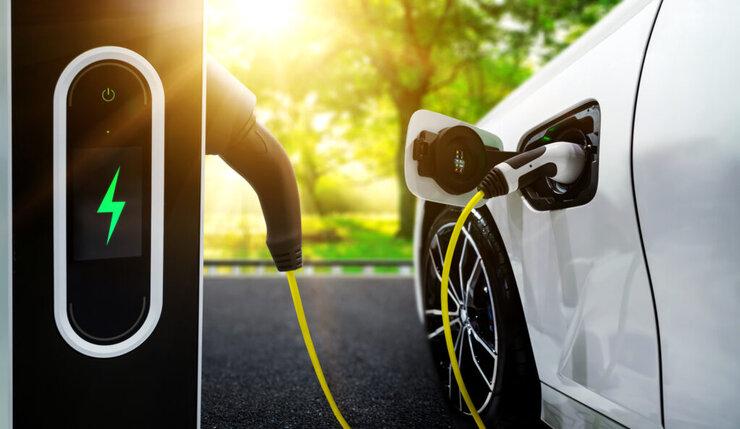
EV charging station for electric car in concept of green energy and eco power produced from sustainable source to supply to charger station in order to reduce CO2 emission .
Do electric cars have fuses?
Did The Neighborhood Get EV Fuses Wrong? Yes — And Marty Should’ve Known Better
Unexpectedly, Marty — the character known for his intelligence, engineering degree, and technical precision — responds with an emphatic: “No!”
For long-time fans, this answer sparked a double-take. Why? Because electric vehicles don’t just have fuses — they rely on multiple types of them to operate safely. Marty, of all people, should know this. While the line serves as a quick punchline, it contradicts the very foundation of his character: a calm, highly educated engineer who rarely makes basic technical mistakes.
The joke lands, but at the cost of technical accuracy and character consistency. Marty is typically the voice of reason and knowledge in the Butler household — especially when it comes to anything mechanical or technological. The idea that he’d misunderstand something as fundamental as an EV fuse system feels out of step with the show’s established internal logic.
Realistically, this is a line that should’ve come from Calvin, whose old-school, hands-on approach to mechanics leaves plenty of room for misunderstandings about modern electric vehicles. Marty would normally be the one who corrects him — not the other way around.
Fact Check: Yes, Electric Cars Have Fuses
Electric cars contain multiple fuse systems, each designed to protect different components and ensure safe operation:
High-Voltage Fuses: Protect the battery pack, inverter, DC-DC converter, and onboard charger.
12-Volt Fuses: Handle accessories like interior lighting, infotainment, power windows, door locks, and safety electronics.
Pyro-Fuses: Specialized safety fuses that instantly disconnect the battery during a crash.
This makes Marty’s confident “No!” not just incorrect but mechanically impossible. EVs rely on fuses in the same way traditional vehicles do — just at higher voltages and sometimes in more sophisticated configurations.
Why the Writers Made This Choice
Like many sitcoms, The Neighborhood occasionally sacrifices technical accuracy for quick comedic timing. The joke required a snappy, surprising answer — and Marty’s overconfident reply delivered that punch. The trade-off is that it momentarily breaks character for a laugh.
For viewers who pay attention to both pop culture and automotive technology, the moment stood out as one of the most transparent technical slips in the series.
What Marty Should Have Said
A more accurate and in-character response could’ve been:
Advertisement
“Yes — and EVs actually use high-voltage fuses, which is why our shop is called The Fuse Box.”
Or the scene could’ve played out with Calvin giving the wrong answer first, and Marty correcting him, keeping both accuracy and humor intact. Either way, the writers opted for the faster laugh, even if it meant bending Marty’s character logic.
Dive into “The Knowledge,” where curiosity meets clarity. This playlist, in collaboration with STMDailyNews.com, is designed for viewers who value historical accuracy and insightful learning. Our short videos, ranging from 30 seconds to a minute and a half, make complex subjects easy to grasp in no time. Covering everything from historical events to contemporary processes and entertainment, “The Knowledge” bridges the past with the present. In a world where information is abundant yet often misused, our series aims to guide you through the noise, preserving vital knowledge and truths that shape our lives today. Perfect for curious minds eager to discover the ‘why’ and ‘how’ of everything around us. Subscribe and join in as we explore the facts that matter. https://stmdailynews.com/the-knowledge/
AI Spacecraft Propulsion: Machine Learning’s Role in Space Travel
AI Spacecraft Propulsion: Discover how AI and machine learning are transforming spacecraft propulsion systems, from nuclear thermal engines to fusion technology, making interplanetary travel faster and more efficient.
Machine learning is a branch of AI that identifies patterns in data that it has not explicitly been trained on. It is a vast field with its own branches, with a lot of applications. Each branch emulates intelligence in different ways: by recognizing patterns, parsing and generating language, or learning from experience. This last subset in particular, commonly known as reinforcement learning, teaches machines to perform their tasks by rating their performance, enabling them to continuously improve through experience. As a simple example, imagine a chess player. The player does not calculate every move but rather recognizes patterns from playing a thousand matches. Reinforcement learning creates similar intuitive expertise in machines and systems, but at a computational speed and scale impossible for humans. It learns through experiences and iterations by observing its environment. These observations allows the machine to correctly interpret each outcome and deploy the best strategies for the system to reach its goal. Reinforcement learning can improve human understanding of deeply complex systems – those that challenge the limits of human intuition. It can help determine the most efficient trajectory for a spacecraft heading anywhere in space, and it does so by optimizing the propulsion necessary to send the craft there. It can also potentially design better propulsion systems, from selecting the best materials to coming up with configurations that transfer heat between parts in the engine more efficiently.In reinforcement learning, you can train an AI model to complete tasks that are too complex for humans to complete themselves.
Reinforcement learning for propulsion systems
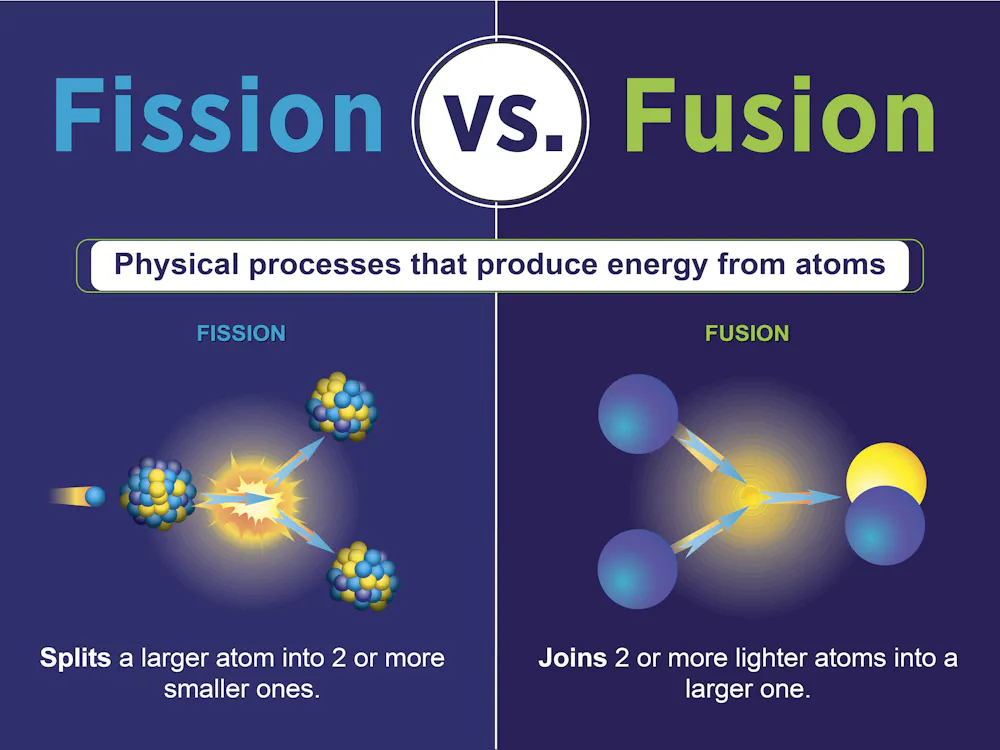
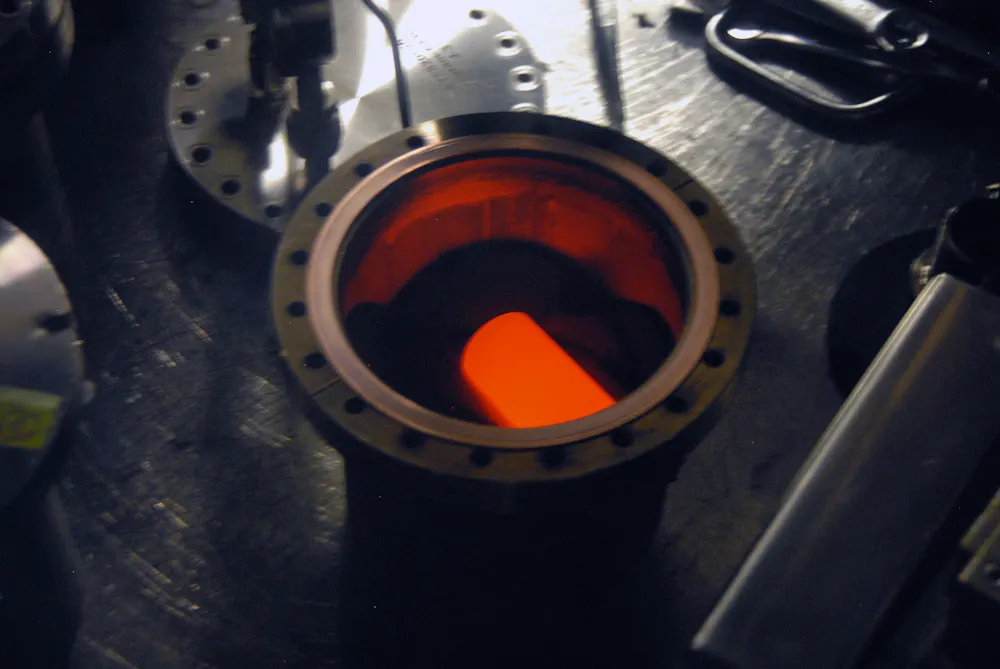
In regard to space propulsion, reinforcement learning generally falls into two categories: those that assist during the design phase – when engineers define mission needs and system capabilities – and those that support real-time operation once the spacecraft is in flight. Among the most exotic and promising propulsion concepts is nuclear propulsion, which harnesses the same forces that power atomic bombs and fuel the Sun: nuclear fission and nuclear fusion. Fission works by splitting heavy atoms such as uranium or plutonium to release energy – a principle used in most terrestrial nuclear reactors. Fusion, on the other hand, merges lighter atoms such as hydrogen to produce even more energy, though it requires far more extreme conditions to initiate.Fission splits atoms, while fusion combines atoms.Sarah Harman/U.S. Department of Energy Fission is a more mature technology that has been tested in some space propulsion prototypes. It has even been used in space in the form of radioisotope thermoelectric generators, like those that powered the Voyager probes. But fusion remains a tantalizing frontier. Nuclear thermal propulsion could one day take spacecraft to Mars and beyond at a lower cost than that of simply burning fuel. It would get a craft there faster than electric propulsion, which uses a heated gas made of charged particles called plasma. Unlike these systems, nuclear propulsion relies on heat generated from atomic reactions. That heat is transferred to a propellant, typically hydrogen, which expands and exits through a nozzle to produce thrust and shoot the craft forward. So how can reinforcement learning help engineers develop and operate these powerful technologies? Let’s begin with design.The nuclear heat source for the Mars Curiosity rover, part of a radioisotope thermoelectric generator, is encased in a graphite shell. The fuel glows red hot because of the radioactive decay of plutonium-238.Idaho National Laboratory, CC BY
Reinforcement learning’s role in design
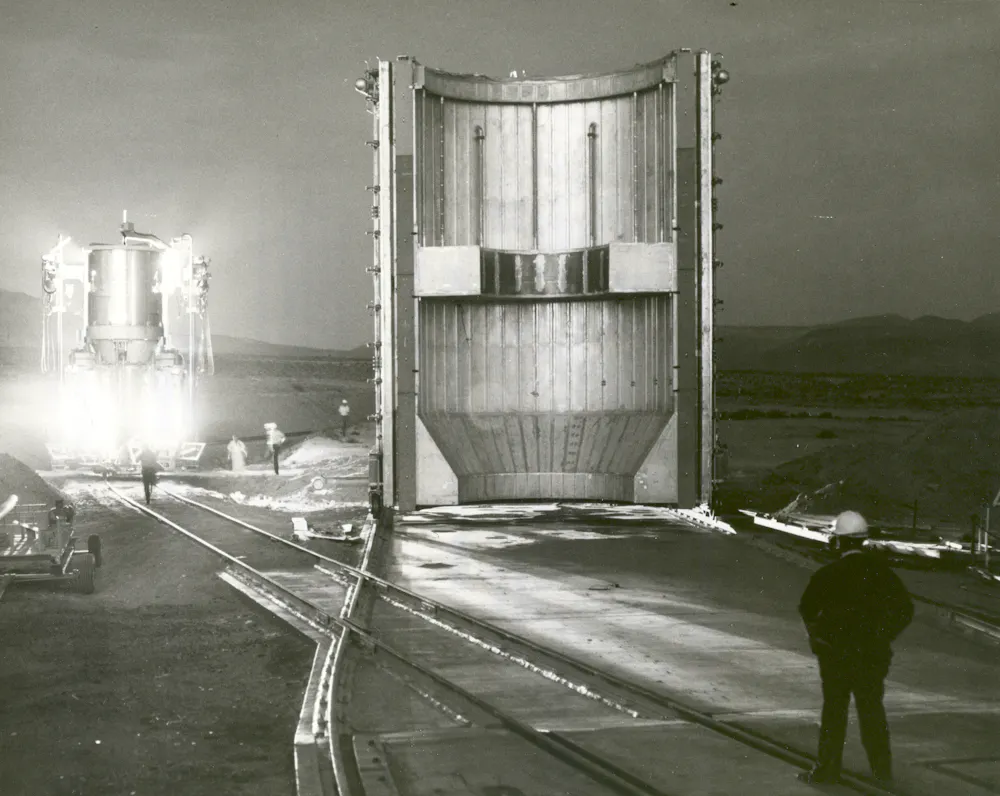
Early nuclear thermal propulsion designs from the 1960s, such as those in NASA’s NERVA program, used solid uranium fuel molded into prism-shaped blocks. Since then, engineers have explored alternative configurations – from beds of ceramic pebbles to grooved rings with intricate channels.The first nuclear thermal rocket was built in 1967 and is seen in the background. In the foreground is the protective casing that would hold the reactor.NASA/Wikipedia Why has there been so much experimentation? Because the more efficiently a reactor can transfer heat from the fuel to the hydrogen, the more thrust it generates. This area is where reinforcement learning has proved to be essential. Optimizing the geometry and heat flow between fuel and propellant is a complex problem, involving countless variables – from the material properties to the amount of hydrogen that flows across the reactor at any given moment. Reinforcement learning can analyze these design variations and identify configurations that maximize heat transfer. Imagine it as a smart thermostat but for a rocket engine – one you definitely don’t want to stand too close to, given the extreme temperatures involved.
Reinforcement learning and fusion technology
Reinforcement learning also plays a key role in developing nuclear fusion technology. Large-scale experiments such as the JT-60SA tokamak in Japan are pushing the boundaries of fusion energy, but their massive size makes them impractical for spaceflight. That’s why researchers are exploring compact designs such as polywells. These exotic devices look like hollow cubes, about a few inches across, and they confine plasma in magnetic fields to create the conditions necessary for fusion. Controlling magnetic fields within a polywell is no small feat. The magnetic fields must be strong enough to keep hydrogen atoms bouncing around until they fuse – a process that demands immense energy to start but can become self-sustaining once underway. Overcoming this challenge is necessary for scaling this technology for nuclear thermal propulsion.
Reinforcement learning and energy generation
However, reinforcement learning’s role doesn’t end with design. It can help manage fuel consumption – a critical task for missions that must adapt on the fly. In today’s space industry, there’s growing interest in spacecraft that can serve different roles depending on the mission’s needs and how they adapt to priority changes through time. Military applications, for instance, must respond rapidly to shifting geopolitical scenarios. An example of a technology adapted to fast changes is Lockheed Martin’s LM400 satellite, which has varied capabilities such as missile warning or remote sensing. But this flexibility introduces uncertainty. How much fuel will a mission require? And when will it need it? Reinforcement learning can help with these calculations. From bicycles to rockets, learning through experience – whether human or machine – is shaping the future of space exploration. As scientists push the boundaries of propulsion and intelligence, AI is playing a growing role in space travel. It may help scientists explore within and beyond our solar system and open the gates for new discoveries. Marcos Fernandez Tous, Assistant Professor of Space Studies, University of North Dakota; Preeti Nair, Master’s Student in Aerospace Sciences, University of North Dakota; Sai Susmitha Guddanti, Ph.D. Student in Aerospace Sciences, University of North Dakota, and Sreejith Vidhyadharan Nair, Research Assistant Professor of Aviation, University of North Dakota This article is republished from The Conversation under a Creative Commons license. Read the original article.
Dive into “The Knowledge,” where curiosity meets clarity. This playlist, in collaboration with STMDailyNews.com, is designed for viewers who value historical accuracy and insightful learning. Our short videos, ranging from 30 seconds to a minute and a half, make complex subjects easy to grasp in no time. Covering everything from historical events to contemporary processes and entertainment, “The Knowledge” bridges the past with the present. In a world where information is abundant yet often misused, our series aims to guide you through the noise, preserving vital knowledge and truths that shape our lives today. Perfect for curious minds eager to discover the ‘why’ and ‘how’ of everything around us. Subscribe and join in as we explore the facts that matter. https://stmdailynews.com/the-knowledge/
Now, that futuristic vision has gained some serious thrust. Archer Aviation — one of the leading players in electric vertical take-off and landing (eVTOL) aircraft — has announced a major move that could change how the city thinks about air mobility.
Archer Takes Control of Hawthorne Airport
In a landmark deal, Archer announced plans to acquire control of Hawthorne Airport — just three miles from LAX — for approximately $126 million in cash.
The 80-acre site, home to 190,000 square feet of hangars and terminal facilities, will become the company’s operational hub for its Los Angeles air-taxi network and a testbed for AI-driven aviation technology.
Alongside the purchase, Archer raised an additional $650 million in new equity funding, bringing its liquidity to more than $2 billion — a strong signal that the company is serious about turning concept into concrete.
What This Means for LA’s Mobility Future
This isn’t just a real estate move. It’s a strategic infrastructure play.
If Los Angeles is to handle Olympic crowds and long-term congestion, new vertical mobility hubs are essential. Hawthorne could serve as the first of several vertiports forming a network across the metro area.
It also puts Archer in a prime position to work alongside city planners and mobility partners preparing for the LA28 Games — potentially transforming how visitors move between venues, airports, and downtown.
Caution: Not Quite “Jetsons” Yet
While this progress looks promising, it’s not smooth skies ahead just yet.
FAA certification remains the biggest hurdle; only about 15% of compliance documentation has been approved. Production and scaling still pose risks — building and maintaining a fleet of electric aircraft at commercial levels isn’t cheap. Public acceptance will matter too. Even the quietest aircraft need to earn the city’s trust for noise, cost, and safety.
Advertisement
Still, compared to even a year ago, the vision of air taxis over Los Angeles feels far less like science fiction.
A Step Toward the Olympic Future
Archer’s move aligns perfectly with the question we raised earlier:
Can Los Angeles turn the 2028 Olympics into a showcase for sustainable, futuristic transportation?
By securing its own hub near LAX and backing it with fresh capital, Archer seems determined to make that answer a yes. Whether passengers will be hailing flying taxis in time for LA28 remains uncertain, but the groundwork — both financial and physical — is clearly being laid.
The skies over LA might just get busier — and cleaner — in the years to come.
Dive into “The Knowledge,” where curiosity meets clarity. This playlist, in collaboration with STMDailyNews.com, is designed for viewers who value historical accuracy and insightful learning. Our short videos, ranging from 30 seconds to a minute and a half, make complex subjects easy to grasp in no time. Covering everything from historical events to contemporary processes and entertainment, “The Knowledge” bridges the past with the present. In a world where information is abundant yet often misused, our series aims to guide you through the noise, preserving vital knowledge and truths that shape our lives today. Perfect for curious minds eager to discover the ‘why’ and ‘how’ of everything around us. Subscribe and join in as we explore the facts that matter. https://stmdailynews.com/the-knowledge/
Rod: A creative force, blending words, images, and flavors. Blogger, writer, filmmaker, and photographer. Cooking enthusiast with a sci-fi vision. Passionate about his upcoming series and dedicated to TNC Network. Partnered with Rebecca Washington for a shared journey of love and art. View all posts