

Space and Tech
The Starbase rocket testing facility is permanently changing the landscape of southern Texas


Robert A. Kopack, University of South Carolina
If there is a leader in the aerospace industry, SpaceX is it. The company’s Crew Dragon and Cargo Dragon spacecrafts are the current go-to vehicles to deliver astronauts and supplies to the International Space Station.
NASA contracts awarded to SpaceX through 2030 alone are worth nearly US$5 billion and include research and development for the Artemis mission to return astronauts to the Moon.
Over the past decade, SpaceX has also emerged as a key vendor to the U.S. Department of Defense, seen most recently with a $733.5 million contract for projects such as launching defense satellite networks and contributing to other national security space objectives.
As a human geographer, I’m interested in how commercial space and defense companies affect the local communities where they conduct launches and tests.
For instance, I spent over two years in Kazakhstan researching the privatization of the Soviet space program and the beginning of a global commercial space industry.
Elon Musk and SpaceX’s influence
Politically, SpaceX is an enormous boon to the United States.
As a U.S.-based defense supplier and contractor, the company’s technology has helped to nearly end an almost two-decade dependency on the Russian Federation for access to the International Space Station. Its billionaire CEO, Elon Musk, has even expressed plans to colonize Mars.
Musk’s decision to spend $250 million helping Donald Trump win the 2024 presidential election is expected to lead to more support for SpaceX.
In the new administration, Musk is poised to lead a newly created advisory agency called the Department of Government Efficiency, which could lead to benefits for his business and widen his space ambitions.
Boca Chica, Texas, is home to SpaceX’s flagship assembly and test installation, Starbase. Since 2021, I have been conducting research with environmental groups and multigenerational community members of Latino and Indigenous descent in south Texas who see space exploration as a landscape-altering industry that affects their well-being.
After watching Starbase’s development proceed since 2014, locals there told me that there is much unseen and unsaid about what happens on the ground while an aerospace giant shoots for the stars.
Breaking eggs to make an omelet
Starbase is an industrial installation built by SpaceX to fabricate and test a number of the company’s rocket types.
The area around it is a unique and delicate ecosystem that includes estuaries and coastal grasslands, mud flats and more, where falcons, hawks, ravens, gulls and songbirds live.
Since construction began, SpaceX engineers have had to drain water-logged soils, level them and pour concrete to support ground tracking stations, assembly buildings, engine test stands, a nearly 500-foot (152-meter) launch tower and onsite fuel mixing and storage.
In a lengthy response to local environmental groups’ claims of environmental abuses, the company maintains that it is dedicated to environmental stewardship.
But developing rockets is a dangerous and messy business. Sites chosen for this kind of work are often, though not always, remote and highly secured installations.
Fiery explosions on the ground or in the air aren’t unheard of over the past several years. Rocket tests in Scotland, China and Japan have all ended in accidents.
In April 2023, one of SpaceX’s prototype Starship rockets exploded over the Gulf of Mexico shortly after liftoff.
This is not the only time that a rocket has exploded at places where SpaceX operates.
SpaceX runs a compact though growing operation at Boca Chica that has transformed the area. The hamlet was previously known as Kopernik Shores, and SpaceX purchased nearly all of the approximately 35 ranch homes in the area. Some residents have reported pressure to sell their property for suboptimal prices following rumors that the county would use eminent domain to seize their residences.
I spoke to Rebekah Hinojosa, a local activist and member of the Carrizo-Comecrudo Tribe of Texas, while researching in the area. To many locals, including Hinojosa, it seems like Musk is so well connected that SpaceX is insulated from public criticism.
In a 2018 press conference, Musk said, “We’ve got a lot of land with no one around, and so if it blows up, it’s cool,” referring to a rocket he planned to test at Starbase.
Changes to the landscape
An installation the size of Starbase cannot avoid disturbing the wildlife in the four distinct state and federal wildlife protection areas that surround it.
If you walk through the protected areas you may see shrapnel, segments of rocket chassis and other random debris from any number of explosions – that is, if someone else hasn’t picked them up first.
In December 2022, I visited a luxury campground near Starbase. It displayed various fragments of rocket debris, which they called memorabilia to the new space age, throughout the site.
Within SpaceX, as well as NASA, the explosion of 2023 was celebrated as a crucial step in developing the Starship rocket. The event did produce valuable data on the rocket’s performance – it has done little to tarnish the company’s reputation.
There is tremendous support for SpaceX in Texas. The company has promised to drive high-tech industry jobs into a region ranked among the country’s poorest.
SpaceX has created about 2,100 jobs. However, reporting shows that local and state politicians have seen more personal gains in their real estate holdings and campaign budgets than the region’s economy has overall.
A laboratory near the community
At the end of the day, to develop a rocket, you need a place to test your design.
“Our local beach is the laboratory,” local activist Hinojosa told me.
Resident coalitions of Indigenous, Latino and Chicano people as well as conservation groups are suing the Texas Parks and Wildlife Department, the Federal Aviation Administration and others to combat SpaceX.
These groups argue that SpaceX misled state and federal regulators about Starbase’s operations. They claim SpaceX changed how frequently it planned to launch tests and built new facilities for several rocket types, which rendered the company’s original environmental impact statement for the area inaccurate.
Some key issues these groups are fighting against include a bid to expand Starbase into more protected areas. Another point of contention is the deluge system, which creates thousands of gallons of toxic wastewater to cool launch pads and rocket engines after testing.
While the EPA and the Texas Commission on Environmental Quality have notified SpaceX about violations of the Clean Water Act, claimants in a recent lawsuit contend that these agencies have not held the company accountable for breaking the law. The company has denied any wrongdoing and refutes claims of environmental harms.
“As we have built up capacity to launch and developed new sites across the country, we have always been committed to public safety and mitigating impacts to the environment,” a SpaceX statement reads. “The list of measures we take just for operations in Texas is over two hundred items long, including constant monitoring and sampling of the short and long-term health of local flora and fauna. The narrative that we operate free of, or in defiance of, environmental regulation is demonstrably false.”
So, what does the future hold? Many people from conservation agencies, activist groups and Indigenous communities in Texas want the company out. Given the high public support for space exploration in the U.S. and the burgeoning friendship between Musk and Trump, a SpaceX evacuation from the area seems unlikely.
While it may take difficult negotiations that require concessions from each party, I hope that somewhere there is a middle ground on which space exploration and environmental protections can coexist.
This article was updated on Jan. 17, 2024 to reflect the amount of money Musk spent helping Trump win the 2024 election as $250 million and the correct speed of light.
Robert A. Kopack, Faculty Instructor of Human Geographies, University of South Carolina
This article is republished from The Conversation under a Creative Commons license. Read the original article.
STM Daily News is a vibrant news blog dedicated to sharing the brighter side of human experiences. Emphasizing positive, uplifting stories, the site focuses on delivering inspiring, informative, and well-researched content. With a commitment to accurate, fair, and responsible journalism, STM Daily News aims to foster a community of readers passionate about positive change and engaged in meaningful conversations. Join the movement and explore stories that celebrate the positive impacts shaping our world.



The Knowledge
Artemis II’s long countdown – a space historian explains why it has taken over 50 years to return to the Moon
Why has it taken 50+ years to return to the Moon? A space historian explains the technical, political, and financial complexities behind Artemis II’s long journey.
Emily A. Margolis, Smithsonian Institution
While I was leading a tour of the National Air and Space Museum in January 2026, a visitor posed this insightful question: “Why has it taken so long to return to the Moon?”
After all, NASA had the know-how and technology to send humans to the lunar surface more than 50 years ago as part of the Apollo program. And, as another tour guest reminded us, computers today can do so much more than they could back then, as evidenced by the smartphones most of us carry in our pockets. Shouldn’t it be easier to get to the Moon than ever before?
The truth is that sending humans into space safely continues to be difficult, especially as missions increase in complexity.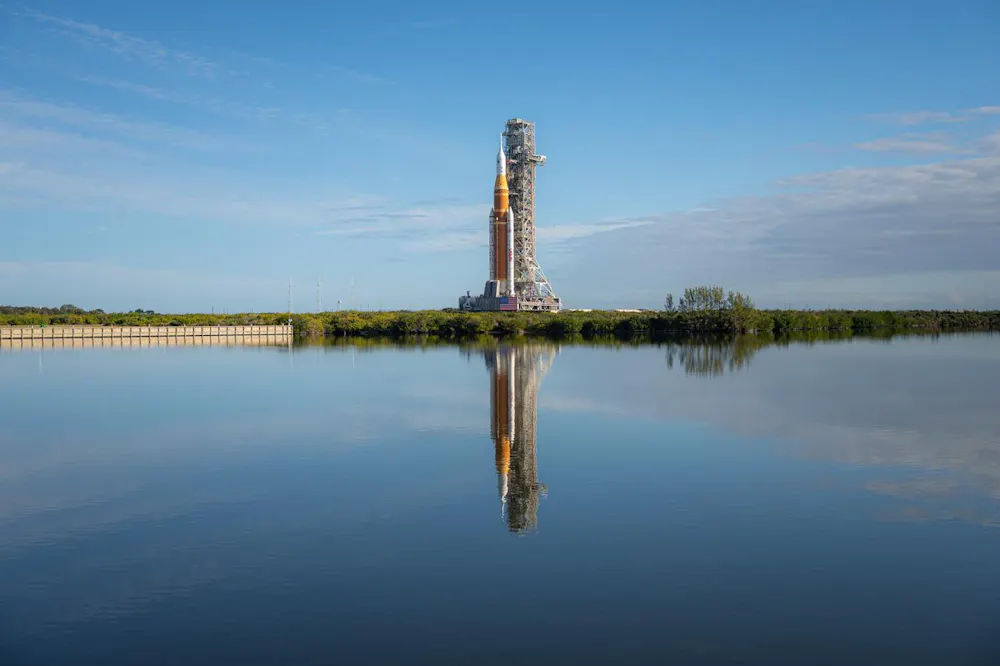
New technologies require years of study, development and testing before they can be certified for flight. And even then, systems and materials can behave in ways that surprise and worry engineers and mission planners; look no further than Boeing’s Starliner CFT mission or the performance of the Orion heat shield on Artemis I.
Issues with Starliner’s thrusters led NASA to return the spacecraft from the International Space Station without its crew. Unanticipated chipping of the Orion heat shield resulted in years of research, culminating in NASA altering the atmospheric reentry plans for the Artemis II mission.
NASA’s programs also require sustained political will and financial support across multiple presidential administrations, Congresses and fiscal years. As a historian of human spaceflight, I have studied the space agency’s efforts to engage the broader public to convince American taxpayers that their programs hold value for the nation.
NASA is now on the eve of the first crewed flight to the Moon since the Apollo era: Artemis II. A crew of four will conduct a lunar flyby, laying the groundwork, the agency hopes, for a landing on the Artemis IV mission.
The story of NASA’s effort to return humans to the Moon is long and winding, demonstrating the complexities of turning grand ambitions into real missions.
Post-Apollo
In early 1970, with two successful Moon landings on the books, President Richard Nixon sought to reduce NASA’s budget to better align with his administration’s priorities. This decision put the space agency in a difficult position, which ultimately led to the cancellation of three planned Apollo missions to conserve funding for its plans for long-term human activity in low Earth orbit.
NASA repurposed the third stage of a Saturn V rocket to create the first U.S. space station, Skylab, which operated from 1973 to 1974. The space agency used leftover Saturn IB rockets and Apollo command and service modules to send crews to the station.
Over the next three decades, NASA developed and operated the space shuttle. The fleet of space shuttle orbiters supported satellite deployment and microgravity research on orbital missions of up to 17 days. This work was meant to enable future long-duration human missions and provide benefits to people on Earth. For example, data from protein crystal growth experiments have informed the development of medicines.
The space shuttle program facilitated the construction, maintenance and staffing of a continuously inhabited research platform in orbit, the International Space Station. The first modules launched in late 1998.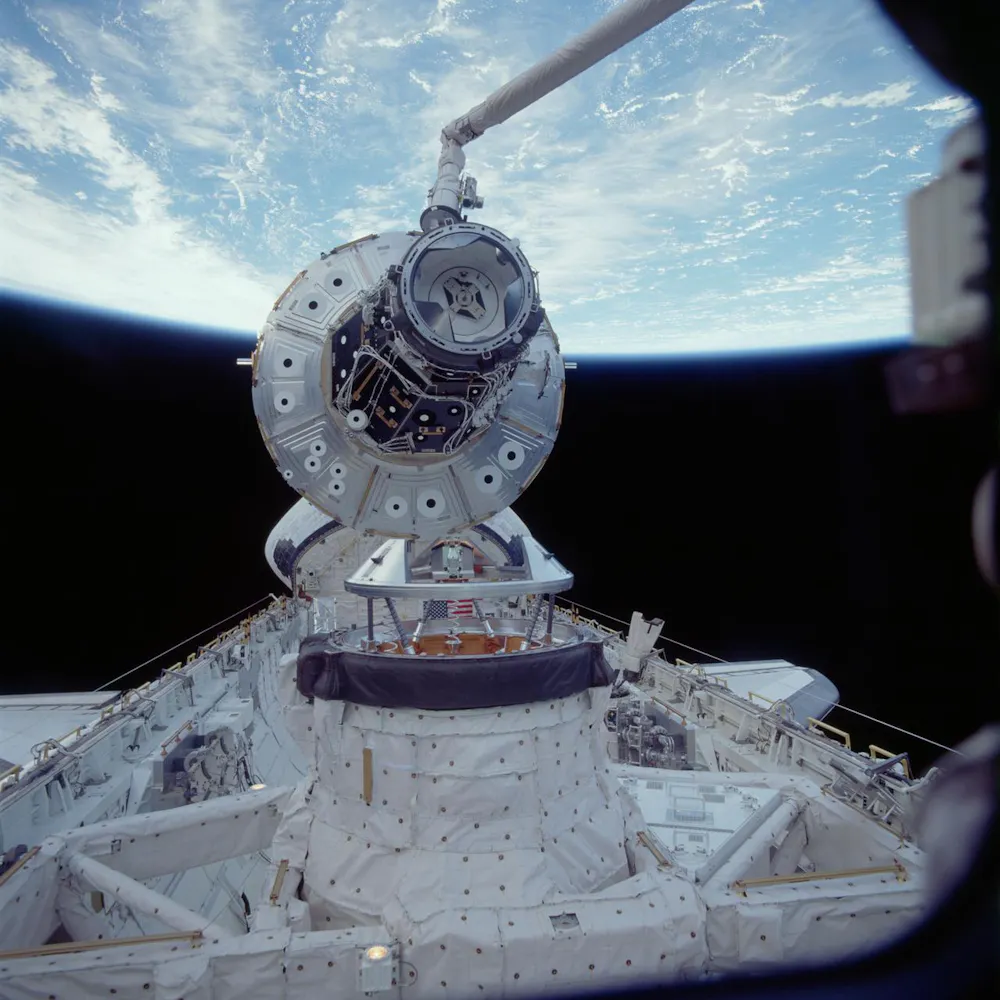
Where to next?
As the new millennium approached, the Clinton administration tasked NASA to think beyond the space station. What could robots and humans do next in space? And where could they do it? Notably, the White House expressed an interest in locations beyond low Earth orbit.
NASA, it turned out, was well positioned to meet the administration’s request. NASA Administrator Daniel Goldin was already thinking about preparing proposals for the next presidential administration and had recently sponsored a human lunar return study. In 1999, he established a team to investigate new technologies, missions and destinations for the 21st century.
This work took on new significance following the tragic loss of the space shuttle Columbia crew in February 2003. Many people, including those in the new George W. Bush White House, wondered whether the human spaceflight program should continue – and, if so, how.
Administration discussions culminated in Bush’s Vision for Space Exploration in 2004, which directed NASA to retire the space shuttle after the completion of the space station. It called for returning humans to the Moon on a crew exploration vehicle designed for destinations beyond low Earth orbit.
It also called for continuing robotic exploration of Mars and engaging companies and international partners in space. Fifteen years earlier, President George H. W. Bush had also announced a Moon and Mars exploration program, but congressional concerns about cost kept space travelers close to home.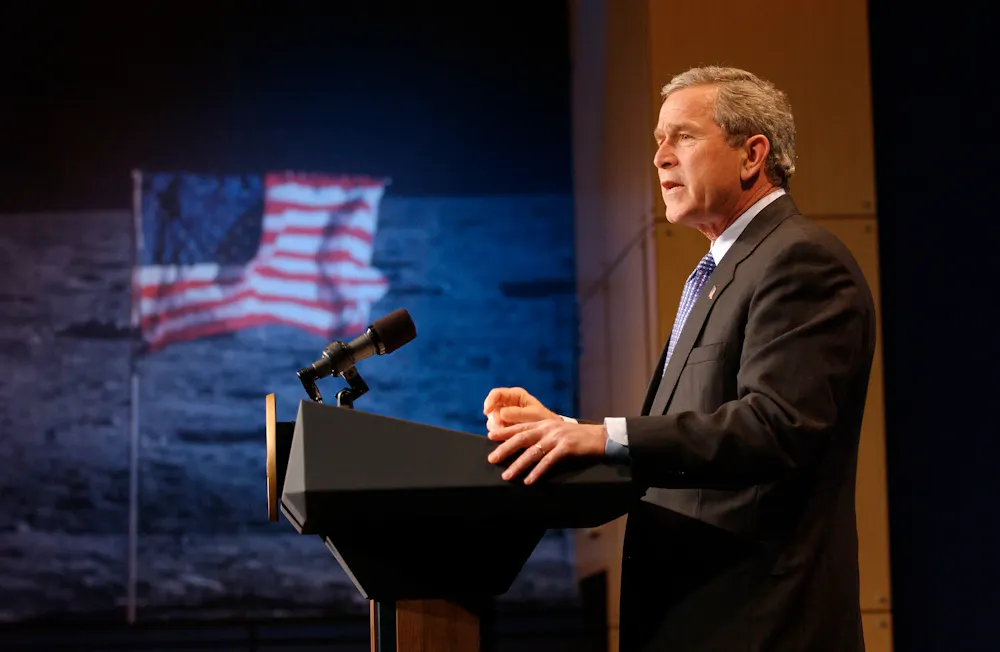
The Constellation program’s legacy
In December 2004, NASA began the process of finding a manufacturer for the crew exploration vehicle. By August 2006, the space agency awarded Lockheed Martin the contract to build the capsule, which it had named Orion – the same Orion planned to carry Artemis astronauts to the Moon.
Years of research, development and testing followed for Orion as well as the Ares I crew and Ares V cargo launch vehicles. Together, these technologies made up the Constellation program.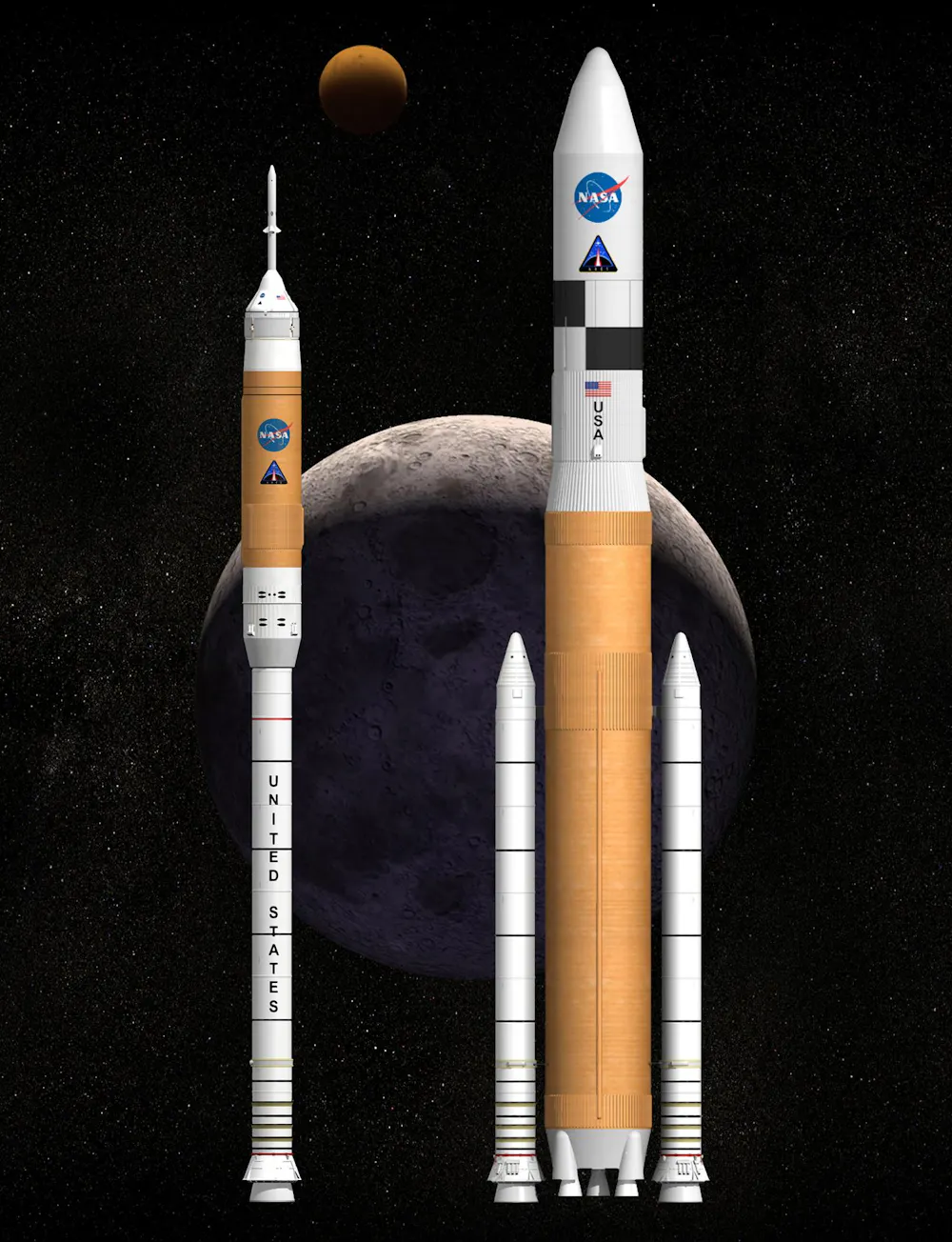
Constellation had two primary objectives: in the near term, to help transport crew to and from the space station after the space shuttle program ended; in the long term, to enable human lunar exploration.
Building systems that could work in both Earth orbit and around the Moon was supposed to save the time and cost of developing two vehicles. Similarly, adapting space shuttle program hardware could supposedly cut costs.
During the first months of Barack Obama’s presidency in 2009, the administration initiated an independent review of NASA’s human spaceflight plans. The Augustine Committee, chaired by retired aerospace executive Norman Augustine, found that the agency’s ambitions outstripped its limited budget, leading to significant delays. The first Orion spacecraft was likely to arrive after the space station ceased operations.
The committee proposed several paths forward at the current funding level, which prioritized space shuttle and space station programs. An additional annual investment of US$3 billion would allow for human exploration beyond low Earth orbit.
Ultimately, the Obama administration canceled Constellation, but two of its technologies lived on, thanks to U.S. senators from states that would have been affected by cuts.
The NASA Authorization Act of 2010 funded Orion’s continued development, shifting responsibility for space station crew transportation to commercial vehicles. It also directed NASA to develop the space launch system, a redesigned Ares V heavy booster, to send Orion to the Moon. The technical strategy had political benefits, too, preserving jobs in numerous congressional districts by providing continuity for aerospace contractors.
In December 2014, a Delta IV heavy rocket launched the first Orion capsule on a test flight, providing engineers with data on spacecraft systems and the heat shield. By October 2015, the space launch system had completed a critical design review, the last step before manufacturing could begin.
Introducing Artemis
In December 2017, the new Trump administration issued a policy directive shifting the focus of NASA’s human spaceflight program back to the Moon. The space agency would use Orion and the space launch system in a race to meet an ambitious 2024 landing date. NASA officially named the program Artemis in May 2019.
The 25-day Artemis I mission, launched in November 2022, was a major milestone for the program. This uncrewed flight was the first flight of the space launch system and the first to integrate SLS and Orion. It laid the groundwork for Artemis II, which will be the first crewed flight of the SLS.
Over more than 50 years, each new presidential administration has reassessed the place of spaceflight among its priorities, either encouraging or curtailing NASA’s efforts to return humans to the lunar surface.
Each crewed flight requires the alignment of technical expertise, political will and financial support over years if not decades. For the space fans who plan to watch the Artemis II launch, the wait for countdown may feel long. But it’s just a blink in NASA’s long journey back to the Moon.
Emily A. Margolis, Curator of Contemporary Spaceflight, National Air and Space Museum, Smithsonian Institution
This article is republished from The Conversation under a Creative Commons license. Read the original article.
Dive into “The Knowledge,” where curiosity meets clarity. This playlist, in collaboration with STMDailyNews.com, is designed for viewers who value historical accuracy and insightful learning. Our short videos, ranging from 30 seconds to a minute and a half, make complex subjects easy to grasp in no time. Covering everything from historical events to contemporary processes and entertainment, “The Knowledge” bridges the past with the present. In a world where information is abundant yet often misused, our series aims to guide you through the noise, preserving vital knowledge and truths that shape our lives today. Perfect for curious minds eager to discover the ‘why’ and ‘how’ of everything around us. Subscribe and join in as we explore the facts that matter. https://stmdailynews.com/the-knowledge/
Space and Tech
Astronaut Victor Glover is the latest in a long line of Black American explorers − including York, the enslaved man who played a key role in the Lewis and Clark expedition
Craig Fehrman, Indiana University
Astronaut Victor Glover
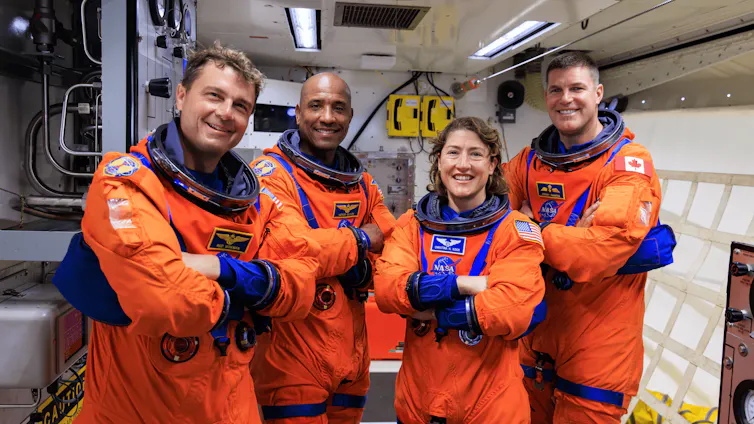
In April 2026, four astronauts are scheduled to fly around the Moon. As part of NASA’s Artemis II mission, they will become the first humans to do so in half a century. One crew member, pilot Victor Glover, will become the first Black astronaut to ever orbit the Moon.
Glover’s achievement is worth celebrating. But it’s also worth remembering that he belongs to a long and underappreciated history. America’s first Black explorer didn’t fly an Apollo rocket or sail with the U.S. Exploring Expedition. He traveled with Lewis and Clark, and he was known by a single name: York.
I’m a historian who spent five years writing a book about Lewis and Clark, and I found new documents that show York was one of the most important people on their expedition. Even in a party that could number as many as 45 men, York stood out – for his courage, his skill and his sacrifices that helped the famous captains reach the Pacific Ocean.
York’s life as a slave

York was born in Virginia around 1770. Growing up, he was a creative and sociable child, unusually tall with dark hair and a dark complexion – “black as a bear,” a contemporary noted.
He was also enslaved by the Clarks. William Clark, who was around the same age, was also unusually tall, though his hair was a rusty red, and sometimes the boys played together. But the playing stopped once York turned 9 or 10. That’s when he joined the adult slaves in working full time. That’s also when he began to note the differences between his life and William’s – differences that became only clearer once William started ordering him around.
In the 1780s, the Clark household headed to Kentucky. York met a Black woman there and married her. He also became William’s “body servant.”
A body servant was a slave who stayed close to his owner and prioritized his comfort, laying out his clothes and serving his meals. When Meriwether Lewis asked Clark to join his expedition, in 1803, Clark ordered York to accompany him.
Perhaps York was excited for this adventure. Perhaps he was not – it would be punishing, and he would be separated from his wife.
Either way, York didn’t have a choice.
The Corps of Discovery
York proved his worth from the start. Once they reached St. Louis, the soldiers, later known as the Corps of Discovery, rushed to raise winter quarters. Working in hail and snow, York and the others built log huts. They needed rough planks for their tables and bunks, but the carpenters had only a single whipsaw to make them. They chose two men to operate this crucial tool. One of them was York.
On May 14, 1804, the corps began ascending the Missouri River. York helped row and tow the party’s barge, which was the size of a semi-truck trailer. He carried a rifle and hunted – according to the expedition’s journals, he was only the fifth named member to bring down a buffalo. York cooked for the captains. He collected scientific specimens. He nursed the sick, including several soldiers and, later on, Sacagawea, a Shoshone woman who would also prove essential to the expedition’s success.

The soldiers were not always kind in return. During this period, officers rarely brought along enslaved body servants. York’s race probably made some of the men angry or uncomfortable. One day, someone threw so much sand in his face that it nearly blinded him. Clark claimed it was “in fun,” but he also wrote that York was “very near losing his eyes,” and no one else got cruelly sprayed with sand.
That fall, during councils with Native leaders, York played a surprising and vital role. The Arikara, Mandan and Hidatsa all crowded in to see him and to touch his skin. They had never met a Black person before, and York showed off his strength and played with the Native children. Later, the Arikara said York was “the most marvelous” thing about the corps.
The next year, the expedition crossed the Rockies and the Continental Divide. York’s most important – and most overlooked – contributions came soon after. On the Columbia River and its tributaries, the party had to dig out five new canoes and then paddle them through treacherous rapids.
Lewis and Clark allowed only their best rivermen on these foaming, rock-riven waters. One of them was almost certainly York. During my research, I found an unpublished letter in which Clark praised York’s ability to “manage the boats.”
Just as important, York was a strong swimmer, a rare thing in an era when many people never learned to swim.
York’s life as an explorer
On the Columbia River, the corps survived a series of terrifying choke points – soggy hazards they referred to as the “Long Narrows” and the “Great Chute.” After that came the ocean. They had traveled together for more than 4,000 miles (6,400 kilometers), and when the captains asked the men to vote on where to put their final winter quarters, they made sure to ask York, too.
It was the latest sign that his role had changed during this epic journey. But those changes began with York. In the West, he found ways to make choices and assert himself. He sent a buffalo robe to his wife in Kentucky. When Clark told him to scale back his performances for Native people, York ignored him – because he wanted to, and because he could.
York’s vote was also evidence that, like Victor Glover today, he was an official American explorer, a key member of a sprawling, federally funded mission. From 1804 to 1806, the government devoted a larger percentage of its budget to the corps than it devotes to NASA today.
Part of that money was earmarked for York. The Army gave officers who brought along their slaves a monthly ration or its cash equivalent. When the corps made it home, the government paid US$274.57 for York’s labor, a sum similar to what the privates received. But that money didn’t go to York. It went to Clark.
The hidden history of Black explorers
There have been many Black explorers in American history. Thomas Jefferson launched other expeditions besides Lewis and Clark’s, and those expeditions also included enslaved people, though their names have not survived. Isaiah Brown served on the Wheeler Survey, which mapped the West in greater detail after the Civil War. Matthew Henson accompanied Robert Peary on his Arctic expeditions, which received some federal support. More recently, NASA has depended on Black astronauts such as Guy Bluford, Mae Jemison and Jeanette Epps, among others.
York and Victor Glover are, for now, the first and most recent examples of this inspiring tradition. But their contributions go beyond that. When the captains asked York to vote on the winter quarters, they were acknowledging in some small way that he’d proven he was more than a body servant.
Of course, York had always been more than that. It just took 4,000 miles for Lewis and Clark to see it.
Craig Fehrman, Adjunct instructor at the Media School, Indiana University
This article is republished from The Conversation under a Creative Commons license. Read the original article.
🧠 Forgotten Genius Fridays
A Short-Form Series from The Knowledge by STM Daily News
Every Friday, STM Daily News shines a light on brilliant minds history overlooked.
Forgotten Genius Fridays is a weekly collection of short videos and articles dedicated to inventors, innovators, scientists, and creators whose impact changed the world—but whose names were often left out of the textbooks.
From life-saving inventions and cultural breakthroughs to game-changing ideas buried by bias, our series digs up the truth behind the minds that mattered.
Each episode of The Knowledge runs 30–90 seconds, designed for curious minds on the go—perfect for YouTube Shorts, TikTok, Reels, and quick reads.
Because remembering these stories isn’t just about the past—it’s about restoring credit where it’s long overdue.
🔔 New episodes every Friday
📺 Watch now at: stmdailynews.com/the-knowledge
🧠 Now you know.

Last Updated on April 7, 2026 by Daily News Staff
🕒 [UPDATE] Artemis II Reaches the Moon
Orion has reached lunar proximity, giving astronauts a historic view of the Moon as the spacecraft performs its flyby maneuver.

Artemis II Successfully Launches
CAPE CANAVERAL, Fla. — NASA has successfully launched its Artemis II mission, marking the first crewed journey toward the Moon in more than 50 years.
The powerful Space Launch System (SLS) rocket lifted off from Kennedy Space Center on April 1, carrying four astronauts on a 10-day mission around the Moon and back.
On board are Commander Reid Wiseman, Pilot Victor Glover, Mission Specialist Christina Koch, and Canadian astronaut Jeremy Hansen. The mission is already being hailed as a major milestone in NASA’s effort to return humans to deep space.
Shortly after liftoff, the Orion spacecraft successfully reached orbit and deployed its solar arrays, beginning its journey that will eventually send the crew on a translunar trajectory toward the Moon. 
Artemis II is a lunar flyby mission, meaning astronauts will not land but will travel farther from Earth than any human mission in decades while testing critical systems needed for future landings.
The mission also marks several historic firsts, including the first woman and the first person of color—Victor Glover—to travel into lunar space.
NASA says the mission is a key step toward future lunar landings and long-term plans to establish a human presence on the Moon later this decade.
🛰️ Artemis II Mission Timeline
The 10-day Artemis II mission follows a carefully planned trajectory from Earth to the Moon and back:
- Day 1: Launch and Earth orbit
- Day 1–2: Translunar injection burn
- Days 2–4: Deep space travel
- Days 4–5: Lunar flyby
- Days 5–8: Return to Earth
- Days 9–10: Reentry and splashdown
For official updates and in-depth mission details, visit the following trusted sources:
- NASA: Artemis II Mission Overview
- NASA Artemis Program (Return to the Moon)
- Orion Spacecraft – Mission Details
- Space Launch System (SLS) Rocket Overview
- Kennedy Space Center – Launch Operations
- Watch NASA Live Coverage and Replays
🧾 Sources
- NASA official launch coverage and mission updates
- NASA Artemis II press materials and briefings
- NASA Kennedy Space Center launch operations updates
Stay with STM Daily News for live updates on Artemis II.





