
Connect with us

art, culture and humanities

THE XXIII EDITION OF THE HABANO FESTIVAL KICKS OFF

Published

on

  • From February 27th to March 3rd, Havana will welcome aficionados, professionals and experts from all over the world
  • Montecristo, Bolívar and Partagás will be the main brands featured in this new edition of the Habano Festival
  • Live music, gastronomy and the best of Cuban culture will once again flood the Caribbean capital to pay tribute to the world of Habanos

HAVANA /PRNewswire/ — Havana will once again dress up to host the 23rd edition of the Habano Festival and thus become the world capital of this unique product. Between Monday, Feb. 27th and Friday, March 3rd, aficionados, experts, and professionals will gather around what is considered the world’s best tobacco and pay tribute to three of Habanos, S.A.’s most prestigious brands: Montecristo, Bolívar and Partagás, among others.

Feria Comercial Habanos
Feria Comercial XXII Festival del Habano // Habanos, S.A.


For this week-long celebration, a host of activities, workshops, lectures and presentations have been prepared with Habanos as the central theme and with the aim of continuing to convey and share knowledge of both its tradition and its entire value chain.

As in previous editions, attendees from more than 110 countries will get a first-hand look at the novelties Habanos, S.A. will be presenting during the Festival.

The 23rd edition of the Habano Festival kicks off with the opening of the Trade Fair, the most important meeting point for professionals in the tobacco sector, manufacturers of premium products and artisans.  This year’s edition brings together more than 270 exhibitors from 10 countries. That same night, Club Habana will host the first of the special evenings with a Welcome Evening, which will revolve around Montecristo and its much-appreciated Línea Open, and during which its latest novelty will be presented.

The Mid-week evening will take place at El Laguito Protocol Room and will feature Bolívar and La Casa del Habano. It will celebrate the brand’s 121 years and the worldwide importance of the international network of franchised specialized stores with the presentation of a new vitola.

The grand finale of this long-awaited Habano Festival will be the Gala evening to be held on Friday, March 3rd, at Pabexpo. This magical evening will be dedicated to Partagás. One of the most important moments of the Festival will be the Habanos Awards Ceremony and the traditional Humidor Auction, whose proceeds will go, as is customary, to the Cuban Public Health System.

A WEEK FULL OF ACTIVITIES

In parallel, the International Seminar will kick off with the Conference “The Partagás brand as seen through Vitolfilia”, presented by Mr. Fernando González García, President of the Cuban Association of Vitolfilia, and Ms. Zoe Nocedo, member of the Association, at the Havana ConventionCenter. Throughout the week, the same venue will host different masterclasses on the Habanos-making process, as well as tastings and pairings with different products.

We will also experience the excitement of a new edition of the Habanos World Challenge in which, in couples, participants will have to demonstrate their knowledge and mastery of the different stages of Habano making and enjoyment. The successors of Tarek Gamayel and Fadi Hammad, winners of the last edition, will be determined through a series of tests competitors will have to pass.

The program of activities at the 23rd Habano Festival will be rounded out by visits to plantations, which this year will take place in in the Vuelta Abajo zone, in the Pinar del Río* region, as well as visits to the Partagás and La Corona factories to gain first-hand knowledge about the whole Habano-making process.

*(P.A.O.) Protected Appellations of Origin.          

Advertisement
Get More From A Face Cleanser And Spa-like Massage

SOURCE Habanos, S.A.

Author


Discover more from Daily News

Subscribe to get the latest posts sent to your email.

Continue Reading
Advertisement SodaStream USA, inc

STM Blog

‘I were but little happy, if I could say how much’: Shakespeare’s insights on happiness have held up for more than 400 years

The World Happiness Report indicates the U.S. ranks 24th in global happiness, emphasizing that joy arises from societal relationships and care. Shakespeare’s works explore happiness’ duality—both fortune and contentment—highlighting cultural influences that affect individuals’ experiences. Understanding happiness requires recognizing social inequalities, community support, and shared cultural beliefs.

Published

on

Last Updated on May 31, 2025 by Daily News Staff

Shakespeare
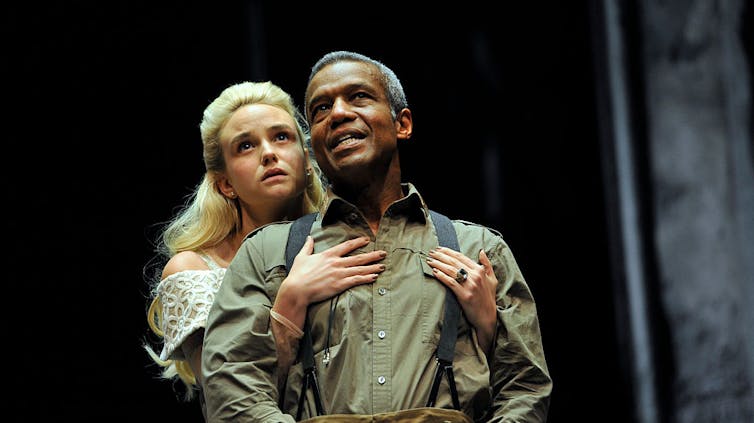
Joanna Vanderham as Desdemona and Hugh Quarshie as the title character in a Royal Shakespeare Company production of ‘Othello.’
Robbie Jack/Corbis via Getty Images

Cora Fox, Arizona State University

What is “happiness” – and who gets to be happy?

Since 2012, the World Happiness Report has measured and compared data from 167 countries. The United States currently ranks 24th, between the U.K. and Belize – its lowest position since the report was first issued. But the 2025 edition – released on March 20, the United Nations’ annual “International Day of Happiness” – starts off not with numbers, but with Shakespeare.

“In this year’s issue, we focus on the impact of caring and sharing on people’s happiness,” the authors explain. “Like ‘mercy’ in Shakespeare’s ‘Merchant of Venice,’ caring is ‘twice-blessed’ – it blesses those who give and those who receive.”

Shakespeare’s plays offer many reflections on happiness itself. They are a record of how people in early modern England experienced and thought about joy and satisfaction, and they offer a complex look at just how happiness, like mercy, lives in relationships and the caring exchanges between people.

Contrary to how we might think about happiness in our everyday lives, it is more than the surge of positive feelings after a great meal, or a workout, or even a great date. The experience of emotions is grounded in both the body and the mind, influenced by human physiology and culture in ways that change depending on time and place. What makes a person happy, therefore, depends on who that person is, as well as where and when they belong – or don’t belong.

Happiness has a history. I study emotions and early modern literature, so I spend a lot of my time thinking about what Shakespeare has to say about what makes people happy, in his own time and in our own. And also, of course, what makes people unhappy.

From fortune to joy

A timber home with lush gardens.
Shakespeare’s birthplace in Stratford-upon-Avon, England.
Tony Hisgett/Flickr via Wikimedia Commons, CC BY-SA

“Happiness” derives from the Old Norse word “hap,” which meant “fortune” or “luck,” as historians Phil Withington and Darrin McMahon explain. This earlier sense is found throughout Shakespeare’s works. Today, it survives in the modern word “happenstance” and the expression that something is a “happy accident.”

But in modern English usage, “happy” as “fortunate” has been almost entirely replaced by a notion of happiness as “joy,” or the more long-term sense of life satisfaction called “well-being.” The term “well-being,” in fact, was introduced into English from the Italian “benessere” around the time of Shakespeare’s birth.

The word and the concept of happiness were transforming during Shakespeare’s lifetime, and his use of the word in his plays mingles both senses: “fortunate” and “joyful.” That transitional ambiguity emphasizes happiness’ origins in ideas about luck and fate, and it reminds readers and playgoers that happiness is a contingent, fragile thing – something not just individuals, but societies need to carefully cultivate and support.

For instance, early in “Othello,” the Venetian senator Brabantio describes his daughter Desdemona as “tender, fair, and happy / So opposite to marriage that she shunned / The wealthy, curled darlings of our nation.” Before she elopes with Othello she is “happy” in the sense of “fortunate,” due to her privileged position on the marriage market.

Advertisement
Get More From A Face Cleanser And Spa-like Massage

Later in the same play, though, Othello reunites with his new wife in Cyprus and describes his feelings of joy using this same term:

…If it were now to die,
‘Twere now to be most happy, for I fear
My soul hath her content so absolute
That not another comfort like to this
Succeeds in unknown fate.

Desdemona responds,

The heavens forbid
But that our loves and comforts should increase
Even as our days do grow!

They both understand “happy” to mean not just lucky, but “content” and “comfortable,” a more modern understanding. But they also recognize that their comforts depend on “the heavens,” and that happiness is enabled by being fortunate.

“Othello” is a tragedy, so in the end, the couple will not prove “happy” in either sense. The foreign general is tricked into believing his young wife has been unfaithful. He murders her, then takes his own life.

The seeds of jealousy are planted and expertly exploited by Othello’s subordinate, Iago, who catalyzes the racial prejudice and misogyny underlying Venetian values to enact his sinister and cruel revenge.

A man and woman hold hands, looking upset, as they sit on a cushion on stage.
James Earl Jones playing the title role and Jill Clayburgh as Desdemona in a 1971 production of ‘Othello.’
Kathleen Ballard/Los Angeles Times/UCLA Library via Wikimedia Commons, CC BY-SA

Happy insiders and outsiders

“Othello” sheds light on happiness’s history – but also on its politics.

While happiness is often upheld as a common good, it is also dependent on cultural forces that make it harder for some individuals to experience. Shared cultural fantasies about happiness tend to create what theorist Sara Ahmed calls “affect aliens”: individuals who, by nature of who they are and how they are treated, experience a disconnect between what their culture conditions them to think should make them happy and their disappointment or exclusion from those positive feelings. Othello, for example, rightly worries that he is somehow foreign to the domestic happiness Desdemona describes, excluded from the joy of Venetian marriage. It turns out he is right.

Because Othello is foreign and Black and Desdemona is Venetian and white, their marriage does not conform to their society’s expectations for happiness, and that makes them vulnerable to Iago’s deceit.

Similarly, “The Merchant of Venice” examines the potential for happiness to include or exclude, to build or break communities. Take the quote about mercy that opens the World Happiness Report.

The phrase appears in a famous courtroom scene, as Portia attempts to persuade a Jewish lender, Shylock, to take pity on Antonio, a Christian man who cannot pay his debts. In their contract, Shylock has stipulated that if Antonio defaults on the loan, the fee will be a “pound of flesh.”

“The quality of mercy is not strained,” Portia lectures him; it is “twice-blessed,” benefiting both giver and receiver.

Advertisement
Get More From A Face Cleanser And Spa-like Massage

It’s a powerful attempt to save Antonio’s life. But it is also hypocritical: Those cultural norms of caring and mercy seem to apply only to other Christians in the play, and not the Jewish people living alongside them in Venice. In that same scene, Shylock reminds his audience that Antonio and the other Venetians in the room have spit on him and called him a dog. He famously asks why Jewish Venetians are not treated as equal human beings: “If you prick us, do we not bleed?”

A sepia-toned photograph of a man with a beard, curly hair and cap staring intently at the camera.
Actor Henry Irving as Shylock in a late 19th-century performance of ‘The Merchant of Venice.’
Lock & Whitfield/Folger Shakespeare Library via Wikimedia Commons, CC BY-SA

Shakespeare’s plays repeatedly make the point that the unjust distribution of rights and care among various social groups – Christians and Jews, men and women, citizens and foreigners – challenges the happy effects of benevolence.

Those social factors are sometimes overlooked in cultures like the U.S., where contemporary notions of happiness are marketed by wellness gurus, influencers and cosmetic companies. Shakespeare’s plays reveal both how happiness is built through communities of care and how it can be weaponized to destroy individuals and the fabric of the community.

There are obvious victims of prejudice and abuse in Shakespeare’s plays, but he does not just emphasize their individual tragedies. Instead, the plays record how certain values that promote inequality poison relationships that could otherwise support happy networks of family and friends.

Systems of support

Pretty much all objective research points to the fact that long-term happiness depends on community, connections and social support: having systems in place to weather what life throws at us.

And according to both the World Happiness Report and Shakespeare, contentment isn’t just about the actual support you receive but your expectations about people’s willingness to help you. Societies with high levels of trust, like Finland and the Netherlands, tend to be happier – and to have more evenly distributed levels of happiness in their populations.

Shakespeare’s plays offer blueprints for trust in happy communities. They also offer warnings about the costs of cultural fantasies about happiness that make it more possible for some, but not for all.The Conversation

Cora Fox, Associate Professor of English and Health Humanities, Arizona State University

This article is republished from The Conversation under a Creative Commons license. Read the original article.


The Bridge is a section of the STM Daily News Blog meant for diversity, offering real news stories about bona fide community efforts to perpetuate a greater good. The purpose of The Bridge is to connect the divides that separate us, fostering understanding and empathy among different groups. By highlighting positive initiatives and inspirational actions, The Bridge aims to create a sense of unity and shared purpose. This section brings to light stories of individuals and organizations working tirelessly to promote inclusivity, equality, and mutual respect. Through these narratives, readers are encouraged to appreciate the richness of diverse perspectives and to participate actively in building stronger, more cohesive communities.

https://stmdailynews.com/the-bridge

Advertisement
Get More From A Face Cleanser And Spa-like Massage

Author


Discover more from Daily News

Subscribe to get the latest posts sent to your email.

Continue Reading

STM Blog

Koyo Kouoh – tribute to a curator who fiercely promoted African art

Published

on

Barnabas Ticha Muvhuti, Rice University

The sudden death of the Cameroon-born curator Koyo Kouoh, at the age of 57 and at the height of her career, has shaken the art world. Her passing has left a void in the African arts scene, one which extends far beyond the continent. Born in 1967 in Douala, she spent her teenage and early adult years in Zurich, Switzerland before returning to the continent and settling in Senegal. She lived in Cape Town, South Africa from 2019. There she was executive director and chief curator of the Zeitz MOCAA museum. It holds the continent’s largest collection of contemporary art. At the time of her death, she was due to become the first African woman to lead the prestigious Venice Biennale, dubbed the “Olympics of art world”. She described her practice, as a creative manager of art spaces and exhibitions, as being deeply rooted in:
A pan-African, feminist, ancestral, activist perspective, but also one that is generous, inclusive and welcoming.
Kouoh was unapologetic about her commitment to promoting Africa and Africanness on the global stage. Her decorated career included serving in global roles as curatorial advisor for leading exhibitions and art events. As a researcher of modern and contemporary arts of Africa, I first met Kouoh in 2015 when she facilitated a curatorial workshop I attended. I would work with her at Zeitz MOCAA, specifically helping research her landmark show, When We See Us: A Century of Black Figuration in Painting. Beyond these achievements, Kouoh mentored countless artists and art organisers, especially women. She leaves a legacy of building sustainable art institutions, critical curating with care, uplifting artists and cultural workers, and educating through art.

Institution building

In her own words:
My motto has always been, You have to set up your own house and build your own home as opposed to trying to get into someone else’s castle.
One of the lasting legacies Kouoh left is teaching how to build African arts institutions, which help give creatives the chance to be seen and heard, and to make independent decisions free of the demands of funders. The RAW Material Company that she established in Dakar stands as testimony of that. Through the artist residency and exhibition space, she was able to bring many independent and emerging artists, curators and gallerists to Senegal. There she published books on art from the continent, helping nurture and shift the Africa art ecosystem as it began to play an increasingly visible role in global art markets.
Her role in reviving the unstable ship that was the Zeitz MOCAA at the time she took over and steering it to becoming one of Africa’s leading cultural institutions and a global competitor says a lot about her vision. As she said:
I’m a fixer, I like to take complicated institutions and make them sustainable.

Education

The exhibitions she led were thoroughly researched and tended to generate critical discourse and public dialogue. When We See Us, for example, comes with an education programme that includes a webinar series. Each exhibition of the show as it tours globally comes with a symposium and a publication with contributions from critical thinkers in the art industry. Even more impressive is how she managed to bring together people from different sectors, including respected academics, cultural workers and captains of industry. We cannot talk about Kouoh’s contributions to art education without mentioning the Zeitz MOCAA & University of the Western Cape Museum Fellowship Programme, geared to grow “curatorial practice as well as advance scholarship on contemporary art discourse from the continent”. In my tenure, I observed that the museum’s Centre for Art Education and its outreach programme were closest to her heart.

Celebrating African artists

At Zeitz MOCAA, Kouoh was more drawn to research-based solo exhibitions or select surveys which offered in-depth insights into “individual practices, with retrospectives and monographs”. In her time at the museum it shone a spotlight on African artists like Senzeni Marasela, Johannes Phokela, Tracey Rose, Mary Evans, Otobong Nkanga and others.
Through the museum’s ongoing Atelier programme, a studio residency which is open and experimental in nature, audiences gain insights into an artist’s practice, process, thinking and intentions. So far, artists like Thania Petersen, Igshaan Adams, Unathi Mkonto and Berni Searle have shared these processes, which normally remain invisible to those who only see the final work. She did all this in just over five years in Cape Town.

Uplifting generations

Kouoh believed in people’s potential and saw infinite possibilities in each one of us. This can be seen through the many peers and young talents she mentored and provided space to flourish. The young team of mostly Black female curators she has left in place at Zeitz MOCAA is proof of that. She cared about the welfare of the people around her.
Of the need to elevate women, she stated:
The importance, or rather the urgency, of focusing on women’s voices cannot be highlighted enough.

Curator of the Venice Biennale 2026

Recently appointed as the next Venice Biennale’s artistic director, Kouoh was due to present the exhibition’s title and theme in Venice on 20 May. Those who have known her practice, as well as her obsessions and values, keenly anticipated the day, knowing African voices would take centre stage. I hope her team will be allowed to execute her ideas to the end.

Legacy

Kouoh belonged to a pioneering generation of African curators who worked hard for the recognition of African voices and creativity on the global stage. Although that recognition started to be earned in the 1990s, she realised a lot more still needed to be done, which is why she never stopped working, even at the most difficult of times.
She shared her vision of building strong independent institutions, encouraging others to do the same. She led in documenting and critically engaging artistic processes, and in producing African knowledge. May her legacy and her spirit live on. As she said:
I do believe in life after death, because I come from an ancestral black education where we believe in parallel lives and realities.The Conversation
Barnabas Ticha Muvhuti, Nancy and Robert J. Carney Postdoctoral Associate in Art History, Rice University This article is republished from The Conversation under a Creative Commons license. Read the original article.

Author


Discover more from Daily News

Subscribe to get the latest posts sent to your email.

Continue Reading

Entertainment

Some ‘Star Wars’ stories have already become reality

Published

on

Star Wars Stories
Tatooine’s moisture farming equipment stands in the desert of Tunisia, where parts of the ‘Star Wars’ movie series were filmed. Véronique Debord-Lazaro via Flickr, CC BY-SA
Daniel B. Oerther, Missouri University of Science and Technology and William Schonberg, Missouri University of Science and Technology Just 48 short years ago, movie director George Lucas used the phrase “A long time ago in a galaxy far, far away” as the opening to the first “Star Wars” movie, later labeled “Episode IV: A New Hope.” But at least four important aspects of the “Star Wars” saga are much closer – both in time and space – than Lucas was letting on. One, the ability to add blue food coloring to milk, was possible even at the time the first film came out. But in 2024, “Star Wars”-themed blue milk became periodically available in grocery stores. And we, an environmental health engineer and a civil engineer, know there are at least three more elements of these ancient, distant Lucas stories that might seem like science fiction but are, in fact, science reality.

Moisture farming

In that first movie, “Episode IV,” Luke Skywalker’s Uncle Owen was a farmer on the planet of Tatooine. He farmed water from air in the middle of a desert. It might sound impossible, but it’s exactly what experts discussed at the second International Atmospheric Water Harvesting Summit hosted by Arizona State University in March 2025. Each day, a human needs to consume about the equivalent of 0.8 gallons of water (3 liters). With more than 8 billion people living on the planet, that means engineers need to produce nearly 2.6 trillion gallons (10 trillion liters) of clean drinking water every year. Taken globally, rainfall would be enough, but it’s distributed very unevenly – including landing in the oceans, where it immediately becomes too salty to drink safely. Deserts, which cover about one-fifth of the Earth’s land area, are home to about 1 billion people. Researchers at places such as Berkeley have developed solar-powered systems that can produce clean drinking water from thin air. In general, they use a material that traps water molecules from the air within its structure and then use sunlight to condense that water out of the material and into drinkable liquid. But there is still a ways to go before they are ready for commercial distribution and available to help large numbers of people.
Researchers can harvest water from air in the desert, in a process powered only by the Sun.

Space debris

When the second Death Star was destroyed in “Return of the Jedi,” it made a huge mess, as you would expect when blowing to smithereens an object at least 87 miles across (140 kilometers). But the movie’s mythology helpfully explains a hyperspace wormhole briefly opened, scattering much of the falling debris across the galaxy. As best as anyone can tell, a hyperspace wormhole has never appeared near Earth. And even if such a thing existed or happened, humans might not have the technology to chuck all our trash in there anyway. So we’re left with a whole lot of stuff all around us, including in space. According to the website Orbiting Now, in late April 2025 there were just over 12,000 active satellites orbiting the planet. All in all, the United States and other space-faring nations are trying to keep track of nearly 50,000 objects orbiting Earth. And there are millions of fragments of space debris too small to be observed or tracked. Just as on Earth’s roads, space vehicles crash into each other if traffic gets too congested. But unlike the debris that falls to the road after an Earth crash, all the bits and pieces that break off in a space crash fly away at speeds of several thousand miles per hour (10,000 to 30,000 kph) and can then hit other satellites or spacecraft that cross their paths. This accumulation of space debris is creating an increasing problem. With more satellites and spacecraft heading to orbit, and more stuff up there moving around that might hit them, space travel is becoming more like flying the Millennium Falcon through an asteroid field every day. Engineers at NASA, the European Space Agency and other space programs are exploring a variety of technologies – including a net, a harpoon and a laser – to remove the more dangerous pieces of space junk and clean up the space environment.
Dodging obstacles in space is no picnic.

The Force itself

To most Earth audiences, the Force was a mysterious energy field created by life that binds the galaxy together. That is until 1999, when “Episode I: The Phantom Menace” revealed that the Force came from midi-chlorians, a microscopic, sentient life form that lives within every living cell. To biologists, midi-chlorians sound suspiciously similar to mitochondria, the powerhouse of our cells. The current working hypothesis is that mitochondria emerged from bacteria that lived within cells of other living things. And mitochondria can communicate with other life forms, including bacteria. There are many different kinds of mitochondria, and medical professionals are learning how to transplant mitochondria from one cell to another just like they transplant organs from one person’s body to another. Maybe one day a transplant procedure could help people find the light side of the Force and turn away from the dark side. May the Fourth – and the Force – be with you.The Conversation Daniel B. Oerther, Professor of Environmental Health Engineering, Missouri University of Science and Technology and William Schonberg, Professor of Civil Engineering, Missouri University of Science and Technology This article is republished from The Conversation under a Creative Commons license. Read the original article.

Discover more from Daily News

Subscribe to get the latest posts sent to your email.

Continue Reading

Trending
