Connect with us

Blog

To spur the construction of affordable, resilient homes, the future is concrete

Published

on

homes
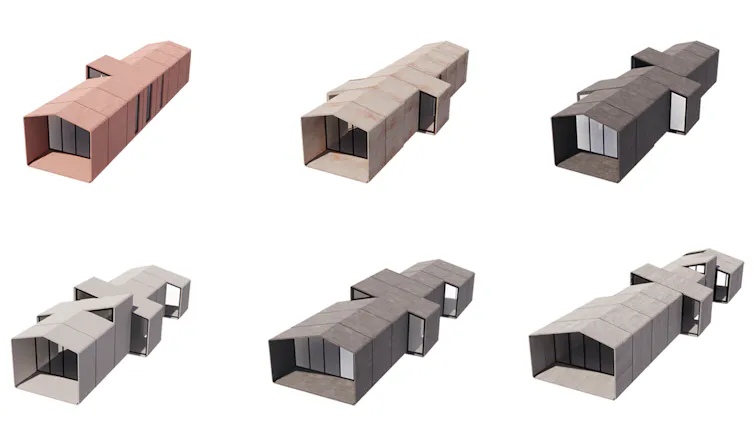
A modular, precast system of concrete ‘rings’ can be connected in different ways to build a range of models of energy-efficient homes.
Pablo Moyano Fernández, CC BY-SA

To spur the construction of affordable, resilient homes, the future is concrete

Pablo Moyano Fernández, Washington University in St. Louis

Wood is, by far, the most common material used in the U.S. for single-family home construction.

But wood construction isn’t engineered for long-term durability, and it often underperforms, particularly in the face of increasingly common extreme weather events.

In response to these challenges, I believe mass-produced concrete homes can offer affordable, resilient housing in the U.S. By leveraging the latest innovations of the precast concrete industry, this type of homebuilding can meet the needs of a changing world.

Wood’s rise to power

Over 90% of the new homes built in the U.S. rely on wood framing.

Wood has deep historical roots as a building material in the U.S., dating back to the earliest European settlers who constructed shelters using the abundant native timber. One of the most recognizable typologies was the log cabin, built from large tree trunks notched at the corners for structural stability.

A mother holds her child in the front doorway of their log cabin home.
Log cabins were popular in the U.S. during the 18th and 19th centuries.
Heritage Art/Heritage Images via Getty Images

In the 1830s, wood construction underwent a significant shift with the introduction of balloon framing. This system used standardized, sawed lumber and mass-produced nails, allowing much smaller wood components to replace the earlier heavy timber frames. It could be assembled by unskilled labor using simple tools, making it both accessible and economical.

In the early 20th century, balloon framing evolved into platform framing, which became the dominant method. By using shorter lumber lengths, platform framing allowed each floor to be built as a separate working platform, simplifying construction and improving its efficiency.

The proliferation and evolution of wood construction helped shape the architectural and cultural identity of the nation. For centuries, wood-framed houses have defined the American idea of home – so much so that, even today, when Americans imagine a house, they typically envision one built of wood.

A row of half-constructed homes surrounded by piles of dirt.
A suburban housing development from the 1950s being built with platform framing.
H. Armstrong Roberts/ClassicStock via Getty Images

Today, light-frame wood construction dominates the U.S. residential market.

Wood is relatively affordable and readily available, offering a cost-effective solution for homebuilding. Contractors are familiar with wood construction techniques. In addition, building codes and regulations have long been tailored to wood-frame systems, further reinforcing their prevalence in the housing industry.

Despite its advantages, wood light-frame construction presents several important limitations. Wood is vulnerable to fire. And in hurricane- and tornado-prone regions, wood-framed homes can be damaged or destroyed.

Wood is also highly susceptible to water-related issues, such as swelling, warping and structural deterioration caused by leaks or flooding. Vulnerability to termites, mold, rot and mildew further compromise the longevity and safety of wood-framed structures, especially in humid or poorly ventilated environments.

Advertisement
Get More From A Face Cleanser And Spa-like Massage

The case for concrete

Meanwhile, concrete has revolutionized architecture and engineering over the past century. In my academic work, I’ve studied, written and taught about the material’s many advantages.

The material offers unmatched strength and durability, while also allowing design flexibility and versatility. It’s low-cost and low-maintenance, and it has high thermal mass properties, which refers to the material’s ability to absorb and store heat during the day, and slowly release it during the cooler nights. This can lower heating and cooling costs.

Properly designed concrete enclosures offer exceptional performance against a wide range of hazards. Concrete can withstand fire, flooding, mold, insect infestation, earthquakes, hail, hurricanes and tornadoes.

It’s commonly used for home construction in many parts of the world, such as Europe, Japan, Mexico, Brazil and Argentina, as well as India and other parts of Southeast Asia.

However, despite their multiple benefits, concrete single-family homes are rare in the U.S.

That’s because most concrete structures are built using a process called cast-in-place. In this technique, the concrete is formed and poured directly at the construction site. The method relies on built-in-place molds. After the concrete is cast and cured over several days, the formwork is removed.

This process is labor-intensive and time-consuming, and it often produces considerable waste. This is particularly an issue in the U.S., where labor is more expensive than in other parts of the world. The material and labor cost can be as high as 35% to 60% of the total construction cost.

Portland cement, the binding agent in concrete, requires significant energy to produce, resulting in considerable carbon dioxide emissions. However, this environmental cost is often offset by concrete’s durability and long service life.

Concrete’s design flexibility and structural integrity make it particularly effective for large-scale structures. So in the U.S., you’ll see it used for large commercial buildings, skyscrapers and most highways, bridges, dams and other critical infrastructure projects.

But when it comes to single-family homes, cast-in-place concrete poses challenges to contractors. There are the higher initial construction costs, along with a lack of subcontractor expertise. For these reasons, most builders and contractors stick with what they know: the wood frame.

Advertisement
Get More From A Face Cleanser And Spa-like Massage

A new model for home construction

Precast concrete, however, offers a promising alternative.

Unlike cast-in-place concrete, precast systems allow for off-site manufacturing under controlled conditions. This improves the quality of the structure, while also reducing waste and labor.

The CRETE House, a prototype I worked on in 2017 alongside a team at Washington University in St. Louis, showed the advantages of a precast home construction.

To build the precast concrete home, we used ultra-high-performance concrete, one of the latest advances in the concrete industry. Compared with conventional concrete, it’s about six times stronger, virtually impermeable and more resistant to freeze-thaw cycles. Ultra-high-performance concrete can last several hundred years.

The strength of the CRETE House was tested by shooting a piece of wood at 120 mph (193 kph) to simulate flying debris from an F5 tornado. It was unable to breach the wall, which was only 2 inches (5.1 centimeters) thick.

The wall of the CRETE House was able to withstand a piece of wood fired at 120 mph (193 kph).

Building on the success of the CRETE House, I designed the Compact House as a solution for affordable, resilient housing. The house consists of a modular, precast concrete system of “rings” that can be connected to form the entire structure – floors, walls and roofs – creating airtight, energy-efficient homes. A series of different rings can be chosen from a catalog to deliver different models that can range in size from 270 to 990 square feet (25 to 84 square meters).

The precast rings can be transported on flatbed trailers and assembled into a unit in a single day, drastically reducing on-site labor, time and cost.

Since they’re built using durable concrete forms, the house can be easily mass-produced. When precast concrete homes are mass-produced, the cost can be competitive with traditional wood-framed homes. Furthermore, the homes are designed to last far beyond 100 years – much longer than typical wood structures – while significantly lowering utility bills, maintenance expenses and insurance premiums.

The project is also envisioned as an open-source design. This means that the molds – which are expensive – are available for any precast producer to use and modify.
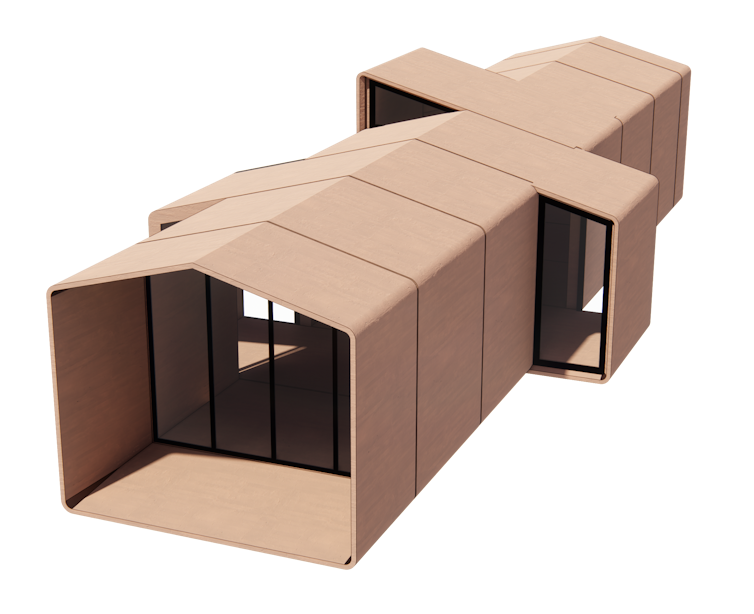
A computer graphic showing a prototype of a small, concrete home.
The Compact House is made using ultra-high-performance concrete.
Pablo Moyano Fernández, CC BY-SA

Leveraging a network that’s already in place

Two key limitations of precast concrete construction are the size and weight of the components and the distance to the project site.

Precast elements must comply with standard transportation regulations, which impose restrictions on both size and weight in order to pass under bridges and prevent road damage. As a result, components are typically limited to dimensions that can be safely and legally transported by truck. Each of the Compact House’s pieces are small enough to be transported in standard trailers.

Advertisement
Get More From A Face Cleanser And Spa-like Massage

Additionally, transportation costs become a major factor beyond a certain range. In general, the practical delivery radius from a precast plant to a construction site is 500 miles (805 kilometers). Anything beyond that becomes economically unfeasible.

However, the infrastructure to build precast concrete homes is already largely in place. Since precast concrete is often used for office buildings, schools, parking complexes and large apartments buildings, there’s already an extensive national network of manufacturing plants capable of producing and delivering components within that 500-mile radius.

There are other approaches to build homes with concrete: Homes can use concrete masonry units, which are similar to cinder blocks. This is a common technique around the world. Insulated concrete forms involve rigid foam blocks that are stacked like Lego bricks and are then filled with poured concrete, creating a structure with built-in insulation. And there’s even 3D-printed concrete, a rapidly evolving technology that is in its early stages of development.

However, none of these use precast concrete modules – the rings in my prototypes – and therefore require substantially longer on-site time and labor.

To me, precast concrete homes offer a compelling vision for the future of affordable housing. They signal a generational shift away from short-term construction and toward long-term value – redefining what it means to build for resilience, efficiency and equity in housing.

A bird's-eye view of a computer-generated neighborhood featuring plots of land with multiple concrete homes located on them.
An image of North St. Louis, taken from Google Earth, showing how vacant land can be repurposed using precast concrete homes.
Pablo Moyano Fernández, CC BY-SA

This article is part of a series centered on envisioning ways to deal with the housing crisis.

Pablo Moyano Fernández, Assistant Professor of Architecture, Washington University in St. Louis

This article is republished from The Conversation under a Creative Commons license. Read the original article.

Continue Reading
Advertisement SodaStream USA, inc

The Knowledge

Metrolink Offers Fare-Free Rides for Earth Day 2026 Across Southern California

Metrolink offers fare-free rides for Earth Day 2026 across Southern California, encouraging sustainable travel and reduced emissions.

Published

on

Last Updated on April 21, 2026 by Daily News Staff

Metrolink Offers Fare-Free Rides for Earth Day 2026
Image Credit: Metrolink

Metrolink Offers Fare-Free Rides for Earth Day 2026

LOS ANGELES — April 22, 2026 — In a continued push toward sustainable transportation, Metrolink will once again offer systemwide free rides on Earth Day, inviting commuters and travelers to leave their cars behind and explore a cleaner way to move across the region.

A One-Day Opportunity to Ride Free

On Wednesday, April 22, passengers can board any Metrolink train — including the Arrow service — without purchasing a ticket. The initiative is part of the broader celebration of Earth Day, encouraging environmentally conscious travel choices.

The fare-free program is designed to appeal to both regular riders and first-time users, particularly those navigating Southern California’s persistent traffic congestion and rising fuel costs.

ml earth emailheader eng.jpg
Image Credit: Metrolink

Encouraging Sustainable Travel Habits

“Earth Day is a reminder that small changes, like choosing public transit over driving one day a week, can have a meaningful impact on our environment,” said Doug Chaffee, chair of the Metrolink Board.

With gas prices continuing to strain household budgets, the agency hopes the initiative will inspire more residents to consider rail as part of their regular commute.

Regional Connections Expand Access

Metrolink’s Earth Day promotion aligns with similar efforts by other Southern California transit providers. Riders can seamlessly connect to services operated by: LA Metro and the Orange County Transportation AuthorityRiverside County Transportation CommissionSan Bernardino County Transportation Authority and Ventura County Transportation Commission.

These partnerships extend the reach of fare-free travel across a six-county region, making it easier for riders to explore destinations without relying on personal vehicles.

Service Adjustments and Rider Tips

Passengers should note that trains will operate on a reduced weekday schedule, implemented earlier this spring. Despite the adjustment, all Metrolink lines and station cities remain in service.

For those planning a trip:

  • No ticket is required — simply board the train
  • Bikes are welcome, with capacity ranging from three bikes per standard car to nine in designated bike cars
  • A curated destination guide highlights attractions within walking or biking distance of stations

Environmental and Economic Impact

Metrolink is also promoting its Personal Impact Calculator, a digital tool that allows riders to estimate how switching from driving to rail can reduce greenhouse gas emissions and lower fuel expenses.

A Broader Trend in Public Transit

Fare-free transit days have gained traction nationwide as agencies look to boost ridership and promote sustainability. Southern California’s expansive commuter rail network makes it particularly well-suited for such initiatives, offering a viable alternative to one of the country’s most car-dependent regions.


Bottom Line

Metrolink’s Earth Day promotion is more than a one-day free ride — it’s a strategic effort to shift commuter behavior, reduce environmental impact, and showcase the convenience of regional rail. For Southern Californians, April 22 presents a low-risk opportunity to rethink how they travel.

Advertisement
Get More From A Face Cleanser And Spa-like Massage

Source: Metrolink

https://metrolinktrains.com/news/metrolink-goes-fare-free-for-earth-day-on-april-22

Dive into “The Knowledge,” where curiosity meets clarity. This playlist, in collaboration with STMDailyNews.com, is designed for viewers who value historical accuracy and insightful learning. Our short videos, ranging from 30 seconds to a minute and a half, make complex subjects easy to grasp in no time. Covering everything from historical events to contemporary processes and entertainment, “The Knowledge” bridges the past with the present. In a world where information is abundant yet often misused, our series aims to guide you through the noise, preserving vital knowledge and truths that shape our lives today. Perfect for curious minds eager to discover the ‘why’ and ‘how’ of everything around us. Subscribe and join in as we explore the facts that matter.  https://stmdailynews.com/the-knowledge/

Continue Reading

Science

New Glenn’s Third Mission Set for April 19 as Blue Origin Advances Commercial Space Capabilities

Published

on

CAPE CANAVERAL, Fla. — Blue Origin has confirmed the launch window for the third mission of its heavy-lift New Glenn rocket, marking another step forward in the company’s expanding role in commercial spaceflight.

New Glenn’s Third Mission
Image Credit: Blue Origin

New Glenn’s Third Mission

Launch Details and Timeline

The mission is scheduled to lift off no earlier than Sunday, April 19, 2026, from Launch Complex 36 at Cape Canaveral Space Force Station. The two-hour launch window opens at 6:45 a.m. EDT (10:45 UTC) and closes at 8:45 a.m. EDT (12:45 UTC).

Viewers can follow the mission through a live webcast hosted by Blue Origin, beginning approximately 30 minutes before liftoff.

Mission Payload: Expanding Space-Based Connectivity

At the heart of the mission is the deployment of the BlueBird 7 satellite, developed by AST SpaceMobile. The satellite is designed to enhance a growing direct-to-smartphone broadband network, an emerging technology aimed at delivering connectivity to standard mobile devices without the need for ground-based towers.

BlueBird 7 will contribute to expanding network capacity and is expected to support initial service rollout plans targeted for 2026. The broader initiative reflects a significant shift in how satellite infrastructure could complement terrestrial telecom systems, particularly in underserved or remote regions.

Reusability Milestone: Booster Returns Again

A key feature of this mission is the planned reuse of New Glenn’s first-stage booster, “Never Tell Me The Odds.” The booster previously demonstrated a successful launch and landing during the rocket’s second mission in November, underscoring Blue Origin’s commitment to reusable rocket technology—a cornerstone of cost reduction and operational efficiency in modern spaceflight.

If successful, this mission will further validate the reliability of the New Glenn system and strengthen its competitiveness in a market increasingly shaped by reusable launch vehicles.

Industry Context: Competing in a Rapidly Evolving Market

The New Glenn program represents Blue Origin’s answer to heavy-lift launch demands, positioning the company alongside major players such as SpaceX. As satellite constellations grow in scale and ambition, reliable and cost-effective launch services have become a critical component of the global space economy.

The inclusion of commercial payloads like BlueBird 7 highlights the increasing collaboration between aerospace firms and telecommunications providers, signaling a future where space-based infrastructure plays a central role in everyday connectivity.

Looking Ahead

With its third mission, New Glenn continues to build momentum as a next-generation launch platform. The combination of reusable hardware, commercial partnerships, and advanced payload capabilities places this launch among the most closely watched developments in the 2026 spaceflight calendar.

For ongoing updates, mission tracking, and live coverage, audiences can follow Blue Origin across its digital platforms or visit its official website.

Advertisement
Get More From A Face Cleanser And Spa-like Massage

Source

Blue Origin Official Announcement – New Glenn Third Mission

Related External Links


Explore the latest in innovation, AI, gadgets, startups, and digital trends in STM Daily News’ Techsection.

Continue Reading

Tech

Drones paired with AI could help search‑and‑rescue teams find missing persons faster

AI-powered drones equipped with thermal and infrared imaging are transforming search-and-rescue operations, enabling teams to locate missing persons faster and assess their condition—including signs of injury, consciousness, or life-threatening temperature changes—in real time.

Published

on

Drones: An AI system can analyze data from a drone to detect people in a forest – and determine what condition they’re in. Adeel Khalid
An AI system can analyze data from a drone to detect people in a forest – and determine what condition they’re in. Adeel Khalid

Adeel Khalid, Kennesaw State University

A combination of infrared imaging, thermal imaging and color cameras on an uncrewed drone, along with an AI system to interpret the data, can help emergency responders and search-and-rescue teams locate, identify and track people who have gone missing in the wilderness. The experimental system helps responders pinpoint where a missing person is and determine whether they are hurt or even alive.

People who get lost or hurt while exploring nature can become stranded for days. Rescue teams often use drones to look for the person or signs of their whereabouts. The small drone my colleagues and I built at my lab at Kennesaw State University flies autonomously using a grid search pattern. It sends live video and images to a ground station operated by the rescue team.

When the AI system finds a person, it analyzes images to determine whether the individual is upright or lying on the ground. It segments parts of the person’s body, identifying the person’s head and the body’s position. It then zeroes in on the forehead. It extracts forehead temperature readings, pixel by pixel, from the imaging data to estimate forehead temperature. We have two papers detailing these findings accepted for the American Institute of Aeronautics and Astronautics Aviation Forum 2026 conference.

https://cdn.theconversation.com/infographics/1381/8e55acef0075dfeebe10e7de53e7f0cbf5223831/site/index.html

Our AI model then assesses whether the person is conscious or unconscious and identifies abnormal temperatures that could indicate heat stress, hypothermia or other physical complications, or death – all vital information for a search-and-rescue team.

In field trials we have conducted, the system has provided consistent temperature readings of the heads of volunteers from our research team who have walked out into a variety of environments, under different conditions.

https://cdn.theconversation.com/infographics/1380/7fe5f8cf79d68c8907da060b27accb7b2051d60c/site/index.html

Why it matters

It is critical to get accurate and timely information on the whereabouts of a missing person. The likelihood that the person will survive decreases steeply as time passes.

An AI-enhanced drone can make search-and-rescue operations significantly more efficient than sending teams of people out into the environment to search on foot, especially in poor weather conditions or under thick foliage. Rescuers who know whether a person is conscious or unconscious can also better gear up for what they need to do to retrieve the person and administer aid. Our technology could save lives.

What other research is being done

Search-and-rescue personnel use various kinds of drones, but the machines often lack the ability to positively identify humans, especially under thick foliage, in bad weather or when the person is lying down or unconscious. The AI-based technology we have developed overcomes those challenges.

Advertisement
Get More From A Face Cleanser And Spa-like Massage

Better sensors that are very lightweight, that can function at night or in rain, and can see more clearly through thick foliage could further improve our drone and drones used by others. Researchers are devising AI-powered sound recognition for detecting screams for help, advanced thermal imaging for better nighttime vision and autonomous drones that could act as first responders.

Also under development are drones that can carry heavy payloads, such as flotation devices, fly for up to 14 hours or perform real-time mapping of the ground below.

What’s next

One of our next steps is to have multiple drones fly together and autonomously coordinate search-and-rescue operations among themselves. This will allow the technology to cover a much larger area, perhaps hundreds of square miles.

We are also designing a large drone that can carry up to 110 pounds (50 kilograms) of payload and stay aloft for an hour.

The Research Brief is a short take on interesting academic work.

Adeel Khalid, Professor of Industrial & Systems Engineering, Kennesaw State University

This article is republished from The Conversation under a Creative Commons license. Read the original article.

Looking for an entertainment experience that transcends the ordinary? Look no further than STM Daily News Blog’s vibrant Entertainment section. Immerse yourself in the captivating world of indie films, streaming and podcasts, movie reviews, music, expos, venues, and theme and amusement parks. Discover hidden cinematic gems, binge-worthy series and addictive podcasts, gain insights into the latest releases with our movie reviews, explore the latest trends in music, dive into the vibrant atmosphere of expos, and embark on thrilling adventures in breathtaking venues and theme parks. Join us at STM Entertainment and let your entertainment journey begin! https://stmdailynews.com/category/entertainment/

and let your entertainment journey begin!

Advertisement
Get More From A Face Cleanser And Spa-like Massage

Author

Continue Reading

Trending

