

STM Blog
Vaccine mandates misinformation: 2 experts explain the true role of slavery and racism in the history of public health policy – and the growing threat ignorance poses today
Vaccine mandates misinformation: Florida’s vaccination rates decline as the state plans to eliminate mandates. Experts warn this could deepen health disparities, undermine public trust, and threaten community health, especially given the history of racism in vaccination practices.

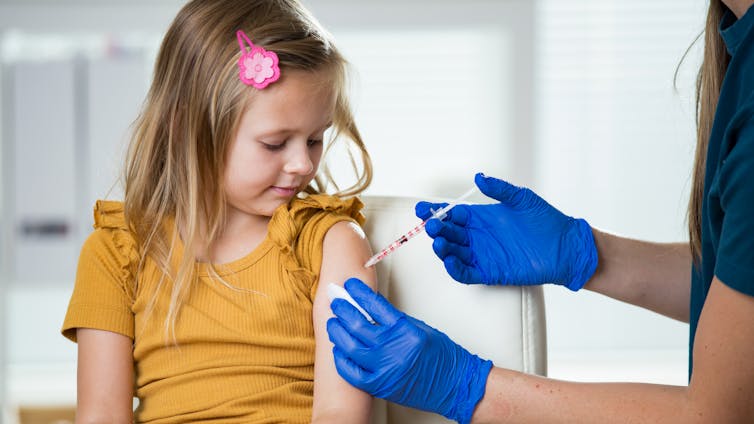
Vaccine mandates misinformation:
Lauren MacIvor Thompson, Kennesaw State University and Stacie Kershner, Georgia State University
On Sept. 3, 2025, Florida announced its plans to be the first state to eliminate vaccine mandates for its citizens, including those for children to attend school.
Current Florida law and the state’s Department of Health require that children who attend day care or public school be immunized for polio, diphtheria, rubeola, rubella, pertussis and other communicable diseases. Dr. Joseph Ladapo, Florida’s surgeon general and a professor of medicine at the University of Florida, has stated that “every last one” of these decades-old vaccine requirements “is wrong and drips with disdain and slavery.”
As experts on the history of American medicine and vaccine law and policy, we took immediate note of Ladapo’s use of the word “slavery.”
There is certainly a complicated history of race and vaccines in the United States. But, in our view, invoking slavery as a way to justify the elimination of vaccines and vaccine mandates will accelerate mistrust and present a major threat to public health, especially given existing racial health disparities. It also erases Black Americans’ key work in centuries of American public health initiatives, including vaccination campaigns.
What’s clear: Vaccines and mandates save human lives
Evidence and data show that vaccines work, as do mandates, in keeping Americans healthy. The World Health Organization reported in a landmark 2024 study that vaccines have saved more than 154 million lives globally in just the past 50 years.
In the United States, vaccines for children are one of the top public health achievements of the 20th century. Rates of eight of the most common vaccine-preventable diseases in school-age children dropped by 97% or more from pre-vaccine levels, preventing an estimated 1,129,000 deaths and resulting in direct savings of US$540 billion and societal savings of $2.7 trillion.
History of vaccine mandates in the United States
Vaccine mandates in the United States date to the Colonial period and have a complex history. George Washington required his troops be inoculated, the predecessor of vaccination, against smallpox during the American Revolution.
To prevent outbreaks of this debilitating, disfiguring and deadly disease, state and local governments implemented smallpox inoculation and vaccination campaigns into the early 1900s. They targeted various groups, including enslaved people, immigrants, people living in tenement and other crowded housing conditions, manual laborers and others, forcibly vaccinating those who could not provide proof of prior vaccination.
Although religious exemptions were not recognized by law until the 1960s, some resisted these vaccination campaigns from the beginning, and 19th-century anti-vaccination societies urged the rollback of state laws requiring vaccination.
By the turn of the 20th century, however, the U.S. Supreme Court also began to intervene in matters of public health and vaccination. The court ultimately upheld vaccine mandates in Jacobson v. Massachusetts in 1905, in an effort to strike a balance between individual rights with the need to protect the public’s health. In Zucht v. King in 1922, the court also ruled in favor of vaccine mandates, this time for school attendance.
Vaccine mandates expanded by the middle of the 20th century to include vaccines for many dangerous childhood diseases, such as polio, measles, rubella and pertussis. When Jonas Salk’s polio vaccine became available, families waited in long lines for hours to receive it, hoping to prevent their children from having to experience paralysis or life in an iron lung.
Scientific studies in the 1970s demonstrated that state declines in measles cases were correlated with enforcement of school vaccine mandates. The federal Childhood Immunization Initiative launched in the late 1970s helped educate the public on the importance of vaccines and encouraged enforcement. All states had mandatory vaccine requirements for public school entry by 1980, and data over the past several decades continues to demonstrate the importance of these laws for public health.
Most parents also continue to support school mandates. A survey conducted in July and August 2025 by The Washington Post and the Kaiser Family Foundation finds that 81% of parents support laws requiring vaccines for school.
Black Americans’ long fight for public health equity
Despite the proven success of vaccines and the importance of vaccine mandates in maintaining high vaccination rates, there is a vocal anti-vaccine minority in the U.S. that has gained traction since the COVID-19 pandemic.
Misinformation proliferates both online and off. Some of the misinformation originates in the historical realities of vaccines and social policy in the United States.
When Ladapo, the Florida surgeon general, invoked the term “slavery” to refer to vaccine mandates, he may have been referring to the history of racism in the medical field, such as the U.S. Public Health Service Untreated Syphilis Study at Tuskegee. The study, which started in 1932 and spanned four decades, involved hundreds of Black men who were recruited without their knowledge or consent so that researchers could study the effects of untreated syphilis. Investigators misled the participants about the nature of the study and actively withheld treatment – including penicillin, which became the standard therapy in the late 1940s – in order to study the effects of untreated syphilis on the men’s bodies.
Today, the study is remembered as one of the most egregious instances of racism and unethical experimentation in American medicine. Its participants had enrolled in the study because it was advertised as a chance to receive expert medical care but, instead, were subjected to lies and painful “treatments.”
Despite these experiences in the medical system, Black Americans have long advocated for better health care, connecting it to the larger struggle for racial equality.
Vaccination is no exception. Despite the fact that they were often the subject of forced innoculation, enslaved people helped to lead the first American public health initiatives around epidemic disease. Historians’ research on smallpox and slavery, for example, has found that inoculation was widely accepted and practiced by West Africans by the early 1700s, and that enslaved people brought the practice to the Colonies.
Although his role is often downplayed, an African man known as Onesimus introduced his enslaver Cotton Mather to inoculation.
Throughout the next century, enslaved people often continued to inoculate each other to prevent smallpox outbreaks, and enslaved and free people of African descent played critical roles in keeping their own communities as healthy as possible in the face of violence, racism and brutality. The modern Civil Rights Movement explicitly drew on this history and centered health equity for Black Americans as one of its key tenets, including working to provide access to vaccines for preventable diseases.
In our view, Ladapo’s reference to vaccines as “slavery” ignores this important and nuanced history, especially Black Americans’ role in the history of preventing communicable disease with vaccines.
Lessons to learn from Tuskegee
Ladapo’s word choice also runs the risk of perpetuating the rightful mistrust that continues to exist in communities of color about vaccines and the American health system more broadly. Studies show that lingering effects of Tuskegee and other instances of medical racism have had real consequences for the health and vaccination rates of Black Americans.
A large body of evidence shows the existence of persistent health disparities for Black people in the United States compared with their white counterparts, leading to shorter lifespans, higher rates of maternal and infant mortality and higher rates of communicable and chronic diseases, with worse outcomes.
Eliminating vaccine mandates in Florida and expanding exemptions in other states will continue to widen these already existing disparities that stem from past public health wrongs.
There is an opportunity here, however, for health officials, not just in Florida but across the nation, to work together to learn from the past in making American public health better for everyone.
Rather than weakening vaccine mandates, national, state and local public health guidance can focus on expanding access and communicating trustworthy information about vaccines for all Americans. Policymakers can acknowledge the complicated history of vaccines, public health and race, while also recognizing how advancements in science and medicine have given us the opportunity to eradicate many of these diseases in the United States today.
Lauren MacIvor Thompson, Assistant Professor of History and Interdisciplinary Studies, Kennesaw State University and Stacie Kershner, Deputy Director of the Center for Law, Health & Society, Georgia State University
This article is republished from The Conversation under a Creative Commons license. Read the original article.
The Bridge is a section of the STM Daily News Blog meant for diversity, offering real news stories about bona fide community efforts to perpetuate a greater good. The purpose of The Bridge is to connect the divides that separate us, fostering understanding and empathy among different groups. By highlighting positive initiatives and inspirational actions, The Bridge aims to create a sense of unity and shared purpose. This section brings to light stories of individuals and organizations working tirelessly to promote inclusivity, equality, and mutual respect. Through these narratives, readers are encouraged to appreciate the richness of diverse perspectives and to participate actively in building stronger, more cohesive communities.
https://stmdailynews.com/the-bridge
Author


Last Updated on April 2, 2026 by Daily News Staff
🕒 [UPDATE] Orion Performs Translunar Injection Burn
The spacecraft has completed its critical engine burn, sending Artemis II on a trajectory toward the Moon. This marks the official start of its deep space journey.

Artemis II Successfully Launches
CAPE CANAVERAL, Fla. — NASA has successfully launched its Artemis II mission, marking the first crewed journey toward the Moon in more than 50 years.
The powerful Space Launch System (SLS) rocket lifted off from Kennedy Space Center on April 1, carrying four astronauts on a 10-day mission around the Moon and back.
On board are Commander Reid Wiseman, Pilot Victor Glover, Mission Specialist Christina Koch, and Canadian astronaut Jeremy Hansen. The mission is already being hailed as a major milestone in NASA’s effort to return humans to deep space.
Shortly after liftoff, the Orion spacecraft successfully reached orbit and deployed its solar arrays, beginning its journey that will eventually send the crew on a translunar trajectory toward the Moon. 
Artemis II is a lunar flyby mission, meaning astronauts will not land but will travel farther from Earth than any human mission in decades while testing critical systems needed for future landings.
The mission also marks several historic firsts, including the first woman and the first person of color—Victor Glover—to travel into lunar space.
NASA says the mission is a key step toward future lunar landings and long-term plans to establish a human presence on the Moon later this decade.
🛰️ Artemis II Mission Timeline
The 10-day Artemis II mission follows a carefully planned trajectory from Earth to the Moon and back:
- Day 1: Launch and Earth orbit
- Day 1–2: Translunar injection burn
- Days 2–4: Deep space travel
- Days 4–5: Lunar flyby
- Days 5–8: Return to Earth
- Days 9–10: Reentry and splashdown
For official updates and in-depth mission details, visit the following trusted sources:
- NASA: Artemis II Mission Overview
- NASA Artemis Program (Return to the Moon)
- Orion Spacecraft – Mission Details
- Space Launch System (SLS) Rocket Overview
- Kennedy Space Center – Launch Operations
- Watch NASA Live Coverage and Replays
🧾 Sources
- NASA official launch coverage and mission updates
- NASA Artemis II press materials and briefings
- NASA Kennedy Space Center launch operations updates
Stay with STM Daily News for live updates on Artemis II.

Feeding America is marking National Agriculture Day by recognizing farmers, ranchers, and producers as key partners in the fight against hunger.
In a March 24 press release, the organization said the agricultural community plays a vital role in helping food banks and pantries deliver fresh, nutritious food to families across the country. Feeding America noted that produce, dairy, and protein are among the most requested foods by neighbors facing hunger and make up half of all food distributed through its network.
The organization said that in 2025, its network worked with growers to rescue 971 million pounds of fresh produce, helping redirect surplus food to communities in need. Feeding America also pointed to federal nutrition and farm support programs, saying government purchases from U.S. growers provide more than 20% of the food distributed through its network.
Ami McReynolds, Feeding America’s chief advocacy and community partnerships officer, said supporting farmers is directly connected to helping families access healthy meals. The organization is also urging Congress to support additional farm aid and a Farm Bill that strengthens nutrition programs.
Feeding America said a recent poll found that 95% of voters view hunger as a nonpartisan issue, reinforcing support for collaborative solutions between agriculture, food banks, and policymakers.
Related Links
Source Links
The Bridge is a section of the STM Daily News Blog meant for diversity, offering real news stories about bona fide community efforts to perpetuate a greater good. The purpose of The Bridge is to connect the divides that separate us, fostering understanding and empathy among different groups. By highlighting positive initiatives and inspirational actions, The Bridge aims to create a sense of unity and shared purpose. This section brings to light stories of individuals and organizations working tirelessly to promote inclusivity, equality, and mutual respect. Through these narratives, readers are encouraged to appreciate the richness of diverse perspectives and to participate actively in building stronger, more cohesive communities.
https://stmdailynews.com/the-bridge
Author

Community
McDonald’s First Job Confessional Turns Career Stories Into Free Meal Opportunity
McDonald’s is launching First Job Confessional, a campaign inviting fans to share first job stories for a chance to receive a $15 gift card in select cities.


First Job Confessional
McDonald’s is putting first jobs in the spotlight with a new campaign that asks fans to share the real-world skills they gained early in their working lives. Launched on National Employee Appreciation Day, the brand’s First Job Confessional invites people to reflect on how those first roles helped shape their careers — and, in some cases, earn a free meal in the process.
The campaign is built around a simple idea: first jobs often teach lasting skills that deserve more recognition. Whether someone learned problem-solving while babysitting, communication during a lunch rush, or teamwork behind a counter, McDonald’s is framing those experiences as valuable career foundations. The company says those are the same kinds of skills employers continue to prioritize as workplace demands evolve.

How the First Job Confessional Works
In select cities, McDonald’s is setting up confessional booths designed to look like ordering kiosks. But instead of placing a meal order, participants can record a story about their first job and the skills they picked up along the way. Those who take part in person will have the opportunity to receive a $15 McDonald’s gift card, while supplies last.
Fans who cannot attend in person can still join online by posting their stories using #FirstJobConfessional. McDonald’s says selected videos may also be featured on its YouTube channel, extending the campaign beyond the live events.
External Related Links
- McDonald’s corporate article: McDonald’s is Asking Fans to Get Real About Their First Job Skills in Exchange for Free Meals
- McDonald’s 1 in 8: First Job Confessional
- McDonald’s 1 in 8 home page
- Marketing Dive coverage of the campaign
- Parade coverage of the First Job Confessional tour
Source Links
- Original PRNewswire press release from McDonald’s USA, LLC
- McDonald’s official corporate story
- McDonald’s 1 in 8 First Job Confessional page
- McDonald’s 1 in 8 official website
The Bridge is a section of the STM Daily News Blog meant for diversity, offering real news stories about bona fide community efforts to perpetuate a greater good. The purpose of The Bridge is to connect the divides that separate us, fostering understanding and empathy among different groups. By highlighting positive initiatives and inspirational actions, The Bridge aims to create a sense of unity and shared purpose. This section brings to light stories of individuals and organizations working tirelessly to promote inclusivity, equality, and mutual respect. Through these narratives, readers are encouraged to appreciate the richness of diverse perspectives and to participate actively in building stronger, more cohesive communities.
https://stmdailynews.com/the-bridge





