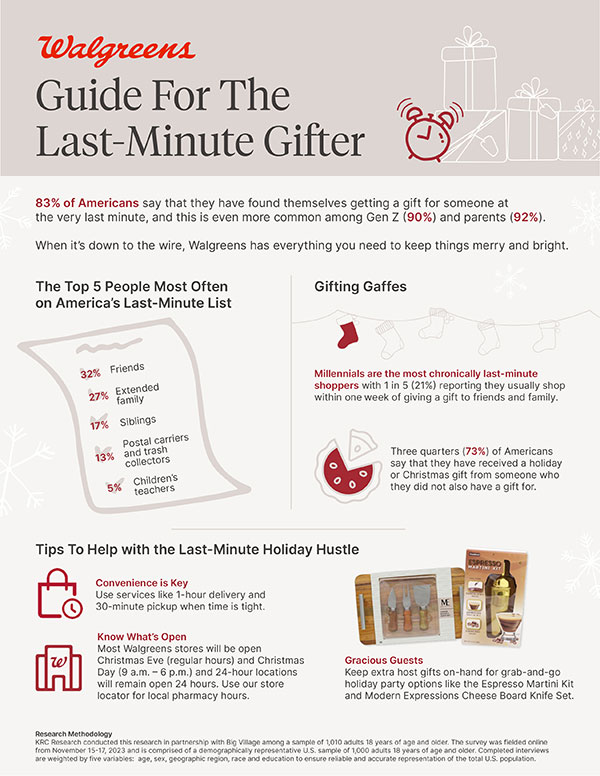
(Family Features) If you’ve ever found yourself buying a holiday gift for someone on your list at the last minute, you’re not alone. According to a Walgreens U.S. gift-giving survey, 83% of Americans found themselves getting a gift for someone at the last minute – a trend even more common among Gen Z (90%) and parents (92%). To help keep things merry and bright, consider these tips to help with the last-minute holiday hustle, and visit Walgreens.com or a store near you to find deals and gift inspiration.
Discover how to choose the perfect live holiday tree and keep it fresh all season. Get expert tips on measuring, selecting, caring for, and disposing of your real Christmas tree for a safe and festive home.
How to Choose and Care for a Live Holiday Tree: Expert Tips for a Fresh, Festive Season
(Family Features) Though artificial Christmas trees have come a long way, few things compare to the fresh scent and natural beauty of a live tree. Whether your family picks out a real tree as an annual tradition or this is your first time considering a live tree for the holidays, this guidance can help you choose the right one and care for it throughout the season. 1. Measure Your Space Before you head to your local tree farm, measure the ceiling height where you plan to set up the tree, subtracting the amount of room your star or topper will account for. Similarly, measure the width to ensure the tree doesn’t encroach too much on furniture or traffic flow. 2. Choose the Right Tree While the options can be overwhelming once you’re among the field of available trees, consider what shape would fit best in your space: Do you want a fuller or slimmer tree to fit a tighter space? Is a uniform shape without large gaps in the needles important or do you need stronger branches better equipped for handling heavier ornaments? Don’t forget to also consider trunk size – and consider bringing your stand with you to ensure your preferred tree fits – as trees with short or crooked trunks may be unstable. 3. Inspect for Freshness and Quality To ensure a safe, long-lasting, beautiful tree throughout the holidays, look at it from all angles and inspect the needles and branches. Needles should be green, not dry or brittle, and firmly attached to the branches, which should be flexible and not snap easily. If you run your hand through the branches and they break or needles fall off, it may be wise to look at other trees. Remember, if your tree has been cut too early, it may sit too long and dry out before Christmas arrives, so try and buy your tree as close to setup time as possible. 4. Set Up with Care Before placing your tree in the stand, make a fresh cut about 1 inch from the base of the trunk to open the pores for water absorption. Place it away from heat sources – vents, fireplaces, direct sunlight – as they will dry it out faster. Remember to water daily (or at least check it daily), keeping the water level above the base of the trunk. 5. Plan for Disposal Once your tree has dried out – branches may be brittle and lots of needles may have fallen off – it’s time to remove it. Remove all decorations then check to see if your city offers tree recycling or chipping service. Many offer these services for free for a limited time after the holidays but may require you to drop the tree off or cut it into smaller pieces for pick up. Find more seasonal advice to make the holidays safe and festive at eLivingtoday.com. Photo courtesy of Shutterstock SOURCE:eLivingtoday.com
Welcome to the Consumer Corner section of STM Daily News, your ultimate destination for savvy shopping and informed decision-making! Dive into a treasure trove of insights and reviews covering everything from the hottest toys that spark joy in your little ones to the latest electronic gadgets that simplify your life. Explore our comprehensive guides on stylish home furnishings, discover smart tips for buying a home or enhancing your living space with creative improvement ideas, and get the lowdown on the best cars through our detailed auto reviews. Whether you’re making a major purchase or simply seeking inspiration, the Consumer Corner is here to empower you every step of the way—unlock the keys to becoming a smarter consumer today!
Tips for Parents to Minimize Stress and Maximize Joy During the Holidays
(Family Features) Stress and parenting go hand in hand, but during the holiday season, many parents find their stress levels rising to new heights. Between coordinating schedules, shopping, traveling and managing children’s expectations – plus the disruption to the school routine that everyone had finally settled into – the season can feel more like mayhem than merry. However, by thoughtfully planning and implementing a few practical strategies, parents can protect their well-being and support their families. Early childhood experts from The Goddard School share guidance to help parents stay grounded and make the most of their meaningful family moments this holiday season. Clarify Priorities One of the most empowering steps is to decide in advance what truly matters to your family. Consider:
Which traditions or gatherings are nonnegotiable?
Are there holiday events you can skip this year without regret?
What obligations are you taking on out of habit rather than genuine desire?
By reducing the number of “must-do” activities, you can avoid overextending your family. It’s OK to decline invitations when your calendar is already full. Establish a Budget Holiday spending can weigh heavily on your mind. Create a family holiday budget that includes gifts and activities, then stick to it. Use the opportunity to teach your children about responsible spending and gratitude. Remember, the most meaningful gifts are often those made with time, attention or creativity, not the highest price tag. Set Boundaries Stress often arises when family dynamics, expectations or traditions clash. You can reduce this by setting boundaries and communicating them early. Speak openly with the relatives and friends you’ll see about what’s comfortable for your family and what isn’t (e.g., physical space, travel, topics to avoid). Let your children know what to expect, as the lack of routine during this time can be particularly challenging. Modeling clear boundaries helps your children learn to express their own needs, too. Prioritize Your Physical and Emotional Health Amid the hustle, your own basic care often slips, but your well-being is key to being present for others. Consider establishing routines, such as:
Sleep: Aim for 7-8 hours per night whenever possible.
Nutrition: Keep healthy staples in the mix, even if treats abound.
Movement: A short walk, stretch breaks or gentle exercise may help reset your nervous system. Stepping outside can be especially helpful.
Also, if illness strikes, listen to your body and give yourself permission to pause. Pushing through tends to backfire. Design a Stress Rescue Plan Even the best-laid plans don’t prevent tension or unexpected emotional triggers. Anticipate stress by creating fallback strategies. For example, plan to use a playlist, a quick breathing exercise or a sensory object to help you regroup when your stress escalates. These strategies work for children as well. If you’re worried about unwanted questions – such as a family member asking about politics or your plans to have another child – rehearse your response in advance with a friend. When these stressful moments arise, having a toolkit gives you a sense of control. Unplug and Be Present Screens are omnipresent. While they serve a purpose, they can be an unwelcome distraction, especially when you’re spending time with loved ones you don’t get to see often. Try to designate screen-free times, such as during meals, after dinner or when gifts are being exchanged. Use screens intentionally, such as video calling out-of-town family members, rather than passively scrolling. Focus on in-person connection by playing games, telling stories, making crafts or taking walks. Remember to lead by example, as your children are watching. Being fully present at key moments is the one gift your family will remember above all else. As the holidays approach, the pressure to do it all can loom large. By clarifying priorities, setting boundaries and safeguarding your health, you can minimize stress and maximize joy. That said, even with careful planning, things can go off course, and that’s OK. Practice self-compassion and allow for imperfections. Enjoy every laugh, surprise and even the occasional moment of calm. For more parenting guidance and insights, including a blog and webinar series, visit the Parent Resource Center at GoddardSchool.com. Photos courtesy of Shutterstock SOURCE:The Goddard School
What to Give Someone With Cancer: Skip Fuzzy Socks, Give Practical Help Instead
Research with 50 cancer patients reveals fuzzy socks and care packages often miss the mark. Discover what people with cancer actually want: meal help, grocery gift cards, errand assistance, and practical support that addresses real daily struggles.
What to Give Someone With Cancer: Skip Fuzzy Socks, Give Practical Help Instead
Ellen T. Meiser, University of Hawaii at Hilo The season of gifting is in full swing – a time when people scour the internet and shops of all kinds for items that appropriately symbolize their relationships with their loved ones. Gift givers hope that their gift will appropriately communicate their feelings and bring the recipient joy. But that’s not always the reality. Gifts can be tricky and rife with hidden hazards. Relationships can even be ruined when the mismatch between the giver’s intention and the recipient’s perceptions of it is too vast. The circumstances of the people involved also shape a gift’s meaning and the way it might be interpreted. My research partner, Nathalie Rita, and I have been seeking to better understand gifting in one of life’s most dicey, distressing circumstances: cancer. As sociologists, we use techniques such as in-depth interviews to study the experiences, feelings and motivations of specific groups of people. I focus on restaurant workers and my colleague on migrants and minorities. But in 2021, we were both diagnosed with cancer in our early 30s – breast cancer for me and endometrial cancer for her. This encouraged us to explore the experiences of other young women dealing with cancer. By 2023, we had interviewed 50 millennial women diagnosed with cancer about a plethora of social and emotional topics related to their illness. Our own bouts with cancer revealed curious patterns in the gifts we very gratefully received from family and friends. So, we included a few questions about gifts in our research. We expected some eccentric anecdotes similar to our own experiences. But our research, which isn’t yet published, revealed just how much of a mismatch there is between what people wanted and what they received – often driven by the marketing of specific gifts or care packages for cancer patients.
What loved ones give
One of our first questions was, what exactly do women diagnosed with cancer receive from their loved ones? Their answers ran the gamut. Our interviewees reported hundreds of gifts, from stuffed possums to child care help to Vitamix blenders. Friends and family were very eager to shower them in goods. But from these hundreds of items and acts, 10 popped up over and over again. In order of frequency, they were:
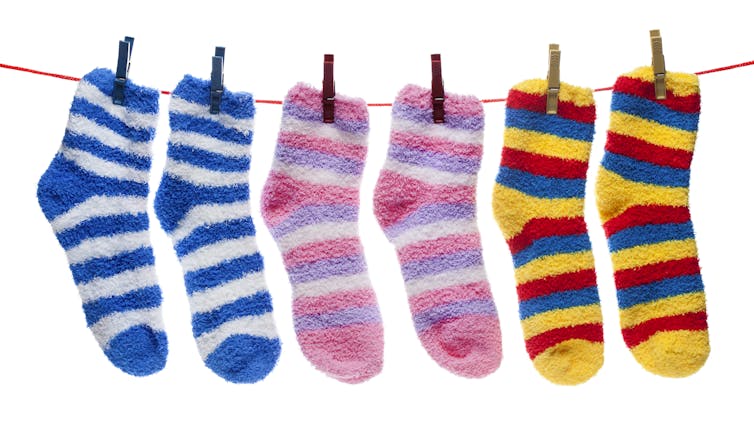
Fuzzy socks.
Food and drinks, particularly herbal teas, groceries, gourmet goodies and Meal Trains.
The women we spoke with largely understood and appreciated the intentions behind these items in the context of their illness: books to distract, flowers to beautify. They viewed the gifts as material proof that their loved ones wanted to deliver comfort and support in a time of discomfort and helplessness. But the frequency of certain items perplexed us. Why socks and coloring books instead of, say, Rollerblades and bongs?
The long shadow of online commerce and gift guides
We traced these gifting trends to two sources: premade cancer care packages and online gift guides. Numerous women reported receiving some of the items from our top 10 list in premade care packages sourced from Etsy, Amazon or cancer-specific companies such as Rock the Treatment and The Balm Box. They noted that the contents of these packages felt predictable: spa-style self-care goods such as aromatherapy oils, lip balms and soy candles; herbal teas; a mug with a slogan or ribbon; and hard candies or throat lozenges. Some received more opulent care packages, similar to Rock the Treatment’s large chemo care package for women, which adds adult coloring books, protein-rich snacks, a beanie and fuzzy socks. These additions mirror our interviewees’ top 10 received gifts even more closely. Online gift guides published by magazines, news sites and stores may be influencing gifters’ behaviors, too. A Google search for “gift guide” yields countless lists for niche demographics – chicken lovers, mathematicians, even people who are always cold. Online viewership of these lists is prolific. For example, New York Magazine’s product recommendation site, The Strategist, received 10.7 million monthly views in 2021. The top seven Google-ranked gift guides for cancer patients also contain suggestions that align almost perfectly with what our interviewees reported, with the addition of clothing and jewelry emblazoned with inspirational declarations such as “I’m stronger than cancer!” These overlaps reflect the broader phenomena of the commodification and commercialization of cancer. As businesses seek to extract economic value out of all aspects of daily life, cancer has become a lucrative business opportunity and patients a source of profit. Our research suggests that these market forces warp how gift givers perceive people with cancer and their desires. In turning cancer into something profitable, the ugly parts of illness are also glossed over to make cancer palatable to the market. Businesses then sell would-be gifters the idea that cancer can be assuaged by purchasing and giving a bejeweled, teal-ribboned Stanley tumbler. Additionally, while premade care packages ease the labor of decision-making for gifters, they run a greater risk of disappointing recipients. These generic boxes, we found, can communicate a degree of thoughtlessness at a time when our study participants were aching for thoughtfulness.Practical gifts, such as bringing groceries, can help relieve daily stressors for people coping with a serious illness.SDI Productions/E+ via Getty Images
What to actually gift
So, what do women going through cancer treatment actually want to receive? Our interviewees recommended:
Money in the form of cash or useful gift cards, such as for Door Dash, grocery stores and Petco.
Meals and groceries, particularly if the recipient is a parent with mouths to feed.
Help with errands and tasks such as babysitting, transportation, cleaning and lawn care.
Cards and personal messages of love, which serve as check-ins and gestures of care and support.
Practical self-care items such as thick lotions, face masks and soft soaps that don’t irritate skin.
Pragmatic. Simple. Even a little mundane. There is some overlap between these recommendations and the frequently received gifts mentioned earlier. But notably, almost none of the women we interviewed expressed a desire for the nonessential items usually stocked in commercial care packages or those associated with profiting from cancer. Instead, the gifts they felt touched them more deeply were ones that addressed ways in which they felt the disease incapacitated their abilities as a worker, woman, mother or caregiver. Our interviewees spoke of financial strain from medical bills, fatigue preventing them from mothering in ways they used to, and mounting burdens that made it almost impossible to be present for partners or spouses. A monstera plant in a whimsical vase offered little reprieve from these pressures. However, a chat while folding laundry or a Pyrex of enchiladas did. Perhaps most importantly, such offerings made them feel cared for and seen – their unvarnished circumstances recognized. So, if a friend with cancer – or any other serious illness, for that matter – is on your list this holiday season, consider hanging those fuzzy socks back on the rack. Instead, mull over their daily stresses, and choose an item – or a task – that provides a bit of relief. Ellen T. Meiser, Assistant Professor of Sociology, University of Hawaii at Hilo This article is republished from The Conversation under a Creative Commons license. Read the original article.









 Set Boundaries Stress often arises when family dynamics, expectations or traditions clash. You can reduce this by setting boundaries and communicating them early. Speak openly with the relatives and friends you’ll see about what’s comfortable for your family and what isn’t (e.g., physical space, travel, topics to avoid). Let your children know what to expect, as the lack of routine during this time can be particularly challenging. Modeling clear boundaries helps your children learn to express their own needs, too. Prioritize Your Physical and Emotional Health Amid the hustle, your own basic care often slips, but your well-being is key to being present for others. Consider establishing routines, such as: