

Science
AI-induced cultural stagnation is no longer speculation − it’s already happening
AI-induced cultural stagnation. A 2026 study by researchers revealed that when generative AI operates autonomously, it produces homogenous content, referred to as “visual elevator music,” despite diverse prompts. This convergence leads to bland outputs and indicates a risk of cultural stagnation as AI perpetuates familiar themes, potentially limiting innovation and diversity in creative expression.

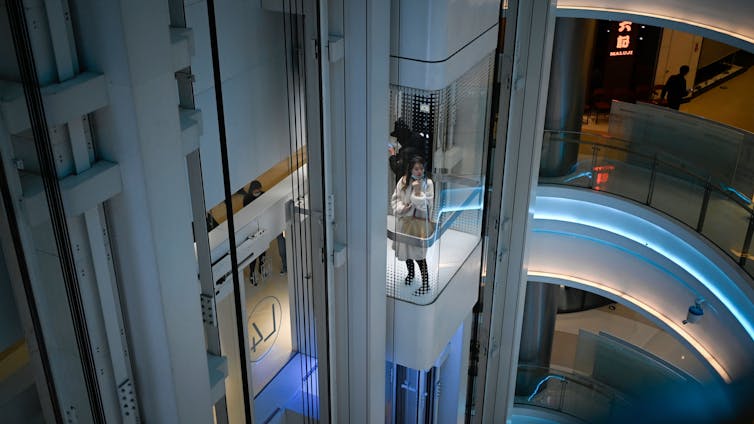
Ahmed Elgammal, Rutgers University
Generative AI was trained on centuries of art and writing produced by humans.
But scientists and critics have wondered what would happen once AI became widely adopted and started training on its outputs.
A new study points to some answers.
In January 2026, artificial intelligence researchers Arend Hintze, Frida Proschinger Åström and Jory Schossau published a study showing what happens when generative AI systems are allowed to run autonomously – generating and interpreting their own outputs without human intervention.
The researchers linked a text-to-image system with an image-to-text system and let them iterate – image, caption, image, caption – over and over and over.
Regardless of how diverse the starting prompts were – and regardless of how much randomness the systems were allowed – the outputs quickly converged onto a narrow set of generic, familiar visual themes: atmospheric cityscapes, grandiose buildings and pastoral landscapes. Even more striking, the system quickly “forgot” its starting prompt.
The researchers called the outcomes “visual elevator music” – pleasant and polished, yet devoid of any real meaning.
For example, they started with the image prompt, “The Prime Minister pored over strategy documents, trying to sell the public on a fragile peace deal while juggling the weight of his job amidst impending military action.” The resulting image was then captioned by AI. This caption was used as a prompt to generate the next image.
After repeating this loop, the researchers ended up with a bland image of a formal interior space – no people, no drama, no real sense of time and place.
As a computer scientist who studies generative models and creativity, I see the findings from this study as an important piece of the debate over whether AI will lead to cultural stagnation.
The results show that generative AI systems themselves tend toward homogenization when used autonomously and repeatedly. They even suggest that AI systems are currently operating in this way by default.
The familiar is the default
This experiment may appear beside the point: Most people don’t ask AI systems to endlessly describe and regenerate their own images. The convergence to a set of bland, stock images happened without retraining. No new data was added. Nothing was learned. The collapse emerged purely from repeated use.
But I think the setup of the experiment can be thought of as a diagnostic tool. It reveals what generative systems preserve when no one intervenes.
This has broader implications, because modern culture is increasingly influenced by exactly these kinds of pipelines. Images are summarized into text. Text is turned into images. Content is ranked, filtered and regenerated as it moves between words, images and videos. New articles on the web are now more likely to be written by AI than humans. Even when humans remain in the loop, they are often choosing from AI-generated options rather than starting from scratch.
The findings of this recent study show that the default behavior of these systems is to compress meaning toward what is most familiar, recognizable and easy to regenerate.
Cultural stagnation or acceleration?
For the past few years, skeptics have warned that generative AI could lead to cultural stagnation by flooding the web with synthetic content that future AI systems then train on. Over time, the argument goes, this recursive loop would narrow diversity and innovation.
Champions of the technology have pushed back, pointing out that fears of cultural decline accompany every new technology. Humans, they argue, will always be the final arbiter of creative decisions.
What has been missing from this debate is empirical evidence showing where homogenization actually begins.
The new study does not test retraining on AI-generated data. Instead, it shows something more fundamental: Homogenization happens before retraining even enters the picture. The content that generative AI systems naturally produce – when used autonomously and repeatedly – is already compressed and generic.
This reframes the stagnation argument. The risk is not only that future models might train on AI-generated content, but that AI-mediated culture is already being filtered in ways that favor the familiar, the describable and the conventional.
Retraining would amplify this effect. But it is not its source.
This is no moral panic
Skeptics are right about one thing: Culture has always adapted to new technologies. Photography did not kill painting. Film did not kill theater. Digital tools have enabled new forms of expression.
But those earlier technologies never forced culture to be endlessly reshaped across various mediums at a global scale. They did not summarize, regenerate and rank cultural products – news stories, songs, memes, academic papers, photographs or social media posts – millions of times per day, guided by the same built-in assumptions about what is “typical.”
The study shows that when meaning is forced through such pipelines repeatedly, diversity collapses not because of bad intentions, malicious design or corporate negligence, but because only certain kinds of meaning survive the text-to-image-to-text repeated conversions.
This does not mean cultural stagnation is inevitable. Human creativity is resilient. Institutions, subcultures and artists have always found ways to resist homogenization. But in my view, the findings of the study show that stagnation is a real risk – not a speculative fear – if generative systems are left to operate in their current iteration.
They also help clarify a common misconception about AI creativity: Producing endless variations is not the same as producing innovation. A system can generate millions of images while exploring only a tiny corner of cultural space.
In my own research on creative AI, I found that novelty requires designing AI systems with incentives to deviate from the norms. Without it, systems optimize for familiarity because familiarity is what they have learned best. The study reinforces this point empirically. Autonomy alone does not guarantee exploration. In some cases, it accelerates convergence.
This pattern already emerged in the real world: One study found that AI-generated lesson plans featured the same drift toward conventional, uninspiring content, underscoring that AI systems converge toward what’s typical rather than what’s unique or creative.
Lost in translation
Whenever you write a caption for an image, details will be lost. Likewise for generating an image from text. And this happens whether it’s being performed by a human or a machine.
In that sense, the convergence that took place is not a failure that’s unique to AI. It reflects a deeper property of bouncing from one medium to another. When meaning passes repeatedly through two different formats, only the most stable elements persist.
But by highlighting what survives during repeated translations between text and images, the authors are able to show that meaning is processed inside generative systems with a quiet pull toward the generic.
The implication is sobering: Even with human guidance – whether that means writing prompts, selecting outputs or refining results – these systems are still stripping away some details and amplifying others in ways that are oriented toward what’s “average.”
If generative AI is to enrich culture rather than flatten it, I think systems need to be designed in ways that resist convergence toward statistically average outputs. There can be rewards for deviation and support for less common and less mainstream forms of expression.
The study makes one thing clear: Absent these interventions, generative AI will continue to drift toward mediocre and uninspired content.
Cultural stagnation is no longer speculation. It’s already happening.
Ahmed Elgammal, Professor of Computer Science and Director of the Art & AI Lab, Rutgers University
This article is republished from The Conversation under a Creative Commons license. Read the original article.
Discover more from Daily News
Subscribe to get the latest posts sent to your email.


Former President Barack Obama recently sparked headlines, social media debates, and a fresh wave of UFO chatter after a brief remark during a podcast interview. The comment quickly ricocheted across news outlets, with many asking: Did Obama just confirm aliens exist? And just as quickly, Donald Trump weighed in.
Let’s unpack what was actually said — and what it means.
🎙️ The Comment That Ignited the Conversation
During a rapid-fire question segment on a podcast hosted by Brian Tyler Cohen, Obama was asked directly:
“Are aliens real?”
Obama’s response:
“They’re real, but I haven’t seen them.”
That short answer fueled immediate speculation. Clips spread online, often stripped of context, with some interpreting the statement as a bombshell confirmation of extraterrestrial life.
🧠 What Obama Meant
Soon after the comment gained traction, Obama clarified his meaning.
His explanation aligned with a position he’s expressed before:
✔ He was referring to the statistical likelihood of life elsewhere in the universe
✔ He was not claiming evidence of alien visitation
✔ He emphasized that during his presidency he saw no proof of extraterrestrial contact
In other words:
Obama was speaking philosophically and scientifically — not revealing classified information.
This interpretation matches mainstream scientific thinking: given the size of the universe, life beyond Earth is plausible, but confirmed evidence remains elusive.
🛸 Why the Comment Resonated
The remark landed in a cultural moment where:
• Interest in UAPs (Unidentified Aerial Phenomena) is high
• Government transparency around UFO reports has increased
• Space exploration discoveries (exoplanets, water worlds) dominate science news
Even a casual statement from a former president can ignite intense discussion.
🇺🇸 Trump’s Reaction
Former (and current political figure) Donald Trump responded critically.
Trump characterized Obama’s comment as:
• A “mistake”
• Potentially involving “classified information”
He also reiterated his own stance:
He does not know whether aliens are real.
Trump pivoted the conversation toward disclosure, suggesting he would support or consider declassifying UFO/UAP-related files — a theme that has periodically surfaced in political rhetoric.
⚖️ Politics vs Interpretation
Trump’s reaction highlights how statements about extraterrestrial life often become political flashpoints, even when the original comment is speculative or philosophical.
Key distinction:Obama’s Clarification Public Interpretation Life elsewhere is likely “Obama confirmed aliens” No evidence of contact “Government disclosure”
🔬 The Scientific Reality
Organizations like NASA and the broader research community maintain:
✅ Life beyond Earth → statistically plausible
❓ Intelligent civilizations → unknown
❌ Confirmed alien contact → no verified evidence
Investigations into UAPs consistently conclude:
• Most sightings have conventional explanations
• Some remain unresolved due to limited data
• None confirmed as extraterrestrial craft
🌌 Why These Stories Keep Captivating Us
Conversations about aliens sit at the intersection of:
✨ Science
🧠 Curiosity
🛸 Mystery
🎭 Pop culture
🏛️ Politics
When a former president comments, the intrigue multiplies.
📌 Bottom Line
Did Obama say aliens are real?
Yes — but in the sense that life elsewhere in the universe is likely, not that aliens are visiting Earth.
Did he claim evidence?
No.
Trump’s response?
Critical, skeptical, and framed around classification and disclosure.
If you’re fascinated by this topic, you might also enjoy exploring:
• How scientists search for alien life
• What counts as real “evidence”
• Why UFO sightings are so often misinterpreted
Want me to craft a follow-up article like “How Close Are We to Discovering Alien Life?” 🚀👽
Related Links & Further Reading
- NASA – Search for Life
- NASA – Exoplanet Exploration
- SETI Institute – Search for Extraterrestrial Intelligence
- U.S. Department of Defense – UAP Reports
- How Close Are We to Discovering Alien Life?
- What Are UAPs? Explained
- A Brief History of UFO Investigations
Dive into “The Knowledge,” where curiosity meets clarity. This playlist, in collaboration with STMDailyNews.com, is designed for viewers who value historical accuracy and insightful learning. Our short videos, ranging from 30 seconds to a minute and a half, make complex subjects easy to grasp in no time. Covering everything from historical events to contemporary processes and entertainment, “The Knowledge” bridges the past with the present. In a world where information is abundant yet often misused, our series aims to guide you through the noise, preserving vital knowledge and truths that shape our lives today. Perfect for curious minds eager to discover the ‘why’ and ‘how’ of everything around us. Subscribe and join in as we explore the facts that matter. https://stmdailynews.com/the-knowledge/
Authors


Discover more from Daily News
Subscribe to get the latest posts sent to your email.
Last Updated on February 10, 2026 by Daily News Staff
Valerie Thomas is a true pioneer in the world of science and technology. A NASA engineer and physicist, she is best known for inventing the illusion transmitter, a groundbreaking device that creates 3D images using concave mirrors. This invention laid the foundation for modern 3D imaging and virtual reality technologies.
Beyond her inventions, Thomas broke barriers as an African American woman in STEM, mentoring countless young scientists and advocating for diversity in science and engineering. Her work at NASA’s Goddard Space Flight Center helped advance satellite technology and data visualization, making her contributions both innovative and enduring.
In our latest short video, we highlight Valerie Thomas’ remarkable journey—from her early passion for science to her groundbreaking work at NASA. Watch and be inspired by a true STEM pioneer whose legacy continues to shape the future of space and technology.
🎥 Watch the video here: https://youtu.be/P5XTgpcAoHw
Dive into “The Knowledge,” where curiosity meets clarity. This playlist, in collaboration with STMDailyNews.com, is designed for viewers who value historical accuracy and insightful learning. Our short videos, ranging from 30 seconds to a minute and a half, make complex subjects easy to grasp in no time. Covering everything from historical events to contemporary processes and entertainment, “The Knowledge” bridges the past with the present. In a world where information is abundant yet often misused, our series aims to guide you through the noise, preserving vital knowledge and truths that shape our lives today. Perfect for curious minds eager to discover the ‘why’ and ‘how’ of everything around us. Subscribe and join in as we explore the facts that matter. https://stmdailynews.com/the-knowledge/
Forgotten Genius Fridays
https://stmdailynews.com/the-knowledge-2/forgotten-genius-fridays/
🧠 Forgotten Genius Fridays
A Short-Form Series from The Knowledge by STM Daily News
Every Friday, STM Daily News shines a light on brilliant minds history overlooked.
Forgotten Genius Fridays is a weekly collection of short videos and articles dedicated to inventors, innovators, scientists, and creators whose impact changed the world—but whose names were often left out of the textbooks.
From life-saving inventions and cultural breakthroughs to game-changing ideas buried by bias, our series digs up the truth behind the minds that mattered.
Each episode of The Knowledge runs 30–90 seconds, designed for curious minds on the go—perfect for YouTube Shorts, TikTok, Reels, and quick reads.
Because remembering these stories isn’t just about the past—it’s about restoring credit where it’s long overdue.
🔔 New episodes every Friday
📺 Watch now at: stmdailynews.com/the-knowledge
🧠 Now you know.
Author
Discover more from Daily News
Subscribe to get the latest posts sent to your email.
The Knowledge
Beneath the Waves: The Global Push to Build Undersea Railways
Undersea railways are transforming transportation, turning oceans from barriers into gateways. Proven by tunnels like the Channel and Seikan, these innovations offer cleaner, reliable connections for passengers and freight. Ongoing projects in China and Europe, alongside future proposals, signal a new era of global mobility beneath the waves.


For most of modern history, oceans have acted as natural barriers—dividing nations, slowing trade, and shaping how cities grow. But beneath the waves, a quiet transportation revolution is underway. Infrastructure once limited by geography is now being reimagined through undersea railways.
Undersea rail tunnels—like the Channel Tunnel and Japan’s Seikan Tunnel—proved decades ago that trains could reliably travel beneath the ocean floor. Today, new projects are expanding that vision even further.
Around the world, engineers and governments are investing in undersea railways—tunnels that allow high-speed trains to travel beneath oceans and seas. Once considered science fiction, these projects are now operational, under construction, or actively being planned.

Undersea Rail Is Already a Reality
Japan’s Seikan Tunnel and the Channel Tunnel between the United Kingdom and France proved decades ago that undersea railways are not only possible, but reliable. These tunnels carry passengers and freight beneath the sea every day, reshaping regional connectivity.
Undersea railways are cleaner than short-haul flights, more resilient than bridges, and capable of lasting more than a century. As climate pressures and congestion increase, rail beneath the sea is emerging as a practical solution for future mobility.
What’s Being Built Right Now
China is currently constructing the Jintang Undersea Railway Tunnel as part of the Ningbo–Zhoushan high-speed rail line, while Europe’s Fehmarnbelt Fixed Link will soon connect Denmark and Germany beneath the Baltic Sea. These projects highlight how transportation and technology are converging to solve modern mobility challenges.
The Mega-Projects Still on the Drawing Board
Looking ahead, proposals such as the Helsinki–Tallinn Tunnel and the long-studied Strait of Gibraltar rail tunnel could reshape global affairs by linking regions—and even continents—once separated by water.
Why Undersea Rail Matters
The future of transportation may not rise above the ocean—but run quietly beneath it.
Discover more from Daily News
Subscribe to get the latest posts sent to your email.





