

Local News
Why Arizona Republicans Are Pushing Back on Light Rail to the State Capitol — and What It Means for the West Valley
Arizona’s debate over a proposed light rail extension to the State Capitol has intensified. Supporters argue it promotes connectivity and equity, while Republicans oppose it due to cost concerns and a preference for car-centric infrastructure. The outcome will impact future west-side transit expansions and shape regional transportation priorities.

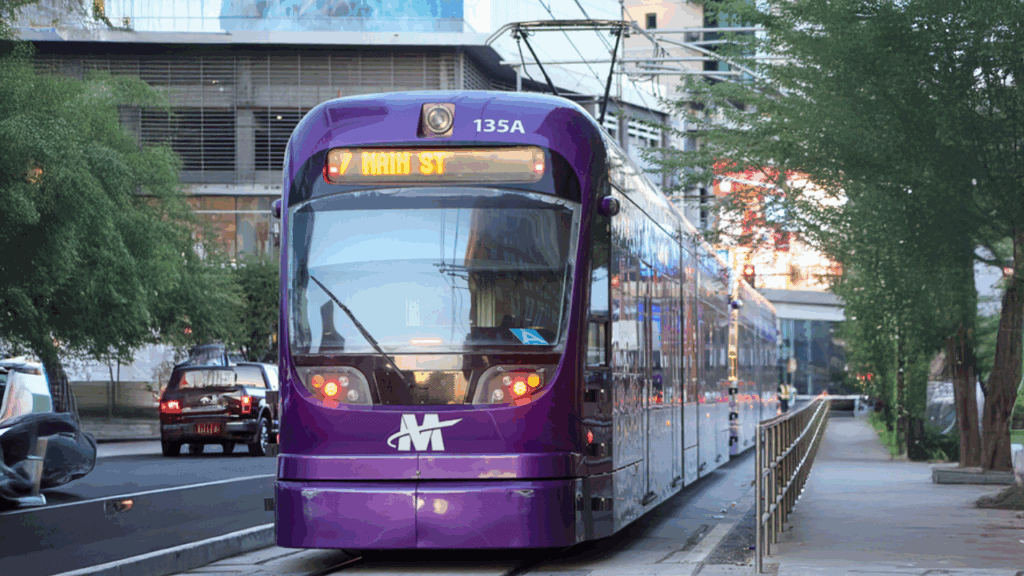
Arizona’s long-running debate over public transit has flared up again, this time over a proposed Valley Metro light rail extension that would bring rail service closer to the Arizona State Capitol complex. While Phoenix and Valley Metro leaders argue the project is a logical next step in regional mobility, Republican leaders at the state Capitol have mounted strong opposition — creating uncertainty not just for this segment, but for future west-side expansions.
The Case for the Capitol Light Rail Extension
Supporters of the project, including Valley Metro officials, Phoenix city leaders, transit advocates, and many west Phoenix residents, argue that extending light rail toward the Capitol area is both practical and symbolic.
From a planning standpoint, the Capitol is a major employment center that draws thousands of workers, visitors, and students. Transit planners say rail access would reduce congestion, improve air quality, and provide reliable transportation for residents who already depend heavily on public transit.
Proponents also emphasize equity. West Phoenix has historically received fewer infrastructure investments than other parts of the metro area, despite strong transit ridership. For supporters, extending rail service westward is about connecting communities to jobs, education, and government services — not politics.
There is also a broader regional argument: light rail lines function best as part of a connected network. Leaving a gap near a central civic destination, supporters say, undermines long-term system efficiency.
Why Republican Lawmakers Are Opposed
Republican leaders in the Arizona Legislature see the project very differently.
One major issue is cost. GOP lawmakers frequently point to the rising price of light rail construction, which has increased significantly over the past decade. They argue that rail projects deliver limited benefit compared to their expense and that bus service or roadway improvements could move more people at lower cost.
Usage is another concern. Critics note that light rail serves a relatively small percentage of total commuters in the Phoenix metro area and requires ongoing public subsidies to operate. From this perspective, expanding rail further — especially into politically sensitive areas like the Capitol — is viewed as fiscally irresponsible.
There is also a political and legal dimension. In recent years, Republican lawmakers passed legislation restricting light rail construction near the Capitol complex. While framed as a land-use and security issue, critics argue it reflects deeper ideological opposition to rail transit and urban-oriented infrastructure.
Finally, some GOP leaders simply prefer different transportation priorities. Arizona remains a car-centric state, and many Republican officials believe future investments should focus on highways, autonomous vehicle technology, or flexible transit options rather than fixed rail.
A Political Standoff with Real Transit Consequences
The dispute has become a high-stakes standoff between the Republican-controlled Legislature and Democratic leaders at the city and regional level. While lawmakers may not be able to directly cancel the project, they have significant leverage through funding approvals, oversight committees, and future legislation.
This uncertainty creates challenges for Valley Metro, which relies on long-term planning, federal funding commitments, and voter-approved local taxes. Transit systems work best with predictability — and political volatility can drive up costs or delay construction.
What This Means for West Valley Light Rail Expansion
The biggest question is what happens next for west Phoenix and the broader West Valley.
If the Capitol-area extension is altered or blocked, Valley Metro may be forced to redesign routes that avoid the restricted area, potentially making service less direct or less useful. That could weaken the case for future westward expansions toward areas like Maryvale or even farther west.
On the other hand, the controversy has also drawn renewed attention to west-side transit needs. Some advocates believe the political fight could energize local support, leading to stronger community backing and clearer messaging about why rail matters in west Phoenix.
Long term, the outcome may set a precedent. If state lawmakers successfully limit rail construction through legislative action, it could signal tighter constraints on future expansions. If cities push forward despite opposition, it may reaffirm local control over transportation planning.
The Bigger Picture
At its core, the debate over light rail to the Arizona State Capitol reflects a broader clash of visions for the region’s future: one focused on dense, transit-oriented growth, and another centered on fiscal restraint and automobile mobility.
For residents of the West Valley, the stakes are tangible. The decision will shape access to jobs, education, and public services for decades. Whether the project moves forward as planned, is rerouted, or delayed entirely, it will leave a lasting imprint on how — and for whom — the Valley’s transit system grows.
As Phoenix continues to expand westward, the question remains unresolved: will light rail be allowed to follow?
Further Reading & Context
- KJZZ Phoenix – State Politics & Transportation Coverage
In-depth reporting on Arizona legislative actions, Valley Metro planning, and Capitol-area transit disputes. - Valley Metro – Capitol / West Extension Project Page
Official project updates, maps, timelines, and explanations from the regional transit authority. - City of Phoenix Public Transit Department
City-level planning documents and policy perspectives on light rail expansion and transit equity. - Arizona State Legislature – Transportation & Infrastructure Bills
Primary source for legislation affecting light rail construction near the Capitol and statewide transit policy. - Cronkite News (Arizona PBS)
Nonpartisan reporting on Arizona infrastructure, urban growth, and political power dynamics. - Axios Phoenix
Concise breakdowns of Phoenix City Council decisions and regional transportation debates. - Federal Highway Administration – Public Transportation Planning
Federal perspective on transit funding, cost comparisons, and long-term mobility planning.


For generations, the Santa Monica Pier sign has marked the start of a day at the beach. Now, the familiar blue neon landmark is preparing for a journey of its own.
Santa Monica scheduled removal of the 1941 sign for October 20–22, with shipment to Las Vegas anticipated October 26. The timetable is subject to change, according to the city’s October 19 announcement.
The temporary removal accompanies replacement of the aging bridge connecting Ocean Avenue to the pier. It also creates an opportunity to preserve the historic sign.
YESCO will restore it at its Las Vegas facility. The company’s experience includes work on the “Welcome to Fabulous Las Vegas” sign.
Crews will repair neon tubing, treat rust, repaint components and address structural needs while retaining historic features. The sign will remain in secure storage during bridge construction.
Once the project is finished, it will return above the new bridge at a slightly greater height for visibility and vehicle clearance. The city’s latest announcement targets project completion by 2028, ahead of the Los Angeles Olympics and Paralympics.
Meanwhile, visitors can photograph a lighted, half-scale replica near Pier Burger.
For anyone who associates that glowing arch with Southern California memories, its absence will be noticeable. The restoration is intended to ensure future generations can make memories beneath it, too.
Source: City of Santa Monica — October 19, 2026 announcement
Related Links
- City of Santa Monica: Official sign restoration announcement — October 19, 2026. Primary source for removal dates, shipment to Las Vegas, YESCO’s restoration work and the sign’s planned return.
- Santa Monica Daily Press: Sign restoration during bridge rebuild — October 20, 2026. Additional local reporting on the project and visitor access.
- LAist: Sign removal and how to watch — Reporting on the removal schedule and public viewing opportunities.
Follow more Southern California stories at STM Daily News.
Science
October Meteor Showers Give Phoenix Skywatchers a Reason to Look Up
Phoenix skywatchers have several chances to catch October’s meteor showers. Here’s when to watch the Taurids and Orionids—and how moonlight affects the view.

Last Updated on October 10, 2026 by Daily News Staff
PHOENIX — October is bringing several opportunities to spot shooting stars over the Valley, with the Draconids reaching their October 8–9 peak and more meteor activity ahead.
The Draconids remain active through October 10, although viewers should expect a light display as the peak passes. Under favorable conditions, the shower typically produces only a handful of meteors per hour. timeanddate.com

Next, the Southern Taurids have an annual activity peak around October 14. Known for occasional bright fireballs, the shower continues into November. The stronger Orionids peak on the night of October 21 into the morning of October 22, typically producing 10–20 meteors per hour under dark skies. A bright Moon will interfere with this year’s display. American Meteor Society
The Orionids originate from debris left by Halley’s Comet. For Phoenix viewers, the best opportunity will be after moonset and before dawn, weather permitting. City lights will further reduce the number visible. amsmeteors.org
NASA recommends finding a viewing area away from streetlights, allowing about 30 minutes for eyes to adjust, and watching a broad stretch of sky. No telescope is needed—just a comfortable chair and patience. NASA Science
ECurious about what’s happening above us? Explore more space stories and science explainers in The Knowledge at STM Daily News.xplore more space, science and everyday
Local News
Maricopa Boil Water Advisory Lifted After Negative E. Coli Tests
Maricopa boil water advisory lifted: Global Water–Santa Cruz Water Company customers in Maricopa can resume normal tap water use after follow-up testing found no E. coli.
MARICOPA, Ariz. — A precautionary boil water advisory for Global Water–Santa Cruz Water Company customers in the city of Maricopa was lifted Thursday, October 8, after repeat testing found no E. coli in water samples. The utility announced the cancellation at approximately 2 p.m. Arizona time.

The advisory was issued October 7 after two preliminary tests indicated possible contamination. Customers were temporarily instructed to use bottled water or boil tap water for at least one minute before drinking it or using it for food preparation.
With follow-up results negative, affected customers no longer need to boil water for drinking, cooking, making ice, brushing teeth or washing dishes, according to the utility.
The advisory affected the utility’s customers in the city of Maricopa, located in Pinal County. It was not a countywide warning for Maricopa County or Phoenix.
Residents can visit Global Water Resources’ official notice page for updates or call 866-940-1102 with questions.




