PLANO, Texas /PRNewswire/ — Doritos today unveiled a collaboration with global flavor innovator Empirical: Empirical x Doritos® Nacho Cheese Spirit. This limited-release offers a multi-sensorial, delicious beverage experience that smells and tastes just like the real thing – bringing the iconic flavor of Doritos Nacho Cheese Chips into the spirits aisle.
The iconic flavor of Doritos Nacho Cheese Chips now in the spirits aisle with Empirical x Doritos Nacho Cheese Spirit.Tweet
Doritos unveils a collaboration with global flavor innovator Empirical: Empirical x Doritos® Nacho Cheese Spirit. This limited-release offers a multi-sensorial, delicious beverage experience that smells and tastes just like the real thing – bringing the iconic flavor of Doritos Nacho Cheese Chips into the spirits aisle. Photo credit: PepsiCo Design & Innovation
“Doritos is all about disrupting culture and bringing our fans unexpected, bold experiences,” said Tina Mahal, Senior Vice President of Marketing for Frito-Lay North America. “We’re always pushing our fans to try new things, so we figure it’s time we disrupt the spirits category by offering our iconic nacho cheese flavor in a bottle.”
The partnership marks a first-of-a-kind innovation for both brands and brings fans a truly new experience. To create the flavor, the many flavor layers of Doritos Nacho Cheese are extracted through Empirical’s innovative production process, using real Doritos chips and retaining their essence through vacuum distillation. Unlike traditional distillation methods, vacuum distillation operates at lower temperatures, preserving the full spectrum of flavors derived from Doritos.
“Empirical is an ‘uncategorized’ spirits company, so it allows us the freedom to experiment with really interesting flavors and not have to be stuck in a gin box or tequila box or whiskey box,” says Lars Williams, Chef/Distiller & CEO, Empirical. “And we can take something that has a unique and amazing flavor, like Doritos, and evolve it into something completely new.”
Limited-edition bottles of Empirical x Doritos Nacho Cheese Spirit will be available next month for a suggested retail price of $65.00 (42% ABV, 750ml) online and in select New York and California markets. Pre-orders begin December 13, 2023 at doritos.x.empirical.co. For more information, visit empirical.co and follow along @doritos.
TASTING NOTES: Empirical x Doritos® Nacho Cheese Spirit
FLAVOR
Nacho Cheese, corn tostada, umami, hint of acidity
ENJOY
In a Margarita, Bloody Mary, Old Fashioned, neat or over ice, or any way Doritos fans like!
TASTES LIKE
The real thing! Experience the indulgent flavors of your favorite snack in liquid form. The spirit opens with umami and tangy aromas of nacho cheese, moving to the deeper, corn-forward flavors of the chip to finish on a soft salty note.
COCKTAILS: Empirical x Doritos® Nacho Cheese Spirit Double Triangle Margarita 1 oz Empirical x Doritos® Nacho Cheese Spirit 1 oz blanco tequila .75 oz fresh lime juice .75 oz agave syrup (3:1) Add all ingredients to a cocktail shaker with ice. Shake hard for 10 to 12 seconds. Strain into a rocks glass over ice. Garnish with a Tajín salt rim and a lime wheel.
Mary Mary 1.5 oz Empirical x Doritos® Nacho Cheese Spirit .5 oz tequila 3 oz tomato juice 1 barspoon lemon juice 1 barspoon Worcestershire sauce Big pinch of celery salt Big pinch of cracked black pepper Tiny pinch of cayenne Build all ingredients in a Collins glass. Add ice and pass a barspoon through the drink 3 to 4 times. Garnish with pepperoncini, seasoned celery and a pickled onion.
Doritos Bangarang 2 oz Empirical x Doritos® Nacho Cheese Spirit 1 pinch smoked sea salt 1 squeeze fresh grapefruit (or citrus of choice) Top with Pepsi® Fill Collins glass with ice. Add Empirical x Doritos® Nacho Chip Spirit, sea salt, grapefruit and top with Pepsi®. Stir 3 – 4 times. Garnish with grapefruit wedge.
About Empirical Founded in Copenhagen, Denmark, in 2017, Empirical is a flavor company by Lars Williams and Mark Emil Hermansen. The two deep-thinking visionaries are inspired by the role flavor plays in their ability to create and transport experiences. The company does things its own way, having custom-built machinery, developed hybrid fermentation techniques, augmented low-temperature distillation, and traveled globally to source the highest quality ingredients. Taking a flavor-first approach means that Empirical does not pay attention to the conventional categories that traditionalists often want to cast their creations into. The result is something that is uncategorized, democratic, shareable, and driven by the journey of creating unique and unexpected flavors. Empirical is writing a playbook that does not exist—one distillation, one spirit and one flavor at a time. For more information, please visit empirical.co, follow us on X, Facebook and Instagram at @empiricalcph and on YouTube. Please Drink Responsibly. Must be 21+. Vacuum Distilled Spirits, 42% Alc by Vol., Empirical.co
Advertisement
About Doritos Doritos believes there’s boldness in everyone. We champion those who are true to themselves, who live life fully engaged and take bold action by stepping outside of their comfort zone and pushing the limits. Doritos is one of many Frito-Lay North America brands – the $23 billion convenient foods division of PepsiCo, Inc. (NASDAQ: PEP), which is headquartered in Purchase, NY. Follow Doritos on X, Instagram, YouTube, Facebook and TikTok. Learn more about Frito-Lay at the corporate website, www.fritolay.com, and on X.
About Frito-Lay North America Frito-Lay North America is the $23 billion convenient foods division of PepsiCo, Inc. (NASDAQ: PEP), which is headquartered in Purchase, NY. Frito-Lay snacks include Lay’s and Ruffles potato chips, Doritos and Tostitos tortilla chips and branded dips, Cheetos snacks, Stacy’s pita chips, PopCorners popped-corn snack, SunChips multigrain snacks and Fritos corn chips. The company operates 30+ manufacturing facilities across the U.S. and Canada, more than 200 distribution centers and services 315,000 retail customers per week through its direct-store-delivery model. Learn more about Frito-Lay at the corporate website, www.fritolay.com, on X (@fritolay), on Instagram (@fritolay) and on Facebook (Frito-Lay).
About PepsiCo PepsiCo products are enjoyed by consumers more than one billion times a day in more than 200 countries and territories around the world. PepsiCo generated more than $79 billion in net revenue in 2021, driven by a complementary beverage and convenient foods portfolio that includes Lay’s, Doritos, Cheetos, Gatorade, Pepsi-Cola, Mountain Dew, Quaker, and SodaStream. PepsiCo’s product portfolio includes a wide range of enjoyable foods and beverages, including many iconic brands that generate more than $1 billion each in estimated annual retail sales.
Guiding PepsiCo is our vision to Be the Global Leader in Beverages and Convenient Foods by Winning with PepsiCo Positive (pep+). pep+ is our strategic end-to-end transformation that puts sustainability and human capital at the center of how we will create value and growth by operating within planetary boundaries and inspiring positive change for planet and people. For more information, visit www.pepsico.com, and follow on X, Instagram, Facebook and LinkedIn @PepsiCo.
Visit our Food & Drink section to get the latest on Foodie News and recipes, offering a delightful blend of culinary inspiration and gastronomic trends to elevate your dining experience.
How Pecans Became a Holiday Staple: 8,000 Years of American Pecan History
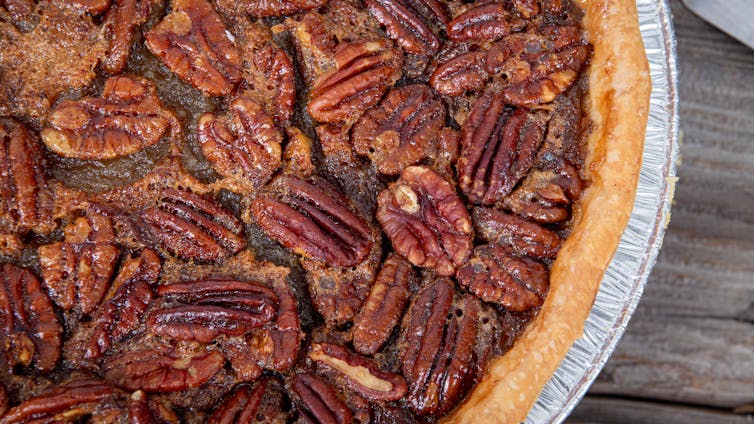
Pecan History? Discover the 8,000-year history of pecans—America’s only native major nut crop. Learn how pecans evolved from wild, overlooked trees to a beloved holiday staple found in pies, pralines, and more.
How Pecans Became a Holiday Staple: 8,000 Years of American Pecan History
Shelley Mitchell, Oklahoma State University Pecans have a storied history in the United States. Today, American trees produce hundreds of million of pounds of pecans – 80% of the world’s pecan crop. Most of that crop stays here. Pecans are used to produce pecan milk, butter and oil, but many of the nuts end up in pecan pies. Throughout history, pecans have been overlooked, poached, cultivated and improved. As they have spread throughout the United States, they have been eaten raw and in recipes. Pecans have grown more popular over the decades, and you will probably encounter them in some form this holiday season. I’m an extension specialist in Oklahoma, a state consistently ranked fifth in pecan production, behind Georgia, New Mexico, Arizona and Texas. I’ll admit that I am not a fan of the taste of pecans, which leaves more for the squirrels, crows and enthusiastic pecan lovers.
The spread of pecans
The pecan is a nut related to the hickory. Actually, though we call them nuts, pecans are actually a type of fruit called a drupe. Drupes have pits, like the peach and cherry.Three pecan fruits, which ripen and split open to release pecan nuts, clustered on a pecan tree.IAISI/Moment via Getty Images The pecan nuts that look like little brown footballs are actually the seed that starts inside the pecan fruit – until the fruit ripens and splits open to release the pecan. They are usually the size of your thumb, and you may need a nutcracker to open them. You can eat them raw or as part of a cooked dish. The pecan derives its name from the Algonquin “pakani,” which means “a nut too hard to crack by hand.” Rich in fat and easy to transport, pecans traveled with Native Americans throughout what is now the southern United States. They were used for food, medicine and trade as early as 8,000 years ago.Pecans are native to the southern United States.Elbert L. Little Jr. of the U.S. Department of Agriculture, Forest Service Pecans are native to the southern United States, and while they had previously spread along travel and trade routes, the first documented purposeful planting of a pecan tree was in New York in 1722. Three years later, George Washington’s estate, Mount Vernon, had some planted pecans. Washington loved pecans, and Revolutionary War soldiers said he was constantly eating them. Meanwhile, no one needed to plant pecans in the South, since they naturally grew along riverbanks and in groves. Pecan trees are alternate bearing: They will have a very large crop one year, followed by one or two very small crops. But because they naturally produced a harvest with no input from farmers, people did not need to actively cultivate them. Locals would harvest nuts for themselves but otherwise ignored the self-sufficient trees. It wasn’t until the late 1800s that people in the pecan’s native range realized the pecan’s potential worth for income and trade. Harvesting pecans became competitive, and young boys would climb onto precarious tree branches. One girl was lifted by a hot air balloon so she could beat on the upper branches of trees and let them fall to collectors below. Pecan poaching was a problem in natural groves on private property.
Pecan cultivation begins
Even with so obvious a demand, cultivated orchards in the South were still rare into the 1900s. Pecan trees don’t produce nuts for several years after planting, so their future quality is unknown.An orchard of pecan trees.Jon Frederick/iStock via Getty Images To guarantee quality nuts, farmers began using a technique called grafting; they’d join branches from quality trees to another pecan tree’s trunk. The first attempt at grafting pecans was in 1822, but the attempts weren’t very successful. Grafting pecans became popular after an enslaved man named Antoine who lived on a Louisiana plantation successfully produced large pecans with tender shells by grafting, around 1846. His pecans became the first widely available improved pecan variety.Grafting is a technique that involves connecting the branch of one tree to the trunk of another.Orest Lyzhechka/iStock via Getty Images The variety was named Centennial because it was introduced to the public 30 years later at the Philadelphia Centennial Expedition in 1876, alongside the telephone, Heinz ketchup and the right arm of the Statue of Liberty. This technique also sped up the production process. To keep pecan quality up and produce consistent annual harvests, today’s pecan growers shake the trees while the nuts are still growing, until about half of the pecans fall off. This reduces the number of nuts so that the tree can put more energy into fewer pecans, which leads to better quality. Shaking also evens out the yield, so that the alternate-bearing characteristic doesn’t create a boom-bust cycle.
US pecan consumption
The French brought praline dessert with them when they immigrated to Louisiana in the early 1700s. A praline is a flat, creamy candy made with nuts, sugar, butter and cream. Their original recipe used almonds, but at the time, the only nut available in America was the pecan, so pecan pralines were born.Pralines were originally a French dessert, but Americans began making them with pecans.Jupiterimages/The Image Bank via Getty Images During the Civil War and world wars, Americans consumed pecans in large quantities because they were a protein-packed alternative when meat was expensive and scarce. One cup of pecan halves has about 9 grams of protein. After the wars, pecan demand declined, resulting in millions of excess pounds at harvest. One effort to increase demand was a national pecan recipe contest in 1924. Over 21,000 submissions came from over 5,000 cooks, with 800 of them published in a book. Pecan consumption went up with the inclusion of pecans in commercially prepared foods and the start of the mail-order industry in the 1870s, as pecans can be shipped and stored at room temperature. That characteristic also put them on some Apollo missions. Small amounts of pecans contain many vitamins and minerals. They became commonplace in cereals, which touted their health benefits. In 1938, the federal government published the pamphlet Nuts and How to Use Them, which touted pecans’ nutritional value and came with recipes. Food writers suggested using pecans as shortening because they are composed mostly of fat. The government even put a price ceiling on pecans to encourage consumption, but consumers weren’t buying them. The government ended up buying the surplus pecans and integrating them into the National School Lunch Program.Today, pecan producers use machines called tree shakers to shake pecans out of the trees.Christine_Kohler/iStock via Getty Images While you are sitting around the Thanksgiving table this year, you can discuss one of the biggest controversies in the pecan industry: Are they PEE-cans or puh-KAHNS? Editor’s note: This article was updated to include the amount of protein in a cup of pecans.Shelley Mitchell, Senior Extension Specialist in Horticulture and Landscape Architecture, Oklahoma State University This article is republished from The Conversation under a Creative Commons license. Read the original article.
Unwrap the Holidays: Whataburger Launches 12 Days of Whatacheer With Daily App Deals
Celebrate the holidays with Whataburger’s 12 Days of Whatacheer! Discover daily in-app deals, exclusive to Rewards members, from December 12–23. Unwrap new menu favorites, BOGO offers, and festive savings—only on the Whataburger App.
As the holiday lights go up and the year winds down, Whataburger is serving up more than just its signature burgers—it’s delivering a sleigh-full of savings and cheer to its loyal fans. For Rewards members, the season just got a whole lot tastier.
12 Days of Whatacheer: Festive Deals for Rewards Members
From December 12 through December 23, Whataburger is rolling out a new holiday tradition: the 12 Days of Whatacheer. Each day, Rewards members can unlock a fresh, exclusive deal in the Whataburger App—think crave-worthy classics, “buy one, get one” surprises, and complimentary add-ons that make every meal feel like a celebration.
Whether you’re craving a hot Honey Butter Chicken Biscuit to start your morning, a classic Whataburger for lunch, or a sweet Strawberry Shake to cap off your evening, there’s a daily treat waiting to be unwrapped. Just sign in to your Rewards account, check the app, and claim your deal to add a little extra joy to your holiday routine.
How It Works
Who: Whataburger Rewards members (sign up in the app if you’re not already!)
When: December 12–23, with a new offer every day
How: Open the Whataburger App, claim the day’s deal, and enjoy with your next order
A new reward pops up each morning—so there’s always a reason to check in, tap, and treat yourself. According to Scott Hudler, Whataburger’s Chief Marketing Officer, “12 Days of Whatacheer is Whataburger’s way of celebrating the season with a bit of holiday magic and special savings just for our Rewards members.”
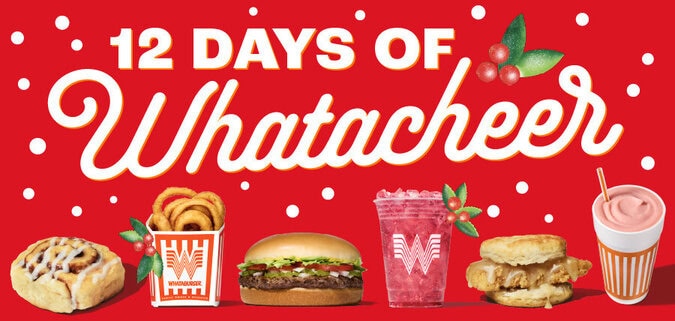
Holiday-themed graphic reading ‘12 Days of WhataCheer’ on a red background with white dots. Below the text are images of Whataburger menu items: a Cinnamon Roll, Onion Rings, a Whataburger, a Whatafresher, a Honey Butter Chicken Biscuit, and a Strawberry Shake.
Why Join the Whataburger Rewards Fun?
It’s not just about the deals (though those are pretty great). It’s about celebrating the season with a brand that’s been a community favorite for 76 years. With over 1,100 locations across 17 states, Whataburger’s family members serve up more than just food—they deliver hospitality and hometown spirit.
Plus, the Whataburger App makes it easy to order, customize, and save—right from your phone. If you haven’t joined the Rewards program yet, now’s the perfect time to start.
Get Started
Ready to add some Whatacheer to your holiday countdown? Download the Whataburger App on iOS or Android, create your Rewards account, and get set to unwrap a new deal every day. For more details, visit Whataburger.com.
Wishing you a season of flavor, fun, and festive deals—see you in the drive-thru!
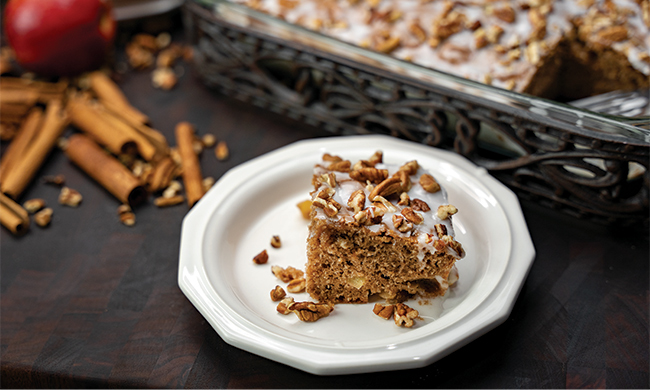
Pumpkin spice may be all the rage this time of year, but don’t forget another fruit that’s sure to please: sweet, delicious apples. For an ooey-gooey breakfast, office snack or potluck dessert, turn to this Apple Spice Cake.
(Family Features) Pumpkin spice may be all the rage this time of year, but don’t forget another fruit that’s sure to please: sweet, delicious apples. For an ooey-gooey breakfast, office snack or potluck dessert, turn to this Apple Spice Cake that looks and tastes like it’s made for the season. Visit Culinary.net to discover more recipe inspiration.
Peel, core and chop apples into bite-sized pieces. In bowl, mix apples with brown sugar, cinnamon and flour, if desired, which helps keep apples from sinking to bottom. Set aside.
In large mixing bowl, mix spice cake mix, butter, eggs and milk. Mix in apples and pour into 9-by-13-inch pan. Bake 30-35 minutes, or until toothpick inserted in center comes out clean.
Let cool.
To make glaze: Mix powdered sugar and milk; pour over cooled cake.