Connect with us

News

Educators Are Being Priced Out of Their Communities—These Cities Are Building Subsidized Teacher Housing to Bring Them Back

Teacher Housing: As housing costs rise and teacher pay stagnates, cities and school districts are building education workforce housing to attract and retain educators—cutting commutes and strengthening community ties.

Published

on

As housing costs rise and teacher pay stagnates, cities and school districts are building education workforce housing to attract and retain educators—cutting commutes and strengthening community ties.
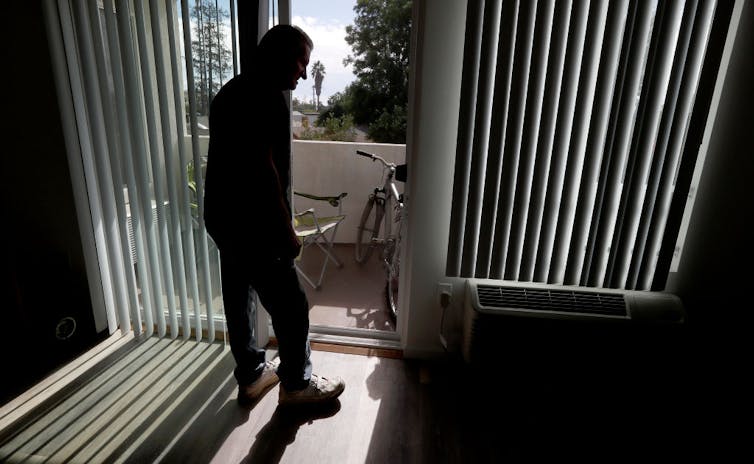
Developers of Wendy’s Village, an affordable housing complex planned for teachers in Colorado Springs, Colo., completed their first homes in July 2025.
WeFortify

America’s educators are being priced out of their communities − these cities are building subsidized teacher housing to lure them back

Jeff Kruth, Miami University and Tammy Schwartz, Miami University

For much of the 20th century, teaching was a stable, middle-class job in the U.S. Now it’s becoming a lot harder to survive on a teacher’s salary: Wages have been stagnant for decades, according to a study from the Economic Policy Institute, and teachers earn 5% less than they did a decade ago when adjusting for inflation.

That’s one reason why there’s a widespread teacher shortage, with tens of thousands of positions going unfilled. At the same time, according to a 2022 report from the Annenberg Institute at Brown University, there are more than 160,000 underqualified teachers in the classroom, meaning they don’t meet full certification or credentialing standards.

This issue has become particularly acute as housing costs have risen sharply across the country over the past decade. Why become a teacher if it means you’ll struggle to put a roof over your head?

In response, many states and cities, from California to Cincinnati, are exploring ways to attract and retain teachers by developing education workforce housing – affordable housing built specifically for public school teachers and staff to make it easier for them to live near where they work. In doing so, they seek to address aspects of both the teacher shortage and housing crisis.

Fertile land for housing

As professors of architecture and education and as directors of an urban teaching program at Miami University in Ohio, we work to make it easier for students to pursue teaching careers – and that includes addressing affordable housing issues in communities where they work.

A key element of this work involves collaborating with local education agencies to either build, subsidize or find housing for teachers.

Local education agencies are tasked with the administrative functions of a school district, and they often own large tracts of land.

This land can be used to build new school buildings or community health clinics. But it can also be used to build housing – a particularly attractive option in cities where land can be scarce and expensive.

California has been at the forefront of these efforts. The state’s school districts own more than 75,000 acres of potentially developable land. Meanwhile, more than one-third of the state’s public school employees are rent-burdened, meaning they spend more than 30% of their income on housing costs.

California’s Teacher Housing Act of 2016 set up a framework for local education agencies to build and develop housing on their land. Since then, education workforce housing complexes have been developed across the state, ranging from San Francisco’s Shirley Chisolm Village to 705 Serramonte in Daly City, California.

Advertisement
Get More From A Face Cleanser And Spa-like Massage
The San Francisco Unified School District celebrated the opening of Shirley Chisolm Village, the city’s first educator housing development, in September 2025.

The nuts and bolts of education workforce housing vary.

It can be financed by traditional sources, such as private philanthropy and government funds. But it can also be funded through financial tools such as certificates of participation, which allow outside investors to provide funding up front and later receive a return on their investment through rental income.

In some cases, teachers are offered reduced rents for just a few years as they start their careers. In others, they’re given the opportunity to purchase their home.

Third party management companies often oversee the projects, since local education agencies usually aren’t interested in property management. This also reduces the potential for any direct disputes between employer and employee. Many programs require only that residents be employees of the school district when they enter the program, meaning if someone leaves their job, they will not be displaced.

In April 2025, UCLA’s CITYLab and the Center for Cities and Schools published a study highlighting some of the benefits and challenges of nine educator workforce housing projects built in California.

The complexes ranged in size, from 18 to 141 dwelling units, with heights that ranged from two to six stories. The researchers found that tenants were largely satisfied with their living situations: They paid rents at far below market rate, and they praised the apartment design. They also highlighted their shorter commutes.

From tiny homes to factory conversions

Since 2020, educator housing has been proposed or developed in Arkansas, Colorado, Florida, Nevada and South Carolina.

In Fort Stockton, a small, rural town in West Texas, the school district bought a motel in 2022 and converted it into teacher housing. In Arizona, the Chino Valley Unified School District built tiny homes for its teachers in 2023, renting them at US$550 per month.

The Chino Valley Unified School District built tiny homes for its workers in 2023.

In Baltimore, more than 775 teachers have recently been housed thanks to initiatives such as the Union Mill project, an 86,000-square-foot historic building converted into teacher apartments that range in price from $700 to $1200 per month.

Teacher housing does more than give educators an affordable place to live. It can forge lasting relationships. A recent assessment of teacher housing in Los Angeles found that the community spaces and programs offered on site strengthened bonds among the residents, leading to friendships and working relationships that lasted for years.

Advertisement
Get More From A Face Cleanser And Spa-like Massage
A spacious living space featuring a billiards table, chairs, tables and a large, built-in bookcase filled with books.
A community room in Norwood Learning Village, a 29-unit affordable housing development for Los Angeles Unified School District employees.
© Alexander Vertikoff for Thomas Saffron and Associates and Norwood Learning Village

Building community in and out of the classroom

Here in Cincinnati, our own graduates now working in schools also benefit from affordable housing options.

Through a partnership between Miami University and St. Francis Seraph, early career teachers from our TEACh and Urban Cohort programs have access to affordable housing.

In 2024, the Archdiocese of Cincinnati converted an old church property in Cincinnati’s Over-the-Rhine neighborhood into teacher apartments, which recent graduates can rent at a reduced rate. Most young teachers otherwise wouldn’t be able to afford living in this area.
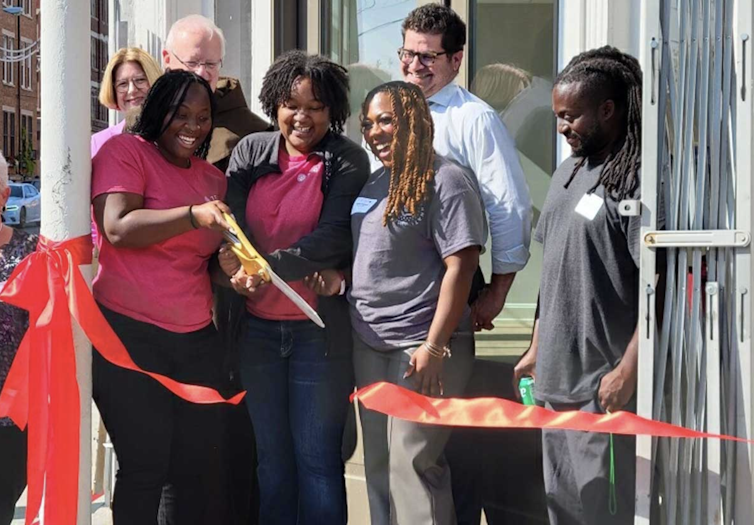
A group of people smile as two women cut a red ribbon.
In 2024, the Archdiocese of Cincinnati collaborated with Miami University to convert the St. Francis Seraph Church building in the city’s Over-the-Rhine neighborhood into affordable housing for recent teaching graduates.
Photo: Je’Von Calhoun, CC BY-SA

“I wouldn’t be able to spend my beginning years as an educator in the community without access to affordable housing,” Nicholas Detzel, a graduate teacher now living in the converted space, told us in an interview.

“Living in the community has been an amazing experience and helps you know your students on a completely different level,” he added. “It has also helped me relate to students about knowing what is going on in our community.”

Teachers like Detzel who live in Over-the-Rhine can walk or take public transportation to the local schools where they work.

Perhaps more importantly, they can better understand the world of their students. They can learn the streets that students avoid, the parks and community spaces that become popular after-school hangouts, and what community organizations offer summer programming. Ultimately, teachers grounded in the life of the community can build relationships outside of the walls of school that contribute to more trust in the classroom.

Providing affordable housing for teachers and staff also helps retention rates, particularly as many younger teachers leave the profession due to low pay and burnout.

Teacher housing programs are still in their infancy. There are roughly 3.2 million public school teachers nationwide, and there are probably fewer than 100 of these developments completed or in progress.

Yet more and more districts are expressing interest, because they help alleviate two major concerns affecting so many American communities: affordable housing and a quality education.

While the need for affordable housing spans both lower- and middle-class families, teachers or not, forging alliances between schools and affordable housing providers can serve as one path forward – and possibly serve as a model for other trades and professions.The Conversation

Jeff Kruth, Assistant Professor of Architecture, Miami University and Tammy Schwartz, Director of the Urban Cohort, Miami University

This article is republished from The Conversation under a Creative Commons license. Read the original article.

Advertisement
Get More From A Face Cleanser And Spa-like Massage


Discover more from Daily News

Subscribe to get the latest posts sent to your email.

Continue Reading
Advertisement Sports Research
Click to comment

Leave a Reply

Your email address will not be published. Required fields are marked *

News

2025’s words of the year reflect a year of digital disillusionment

From “AI slop” to “rage bait” and “parasocial,” 2025’s words of the year reflect growing distrust in online life—where manipulation, misinformation, and fake relationships thrive.

Published

on

From “AI slop” to “rage bait” and “parasocial,” 2025’s words of the year reflect growing distrust in online life—where manipulation, misinformation, and fake relationships thrive.
Many of the year’s winners reference the lack of meaning and certainty in our online interactions. Mininyx Doodle/iStock via Getty Images

2025’s words of the year reflect a year of digital disillusionment

Roger J. Kreuz, University of Memphis Which terms best represent 2025? Every year, editors for publications ranging from the Oxford English Dictionary to the Macquarie Dictionary of Australian English select a “word of the year.” Sometimes these terms are thematically related, particularly in the wake of world-altering events. “Pandemic,” “lockdown” and “coronavirus,” for example, were among the words chosen in 2020. At other times, they are a potpourri of various cultural trends, as with 2022’s “goblin mode,” “permacrisis” and “gaslighting.” This year’s slate largely centers on digital life. But rather than reflecting the unbridled optimism about the internet of the early aughts – when words like “w00t,” “blog,” “tweet” and even “face with tears of joy” emoji (😂) were chosen – this year’s selections reflect a growing unease over how the internet has become a hotbed of artifice, manipulation and fake relationships.

When seeing isn’t believing

A committee representing the Macquarie Dictionary of Australian English settled on “AI slop” for their word of the year. Macquarie defines the term, which was popularized in 2024 by British programmer Simon Willison and tech journalist Casey Newton, as “low-quality content created by generative AI, often containing errors, and not requested by the user.” AI slop – which can range from a saccharine image of a young girl clinging to her little dog to career advice on LinkedIn – often goes viral, as gullible social media users share these computer-generated videos, text and graphics with others. Images have been manipulated or altered since the dawn of photography. The technique was then improved, with an assist from AI, to create “deepfakes,” which allows existing images to be turned into video clips in surreal ways. Yes, you can now watch Hitler teaming up with Stalin to sing a 1970s hit by The Buggles. What makes AI slop different is that images or video can be created out of whole cloth by providing a chatbot with just a prompt – no matter how bizarre the request or ensuing output.

Meet my new friend, ChatGPT

The editors of the Cambridge Dictionary chose “parasocial.” They define this as “involving or relating to a connection that someone feels between themselves and a famous person they do not know, a character in a book, film, TV series … or an artificial intelligence.” These asymmetric relationships, according to the dictionary’s chief editor, are the result of “the public’s fascination with celebrities and their lifestyles,” and this interest “continues to reach new heights.” As an example, Cambridge’s announcement cited the engagement of singer Taylor Swift and football player Travis Kelce, which led to a spike in online searches for the meaning of the term. Many Swifties reacted with unbridled joy, as if their best friend or sibling had just decided to tie the knot. But the term isn’t a new one: It was coined by sociologists in 1956 to describe “the illusion” of having “a face-to-face relationship” with a performer. However, parasocial relationships can take a bizarre or even ominous turn when the object of one’s affections is a chatbot. People are developing true feelings for these AI systems, whether they see them as a trusted friend or even a romantic partner. Young people, in particular, are now turning to generative AI for therapy.

Taking the bait

The Oxford Dictionary’s word of the year is “rage bait,” which the editors define as “online content deliberately designed to elicit anger or outrage by being frustrating, provocative, or offensive, typically posted in order to increase traffic to or engagement with a particular web page or social media content.” This is only the latest word for forms of emotional manipulation that have plagued the online world since the days of dial-up internet. Related terms include trolling, sealioning and trashposting. Unlike a hot take – a hasty opinion on a topic that may be poorly reasoned or articulated – rage baiting is intended to be inflammatory. And it can be seen as both a cause and a result of political polarization. People who post rage bait have been shown to lack empathy and to regard other people’s emotions as something to be exploited or even monetized. Rage baiters, in short, reflect the dark side of the attention economy.
Glitchy image of a red, sinister-looking skull.
Rage baiters have little concern for the people whose emotions they exploit for attention or profit. yamonstro/iStock via Getty Images

Meaningless meaning

Perhaps the most contentious choice in 2025 was “6-7,” chosen by Dictionary.com. In this case, the controversy has to do with the actual meaning of this bit of Gen Alpha slang. The editors of the website describe it as being “meaningless, ubiquitous, and nonsensical.” Although its definition may be slippery, the term itself can be found in the lyrics of the rapper Skrilla, who released the single “Doot Doot (6 7)” in early 2025. It was popularized by 17-year-old basketball standout Taylen Kinney. For his part, Skrilla claimed that he “never put an actual meaning on it, and I still would not want to.” “6-7” is sometimes accompanied by a gesture, as if one were comparing the weight of objects held in both hands. British Prime Minister Keir Starmer recently performed this hand motion during a school visit. The young students were delighted. Their teacher, however, informed Starmer that her charges weren’t allowed to use it at the school, which prompted a clumsy apology from the chastened prime minister.

Throw your hands in the air?

The common element that these words share may be an attitude best described as digital nihilism. As online misinformation, AI-generated text and images, fake news and conspiracy theories abound, it’s increasingly difficult to know whom or what to believe or trust. Digital nihilism is, in essence, an acknowledgment of a lack of meaning and certainty in our online interactions. This year’s crop of words might best be summed up by a single emoji: the shrug (🤷). Throwing one’s hands up, in resignation or indifference, captures the anarchy that seems to characterize our digital lives.The Conversation Roger J. Kreuz, Associate Dean and Feinstone Interdisciplinary Research Professor​, University of Memphis This article is republished from The Conversation under a Creative Commons license. Read the original article.

Discover more from Daily News

Subscribe to get the latest posts sent to your email.

Continue Reading

News

Slayer Rule Explained: How Rob Reiner’s Estate Could Be Handled After the Killings

After the deaths of Rob Reiner and Michele Singer Reiner, legal experts explain how the “slayer rule” can block a killer from inheriting—and what could happen next in probate court.

Published

on

Last Updated on January 1, 2026 by Daily News Staff

Rob Reiner and his son Nick Reiner pictured together at a public event, used in an article explaining the slayer rule and inheritance law.
Michele Singer Reiner and Rob Reiner pose with their children, Jake, Romy and Nick, far right, at a 2014 gala. Michael Loccisano/Getty Images

How the ‘slayer rule’ might play a role in determining who will inherit wealth from Rob Reiner and his wife

Naomi Cahn, University of Virginia and Reid Kress Weisbord, Rutgers University – Newark The fatal stabbings of filmmaker and actor Rob Reiner and his wife, the photographer and producer Michele Singer Reiner, have sparked widespread grieving. This tragedy, discovered on Dec. 14, 2025, is also increasing the public’s interest in what happens when killers could inherit wealth from their victims. That’s because Nick Reiner, their son, was charged with two counts of first-degree murder four days after the couple’s deaths at their Los Angeles home.

What’s the ‘slayer rule’?

All states have some form of a slayer rule that prevents killers from inheriting from their victims. While the rules differ slightly from state to state, they always bar murderers from profiting from their own crimes. Simply put, if you’re found guilty of killing someone or plead guilty to their murder, you can’t inherit anything from your victim’s estate. In some states, this might go beyond inheritance and apply to jointly held property, insurance policies and other kinds of accounts. Most of these slayer rules, including California’s, apply only to “felonious and intentional” killings, meaning that they don’t apply if you accidentally kill someone. Although there doesn’t have to be a guilty verdict by a judge or a jury, or a guilty plea from the accused, there must be some finding by a criminal or civil court of an intentional and felonious killing. These rules, known as slayer rules, have a long history in the United States. They became more prominent following an 1889 murder case in New York state, in which a 16-year-old boy poisoned his grandfather to get an inheritance that was written into his grandfather’s will.

How often are slayer rules invoked?

It’s hard to say for sure. As far as we know, nobody’s tried to keep track. Slayer rules come into play whenever someone who would otherwise inherit assets from an estate is convicted of or found liable for murder, and the slayer is entitled to inherit from the victim. These tragic cases almost always involve murders committed by relatives. Many of the high-profile ones have been tied to murders that occurred in California. Famous disinherited murderers include Lyle and Erik Menendez, the Californians known as the Menendez brothers. In 1996, a jury found them guilty of the first-degree murder of their parents, José and Mary Louise “Kitty” Menendez. The Menendez brothers’ parents, who were killed in 1989, had a fortune that today would be worth more than $35 million. The brothers, who became eligible for parole but were denied it in 2025, have been in prison ever since. Once there has been a finding of an intentional and felonious killing, even if the slayer is later released on parole – or even if they serve no prison time at all – they would still not inherit anything. In practical terms, that means if one or both of the Menendez brothers were to win parole in the future, they would still be ineligible to inherit any of their parents’ wealth upon their release from prison. California’s slayer rule also meant that salesman Scott Peterson, who was convicted of killing his pregnant wife, Laci Peterson, in 2002, couldn’t collect the money he would otherwise have been due from her life insurance policy. Peterson has been in prison since 2005.
Two young men, wearing prison garb, sit in a courtroom.
Erik Menendez, left, and Lyle Menendez, seen standing trial for their parents’ murders, in 1994. They were convicted in 1996. Ted Soqui/Sygma via Getty Images

What can block its application?

In the absence of a murder conviction, the slayer rule may not apply. For example, a conviction for a lesser criminal offense, such as manslaughter, might allow the accused – or their lawyers – to argue that the killing was unintentional. This exception could be relevant to the prosecution of the Reiners’ murders if it were to turn out that Nick Reiner’s defense can show that substance abuse or schizophrenia rendered him insane when he allegedly killed his parents at their Los Angeles home. On the other hand, under California law, even if there is no conviction the probate court administering the murder victim’s estate could still separately find that the killing was intentional and felonious. That civil finding would bar the slayer from inheriting without a criminal conviction.
Rob Reiner holds a microphone next to a young man with a banner for the movie 'Being Charlie' visible in the background.
Rob Reiner and his son Nick, seen in 2016 speaking about ‘Being Charlie,’ the movie about a young man’s struggle with substance use that they made together. Laura Cavanaugh/FilmMagic via Getty Images

Does this only apply to families with big fortunes?

Slayer rules apply to anyone who kills one or more of their relatives, whether their victims were rich, poor or in between. When large amounts of money are at stake, cases tend to garner more attention due to media coverage during the criminal trial and subsequent inheritance litigation.

Who will inherit Rob Reiner’s and Michele Singer Reiner’s wealth?

It’s too soon for both the public and the family to know who will inherit ultimately from the Reiners. Wills are typically public documents, although the Reiners may have also engaged in other types of estate planning, such as trusts, that do not typically become public records. And celebrities with valuable intellectual property rights, such as copyrights from the Reiners’ many film and television properties, tend to establish trusts. Assuming that, like many parents, the Reiners left most of their fortune – which reportedly was worth some US$200 million – to their children, including Nick, then California’s slayer statute may come into play. The couple had two other children together, Romy and Jake. Rob Reiner also had another daughter, Tracy Reiner, whom he adopted after his marriage to his first wife, the actor and filmmaker Penny Marshall. It’s also likely that the Reiners included charitable bequests in their estate plans. They were strong supporters of many causes, including early childhood development.

Might the slayer rule apply to Nick Reiner?

It’s much too soon to know. It is important to emphasize that the wills and other estate planning documents of Rob Reiner and Michele Singer Reiner have not yet been made public. That means what Nick Reiner might stand to inherit, if the slayer rule were to prove irrelevant in this case, is unknown. Nor, with the investigation of the couple’s deaths still underway, can anyone make any assumptions about Nick’s innocence or guilt. And, as of mid-December 2025, an unnamed source was telling entertainment reporters that Nick Reiner’s legal bills were being paid for by the Reiner family. Naomi Cahn, Professor of Law, University of Virginia and Reid Kress Weisbord, Distinguished Professor of Law and Judge Norma Shapiro Scholar, Rutgers University – Newark This article is republished from The Conversation under a Creative Commons license. Read the original article.
High Demand Marks “Veggies for Veterans” Event Amid SNAP Delays
Link: https://stmdailynews.com/high-demand-marks-veggies-for-veterans-event-amid-snap-delays/

Author

Want more stories 👋
"Your morning jolt of Inspiring & Interesting Stories!"

Sign up to receive awesome articles directly to your inbox.

STM Coffee Newsletter 1

We don’t spam! Read our privacy policy for more info.


Discover more from Daily News

Subscribe to get the latest posts sent to your email.

Continue Reading

pets

Cozy Up to Peace of Mind: 4 Tips to Avoid Common Pet Hazards This Thanksgiving

Tips to Avoid Common Pet Hazards: Keep your furry friends safe this Thanksgiving with these 4 essential pet safety tips. Learn which foods are toxic to pets, how to pet-proof holiday decor, and what to do in emergencies. VCA Animal Hospitals offer 50% off ER exams to help protect your four-legged family members during the holidays.

Published

on

Last Updated on December 24, 2025 by Daily News Staff

Tips to Avoid Common Pet Hazards

Cozy Up to Peace of Mind: 4 Tips to Avoid Common Pet Hazards This Thanksgiving

(Family Features) Thanksgiving is a time for cozy gatherings with loved ones to share gratitude, crisp adventures, festive decor and, oftentimes, delicious food. However, many traditions associated with giving thanks, including the feast, can pose risks to your furry family members. Even with the best-laid plans, accidents can happen. From tempting table scraps to the crackling fire and festive decor, it’s important to take steps to prevent seasonal hazards from ruining the celebration for your pets. However, should those unforeseen moments occur, participating VCA Animal Hospitals Emergency Care locations offer access to world-class emergency medicine, 50% off an ER exam for all pet owners and free ER exams for CareClub members. For added peace of mind, taking these extra precautions during the festivities can help keep your furry friends safe and healthy:   Skip the Table Scraps While pleading eyes can be hard to resist when you’re gathered around the table, remember – and remind little ones – many Thanksgiving foods can make pets sick. Avoid feeding pets turkey skin, which can trigger pancreatitis, or bones, which could splinter and lead to choking or internal injuries, and pack away any leftovers quickly to keep curious pets at bay. Similarly, beware of ingredients like onions, garlic and chives, which are common in stuffing and casseroles, and are toxic to both dogs and cats. If you want to include your four-legged family members in the celebration, plain turkey breast, unseasoned green beans or pumpkin puree are safe for most pets to consume. However, many other seasonal desserts contain chocolate, raisins, grapes or the sugar substitute xylitol, which can also be harmful. Be sure to keep beverages out of reach as well, as pets can quickly absorb alcohol, which may lead to alcohol poisoning. Mind the Decorations Seasonal decor can make your home feel welcoming, but pets are curious by nature and often attracted to new items in their living spaces. Help keep your furry friends safe by sitting or hanging decorations out of paws’ reach and unplugging extra cords and string lights when not in use as they pose a chewing – and shock – risk to pets. Beware of Open Flames Heat sources, such as fireplaces and wood stoves, can be enticing with their warm embers and golden hue, but they also pose serious fire and burn risks should wagging tails or chilly noses get too close. Keep pets a safe distance from open flames by placing a guard around the flame and, similarly, keep lit candles out of pets’ reach. Prepare for Cool-Weather Walks If you live in an area with snow and ice, be cautious of weather conditions when sending pets outside to play or use the bathroom, and consider a pet sweater or jacket and booties to protect them from the cold. When going out for walks, particularly during the early morning and late evening hours, use a non-retractable leash to keep furry family members close, wear high-visibility gear and avoid paths, roads and trails with limited lighting. Visit vcaholiday.com to find a location near you in case of emergency and more tips to keep your pets happy and healthy this Thanksgiving.   Emergency Situations That Require Immediate Attention During the holidays – or any other time or year – accidents can happen. Should your pet be involved in any of these situations, they likely require emergency veterinary attention:
  • Severe accident or trauma
  • Vomiting or diarrhea that goes on for an extended time
  • Severe fever or malaise
  • Birthing problems
  • Broken bones
  • Getting hit by a car
  • Seizures
  • Shock
  • Uncontrolled bleeding
  • Attack by another animal
  • Known or suspected toxin ingestion
  • Difficulty breathing or severe coughing
  Photo courtesy of Shutterstock collect?v=1&tid=UA 482330 7&cid=1955551e 1975 5e52 0cdb 8516071094cd&sc=start&t=pageview&dl=http%3A%2F%2Ftrack.familyfeatures SOURCE: VCA Animal Hospitals

Our Lifestyle section on STM Daily News is a hub of inspiration and practical information, offering a range of articles that touch on various aspects of daily life. From tips on family finances to guides for maintaining health and wellness, we strive to empower our readers with knowledge and resources to enhance their lifestyles. Whether you’re seeking outdoor activity ideas, fashion trends, or travel recommendations, our lifestyle section has got you covered. Visit us today at https://stmdailynews.com/category/lifestyle/ and embark on a journey of discovery and self-improvement.

Author


Discover more from Daily News

Subscribe to get the latest posts sent to your email.

Continue Reading

Trending