

Automotive
EPA removal of vehicle emissions limits won’t stop the shift to electric vehicles, but will make it harder, slower and more expensive
The EPA’s move to rescind the 2009 “endangerment finding” and roll back vehicle emissions limits won’t stop the shift to electric vehicles—but it will slow adoption, raise costs, and increase climate and public health harms.

Alan Jenn, University of California, Davis
The U.S. government is in full retreat from its efforts to make vehicles more fuel-efficient, which it had been prioritizing, along with state governments, since the 1970s.
The latest move came on Feb. 12, 2026, when President Donald Trump and the Environmental Protection Agency issued a new rule rescinding the landmark “endangerment finding,” and reversing various emissions limits on cars and trucks. The 2009 finding stated that greenhouse gases pose a threat to public health and welfare. If the new rule stands up in court and is not overruled by Congress, it would undo a key part of the long-standing effort to limit greenhouse gas emissions from vehicles.
As a scholar of how vehicle emissions contribute to climate change, I know that the science behind the endangerment finding hasn’t changed. If anything, the evidence has grown that greenhouse gas emissions are warming the planet and threatening people’s health and safety. Heat waves, flooding, sea-level rise and wildfires have only worsened in the decade and a half since the EPA’s ruling.
Regulations over the years have cut emissions from power generation, leaving transportation as the largest source of greenhouse gas emissions in the U.S.
The scientific community agrees that vehicle emissions are harmful and should be regulated. The public also agrees, and has indicated strong preferences for cars that pollute less, including both more efficient gas-burning vehicles and electric-powered ones. Consumers have also been drawn to electric vehicles thanks to other benefits such as performance, operation cost and innovative technologies.
That is why I believe the EPA’s move will not stop the public and commercial transition to electric vehicles, but it will make that shift harder, slower and more expensive for everyone.
Putting carmakers in a bind
The most recent EPA rule about vehicle emissions was finalized in 2024. It set emissions limits that can realistically only be met by a large-scale shift to electric vehicles.
Over the past decade and a half, automakers have been building up their capability to produce electric vehicles to meet these fleet requirements, and a combination of regulations such as California’s zero-emission-vehicle requirements have worked together to ensure customers can get their hands on EVs. The zero-emission-vehicle rules require automakers to produce EVs for the California market, which in turn make it easier for the companies to meet their efficiency and emissions targets from the federal government. These collectively pressure automakers to provide a steady supply of electric vehicles to consumers.
The new EPA move would undo the 2024 EPA vehicle-emissions rule and other federal regulations that also limit emissions from vehicles, such as the heavy-duty vehicle emissions rule.
The possibility of a regulatory reversal puts automakers into a state of uncertainty. Legal challenges to the EPA’s shift are all but guaranteed, and the court process could take years.
For companies making decade-long investment decisions, regulatory stability matters more than short-term politics. Disrupting that stability undermines business planning, erodes investor confidence and sends conflicting signals to consumers and suppliers alike.

A slower roll
The Trump administration has taken other steps to make electric vehicles less attractive to carmakers and consumers.
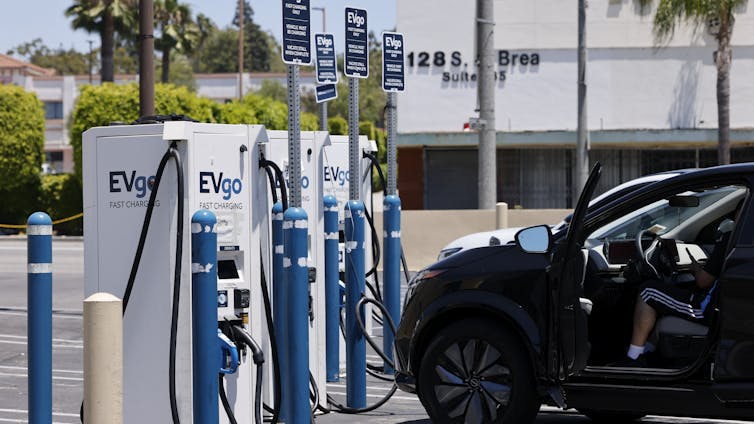
The White House has already suspended key provisions of the Inflation Reduction Act that provided tax credits for purchasing EVs and halted a US$5 billion investment in a nationwide network of charging stations. And Congress has retracted the federal waiver that allowed California to set its own, stricter emissions limits. In combination, these policies make it hard to buy and drive electric vehicles: Fewer, or no, financial incentives for consumers make the purchases more expensive, and fewer charging stations make travel planning more challenging.
Overturning the EPA’s 2009 endangerment finding would remove the legal basis for regulating climate pollution from vehicles altogether.
But U.S. consumer interest in electric vehicles has been growing, and automakers have already made massive investments to produce electric vehicles and their associated components in the U.S. – such as Hyundai’s EV factory in Georgia and Volkswagen’s Battery Engineering Lab in Tennessee.
Global markets, especially in Europe and China, are also moving decisively toward electrifying large proportions of the vehicles on the road. This move is helped in no small part due to aggressive regulation by their respective governments. The results speak for themselves: Sales of EVs in both the European Union and China have been growing rapidly.
But the pace of change matters. A slower rollout of clean vehicles means more cumulative emissions, more climate damage and more harm to public health.
The EPA’s move seeks to slow the shift to electric vehicles, removing incentives and raising costs – even though the market has shown that cleaner vehicles are viable, the public has shown interest, and the science has never been clearer. But even such a major policy change can’t stop the momentum of those trends.
This is an updated version of an article originally published Aug. 5, 2025.
Alan Jenn, Associate Professor of Civil and Environmental Engineering, University of California, Davis
This article is republished from The Conversation under a Creative Commons license. Read the original article.
Stay ahead of the curve with STM Daily News’ Tech section, featuring the latest on innovation, consumer technology, digital trends, startups, AI, and the stories shaping how we live and work.


Automotive
Slate Truck Gets Real: First Experience Center Opens Ahead of Planned Deliveries
Slate Auto’s first permanent Experience Center gives consumers an up-close look at its customizable electric truck ahead of planned customer deliveries.

Slate Auto’s new Chicago location gives prospective buyers a permanent place to see the minimalist electric pickup, explore customization options and learn about demo opportunities—but it is not yet proof that customer deliveries have begun.
CHICAGO — October 20, 2026 — The Slate Truck is moving out of computer renderings and temporary roadshow stops and into a permanent retail setting. Slate Auto opened its first Experience Center on October 15 at 1053 W. Grand Avenue in Chicago, giving consumers a year-round location to get an up-close look at the company’s highly anticipated electric pickup.
The Near West Side facility occupies a former Tesla location and includes showroom, retail and garage space, along with electric-vehicle charging infrastructure. For Slate, the opening represents an important step in turning strong online interest into a more tangible buying experience as the startup works toward launching its first vehicle.
Visitors can examine the truck’s compact dimensions, deliberately simple cabin and accessory-driven design in person. The center also showcases Slate’s personalization strategy, including exterior wraps, add-on accessories and digital design tools intended to let owners configure the truck around their needs.
Slate has also promoted demonstration opportunities connected with the location, although availability may be limited or appointment-based as the company continues to prepare its fleet. Early media access included passenger rides rather than unrestricted customer test drives, so prospective visitors should confirm current availability before making a special trip.
Why the Chicago opening matters
Until now, most consumers have encountered the Slate Truck through online reservations, media coverage or temporary appearances. A permanent showroom gives buyers a chance to judge details that are difficult to evaluate on a screen, including seating position, bed access, cabin materials and the overall size of the vehicle.
That is especially important for a product built around an unconventional value proposition. Slate is promoting a basic two-seat, two-door electric truck with manual crank windows and no factory-installed infotainment screen or stereo. The company’s strategy is to keep the starting price low and let buyers add features later through accessories and conversion kits.
The physical location also gives Slate a place to explain that approach directly. Rather than presenting the truck as an unfinished vehicle, the company can demonstrate how its modular accessories, wraps and planned SUV-style conversion components are meant to expand the vehicle’s usefulness over time.
Chicago is a logical first market for that effort. The city offers access to a large Midwestern customer base and is within the broader region of Slate’s planned manufacturing operation in Warsaw, Indiana. Reusing a former Tesla store also gives the startup a space already suited to displaying and servicing electric vehicles.
The roadshow continues beyond Chicago
The Experience Center is opening as Slate expands its public demonstration schedule. The company’s events calendar lists a Boston-area demo ride event from October 21 through October 25 at The Shops at Chestnut Hill, followed by an appearance at RADwood in Alameda, California, on October 24 and a New Jersey demo ride event in Freehold from October 28 through October 31.
Slate also lists future stops in Washington, D.C., Raleigh, Atlanta, Miami and Orlando. Together, the permanent Chicago center and the traveling events suggest the company is moving into a broader customer-education phase ahead of planned deliveries.
What has—and has not—changed
The showroom opening does not change Slate’s headline pricing or range claims. The truck is still advertised with a base price of $24,950 before taxes, registration and destination charges. With the currently listed $1,450 destination fee, the entry price would be approximately $26,400 before other costs or optional equipment.
Slate also continues to advertise an estimated range of up to 205 miles. That figure remains an estimate rather than a final EPA-certified rating.
Most importantly, Slate has not publicly confirmed that regular customer production has started or that the first retail deliveries have occurred. Limited deliveries have been reported as possible before the end of December 2026, while many reservation holders may receive later delivery windows in 2027. The Chicago opening is therefore a commercialization milestone, not a manufacturing milestone.
For customers and industry observers, the next major signals will be the start of production at the Warsaw factory, final specifications and EPA range ratings, and confirmed handoffs to paying buyers.
The bottom line
Slate Auto now has a permanent place where consumers can see and evaluate its unusually simple electric truck. That makes the product feel more real and gives the company a platform to explain a customization-heavy business model that may be unfamiliar to traditional truck buyers.
Still, the biggest questions remain unanswered. Opening a showroom demonstrates progress in marketing and customer engagement; producing vehicles at scale, holding the promised price and delivering a 205-mile truck to reservation holders will determine whether Slate can convert enthusiasm into a viable automotive business.
Sources and more information
- Slate Auto events and demo schedule
- Electrek: Slate opens its first Experience Center in Chicago
- Autoblog: Slate opens its first U.S. showroom
- Slate Auto
Category: Consumer Corner / Automotive


Automotive
The New Tire-Buying Playbook: AI Insights Meet Human Advice
New Tire-Buying Playbook: A tire purchase can start with a familiar moment: a dashboard warning light, a repair shop visit, worn tread or realizing the current set is nearing a mileage milestone. When it’s time to replace tires, drivers have more ways than ever to research options, including classic search engines and AI chatbots.

The New Tire-Buying Playbook: AI Insights Meet Human Advice
(Feature Impact) A tire purchase can start with a familiar moment: a dashboard warning light, a repair shop visit, worn tread or realizing the current set is nearing a mileage milestone. When it’s time to replace tires, drivers have more ways than ever to research options.
New research from Hankook Tire’s Gauge Index Survey found drivers are utilizing multiple methods for research, from search engines and AI assistants to asking someone they trust for advice. Two-thirds of respondents said they always or often research multiple sources before buying tires, suggesting many shoppers want to weigh several opinions before deciding to buy a new set, including turning to fellow drivers.
As tools like classic search engines and AI chatbots continue to evolve, the most useful strategy for tire shopping may be less about choosing between technology and human expertise, and more about knowing how each fits into the research process. Here are a few ways drivers can confidently conduct tire research.
Start broad then narrow the search.
For many drivers, the process begins online. One-quarter of respondents said they typically begin their tire research with a search engine, the most common starting point reported in the survey. Retailer or dealer websites are the next at 16%, followed by recommendations from a mechanic at 15%.
That range of starting points reflects how personal a tire purchase can be. A search engine can help a driver organize initial questions and identify the types of information they want to compare. Retailer and dealer sites offer another place to review available options – and reviews from other drivers. A mechanic can help put the vehicle and driver’s specific needs into context.
Drivers can also use their initial search to create a short list of requirements, such as tire size, type and available warranties.
Use AI as one research tool – but not the only one.
AI is a growing part of any research. About 4 in 10 drivers (42%) said they have used an AI tool to research or compare tires more than once. Another 11% said they have not used one yet but plan to the next time they buy tires.
Conversely, just 5% of respondents said an AI assistant or chatbot would be their typical first stop when researching tires, suggesting many drivers may add AI later in the process to help sort through information or frame comparisons.
AI can help turn a general concern into a clearer list of questions. A driver might use it to identify terms to research, compare categories of information or prepare for a conversation with a retailer, dealer or repair professional.
Keep trusted people in the research loop.
Despite drivers’ increased reliance on digital tools, trusted advice is still important. More than one-quarter of drivers said they would typically begin tire research with a recommendation from a mechanic (15%) or from friends or family (12%).
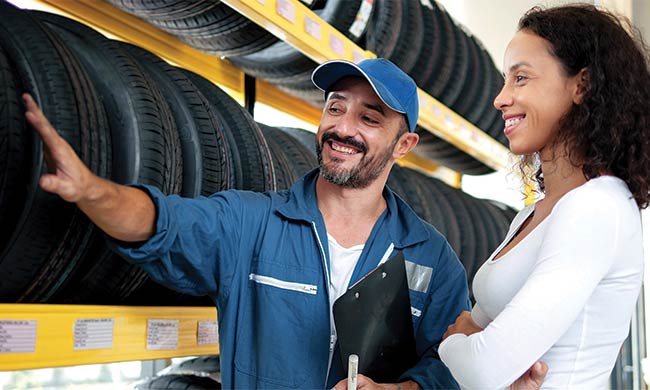
Friends and family may share firsthand experiences, while a mechanic may help a driver better understand the questions that matter for their vehicle. More than 1 in 5 respondents (21%) list advice from a repair shop among the top three reasons that would prompt them to buy new tires, showing the role professional guidance can play when a purchase becomes necessary.
Find the full survey and approach your next tire research process with clearer questions, more confidence and a better sense of what matters most for the road ahead at HankookTire.com.
Photo courtesy of Shutterstock
SOURCE:
Automotive
Hyundai Unveils All-New Tucson With Bold New Look, Smarter Hybrid Tech
Hyundai has unveiled the all-new Tucson, bringing bolder styling, a next-generation hybrid targeting up to 42 mpg, AI-powered infotainment and the rugged new XRT PRO.
Hyundai’s popular compact SUV gets a major makeover with a targeted 42 mpg hybrid, AI-powered infotainment and a more adventurous XRT PRO model.
Hyundai is preparing the Tucson for its next chapter, unveiling an all-new version of its popular SUV with a dramatically revised design, next-generation hybrid technology and a new digital experience built around artificial intelligence.
Hyundai Motor Company introduced the all-new Tucson in New York City against the Manhattan skyline, calling the redesigned model its “boldest SUV” yet.
For buyers, however, the bigger story may be what lies beneath the new styling. Hyundai is combining improved hybrid efficiency, more advanced infotainment and additional off-road capability in an effort to make the Tucson equally comfortable handling weekday commuting, family duty and weekend adventures.
A Bolder Tucson Takes Shape
The new Tucson adopts Hyundai’s “Art of Steel” design philosophy, giving the SUV a more muscular and purposeful appearance.
Rather than simply updating the outgoing Tucson, Hyundai appears to be pushing the model toward a stronger SUV identity while maintaining the everyday practicality that has helped make the Tucson one of the company’s most important global vehicles.
The new exterior is complemented by a redesigned cabin emphasizing space, storage and easier-to-use controls. Hyundai says the interior includes flexible storage solutions and available relaxation features designed to make longer trips more comfortable.
That combination could be important in a compact SUV segment where shoppers increasingly expect vehicles to serve several roles at once — commuter, family vehicle, road-trip machine and recreational vehicle.
Hybrid Targets Up to 42 MPG
One of the most significant changes is Hyundai’s Next-generation Hybrid System.
Hyundai says the new system is targeting fuel economy of up to 42 mpg, while also attempting to preserve responsive driving performance.
If that target carries through to production specifications and official fuel-economy testing, it could make the Tucson Hybrid particularly attractive to drivers who want SUV practicality without moving to a fully electric vehicle.
The strategy also reflects a broader automotive trend. Hybrids have increasingly become an important middle ground for consumers looking to reduce fuel consumption without changing their driving and charging habits.
Final EPA fuel-economy figures and U.S.-market specifications will ultimately determine how the new Tucson compares with its competitors.
Pleos Connect Brings AI Into the Cabin
Technology is another major focus of the redesign.
The Tucson introduces Hyundai’s Pleos Connect next-generation infotainment platform, which incorporates Gleo AI, an expanding app marketplace and a redesigned user interface.
Hyundai describes Pleos Connect as an evolving digital platform rather than simply a conventional infotainment system.
That could allow the Tucson’s capabilities to expand over time as software, applications and connected services develop.
The important question for drivers will be whether all that technology actually makes everyday tasks easier. Automakers continue adding increasingly sophisticated screens and software to their vehicles, but intuitive controls and minimal driver distraction remain just as important as the number of available features.
Tucson XRT PRO Heads Further Off the Pavement
Hyundai is also expanding the Tucson’s adventurous side with the introduction of the Tucson XRT PRO.
The more rugged model adds enhanced off-road technologies, including Hyundai’s first Smart Terrain Assist, or STA.
The system is designed to help the vehicle adapt to changing terrain and provide drivers with additional confidence when leaving paved roads.
The XRT PRO could broaden the Tucson’s appeal among buyers who like the practicality of a compact crossover but want more capability for camping, outdoor recreation and light off-road travel.
More detailed specifications will help determine just how far the XRT PRO moves beyond the appearance-oriented adventure packages commonly offered in the compact SUV market.
A Major Vehicle in Hyundai’s Bigger Product Push
The importance of the new Tucson extends beyond a single model.
“Millions of families around the world count on the Hyundai TUCSON, and this is the best one we have ever built,” Hyundai Motor Company President and CEO José Muñoz said during the announcement.
Muñoz also said the Tucson begins what Hyundai describes as the most ambitious product offensive in its history.
The automaker plans to introduce more than 100 new or refreshed vehicles globally by 2030, including 58 in North America.
That makes the Tucson something of an opening act for Hyundai’s next generation of vehicles.
The Tucson Enters Its Next Era
Compact SUVs remain some of the most versatile vehicles on the market, and Hyundai appears determined to keep the Tucson competitive by improving several areas simultaneously rather than relying on styling alone.
A targeted 42-mpg hybrid powertrain could appeal to fuel-conscious drivers. Pleos Connect and Gleo AI represent Hyundai’s push toward increasingly software-driven vehicles. Meanwhile, the new XRT PRO gives the Tucson lineup a more adventurous option.
There are still important details to come, including complete U.S. specifications, EPA-certified fuel economy, trim levels, pricing and availability.
But Hyundai’s message is already clear: the next Tucson is intended to be more than a routine redesign.
It is being positioned as a showcase for where Hyundai believes the modern SUV is headed — bolder in appearance, smarter inside and more efficient underneath.
Source: Hyundai Motor Company. Specifications and fuel-economy figures discussed by Hyundai are preliminary and may vary by market. Final U.S. specifications and EPA ratings may differ.
Sources & Related Links
- Hyundai Motor Company — Official All-New Tucson Announcement
Hyundai’s original newsroom announcement covering the redesign, next-generation hybrid system, Pleos Connect, Gleo AI and Tucson XRT PRO. Hyundai
Hyundai Motor: All-New Tucson Official Announcement - Hyundai — All-New Tucson Highlights
Official product page with more detail on the “Art of Steel” design, Pleos Connect, 17-inch display, app marketplace, hybrid technology and XRT PRO. Hyundai
Explore the All-New Tucson - Hyundai USA — Tucson
Hyundai’s U.S. consumer page for Tucson information, specifications, trims and future model updates.
Hyundai USA: Tucson - PR Newswire — All-New Hyundai Tucson Press Release
The syndicated release announcing the new Tucson and Hyundai’s target of up to 42 mpg for its next-generation hybrid system. PR Newswire
Read the Original PR Newswire Release - Car and Driver — 2027 Hyundai Tucson
Independent coverage with additional U.S.-market specifications, including powertrain, interior, cargo and XRT Pro information. Car and Driver
Car and Driver: 2027 Hyundai Tucson Details - Road & Track — 2027 Hyundai Tucson
Additional independent coverage of the Tucson redesign, hybrid powertrain, Pleos Connect and XRT Pro off-road features. Road & Track
Road & Track: New Hyundai Tucson Details




