

indie film production
Experience Diversity and Chi Energy Awareness in Patricia Chica’s Award-Winning ‘MONTRÉAL GIRLS’
Discover the groundbreaking approach to filmmaking in Patricia Chica’s award-winning feature film, ‘MONTRÉAL GIRLS,’ which utilizes Chi Energy Awareness techniques to create an immersive and authentic experience for viewers.

Last Updated on September 20, 2025 by Daily News Staff

Jade Hassouné (actor), Jasmina Parent (actress), Patricia Chica (director), Hakim Brahimi (actor).
Photo Courtesy of © Jonathan Shensa for Dig IN Magazine
Award-winning director Patricia Chica’s feature film, MONTRÉAL GIRLS, is set to release in the United States on June 2nd, and it promises to be a captivating and immersive experience. This coming-of-age drama follows the story of Ramy, a young Middle Eastern poet, as he embarks on a journey of passion, rebellion, and heartbreak after getting involved with two young women who challenge his perceptions and reveal his destiny to him.
What sets MONTRÉAL GIRLS apart is Patricia Chica’s unique approach to filmmaking, utilizing Chi energy awareness and mindful practices with her team, from prep to post. With two remarkable discovery actors, Hakim Brahimi and Jasmina Parent, who underwent a rigorous training program, their performances are captivating and authentic. This film has garnered critical acclaim since its premiere at CINEQUEST, followed by the Best Feature Award at the Los Angeles International Film Festival, where it played to a sold-out theatre.
MONTRÉAL GIRLS is a celebration of diversity, with characters of various cultural backgrounds, identities, and languages, reflecting our world today. Patricia Chica, the director, shares that the story is inspired by her true experience navigating the subcultures of Montréal, and she believes that blending fiction with what’s real makes imagination transcend the hearts of the audiences, no matter where they’re from.
The film boasts stunning visuals by cinematographer Alexandre Bussière and an entrancing soundtrack by a multitude of indie musicians. The cast is filled with powerful performances by Jade Hassouné, Nahéma Ricci, Sana Asad, Manuel Tadros, Guillaume Rodrigue, Thomas Vallières, Simon Therrien, Marina Harvey, Chadi Alhelou, Natalie Tannous, and special appearances by Canadian veteran actors Larry Day and Martin Dubreuil.

Jasmina Parent (DÉSIRÉE) & Hakim Brahimi (RAMY).
Photo Courtesy of:
Objectif 9.
MONTRÉAL GIRLS was written by Patricia Chica and Kamal John Iskander and produced by Bahija Essoussi and Samuel Gagnon of Objectif 9 in association with Patricia Chica’s Flirt Films. The film is distributed in the United States by Andreas Olavarria of Level 33 Entertainment and will be available in Canada on June 9th via Filmoption International and on VOD on June 27th.
Incorporating energy work within her creative process as a tool to empower her actors and collaborators, Patricia Chica uses the laws of nature, visualization, and meditation to bring her actors to a higher level of consciousness and awareness. She is a rising female filmmaker and a prolific director, named as such by Dread Central and Variety, respectively.
MONTRÉAL GIRLS promises to be a truly unique cinematic experience and a must-see for all film enthusiasts.
To know more about MONTRÉAL GIRLS, please visit the following links:
Official Website: www.MontrealGirlsMovie.com
Facebook: www.facebook.com/MontrealGirlsMovie
Instagram: www.instagram.com/MontrealGirlsMovie
Hashtags: #MontrealGirlsMovie
Visit: https://www.montrealgirlsmovie.com/
Looking for an entertainment experience that transcends the ordinary? Look no further than STM Daily News Blog’s vibrant Entertainment section. Immerse yourself in the captivating world of indie films, streaming and podcasts, movie reviews, music, expos, venues, and theme and amusement parks. Discover hidden cinematic gems, binge-worthy series and addictive podcasts, gain insights into the latest releases with our movie reviews, explore the latest trends in music, dive into the vibrant atmosphere of expos, and embark on thrilling adventures in breathtaking venues and theme parks. Join us at STM Entertainment and let your entertainment journey begin! https://stmdailynews.com/category/entertainment/
and let your entertainment journey begin!
Dreambreaker: A Pickleball Story — A Closer Look at the Documentary and Its Uncredited Voice


documentaries
Vision Films Acquires Jeff Bridges–Narrated Doc “In The Company of Wolves” Ahead of Cannes Premiere
Vision Films acquires In The Company of Wolves: An American Journey, Susan Kucera’s new documentary narrated by Jeff Bridges, premiering at Cannes May 15, with a limited theatrical and TVOD release July 17, 2026.
Vision Films has picked up In The Company of Wolves: An American Journey, an environmental documentary narrated by Academy Award® winner Jeff Bridges and directed by award-winning filmmaker Susan Kucera. The film is set to debut at the 2026 Cannes Film Festival on May 15 at the Olympia Theater, with a limited theatrical rollout and transactional VOD release to follow on July 17, 2026.

A nature documentary that reframes American history
Rather than treating wolves as a backdrop to frontier mythology, In The Company of Wolves positions them—and other animals—as co-travelers through the American story. The documentary traces a sweeping timeline from the shores of England to the birth of the New Republic and into the colonization of the modern American West, exploring how the nation’s evolving relationship with wolves shaped folklore, identity, and the idea of “nationhood” itself.
Kucera describes the project as a shift in perspective: “I think this film stands apart because it reframes the American mythos—moving beyond human ambition to the deeper relationships that shaped the land, and in turn, the nation itself.”
A third collaboration for Kucera and Bridges
The documentary marks the third collaboration between Kucera and Bridges, following previous environmental projects including Living in the Future’s Past. Vision Films CEO and Managing Director Lise Romanoff said the company is “proud to partner with Susan Kucera again” and called the film “a spectacular visual journey and a reminder of the need to respect and preserve our planet’s ecosystem.”
Bridges, whose voice anchors the film’s historical and ecological throughline, added that the story “reminds us that the wild and the domesticated have always reflected the deeper story of who we are as a nation — and who we might yet become.” According to the release, Bridges is also using his compensation to support multiple conservation organizations, including The Vital Ground Foundation, which protects and connects wildlife habitat in the Northern Rocky Mountains.
Voices, experts, and an evocative score
The film features commentary from members of the Eastern Shoshone Tribe and Crow Nation, alongside historians and authors who have shaped public understanding of wolves and the American West. Participants named in the announcement include:
- Michelle Paver, best-selling author of the Wolf Brothers series (over 3 million copies sold worldwide)
- David Quammen, science writer (Outside, National Geographic)
- Professor Jon Coleman (University of Notre Dame), author of Vicious: Wolves and Men in America
- Cristina Eisenberg, Native American ecologist and author
- Jason Baldes, Eastern Shoshone conservationist (Intertribal Buffalo Council, Conservation Lands Foundation)
- Cameron Krebs, fourth-generation sheep rancher
Adding to the film’s atmosphere is an original score by Keefus Ciancia, whose credits include True Detective.
Release plan: Cannes first, then theaters and TVOD
For audiences tracking Cannes premieres and documentary acquisitions, the release plan is straightforward:
- Cannes Film Festival premiere: May 15, 2026 (Olympia Theater)
- Limited theatrical release + TVOD: July 17, 2026
For updates, the filmmakers point viewers to the official site: inthecompanyofwolvesfilm.com.
About the companies behind the release
Vision Films is an independent sales and VOD aggregator with a catalog of more than 800 features, documentaries, and series, releasing 2–4 films per month across theatrical, VOD, DVD, and television.
Rangeland Productions, founded by producer Jim Swift, focuses on documentaries and independent films and has previously produced and executive produced projects with Kucera, including Living in the Future’s Past, Breath of Life, and Hot Money.
What to watch for
With its Cannes debut and Jeff Bridges’ continued presence in environmental storytelling, In The Company of Wolves: An American Journey is positioned to land at the intersection of prestige documentary, American history, and conservation cinema—an increasingly crowded space where voice, point of view, and cultural framing matter as much as the visuals.
Related Links
Source: Vision Films
awards and contests
The Largest AI Film Competition Is a Snapshot of Where AI Filmmaking Is Headed
Higgsfield released results from its largest AI filmmaking competition: nearly 8,800 submissions from 139 countries and $500,000 in prizes—highlighting a fast-growing, global, creator-led filmmaking ecosystem.
Last Updated on April 25, 2026 by Daily News Staff
A year ago, “AI film” still sounded like a niche experiment—cool demos, rough edges, and lots of debate about whether it could ever look truly cinematic. Higgsfield’s latest competition results suggest we’ve crossed into a new phase: AI filmmaking is becoming a real, global production lane, driven by independent creators working outside traditional studio systems.
According to the company, its AI Film Competition drew nearly 8,800 submissions from 139 countries, with a $500,000 cash prize pool distributed to independent filmmakers. Beyond the winners, the dataset reads like a market signal: generative tools are lowering the cost of entry for high-end visuals, and the talent pipeline is no longer geographically locked to legacy production hubs.
A global creator map is replacing the old studio map
One of the most telling takeaways is where the work is coming from. Higgsfield reports the largest volume of entries came from:
- India (1,805)
- United States (1,041)
- Germany (278)
- France (230)
- Italy (228)
- Brazil (212)
- United Kingdom (196)
Historically, cinematic action and high-end VFX were concentrated in a handful of established centers—places with the budgets, infrastructure, and specialized crews to pull off complex sequences. Higgsfield’s results point to a different reality: subscription-based, production-grade AI tools are reducing geographic barriers, enabling creators across Latin America, Southeast Asia, and Eastern Europe to compete in the same visual arena.
Higgsfield CEO Alex Mashrabov framed it as a creator inflection point, arguing that the scale of participation signals the next breakout franchise “can come from anywhere on Earth.” Whether or not you buy the blockbuster prediction, the underlying shift is hard to ignore: global access is now a feature of the production model.
The judging criteria hints at what matters next
Another important detail: the prize pool wasn’t awarded for “best render” alone. Higgsfield says the jury—made up of both traditional production veterans and AI-native creators—prioritized storytelling and directorial intent over technical polish.
That’s a meaningful signal for where AI filmmaking is headed. As tools improve, the baseline for visual quality rises. What differentiates creators isn’t just the ability to generate a shot—it’s the ability to direct one: pacing, tone, character, and clarity of vision.
The jury included names and studios spanning both worlds, such as Secret Level (founded by Emmy-winning filmmaker Jason Zada), Buralqy, concept artist Jama Jurabaev, and PJ Ace of Genre.ai—who called it “the best-looking AI film contest” they’ve seen.
Decentralized production is no longer theoretical
The Grand Prize winner is also a case study in how AI changes collaboration. 1st Place ($150,000) went to Muhannad Nassar (Detroit) and Simon Meyer (Germany) for “GRANDMA vs WASP.” The pair reportedly never met in person, instead using an asynchronous workflow across time zones with Higgsfield’s Cinema Studio.
That’s not just a fun anecdote—it’s a preview of a parallel production ecosystem where teams form around taste and capability rather than geography. If the toolchain is centralized in the cloud, the “studio” becomes a workflow, not a building.
Winners show two pathways: new creators and experienced pros
The rest of the top placements reflect how broad the adoption curve is becoming:
- 2nd Place ($100,000): Nikolay Shestak for “CUPID,” using Higgsfield to execute concepts that would normally be budget-prohibitive. He plans to apply the prize toward an independent superhero film.
- 3rd Place ($50,000): Brothers Ash and Aram Gevorkyan for “SCRATCH,” created in five days. Ash noted audiences mistook it for a studio-backed theatrical release and asked for a link to the “full movie.”
What’s emerging is a two-lane future: newcomers using AI to enter filmmaking for the first time, and established creatives using it to expand what they can produce independently.
Money is starting to loop back into production
Higgsfield also highlights something that looks a lot like early-stage industry deal flow: one top winner is reportedly reinvesting prize money back into the platform to produce a feature-length film, and the project has already attracted involvement from a major Hollywood figure.
That matters because it suggests AI-generated work isn’t staying in a separate “AI corner.” It’s beginning to intersect with the traditional financing-and-distribution ecosystem—especially when the output looks cinematic enough to be taken seriously.
The market is growing—and the infrastructure is consolidating
The competition results land in a market that’s expanding quickly. Citing Grand View Research, Higgsfield notes the global AI video generator market was estimated at $788.5 million in 2025 and is projected to reach $3.44 billion by 2033 (a 20.3% CAGR).
Higgsfield is positioning itself as an all-in-one workflow layer, combining its own models with third-party options (including OpenAI’s Sora and Google’s Veo, among others) so creators can choose the best model per task without rebuilding pipelines. The company says it serves 20 million+ users who have generated 50 million+ videos, and it reports a most recent valuation of $1.3 billion.
What to watch for next
If you’re tracking where AI filmmaking is going, this competition offers a few clear “watch points”:
- More global breakout creators as the cost of cinematic visuals continues to fall
- Decentralized teams forming around projects, not locations
- A shift from “can it look good?” to “can you direct it?” as quality becomes more accessible
- Traditional industry crossover as AI-native projects attract recognizable partners
Want to see the winning films and action scenes? Higgsfield has them here: https://higgsfield.ai/contests/make-your-action-scene
Source: Higgsfield press release distributed via PRNewswire (March 18, 2026).
Looking for an entertainment experience that transcends the ordinary? Look no further than STM Daily News Blog’s vibrant Entertainment section. Immerse yourself in the captivating world of indie films, streaming and podcasts, movie reviews, music, expos, venues, and theme and amusement parks. Discover hidden cinematic gems, binge-worthy series and addictive podcasts, gain insights into the latest releases with our movie reviews, explore the latest trends in music, dive into the vibrant atmosphere of expos, and embark on thrilling adventures in breathtaking venues and theme parks. Join us at STM Entertainment and let your entertainment journey begin! https://stmdailynews.com/category/entertainment/
and let your entertainment journey begin!
documentaries
“1001 Crowns for My Head”: A Powerful Celebration of Afro Hair, Identity, and Pride
Habibata Ouarme’s documentary “1001 Crowns for My Head” debuts October 27 on TFO.org, celebrating the cultural pride and heritage of Afro-descendant women through the art and history of hair.
Last Updated on October 26, 2025 by Daily News Staff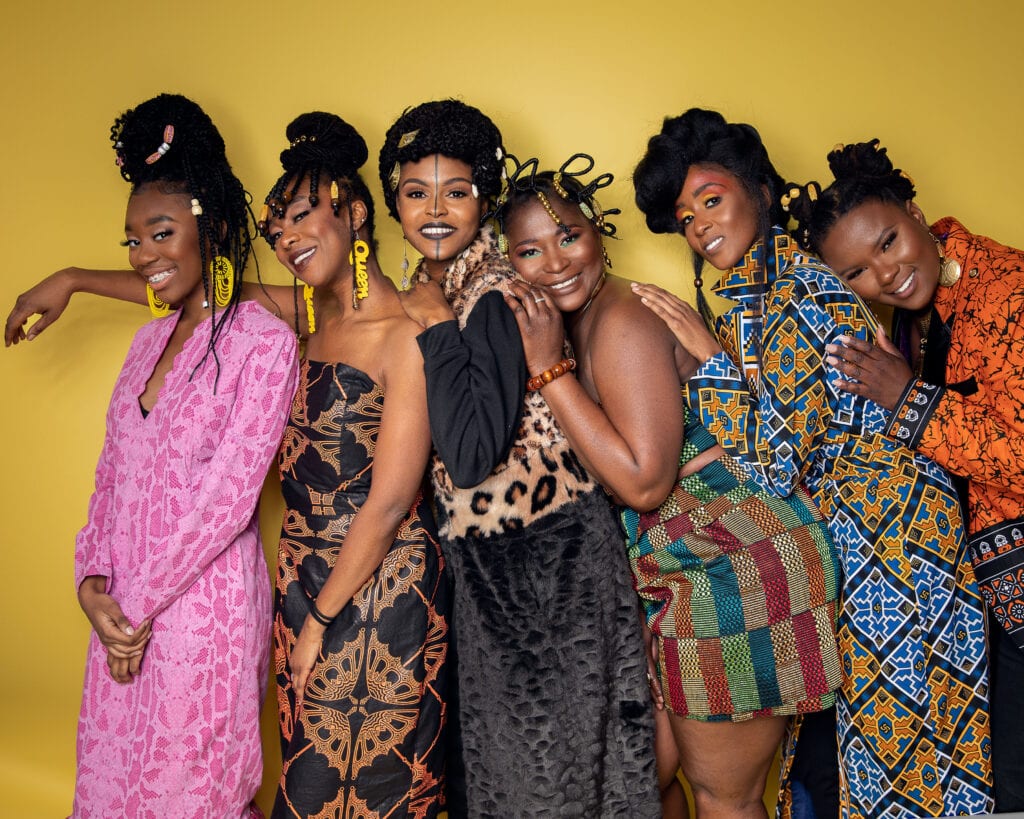
Airing October 27, 2025, on TFO.org
(Montreal, QC) — October 13, 2025) — Hair is more than just style—it’s a story, a legacy, and a declaration of self. The new documentary 1001 Crowns for My Head by acclaimed filmmaker Habibata Ouarme (of KOROMOUSSO: Big Sister fame) brings that truth to life in a dazzling, heartfelt tribute to the beauty, resilience, and hair heritage of women of African descent.
Premiering October 27, 2025, at 9:00 PM on TFO, and streaming online the same day at TFO.org, 1001 Crowns for My Head explores the deep cultural roots of African and Afro-descendant hairstyles—from ancient civilizations to the modern diaspora. Each braid, curl, and twist tells a story of survival, self-expression, and shared memory.
🎥 Watch the trailer: https://vimeo.com/1091820352/e4cd2a903a
A Crown of History and Identity
Through vibrant visuals and deeply personal storytelling, 1001 Crowns for My Head examines how hair has served as both an act of self-affirmation and a symbol of identity. The documentary brings together an impressive lineup of Afro-descendant women—leaders, artists, scholars, and activists—each sharing their unique relationship with their hair and culture.
Among the featured voices are:
- Dr. Afua Cooper, Canadian scholar, author, and artist
- Juliette Sméralda, sociologist and writer
- Martine Musau Muele, lawyer, actress, and President of the Montreal City Council
- Isabelle Massé, director at La Presse, author, and columnist
- Keithy Antoine, artist and entrepreneur
Together, these women bridge generations, challenging stereotypes and reclaiming narratives that have long been shaped by colonial and cultural pressures. Their testimonies, filled with courage and creativity, redefine beauty on their own terms—through authenticity and pride.
The Filmmaker’s Vision
For Habibata Ouarme, a socially engaged filmmaker from the Ivory Coast now based in Canada, 1001 Crowns for My Head is both personal and political.
“What drives me as a documentary filmmaker is giving a voice to the voiceless and highlighting diverse communities,” Ouarme explains. “1001 Crowns was born from my own relationship with my natural hair and my desire to understand the history and meaning of this cultural heritage.”
Through her lens, Ouarme transforms everyday hair rituals into symbols of resistance and empowerment. The film reminds audiences that the beauty of Black hair is not merely aesthetic—it is a living, breathing connection to ancestry, community, and strength.
Beyond the cultural narrative, Ouarme’s message extends to unity and empathy.
“I hope this film inspires audiences to better understand the journey and identity of Afro-descendant women. The world needs listening, connection, and sharing to build bridges between communities,” she says.

Behind the Scenes
1001 Crowns for My Head was written, directed, and produced by Habibata Ouarme through her company KOROMOUSSO Media Inc. Executive producers include Alexandrine Torres de Figueiredo and Byron A. Martin, with cinematography by Ricardo Diaz, André Dufour, Jim Donovan, and Juozas Cernius.
The film’s editing is handled by Boban Chaldovich, and the original score—composed by Benoît Groulx and Chihiro Nagamatsu—provides an evocative backdrop that enhances the film’s emotional depth.
Supported by Telefilm Canada (Talent to Watch), the Canada Media Fund, the Canada Council for the Arts, and TFO, the documentary stands as a shining example of the growing recognition and support for diverse stories in Canadian cinema.
A Journey Through Time and Texture
From intricate braids that once signified tribal belonging to natural hairstyles that now symbolize freedom and self-acceptance, 1001 Crowns for My Head paints an exquisite picture of cultural evolution. The film doesn’t just document hairstyles—it celebrates the spiritual and emotional power woven into each strand.
As the documentary unfolds, viewers are invited to reflect on how beauty standards have evolved and how Afro-descendant women continue to redefine them on their own terms. The result is a vibrant cinematic experience filled with humanity, hope, and heritage.
About the Director
Habibata Ouarme is an award-winning filmmaker and activist whose work focuses on human rights, cultural identity, and women’s empowerment. Her first documentary, KOROMOUSSO (Big Sister)—co-directed and produced by the National Film Board of Canada—examined female genital mutilation through a courageous, empathetic lens.
With 1001 Crowns for My Head, Ouarme continues her mission of storytelling as activism. She is also developing her first fiction feature, Tonton Patrick, and remains actively involved in community-based projects promoting women’s health and cultural awareness.
How to Watch & Connect
📺 Premiere Date: Monday, October 27, 2025, at 9:00 PM
🌐 Where to Watch: TFO.org
🎬 Official Website: www.1001CrownsFilm.com
Follow Habibata Ouarme:
- Instagram: @habibata_o
- Facebook: @Lankoande.Habibata
Follow the Film:
- Facebook: @1001-Couronnes-Pour-Ma-Tête
Final Thoughts
1001 Crowns for My Head is more than a documentary—it’s a love letter to Afro hair, a tribute to identity, and a call to embrace heritage without apology. In a world still learning to celebrate difference, Ouarme’s film stands as a radiant reminder: every crown tells a story worth hearing.
Looking for an entertainment experience that transcends the ordinary? Look no further than STM Daily News Blog’s vibrant Entertainment section. Immerse yourself in the captivating world of indie films, streaming and podcasts, movie reviews, music, expos, venues, and theme and amusement parks. Discover hidden cinematic gems, binge-worthy series and addictive podcasts, gain insights into the latest releases with our movie reviews, explore the latest trends in music, dive into the vibrant atmosphere of expos, and embark on thrilling adventures in breathtaking venues and theme parks. Join us at STM Entertainment and let your entertainment journey begin! https://stmdailynews.com/category/entertainment/
and let your entertainment journey begin!





