

Food and Beverage
Harness Peanut Power for Improved Cognitive Health
A healthy brain goes beyond reading exercises and completing puzzles – it extends to the kitchen, too. Emerging nutritional science is clear that what people eat doesn’t just fuel the body; it shapes memory, mood and cognitive health.


(Feature Impact) A healthy brain goes beyond reading exercises and completing puzzles – it extends to the kitchen, too. Emerging nutritional science is clear that what people eat doesn’t just fuel the body; it shapes memory, mood and cognitive health.
Among the foods you can include in your diet to give your brain a boost are peanuts and peanut butter, staples valued not only for their convenience but also for their cognitive benefits. In fact, a study published in the “Journal of the Prevention of Alzheimer’s Disease” found adults 60-80 years old who did not eat peanuts and peanut butter regularly were 30-50% more likely to perform poorly on tests measuring learning, memory, language, processing motor speed and attentiveness compared to those who did consumer peanuts and peanut butter.
It’s not just the older generation that can benefit. According to research published in “Clinical Nutrition,” a study of college students ages 18-33 showed consumption of peanuts and peanut butter was associated with improved memory function and decreased anxiety, depression and stress.
Consider this key information from the Georgia Peanut Commission before your next meal planning session.
Nutrients that Give the Brain a Boost
Despite their small stature, peanuts pack a nutrition punch. Their unique blend of various vitamins, minerals and bioactive compounds includes:
- Niacin, which can slow cognitive decline and reduce the risk for Alzheimer’s disease, according to the “Journal of Neurology, Neurosurgery and Psychiatry”
- Vitamin E, found to promote healthy brain aging and delay cognitive decline
- Resveratrol, believed to be beneficial in fighting against Alzheimer’s disease and other nerve degenerating diseases, per the “Journal of Biological Chemistry”
- P-coumaric acid, an antioxidant that appears to target the neurotransmitters in the brain that regulate mood, stress and anxiety
Peace of MIND
Peanuts are included in the MIND diet, a combination of the Mediterranean and DASH diets, which specifically includes foods shown to benefit the brain.
Adding peanuts to your menu can be a breeze. Look no further than a powerful main course like Crunchy and Creamy Cold Green Pea and Peanut Salad, a perfect accompaniment at potlucks and cookouts as an easy side or light main course.
Brain Food for Thought
Supporting your brain starts with the right nutrition, and evidence makes clear peanuts and peanut butter should be top-of-mind as you head to the grocery store. For help getting started, find more recipes and nutritional information by visiting GAPeanuts.com.
Crunchy and Creamy Cold Green Pea and Peanut Salad
Recipe courtesy of The Peanut Institute
Servings: 8
Dressing:
- 1/3 cup sour cream
- 1 1/2 tablespoons mayonnaise
- 2 teaspoons apple cider vinegar
- 2 teaspoons sugar
Salad:
- 1 package (20 ounces) green peas, frozen
- 1 cup celery, chopped
- 1/3 cup red onions, chopped
- 1 cup dry roasted peanuts
- 6 slices thick cut bacon, cooked and crumbled
- 1 pinch salt, or to taste
- 1 pinch freshly ground black pepper, or to taste
- To make dressing: In small mixing bowl, whisk sour cream, mayonnaise, apple cider vinegar and sugar.
- To make salad: In large mixing bowl, combine frozen green peas, celery and onion. Pour dressing over salad and toss to combine. Refrigerate at least 2 hours.
- Before serving, stir in roasted peanuts and crumbled bacon. Season with salt and freshly ground black pepper.
Nutritional information per serving: 230 calories, 17 g carbohydrates, 12 mg cholesterol, 3 g saturated fat, 9 g unsaturated fat, 5 g fiber, 11 g protein, 249 mg sodium, 6 g sugar, 1 g added sugar.

SOURCE:
STM Daily News’ Food and Drink section highlights the stories, trends, flavors, and events shaping today’s food culture. From recipes to restaurant news, it keeps readers connected to what’s fresh and worth tasting.


Last Updated on November 11, 2026 by Daily News Staff
Fifty volunteers joined Diana Gregory Outreach Services and community partners on November 5, with support from AARP, State Farm, and BHHS Legacy Foundation.
PHOENIX — Fresh produce and community support came together Thursday morning, November 5, 2026, as Veggies for Veterans distributed 700 grocery bags during an event hosted by the Phoenix VA Health Care System.
The Diana Gregory Outreach Services (DGOS) program brought together 50 volunteers to help provide veterans with nutritious food. Each bag contained a variety of 13 fruits and vegetables, according to the event results supplied by organizers.
The effort also received a contribution from Peddler’s Son, which donated a five-pound bag of Idaho potatoes and a bag of grapes for each veteran.
AARP, State Farm, and BHHS Legacy Foundation Lead Financial Support
AARP, State Farm, and BHHS Legacy Foundation were the event’s three largest financial sponsors, helping make the distribution possible.
Volunteers represented all three organizations, along with the Archer Ragsdale Arizona Chapter Tuskegee Airmen, Inc. Arizona Community Foundation and Santander also contributed volunteer support.
AARP Arizona State Director Dana Marie Kennedy attended the event. AARP’s participation included volunteers and an outreach table featuring candy and AARP-branded giveaway items for attendees and veterans.
Together, the financial contributions, donated food, and volunteer service supported an event centered on veterans and their access to fresh produce.
A Special Guest With a Remarkable Service History
Among those attending was 106-year-old Major Fannie Griffin McClendon, whose military career connects the gathering to an extraordinary chapter in American history.
McClendon served during World War II with the 6888th Central Postal Directory Battalion, widely known as the “Six Triple Eight.” The historic unit of Black women soldiers helped process a massive backlog of military mail in Europe.
Her service continued beyond World War II. The Library of Congress documents her later career in the Air Force, including service as a squadron commander.
Her attendance offered an opportunity to recognize a veteran whose career helped break barriers for Black women in the military.
More Than a Bag of Groceries
Veggies for Veterans’ purpose extends beyond the food distributed at an individual event. The program focuses on helping veterans access fresh produce while creating opportunities for connection and community support.
Grocery costs, transportation, and mobility can make obtaining nutritious food difficult. Bringing produce directly to veterans through VA and community settings is one way the program works to address those barriers.
The November 5 distribution also reflected the collective work behind that support: an organization coordinating the effort, a VA host, financial sponsors, a food donor, and volunteers contributing their time.
With 700 bags distributed and 50 volunteers participating, the event demonstrated how community partnerships can translate into practical support for veterans.
Readers interested in learning more about the program, volunteering, or exploring ways to support its work can visit Diana Gregory Outreach Services.
Reporting note: Event results, sponsor recognition, donations, volunteer participation, and attendee information were supplied for this recap. Historical background on Major McClendon is supported by the Library of Congress.
Sources and Further Information
- Diana Gregory Outreach Services — Veggies for Veterans
- Phoenix VA — November 5 Veggies for Veterans event listing
- Library of Congress — Fannie Griffin McClendon
Food
Campbell’s 2026 State of the Sides Report Puts Holiday Favorites Center Stage
Campbell’s 2026 State of the Sides Report finds Americans are serving more Thanksgiving sides, with green bean casserole and mac & cheese leading the table.

Thanksgiving may be known for turkey, but Campbell’s latest research suggests the real stars of the holiday table are the dishes around it.
Campbell’s has released its fifth annual State of the Sides Report, finding that Americans are placing even more importance on the casseroles, potatoes, pasta and stuffing that define a holiday meal. Based on a survey of 5,017 U.S. adults who celebrate Thanksgiving, the 2026 report paints a familiar picture: tradition still matters, but home cooks are also looking for convenience and flexibility.
Sides Take the Spotlight
The appetite for side dishes is clear. Campbell’s reports that 80% of Americans enjoy cooking the sides more than the turkey, an 11-point increase from 2023. Meanwhile, 86% expect to serve at least four side dishes this Thanksgiving, with a median of five per table.
That enthusiasm is particularly strong among younger generations. Nearly two-thirds of Gen Z respondents, along with 56% of Millennials, said they would be happy eating an all-sides meal.
The nation’s top five Thanksgiving sides have remained consistent for the past three years, though their order has shifted slightly:
- Green bean casserole
- Macaroni and cheese
- Yams or sweet potatoes
- Mashed potatoes
- Stuffing or dressing
Campbell’s estimates those holiday menus will add up to roughly 749 million side dishes served nationwide.
Green Bean Casserole Holds Its Ground
Green bean casserole continues to stand out as one of the most emotionally connected dishes on the table. Sixty-seven percent of those surveyed said it reminds them of Thanksgivings past, and only 19% said they would alter its recipe—the lowest share among the top five sides.
The dish, developed more than 75 years ago in Campbell’s Test Kitchen by Dorcas Reilly, has stayed close to its original five-ingredient formula. Campbell’s says 69% of Americans believe it is best prepared with cream of mushroom or cream of celery soup, while 87% name Campbell’s Soup as their preferred option for making it.
The seasonal demand is substantial: Campbell’s sells nearly 40 million cans of Cream of Mushroom soup during the holiday period. Over the last five holiday seasons, the company says it has sold more than 308 million cans.
Mac and Cheese Brings Everyone Together
If green bean casserole is rooted in nostalgia, macaroni and cheese is positioned as the crowd-pleaser. Fifty-seven percent of respondents described it as the side dish everyone can agree on, and it remains Gen Z’s top side for the second consecutive year.
It is also a dish that rarely lingers. Forty-two percent said there are never leftovers when mac and cheese is served. For many cooks, simplicity is part of its appeal: 46% cited easy preparation as a reason for choosing it for a holiday meal.
Tradition, With Space for New Ideas
The report points to a holiday table that is both traditional and adaptable. Americans are holding onto family and cultural recipes while making room for new flavors, shortcuts and sources of inspiration—including AI-assisted meal planning.
For Campbell’s, the findings reinforce a simple conclusion: while holiday menus may evolve, sides remain the dishes that make the gathering feel complete.
Campbell’s commissioned the survey in August and September 2026 through independent research organization Reputation Leaders. National results carry a margin of error of plus or minus 1.4 percentage points.
For more information and holiday recipe ideas, visit Campbell’s Sides Season.
Recipe of the Week
Warm Up Autumn Days with Rich, Creamy Pumpkin Soup
Nothing screams fall quite like pumpkins, and as the weather gets cooler, there’s no better way to enjoy them than in a hot bowl of homemade soup. Roasting a whole pumpkin or kabocha squash creates deeper, richer flavors in this Creamy Pumpkin Soup recipe.
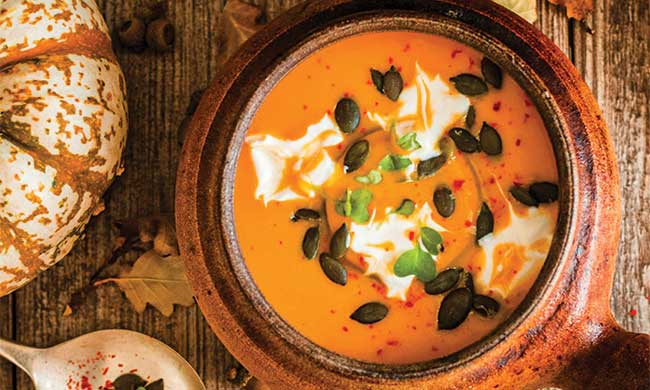
Warm Up Autumn Days with Rich, Creamy Pumpkin Soup
(Feature Impact) Nothing screams fall quite like pumpkins, and as the weather gets cooler, there’s no better way to enjoy them than in a hot bowl of homemade soup.
Roasting a whole pumpkin or kabocha squash creates deeper, richer flavors in this Creamy Pumpkin Soup recipe, but if you don’t have much time to spend in the kitchen, canned pumpkin offers a convenient alternative. Aromatic onion and garlic join warm autumnal spices like ginger and cardamom for a bowl with harmonizing layers of flavor.
Whether you want a pot of pumpkin soup simmering on the stove on a rainy day or plan to serve it as a sophisticated holiday appetizer, this recipe is a delicious way to make the most of the season’s harvest.
Find more seasonal recipe inspiration at Culinary.net.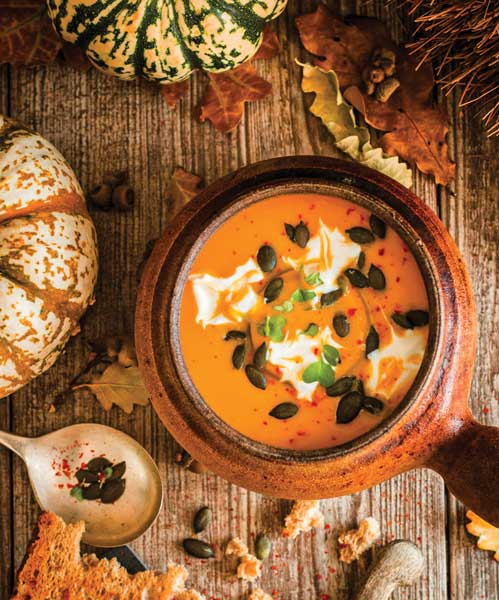
Creamy Pumpkin Soup
Recipe adapted from Love and Lemons
Prep time: 20 minutes
Cook time: 1 hour, 20 minutes
Servings: 6
- 1 pumpkin or kabocha squash (about 4 pounds)
- 2 tablespoons extra-virgin olive oil, plus more for drizzling, divided
- 1 teaspoon sea salt, plus more for sprinkling, divided
- freshly ground black pepper
- 1 medium yellow onion, chopped
- 1 shallot, chopped
- 3 garlic cloves, chopped
- 1 teaspoon grated fresh ginger
- 1 teaspoon ground cumin
- 1/2 teaspoon ground coriander
- 1/2 teaspoon turmeric
- 1/2 teaspoon ground cardamom
- 1 can (14 ounces) full-fat coconut milk, divided
- 2 1/2 cups vegetable broth
- 1 tablespoon apple cider vinegar
- water (optional)
- cayenne pepper, to taste
- 1/4 cup roasted pumpkin seeds (optional)
- Preheat oven to 400 F and line baking sheet with parchment paper.
- Cut pumpkin in half and scoop out seeds. Drizzle with olive oil and sprinkle with salt and pepper then place cut side down on baking sheet. Roast 40-60 minutes, or until soft. Allow to cool then peel away skin and measure 4 1/2 packed cups of flesh.
- In large pot or Dutch oven, heat 2 tablespoons olive oil over medium-low heat. Add onion and shallot and cook 12-15 minutes until softened and caramelized.
- Add 1 teaspoon salt, garlic, ginger, cumin, coriander, turmeric and cardamom; stir 30-60 seconds until spices are aromatic. Stir in cooked pumpkin; coconut milk, reserving some for garnish; and broth. Simmer 20 minutes then stir in vinegar.
- Transfer to high-powered blender, working in batches if necessary, or use immersion blender and blend until smooth. If soup is too thick, gradually add up to 1 1/2 cups water until desired consistency is reached.
- Pour into bowls and garnish with additional coconut milk, salt, pepper, dash of cayenne and pumpkin seeds, if desired.
Substitution: For convenience, use two cans (15 ounces each) of pumpkin puree instead of whole pumpkin.
Photo courtesy of Unsplash
SOURCE:
🍴 What’s your favorite food, recipe, or dining spot? Tell us in the comments! Then subscribe to the STM Daily News newsletter for fresh recipes, restaurant news, food trends, and delicious stories delivered straight to your inbox. Join our growing community of food lovers today!




