Chicago, March 27, 2025 /PRNewswire/ – Spring has sprung, and Easter is just around the corner! This year, BRACH’S®, America’s #1 Easter Jelly Bean Brand, is taking family fun to a new level with their debut egg hiding service: BRACH’S Egg Hunt Hiders! Forget the stress of planning and hiding eggs yourself; let BRACH’S make your Easter memorable by giving you and your family the chance to focus on what truly matters—togetherness and joy.
What is BRACH’S Egg Hunt Hiders?
This first-of-its-kind service allows families in the top 10 jelly bean-loving markets to enjoy a hassle-free Easter egg hunt. Thanks to a partnership with Card My Yard, BRACH’S will hide dozens of beautifully decorated eggs in your yard, filled with their iconic jelly beans and delightful seasonal treasures. The best part? Adults can now join in on the excitement without knowing where the eggs are hidden!
Imagine the smiles on your loved ones’ faces as they stumble upon colorful, egg-shaped surprises. This year, you can create magical memories without the hours of prep work!
A Sweet Solution for Families
Research shows that 57% of American adults wish they could participate in egg hunts alongside their family. However, many feel held back by the logistics of hiding eggs themselves. BRACH’S Egg Hunt Hiders eliminates that dilemma, letting everyone partake in the laughter, excitement, and friendly competition!
Whether you lean toward fair and square fun or enjoy a little playful trickery, BRACH’S has you covered. In fact, a recent survey revealed that 45% of Americans prefer an honest egg hunt, while 42% are not above pulling a playful fast one!
Reserve Your Egg Hunt Today!
Starting Thursday, April 3 at 7 p.m. ET, residents in these targeted jelly bean regions—Baltimore/Washington, D.C., Boston, Chicago, Detroit, Los Angeles, New England, New York City, Philadelphia, Phoenix/Tucson, and South Carolina—can hop on over to BrachsEggHunt.com for a chance to reserve this unique egg hiding service (while supplies last).
Each reservation will come with a festive Easter yard sign, and as an ‘eggs-tra’ treat, one fortunate household in each market will discover a special golden egg—redeemable for a year’s supply of BRACH’S Jelly Beans!
Celebrate the Easter Spirit with BRACH’S
As Kelly Peyser, Director of BRACH’S and Seasonal Marketing at Ferrara Candy Company says, “Spring celebrations are only complete with BRACH’S Jelly Beans and Easter egg hunts, so it felt natural for us to combine these traditions and make it easier for families to enjoy them together.”
Indeed, Easter traditions like spending time with loved ones (75%), engaging in egg hunts (65%), and sharing a delicious Easter brunch or dinner (55%) are cherished by many. However, everyone can agree that prepping for these occasions can feel overwhelming, with 40% of people struggling to find time to get ready for the holiday.
With BRACH’S Egg Hunt Hiders, you can eliminate the stress and focus on what really matters—quality time and sweet celebrations with family and friends.
Join the Jelly Bean Craze!
This spring, as you prep for your Easter gatherings, make sure to scoop up BRACH’S Jelly Beans and other delightful treats at retailers nationwide. Perfect for snacking, baking, or adding to your Easter baskets, BRACH’S treats are the ultimate spring-time indulgence.
Advertisement
Do you have exciting plans for Easter? Share your celebrations by posting on social media and tagging @BrachsCandy. With seasonal recipes and inspiration available at Brachs.com, you’ll find all the tools you need to make this Easter the sweetest yet!
Hop, skip, and jump into an unforgettable Easter with BRACH’S! With their innovative Egg Hunt Hiders, family fun just got a whole lot more exciting!
About BRACH’S® Candy For 120 years, BRACH’S® Candy has been loved for trusted, quality sugar confections that are known for making moments sweeter. Today, BRACH’S is America’s Easter jelly bean leader and the #1 seasonal sugar candy brand5. The portfolio leads with iconic product forms, including Conversation Hearts, Easter Jelly Beans, Candy Corn and Candy Canes. Each of BRACH’S product offerings come in a variety of shapes, textures, and flavors made for all seasonal festivities. BRACH’S inspires connection and celebration with its classic candy treats and innovations, perfect for snacking, decorating, baking, gifting, and so much more. To learn more about BRACH’S, visit brachs.com, or follow along on TikTok, Facebook, Instagram, and Pinterest.
About Ferrara® For more than 115 years, Ferrara has created sugar confections that enable moments of sweetness, celebration, and connection for candy lovers of all generations. Today, the company is a leading sugar confectioner in the United States and Brazil, with global sales in more than 40 countries. Ferrara boasts a passionate team of more than 8,400 employees creating and delivering hundreds of products sold under 30+ popular brands like Brach’s®, Jelly Belly®, NERDS®, SweeTARTS®, Laffy Taffy®, and Trolli® to more than 67 million U.S. households annually and popular Dori snacking products under brands such as Dori, Gomets, Pettiz, and Yogurte 100 in Brazil. Ferrara’s success in industry-leading innovation has been driven by deep consumer insights, strong retailer partnerships, and a dedication to diversity of thought, experience, and people. The company has its global headquarters in Chicago and an operational network of more than 27 locations in North America, Brazil, China, and Thailand that includes manufacturing, distribution, sales, and R&D facilities. Ferrara is a privately held Ferrero-related company. Learn more at www.ferrara.com or www.linkedin.com/company/ferrara-.
About Card My Yard Founded in 2014 in Austin, Texas, Card My Yard helps neighbors celebrate neighbors with personalized yard greetings for every occasion. With over 550 locations across 46 states, our local franchise owners are deeply committed to serving their communities, spreading joy, and helping others celebrate special moments and milestones. From birthdays and graduations to school events and community celebrations, Card My Yard partners with local owners across the country to deliver joy to front yards everywhere. For more information, visit www.cardmyyard.com.
SOURCE:
1 #1 Seasonal Easter Jelly Bean Brand – Circana Market Advantage Total US MULO+C: Easter Season 8 Weeks WE 3.31.24
2 Survey conducted by Zappi on behalf of BRACH’S® in February 2025 with a sample of 2,000 U.S. adults age 18+ who celebrate Easter. The margin of error at this sample size is +/- 2.5% at the 95% confidence level. Use of words “Americans” refers to the 90% of Americans screened into this survey for celebrating Easter (nationally representative sample of n=2,000).
3 U.S. Jelly Bean Sales/Top 10 Markets – IRI Data Ending 3.31.24
4 NO PURCHASE NECESSARY. Brach’s® Egg Hunt Hiders Giveaway. Open to legal residents of AZ, CA, CT, IL, MA, MD, MI, NH, NJ, NY, PA, RI, SC, and VA who reside within one (1) of the participating zip codes as defined in the Official Rules and are 18+ or age of majority in state of residence, whichever older, as of Submission. Begins 4/3/25 at 7:00 PM ET and ends 4/10/25 at 11:59 PM ET, or when all Prizes have been awarded, whichever comes first. First 300 eligible participants who visit BrachsEggHunt.com and follow the instructions to complete a Submission form can win an Easter egg hunt hiding service, setup and delivered by participating Card My Yard franchisees on April 19, 2025. First Prizes: three hundred (300) Easter egg hunt hiding services, with up to four (4) or five (5) each eligible First Prize zip code group. Each First Prize to include the delivery and setup of one (1) Easter egg hunt hiding service, Brach’s® branded tote bag, three (3) bags of Brach’s® Jelly Beans (14.5oz and 9oz), one (1) 8oz bag of Brach’s® Springtime Soft Jellies, one (1) 36″x 48″ festive Easter yard sign and 30-120 plastic Easter eggs (pending recipient’s selected size of egg hunt participants) filled with Brach’s® Jelly Bean Treat Packs and Brach’s® Stickers and Erasers. ARV: $150 for each First Prize. Odds depend on the time of Submission relative to other Entrants. Only the first three hundred (300) eligible Submissions will receive a First Prize. Grand Prizes: ten (10) Golden Eggs representing the redemption of fifty-two (52) 14.5oz. bags of BRACH’S Classic Jelly Beans. One (1) Grand Prize Winner will be randomly selected from each of the eligible Grand Prize regions. ARV of the Grand Prize: $130. Odds depend on # of eligible Submissions. Visit BrachsEggHunt.com/Rules for list of eligible zip codes, free Submission, eligibility, and Official Rules. Message and data rates may apply. Void where prohibited. Sponsor: Ferrara Candy Co., 404 W Harrison St., #650, Chicago, IL 60607.
Advertisement
5 #1 Seasonal Easter Jelly Bean Brand – Circana Market Advantage Total US MULO+C: Easter Season 8 Weeks WE 3.31.24; #1 Candy Corn Brand – CIRCANA SCAN DATA, MULO+C HWN 14 Weeks W/E 11.3.24; #1 Conversation Heart Brand – Circana Market Advantage Total US MULO+C: Valentine’s Day Season 8 Weeks WE 2.18.24; #1 Candy Cane Brand – Circana Market Advantage Total US MULO+C: Holiday Season 8 Weeks WE 12.24.23
SOURCE Ferrara
STM Daily News is a vibrant news blog dedicated to sharing the brighter side of human experiences. Emphasizing positive, uplifting stories, the site focuses on delivering inspiring, informative, and well-researched content. With a commitment to accurate, fair, and responsible journalism, STM Daily News aims to foster a community of readers passionate about positive change and engaged in meaningful conversations. Join the movement and explore stories that celebrate the positive impacts shaping our world.
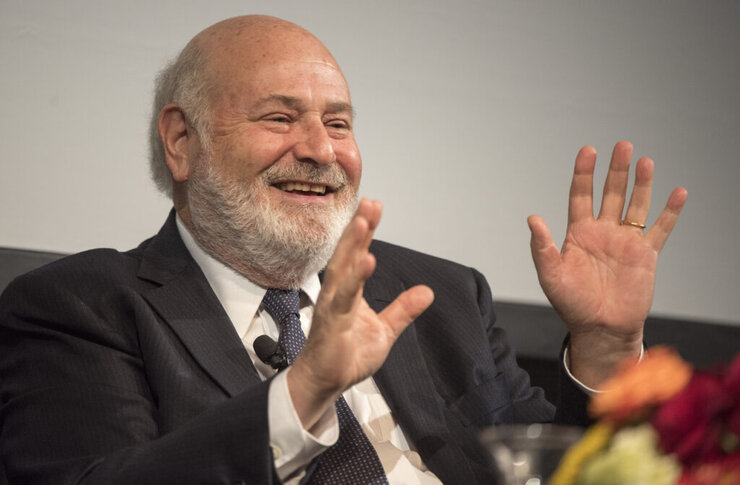
Hollywood Legend Rob Reiner and Wife Found Dead; Son in Custody
Renowned filmmaker Rob Reiner and his wife, Michele Singer Reiner, were found dead in their Los Angeles home in a reported homicide. Police have arrested their son in connection with the case, and tributes are pouring in.
Director Rob Reiner participates in a discussion following a screening of the film LBJ at the LBJ Presidential Library in Austin, Texas on Saturday October 22, 2016 On Saturday evening October 22, 2016, the LBJ Presidential Library held a sneak peek of Rob Reiner’s new filmÊLBJ, starring Woody Harrelson as the 36th president. The film, which premiered at the Toronto International Film Festival in September, chronicles the life and times of Lyndon Johnson who would inherit the presidency at one of the most fraught moments in American history. Following the screening, director Rob Reiner, actor Woody Harrelson, and writer Joey Hartstone joined LBJ Library Director Mark Updegrove on stage for a conversation about the film. LBJ Library photo by Jay Godwin 10/22/2016
Hollywood Legend Rob Reiner and Wife Found Dead; Son in Custody
December 15, 2025
Renowned filmmaker and actor Rob Reiner, 78, and his wife Michele Singer Reiner, 68, were found dead in their Brentwood, Los Angeles home on Sunday, authorities say. Emergency responders were called to the residence Sunday afternoon, where both were discovered with fatal wounds consistent with a stabbing. Police are treating the case as a double homicide.
Los Angeles police arrested the couple’s 32-year-old son, Nick Reiner, in connection with the deaths. He is being held in custody as investigators continue to piece together the circumstances surrounding the incident.
2016 SAMHSA Voice Awards
Reiner was one of Hollywood’s most influential figures, known for his work as a director, producer and actor. His career spanned decades, from early television fame to directing beloved films that shaped American cinema.
Friends, colleagues and public figures have begun sharing tributes and reactions to the news as the investigation is ongoing.
More details will be updated as they become available.
FDA’s COVID-19 Vaccine Safety Claims Lack Solid Evidence—Why Overreaction Could Harm Public Health
COVID-19 vaccine safety: The FDA’s claims about COVID-19 vaccine deaths in children lack strong evidence and could restrict vaccine access. Learn why experts say VAERS reports aren’t proof, and how overreacting may harm public health and trust in vaccines.
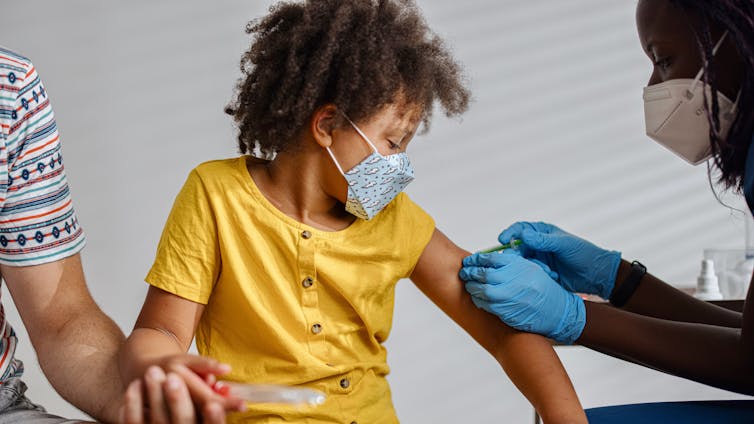
The death of children due to an unsafe vaccine is a serious allegation. I am a pediatric cardiologist who has studied the link between COVID-19 vaccines and heart-related side effects such as myocarditis in children. To my knowledge, studies to date have shown such side effects are rare, and severe outcomes even more so. However, I am open to new evidence that could change my mind. But without sufficient justification and solid evidence, restricting access to an approved vaccine and changing well-established procedures for testing vaccines would carry serious consequences. These moves would limit access for patients, create roadblocks for companies and worsen distrust in vaccines and public health. In my view, it’s important for people reading about these FDA actions to understand how the evidence on a vaccine’s safety is generally assessed.
Determining cause of death
The FDA memo claims that the deaths of these children were directly related to receiving a COVID-19 immunization. From my perspective as a clinician, it is awful that any child should die from a routine vaccination. However, health professionals like me owe it to the public to uphold the highest possible standards in investigating why these deaths occurred. If the FDA has evidence demonstrating something that national health agencies worldwide have missed – widespread child deaths due to myocarditis caused by the COVID-19 vaccine – I don’t doubt that even the most pro-vaccine physician will listen. So far, however, no such evidence has been presented. While a death logged in VAERS is a starting point, on its own it is insufficient to conclude whether a vaccine caused the death or other medical causes were to blame. To demonstrate a causal link, FDA staff and physicians must align the VAERS report with physicians’ assessments of the patient, as well as data from other sources for monitoring vaccine safety. These include PRISM, which logs insurance claims data, and the Vaccine Safety Datalink, which tracks safety signals in electronic medical records. It’s known that most deaths logged only in VAERS of children who recently received vaccines have been incorrectly attributed to the vaccines – either by accident or in some cases on purpose by anti-vaccine activists.
Heart-related side effects of COVID-19 vaccines
In his Substack and Twitter accounts, Prasad has said that he believes the rate of severe cardiac side effects after COVID-19 vaccination is severely underestimated and that the vaccines should be restricted far more than they currently are. In a July 2025 presentation, Prasad quoted a risk of 27 cases per million of myocarditis in young men who received the COVID-19 vaccine. A 2024 review suggested that number was a bit lower – about 20 cases out of 1 million people. But that same study found that unvaccinated people had greater risk of heart problems after a COVID-19 infection than vaccinated people. In a different study, people who got myocarditis after a COVID-19 vaccination developed fewer complications than people who got myocarditis after a COVID-19 infection. Existing vaccine safety infrastructure in the U.S. successfully identifies dangers posed by vaccines – and did so during the COVID-19 pandemic. Today, most COVID-19 vaccines in the U.S. rely on mRNA technology. But as vaccines were first emerging during the COVID-19 pandemic, two pharmaceutical companies, Janssen and AstraZeneca, rolled out a vaccine that used a different technology, called a viral vector. This type of vaccine had a very rare but genuine safety problem that was detected.A report in VAERS is at most a first step to determining whether a vaccine caused harm. VAERS, the Vaccine Safety Datalink, clinical investigators in the U.S. and their European counterparts detected that these vaccines did turn out to cause blood clotting. In April 2021, the FDA formally recommended pausing their use, and they were later pulled from the market. Death due to myocarditis from COVID-19 vaccination is exceedingly rare. Demonstrating that it occurred requires proof that the person had myocarditis, evidence that no other reasonable cause of death was present, and the absence of any additional cause of myocarditis. These factors cannot be determined from VAERS data, however – and to date, the FDA has presented no other relevant data.
A problematic vision for future vaccine approvals
Currently, vaccines are tested both by seeing how well they prevent disease and by how well they generate antibodies, which are the molecules that help your body fight viruses and bacteria. Some vaccines, such as the COVID-19 vaccine and the influenza vaccine, need to be updated based on new strains. The FDA generally approves these updates based on how well the new versions generate antibodies. Since the previous generation of vaccines was already shown to prevent infection, if the new version can generate antibodies like the previous one, researchers assume its ability to prevent infection is comparable too. Later studies can then test how well the vaccines prevent severe disease and hospitalization. The FDA memo says this approach is insufficient and instead argues for replacing such studies with many more placebo-controlled trials – not just for COVID-19 vaccines but also for widely used influenza and pneumonia vaccines. That may seem reasonable theoretically. In practice, however, it is not realistic. Today’s influenza vaccines must be changed every season to reflect mutations to the virus. If the FDA were to require new placebo-controlled trials every year, the vaccine being tested would become obsolete by the time it is approved. This would be a massive waste of time and resources.Influenza vaccines must be updated for every flu season.Jacob Wackerhausen/iStock via Getty Images Plus Also, detecting vaccine-related myocarditis at the low rate at which it occurs would have required clinical trials many times larger than the ones that were done to approve COVID-19 mRNA vaccines. This would have cost at least millions of dollars more, and the delay in rolling out vaccines would have also cost lives. Placebo-controlled trials would require comparing people who receive the updated vaccine with people who remain unvaccinated. When an older version of the vaccine is already available, this means purposefully asking people to forgo that vaccine and risk infection for the sake of the trial, a practice that is widely considered unethical. Current scientific practice is that only a brand-new vaccine may be compared against placebo. While suspected vaccine deaths should absolutely be investigated, stopping a vaccine for insufficient reasons can lead to a significant drop in public confidence. That’s why it’s essential to thoroughly and transparently investigate any claims that a vaccine causes harm.
Tariffs 101: What they are, who pays them, and why they matter now
Learn what tariffs are, who pays them, and why they matter for the U.S. economy. Explore how import taxes impact prices, trade policy, and everyday consumers as the Supreme Court reviews Trump’s global tariffs.
Tariffs 101: What they are, who pays them, and why they matter now
Kent Jones, Babson College The U.S. Supreme Court is currently reviewing a case to determine whether President Donald Trump’s global tariffs are legal. Until recently, tariffs rarely made headlines. Yet today, they play a major role in U.S. economic policy, affecting the prices of everything from groceriesto autosto holiday gifts, as well as the outlook for unemployment, inflation and even recession. I’m an economist who studies trade policy, and I’ve found that many people have questions about tariffs. This primer explains what they are, what effects they have, and why governments impose them.
What are tariffs, and who pays them?
Tariffs are taxes on imports of goods, usually for purposes of protecting particular domestic industries from import competition. When an American business imports goods, U.S. Customs and Border Protection sends it a tariff bill that the company must pay before the merchandise can enter the country. Because tariffs raise costs for U.S. importers, those companies usually pass the expense on to their customers by raising prices. Sometimes, importers choose to absorb part of the tariff’s cost so consumers don’t switch to more affordable competing products. However, firms with low profit margins may risk going out of business if they do that for very long. In general, the longer tariffs are in place, the more likely companies are to pass the costs on to customers. Importers can also ask foreign suppliers to absorb some of the tariff cost by lowering their export price. But exporters don’t have an incentive to do that if they can sell to other countries at a higher price. Studies of Trump’s 2025 tariffs suggest that U.S. consumers and importers are already paying the price, with little evidence that foreign suppliers have borne any of the burden. After six months of the tariffs, importers are absorbing as much as 80% of the cost, which suggests that they believe the tariffs will be temporary. If the Supreme Court allows the Trump tariffs to continue, the burden on consumers will likely increase. While tariffs apply only to imports, they tend to indirectly boost the prices of domestically produced goods, too. That’s because tariffs reduce demand for imports, which in turn increases the demand for substitutes. This allows domestic producers to raise their prices as well.
A brief history of tariffs
The U.S. Constitution assigns all tariff- and tax-making power to Congress. Early in U.S. history, tariffs were used to finance the federal government. Especially after the Civil War, when U.S. manufacturing was growing rapidly, tariffs were used to shield U.S. industries from foreign competition. The introduction of the individual income tax in 1913 displaced tariffs as the main source of U.S. tax revenue. The last major U.S. tariff law was the Smoot-Hawley Tariff Act of 1930, which established an average tariff rate of 20% on all imports by 1933. Those tariffs sparked foreign retaliation and a global trade war during the Great Depression. After World War II, the U.S. led the formation of the General Agreement on Tariffs and Trade, or GATT, which promoted tariff reduction policies as the key to economic stability and growth. As a result, global average tariff rates dropped from around 40% in 1947 to 3.5% in 2024. The U.S. average tariff rate fell to 2.5% that year, while about 60% of all U.S. imports entered duty-free. While Congress is officially responsible for tariffs, it can delegate emergency tariff power to the president for quick action as long as constitutional boundaries are followed. The current Supreme Court case involves Trump’s use of the International Emergency Economic Powers Act, or IEEPA, to unilaterally change all U.S. general tariff rates and duration, country by country, by executive order. The controversy stems from the claim that Trump has overstepped his constitutional authority granted by that act, which does not mention tariffs or specifically authorize the president to impose them.
The pros and cons of tariffs
In my view, though, the bigger question is whether tariffs are good or bad policy. The disastrous experience of the tariff war during the Great Depression led to a broad global consensus favoring freer trade and lower tariffs. Research in economics and political science tends to back up this view, although tariffs have never disappeared as a policy tool, particularly for developing countries with limited sources of tax revenue and the desire to protect their fledgling industries from imports. Yet Trump has resurrected tariffs not only as a protectionist device, but also as a source of government revenue for the world’s largest economy. In fact, Trump insists that tariffs can replace individual income taxes, a view contested by most economists. Most of Trump’s tariffs have a protectionist purpose: to favor domestic industries by raising import prices and shifting demand to domestically produced goods. The aim is to increase domestic output and employment in tariff-protected industries, whose success is presumably more valuable to the economy than the open market allows. The success of this approach depends on labor, capital and long-term investment flowing into protected sectors in ways that improve their efficiency, growth and employment. Critics argue that tariffs come with trade-offs: Favoring one set of industries necessarily disfavors others, and it raises prices for consumers. Manipulating prices and demand results in market inefficiency, as the U.S. economy produces more goods that are less efficiently made and fewer that are more efficiently made. In addition, U.S. tariffs have already resulted in foreign retaliatory trade actions, damaging U.S. exporters. Trump’s tariffs also carry an uncertainty cost because he is constantly threatening, changing, canceling and reinstating them. Companies and financiers tend to invest in protected industries only if tariff levels are predictable. But Trump’s negotiating strategy has involved numerous reversals and new threats, making it difficult for investors to calculate the value of those commitments. One study estimates that such uncertainty has actually reduced U.S. investment by 4.4% in 2025. A major, if underappreciated, cost of Trump’s tariffs is that they have violated U.S. global trade agreements and GATT rules on nondiscrimination and tariff-binding. This has made the U.S. a less reliable trading partner. The U.S. had previously championed this system, which brought stability and cooperation to global trade relations. Now that the U.S. is conducting trade policy through unilateral tariff hikes and antagonistic rhetoric, its trading partners are already beginning to look for new, more stable and growing trade relationships. So what’s next? Trump has vowed to use other emergency tariff measures if the Supreme Court strikes down his IEEPA tariffs. So as long as Congress is unwilling to step in, it’s likely that an aggressive U.S. tariff regime will continue, regardless of the court’s judgment. That means public awareness of tariffs – and of who pays them and what they change – will remain crucial for understanding the direction of the U.S. economy. Kent Jones, Professor Emeritus, Economics, Babson College This article is republished from The Conversation under a Creative Commons license. Read the original article.
STM Daily News is a vibrant news blog dedicated to sharing the brighter side of human experiences. Emphasizing positive, uplifting stories, the site focuses on delivering inspiring, informative, and well-researched content. With a commitment to accurate, fair, and responsible journalism, STM Daily News aims to foster a community of readers passionate about positive change and engaged in meaningful conversations. Join the movement and explore stories that celebrate the positive impacts shaping our world.