

Race Relations
Mass deportations don’t keep out ‘bad genes’ − they use scientific racism to justify biased immigration policies


Shoumita Dasgupta, Boston University
Threats of mass deportations loom on the post-2024 election horizon. Some supporters claim these will protect the country from immigrants who bring “bad genes” into America. But this is a misguided use of the language of science to give a sheen of legitimacy to unscientific claims.
Politicians invoke genetics to confirm false stereotypes that immigrants are more violent than native-born citizens as a result of biological differences. This is despite the fact that immigrants living in the country with or without legal authorization have significantly lower crime and violent crime rates than U.S. citizens. Moreover, there is no strong genetic evidence to support a biological predisposition for committing violent acts.
As a geneticist and a child of immigrants, I study the intersection of biology and bias. I am also author of the book “Where Biology Ends and Bias Begins: Lessons on Belonging from Our DNA.” What is clear from my professional work is that this line of thinking – attempting to use science to explain human difference in ways that reinforce social hierarchies – isn’t new. It takes the playbooks of genetic essentialism and scientific racism and applies them to public policy.
The fallacy of genetic essentialism
Genetic essentialism is the concept that genes alone are the reason why someone develops a specific trait or behaves a certain way. For instance, a genetic essentialist would say that a person’s athleticism, intelligence, personality and a range of other traits are encoded entirely in their DNA. They ignore the influence that sports training, material resources and learned behaviors have on these traits.
When used to explain differences between populations, genetic essentialism discounts the role that structural biases – inequities deeply ingrained in how systems operate – play in individual differences. Structural biases create a playing field that advantages one group over another from the start.
For instance, studies seeking to identify a gene for violent behavior may use measurements that are themselves biased. If arrest or incarceration rates were used as evidence of violence, study findings would be affected by discriminatory practices in the policing and criminal justice systems that more harshly penalize people of color.
Studies trying to disentangle the relative effects of genetic and structural factors on specific traits also face similar biases. For example, mental health outcomes are influenced by the identity-related stress that racial or sex and gender minorities experience. Similarly, socioeconomic outcomes are affected by the effects of redlining and segregation on generational wealth.
Genetics of educational attainment
As another example of behavioral genetics, consider a 2018 study on the genetics of educational attainment – in other words, whether certain genes were associated with years of schooling completed. The researchers were careful to communicate their results as pertaining specifically to educational attainment. They highlighted that genetic scores explained only about 11% to 13% of the variance – meaning, 87% to 89% of differences in educational attainment were due to influences other than genetics.
However, some popular press coverage oversimplified their findings as identifying genes for intelligence, even though the scientists did not directly measure intelligence – nor is it possible to.
Educational attainment can reflect everything from generational wealth to racial biases in education. A student with access to tutors their parents paid for has fewer educational obstacles than a student who has to work after school to make ends meet. Likewise, school punishment practices that are biased against students from certain backgrounds can set them on a harmful trajectory known as the school-to-prison pipeline.
Genetic studies are not conducted in a vacuum, and social influences can confound analyses seeking to focus on biological effects. In fact, some scientists think of genes as potential controls to allow more careful study of the nongenetic factors accounting for the remaining 87% to 89% of differences in educational attainment.
Intentional misinterpretation of these observations on educational attainment have led some to conclude that Black students are simply not as intelligent as their white counterparts. They argue that these differences are genetically encoded and immutable. However, when the effects of wealth gaps and school segregation are accounted for, test score gaps substantially narrow. Importantly, educational attainment gaps actually invert, predicting that Black students complete more years of school than white students.
Slipping to scientific racism
This brings us to scientific racism: the way in which science is contorted to support preexisting views about the superiority of the white race over all others.
American physician Samuel Morton was one of the original forebears of scientific racism. He was interested in providing “evidence” to support his belief that Caucasians were the most intelligent of all races. To do this, he collected skulls and categorized them into five racial groupings he believed were derived from separate creation events. He measured skull volume as an indicator of intelligence.
When comparing the averages from each group, his results supported his original theory. However, if he had instead focused on the array of skull volumes in his collection, he would have seen substantial overlap in each of the groupings. That is, each group had a range of small to large skulls. Morton’s singular focus on proving his beliefs from the outset likely influenced his favored analytical approach. Nor is there a meaningful correlation between brain volume and intelligence.
Similar beliefs are at play when white supremacists manipulate data to create a scientific basis for their claims that white people are more intelligent than Black people. These tampered results appear in dark corners of the internet where they are shared in fringe journals, far-right social media memes and racist manifestos.
To be clear, there is no evidence that genetic differences related to intelligence or cognitive performance exist between racial groups. Instead, this is another argument growing out of replacement theory, the conspiracy theory that Jews and Western elites are deliberately replacing white populations with populations of color. Adherents believe that people of color are genetically inferior but are reproducing and immigrating at greater rates, and so threatening white power.
Human genetic variation
Scientists have systematically studied human genetic variation for decades, looking at differences in the DNA of people around the world. These studies definitively demonstrate that we are far more alike than different. The vast majority of common genetic variation is found across populations, and very few rare variants are specific to an individual group.
This may seem unexpected. Looking at the world around you, you’ll observe some differences between racially defined groups, such as skin tone and hair texture. However, there is no place in the world where you’ll be able to draw a line that cleanly separates people with dark skin tone from those with light skin tone. Skin color varies continuously across the globe, and a range of skin tones are present within any individual group.
Importantly, variation in one genetic trait is not predictive of other genetic traits. That is, you can’t extrapolate conclusions about traits such as disease predisposition from the genes that influence skin color. Even if the fallacy of genetic essentialism were true and cognitive ability was primarily a biological trait – which it is not – it would not be possible to connect an observed skin tone to predicted intelligence. https://www.youtube.com/embed/wK94PWbCmsk?wmode=transparent&start=0 President-elect Donald Trump pledged to use the military to carry out mass deportations.
Misappropriating genetics
While science does not support genetic essentialism or other underpinnings of replacement theory, this exact rationale has made its way into national immigration policy.
These policies grew directly out of the American eugenics movement, which sought to build a supposedly better human race through social engineering based on “race science.” Zoologist Charles Davenport created the Cold Spring Harbor Eugenics Record Office in 1910 to pursue his interests in evolution, breeding and human heredity. There, he and his colleagues collected records of American families, documenting their traits and ascribing genetic bases to them.
Harry Laughlin, a high school teacher Davenport recruited to serve as superintendent of the office, was later appointed as the expert eugenics agent for the U.S. congressional Committee on Immigration and Naturalization. He commissioned studies to document race-based trends in so-called biological traits such as intelligence, inventiveness and feeble-mindedness, erroneously concluding that observed patterns were due to genetic differences between populations. His findings were used to inform U.S. immigration quotas, which were set higher for populations deemed to have good genes and lower for those with undesirable traits.
These policies were codified in the Immigration Restriction Act of 1924. In signing the act, President Calvin Coolidge declared, “America must remain American,” paraphrasing a popular Ku Klux Klan slogan. This law severely restricted immigration from Asia and implemented strict quotas for immigrants from Southern and Eastern Europe. It also established elements of immigration that remain in 2025, including the visa system and the Border Patrol. With the passage of the Immigration Restriction Act, anti-Semitism and xenophobia became law of the land.
Coming full circle, genetic essentialism and racism continue to drive present-day rhetoric using “bad genes” to justify mass deportations of people deemed harmful to American society. Politicians and tech moguls are employing a combination of racism, willful misunderstanding of genetic science and political power to promote their own social agendas.
Politicians and hate groups have often weaponized genetics, leading to violent events carried out in the name of white supremacy. These include the 2017 Charlottesville Unite the Right rally, the 2019 Christchurch shootings of Muslims at two mosques, and the 2022 Buffalo massacre of Black customers at a neighborhood grocery store.
A better understanding of science and history can empower scientists, policymakers and others to reject unscientific claims and protect vulnerable members of society targeted by racism.
Shoumita Dasgupta, Professor of Medicine, Assistant Dean of Diversity & Inclusion, Boston University
This article is republished from The Conversation under a Creative Commons license. Read the original article.

Health
Truth Initiative and NAACP Expand Partnership to Advance Health Equity and Increase Access to Proven Quit Resources


Health Equity
When we talk about health equity, we’re really talking about who gets the chance to live a longer, healthier life — and who has been systematically denied that chance. Tobacco and nicotine addiction remain a clear example of that imbalance, especially in Black communities and other historically marginalized groups.
That’s why Truth Initiative and the NAACP are expanding their partnership to increase access to proven quit support and to reframe nicotine cessation as something bigger than an individual choice. Their new phase of collaboration launches the Breath of Freedom Movement, powered by Truth Initiative and the NAACP — a community-centered effort that combines civil rights leadership with public health expertise.
A movement rooted in community and accountability
The Breath of Freedom Movement builds on the work of the Breath of Freedom coalition, an alliance led by Truth Initiative across Black-led organizations. The coalition’s mission has been to reclaim the narrative around tobacco use, confront the ways the industry has shaped that narrative, and connect people to support that respects culture, history, and lived experience.
This expansion arrives at a critical moment. According to the press release, approximately 45,000 Black Americans die each year from smoking-related illness. The burden is not accidental — it has been driven in large part by decades of targeted marketing of menthol cigarettes and other flavored tobacco products.
The release highlights another stark disparity: more than 80% of Black smokers use menthol cigarettes, compared with 43% of adult smokers overall. Menthol products are often described as easier to start and harder to quit, which makes access to culturally relevant cessation resources not just helpful, but essential.
Launching at the NAACP National Convention in Chicago
The Breath of Freedom Movement will officially launch at the NAACP National Convention, taking place July 18–22, 2026, in Chicago. The convention theme, “We, The People,” commemorates the nation’s 250th anniversary and marks 100 years since Chicago first hosted the NAACP conference in 1926.
As part of the convention programming, Truth Initiative will debut the Rise Together EXperience: Culture, Community, and Nicotine-Free Lives — an immersive mobile exhibit designed to explore how tobacco use and industry marketing tactics have impacted Black, Hispanic, and LGBTQ+ communities. The exhibit is also meant to connect people to quit support in a way that feels accessible and grounded in real community conversations.
What the expanded partnership will do
Truth Initiative and the NAACP say this partnership is designed to move beyond awareness and into action — action that’s rooted in community spaces where trust already exists. The expanded collaboration will focus on:
- Hosting culturally relevant presentations, community forums, workshops, and healing-centered discussions about the health consequences of smoking, vaping, and nicotine addiction, with a focus on disproportionate impacts.
- Advancing the Breath of Freedom mission by reframing nicotine cessation as an act of liberation and resistance to the tobacco industry’s exploitation of Black communities.
- Co-developing and distributing culturally relevant public health content, including toolkits, digital resources, and community-informed cessation materials.
- Promoting awareness of and access to proven quit resources — including Truth Initiative’s EX Program — in partnership with Black-led organizations, faith-based groups, LGBTQ+ advocates, and other culturally aligned stakeholders.
- Strengthening local, regional, and national outreach strategies that elevate community voices and mobilize grassroots support for nicotine prevention and cessation.
In the release, Dr. Chris T. Pernell, Director of the NAACP Center of Health Equity, underscored that health equity requires more than information — it requires accountability and community-rooted action that connects people with tools for healing and freedom from addiction.
Quitting as liberation — not just willpower
One of the most important shifts in this work is the language: quitting isn’t framed as a moral test or a matter of “just trying harder.” Instead, it’s positioned as a supported process — and as a way for communities to push back against systems that have profited from addiction.
As Dr. Dartis noted in the announcement, the tobacco industry has targeted Black communities for generations with products and marketing designed to drive nicotine addiction. The expanded partnership aims to meet people where they are — in trusted spaces, through meaningful conversations, and with resources that recognize culture and lived experience.
Bridging public health data and lived experience
The press release also notes that Dr. Dartis will be featured in an upcoming NAACP docuseries focused on bridging the gap between public health data and the lived experiences of Black men in America. The project will explore the systems, relationships, and environments that shape health outcomes, while highlighting resilience and calling for accountability from the systems meant to serve communities.
How to get free quit support
If you or someone you care about is ready to quit smoking, vaping, or other nicotine products, free support is available through Truth Initiative’s EX Program.
- Text JoinFreedom to 88709
- Visit exprogram.com
Local resources (Arizona)
If you’re in Arizona and want additional, local support, consider these options:
- Arizona Smokers’ Helpline (ASHLine): Call 1-800-55-66-222 or visit https://www.azdhs.gov/ashline/ for free quit coaching and support for Arizona residents.
- Arizona 2-1-1: Dial 2-1-1 (or visit 211arizona.org) to get connected to local health services, community programs, and support resources.
- Primary care clinics and community health centers: If you have a regular doctor or use a community clinic, ask about quit plans and nicotine replacement options. Many clinics can help you build a step-by-step approach and connect you to additional programs.
The takeaway
The Breath of Freedom Movement is a reminder that nicotine addiction doesn’t exist in a vacuum. It’s connected to policy, marketing, access to care, and the long history of unequal health outcomes in the United States. By combining community leadership with proven quit resources, Truth Initiative and the NAACP are working to ensure that communities most impacted by tobacco-related harm have the support they need to heal, quit, and thrive.
Credit: Truth Initiative. News provided by Truth Initiative via PRNewswire, July 17, 2026.
- Related Links
- https://www.exprogram.com (or exprogram.com)
- https://www.azdhs.gov/ashline/
- https://211arizona.org
💪 Your health journey starts here! Explore the latest health news, fitness tips, wellness trends, and healthy living advice. Share your thoughts in the comments and subscribe to the STM Daily News newsletter to stay informed and inspired every day.

Three new studies shared this week at the Society of NeuroInterventional Surgery (SNIS) 23rd Annual Meeting deliver a clear message: stroke care in the U.S. is improving, but those gains are not reaching everyone equally. Researchers found persistent disparities tied to race, geography, and socioeconomic status—factors that can shape whether a patient receives advanced treatment, how quickly they reach specialized care, and ultimately, whether they survive.
Stroke remains one of the nation’s leading causes of death and long-term disability. In recent years, breakthroughs in emergency response systems and minimally invasive procedures have expanded what’s possible in the critical first hours after a stroke. But the latest findings suggest that access to those life-saving advances still depends too heavily on who you are and where you live.
Study 1: Treatment gaps widen as strokes get more severe
The first study, “Racial Disparities in Endovascular Thrombectomy Widen with Stroke Severity: A National Inpatient Sample Analysis,” examined more than 325,000 acute ischemic stroke patients treated at U.S. teaching hospitals between 2018 and 2022.
The focus was endovascular thrombectomy (EVT), a minimally invasive procedure in which specialists remove a clot from a blocked artery in the brain. EVT can be a game-changer for eligible patients—but researchers found Black patients were less likely than white patients to receive it across all levels of stroke severity.
What stood out most: the disparity grew as stroke severity increased. At a National Institutes of Health Stroke Scale (NIHSS) score of 20, the predicted probability of receiving EVT was:
- 33% for white men
- 32% for white women
- 28% for Black men
- 26% for Black women
Co-first author Muhammed Amir Essibayi, MD, MSc, FRCP, noted that timely access becomes even more critical as severity rises—yet the treatment gap becomes more pronounced. The study also highlighted an intersectional pattern, with Black women consistently least likely to receive EVT.
Study 2: Hemorrhagic stroke deaths are falling—but disparities persist
The second study, “Reducing Inequalities in Stroke Events-Hemorrhagic Disparities (RISE-HD): A 10-year Statewide Analysis of Social Determinants of Mortality in Hemorrhagic Stroke,” analyzed more than 120,000 patients hospitalized with hemorrhagic stroke in Florida between 2013 and 2024.
There was good news: mortality rates declined significantly over the decade, suggesting real progress in stroke systems and hospital care.
But after adjusting for age, sex, and comorbidities, disparities remained. Black patients had higher odds of in-hospital mortality than white patients. Higher mortality was also associated with:
- Living in rural areas
- Having Medicaid or other non-commercial insurance
Researchers also found regional differences across Florida, pointing to uneven access to specialized stroke care.
Primary author Natália Vasconcellos, MD, MSc, emphasized that improving outcomes for everyone will require addressing barriers to specialized stroke systems—especially in underserved communities.
Study 3: The “Stroke Belt” has two different access problems
The third study, “Dual Pathways to Hemorrhagic Stroke Mortality Across the U.S. Stroke Belt: Rural Neurointerventional Isolation and Urban Structural Vulnerability,” looked at hemorrhagic stroke mortality across 433 counties in the “Stroke Belt,” a region long associated with higher stroke rates and worse outcomes.
Researchers compared factors linked to mortality in rural versus urban counties, including:
- Distance to the nearest Comprehensive Stroke Center
- Community-level socioeconomic disadvantage
- Racial and economic segregation
- HIV burden
They found the drivers of mortality differed sharply by setting:
- In rural counties, longer travel times to Comprehensive Stroke Centers were more strongly associated with higher mortality.
- In urban counties, racialized economic segregation and HIV burden were more strongly associated with poorer outcomes—even when specialized care was geographically closer.
Dylan Yates, a medical student at Tulane University School of Medicine, summarized the takeaway: the neurointerventional access gap in the Stroke Belt is “not one problem, it is two.” Solutions need to match the reality on the ground—strengthening transfer networks and specialty connections in rural areas, while addressing structural disadvantage and underinvestment in urban communities.
What to watch for: where the system can improve
Across all three studies, the common thread is that medical innovation alone doesn’t guarantee equitable outcomes. Researchers pointed toward targeted interventions that could help close the gap, including:
- More consistent, equitable treatment pathways for advanced stroke procedures like EVT
- Stronger stroke transfer networks to reduce delays—especially in rural regions
- Expanded access to specialty stroke care and Comprehensive Stroke Centers
- Community-level investment and structural reforms in underserved urban neighborhoods
For patients and families, these findings also reinforce the importance of recognizing stroke symptoms quickly and calling 911 immediately. Time is brain—yet the system must ensure that “time” and “access” don’t vary based on race, ZIP code, or insurance status.Source: Society of NeuroInterventional Surgery (SNIS), July
Related Links
- Society of NeuroInterventional Surgery (SNIS) — https://www.snisonline.org
- NIH: Stroke (overview, symptoms, treatment) — https://www.ninds.nih.gov/health-information/disorders/stroke
- CDC: Stroke (risk factors, prevention, data) — https://www.cdc.gov/stroke/
- American Stroke Association (ASA): Stroke resources — https://www.stroke.org/
- NIH Stroke Scale (NIHSS) basics (clinical context) — https://www.stroke.nih.gov/resources/scale.htm
- Find a certified stroke center (The Joint Commission) — https://www.qualitycheck.org/
SOURCE Society of NeuroInterventional Surgery
💪 Your health journey starts here! Explore the latest health news, fitness tips, wellness trends, and healthy living advice. Share your thoughts in the comments and subscribe to the STM Daily News newsletter to stay informed and inspired every day.
The Bridge
Large trunks discovered in a basement offer a window into the lives and struggles of early Filipino migrants
Abandoned trunks became time capsules of Little Manila’s Filipino migrant story.
Sam Vong, Smithsonian Institution
In 2005, Antonio Somera, a Filipino American member of the Legionarios del Trabajo, a Masonic fraternal order, stumbled across a trove of mysterious-looking containers while he was cleaning out the basement of the Daguhoy Lodge in Stockton, California.
The containers, which had been abandoned for decades, included more than a dozen steamer trunks – large luggage chests designed for long-distance travel – and a handful of suitcases dating to the 1910s.
They belonged to former Legionarios del Trabajo members who at some point lived in the lodge but had passed away. Fraternal brothers packed their personal belongings to memorialize the deceased and hoped that surviving family members would later reclaim the objects.
These unusual time capsules and their contents tell a largely forgotten history of the men and women who had left the Philippines in the 1910s to work in Hawaii’s sugar industry and later settled in California’s San Joaquin Valley. Affectionately dubbed “Little Manila,” south Stockton became an important hub for one of the largest communities of Filipinos outside the Philippines.
Along with my curatorial assistant, Ethan Johanson, we studied the fascinating objects and photographs found in the trunks to tell the story of this largely forgotten cohort of migrants.
Here are five objects that capture the breadth and depth of life and work in California, Hawaii and other states for Filipino migrants. They’re among those featured in an exhibition created by the Smithsonian Asian Pacific American Center on display at the Smithsonian’s National Museum of American History. Titled, “How Can You Forget Me: Filipino American Stories,” the exhibition explores the making of the Filipino American community in Stockton between the 1910s and 1970s.
1. The steamer trunk

This steamer trunk formerly belonged to Anastacio Atig Omandam, a worker who arrived in Honolulu from the Philippine province Negros Oriental in January 1916.
In his 20s, Omandam embarked on a two- to three-week voyage across the Pacific Ocean, leaving his rural and impoverished hometown to earn money to send home.
Omandam was part of a group of mostly young, single men who were recruited by sugar plantation companies as early as 1906 to work in Hawaii’s booming sugar industry. Between 1906 and 1935, thousands of men – and later women – left their hometowns in the Ilocos and Visayas regions of the Philippines for Hawaii, toiling on plantations alongside other immigrant workers.
After the United States defeated Spain in the 1898 Spanish-American War, the Philippines was under U.S. colonial rule until 1935.
Filipinos living under American rule and in U.S. territories were designated as U.S. nationals, an ambiguous legal status. It allowed Filipinos to migrate relatively freely within U.S. territories, but they lacked constitutional protections and privileges such as citizenship and voting rights.
Omandam’s steamer trunk is emblematic of the trunks discovered by Somera in 2005. Omandam likely bought the trunk secondhand in the Philippines or Hawaii. While the origins of the trunk remain a mystery, it traveled with Omandam from job to job, reflecting the life of a migrant worker continually on the move. Many of these trunks – Omandam’s included – contained handwritten correspondence written in beautiful cursive, photographs, postcards, work tools, garments and pay stubs.
They were, in essence, time capsules of each of these men’s lives.
2. An asparagus knife
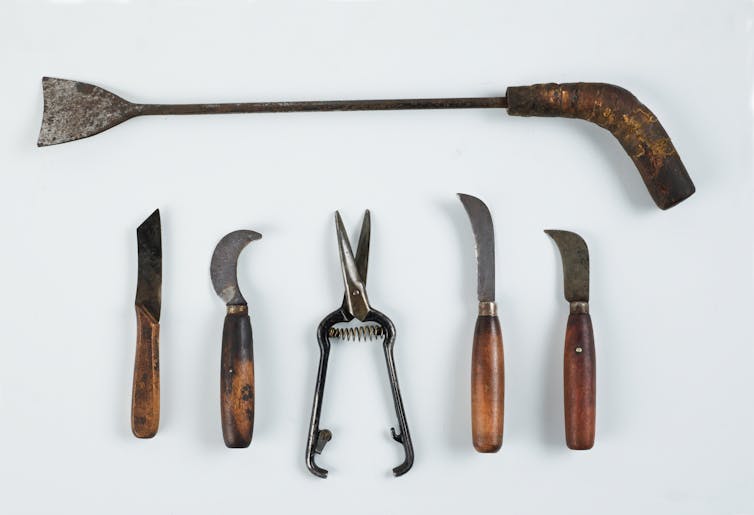
The large, unusual-looking metal instrument found in one trunk is a knife that farmworkers used to harvest asparagus.
During the harvesting season, typically between February and June, workers wielded this knife, using the sharp edge of the forked blade to pierce approximately 6 inches (15 centimeters) below the soil to cut the root of the asparagus.
Harvesting asparagus demanded dexterity and speed. Workers needed to constantly bend over to cut and collect the produce as they moved up and down the rows. This repetitive and backbreaking motion earned Filipino farmworkers the derogatory label “stoop labor.”
After a series of restrictive immigration laws barred Chinese, Japanese and other immigrant groups between the 1870s and 1920s, growers and agribusiness turned to hiring Filipinos and Mexicans to harvest seasonal crops such as lettuce, grapes and asparagus, among others.
When the harvesting season was over, Filipino farmworkers migrated to other West Coast states to harvest apples, hops and grapes. Others went to Alaska to can salmon.
The asparagus knife was found among the containers in the basement, alongside other grafting and pruning knives. These tools – still carrying the soil from which they were tilled – represent the work of the immigrant farmworkers of all backgrounds who helped build California’s agriculture industry, which continues to feed the nation today.
3. Three-piece suits
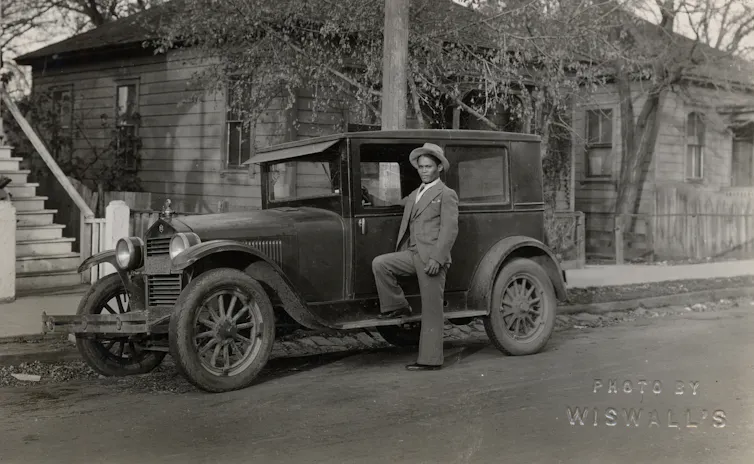
Three-piece suits were found in nearly all the steamer trunks, along with Stetson hats, bow ties and other fashionable accessories from the 1920s and ’30s.
Despite earning meager wages, most Filipino farmworkers saved their hard-earned money to purchase at least one tailored three-piece suit. Men donned these stylish garments to attend Sunday Mass, dinners and taxi-dance halls – where they could pay a small fee to dance with a professional dancer – or merely to strut their stuff down the streets of Stockton’s Little Manila.
Because Americans often looked down upon agricultural workers as uncultured and illiterate – “little brown monkeys” was a common slur – Filipinos resisted these negative characterizations by presenting themselves like the Hollywood movie stars they saw at the cinema. They understood the power of self-presentation: By embracing popular American styles, they sought to command respect and dignity.
They also wore these suits to pose for fancy photographs that were sent back home to the Philippines as a way to display affluence and social mobility – and to entice their compatriots to join them in the U.S.
Not everyone was enchanted. Some white Americans viewed these slick, handsomely dressed Filipino men as a sexual threat that could “steal” their women.
4. A pageant dress
This sequined dress belonged to Barbara Nambatac, a longtime resident of Livingston, California, who grew up among the “manongs,” a kinship title meaning older brother often used when referring to this early generation of Filipino migrants.
Her Filipino father was a cook who served food to Filipino and Mexican field hands on farms throughout California’s Central Valley, where he later met Nambatac’s Mexican mother.
In the 19th century and into the 20th century, California’s anti-miscegenation laws prohibited whites from marrying outside their race. At the same time, the shared experiences of Mexican and Filipino farmworkers often led to relationships between members of the two migrant groups.
When Barbara was 21, Nambatac’s father, who was a member of the Legionarios del Trabajo in Stockton, saved his modest salary to buy the dress from the Philippines and registered her in a beauty pageant that helped raise funds for the lodge. She ultimately took first place.
In Stockton’s Little Manila, pageants reinforced the importance of women in the community. Since women were discouraged from migrating, there was a gender imbalance in Filipino American communities that persisted for decades.
Filipinas who were able to migrate to the United States were important pillars in Stockton’s Filipino American community and assumed multiple roles. Women labored tirelessly alongside men in the fields, performed domestic work in households, advised young men to save money and go to school, and built and maintained networks that sustained local communities and transpacific ties back home in the Philippines.
Although the gender disparity was stark in Little Manila before the 1960s, the presence of women and girls ensured the survival of Filipino American families.
5. A pillowcase

This pillowcase was one of three found in Anastacio Omandam’s steamer trunk.
It’s embroidered with floral patterns and a poignant message – “How Can You Forget Me” – which inspired the exhibition’s title. The pillowcases, along with letters and photographs, evoke the sentimental messages that connected friends, families and lovers separated by a vast ocean.
In the case of Omandam, a loved one from the Philippines likely sent him the pillowcase. The lack of punctuation is interesting: It serves as neither a question nor a declaration, but nonetheless urges Omandam to never let go of his memories of home.
In the same way, I hope the exhibition will implore visitors to never forget this generation of men and women who paved a path for other Filipino immigrants. More than 4.4 million Americans identify as having Filipino ancestry, according to the 2020 U.S. census.
These objects reflect the stories of ordinary people who were resourceful, creative, resilient and filled with hope in the face of discrimination, racism and legal exclusion.
The odds were constantly stacked against them. And yet they persevered – each strike into the soil, each coin saved to save up for a new suit, each lodge meeting and each beauty pageant taking them one step closer to forging a place for themselves in the American story.
Sam Vong, Curator of Asian Pacific American History, Smithsonian Institution
This article is republished from The Conversation under a Creative Commons license. Read the original article.
WATCH MORE • READ MORE • STAY INFORMED
STMDailyNews.com





