

jobs help wanted
Rethinking Career Decisions: Why College is No Longer the Unquestioned Path


(Feature Impact) For generations, students have been told a college degree is key to landing a well-paying job and building a stable future. Long treated as the gold standard for post-secondary education, albeit an expensive one, the four-year degree is no longer the unquestioned path to career success.
New research from the U.S. Career Institute, an online career training provider, suggests many Americans are rethinking what education and long-term job security actually look like. While college remains a popular path, 26% of adults surveyed said certifications or skills-based programs are the safer choice. Just 18% said the same about a four-year degree.
In fact, if given the chance to do it all over again, 27% of respondents said they would choose a different path entirely, and 33% said they would look for something faster or more affordable. Knowing what they know now, just 17% reported they would make the same choice again; meaning more U.S. adults are now willing to ask if college is the right call.
Cost is Getting Harder to Ignore
Long sold as an investment that would pay for itself in time, the price tag that accompanies that college degree is increasingly scrutinized. While 38% of survey respondents said paying for college feels like a necessary investment despite the expense, 29% said they question whether it’s a worthwhile expenditure.
What’s more, 32% of respondents said they would reconsider investing in a college education if student loan debt exceeded $10,000, even as the price of obtaining a degree continues to climb.
AI is Leading to Job Security Concerns
The rapid rise of artificial intelligence is adding another layer of uncertainty. In fact, 1 in 4 adults in the U.S. believe office-based and white-collar workers are the type of employees most likely to be replaced by AI in the next five years. As automation becomes a bigger part of workplace conversations, it’s also influencing how people think about their futures, with more than half (54%) of respondents reconsidering their education or career path due to concerns about job security or automation.
For some, that reconsideration is already translating into action. A quarter of respondents (25%) have already completed a certificate or skills-based training program while another 29% said they’ve seriously considered pursuing one.
Stability is Taking Center Stage
Prestige, job title and earning potential have long influenced post-secondary education choices. However, stability has become the most commonly cited factor influencing career decisions today, named by 53% of respondents, ranking it above prestige and status.
That same mindset is shaping the advice people give younger generations. For those starting their careers now, 30% of survey respondents said they would recommend a certification or skills-based program while 24% said they’d still recommend pursuing a four-year degree.
For many careers, a college degree remains a requirement. However, it may no longer be the only path forward for every student entering the workforce. To explore skills-based training and certification programs as an alternative, visit uscareerinstitute.edu.
Photo courtesy of Shutterstock

SOURCE:
Looking for stories that inform, inspire, and keep you connected to what matters right now? Visit STM Daily News for breaking news, community stories, travel, food and drink, health and wellness, technology, transportation, and our popular Knowledge series. Discover fresh content updated daily, and stay informed with news you can use this moment. Don’t forget to subscribe to our newsletter and follow us on social media so you never miss a story.


financial wellness
Investing in Education: 5 Ways to Prepare Students for the Jobs of Tomorrow
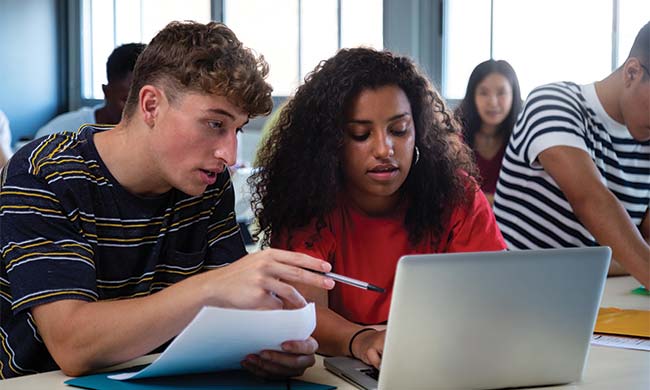
Jobs of Tomorrow: A diploma is still an important milestone, but what matters more than the piece of paper is whether graduates have the knowledge, skills and confidence to take meaningful next steps in pursuing further education or building careers. Students, families, educators, employers and policymakers all have a role to play in cultivating these opportunities.
Investing in Education: 5 Ways to Prepare Students for the Jobs of Tomorrow
(Feature Impact) The landscape of modern work is changing rapidly, leaving many uncertain about whether they’re adequately equipped to face the future. Even though America invests roughly $1 trillion in education every year, it’s difficult to know whether that investment is truly preparing young people for what comes next.
“Our education system isn’t evolving quickly enough to prepare our students for the jobs of tomorrow,” said Amit Sevak, CEO of ETS, a global education and talent solutions organization working with more than 30 million students a year to measure learning success and power human progress at every stage of life. “Students only get one chance at an education, and we have a responsibility to understand what’s working, what’s not and where additional support is needed.”
A diploma is still an important milestone, but what matters more than the piece of paper is whether graduates have the knowledge, skills and confidence to take meaningful next steps in pursuing further education or building careers. Students, families, educators, employers and policymakers all have a role to play in cultivating these opportunities.
Start the Conversation Early
Success isn’t a single path anymore, so young people may benefit from thinking outside the traditional pipeline of high school to college to a good job to retirement. By prompting early conversations, parents can help their children begin sorting through their options well in advance. Encourage dinner table talks about favorite school subjects, what kind of work seems interesting and alternative pathways to build careers. The goal isn’t necessarily to choose a life track immediately – just to start exploring ideas before the time arrives to lock in a decision.
Learn to Work with AI
In the age of AI, there’s a balance to be found between fully embracing or avoiding it. Parents and educators can encourage thoughtful, responsible use of the AI tools reshaping modern workplaces – without sanctioning them as a way to get out of doing homework. Students should think critically about both the uses and limitations of AI, learning how these systems work but still recognizing when human judgment matters.
Get Real-World Experience Before Graduation
Textbooks and classrooms can teach a lot, but some of the most valuable lessons come from the real world. Summer jobs, internships, volunteering, co-op programs, job shadowing or small-scale forays into entrepreneurship can help kids discover where their talents and passions fit. It’s also a chance to develop the soft skills that make great employees, like being punctual, working well with others and adapting to new situations.
Build Human Skills
There are certain abilities technology just can’t replace, making them vital pieces of future-proof training. Strong communication, teamwork mindsets, critical thinking skills, civic reasoning and empathy translate well to many careers. Rather than focusing strictly on academics, teachers can shift lesson plans to encourage growth in these areas. Specialized hands-on talents and trades are also more insulated from technological disruptions.
Measure Progress Beyond Grades
Grades and test scores don’t tell the whole story about career readiness, yet they’re often treated as the only metric that matters in educational success. Policymakers have the opportunity to change how schools measure student progress, including by trading the one-size-fits-all rubrics for more personalized assessments that demonstrate proficiency in more comprehensive ways. Education is on the ballot this election season, so ask your local and state elected leaders about whether today’s graduates are ready to face the future.
For information about a system that gives students, educators and employers clear evidence that learning is leading to opportunity, visit ETS.org.
Photos courtesy of Shutterstock
SOURCE:
ETS
child education
Preparing the Next Generation for Economic Mobility in an AI-Driven World
AI-Driven World: Within only a few years, AI has already changed many things about the world and workforce. Entry-level jobs, particularly the ones relying on routine and predictable tasks, are increasingly disappearing to automation, leaving young people wondering how to launch their careers and futures. To learn what preparing students for the future may look like in practice, consider these tips.

Preparing the Next Generation for Economic Mobility in an AI-Driven World
(Feature Impact) Within only a few years, AI has already changed many things about the world and workforce. Entry-level jobs, particularly the ones relying on routine and predictable tasks, are increasingly disappearing to automation, leaving young people wondering how to launch their careers and futures.
Access to economic mobility – the ability to change your income or wealth – doesn’t just rely on technical knowledge and skills but on leaning into humanity. Being able to think outside the box, collaborate, solve problems and grow as a person can open doors in life and at work. AI may be changing the world, but in change lies opportunity. The students who can adapt quickly are more likely to prosper as the economy continues to reshape itself.
To learn what preparing students for the future may look like in practice, consider these tips from the economic and career experts at Junior Achievement.
Build the Kinds of Skills AI Can’t Replace
Young people facing AI as their competition can get a boost from cultivating the uniquely human skills technology can’t replicate. Educators, parents and other adults in kids’ lives can help them develop increasingly important soft skills like critical thinking, communication, teamwork and leadership, which can translate to many different careers. Hands-on skills can fit into this category as well, like the kinds required in entrepreneurship and the trades.
Provide Real-World Experiences
When young people have the chance to test themselves in a real-world setting, it lets them hone their interests, skills and confidence before the time comes to make major decisions about their futures. As early as elementary school, experiential learning activities like Junior Achievement’s Biztown allow students to operate businesses, work with others, manage finances and solve problems, combining in-class learning with hands-on simulations. As kids grow up, other options can include job shadowing, internships and entrepreneurship experiments – all ways to build durable social and professional skills that can help them succeed.
Teach Foundational Financial Literacy
Earning money is only part of the equation for a healthy financial future; equally important is understanding how to manage it. As kids prepare to earn their first sources of income, make sure they’re also equipped with practical financial skills like budgeting, saving, investing, using credit wisely and planning for future goals. Giving them these tools early helps them make informed decisions about their long-term economic advancement.
Connect Students with Employers and Opportunities
Sometimes, all a student needs to succeed is someone who’s willing to give them a chance. Young people in a position to meet business professionals in (and beyond) their communities may be able to turn those connections into future opportunities. This can happen naturally as they seek real-world experiences through apprenticeships, mentorship programs, career fairs and more.
Programs like Junior Achievement’s 3DE puts students in authentic business challenges, connecting them with educators, business partners and volunteers as they work in teams to complete case experiences. This not only gives young people the opportunity to meet potential employers or mentors, it also lets them demonstrate critical thinking, social skills and real-world competence.
Visit jausa.ja.org for more ideas to help young people gain the confidence and connections needed to achieve economic mobility in a changing world.
Photo courtesy of Shutterstock
SOURCE:
Business and Finance
Handshake Launches Free AI Skills Studio to Help Job Seekers Prepare for an AI-Driven Workplace
Handshake has launched AI Skills Studio, a free project-based learning hub designed to help students and job seekers develop practical AI skills and demonstrate what they can do to prospective employers.

As artificial intelligence becomes a bigger part of everyday work, knowing how to actually use AI tools may become just as important as knowing what they can do.
Career platform Handshake is betting on that shift with the launch of AI Skills Studio, a free learning hub designed to give students and job seekers practical experience using AI through short, hands-on projects.
Handshake’s AI Skills Studio aims to help job seekers build practical, hands-on AI experience as artificial intelligence becomes increasingly important across the workplace. Image: Rod Washington and Firefly.
Announced September 22, AI Skills Studio offers project-based learning “missions” that generally take between 10 and 45 minutes to complete. Instead of focusing primarily on lectures or traditional coursework, participants work directly with AI and technology tools to create something tangible.
Projects can include automated workflows, software, interactive games, data dashboards, portfolios, and tools aimed at preparing users for jobs in areas such as sales and marketing.
The program was developed with a broad group of technology companies and educational partners, including Clay, Figma, Gamma, Google, Lovable, Notion, OpenAI, Replit, Salesforce, Southern New Hampshire University and Vercel.
Turning AI knowledge into something employers can see
One of the more notable aspects of AI Skills Studio is its emphasis on demonstrating skills rather than simply listing them on a résumé.
After completing a mission, learners can add their projects to their Handshake profiles and potentially feature them in the platform’s AI Showcase. Participants also receive verified skill badges intended to provide employers with evidence that they have applied particular AI skills.
That approach reflects a growing challenge for both applicants and businesses: simply saying someone is familiar with artificial intelligence doesn’t necessarily show an employer what that person can accomplish with it.
“Employers know they need people who can work effectively with AI, but a résumé can’t tell you what someone is truly capable of,” Handshake Chief Operating Officer Jon Stull said in announcing the program.
For job seekers, that could make small AI projects increasingly useful as part of a professional portfolio, particularly for people entering the workforce without years of experience.
Students see AI skills becoming increasingly important
Handshake says its own research indicates that many students recognize the importance of AI but don’t necessarily believe their education has kept pace.
According to the company’s 2026 Network Trends Report, 58% of graduating seniors surveyed said they would need a stronger understanding of AI to succeed in the workplace. Only 28%, however, said AI had been meaningfully integrated into their educational programs.
Those figures come from Handshake’s own research, but they highlight a broader issue confronting workers, schools and businesses as generative AI moves rapidly into professional environments.
Julia Stiglitz, Handshake’s Chief Education and Workforce Officer, said people shouldn’t necessarily wait for the technology—or the workplace—to stop changing before beginning to develop AI skills.
“The best thing people can do is start learning and start building,” Stiglitz said.
Learning with tools used in the workplace
Rather than teaching AI only as a theoretical subject, the Studio is designed around tools people could encounter professionally.
OpenAI, for example, is participating with projects involving ChatGPT and Codex. Google is contributing training involving its AI tools and workflows, while other partners bring experience in areas ranging from software development and design to productivity and enterprise technology.
An AI Skills Instructor provides learners with guidance and feedback while they complete projects.
Handshake says connecting those projects directly to a career profile could also give employers another way to evaluate applicants—allowing recruiters to look at what candidates have actually built instead of relying entirely on degrees, résumés or self-reported skills.
AI could change what “experience” means
The development is especially interesting for students, career changers and early-career workers.
Traditionally, gaining experience has often created a familiar problem: employers want applicants with experience, while applicants need employment opportunities to acquire that experience.
Project-based AI training doesn’t eliminate that problem, and completing a short AI exercise isn’t the same as performing a job professionally. But projects can provide another way for someone to demonstrate curiosity, technical familiarity and the ability to apply new tools to a specific task.
As AI becomes embedded in more occupations, portfolios demonstrating how someone uses the technology could become an increasingly useful complement to conventional credentials.
That doesn’t mean everyone needs to become an AI engineer. The more immediate workplace skill may simply be understanding how to use AI effectively within an existing profession—whether that’s marketing, design, software development, sales, research or business operations.
Handshake’s new program is another indication that career preparation is beginning to adjust to that reality.
AI Skills Studio is available free through Handshake’s website and mobile app.
Source: Handshake press release, September 22, 2026. Statistics regarding graduating seniors and AI education are attributed to Handshake’s 2026 Network Trends Report.
Source and Related Links
Handshake — Introducing AI Skills Studio: AI Skills Studio launch and overview — Details the program, project-based missions, participating partners and how completed projects can be displayed to employers.
Handshake — What is AI Skills Studio?: AI Skills Studio Help Center — Official information on how the program works, eligibility, missions and access.
Handshake — Class of 2026 Graduation Report: AI and the Workforce Ahead — Supports the article’s statistics that 58% of graduating seniors say they need stronger AI skills while only 28% say AI has been meaningfully integrated into their academic program. Handshake
Handshake — Workforce Outlook: Class of 2026 in the AI Economy — Additional research on AI adoption, employer demand and attitudes toward AI among graduating students.
Stay informed. Stay curious. From business and technology to lifestyle, entertainment, transportation, science and the stories shaping everyday life, STM Daily News brings you news, insight and useful information that matters.
Discover more stories at STM Daily News: https://stmdailynews.com





