

Automotive
Slate Auto’s $20K EV Truck: A Dream Deferred?


From Breakthrough to Boardwalk—Price Expectations Get Reset
When Slate Auto unveiled its electrifying minimalist pickup in April 2025, headlines buzzed with the promise of a fully electric truck under $20,000—a rarity in a market dominated by expensive, tech-heavy EVs. Its no-frills, modular build captured imaginations and racked up over 100,000 refundable reservations, thanks in part to its clever positioning on affordability.
That price, however, relied on a then-available $7,500 federal EV tax credit. But with President Trump signing the “Big Beautiful Bill,” the credit was eliminated—effective September 30, 2025.
Unsurprisingly, Slate pulled the under-$20K claim from its website and now lists the truck’s starting MSRP in the “mid-$20,000” range. Analysts peg the real price closer to $27,500, before accessories are factored in.
Bare Bones vs. Price Tag—Is It Still Enough?
Slate’s design philosophy remains stubbornly minimal: no infotainment system, manual windows, unpainted exterior, and a compressed SKU model that lets buyers bolt on desired features—like a stereo or power windows—later.
Executive analysts, such as Ed Kim of AutoPacific, caution that a $20K EV might have been compelling—but at $26K or $27K, the appeal diminishes rapidly—especially to budget-conscious buyers.
On community platforms like Reddit, opinions run the gamut:
“Mid 20s would still make it one of the cheapest vehicles on the market.”
“The Slate truck is still going to be a value for many people and fleet buyers.”
Slate continues to assert that even without the tax credit, its ultra-simplified manufacturing process and stripped-down design can undercut traditional competitors—and appeal to younger, cost-conscious Americans.
Where It Stands Now: Snapshot of Slate’s Current Strategy
Element | Current Status |
|---|---|
Official Starting Price | Mid-$20,000s (approx. $27,500 base) |
Federal EV Tax Credit | Repealed; now unrelated to pricing |
Design Philosophy | Ultra–minimalist with a customizable option system |
Production Timeline | On track for late-2026 delivery |
Value Proposition | Affordable in EV terms, but faces stiffer competition at the new price level |
Why It Still Matters—EV Affordability in a Tough Climate
Price pressure continues: With the tax credit gone, the Slate truck now competes more directly with entry-level compact trucks like the Ford Maverick, rather than outperforming them on cost.
Industry shift to functionality: Ford is now targeting a $30,000 electric truck with full equipment—showing that slab pricing isn’t the only way to democratize EVs right now.
Consumer hunger for simplicity: The minimalist ethos still resonates. Slate is betting that a 500-part build—with removable, modular features—hits a sweet spot for buyers tired of over-engineered cars.
Final Word
Slate Auto’s journey from a hyped $20K EV dream to a somewhat more grounded mid-$20K reality reflects the challenges of auto innovation amid shifting policy landscapes. While the federal tax credit may be gone, the core of Slate’s vision—an affordable, modular, and accessible EV—remains intact. The question now: will the market rallied by its minimal design and competitive pricing be enough to keep it afloat?
Related Links:
Slate Truck Will No Longer Cost Under $20K After EV Tax Credit Axed – Car and Driver
Slate Auto confirms where it’ll build its $20,000 Truck – The Verge
Slate Truck No Longer Under $20K After Tax Incentive Update – TFLTruck
Dive into “The Knowledge,” where curiosity meets clarity. This playlist, in collaboration with STMDailyNews.com, is designed for viewers who value historical accuracy and insightful learning. Our short videos, ranging from 30 seconds to a minute and a half, make complex subjects easy to grasp in no time. Covering everything from historical events to contemporary processes and entertainment, “The Knowledge” bridges the past with the present. In a world where information is abundant yet often misused, our series aims to guide you through the noise, preserving vital knowledge and truths that shape our lives today. Perfect for curious minds eager to discover the ‘why’ and ‘how’ of everything around us. Subscribe and join in as we explore the facts that matter. https://stmdailynews.com/the-knowledge/


Automotive
4 Tips for Efficient EV Charging at Home
Efficient EV Charging at Home: Your car has one job – to take you where you need to go. For electric vehicle (EV) owners, that means keeping it charged so it’s ready to hit the road when you are. Charging your car at home is convenient and cost-effective, especially if you have the right equipment and routines.

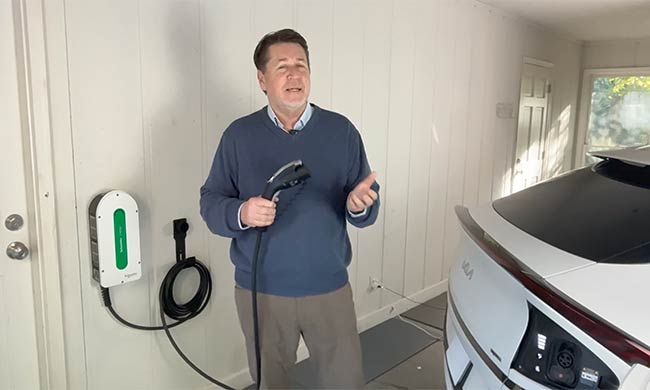
4 Tips for Efficient EV Charging at Home
(Feature Impact) Your car has one job – to take you where you need to go. For electric vehicle (EV) owners, that means keeping it charged so it’s ready to hit the road when you are.
Charging your car at home is convenient and cost-effective, especially if you have the right equipment and routines. Consider these quick tips from the EV experts at Schneider Electric.
Watch this video to learn more:
//www.youtube.com/embed/IELsXkSgOQQ
Install a Level 2 Home Charger
While many EV owners start with standard Level 1 charging using typical 120-volt household outlets, upgrading to a 240-volt Level 2 charger can offer extra efficiency and convenience. With significantly faster charging speeds, these units increase your driving range per charging hour and can replenish your battery in a fraction of the time.
Charge During Off-Peak Hours
If your electric company has variable pricing based on the time of day, you may be able to lower your utility bill by shifting your charging routines. This could mean doing most of your charging overnight and unplugging during peak daytime hours when rates are often more expensive.
Consider a Smart Charger
Since Level 2 chargers can add significant electrical load to your home, many EV owners are concerned they’ll need to make costly electrical upgrades to accommodate the higher power requirements. Instead, consider a smart Level 2 home charger with dynamic power management like the Schneider Charge.
With built-in technology called SmartAmp, this charger intelligently monitors the electrical demand in the home and adjusts the output to your EV accordingly. Whether you’re running a dryer full of laundry or turning on the air conditioning, the system can automatically dial back the charging power to your EV when necessary then ramp it back up when demand drops. This way, you won’t have to worry about overloading your electrical system or being forced to install pricey new panels so you can get everything done.
Since it works with all standard EV charging formats, it’s built to fit your current vehicle and whatever you buy next. Plus, through the connected app, you can conveniently schedule charging with a tap, giving you the ability to manage your EV routine remotely – or just set it and forget it.
Track Your Habits
Understanding your current charging habits can help you fine-tune your routines over time. Smart chargers can make tracking simple and automatic with apps that allow you to access information like how often you’re charging your vehicle, how long it takes and how much energy it consumes.
Learn more about smart EV charging at SE.com.
SOURCE:

Automotive
Slate Truck Gets Real: First Experience Center Opens Ahead of Planned Deliveries
Slate Auto’s first permanent Experience Center gives consumers an up-close look at its customizable electric truck ahead of planned customer deliveries.

Slate Auto’s new Chicago location gives prospective buyers a permanent place to see the minimalist electric pickup, explore customization options and learn about demo opportunities—but it is not yet proof that customer deliveries have begun.
CHICAGO — October 20, 2026 — The Slate Truck is moving out of computer renderings and temporary roadshow stops and into a permanent retail setting. Slate Auto opened its first Experience Center on October 15 at 1053 W. Grand Avenue in Chicago, giving consumers a year-round location to get an up-close look at the company’s highly anticipated electric pickup.
The Near West Side facility occupies a former Tesla location and includes showroom, retail and garage space, along with electric-vehicle charging infrastructure. For Slate, the opening represents an important step in turning strong online interest into a more tangible buying experience as the startup works toward launching its first vehicle.
Visitors can examine the truck’s compact dimensions, deliberately simple cabin and accessory-driven design in person. The center also showcases Slate’s personalization strategy, including exterior wraps, add-on accessories and digital design tools intended to let owners configure the truck around their needs.
Slate has also promoted demonstration opportunities connected with the location, although availability may be limited or appointment-based as the company continues to prepare its fleet. Early media access included passenger rides rather than unrestricted customer test drives, so prospective visitors should confirm current availability before making a special trip.
Why the Chicago opening matters
Until now, most consumers have encountered the Slate Truck through online reservations, media coverage or temporary appearances. A permanent showroom gives buyers a chance to judge details that are difficult to evaluate on a screen, including seating position, bed access, cabin materials and the overall size of the vehicle.
That is especially important for a product built around an unconventional value proposition. Slate is promoting a basic two-seat, two-door electric truck with manual crank windows and no factory-installed infotainment screen or stereo. The company’s strategy is to keep the starting price low and let buyers add features later through accessories and conversion kits.
The physical location also gives Slate a place to explain that approach directly. Rather than presenting the truck as an unfinished vehicle, the company can demonstrate how its modular accessories, wraps and planned SUV-style conversion components are meant to expand the vehicle’s usefulness over time.
Chicago is a logical first market for that effort. The city offers access to a large Midwestern customer base and is within the broader region of Slate’s planned manufacturing operation in Warsaw, Indiana. Reusing a former Tesla store also gives the startup a space already suited to displaying and servicing electric vehicles.
The roadshow continues beyond Chicago
The Experience Center is opening as Slate expands its public demonstration schedule. The company’s events calendar lists a Boston-area demo ride event from October 21 through October 25 at The Shops at Chestnut Hill, followed by an appearance at RADwood in Alameda, California, on October 24 and a New Jersey demo ride event in Freehold from October 28 through October 31.
Slate also lists future stops in Washington, D.C., Raleigh, Atlanta, Miami and Orlando. Together, the permanent Chicago center and the traveling events suggest the company is moving into a broader customer-education phase ahead of planned deliveries.
What has—and has not—changed
The showroom opening does not change Slate’s headline pricing or range claims. The truck is still advertised with a base price of $24,950 before taxes, registration and destination charges. With the currently listed $1,450 destination fee, the entry price would be approximately $26,400 before other costs or optional equipment.
Slate also continues to advertise an estimated range of up to 205 miles. That figure remains an estimate rather than a final EPA-certified rating.
Most importantly, Slate has not publicly confirmed that regular customer production has started or that the first retail deliveries have occurred. Limited deliveries have been reported as possible before the end of December 2026, while many reservation holders may receive later delivery windows in 2027. The Chicago opening is therefore a commercialization milestone, not a manufacturing milestone.
For customers and industry observers, the next major signals will be the start of production at the Warsaw factory, final specifications and EPA range ratings, and confirmed handoffs to paying buyers.
The bottom line
Slate Auto now has a permanent place where consumers can see and evaluate its unusually simple electric truck. That makes the product feel more real and gives the company a platform to explain a customization-heavy business model that may be unfamiliar to traditional truck buyers.
Still, the biggest questions remain unanswered. Opening a showroom demonstrates progress in marketing and customer engagement; producing vehicles at scale, holding the promised price and delivering a 205-mile truck to reservation holders will determine whether Slate can convert enthusiasm into a viable automotive business.
Sources and more information
- Slate Auto events and demo schedule
- Electrek: Slate opens its first Experience Center in Chicago
- Autoblog: Slate opens its first U.S. showroom
- Slate Auto
Category: Consumer Corner / Automotive

Automotive
The New Tire-Buying Playbook: AI Insights Meet Human Advice
New Tire-Buying Playbook: A tire purchase can start with a familiar moment: a dashboard warning light, a repair shop visit, worn tread or realizing the current set is nearing a mileage milestone. When it’s time to replace tires, drivers have more ways than ever to research options, including classic search engines and AI chatbots.

The New Tire-Buying Playbook: AI Insights Meet Human Advice
(Feature Impact) A tire purchase can start with a familiar moment: a dashboard warning light, a repair shop visit, worn tread or realizing the current set is nearing a mileage milestone. When it’s time to replace tires, drivers have more ways than ever to research options.
New research from Hankook Tire’s Gauge Index Survey found drivers are utilizing multiple methods for research, from search engines and AI assistants to asking someone they trust for advice. Two-thirds of respondents said they always or often research multiple sources before buying tires, suggesting many shoppers want to weigh several opinions before deciding to buy a new set, including turning to fellow drivers.
As tools like classic search engines and AI chatbots continue to evolve, the most useful strategy for tire shopping may be less about choosing between technology and human expertise, and more about knowing how each fits into the research process. Here are a few ways drivers can confidently conduct tire research.
Start broad then narrow the search.
For many drivers, the process begins online. One-quarter of respondents said they typically begin their tire research with a search engine, the most common starting point reported in the survey. Retailer or dealer websites are the next at 16%, followed by recommendations from a mechanic at 15%.
That range of starting points reflects how personal a tire purchase can be. A search engine can help a driver organize initial questions and identify the types of information they want to compare. Retailer and dealer sites offer another place to review available options – and reviews from other drivers. A mechanic can help put the vehicle and driver’s specific needs into context.
Drivers can also use their initial search to create a short list of requirements, such as tire size, type and available warranties.
Use AI as one research tool – but not the only one.
AI is a growing part of any research. About 4 in 10 drivers (42%) said they have used an AI tool to research or compare tires more than once. Another 11% said they have not used one yet but plan to the next time they buy tires.
Conversely, just 5% of respondents said an AI assistant or chatbot would be their typical first stop when researching tires, suggesting many drivers may add AI later in the process to help sort through information or frame comparisons.
AI can help turn a general concern into a clearer list of questions. A driver might use it to identify terms to research, compare categories of information or prepare for a conversation with a retailer, dealer or repair professional.
Keep trusted people in the research loop.
Despite drivers’ increased reliance on digital tools, trusted advice is still important. More than one-quarter of drivers said they would typically begin tire research with a recommendation from a mechanic (15%) or from friends or family (12%).
Friends and family may share firsthand experiences, while a mechanic may help a driver better understand the questions that matter for their vehicle. More than 1 in 5 respondents (21%) list advice from a repair shop among the top three reasons that would prompt them to buy new tires, showing the role professional guidance can play when a purchase becomes necessary.
Find the full survey and approach your next tire research process with clearer questions, more confidence and a better sense of what matters most for the road ahead at HankookTire.com.
Photo courtesy of Shutterstock
SOURCE:




