Connect with us

The Earth

Solving the world’s microplastics problem: 4 solutions cities and states are trying after global treaty talks collapsed

Published

on

Solving the world’s microplastics problem
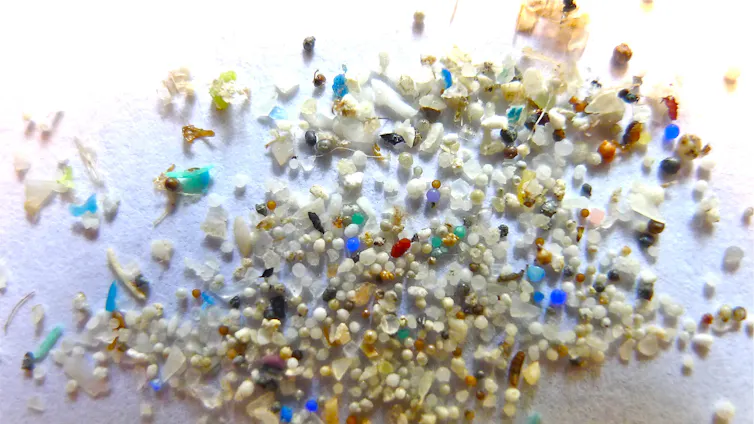
Microplastics are a growing concern in marine environments. As they break down, the particles can become microscopic.
Oregon State University via Wikimedia Commons, CC BY-SA

Solving the world’s microplastics problem: 4 solutions cities and states are trying after global treaty talks collapsed

Sarah J. Morath, Wake Forest University

Microplastics seem to be everywhere – in the air we breathe, the water we drink, the food we eat. They have turned up in human organs, blood, testicles, placentas and even brains.

While the full health consequences of that exposure are not yet known, researchers are exploring potential links between microplastics and negative health effects such as male infertility, inflammation, liver disease and other metabolic problems, and heart attack or stroke.

Countries have tried for the past few years to write a global plastics treaty that might reduce human exposure to plastic particles and their harm to wildlife and ecosystems, but the latest negotiations collapsed in August 2025. Most plastics are made with chemicals from fossil fuels, and oil-producing countries, including the U.S., have opposed efforts that might limit plastics production.

While U.S. and global solutions seem far off, policies to limit harm from microplastics are gaining traction at the state and local levels.

A person holds a petri dish with microplastics and uses tweezers to pick them apart.
Marine animals ingest microplastics from the water and as they’re eating. These were found in marine animals at the Hellenic Centre for Marine Research near Athens, Greece, in 2025.
Milos Bicanski/Getty Images

As an environmental lawyer and author of the book “Our Plastic Problem and How to Solve It,” I see four promising policy strategies.

Banning added microplastics: Glitter, confetti and turf

Some microplastics are deliberately manufactured to be small and added to products. Think glitter in cosmetics, confetti released at celebrations and plastic pellet infill, used between the blades in turf fields to provide cushion and stability.

These tiny plastics inevitably end up in the environment, making their way into the air, water and soil, where they can be inhaled or ingested by humans and other organisms.

California has proposed banning plastic glitter in personal care products. No other state has pursued glitter, however some cities, such as Boca Raton, Florida, have restricted plastic confetti. In 2023, the European Union passed a ban on all nonbiodegradable plastic glitter as well as microplastics intentionally added to products.

A young woman with heavy, glittery makeup on her eyes and cheeks.
Personal care products, particularly makeup, have added glitter in recent years. However, when that makeup is washed off, it often goes down drains and into wastewater, adding to plastics in the environment.
Rich Fury/Invision/AP

Artificial turf has also come under scrutiny. Although turf is popular for its low maintenance, these artificial fields shed microplastics.

European regulators targeted turf infill through the same law for glitter, and municipalities in Connecticut and Massachusetts are considering local bans.

A cloud of tiny particles rises from the turf from where a soccer player just jumped.
Infill flies up from artificial turf as a high school soccer player kicks the ball in 2022.
Isaac Wasserman for The Washington Post via Getty Images

Rhode Island’s proposed law, which would ban all intentionally added microplastics by 2029, is broad enough to include glitter, turf and confetti.

Reducing secondary microplastics: Textiles and tires

Most microplastics don’t start small; rather, they break off from larger items. Two of the biggest culprits of secondary microplastics are synthetic clothing and vehicle tires.

A study in 2019 estimated that textiles accounted for 35% of all microplastics entering the ocean – shed from polyester, nylon or acrylic clothing when washed. Microplastics can carry chemicals and other pollutants, which can bioaccumulate up the food chain.

Advertisement
Get More From A Face Cleanser And Spa-like Massage

In an effort to capture the fibers before they are released, France will require filters in all new washing machines by 2029.

A man looks at a jar in the light. Tiny black filaments are visible at the bottom.
A scientist holds a sample showing microfibers captured during a washing machine cycle.
Owen Humphreys/PA Images via Getty Images

Several U.S. states, including Oregon, Illinois, New York, New Jersey and Pennsylvania, are considering similar legislation. California came close in 2023, passing legislation to require microfiber filters for washing machines, but it was ultimately vetoed due to concerns about the cost of adding the filters. Even so, data submitted in support of the bill showed that such filters could cut microplastic releases from laundry by nearly 80%.

Some states, such as California and New York, are considering warnings on clothing made with synthetic fibers that would alert consumers to the shedding of microplastics.

Tires are another large source of microplastics. As they wear down, tires release millions of tons of particles annually, many of which end up in rivers and oceans. These particles include 6PPD-quinone, a chemical linked to mass die-offs of salmon in the Pacific Northwest.

A closeup of an SUV tire on a dirt road.
Synthetic rubber in vehicle tires shed particles into the environment as the tires wear down.
Wenson Wei/Wikimedia Commons, CC BY

One approach would be to redesign the product to include safer alternatives. California’s Department of Toxic Substances Control recently added 6PPD-quinone to its priority product list, requiring manufacturers to explain how they will either redesign their product or remove it from the market.

Regulating disposal

Microplastics can also be dealt with at the disposal stage.

Disposable wipes, for example, contain plastic fibers but are still flushed down toilets, clogging pipes and releasing microplastics. States such as New York, California and Michigan have passed “no-flush” labeling laws requiring clear warnings on packaging, alerting consumers to dispose of these wipes another way.

Construction sites also contribute to local microplastic pollution. Towns along the New Jersey shore have enacted ordinances that require builders to prevent microplastics from entering storm drains that can carry them to waterways and the ocean. Such methods include using saws and drills with vacuums to reduce the release of microplastics and cleaning worksites each day.

Oregon and Colorado have new producer responsibility laws that require manufacturers that sell products in plastic packaging to fund recycling programs. California requires manufacturers of expanded polystyrene plastic products to ensure increasing levels of recycling of their products.

Statewide strategies and disclosure laws

Some states are experimenting with broader, statewide strategies based on research.

California’s statewide microplastic strategy, adopted in 2022, is the first of its kind. It requires standardized testing for microplastics in drinking water and sets out a multiyear road map for reducing pollution from textiles, tires and other sources.

California has also begun treating microplastics themselves as a “chemical of concern.” That shifts disclosure and risk assessment obligations to manufacturers, rather than leaving the burden on consumers or local governments.

Advertisement
Get More From A Face Cleanser And Spa-like Massage

Other states are pursuing statewide strategies. Virginia, New Jersey and Illinois have considered bills to monitor microplastics in drinking water. A Minnesota bill would study microplastics in meat and poultry, and the findings and recommendations could influence future consumer safety regulations in the state.

State and local initiatives in the U.S. and abroad – be they bans, labels, disclosures or studies – can help keep microplastics out of our environment and lay the foundation for future large-scale regulation.

Federal ripple effects

These state-level initiatives are starting to influence policymakers in Washington.

In June 2025, the U.S. House passed the bipartisan WIPPES Act, modeled on state “no-flush” laws, and sent it to the Senate for consideration.

Another bipartisan bill was introduced in July 2025, the Microplastic Safety Act, which would direct the FDA to research microplastics’ human health impacts, particularly on children and reproductive systems.

Proposals to require microfiber filters in washing machines, first tested at the state level, are also being considered at the federal level.

This pattern is not new. A decade ago, state bans on wash-off cosmetic microbeads paved the way for the Microbead-Free Waters Act of 2015, the only federal law to date that directly bans a type of microplastic. That history suggests today’s state and local actions could again catalyze broader national reform.

Small steps with big impact

Microplastics are a daunting challenge: They come from many sources, are hard to clean up once released, and pose risks to our health and the environment.

While global treaties and sweeping federal legislation remain out of reach, local and state governments are showing a path forward. These microsolutions may not eliminate microplastics, but they can reduce pollution in immediate and measurable ways, creating momentum for larger reforms.

Sarah J. Morath, Professor of Law and Associate Dean for International Affairs, Wake Forest University

Advertisement
Get More From A Face Cleanser And Spa-like Massage

This article is republished from The Conversation under a Creative Commons license. Read the original article.

The science section of our news blog STM Daily News provides readers with captivating and up-to-date information on the latest scientific discoveries, breakthroughs, and innovations across various fields. We offer engaging and accessible content, ensuring that readers with different levels of scientific knowledge can stay informed. Whether it’s exploring advancements in medicine, astronomy, technology, or environmental sciences, our science section strives to shed light on the intriguing world of scientific exploration and its profound impact on our daily lives. From thought-provoking articles to informative interviews with experts in the field, STM Daily News Science offers a harmonious blend of factual reporting, analysis, and exploration, making it a go-to source for science enthusiasts and curious minds alike. https://stmdailynews.com/category/science/

Author

Continue Reading
Advertisement SodaStream USA, inc

The Earth

Restore Our Earth: Celebrating Earth Day and Taking Action for a Sustainable Future

Published

on

Last Updated on April 17, 2026 by Daily News Staff

Earth Day is celebrated annually on April 22nd, and it serves as a reminder of the importance of taking care of our planet. It’s a day to reflect on our impact on the environment and to take action to create a better future for our planet.

The first Earth Day was celebrated in 1970, and it marked the beginning of the environmental movement. Since then, Earth Day has grown into an international event, with millions of people around the world participating in activities and events to raise awareness about environmental issues.

One of the main goals of Earth Day is to encourage people to take action to reduce their impact on the environment. This can include simple actions like recycling, conserving energy, and reducing waste. It can also involve more significant actions like advocating for environmental policies and supporting sustainable businesses.

Another important aspect of Earth Day is education. It’s a time to learn about environmental issues and to understand how our actions can impact the planet. Many schools and organizations use Earth Day as an opportunity to teach children about the importance of taking care of the environment.

This year’s Earth Day theme is “Restore Our Earth”, and it focuses on the idea that we can all play a role in restoring the planet’s ecosystems. This can include actions like planting trees, reducing plastic waste, and supporting sustainable agriculture.

Earth Day is an important reminder of the impact that we have on the environment and the importance of taking action to create a better future for our planet. By working together and taking small steps, we can make a big difference in protecting the planet and ensuring that it remains healthy and beautiful for generations to come.

Earth Day – April 22

https://nationaltoday.com/earth-day/

https://stmdailynews.com/category/science/

Advertisement
Get More From A Face Cleanser And Spa-like Massage

Author

  • Rod Washington

    Rod: A creative force, blending words, images, and flavors. Blogger, writer, filmmaker, and photographer. Cooking enthusiast with a sci-fi vision. Passionate about his upcoming series and dedicated to TNC Network. Partnered with Rebecca Washington for a shared journey of love and art.

    View all posts
Continue Reading

The Knowledge

Mosquitoes carrying malaria are evolving more quickly than insecticides can kill them – researchers pinpoint how

Published

on

file 20260319 57 o1tmci.JPG?ixlib=rb 4.1
Anopheles darlingi, a key carrier of malaria, is rapidly evolving resistance to insecticides. Romuald Carinci and Pascal Gaborit/Duchemin lab/Institut Pasteur de la Guyane, CC BY-SA

Jacob A Tennessen, Harvard University

The fight against infectious disease is a race against evolution. Bacteria become resistant to antibiotics. Viruses adapt to spread more quickly. Diseases transmitted by insects present another evolutionary front: Insects themselves can evolve resistance to the poisons that people use to kill them.

In particular, the mosquito-borne disease malaria kills over 600,000 people annually. Since World War II, people have battled malaria with insecticides – chemical weapons intended to kill Anopheles mosquitoes infected with the Plasmodium parasites that cause the disease.

However, mosquitoes are quickly evolving counterstrategies that make these insecticides ineffective, putting millions of people at greater risk of deadly infection. My colleagues and I have newly published research showing how.

Insecticide resistance threatens public health

As an evolutionary geneticist, I study natural selection – the basis for adaptive evolution. Genetic variants that best promote survival can replace less advantageous versions, causing species to change. Anopheles mosquitoes are frustratingly adept at evolving.

In the mid-1990s, most African Anopheles were susceptible to pyrethroids, a popular type of insecticide originally derived from chrysanthemums. Anopheles control relies on two pyrethroid-based methods: insecticide-treated bed nets to protect sleepers, and indoor residual spraying of insecticide against the walls of homes. These two methods alone likely prevented over a half-billion cases of malaria between 2000 and 2015.

However, mosquitoes today from Ghana to Malawi are often able to survive insecticide concentrations 10 times the previously lethal dose. Along with Anopheles control efforts, agriculture also inadvertently exposes mosquitoes to pyrethroids and contributes to insecticide resistance.

In some African locales, Anopheles is already showing resistance to all four main classes of insecticide used for malaria control.

Close-up of mosquito on human skin with abdomen engorged with blood, a droplet extruding at its end
Anopheles mosquitoes are found all over the world. Jim Gathany/CDC

Adaptation in Latin American mosquitoes

Anopheles mosquitoes and the malaria-causing Plasmodium also occur outside Africa, where insecticide resistance is less well-researched.

In much of South America, the main malaria vector is Anopheles darlingi. This mosquito species has diverged evolutionarily from the African vectors so extensively that it might be a different genus, Nyssorhynchus. Along with colleagues from eight countries, I analyzed over 1,000 Anopheles darlingi genomes to understand its genetic diversity, including any recent changes due to human activity. My collaborators collected these mosquitoes at 16 locations ranging from the Atlantic coast of Brazil to the Pacific side of the Andes in Colombia.

We found that, like its African counterparts, Anopheles darlingi shows extremely high genetic diversity – more than 20 times that of humans – indicating that very large populations of this insect exist. A species with such a vast gene pool is well poised to adapt to new challenges. The right mutation giving it the advantage it needs is more likely to pop up when there are so many individuals. And once that mutation starts to spread, it’s protected by numbers since it won’t be wiped out if a few mosquitoes die by chance.

In contrast, bald eagles in the contiguous U.S. were never able to evolve resistance against the insecticide DDT and approached extinction. Evolution is more efficient among millions of insects than mere thousands of birds. And indeed, we saw signals of adaptive evolution in the resistance-related genes of Anopheles darlingi occurring over the past few decades.

Advertisement
Get More From A Face Cleanser And Spa-like Massage

Mosquitoes evolve to detoxify poisons

Insecticides like pyrethroids and DDT share the same molecular target: channels in nerve cells that can open and close. When open, the nerve cell stimulates other cells. These insecticides force the channels to remain open and continuously fire, causing paralysis and death. However, insects can evolve resistance by changing the shape of the channel itself.

Earlier genetic scans performed by other researchers had not detected this type of resistance in Anopheles darlingi, and neither did ours. Instead, we found that resistance is evolving in another way: a group of genes encoding enzymes that break down toxic compounds. High activity of these enzymes, called P450, frequently underlies resistance to insecticides in other mosquitoes. The same cluster of P450 genes has changed independently at least seven times across South America since insecticide use began in the mid-20th century.

In French Guiana, a different set of P450 genes exhibits a similar evolutionary pattern, cementing the clear connection between these enzymes and adaptation. Moreover, when we exposed mosquitoes to pyrethroids in sealed bottles, differences among the P450 genes of individual mosquitoes were linked to the length of time they stayed alive.

Insecticide-heavy campaigns against malaria have been only sporadic in South America and may not be the main driver behind this evolution. Instead, it’s possible that mosquitoes are being exposed indirectly to agricultural insecticides. Intriguingly, we saw the strongest signs of evolution in places where farming is prevalent.

Diagram comparing Mendelian inheritance (50% chance of inheritance leads to slower spread) with gene drive inheritance (nearly 100% inheritance leads to rapid spread)
Gene drives can help a malaria-fighting mutation spread more quickly through a mosquito population than it would by chance alone. Naidoo et al./Gene Therapy, CC BY-SA

Toward more sophisticated vector control

Despite new vaccines and other recent advances against malaria, mosquito control remains essential for reducing disease.

Some countries are launching trials of gene drives to control malaria, which involve forcing a genetic modification into a mosquito population to reduce their numbers or their tolerance for Plasmodium. Such prospects are exciting, though the relentless adaptability of mosquitoes could be an obstacle.

I and others are revising methods to efficiently test for emerging insecticide resistance. Genome-scale sequencing remains important to detect new or unexpected evolutionary responses. The risk of adaptation is highest under a continuous, strong selection pressure, so minimizing, switching and staggering pesticides can help thwart resistance.

Success in the fight against evolving resistance will require a coordinated effort of monitoring, and reacting accordingly. Unlike evolution, humans can think ahead.

Jacob A Tennessen, Research Scientist in Immunology and Infectious Diseases, Harvard University

This article is republished from The Conversation under a Creative Commons license. Read the original article.

Advertisement
Get More From A Face Cleanser And Spa-like Massage

The science section of our news blog STM Daily News provides readers with captivating and up-to-date information on the latest scientific discoveries, breakthroughs, and innovations across various fields. We offer engaging and accessible content, ensuring that readers with different levels of scientific knowledge can stay informed. Whether it’s exploring advancements in medicine, astronomy, technology, or environmental sciences, our science section strives to shed light on the intriguing world of scientific exploration and its profound impact on our daily lives. From thought-provoking articles to informative interviews with experts in the field, STM Daily News Science offers a harmonious blend of factual reporting, analysis, and exploration, making it a go-to source for science enthusiasts and curious minds alike. https://stmdailynews.com/category/science/

View recent photos

Unlock fun facts & lost history—get The Knowledge in your inbox!

We don’t spam! Read our privacy policy for more info.

Continue Reading

home improvement

Simple Ways to Make At-Home Recycling More Effective

To create a more eco-friendly household, consider these practical tips to help you reduce waste, stay organized and make at-home recycling part of your everyday routine.

Published

on

17862 Recycling detail intro

Simple Ways to Make At-Home Recycling More Effective

(Feature Impact) Recycling is a simple way households can reduce waste and help protect natural resources. While many communities offer curbside recycling programs, some people still wonder if they’re doing it correctly or if they’re missing opportunities to recycle more.

To create a more eco-friendly household, consider these practical tips to help you reduce waste, stay organized and make recycling part of your everyday routine.

Know What Your Local Program Accepts

Recycling rules vary depending on your city or waste management provider. Most curbside programs include items like cardboard, paper, aluminum cans and plastics, but others – such as glass – may require drop-off recycling. Review your community guidelines so recyclables don’t accidentally end up in the regular trash.

Create a Simple Sorting System

Set up clearly labeled bins – separated for paper, plastics and metals – in a high-traffic area like the kitchen, garage or laundry room.

Rinse Before You Recycle

Food residue can contaminate other recyclables and may cause entire batches of materials to be rejected during the recycling process. Quickly rinsing yogurt cups, jars or soup cans of leftover residue helps keep recycling streams clean and more likely to be processed properly.

Break Down Boxes

Cardboard boxes are among the most commonly recycled household materials. Flattening boxes before placing them in the recycling bin saves space and allows collection trucks to hold more.

Compost Food Scraps

Not everything belongs in the recycling bin, particularly food waste. Composting fruit peels, vegetable scraps, coffee grounds and eggshells is an easy way to reduce the amount of trash your household produces. Finished compost can be used in gardens, flower beds or houseplants, turning kitchen waste into a valuable resource.

Find more ideas for making recycling a natural part of your household routine at eLivingtoday.com.

Photo courtesy of Shutterstock

    collect?v=1&tid=UA 482330 7&cid=1955551e 1975 5e52 0cdb 8516071094cd&sc=start&t=pageview&dl=http%3A%2F%2Ftrack.familyfeatures
track

SOURCE:

eLivingtoday.com

Advertisement
Get More From A Face Cleanser And Spa-like Massage

Welcome to the Consumer Corner section of STM Daily News, your ultimate destination for savvy shopping and informed decision-making! Dive into a treasure trove of insights and reviews covering everything from the hottest toys that spark joy in your little ones to the latest electronic gadgets that simplify your life. Explore our comprehensive guides on stylish home furnishings, discover smart tips for buying a home or enhancing your living space with creative improvement ideas, and get the lowdown on the best cars through our detailed auto reviews. Whether you’re making a major purchase or simply seeking inspiration, the Consumer Corner is here to empower you every step of the way—unlock the keys to becoming a smarter consumer today!

https://stmdailynews.com/category/consumer-corner

Continue Reading

Trending