

Food and Beverage
Start the Day by Sharing a Heartwarming Breakfast

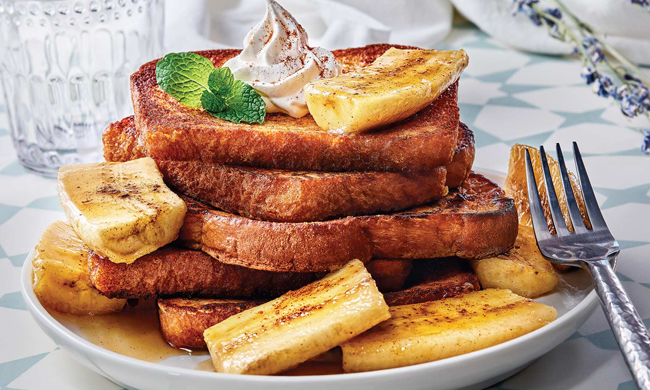
(Family Features) A cozy morning at home sharing a delicious breakfast – for many families, it’s a picture of perfection. Whether your brunch favorites include pastries and pancakes or fruits and French toast, enjoying a meal together is a heartwarming way to start the day.
Now, you can savor all your favorite flavors inspired by wish kids. These Bananas Foster French Toast and Peanut Butter and Apple breakfast recipes are made with the freshness and irresistibly soft texture of Butterbread from Nature’s Own, which partnered with Make-A-Wish on a $500,000 donation to highlight and support wish kids through 2026.
Since 1980, the global nonprofit has granted more than 375,000 wishes in the U.S. to children with critical illnesses, helping them build the strength and hope needed to fight their illnesses. Granted wishes can be life-changing, bringing a sense of normalcy to families that can impact entire communities.
To celebrate the partnership, the Slice of Hope Campaign was launched, introducing in-store displays as well as a digital “Well Wish Wall” where shoppers can submit their well wishes for kids to see.
Special-edition bread loaf packaging also highlights the collaboration by sharing inspiring stories from three wish kids: Addison, who fulfilled her dream of experiencing the wonders of Pearl Harbor; Aden, who ventured out for an epic fishing trip; and Joanna, born with an adventurous spirit that wouldn’t rest until she learned to surf the breathtaking shores of Hawaii.
“We are truly honored to partner with Make-A-Wish on this meaningful two-year journey, committing to help grant life-changing wishes,” said Krystle Farlow, senior director of brand management for Nature’s Own. “Together, we hope to continue to inspire and spread goodness, one wish at a time.”
To learn more about the campaign, visit naturesownbread.com/make-a-wish.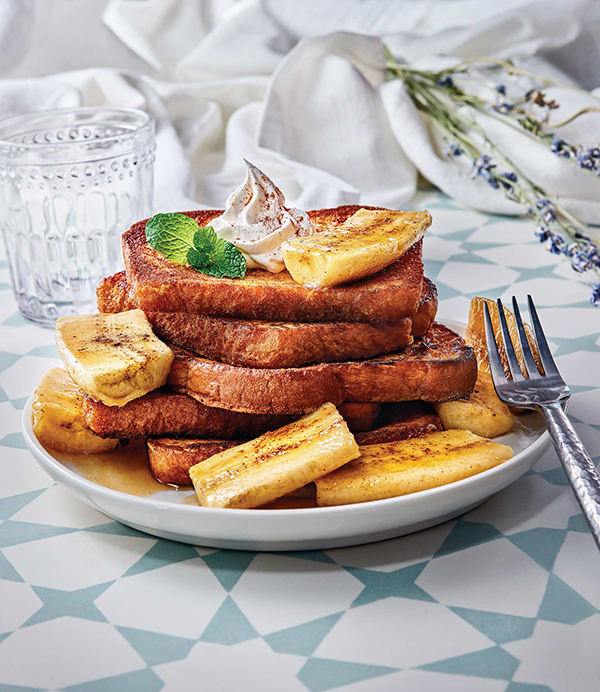
Bananas Foster French Toast
Total time: 30 minutes
Servings: 4
French Toast:
- 4 cups half-and-half
- 1 teaspoon cinnamon
- 1/2 cup sugar
- 1 tablespoon vanilla extract
- 1/4 stick butter
- 1 loaf Nature’s Own Butterbread
Bananas Foster Sauce:
- 1/2 stick butter
- 1 1/2 cups brown sugar
- 1 teaspoon cinnamon
- 3 bananas, sliced lengthwise and quartered
- To make French toast: In mixing bowl, combine eggs, half-and-half, cinnamon, sugar and vanilla. Beat until well blended.
- On nonstick griddle or griddle pan on medium heat, melt butter.
- Dip each bread slice into egg mixture until fully coated (two times each). Place on griddle and cook until each side is slightly brown.
- To make bananas foster sauce: Melt butter and brown sugar together; add cinnamon. Once melted into caramel, add sliced bananas.
- Continue spooning sauce over bananas in pan.
- Plate French toast and spoon bananas with sauce on top of each French toast stack.
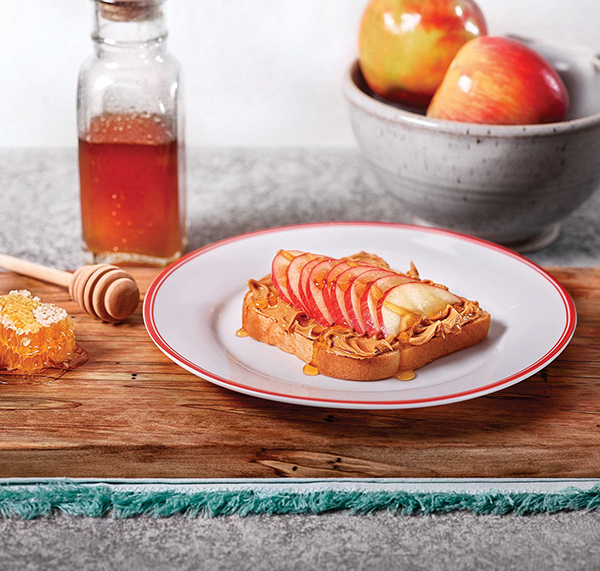
Peanut Butter and Apple
Total time: 10 minutes
Servings: 1
- 2 tablespoons peanut butter
- 1 slice Nature’s Own Butterbread
- 1/2 apple, thinly sliced
- 1 teaspoon honey
- Spread peanut butter on one side of bread.
- Arrange apple slices on top of peanut butter.
- Drizzle honey over apple slices.
SOURCE:
Nature’s Own


Simple, Convenient, Time-Saving Snacks for Busy Families
(Feature Impact) When every afternoon feels like a race to the dinner table and weekends are a blur of activities, there’s only one way to keep loved ones from getting “hangry”: easy, delicious appetizers and snacks. Keeping a few must-have ingredients in the pantry can help you avoid those dreaded moments between meals when stomachs are growling and a meal feels so close, yet so far away.
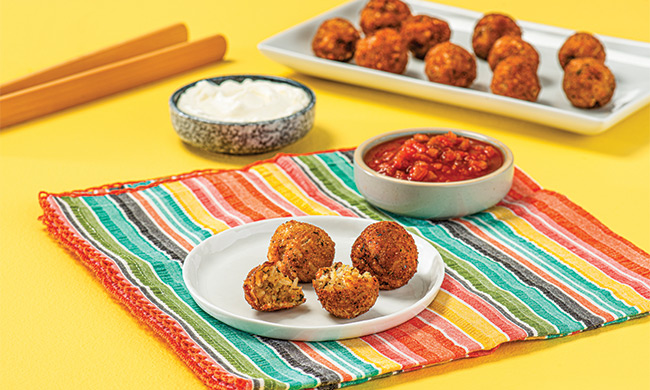
If you’re craving a quick, savory bite, look no further than these Cheesy Mexican Rice Bites. They’re prepared in just 20 minutes – but don’t be surprised if you find yourself making a second batch afterward. Featuring a touch of heat from Minute Jalapeno Rice Cups that are conveniently pre-portioned and ready in one minute, you can enjoy minimal cleanup while staving off hunger.
Classic Porcupine Meatballs offer another versatile solution as a make-ahead snack before busy weekends. For first-timers, here’s a secret: meatballs aren’t as tricky to make as they might look. Just mix the ingredients, form meatballs by hand and cook in a pot until ready to enjoy, or refrigerate then reheat once you’re home from Saturday’s soccer games.
Since these are “porcupine” meatballs, that means they’re made with Minute Instant White Rice rather than traditional breadcrumbs. Known for its light fluffiness and easy prep, it’s ready in just 5 minutes. With this dish, however, it’s simply added to the meatballs straight from the box.
Visit MinuteRice.com to find more convenient snack ideas that save time and trouble in the kitchen.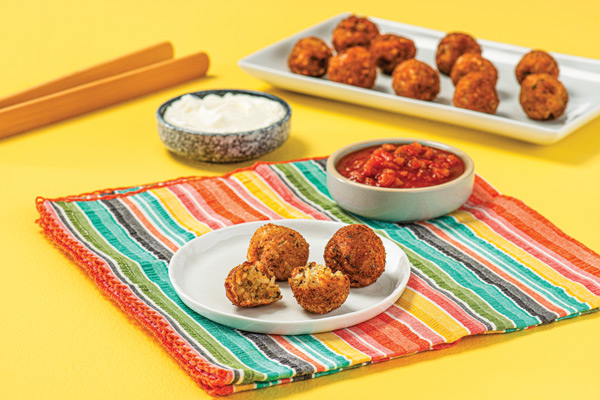
Cheesy Mexican Rice Bites
Prep time: 5 minutes
Cook time: 15 minutes
Servings: 2
- 1 Minute Jalapeno Rice Cup
- 1/4 cup diced onions
- 1/2 teaspoon cumin
- 1/2 cup Mexican cheese blend, shredded
- 1 egg, beaten
- 1/2 cup breadcrumbs
- nonstick cooking spray
- salsa (optional)
- sour cream (optional)
- Preheat air fryer to 375 F. Heat rice according to package directions.
- In large mixing bowl, combine rice, diced onions, cumin and Mexican cheese blend. Mix well.
- Add beaten egg to rice mixture and stir until fully combined.
- Using hands, shape about 2 tablespoons rice mixture into ball. Repeat with remaining mixture.
- Roll rice balls in breadcrumbs, ensuring they are fully coated.
- Lightly coat air fryer basket with nonstick cooking spray to prevent sticking.
- Place rice bites in single layer in air fryer basket, leaving space between each for even cooking. Work in batches, if necessary. Spray tops of each ball with nonstick cooking spray to help with browning.
- Cook 15 minutes, or until golden brown and crisp, flipping halfway through for even browning.
- Allow to cool slightly and serve with salsa or sour cream, if desired.
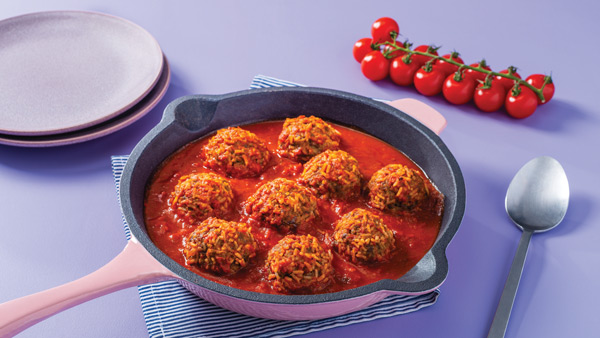
Porcupine Meatballs
Prep time: 10 minutes
Cook time: 20 minutes
Servings: 4-6
- 1 tablespoon butter
- 1 small onion, finely chopped
- 1 pound lean ground beef
- 1 cup Minute White Rice, plus additional for serving, cooked
- 1 egg, lightly beaten
- 1 packet (1 1/2 ounces) meatloaf seasoning
- 1 1/4 cups water, divided
- 1 jar (24 ounces) pasta sauce
- grated Parmesan cheese
- In 3-quart saucepan over medium-high heat, melt butter. Add onions and cook, stirring, until starting to soften.
- In large bowl, combine onions, beef, 1 cup uncooked rice, egg, seasoning and 1/4 cup water; mix gently by hand until well blended. Shape mixture into medium-sized meatballs.
- Pour pasta sauce and remaining water into same 3-quart saucepan. Stir and bring to boil. Add meatballs and return to boil.
- Reduce heat to low and cover. Simmer 15 minutes, or until meatballs are cooked through.
- Serve meatballs and sauce over extra cooked rice and top with grated Parmesan cheese.
- Substitution: Ground turkey, chicken or meatless ground can be used in place of beef.


SOURCE:
Food and Beverage
Ferrero Survey Says Adults Are Reclaiming Easter Candy Traditions
A new Ferrero survey finds adults are embracing Easter candy traditions, from building their own baskets to buying premium treats and raiding the kids’ stash.


Easter Is for Adults Now, Too
Ferrero’s latest survey suggests the holiday candy aisle is no longer just about kids. It is also about nostalgia, self-indulgence, and adults openly claiming a place in traditions they were once expected to outgrow.
At some point, adults stopped pretending they were only buying Easter candy for the kids.
Ferrero North America’s latest Easter Candy Survey leans hard into that reality, arguing that the “Adultoween” energy the company has been tracking around Halloween has now fully crossed into spring. According to the survey, 66% of North American adults say they deserve an Easter basket just as much as children do. If that sounds less like a shocking revelation and more like a formal acknowledgment of what has already been happening in grocery store checkout lines for years, that is probably because it is.
The bigger story here is not just that adults like candy. Of course they do. It is that brands are becoming much more comfortable marketing nostalgia, ritual, and seasonal indulgence directly to grown-ups. Easter, once framed mostly as a family holiday centered on children, is increasingly being recast as a shared cultural event where adults are not just participating politely. They are fully in it.
The Easter Bunny Has Entered the Group Chat
Ferrero’s survey of 1,000 adults in the United States and Canada paints a picture of Easter as a holiday that now comes with brunch plans, premium baskets, personal candy stashes, and a surprising amount of competitive behavior. Seventy percent of respondents said Easter is the best time of year for both adults and kids to indulge in candy together. Nearly half said they are likely to host or attend an adult Easter brunch, party, or gathering.
Then there are the confessions, which are really the heart of the whole thing. More than one in three adults said they have eaten their children’s Easter candy without telling them. More than one in four said they have competed with their own kids to find Easter eggs first. Eighteen percent admitted to cheating to win.
None of this is exactly noble, but it is revealing. The modern holiday experience is less about adults facilitating magic from the sidelines and more about everyone wanting in on the fun. Ferrero is smart to recognize that. Seasonal candy marketing has traditionally leaned on childhood wonder. What it is leaning on now is something slightly different: the idea that adulthood is stressful, nostalgia sells, and nobody really wants to age out of joy.
Candy as Culture, Not Just Confection
The survey also suggests that adults are not treating Easter candy as an afterthought. More than half of respondents said they would pay extra for a premium Easter basket, spending an average of $23 on a chocolate bunny or specialty treat. Dark chocolate, peanut butter candy, and chocolate eggs topped the wish lists. More than half also said Easter candy tastes better than Halloween candy, which feels like the kind of claim that could start arguments at a family gathering.
What matters more than the specific rankings, though, is what they signal. Holidays are increasingly being marketed as lifestyle moments rather than fixed traditions. The basket is no longer just for children. It is a seasonal self-care package, a joke, a nostalgic ritual, and a low-stakes luxury purchase all at once.
That shift says something broader about consumer culture. Adults are being invited to reclaim the symbols of childhood not because society has become less serious, but because modern life often feels serious all the time. A chocolate bunny is cheap therapy. A private stash of mini eggs is a coping mechanism with pastel packaging.
Why This Trend Matters
It would be easy to dismiss all of this as clever branding wrapped around survey data, and to be fair, Ferrero clearly knows how to turn consumer behavior into a seasonal narrative. But the company is tapping into something real. The line between kids’ traditions and adult participation has been softening for a while, whether that shows up in Halloween, themed merchandise, collectibles, or holiday food culture.
Easter now appears to be joining that list. Not because adults suddenly discovered candy in 2026, but because they are increasingly willing to admit that these rituals still mean something to them. Not everything has to be optimized, productive, or age-appropriate in the most boring sense of the phrase. Sometimes people just want the basket.
Ferrero’s Easter lineup this year includes products from Butterfinger, CRUNCH, Ferrero Rocher, Kinder, Nutella, Mother’s Cookies, Keebler, and Tic Tac, among others. The survey was conducted by Golin in partnership with Dynata between January 13 and January 27, 2026, among 1,000 respondents in the United States and Canada, with a margin of error of plus or minus 3%.
External Related Links
- Ferrero North America
- Ferrero Rocher Easter Products
- Kinder Easter Candy Collection
- Nutella Products and Brand Information
- PRNewswire Consumer Lifestyle News
Source: Ferrero North America via PRNewswire
The Food and Drink section at STM Daily News delivers fresh coverage on dining, drinks, recipes, and the food stories bringing communities together.
Last Updated on April 4, 2026 by Daily News Staff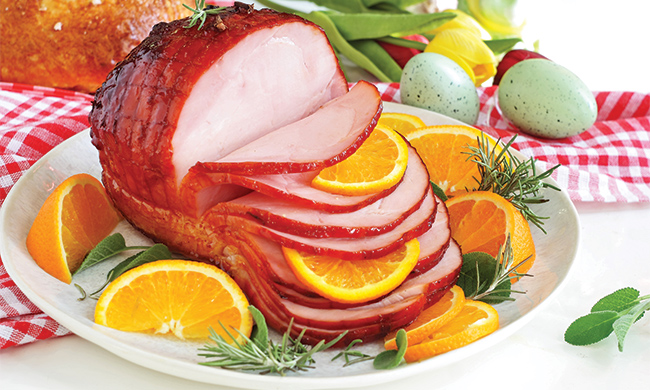
(Feature Impact) When your kitchen is full of colorful eggs, candy baskets, tempting sweets and all that comes with Easter, sometimes a holiday classic is just the answer for simplifying the season. Perfect for pairing with deviled eggs, potato salad and a traditional Sunday feast, this Maple-Glazed Easter Ham provides a hands-off approach to the main dish.
With an easily prepared glaze and your oven doing most of the work, you can keep your attention on time spent with loved ones. Visit Culinary.net to find more seasonal favorites, both classic and contemporary.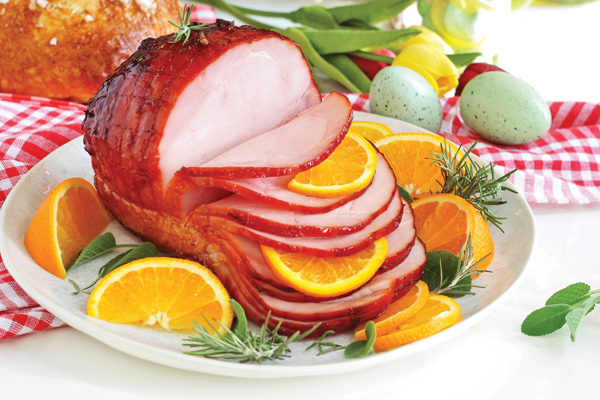
Maple-Glazed Easter Ham
Recipe adapted from Southern Living
Total time: 3 hours
Servings: 10
- 1 bone-in spiral-cut ham (8-9 pounds)
- 1 cup pure maple syrup
- 1/2 cup packed dark brown sugar
- 1/2 cup (4 ounces) bourbon
- 1/2 teaspoon grated fresh ginger
- 1/4 teaspoon ground cinnamon
- orange slices and wedges, for garnish
- fresh rosemary sprigs, for garnish
- Preheat oven to 350 F.
- Place ham in large roasting pan and fill with 1/2 inch of water. Cover pan with aluminum foil and bake about 2 hours, basting every 30 minutes with juices from pan, until meat registers 120 F at thickest portion.
- In medium saucepan over medium-high heat, stir maple syrup, brown sugar, bourbon, ginger and cinnamon; bring to boil. Cook, stirring occasionally, until thickened, 6-8 minutes. Remove from heat. Cover to keep warm and set aside.
- Remove ham from oven and discard foil. Increase oven temperature to 400 F. Using pastry brush, glaze ham with 1/3 cup maple-bourbon mixture.
- Bake ham about 30 minutes until top is lightly caramelized and meat registers 145 F at thickest portion, brushing with remaining glaze every 10 minutes.
- Remove from oven and transfer ham to serving platter. Let rest 15 minutes and garnish with orange slices, orange wedges and rosemary sprigs.
Photo courtesy of Shutterstock

SOURCE:
At our core, we at STM Daily News, strive to keep you informed and inspired with the freshest content on all things food and beverage. From mouthwatering recipes to intriguing articles, we’re here to satisfy your appetite for culinary knowledge.
Visit our Food & Drink section to get the latest on Foodie News and recipes, offering a delightful blend of culinary inspiration and gastronomic trends to elevate your dining experience. https://stmdailynews.com/food-and-drink/





