

Space and Tech
Virgin Galactic’s Historic Galactic 02 Flight and What’s Happened Since
Virgin Galactic Galactic 02 made history with diverse private astronauts. See how the mission’s legacy shapes space tourism and Delta-class flights.

Last Updated on September 6, 2025 by Daily News Staff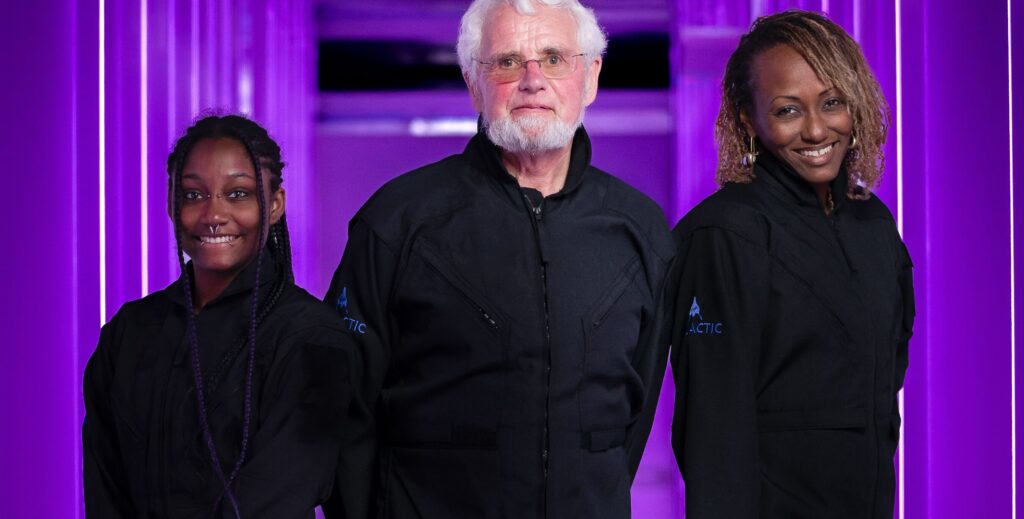
Virgin Galactic’s Historic Galactic 02 Flight and What’s Happened Since
Virgin Galactic’s Galactic 02 mission, launched on August 10, 2023, was a milestone in commercial space travel and inclusivity. The six-person crew aboard VSS Unity included three private astronauts and three Virgin Galactic professionals, marking the company’s first private astronaut mission.
Among the private passengers was Jon Goodwin, an 80-year-old Olympian and early ticket holder who was diagnosed with Parkinson’s disease in 2014. His journey into space symbolized resilience and the human drive to overcome obstacles. Joining him were Keisha Schahaff and her daughter Anastatia Mayers, the first astronauts from Antigua and Barbuda, and the first mother-daughter duo to fly to space. Their seats were won through a draw organized by the non-profit Space for Humanity, reinforcing Virgin Galactic’s mission to expand access to space.
The flight also set multiple records:
First Olympian in space
First Caribbean astronauts
Youngest woman to fly to space
Highest number of women on a single mission
Most private astronauts on a commercial spaceflight
By livestreaming the event globally, Virgin Galactic shared the experience of the Overview Effect—the awe and unity that comes from seeing Earth from space.
Building Momentum: 2023–2024
Following the success of Galactic 02, Virgin Galactic maintained an ambitious schedule:
Galactic 03 launched on September 8, 2023
Galactic 04 flew October 6, 2023
Galactic 05 launched November 2, 2023
Galactic 06 and 07 flew in early and mid-2024
This cadence demonstrated the company’s ability to provide consistent commercial spaceflights and validated its operational model.
The Shift to Delta-Class
In mid-2024, Virgin Galactic made a strategic decision to pause Unity flights and focus resources on developing its next-generation Delta-class spacecraft. These new vehicles are designed to fly twice a week and carry more passengers, making commercial suborbital spaceflight more scalable and economically sustainable.
The Delta fleet is expected to begin operations by 2026, signaling Virgin Galactic’s transition from demonstration flights to a higher-capacity, revenue-driven spaceflight business.
Why Galactic 02 Still Matters
While Virgin Galactic has temporarily stepped back from regular Unity flights, the legacy of Galactic 02 continues to resonate. It proved that space is no longer the exclusive domain of government astronauts or the ultra-wealthy. Instead, it showed how diverse backgrounds—an Olympian, a mother, and a student from the Caribbean—can come together to represent humanity in space.
Virgin Galactic’s path forward with the Delta-class program builds directly on this foundation, aiming to make commercial space travel not just a novelty, but a regular and transformative experience for people worldwide.
✨ Galactic 02 was not just a flight; it was a statement—that space is for everyone. And with Virgin Galactic’s next chapter already in motion, that vision is only getting closer to reality.
Related Links for further reading
Source: Virgin Galactic
Virgin Galactic, Galactic 02, Galactic 03, Galactic 04, Galactic 05, Galactic 06, Galactic 07, Delta-class spacecraft, space tourism, private astronaut mission, Jon Goodwin, Keisha Schahaff, Anastatia Mayers, Space for Humanity, VSS Unity, commercial spaceflight, Overview Effect, democratizing space, space exploration news
The science section of our news blog STM Daily News provides readers with captivating and up-to-date information on the latest scientific discoveries, breakthroughs, and innovations across various fields. We offer engaging and accessible content, ensuring that readers with different levels of scientific knowledge can stay informed. Whether it’s exploring advancements in medicine, astronomy, technology, or environmental sciences, our science section strives to shed light on the intriguing world of scientific exploration and its profound impact on our daily lives. From thought-provoking articles to informative interviews with experts in the field, STM Daily News Science offers a harmonious blend of factual reporting, analysis, and exploration, making it a go-to source for science enthusiasts and curious minds alike. https://stmdailynews.com/category/science/
Sinking Cities: Why Parts of Phoenix—and Much of Urban America—Are Slowly Dropping
Author


Last Updated on April 1, 2026 by Daily News Staff
🕒 [UPDATE] Solar Arrays Successfully Deployed
NASA confirms Orion’s solar arrays have deployed, providing power for the spacecraft as it prepares for its journey beyond Earth orbit.

Artemis II Successfully Launches
CAPE CANAVERAL, Fla. — NASA has successfully launched its Artemis II mission, marking the first crewed journey toward the Moon in more than 50 years.
The powerful Space Launch System (SLS) rocket lifted off from Kennedy Space Center on April 1, carrying four astronauts on a 10-day mission around the Moon and back.
On board are Commander Reid Wiseman, Pilot Victor Glover, Mission Specialist Christina Koch, and Canadian astronaut Jeremy Hansen. The mission is already being hailed as a major milestone in NASA’s effort to return humans to deep space.
Shortly after liftoff, the Orion spacecraft successfully reached orbit and deployed its solar arrays, beginning its journey that will eventually send the crew on a translunar trajectory toward the Moon. 
Artemis II is a lunar flyby mission, meaning astronauts will not land but will travel farther from Earth than any human mission in decades while testing critical systems needed for future landings.
The mission also marks several historic firsts, including the first woman and the first person of color—Victor Glover—to travel into lunar space.
NASA says the mission is a key step toward future lunar landings and long-term plans to establish a human presence on the Moon later this decade.
🚀 What’s Next:
A critical engine burn in the coming days will send Orion out of Earth orbit and toward the Moon, continuing humanity’s return to deep space exploration.
🔗 Related External Links & Sources
For official updates and in-depth mission details, visit the following trusted sources:
- NASA: Artemis II Mission Overview
- NASA Artemis Program (Return to the Moon)
- Orion Spacecraft – Mission Details
- Space Launch System (SLS) Rocket Overview
- Kennedy Space Center – Launch Operations
- Watch NASA Live Coverage and Replays
🧾 Sources
- NASA official launch coverage and mission updates
- NASA Artemis II press materials and briefings
- NASA Kennedy Space Center launch operations updates
Stay with STM Daily News for live updates on Artemis II.
Last Updated on April 1, 2026 by Daily News Staff
Published: April 1, 2026 | By: STM Daily News
Source: NASA/John Kraus
Artemis II countdown is underway
CAPE CANAVERAL, Fla. — The countdown has officially begun for Artemis II, NASA’s highly anticipated return to crewed lunar missions, marking a historic step toward sending humans back to the Moon for the first time in more than 50 years.
At precisely 4:44 p.m. EDT, the countdown clock started ticking at Kennedy Space Center, targeting a 6:24 p.m. launch on Wednesday, April 1. The mission will be the first crewed flight of NASA’s powerful Space Launch System (SLS) rocket and Orion spacecraft. The Artemis II mission marks NASA’s first crewed journey toward the Moon since the Apollo era, using the powerful Space Launch System (SLS) rocket and Orion spacecraft.
The mission is part of NASA’s broader Artemis program, which aims to return humans to the Moon and establish a sustainable presence for future Mars exploration.
Launch operations are being conducted at Kennedy Space Center in Florida, the historic site of previous Apollo and Space Shuttle missions.
🚀 Final Preparations Underway
Inside the Rocco Petrone Launch Control Center, engineers and launch teams are actively powering up flight systems, verifying communications, and preparing for one of the most complex fueling operations ever attempted.
The rocket will be loaded with hundreds of thousands of gallons of super-cooled liquid hydrogen and liquid oxygen, a delicate process requiring precise timing and coordination.
Meanwhile, at Launch Complex 39B, crews are filling the sound suppression system—a massive water tank designed to release a high-volume deluge at liftoff, protecting the rocket from extreme acoustic energy generated during launch.
Source: NASA / Bill Ingalls
👨🚀 Crew in Quarantine Ahead of Launch
The four-person crew remains in quarantine at the Neil A. Armstrong Operations and Checkout Building, undergoing final medical checks and mission briefings.
- Reid Wiseman – Commander
- Victor Glover – Pilot
- Christina Koch – Mission Specialist
- Jeremy Hansen – Mission Specialist (Canadian Space Agency)
Glover, a Southern California native and Ontario High School graduate, is set to make history as the first Black astronaut to travel to lunar space—bringing a powerful local connection to this global mission.
The crew is following a controlled sleep and nutrition schedule while receiving continuous updates on launch conditions and spacecraft readiness.
🌤️ Weather Conditions 80% Favorable
NASA and U.S. Space Force weather teams are closely monitoring conditions ahead of fueling operations. Current forecasts show an 80% chance of favorable weather, with concerns focused on potential cloud cover and high winds.
Weather will continue to be evaluated as the countdown progresses.
📺 How to Watch the Launch Live
NASA will provide live coverage throughout launch day:
- 7:45 a.m. EDT – Tanking operations coverage begins (NASA YouTube)
- 12:50 p.m. EDT – Full launch coverage begins on NASA+
Viewers can also follow along via NASA’s official social media platforms for real-time updates.
🚀 Artemis II Mission Snapshot
- Mission: Artemis II
- Agency: NASA
- Launch Vehicle: Space Launch System (SLS)
- Spacecraft: Orion
- Launch Site: Kennedy Space Center (LC-39B)
- Mission Duration: ~10 days
- Objective: Crewed lunar flyby (no landing)
- Commander: Reid Wiseman
- Pilot: Victor Glover
- Mission Specialists: Christina Koch, Jeremy Hansen
🌕 A Mission Decades in the Making
Artemis II will send astronauts on a 10-day journey around the Moon and back, serving as a critical test flight for future lunar landings under NASA’s Artemis program.
The mission is designed to validate deep space navigation, life support systems, and spacecraft performance—laying the groundwork for Artemis III, which aims to return humans to the lunar surface.
As the countdown continues, all eyes are now on Florida’s Space Coast for what could become one of the most significant spaceflight milestones of the 21st century.
🧾 Sources & References
- NASA – Artemis II Mission Updates and Press Materials
- NASA Kennedy Space Center Launch Operations Briefings
- NASA Artemis Program Overview
- Official NASA Broadcast and Launch Coverage
For more details on NASA’s Artemis II mission and live launch coverage, explore the official resources below:
🔗 Related External Links & Sources
- NASA: Artemis II Mission Overview
- NASA Artemis Program Explained
- Kennedy Space Center Official Site
- Orion Spacecraft Details
- Space Launch System (SLS) Rocket Overview
- Watch Artemis II Live on NASA YouTube
❓ Frequently Asked Questions
What is Artemis II?
Artemis II is NASA’s first crewed mission in its Artemis program, sending astronauts on a flight around the Moon to test systems for future lunar landings.
When is the Artemis II launch?
The mission is targeting a launch on April 1, 2026, from Kennedy Space Center in Florida.
Will Artemis II land on the Moon?
No, Artemis II is a lunar flyby mission designed to test spacecraft systems before a future landing mission.
Who is Victor Glover?
Victor Glover is a NASA astronaut and Artemis II pilot who will become the first Black astronaut to travel to lunar space.
Stay with STM Daily News for continuing coverage of Artemis II and NASA’s return to the Moon.
Stay ahead of the curve with STM Daily News’ Tech section, featuring the latest on innovation, consumer technology, digital trends, startups, AI, and the stories shaping how we live and work.
Last Updated on February 10, 2026 by Daily News Staff
Valerie Thomas is a true pioneer in the world of science and technology. A NASA engineer and physicist, she is best known for inventing the illusion transmitter, a groundbreaking device that creates 3D images using concave mirrors. This invention laid the foundation for modern 3D imaging and virtual reality technologies.
Beyond her inventions, Thomas broke barriers as an African American woman in STEM, mentoring countless young scientists and advocating for diversity in science and engineering. Her work at NASA’s Goddard Space Flight Center helped advance satellite technology and data visualization, making her contributions both innovative and enduring.
In our latest short video, we highlight Valerie Thomas’ remarkable journey—from her early passion for science to her groundbreaking work at NASA. Watch and be inspired by a true STEM pioneer whose legacy continues to shape the future of space and technology.
🎥 Watch the video here: https://youtu.be/P5XTgpcAoHw
Dive into “The Knowledge,” where curiosity meets clarity. This playlist, in collaboration with STMDailyNews.com, is designed for viewers who value historical accuracy and insightful learning. Our short videos, ranging from 30 seconds to a minute and a half, make complex subjects easy to grasp in no time. Covering everything from historical events to contemporary processes and entertainment, “The Knowledge” bridges the past with the present. In a world where information is abundant yet often misused, our series aims to guide you through the noise, preserving vital knowledge and truths that shape our lives today. Perfect for curious minds eager to discover the ‘why’ and ‘how’ of everything around us. Subscribe and join in as we explore the facts that matter. https://stmdailynews.com/the-knowledge/
Forgotten Genius Fridays
https://stmdailynews.com/the-knowledge-2/forgotten-genius-fridays/
🧠 Forgotten Genius Fridays
A Short-Form Series from The Knowledge by STM Daily News
Every Friday, STM Daily News shines a light on brilliant minds history overlooked.
Forgotten Genius Fridays is a weekly collection of short videos and articles dedicated to inventors, innovators, scientists, and creators whose impact changed the world—but whose names were often left out of the textbooks.
From life-saving inventions and cultural breakthroughs to game-changing ideas buried by bias, our series digs up the truth behind the minds that mattered.
Each episode of The Knowledge runs 30–90 seconds, designed for curious minds on the go—perfect for YouTube Shorts, TikTok, Reels, and quick reads.
Because remembering these stories isn’t just about the past—it’s about restoring credit where it’s long overdue.
🔔 New episodes every Friday
📺 Watch now at: stmdailynews.com/the-knowledge
🧠 Now you know.
Author





