Connect with us

News

Space law hasn’t been changed since 1967 – but the UN aims to update laws and keep space peaceful

Published

on

Space law
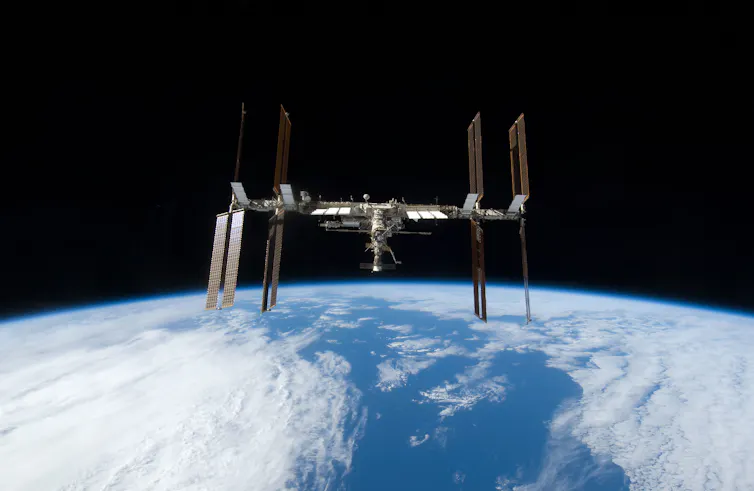
The International Space Station is a great example of how space has, for the most part, been a peaceful and collaborative international arena. NASA Marshall Spaceflight Center/Flickr, CC BY-NC
Michelle L.D. Hanlon, University of Mississippi and Greg Autry, Arizona State University On Nov. 15, 2021, Russia destroyed one of its own old satellites using a missile launched from the surface of the Earth, creating a massive debris cloud that threatens many space assets, including astronauts onboard the International Space Station. This happened only two weeks after the United Nations General Assembly First Committee formally recognized the vital role that space and space assets play in international efforts to better the human experience – and the risks military activities in space pose to those goals.

Space Law and the UN

The U.N. First Committee deals with disarmament, global challenges and threats to peace that affect the international community. On Nov. 1, it approved a resolution that creates an open-ended working group. The goals of the group are to assess current and future threats to space operations, determine when behavior may be considered irresponsible, “make recommendations on possible norms, rules and principles of responsible behaviors,” and “contribute to the negotiation of legally binding instruments” – including a treaty to prevent “an arms race in space.” We are two space policy experts with specialties in space law and the business of commercial space. We are also the president and vice president at the National Space Society, a nonprofit space advocacy group. It is refreshing to see the U.N. acknowledge the harsh reality that peace in space remains uncomfortably tenuous. This timely resolution has been approved as activities in space become ever more important and – as shown by the Russian test – tensions continue to rise.

A large meeting hall in the United Nations headquarters.
Current actions in space are governed by the 1967 Outer Space Treaty that was developed within the United Nations, seen here. Basil D Soufi/WikimediaCommons, CC BY-SA

The 1967 Outer Space Treaty

Outer space is far from a lawless vacuum. Activities in space are governed by the 1967 Outer Space Treaty, which is currently ratified by 111 nations. The treaty was negotiated in the shadow of the Cold War when only two nations – the Soviet Union and the U.S. – had spacefaring capabilities. While the Outer Space Treaty offers broad principles to guide the activities of nations, it does not offer detailed “rules of the road.” Essentially, the treaty assures freedom of exploration and use of space to all humankind. There are just two caveats to this, and multiple gaps immediately present themselves. The first caveat states that the Moon and other celestial bodies must be used exclusively for peaceful purposes. It omits the rest of space in this blanket prohibition. The only guidance offered in this respect is found in the treaty’s preamble, which recognizes a “common interest” in the “progress of the exploration and use of space for peaceful purposes.” The second caveat says that those conducting activities in space must do so with “due regard to the corresponding interests of all other States Parties to the Treaty.” A major problem arises from the fact that the treaty does not offer clear definitions for either “peaceful purposes” or “due regard.” While the Outer Space Treaty does specifically prohibit placing nuclear weapons or weapons of mass destruction anywhere in space, it does not prohibit the use of conventional weapons in space or the use of ground-based weapons against assets in space. Finally, it is also unclear if some weapons – like China’s new nuclear capable partial-orbit hypersonic missile – should fall under the treaty’s ban. The vague military limitations built into the treaty leave more than enough room for interpretation to result in conflict.
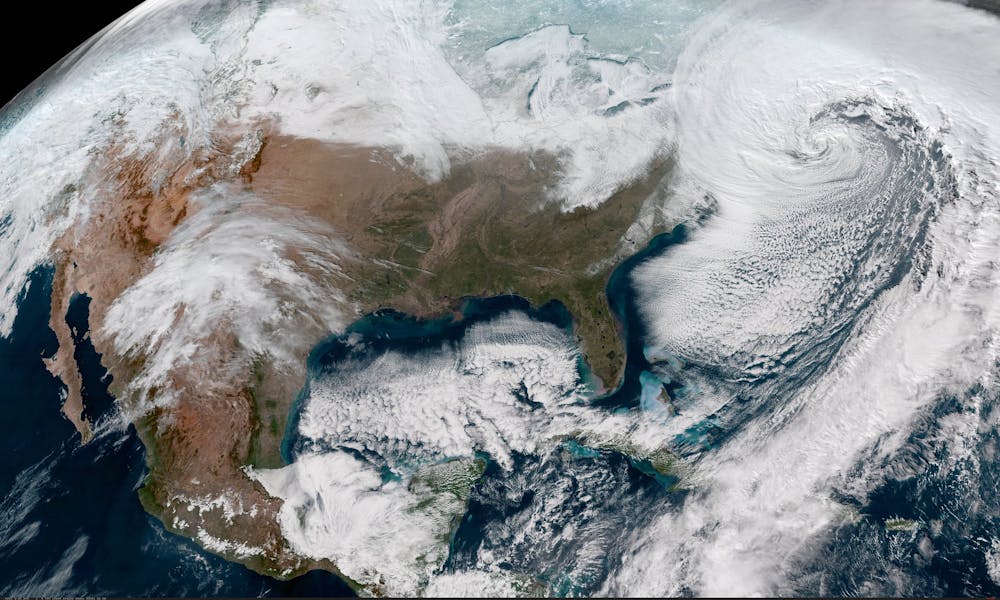
A satellite image of a storm over the U.S.
Nonmilitary satellites, like those used to take images for weather forecasts, can also serve important military functions. NASA Goddard Spaceflight Center/Flickr, CC BY

Space is militarized, conflict is possible

Space has been used for military purposes since Germany’s first V2 rocket launch in 1942. Many early satellites, GPS technology, a Soviet Space Station and even NASA’s space shuttle were all either explicitly developed for or have been used for military purposes. With increasing commercialization, the lines between military and civilian uses of space are less blurry. Most people are able to identify terrestrial benefits of satellites like weather forecasts, climate monitoring and internet connectivity but are unaware that they also increase agricultural yields and monitor human rights violations. The rush to develop a new space economy based on activities in and around Earth and the Moon suggests that humanity’s economic dependence on space will only increase. However, satellites that provide terrestrial benefits could or already do serve military functions as well. We are forced to conclude that the lines between military and civilian uses remain sufficiently indistinct to make a potential conflict more likely than not. Growing commercial operations will also provide opportunities for disputes over operational zones to provoke governmental military responses.

Military testing

While there has not yet been any direct military conflict in space, there has been an escalation of efforts by nations to prove their military prowess in and around space. Russia’s test is only the most recent example. In 2007, China tested an anti-satellite weapon and created an enormous debris cloud that is still causing problems. The International Space Station had to dodge a piece from that Chinese test as recently as Nov. 10, 2021. [Understand new developments in science, health and technology, each week. Subscribe to The Conversation’s science newsletter.] Similar demonstrations by the U.S. and India were far less destructive in terms of creating debris, but they were no more welcomed by the international community. The new U.N. resolution is important because it sets in motion the development of new norms, rules and principles of responsible behavior. Properly executed, this could go a long way toward providing the guardrails needed to prevent conflict in space.

From guidelines to enforcement

The U.N. Committee on the Peaceful Uses of Outer Space has been addressing space activities since 1959. However, the remit of the 95-member committee is to promote international cooperation and study legal problems arising from the exploration of outer space. It lacks any ability to enforce the principles and guidelines set forth in the 1967 Outer Space Treaty or even to compel actors into negotiations. The U.N. resolution from November 2021 requires the newly created working group to meet two times a year in both 2022 and 2023. While this pace of activity is glacial compared with the speed of commercial space development, it is a major step in global space policy. Michelle L.D. Hanlon, Professor of Air and Space Law, University of Mississippi and Greg Autry, Clinical Professor of Space Leadership, Policy and Business, Arizona State University This article is republished from The Conversation under a Creative Commons license. Read the original article.

Discover more from Daily News

Subscribe to get the latest posts sent to your email.

News

CES 2026: The Exhibitors and Moments That Stood Out for Entertainment + Tech Fans

CES 2026 delivered big entertainment-tech moments—from Sony Honda’s AFEELA to streaming, smart glasses, AI PCs, and robots that stole the show.

Published

on

Crowds walk the CES 2026 show floor in Las Vegas with large tech displays and exhibitor booths showcasing AI, robotics, and entertainment technology.
CES® 2026. Image Credit: Consumer Technology Association (CTA)®

CES 2026 (Jan. 6–9 in Las Vegas) didn’t feel like a “future tech” show as much as a “right now” show. The big shift: AI wasn’t treated like a standalone product category anymore. It was the invisible layer powering everything from streaming discovery to robots that can actually do work.

For STM Daily News readers who live in the overlap of Entertainment and Tech, here are the exhibitors and trends that stood out most—plus why they matter beyond the show floor.

1) Sony Honda Mobility (AFEELA): The car as a rolling entertainment platform

Sony Honda Mobility’s AFEELA presence reinforced a direction CES keeps leaning into: the next generation of vehicles is competing as much on software and in-cabin experience as it is on horsepower.

What made it stand out:

  • AFEELA represents the “car as a connected device” idea taken seriously—where the cabin becomes a screen-first, service-driven environment.
  • It’s a clean example of how mobility and entertainment are merging: navigation, safety, personalization, and media all living in one interface.

2) Netflix + Amazon Prime Video + Roku + Xumo: Streaming is evolving into ecosystems

CES 2026’s Content & Entertainment story wasn’t about “who has the most subscribers.” It was about streaming as an ecosystem: bundling, ad-supported growth, and smarter discovery.

What made it stand out:

  • CES highlighted how streaming platforms are pushing beyond simple libraries into bundles, premium originals, and integrated experiences.
  • FAST (free ad-supported streaming TV) continues to gain traction, and device/platform players are positioning themselves as the front door.

3) Dolby: The quiet power behind the best-looking, best-sounding experiences

Dolby isn’t always the flashiest booth, but it consistently shows up as the tech that makes everything else feel “premium.”

What made it stand out:

  • In a year where screens, XR, and immersive venues are everywhere, audio and imaging standards are the difference between “cool demo” and “wow.”
  • Dolby’s relevance keeps growing as entertainment moves across phones, living rooms, cars, and wearables.

4) Meta + XREAL: Smart glasses keep inching toward mainstream

Wearables at CES 2026 weren’t just about steps and sleep. The momentum was in smart glasses and AR—especially as generative AI voice interfaces make hands-free use feel more natural.

What made it stand out:

  • CES noted smart/AR glasses evolving with features like real-time translation, recording, and AI voice interfaces.
  • For entertainment fans, this is where “watching” and “doing” start to blend—live overlays, creator tools, and new ways to capture experiences.

5) Samsung + LG + TCL: Screens are still the show’s main stage

Even in an AI-everywhere year, CES still belongs to display tech. Big brands kept proving that TVs aren’t just TVs—they’re hubs for gaming, streaming, smart home control, and ambient experiences.

What made it stand out:

  • Display leaders continue to set the tone for how entertainment is consumed at home.
  • The conversation is shifting from specs to experience: personalization, AI-powered recommendations, and multi-device continuity.

6) NVIDIA + AMD + Lenovo: The “AI PC” era is no longer theoretical

CES 2026 made it clear that the next wave of consumer computing is built around on-device AI. That matters for creators, editors, and anyone who lives in content.

What made it stand out:

  • CES highlighted AI’s move from “digital transformation” to “intelligent transformation,” including edge/enterprise and physical AI in robotics.
  • AMD’s CES keynote emphasized AI across devices from PCs to data centers, underscoring how quickly this is becoming standard.

7) Unitree + Richtech Robotics + Hyundai: Robots were the surprise crowd-pleaser

If CES 2026 had a “you had to see it” category, it was robotics. Not just novelty bots—machines built for real environments.

What made it stand out:

  • CES framed robotics as “physical AI,” where generative AI and simulation training help robots learn faster than traditional programming.
  • Humanoid robots, in particular, are moving from single-task demos toward more collaborative assistant roles.

The big takeaway for STM Daily News readers

CES 2026 wasn’t about one killer gadget. It was about convergence:

  • Entertainment is becoming more interactive, more personalized, and more portable.
  • Cars are becoming screens.
  • Wearables are becoming interfaces.
  • Robots are becoming the next “device category” people actually want to watch.

And underneath it all: AI is becoming less of a headline and more of the operating system for modern life.

Here’s a list of what stood out to us at CES 2026:

Advertisement
Get More From A Face Cleanser And Spa-like Massage

Sources

Dive into “The Knowledge,” where curiosity meets clarity. This playlist, in collaboration with STMDailyNews.com, is designed for viewers who value historical accuracy and insightful learning. Our short videos, ranging from 30 seconds to a minute and a half, make complex subjects easy to grasp in no time. Covering everything from historical events to contemporary processes and entertainment, “The Knowledge” bridges the past with the present. In a world where information is abundant yet often misused, our series aims to guide you through the noise, preserving vital knowledge and truths that shape our lives today. Perfect for curious minds eager to discover the ‘why’ and ‘how’ of everything around us. Subscribe and join in as we explore the facts that matter.  https://stmdailynews.com/the-knowledge/

Author


Discover more from Daily News

Subscribe to get the latest posts sent to your email.

Continue Reading

actors & performers

T.K. Carter, The Thing and Punky Brewster Actor, Dies at 69

Actor T.K. Carter, known for The Thing and Punky Brewster, has died at age 69. A look at his career and lasting legacy in film and television.

Published

on

Actor T.K. Carter at a public appearance, known for roles in The Thing and Punky Brewster

T.K. Carter in Punky Brewster (1984) Image: IMDB

Veteran actor T.K. Carter, best known for his roles in The Thing and the popular 1980s television series Punky Brewster, has died at the age of 69.

Authorities confirmed Carter was found unresponsive at his home in Duarte, California. No foul play is suspected, and an official cause of death has not yet been released.

A Career Spanning Decades

Born Thomas Kent Carter, T.K. Carter built a career in film and television that spanned more than four decades. He became a cult favorite portraying Nauls in John Carpenter’s 1982 horror classic The Thing, a film that continues to influence the genre today.

Television audiences widely remember Carter for his role as Mike Fulton on Punky Brewster, where his comedic timing and grounded performances helped make the show a lasting favorite of the era.

Film and Television Legacy

In addition to his best-known roles, Carter appeared in films such as Runaway Train, Ski Patrol, and Space Jam. His television work included guest appearances on a wide range of series throughout the 1980s, 1990s, and beyond.

Known within the industry as a reliable and versatile performer, Carter often brought authenticity and warmth to supporting roles that left a lasting impression, even in brief appearances.

Remembering T.K. Carter

As news of his passing spreads, fans and colleagues alike are reflecting on T.K. Carter’s contributions to film and television. While he may not have always been the leading name on the marquee, his work helped shape stories that continue to be watched and appreciated by new generations.

T.K. Carter is remembered for his enduring performances, professional dedication, and the quiet but meaningful legacy he leaves behind.

Related Coverage

Stay with STM Daily News for updates to this developing story and more independent coverage of entertainment, history, and culture. Visit www.stmdailynews.com for the latest.


Discover more from Daily News

Subscribe to get the latest posts sent to your email.

Continue Reading

News

Gregory Outreach Services Expands Food Access with Addition of Third Refrigerated Van

Gregory Outreach Services expands its mission to fight food insecurity with the addition of a third refrigerated van, doubling food access for low-income seniors and veterans in Phoenix.

Published

on

Last Updated on January 8, 2026 by Daily News Staff

Gregory Outreach Services expands its mission to fight food insecurity with the addition of a third refrigerated van, doubling food access for low-income seniors and veterans in Phoenix.

Gregory Outreach Services’ newest refrigerated delivery van expands food access for low-income seniors and veterans across Phoenix.

Phoenix, AZ — Gregory Outreach Services has taken a major step forward in its mission to fight food insecurity with the addition of a third refrigerated delivery van, significantly expanding its capacity to serve low-income seniors and veterans across the Phoenix area.

The new refrigerated van was made possible through the support of a generous anonymous donor. The expansion is further strengthened by the continued generosity of the BHHS Legacy Foundation, who donated fresh produce to support the organization’s growing distribution efforts.

As rising food costs and inflation continue to place pressure on individuals living on fixed incomes, the need for reliable access to nutritious food has never been greater. This latest addition to the organization’s mobile fleet allows Gregory Outreach Services to double the number of individuals served, while maintaining strict food safety and quality standards.

“As the cost of living continues to rise, more seniors and veterans are struggling to afford nutritious food,” said Diana Gregory, Founder and CEO of Gregory Outreach Services. “This van allows us to bridge a widening gap for individuals living on fixed incomes, many of whom face mobility challenges and limited access to fresh food options.”

Meeting a Growing Community Need

Gregory Outreach Services works directly with seniors and veterans who are disproportionately affected by inflation, medical expenses, and transportation barriers. For many, simply reaching a grocery store can be a challenge. Refrigerated vehicles are essential to ensuring that fresh fruits and vegetables arrive safely and consistently at senior housing communities, veteran shelters, and community distribution sites.

“This third van complements the two already in operation and represents a critical milestone in our growth,” Gregory added. “We are deeply grateful to our anonymous donor for investing in our mission, and to BHHS Legacy Foundation’s Board of Directors and its CEO, Jerry Wissink for Legacy’s generosity in donating fresh produce. Together, this support allows us to scale our impact and respond to the increasing needs of our community.”

Expanding Impact While Preserving Dignity

With an expanded fleet and increased food supply, Gregory Outreach Services is better positioned to address food insecurity, promote healthier outcomes, and serve seniors and veterans with dignity, respect, and care. The organization’s mobile delivery model ensures help reaches those who need it most — directly and reliably.

About Gregory Outreach Services

Advertisement
Get More From A Face Cleanser And Spa-like Massage

Gregory Outreach Services is a nonprofit organization dedicated to improving health outcomes for low-income seniors and veterans through mobile produce delivery, nutrition education, and community-based wellness programs. By bringing fresh food directly to those most in need, the organization works to reduce food insecurity and strengthen community wellness.

For more information, visit dianagregory.com.

Stories of Change: People Making a Difference

Discover inspiring stories of changemakers making a positive impact. Explore videos and articles of people tackling today’s biggest challenges with action and hope. Visit: https://stmdailynews.com/stories-of-change/

Dive into “The Knowledge,” where curiosity meets clarity. This playlist, in collaboration with STMDailyNews.com, is designed for viewers who value historical accuracy and insightful learning. Our short videos, ranging from 30 seconds to a minute and a half, make complex subjects easy to grasp in no time. Covering everything from historical events to contemporary processes and entertainment, “The Knowledge” bridges the past with the present. In a world where information is abundant yet often misused, our series aims to guide you through the noise, preserving vital knowledge and truths that shape our lives today. Perfect for curious minds eager to discover the ‘why’ and ‘how’ of everything around us. Subscribe and join in as we explore the facts that matter.  https://stmdailynews.com/the-knowledge/   Get The Knowledge. Read more community news and local stories at STM Daily News.


Discover more from Daily News

Subscribe to get the latest posts sent to your email.

Continue Reading

Trending


