Connect with us

The Earth

What Native-held lands in California can teach about resilience and the future of wildfire

Native-held lands:California’s Native American public domain allotments represent rare opportunities for Indigenous families to reclaim land rights, restore cultural stewardship practices like cultural burning, and help reduce wildfire risk while preserving ecological diversity.

Published

on

Native-held lands
Blue oak woodlands in California offer beauty and opportunities to sustain traditional knowledge and ecological resilience.
Nina Fontana, CC BY-NC-ND

What Native-held lands in California can teach about resilience and the future of wildfire

Nina Fontana, University of California, Davis and Beth Rose Middleton Manning, University of California, Davis

It took decades, stacks of legal paperwork and countless phone calls, but, in the spring of 2025, a California Chuckchansi Native American woman and her daughter walked onto a 5-acre parcel of land, shaded by oaks and pines, for the first time.

This land near the foothills of the Sierra National Forest is part of an unusual category of land that has been largely left alone for more than a century. The parcel, like roughly 400 other parcels across the state totaling 16,000 acres in area, is held in trust by the federal government for the benefit of specific Indigenous people – such as a family member of the woman visiting the land with her daughter.

Largely inaccessible for more than a century, and therefore so far of little actual benefit to those it is meant for, this land provides an opportunity for Indigenous people to not only have recognized land rights but also to care for their land in traditional ways that could help reduce the threat of intensifying wildfires as part of a changing climate.

In collaboration with families who have long been connected to this land, our research team at the University of California, Davis is working to clarify ownership records, document ecological conditions and share information to help allottees access and use their allotments.

California’s unique historical situation

As European nations colonized the area that became the United States, they entered into treaties with Native nations. These treaties established tribal reservations and secured some Indigenous rights to resources and land.

Just after California became a state in 1850, the federal government negotiated 18 treaties with 134 tribes, reserving about 7.5 million acres, roughly 7.5% of the state, for tribes’ exclusive use.

However, land speculators and early state politicians considered the land too valuable to give away, so the U.S. Senate refused to ratify the treaties – while allowing the tribes to think they were valid and legally binding. As a result, most California Native Americans were left landless and subject to violent, state-sanctioned removals by incoming miners and settlers.

Then, in 1887, Congress passed the Dawes Act, which allowed Native people across the U.S. to be assigned or apply for land individually. Though it called the seized land – their former tribal homelands – the “public domain,” the Dawes Act presented a significant opportunity for the landless Native people in California to secure land rights that would be recognized by the government.

These land parcels, called allotments, are not private land, public land or reservation land – rather, they are individual parcels held in trust by the federal government for the benefit of allottees and their descendants.

A map of California showing different habitat regions and marking allotments with black dots, next to a chart showing how many acres of allotments are in each type of habitat.
Allotments are in a wide range of ecosystems, though more are in blue oak woodlands than any other single type of habitat.
Images created by James Thorne, Ryan Boynton, Allan Hollander and Dave Waetjan.

Many of these allotments were remote – ecologically rich, yet hard to access. They were carved out of ancestral territories but often lacked access to infrastructure like roads, water or electricity. In some cases, allotments were separated from traditional village sites, ceremonial areas or vital water resources, cutting them off from broader ecosystems and community networks.

Federal officials often drew rough or incorrect maps and even lost track of which parcels had been allotted and to whom, especially as original allottees passed away. As a result, many allotments were claimed and occupied by others, coming into private hands without the full knowledge or consent of the Native families they were held in trust for.

Advertisement
Get More From A Face Cleanser And Spa-like Massage

There were once 2,522 public domain allotments in California totaling 336,409 acres. In 2025, approximately 400 of these allotments remain, encompassing just over 16,000 acres. They are some of the only remaining, legally recognized tracts of land where California Native American families can maintain ties to place, which make them uniquely significant for cultural survival, sovereignty and ecological stewardship.

The allotments today

Because of their remoteness, many of these lands remained relatively undisturbed by human activity and are home to diverse habitats, native plants and traditional gathering places. And because they are held in trust for Native people, they present an opportunity to exercise Indigenous practices of land and resource management, which have sustained people and ecosystems through millennia of climate shifts.

We and our UC Davis research team partner with allottee families; legal advocates including California Indian Legal Services, a Native-led legal nonprofit; and California Public Domain Allottee Association, an allottee-led nonprofit that supports allottees to access and care for their lands. Together, we are studying various aspects of the remaining allotments, including seeking to understand how vulnerable they are to wildfire and drought, and identifying options for managing the land to reduce those vulnerabilities.

A map of California showing different fire risk regions and marking allotments with black dots, alongside a chart showing how many acres of allotments are in different categories of fire risk.
Allotments have a range of fire risk, though many are in very-high-risk areas.
Images created by James Thorne, Ryan Boynton, Allan Hollander and Dave Waetjan.

An opportunity for learning

So far, our surveys of the vegetation on these lands suggest that they could serve as places that sustain both flora and fauna as the climate changes.

Many of these parcels are located in remote, less-developed foothills or steep terrain where they have remained relatively intact, retaining more native species and diverse habitats than surrounding lands. Many of these parcels have elements like oak woodlands, meadows, brooks and rivers that create cooler, wetter areas that help plants and animals endure wildfires or periods of extreme heat or drought.

Allotment lands also offer the potential for the return of stewardship methods that – before European colonization – sustained and improved these lands for generations. For example, Indigenous communities have long used fire to tend plants, reduce overgrowth, restore water tables and generally keep ecosystems healthy.

Guided by Indigenous knowledge and rooted in the specific cultures and ecologies of place, this practice, often called cultural burning, reduces dry materials that could fuel future wildfires, making landscapes more fire-resilient and lowering both ecological and economic damage when wildfires occur. At the same time, it brings back plants for food, medicine, fiber and basketry for California Native communities.

Challenges on allotments

The Chuckchansi family who reached their land for the first time in the spring of 2025 would like to move onto the land. However, the parcel is surrounded by private property, and they need to seek permission from neighboring landowners to even walk onto their own parcel.

In addition, a small number of employees at the Bureau of Indian Affairs are responsible for allotments, and they must also deal with issues on larger reservations and other tribal lands.

Further, because the lands are held in federal trust, allottees’ ability to engage in traditional management practices like cultural burning often face more stringent federal permitting processes than state or private landowners – including restrictions under the Clean Air Act and the National Environmental Policy Act.

To our knowledge, no fire management plans have been approved by the Bureau of Indian Affairs on California Native American public domain allotments. Nonetheless, many families are interested in following traditional practices to manage their land. These efforts were a key topic at the most recent California Public Domain Allottees Conference, which included about 100 participants, including many allottee families.

Advertisement
Get More From A Face Cleanser And Spa-like Massage
A group of people are assembled in a meeting room.
People gather at the second annual California Public Domain Allottees Conference in May 2025.
Nina Fontana, CC BY-NC-ND

Why it matters

As California searches for ideas to help its people adapt to climate change, the allotment lands offer what we believe is a meaningful opportunity to elevate Indigenous leadership in climate adaptation. Indigenous land stewardship strategies have shown they can reduce wildfire risk, restoring ecosystems and sustaining culturally important plants and foods. Though the parcels are small, the practices applied there – such as cultural burning, selective gathering and water stewardship – are often low-cost, community-based and potentially adaptable to larger parcels elsewhere around the state.

One option could be to shift some of the regulatory authority from the Bureau of Indian Affairs to the allottees themselves. Shifting authority to Indigenous peoples has improved forest health elsewhere, as found in a collaborative study between University of California Extension foresters and Hoopa Tribal Forestry. That research found that when the Hoopa Tribe gained control of forestry on their reservation along the Trinity River in northern California, tribal leaders moved toward more restorative forestry practices. They decreased allowable logging amounts, created buffers around streams and protected species that were culturally important, while still reducing the buildup of downed or dead wood that can fuel wildfires.

At a time when California faces record-breaking wildfires and intensifying climate extremes, allotments offer rare pockets of intact habitat with the potential to be managed with cultural knowledge and ecological care. They show that adapting to change is not just about infrastructure or technology, but also about relationships – between people and place, culture and ecology, past and future.

Kristin Ruppel from Montana State University, author of “Unearthing Indian Land, and Jay Petersen from California Indian Legal Services also contributed to the drafting of this article.

Nina Fontana, Researcher in Native American Studies, University of California, Davis and Beth Rose Middleton Manning, Professor of Native American Studies, University of California, Davis

This article is republished from The Conversation under a Creative Commons license. Read the original article.

Sinking Cities: Why Parts of Phoenix—and Much of Urban America—Are Slowly Dropping

Link: https://stmdailynews.com/sinking-cities-why-parts-of-phoenix-and-much-of-urban-america-are-slowly-dropping/

Continue Reading
Advertisement SodaStream USA, inc

Science

Sonic booms from meteors can release the energy of hundreds of tons of TNT – here’s how they work

Published

on

Sonic booms from meteors can release the energy of hundreds of tons of TNT – here’s how they work
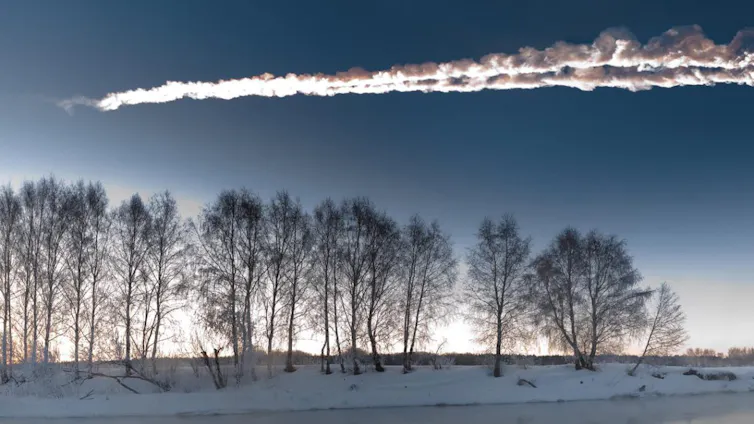
The Chelyabinsk asteroid left a vapor trail as it hit the Earth’s atmosphere in 2013. M. Ahmetvaleev/European Space Agency

Shawn Laatsch, University of Maine

Sonic booms from meteors can release the energy of hundreds of tons of TNT – here’s how they work

As humans, we live out our lives on a planet that is constantly sweeping through a cosmic ocean littered with ancient debris from the formation of the solar system. For the most part, our world glides silently through space, shielded by Earth’s thin atmosphere.

Occasionally, however, the rest of the universe reminds us of its presence with stunning, visceral clarity.

Residents along the Massachusetts–New Hampshire border were startled by a sudden sonic boom on the afternoon of May 30, 2026. A large number of people up and down the Eastern Seaboard witnessed it.

After NASA analyzed imagery from weather satellites, they identified the culprit as a small meteor measuring roughly 3 to 5 feet (1 to 2 meters) across. It was screaming through space at an astonishing 42,000 miles per hour (68,000 kilometers per hour) when it plunged into Earth’s upper atmosphere.

Fragments from a meteor fell into Cape Cod Bay in May 2026.

Friction between the meteor and the increasingly dense air quickly turned the kinetic energy of the rock shooting through the sky into blistering heat. At an altitude of roughly 40 miles (60 kilometers), the immense heat and pressure overcame the structural integrity of the meteor, causing it to fragment in a brilliant flash.

The breakup released a staggering burst of energy equivalent to 300 tons of TNT. When an object travels through the air at speeds faster than sound, which is 761 mph (1,225 kph), it creates a shock wave creating a thunderous clap, or sonic boom. While the majority of the rock vaporized, the remaining fragments rained down harmlessly into the waters of Cape Cod Bay.

In the past, such an event might have passed as an unverified sighting in the daytime sky. Today, however, our planet is wired with an accidental network of planetary defense sensors: dashboard cameras, security systems and digital doorbells.

Because meteor entries like this one last only a few fleeting seconds, they were easily missed in the past. Now, our collective digital eyes capture these spontaneous cosmic intrusions almost instantly, bringing the universe directly into our daily news feeds. While dramatic, these events are more common than most people imagine.

As someone who has worked as a planetarium director and astronomy educator for over four decades, I often get emails, social media messages and phone calls about such objects and sightings. While hearing a sonic boom can be a bit unsettling or even shocking, it reminds us we live in an active universe and may want to occasionally look up instead of down at our devices.

A meteoric spring

The Cape Cod fireball was the latest sighting in an active season of meteoritic arrivals. Just months earlier, the solar system seemed to be sending a parade of rocky objects down to Earth.

Advertisement
Get More From A Face Cleanser And Spa-like Massage

From March 8-11, observers in Northern Europe witnessed large, slow-moving fireballs in their skies. Enthusiasts and scientists successfully recovered several fragments. Lab analysis of these specimens revealed their place in a fascinating lineage – scientists determined that they had originated from Vesta, a massive, pristine asteroid orbiting between Mars and Jupiter.

On March 17, a 7-ton asteroid measuring roughly 6 feet across entered the atmosphere directly over Lake Erie. Traveling at 45,000 mph (72,400 kph), it generated a brilliant daytime flash and a powerful sonic boom, unloading an energy equivalent to 250 tons of TNT. NASA scientists published data about its trajectory, allowing meteorite hunters to recover pristine fragments in Valley City, just a short drive from Cleveland, Ohio.

Only four days later, on March 21, another cosmic fragment blazed across the skies of Texas. This object was about 3 feet wide, and it traveled at 35,000 mph (56,300 kph), releasing the energy of roughly 26 tons of TNT.

Outside of Houston, homeowner Sherri James was startled by a sudden crash, only to discover a 6-inch (15-cm) hole in her roof and a small piece of the solar system resting on her floor.

Thank goodness for Earth’s atmospheric shield

The benchmark for modern atmospheric impacts is the Chelyabinsk meteor, which exploded over Russia on Feb. 15, 2013.

That object was significantly larger than any of the meteors researchers have observed in 2026, measuring 60 feet (18 m) across and weighing roughly 10,000 tons. When it shattered 18 miles (29 km) above the ground, it produced an airburst with an explosive force 30 times greater than the Hiroshima atomic bomb.

A gif of a bright streak moving across the sky and growing brighter towards the end of its journey
The Chelyabinsk meteor, the largest observed in modern history, shoots through the sky in February 2013. Aleksandr Ivanov/Wikimedia Commons, CC BY

The resulting shock wave shattered glass across hundreds of square miles, injuring nearly 1,500 people and registering as a seismic event between 2.7 and 3.7 on the Richter scale. The incident was a stark reminder that while Earth’s atmosphere is an incredibly effective shield, absorbing the lion’s share of cosmic impacts, a large enough kinetic punch can still reach the surface below.

Despite the dramatic stories around these meteor impacts, history shows that the cosmic lottery rarely targets humans directly. In all of recorded history, there is only one universally confirmed case of a person being directly struck by a space rock.

In 1954, an 8.5-pound (3.8 kg) meteorite crashed through the roof of a house in Sylacauga, Alabama, ricocheted off a heavy wooden radio and struck a sleeping woman named Ann Hodges. Though it left a severe bruise on her hip, the radio absorbed the brunt of the impact. Had it not been for the radio, there is a chance she could have been seriously injured or killed by this object.

Living with the cosmos

So, are you in any imminent danger from meteors? The mathematics of the cosmos provide profound reassurance. The statistical odds of being struck by a meteorite are vanishingly small. You stand a better chance of winning a multimillion-dollar lottery jackpot 10 times in a row than ever being hit by a meteorite.

The vast majority of the tons of space debris that bombard Earth daily arrive as harmless dust grains, burning up as elegant meteors or shooting stars. But when the larger pieces do break through and land on our planet, they offer a rare, tangible connection to the beginning of the solar system.

Advertisement
Get More From A Face Cleanser And Spa-like Massage

If you ever happen to witness one of these magnificent fireballs ripping open the sky, consider reporting your observation to the American Meteor Society. The organization keeps track of sightings and falls from around the globe. Recovered fragments provide a way for scientists to gain valuable information about the origin of our solar system, and of our home planet.

Shawn Laatsch, Director of the Versant Power Astronomy Center, University of Maine

This article is republished from The Conversation under a Creative Commons license. Read the original article.

📰 Thanks for reading STM Daily News – your source for News You Can Use This Moment!

We love hearing from our readers. Share your thoughts in the comments section and join the conversation with our growing community. Your feedback helps us create the stories and features that matter most to you.

Don’t miss the latest news, inspiring stories, lifestyle tips, food and drink features, and exclusive updates. Subscribe to the STM Daily News newsletter and get our top stories delivered directly to your inbox.

💬 Leave a comment.
📧 Subscribe to our newsletter.
📢 Share your favorite stories with friends and family.

Stay informed, stay connected, and be part of the STM Daily News community at STMDailyNews.com.

Advertisement
Get More From A Face Cleanser And Spa-like Massage
Continue Reading

Automotive

The Road to Cleaner Water: How to Prevent Roads from Polluting Waterways

Everyone loves driving on clean highways and spotless local roads. Few people, however, realize the benefits of clean roads go well beyond mere aesthetics. Cleaner roads also mean cleaner and healthier local rivers, lakes and beaches. Follow these simple year-round tips to help make the waters as fun and healthy as possible this summer.

Published

on

Everyone loves driving on clean highways and spotless local roads. Few people, however, realize the benefits of clean roads go well beyond mere aesthetics. Cleaner roads also mean cleaner and healthier local rivers, lakes and beaches. Follow these simple year-round tips to help make the waters as fun and healthy as possible this summer.

(Feature Impact) Everyone loves driving on clean highways and spotless local roads. Few people, however, realize the benefits of clean roads go well beyond mere aesthetics. Cleaner roads also mean cleaner and healthier local rivers, lakes and beaches.

That’s because harmful pollutants in local waters often run off untreated from highways and roads during strong storms. Those rains sweep trash, dripped oil, harmful chemicals and even dangerous bacteria from pet waste into local waters via stormways and sewers. This untreated runoff can affect people’s health, make water unsafe for swimming and harm aquatic life. Every year, such man-made “stormwater pollution” even closes portions of recreational rivers and beaches.

It’s up to everyone to help prevent human-caused stormwater pollution. Don’t wait for rain in the forecast to get started. Instead, follow these simple year-round tips from the experts at the California Department of Transportation to help make the cooling waters in California and beyond as fun and healthy as possible this summer.

Trash-Free Trips and Responsible Car Care

Summer can mean more road time traveling to your next adventure. Loose items in truck beds and on roof carriers or trash tossed from car windows can quickly become the next wave of stormwater pollution flowing into local waters. To reduce:

  • Secure Your Load: Always securely tarp and tie down anything in a truck bed or on a roof rack. Items falling off vehicles are both a safety hazard and can become roadside debris.
  • Keep a Car Trash Catcher: Designate a bag or container in your car for food wrappers, coffee cups and other small trash until you can dispose of it properly.
  • Wash Smart: Commercial car washes that recycle water are superior for preventing road dirt and chemicals accumulated on your car from entering storm drains compared to washing in a driveway. If washing at home, do it on your lawn or a permeable surface where the water naturally filters into the ground and not street gutters.
17968 B detail embed

Outdoor Adventures That Leave Only Footprints

Whether you’re hiking a mountain trail, picnicking at the park or relaxing on the beach, remember the outdoor golden rule: pack out everything you pack in. Food wrappers, plastic bottles and even seemingly small items like bottle caps and cigarette butts are some of the most common litter found in parks, waterways and along coastlines. When left behind, they’re not just eyesores; they’re prime candidates for being washed into waterways.

  • Pro Tip: Choose reusable water bottles that clip onto bags to reduce pollution from discarded plastic bottles.

At Home and In Your Neighborhood


Even close to home, your actions can make a difference.

  • Garden Care: When tidying up your garden or front lawn, sweep leaves and grass clippings into your green bin instead of hosing them down the driveway. Hosing yard waste into road gutters can clog storm drains and cause flooding.
  • Pesticide Prevention: To protect waterways from harmful chemical runoff, opt for organic or eco-friendly alternatives for pest and weed control whenever possible.
  • Scoop the Poop: Pet waste contains harmful bacteria that can contaminate waterways. In fact, the EPA estimates that just two days’ worth of waste from 100 dogs can produce enough bacteria to close a beach. Always pick up after your pets, especially when walking in your neighborhood or parks, and dispose of it in a trash bin.

Pollution in waterways doesn’t just look bad; it creates real problems, from harming wildlife and ecosystems to causing potential health issues for humans and pets who encounter contaminated water. The cleaner roads and surrounding areas are, the healthier rivers, lakes and beaches become. For more tips and resources, visit CleanWaterCA.com to ensure a clean, healthy summer for everyone.

Photos courtesy of Shutterstock collect?v=1&tid=UA 482330 7&cid=1955551e 1975 5e52 0cdb 8516071094cd&sc=start&t=pageview&dl=http%3A%2F%2Ftrack.familyfeatures track

SOURCE:
California Department of Transportation

STM Daily News is a vibrant news blog dedicated to sharing the brighter side of human experiences. Emphasizing positive, uplifting stories, the site focuses on delivering inspiring, informative, and well-researched content. With a commitment to accurate, fair, and responsible journalism, STM Daily News aims to foster a community of readers passionate about positive change and engaged in meaningful conversations. Join the movement and explore stories that celebrate the positive impacts shaping our world. 

https://stmdailynews.com/

Start Your Morning Informed

Get the STM Morning Brief delivered to your inbox every weekday with breaking news, transportation updates, technology, science, and trending stories.

STM News Brief Ad 2

We don’t spam! Read our privacy policy for more info.

Advertisement
Get More From A Face Cleanser And Spa-like Massage
Continue Reading

health and wellness

Warmer temps bring soaring tick populations – here’s how to stay safe from Lyme disease

Tick bites are rising in 2026. Learn where Lyme disease is spreading, early symptoms like the bull’s-eye rash, treatment options, and practical ways to prevent tick bites.

Published

on

Last Updated on June 6, 2026 by Daily News Staff

file 20260428 85 68li0w.jpg?ixlib=rb 4.1
Exposure to ticks can be a downside to spending time in the woods. skaman306/Moment via Getty Images

Lakshmi Chauhan, University of Colorado Anschutz

Spring’s warmer weather lures people outdoors – and into possible contact with ticks that spread Lyme disease.

Already, the 2026 tick season is booming. On April 23, the Centers for Disease Control and Prevention warned that emergency room visits due to tick bites are at their highest level since 2017. That may portend an especially severe season for Lyme disease and other tick-borne illnesses.

State health departments reported more than 89,000 cases of Lyme disease in 2023, the last year for which data is available. But public health experts believe that close to 500,000 people in the U.S. get Lyme disease every year.

As an infectious disease doctor with experience treating some of this infection’s long-term outcomes, I know that Lyme disease can be tricky because people often don’t notice tick bites and may overlook early symptoms of an infection. But left untreated, the infection can cause serious lingering – and even permanent – health issues.

Here’s what you need to know about Lyme disease to stay safe this season:

What causes Lyme disease?

Lyme disease, named after the Connecticut town where the disease was first identified in 1975, is caused by a group of bacteria called Borrelia – most often, the species Borrelia burgdorferi.

Deer ticks – also called black-legged ticks, and members of a group called Ixodes – transmit the disease after feeding on an infected animal, usually a bird, mouse or deer. When they then bite a person, they can transmit the bacteria into the person’s bloodstream.
Usually, the tick must attach for 24-48 hours to transmit the bacteria causing Lyme disease.

Where and when does Lyme disease occur?

Lyme disease can occur in most regions where deer ticks live.

These ticks are most active in late spring, summer and fall – usually April to November in most regions. They emerge when the temperature is above freezing. In years when winter is shorter, ticks can emerge earlier. And they may be active year-round in regions where freezing temperatures are rare.

Advertisement
Get More From A Face Cleanser And Spa-like Massage

Approximately 90% of U.S. cases are reported from states in the Northeast, mid-Atlantic from Virginia to eastern Canada, and Upper Midwest regions including Wisconsin, Michigan and Minnesota. A few cases occasionally pop up in California, Oregon and Washington.

Map of the U.S. showing lots of Lyme disease incidence in the Northeast and in Upper Midwest states, plus a smattering elsewhere in the country
Northeast and Upper Midwest states have the highest incidence of Lyme disease, according to the Centers for Disease Control and Prevention in 2023. Centers for Disease Control and Prevention

Since 1995, the incidence of Lyme disease in the U.S. has almost doubled.

Warmer weather and changes in rainfall patterns now allow ticks to survive in new regions of the country – and for longer periods. But even in regions where ticks lived before, Lyme disease has become more common due to increases in deer populations. As woodland areas are increasingly being developed, it may be bringing the habitat of deer and mice closer to people, increasing the risk of transmission.

Lyme disease symptoms to watch for

Early symptoms of Lyme disease – fever, muscle aches and fatigue – generally emerge within three to 30 days after a tick bite. Another classic symptom in the first month is a target or bull’s eye rash at the site of tick bite, which occurs in about 70% to 80% of cases.

Other rashes following a tick bite can also occur. Some may be due to irritation from the bite, and not necessarily an infection.

If you know you’ve had a tick bite and experience flu-like symptoms – or if you see a bull’s-eye rash, whether you know you were bitten or not – it’s important to check with your healthcare provider about whether you should be treated with antibiotics.

A blood test for antibodies can help confirm the infection, but it can sometimes yield a false negative result, particularly in the first couple of weeks of the disease.

Deer ticks at four stages of development, from larva to adult
In the larval stage, deer ticks can be tiny – and difficult to spot on your body. Centers for Disease Control and Prevention

In most people, the rash goes away on its own. However, treatment may shorten its duration and is important for preventing other symptoms. A two- to four-week course of antibiotics can generally treat Lyme disease. Severe cases might require intravenous antibiotics.

A promising new vaccine for Lyme disease is currently being tested. In March 2026, Pfizer, the pharmaceutical company developing it, announced that in a late-stage study, the vaccine prevented the disease in 70% of people who received it.

Later Lyme symptoms

If left untreated, the bacteria that causes Lyme can spread, potentially causing longer-term symptoms. About 60% of people who get Lyme disease and don’t treat it can develop arthritis.

In rare cases, Lyme disease can also affect the heart and the nervous system. Inflammation in the brain or the tissues surrounding it, called meninges, can cause headaches and neck pain, as well as balance issues and memory and behavior changes. It can also cause nerve damage that results in numbness, tingling and muscle weakness.

These symptoms can appear right away or much later – sometimes months to years after infection. And in cases where the disease wasn’t promptly treated, late-stage symptoms can linger even after antibiotics kill the bacteria.

Advertisement
Get More From A Face Cleanser And Spa-like Massage

Scientists don’t fully understand why, but one intriguing study found that some particles from the bacteria’s cell wall leak into the joints and can persist after treatment, spurring ongoing inflammation and arthritis symptoms.

Another reason for Lyme’s long-term effects is that it can trigger autoimmune disease, which is when the immune system attacks its own cells. What’s more, because the nervous system may be particularly sensitive to damage caused by the bacteria and related inflammation, it may take an especially long time to heal. In some situations, the damage could be permanent.

Preventing Lyme disease

Until a vaccine becomes available, there are steps you and your family can take to help protect against Lyme disease:

  • Use tick and insect repellents such as DEET and picaridin, which can be applied to skin, and permethrin, which is sprayed onto clothing, to keep ticks at bay. Treating clothing with permethrin may be especially beneficial, since the substance withstands several washes.
  • Wear long-sleeve shirts and pants while you are gardening, hiking or walking through grass or woods to prevent tick bites. Wearing light-colored clothes makes ticks more visible, and tucking your pants into your socks can also prevent the little buggers from traveling from your pants, shoes and socks onto your legs.
  • Remove your outdoor clothes immediately. Washing and drying clothes at high temperature can help kill any ticks that managed to hitch a ride. And a quick shower immediately after spending time outdoors can wash ticks off the skin before they have a chance to attach.
  • If you spend time outdoors, perform daily tick checks, paying special attention to warm areas like your armpits, neck, ears and underwear line. If you find a tick attached, pull it off with tweezers, holding them perpendicular to the skin.
  • If you find a tick that may have been on the skin for more than 36 hours, ask your healthcare provider whether a dose of preventive antibiotics – generally given within 72 hours of the bite – would be appropriate.

Lakshmi Chauhan, Associate Professor of Infectious Disease Medicine, University of Colorado Anschutz

This article is republished from The Conversation under a Creative Commons license. Read the original article.

Continue Reading

Trending