

News
From FIFA to the LA Clippers, carbon offset scandals are exposing the gap between sports teams’ green promises and reality
Under Steve Ballmer’s ownership, the LA Clippers have made strides in reducing greenhouse gas emissions, yet concerns arise over the efficacy of their carbon offsets, especially following issues with their partner, Aspiration. Many sports organizations face scrutiny for their offset claims, highlighting a need for transparent, verified carbon reduction strategies and a reassessment of sustainability practices in the industry.


Brian P. McCullough, University of Michigan and Edward Carrington, University of Michigan
If you go to a pro sports event today, there’s a good chance the stadium or arena will be powered at least in part by renewable energy. The team likely takes steps to reduce energy and waste. Some even claim to have net-zero greenhouse gas emissions, meaning any emissions they still do produce they offset by paying for projects, such as tree-planting, that reduce greenhouse gases elsewhere.
The venue upgrades have been impressive – Seattle’s hockey and basketball arena runs on 100% renewable energy, makes its rink ice from captured rainwater, and offers free public transit for ticket holders.
But how much of the teams’ offset purchases are actually doing the good that they claim?
It’s an important question, in part because fans may ultimately pay for those offsets.
The cost of carbon offsetting in sports varies by organization, with no industry standard for who pays. Some teams and leagues absorb costs through their operational budgets, treating carbon neutrality as a core responsibility. Others pass costs to consumers: Some teams add sustainability fees to ticket prices to offset each attendee’s carbon footprint. The payment model ultimately reflects whether an organization views offsetting as an institutional obligation or a shared responsibility with fans.
Carbon offsets in sports are also in the news, with scandals erupting around them in connection with sports from FIFA’s 2022 World Cup to basketball’s LA Clippers.
As sport management researchers, we have been following offset agreements and other sustainability commitments that teams and sports leagues such as FIFA have been making to see whether they translate into measurable environmental outcomes. We see lots of good intentions but also a disturbing amount of failures and outright fraud.
Where sports teams’ emissions come from
The vast majority of a sports team’s climate footprint comes from team’s and fans’ travel, which they have little control over. Leagues can reduce teams’ travel somewhat with creative scheduling, but unlike other industries, sports teams have few ways to reduce the bulk of their emissions.
What many of them do instead is offset those travel emissions by buying carbon credits.
https://datawrapper.dwcdn.net/C9q2E/1
Carbon credits are generated by projects that reduce greenhouse gases in the atmosphere or prevent greenhouse gas emissions. Many of those projects involve planting trees to remove carbon dioxide from the atmosphere; others expand clean energy to reduce fossil fuel use. Each carbon credit is supposed to represent the reduction or prevention of one metric ton of carbon dioxide.
However, carbon offset projects have come under scrutiny in recent years. Tree-planting projects, the most common type, take time to meet their promise as the trees grow, and wildfires and logging can wipe out the benefit. Studies have found that companies tend to buy cheap, low-quality carbon credits, which run a risk of exaggerating their carbon reduction claims or providing results that would have happened anyway, leaving no real climate benefit.
Unfortunately, several teams, perhaps unknowingly, have been purchasing fraudulent or low-quality credits.
Reputations at risk
FIFA brought the sports world’s carbon offset problem into the spotlight during the 2022 Qatar World Cup.
FIFA claimed the event would be carbon neutral, but that claim relied on creative accounting that understated the event’s construction and travel emissions. Organizers also used low-quality offsets. Many of those offsets were renewable energy projects with a high likelihood of being built anyway.
A year after the tournament, FIFA had completed offset purchases for less than a third of the World Cup’s estimated emissions, the nonprofit Carbon Market Watch found. And Switzerland’s advertising regulator ordered FIFA to stop claiming the World Cup had been “carbon neutral.”
The Clippers and baseball’s Boston Red Sox ran into problems when they publicly partnered with Aspiration, a now-bankrupt finance technology company and carbon credit broker, to meet their “carbon neutral” claims.
The Clippers had a US$300 million partnership with Aspiration that included paying the company at least $56 million for carbon credits in mid-2022, The New York Times reported. Both teams also had plans with Aspiration to offer fans a way to buy carbon credits to cover their own travel when purchasing tickets.
However, Aspiration officials claimed to have supported millions more tree-plantings than what had actually happened, a ProPublica investigation found. Aspiration co-founder Joe Sanberg pleaded guilty in 2025 to wire fraud involving false statements about financing to secure loans and attract investors, who lost at least $248 million.
The Aspiration partnership is also under investigation by the NBA over an endorsement deal the company made with Clippers all-star Kawhi Leonard at about the same time and questions about whether it was used to violate the league’s salary cap. Team owner Steve Ballmer, who personally invested at least $50 million in Aspiration, told ESPN he and the team did nothing wrong. “They conned me,” he said.
While the scandal focused on financial fraud and the salary cap, it also raised questions about the team’s sustainability claim.
Without verification, who knows?
In some cases, the value of offset projects is difficult to verify, even when trees are being planted nearby.
The Seattle Sounders FC declared itself the first carbon-neutral professional soccer team in North America in 2019 by cutting its waste, water and energy use and offsetting its remaining emissions through the nonprofit organization Forterra, which plants trees in the Puget Sound region.
While the effort positioned the club as a sustainability leader, the offsets lacked what’s known as third-party verification. Similar to how organic food must be certified by reputable agencies, third-party validation of carbon credits ensures credits truly represent the removal of carbon from the atmosphere or avoided emissions.
Without verification, it’s unclear whether claimed emission reductions are permanent, accurately tracked and transparently reported.
Potential legal consequences
Even the most prominent venues are susceptible to issues with unreliable credits.
Climate Pledge Arena in Seattle has been celebrated as the world’s first “zero-carbon” certified arena, with electric Zambonis, recycled materials, renewable energy and free public transit. It represents one of the most ambitious pushes to develop sustainable sport infrastructure globally.
To offset unavoidable construction emissions, the arena’s owner relied on carbon credits tied to projects meant to reduce rainforest loss in Colombia. However, an analysis by the carbon rating company Calyx Global found that while the arena’s credits may prevent some deforestation, the numbers likely overstate the benefits.
A 2023 report suggested that over 90% of rainforest carbon credits from the leading certifier of offsets lack evidence that they reduced deforestation. The certifier disputed that conclusion but is working to revise its review process.
When credits fail to offset real emissions, that erodes public trust and can expose organizations to potential legal consequences.
Delta Air Lines, for example, is facing a lawsuit over its carbon neutrality claim. The suit alleges that Delta misled passengers by describing itself as a “carbon-neutral airline” while relying on carbon offset projects that were ineffective or “junk.”
Time for some strategic reassessment
These and other failures in the carbon credit market suggest the industry needs to fundamentally reassess how sports teams achieve their climate goals.
To provide meaningful sustainability commitments, sports organizations and facilities can start at home by lowering their fossil fuel use and increasing their energy efficiency. Many arenas do this.

https://datawrapper.dwcdn.net/O1mkr/1
Leagues can design game schedules to reduce team and fan travel. Many of the Paris Olympics venues in 2022, for example, were connected by subway or bus. The 2026 FIFA World Cup, in contrast, has venues hundreds of miles apart across North America, meaning potentially higher emissions from fan travel.
Where offsets will still play a role, teams can ensure that they partner with verified carbon credit providers that deliver measurable, transparent carbon reductions.
In a field where public trust and reputation matter as much as performance, the sports industry cannot afford foul play on climate. We believe a shift toward strategies that cut emissions first, and then use only the most credible offsets, will be the difference between striking out and leading the sustainability game.
Brian P. McCullough, Associate Professor of Sport Management, University of Michigan and Edward Carrington, Assistant in Research in Sports Management, University of Michigan
This article is republished from The Conversation under a Creative Commons license. Read the original article.
Author

Discover more from Daily News
Subscribe to get the latest posts sent to your email.


The Knowledge
How to avoid seeing disturbing video on social media and protect your peace of mind
How to avoid seeing disturbing video on social media and protect your peace of mind
Last Updated on January 29, 2026 by Daily News Staff
Annie Margaret, University of Colorado Boulder
How to avoid seeing disturbing video on social media and protect your peace of mind
When graphic videos like those of the recent shooting of a protester by federal agents in Minneapolis go viral, it can feel impossible to protect yourself from seeing things you did not consent to see. But there are steps you can take.
Social media platforms are designed to maximize engagement, not protect your peace of mind. The major platforms have also reduced their content moderation efforts over the past year or so. That means upsetting content can reach you even when you never chose to watch it.
You do not have to watch every piece of content that crosses your screen, however. Protecting your own mental state is not avoidance or denial. As a researcher who studies ways to counteract the negative effects of social media on mental health and well-being, I believe it’s a way of safeguarding the bandwidth you need to stay engaged, compassionate and effective.
Why this matters
Research shows that repeated exposure to violent or disturbing media can increase stress, heighten anxiety and contribute to feelings of helplessness. These effects are not just short-term. Over time, they erode the emotional resources you rely on to care for yourself and others.
Protecting your attention is a form of care. Liberating your attention from harmful content is not withdrawal. It is reclaiming your most powerful creative force: your consciousness.
Just as with food, not everything on the table is meant to be eaten. You wouldn’t eat something spoiled or toxic simply because it was served to you. In the same way, not every piece of media laid out in your feed deserves your attention. Choosing what to consume is a matter of health.
And while you can choose what you keep in your own kitchen cabinets, you often have less control over what shows up in your feeds. That is why it helps to take intentional steps to filter, block and set boundaries.
Practical steps you can take
Fortunately, there are straightforward ways to reduce your chances of being confronted with violent or disturbing videos. Here are four that I recommend:
- Turn off autoplay or limit sensitive content. Note that these settings can vary depending on device, operating system and app version, and can change.
https://datawrapper.dwcdn.net/d1deR/2
- Use keyword filters. Most platforms allow you to mute or block specific words, phrases or hashtags. This reduces the chance that graphic or violent content slips into your feed.
- Curate your feed. Unfollow accounts that regularly share disturbing images. Follow accounts that bring you knowledge, connection or joy instead.
- Set boundaries. Reserve phone-free time during meals or before bed. Research shows that intentional breaks reduce stress and improve well-being.

Reclaim your agency
Social media is not neutral. Its algorithms are engineered to hold your attention, even when that means amplifying harmful or sensational material. Watching passively only serves the interests of the social media companies. Choosing to protect your attention is a way to reclaim your agency.
The urge to follow along in real time can be strong, especially during crises. But choosing not to watch every disturbing image is not neglect; it is self-preservation. Looking away protects your ability to act with purpose. When your attention is hijacked, your energy goes into shock and outrage. When your attention is steady, you can choose where to invest it.
You are not powerless. Every boundary you set – whether it is turning off autoplay, filtering content or curating your feed – is a way of taking control over what enters your mind. These actions are the foundation for being able to connect with others, help people and work for meaningful change.
More resources
I’m the executive director of the Post-Internet Project, a nonprofit dedicated to helping people navigate the psychological and social challenges of life online. With my team, I designed the evidence-backed PRISM intervention to help people manage their social media use.
Our research-based program emphasizes agency, intention and values alignment as the keys to developing healthier patterns of media consumption. You can try the PRISM process for yourself with an online class I launched through Coursera in October 2025. You can find the course, Values Aligned Media Consumption, on Coursera. The course is aimed at anyone 18 and over, and the videos are free to watch.
This story was updated on Jan. 25, 2026 to include reference to the recent shooting in Minneapolis.
Annie Margaret, Teaching Assistant Professor of Creative Technology & Design, ATLAS Institute, University of Colorado Boulder
This article is republished from The Conversation under a Creative Commons license. Read the original article.
Discover more from Daily News
Subscribe to get the latest posts sent to your email.
News
Greenland’s Inuit have spent decades fighting for self-determination
The article highlights the Inuit communities in Greenland amid global discussions about the island’s ownership, particularly regarding U.S. President Trump’s interest. It chronicles the Inuit’s historical presence, their traditional lifestyles, and the ongoing struggle for self-determination. Despite colonial influences, modern Kalaallit strive for recognition and independence.
Susan A. Kaplan, Bowdoin College and Genevieve LeMoine, Bowdoin College
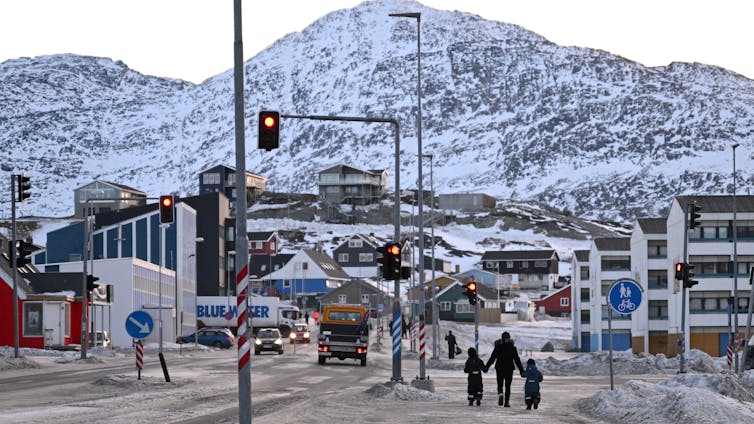
Amid the discussion between U.S. President Donald Trump and Danish and European leaders about who should own Greenland, the Inuit who live there and call it home aren’t getting much attention.
The Kalaallit (Inuit of West Greenland), the Tunumi (Inuit of East Greenland) and the Inughuit (Inuit of North Greenland) together represent nearly 90% of the population of Greenland, which totals about 57,000 people across 830,000 square miles (2.1 million square kilometers).
We are Arctic anthropologists who work in a museum focused on the Arctic and its people. One of the areas we study is a land whose inhabitants call it Kalaallit Nunaat, or land of the Kalaallit. Known in English as Greenland, it is an Indigenous nation whose relatively few people have been working for decades to reclaim their right to self-determination.
https://datawrapper.dwcdn.net/WqWx2/1
Arrivals from the west
For nearly 5,000 years, northwestern Greenland – including the area that is now the U.S. Space Force’s Pituffik Space Base, formerly known as Thule Air Force Base – was the island’s main entry point. A succession of Indigenous groups moved eastward from the Bering Strait region and settled in Siberia, Alaska, Canada and Greenland.
Approximately 1,000 years ago, the ancestors of the Inuit living in Greenland today arrived in that area with sophisticated technologies that allowed them to thrive in a dynamic Arctic environment where minor mishaps can have serious consequences. They hunted animals using specialized technologies and tools, including kayaks, dog-drawn sleds, complex harpoons, and snow goggles made from wood or bone with slits cut into them. They dressed in highly engineered garments made from animal fur that kept them warm and dry in all conditions.
Their tools and clothing were imbued with symbolic meanings that reflected their worldview, in which humans and animals are interdependent. Inughuit families who live in the region today continue to hunt and fish, while navigating a warming climate.
Arrivals from the east
At Qassiarsuk in south Greenland, around the time Inuit arrived in the north, Erik the Red established the first Norse farm, Brattahlíð, in 986, and sent word back to Iceland to encourage others to join him, as described in an online exhibit at the Greenland National Museum. Numerous Norse families followed and established pastoral farms in the region.
As Inuit expanded southward, they encountered the Norse farmers. Inuit and Norse traded, but relations were sometimes tense: Inuit oral histories and Norse sagas describe some violent interactions. The two groups maintained distinctly different approaches to living on the land that rims Greenland’s massive ice sheet. The Norse were very place-based, while the Inuit moved seasonally, hunting around islands, bays and fjords.
As the Little Ice Age set in early in the 14th century, and temperatures dropped in the Northern Hemisphere, the Norse were not equipped to adjust to the changing conditions. Their colonies faltered and by 1500 had disappeared. By contrast, the mobile Inuit took a more flexible approach and hunted both land and marine mammals according to their availability. They continued living in the region without much change to their lifestyle.
A center of activity
In Nuuk, the modern capital of Greenland, an imposing and controversial statue of missionary Hans Egede commemorates his arrival in 1721 to establish a Lutheran mission in a place he called Godthåb.
In 1776, as trade became more important, the Danish government established the Royal Greenland Trading Department, a trading monopoly that administered the communities on the west coast of Greenland as a closed colony for the next 150 years.
By the 19th century some Kalaallit families who lived in Nuuk/Godthåb had formed an educated, urban class of ministers, educators, artists and writers, although Danish colonists continued to rule.
Meanwhile, Kalaallit families in small coastal communities continued to engage in traditional economic and social activities, based on respect of animals and sharing of resources.
On the more remote east coast and in the far north, colonization took root more slowly, leaving explorers such as American Robert Peary and traders such as Danish-Greenlandic Knud Rasmussen a free hand to employ and trade with local people.
The U.S. formally recognized Denmark’s claim to the island in 1916 when the Americans purchased the Danish West Indies, which are now the U.S. Virgin Islands. And in 1921, Denmark declared sovereignty over the whole of Greenland, a claim upheld in 1933 by the Permanent Court of International Justice. But Greenlanders were not consulted about these decisions.
The world arrives

World War II brought the outside world to Greenland’s door. With Denmark under Nazi control, the U.S. took responsibility for protecting the strategically important island of Greenland and built military bases on both the east and west coasts. The U.S. made efforts to keep military personnel and Kalaallit apart but were not entirely successful, and some visiting and trading went on. Radios and broadcast news also spread, and Kalaallit began to gain a sense of the world beyond their borders.
The Cold War brought more changes, including the forced relocation of 27 Inughuit families living near the newly constructed U.S. Air Force base at Thule to Qaanaaq, where they lived in tents until small wooden homes were built.
In 1953, Denmark revised parts of its constitution, including changing the status of Greenland from a colony to one of the nation’s counties, thereby making all Kalaallit residents of Greenland also full-fledged citizens of Denmark. For the first time, Kalaallit had elected representatives in the Danish parliament.
Denmark also increased assimilation efforts, promoting the Danish language and culture at the expense of Kalaallisut, the Greenlandic language. Among other projects, the Danish authorities sent Greenlandic children to residential schools in Denmark.
In Nuuk in the 1970s, a new generation of young Kalaallit politicians emerged, eager to protect and promote the use of Kalaallisut and gain greater control over Greenland’s affairs. The rock band Sumé, singing protest songs in Kalaallisut, contributed to the political awakening. https://www.youtube.com/embed/qe-f6jleXFs?wmode=transparent&start=0 Sumé, a rock band singing in Kalaallisut, the Greenlandic language, helped galvanize a political movement for self-determination in the 1970s.
In a 1979 Greenland-wide referendum, a substantial majority of Kalaallit voters opted for what was called “home rule” within the Danish Kingdom. That meant a parliament of elected Kalaallit representatives handled internal affairs, such as education and social welfare, while Denmark retained control of foreign affairs and mineral rights.
However, the push for full independence from Denmark continued: In 2009, home rule was replaced by a policy of self-government, which outlines a clear path to independence from Denmark, based on negotiations following a potential future referendum vote by Greenlanders. Self-government also allows Greenland to assert and benefit from control over its mineral resources, but not to manage foreign affairs.
Today, Nuuk is a busy, vibrant, modern city. Life is quieter in smaller settlements, where hunting and fishing are still a way of life. While contemporary Greenland encompasses this range of lifestyles, Kalaallit are unified in their desire for self-determination. Greenland’s leaders have delivered this message clearly to the public and to the White House directly.
Susan A. Kaplan, Professor of Anthropology, Director of Peary-MacMillan Arctic Museum and Arctic Studies Center, Bowdoin College and Genevieve LeMoine, Curator, Peary-MacMillan Arctic Museum and Arctic Studies Center, Bowdoin College
This article is republished from The Conversation under a Creative Commons license. Read the original article.
STM Daily News is a vibrant news blog dedicated to sharing the brighter side of human experiences. Emphasizing positive, uplifting stories, the site focuses on delivering inspiring, informative, and well-researched content. With a commitment to accurate, fair, and responsible journalism, STM Daily News aims to foster a community of readers passionate about positive change and engaged in meaningful conversations. Join the movement and explore stories that celebrate the positive impacts shaping our world.
Discover more from Daily News
Subscribe to get the latest posts sent to your email.
Local News
Why Arizona Republicans Are Pushing Back on Light Rail to the State Capitol — and What It Means for the West Valley
Arizona’s debate over a proposed light rail extension to the State Capitol has intensified. Supporters argue it promotes connectivity and equity, while Republicans oppose it due to cost concerns and a preference for car-centric infrastructure. The outcome will impact future west-side transit expansions and shape regional transportation priorities.


Arizona’s long-running debate over public transit has flared up again, this time over a proposed Valley Metro light rail extension that would bring rail service closer to the Arizona State Capitol complex. While Phoenix and Valley Metro leaders argue the project is a logical next step in regional mobility, Republican leaders at the state Capitol have mounted strong opposition — creating uncertainty not just for this segment, but for future west-side expansions.
The Case for the Capitol Light Rail Extension
Supporters of the project, including Valley Metro officials, Phoenix city leaders, transit advocates, and many west Phoenix residents, argue that extending light rail toward the Capitol area is both practical and symbolic.
From a planning standpoint, the Capitol is a major employment center that draws thousands of workers, visitors, and students. Transit planners say rail access would reduce congestion, improve air quality, and provide reliable transportation for residents who already depend heavily on public transit.
Proponents also emphasize equity. West Phoenix has historically received fewer infrastructure investments than other parts of the metro area, despite strong transit ridership. For supporters, extending rail service westward is about connecting communities to jobs, education, and government services — not politics.
There is also a broader regional argument: light rail lines function best as part of a connected network. Leaving a gap near a central civic destination, supporters say, undermines long-term system efficiency.
Why Republican Lawmakers Are Opposed
Republican leaders in the Arizona Legislature see the project very differently.
One major issue is cost. GOP lawmakers frequently point to the rising price of light rail construction, which has increased significantly over the past decade. They argue that rail projects deliver limited benefit compared to their expense and that bus service or roadway improvements could move more people at lower cost.
Usage is another concern. Critics note that light rail serves a relatively small percentage of total commuters in the Phoenix metro area and requires ongoing public subsidies to operate. From this perspective, expanding rail further — especially into politically sensitive areas like the Capitol — is viewed as fiscally irresponsible.
There is also a political and legal dimension. In recent years, Republican lawmakers passed legislation restricting light rail construction near the Capitol complex. While framed as a land-use and security issue, critics argue it reflects deeper ideological opposition to rail transit and urban-oriented infrastructure.
Finally, some GOP leaders simply prefer different transportation priorities. Arizona remains a car-centric state, and many Republican officials believe future investments should focus on highways, autonomous vehicle technology, or flexible transit options rather than fixed rail.
A Political Standoff with Real Transit Consequences
The dispute has become a high-stakes standoff between the Republican-controlled Legislature and Democratic leaders at the city and regional level. While lawmakers may not be able to directly cancel the project, they have significant leverage through funding approvals, oversight committees, and future legislation.
This uncertainty creates challenges for Valley Metro, which relies on long-term planning, federal funding commitments, and voter-approved local taxes. Transit systems work best with predictability — and political volatility can drive up costs or delay construction.
What This Means for West Valley Light Rail Expansion
The biggest question is what happens next for west Phoenix and the broader West Valley.
If the Capitol-area extension is altered or blocked, Valley Metro may be forced to redesign routes that avoid the restricted area, potentially making service less direct or less useful. That could weaken the case for future westward expansions toward areas like Maryvale or even farther west.
On the other hand, the controversy has also drawn renewed attention to west-side transit needs. Some advocates believe the political fight could energize local support, leading to stronger community backing and clearer messaging about why rail matters in west Phoenix.
Long term, the outcome may set a precedent. If state lawmakers successfully limit rail construction through legislative action, it could signal tighter constraints on future expansions. If cities push forward despite opposition, it may reaffirm local control over transportation planning.
The Bigger Picture
At its core, the debate over light rail to the Arizona State Capitol reflects a broader clash of visions for the region’s future: one focused on dense, transit-oriented growth, and another centered on fiscal restraint and automobile mobility.
For residents of the West Valley, the stakes are tangible. The decision will shape access to jobs, education, and public services for decades. Whether the project moves forward as planned, is rerouted, or delayed entirely, it will leave a lasting imprint on how — and for whom — the Valley’s transit system grows.
As Phoenix continues to expand westward, the question remains unresolved: will light rail be allowed to follow?
Further Reading & Context
- KJZZ Phoenix – State Politics & Transportation Coverage
In-depth reporting on Arizona legislative actions, Valley Metro planning, and Capitol-area transit disputes. - Valley Metro – Capitol / West Extension Project Page
Official project updates, maps, timelines, and explanations from the regional transit authority. - City of Phoenix Public Transit Department
City-level planning documents and policy perspectives on light rail expansion and transit equity. - Arizona State Legislature – Transportation & Infrastructure Bills
Primary source for legislation affecting light rail construction near the Capitol and statewide transit policy. - Cronkite News (Arizona PBS)
Nonpartisan reporting on Arizona infrastructure, urban growth, and political power dynamics. - Axios Phoenix
Concise breakdowns of Phoenix City Council decisions and regional transportation debates. - Federal Highway Administration – Public Transportation Planning
Federal perspective on transit funding, cost comparisons, and long-term mobility planning.

Authors


Discover more from Daily News
Subscribe to get the latest posts sent to your email.





