

News
NASA Names Astronauts to Next Moon Mission, First Crew Under Artemis


NASA and the Canadian Space Agency (CSA) announced the four astronauts who will venture around the Moon on Artemis II, the first crewed mission on NASA’s path to establishing a long-term presence at the Moon for science and exploration through Artemis. The agencies revealed the crew members Monday during an event at Ellington Field near NASA’s Johnson Space Center in Houston.
“The Artemis II crew represents thousands of people working tirelessly to bring us to the stars. This is their crew, this is our crew, this is humanity’s crew,” said NASA Administrator Bill Nelson. “NASA astronauts Reid Wiseman, Victor Glover, and Christina Hammock Koch, and CSA astronaut Jeremy Hansen, each has their own story, but, together, they represent our creed: E pluribus unum – out of many, one. Together, we are ushering in a new era of exploration for a new generation of star sailors and dreamers – the Artemis Generation.”
The crew assignments are as follows: Commander Reid Wiseman, Pilot Victor Glover, Mission Specialist 1 Christina Hammock Koch, and Mission Specialist 2 Jeremy Hansen. They will work as a team to execute an ambitious set of demonstrations during the flight test.
The approximately 10-day Artemis II flight test will launch on the agency’s powerful Space Launch System rocket, prove the Orion spacecraft’s life-support systems, and validate the capabilities and techniques needed for humans to live and work in deep space.
“We are going back to the Moon and Canada is at the center of this exciting journey,” said the Honorable François-Philippe Champagne, the minister responsible for the Canadian Space Agency. “Thanks to our longstanding collaboration with NASA, a Canadian astronaut will fly on this historic mission. On behalf of all Canadians, I want to congratulate Jeremy for being at the forefront of one of the most ambitious human endeavors ever undertaken. Canada’s participation in the Artemis program is not only a defining chapter of our history in space, but also a testament to the friendship and close partnership between our two nations.”
The flight, set to build upon the successful uncrewed Artemis I mission completed in December, will set the stage for the first woman and first person of color on the Moon through the Artemis program, paving the way for future for long-term human exploration missions to the Moon, and eventually Mars. This is the agency’s Moon to Mars exploration approach.
“For the first time in more than 50 years, these individuals – the Artemis II crew – will be the first humans to fly to the vicinity of the Moon. Among the crew are the first woman, first person of color, and first Canadian on a lunar mission, and all four astronauts will represent the best of humanity as they explore for the benefit of all,” said Director Vanessa Wyche, NASA Johnson. “This mission paves the way for the expansion of human deep space exploration and presents new opportunities for scientific discoveries, commercial, industry and academic partnerships and the Artemis Generation.”
Meet Artemis II Astronauts
This will be Wiseman’s second trip into space, serving previously as a flight engineer aboard the International Station for Expedition 41 from May through November 2014. Wiseman has logged more than 165 days in space, including almost 13 hours as lead spacewalker during two trips outside the orbital complex. Prior to his assignment, Wiseman served as chief of the Astronaut Office from December 2020 until November 2022.
The mission will be Glover’s second spaceflight, serving previously as pilot on NASA’s SpaceX Crew-1, which landed May 2, 2021, after 168 days in space. As a flight engineer aboard the space station for Expedition 64, he contributed to scientific investigations, technology demonstrations, and participated in four spacewalks.
Koch also will be making her second flight into space on the Artemis II mission. She served as flight engineer aboard the space station for Expedition 59, 60, and 61. Koch set a record for the longest single spaceflight by a woman with a total of 328 days in space and participated in the first all-female spacewalks.
Representing Canada, Hansen is making his first flight to space. A colonel in the Canadian Armed Forces and former fighter pilot, Hansen holds a Bachelor of Science in space science from Royal Military College of Canada in Kingston, Ontario, and a Master of Science in physics from the same institution in 2000, with a research focus on Wide Field of View Satellite Tracking. He was one of two recruits selected by CSA in May 2009 through the third Canadian Astronaut Recruitment Campaign and has served as Capcom in NASA’s Mission Control Center at Johnson and, in 2017, became the first Canadian to be entrusted with leading a NASA astronaut class, leading the training of astronaut candidates from the United States and Canada.
“I could not be prouder that these brave four will kickstart our journeys to the Moon and beyond,” said Director of Flight Operations Norm Knight, NASA Johnson. “They represent exactly what an astronaut corps should be: a mix of highly capable and accomplished individuals with the skills and determination to take on any trial as a team. The Artemis II mission will be challenging, and we’ll test our limits as we prepare to put future astronauts on the Moon. With Reid, Victor, Christina, and Jeremy at the controls, I have no doubt we’re ready to face every challenge that comes our way.”
Through Artemis missions, NASA will use innovative technologies to explore more of the lunar surface than ever before. We will collaborate with commercial and international partners and establish the first long-term presence on the Moon. Then, we will use what we learn on and around the Moon to take the next giant leap: sending the first astronauts to Mars.
For more information about the crew, visit:
https://www.nasa.gov/specials/artemis-ii
Source: NASA




health and wellness
Heat waves can leave homes dangerously hot – even for young, healthy adults
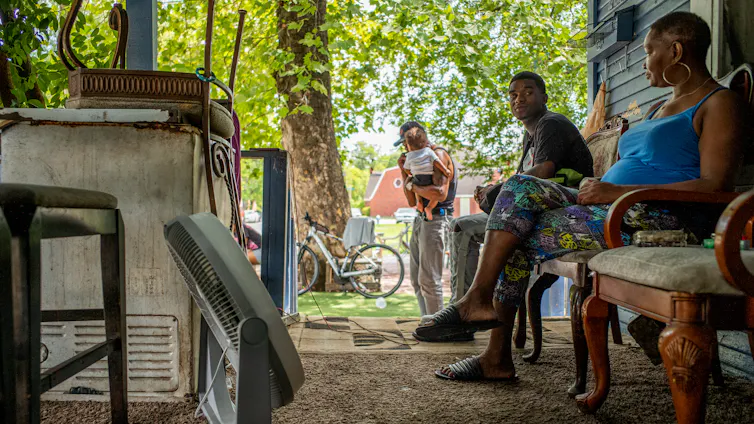
Heat waves can turn homes into dangerous heat traps—especially during blackouts or in houses without AC—pushing indoor temperatures and humidity into lethal territory even for young, healthy adults, not just the elderly.

Heat waves can leave homes dangerously hot – even for young, healthy adults
Zoltan Nagy, Eindhoven University of Technology
Most people know that heat waves can be dangerous, but what they may not realize is that the heat indoors can be much worse than outdoors.
When the power goes out and air conditioning stops, or in homes without cooling, a house starts to function like a greenhouse during a heat wave. Heat enters through windows and walls and has nowhere to go. Air stagnates.
Within hours, indoor temperatures can climb well above what the thermometer shows outside, especially on upper floors and in rooms with south-facing windows. Over longer periods, especially if temperatures don’t cool off overnight, conditions can become lethal.
Most heat-related deaths occur indoors. When a heat dome sent temperatures soaring in the Pacific Northwest in 2021, 98% of the more than 600 deaths in British Columbia happened inside homes. Washington and Oregon also saw high numbers of deaths in homes that lacked air conditioning.
In Europe, where only 1 in 10 households have air conditioning, heat waves killed an estimated 60,000 people in 2022 and 47,000 in 2023, largely inside buildings never designed for these temperatures.
People of all ages are at risk in heat waves like these. I spent eight years at the University of Texas at Austin studying how buildings respond to extreme heat. In a recent study, my team assessed the heat risk in every single-family home in Austin.
We found that even younger, healthy adults face far more risk than they realize.
How hot is too hot for a human body?
Your body maintains a core temperature of about 98.6 degrees Fahrenheit (37 degrees Celsius). To cool down, it pushes blood to the skin and sweats. But when air temperature is high, that convective cooling weakens. When humidity is also high, sweat cannot evaporate.
If the body has no way to release heat, core temperature rises. If the core temperature increases past about 104 F (40 C), the body’s thermoregulation starts to fail. Past 109 F (42.8 C), death becomes likely.

What makes indoor heat especially dangerous is that it does not let up at night in homes that lack air conditioning. Outdoor temperatures typically drop after sunset, and someone outside can get a few hours of recovery. But a poorly insulated home that has been absorbing heat all day releases that heat slowly, keeping indoor temperatures elevated through the night. A person inside the home never gets a break.
After two or three nights of this, even healthy people start to be at serious risk for heat-related illnesses.
Why homes heat up more than people expect
People tend to underestimate indoor heat for a few reasons.
One is that the thermostat typically sits on one wall in one room. It does not tell what the temperature is in an upstairs bedroom or near a sun-facing window. In older, underinsulated homes, the actual felt temperature can exceed 90 F (32.2 C) even when a thermostat reads 75 F (23.9 C). The hot walls, ceilings and windows can radiate heat directly onto your body.
Another reason is that people assume all homes respond to heat the same way. However, a newer home with double-pane windows and good insulation acts like a thermos, keeping heat out for a longer time. An older home with single-pane windows and cracks in the walls heats up fast.
Two houses on the same street, exposed to the same outdoor conditions, can have completely different temperatures inside. And in a blackout, where neither home has cooling, those differences can become a matter of life and death.
What we found in Austin
Our study combined two datasets. From Austin’s tax appraisal records, we pulled basic property information, such as the year the home was built, the size and the number of stories for each of the city’s 213,000 single-family homes. We then matched each home to the most similar energy simulation models in a U.S. Department of Energy database that contains thousands of detailed, physics-based building energy models representing the U.S. residential building stock.
Using those models, we simulated each building’s indoor temperatures over time during a three-day heat wave and power outage with outdoor temperatures above 110 F (43 C).
We found that 85% of homes got hot enough to pose a significant risk of death for an elderly occupant. But what surprised us was the risk to younger people.
Under today’s climate conditions in Austin, about 15% of homes already have the potential to get hot enough without air conditioning to pose serious heat risks to healthy adults. Under future warming scenarios, that number jumps to as high as 65% if average summer highs reach 104 F (40 C). Further, climate projections for Austin show that heat waves will double in frequency by the end of the century.
We found three types of buildings and accompanying risks:
- Resilient homes, which are newer and well insulated, tended to have temperature and humidity conditions that would be survivable for an elderly occupant throughout the simulated heat wave with blackout.
- Critical-risk buildings, which are mostly older homes, became dangerous almost immediately.
- And then there was the middle group – homes where temperatures rose slowly during the simulated blackout, day by day, possibly giving occupants a false sense of security until it was too late.
Texas has already seen conditions like our case study’s – a heat wave paired with a power outage. In 2024, a derecho knocked out power for nearly 900,000 Houston households while the heat index climbed to 100 F (37.8 C). Seven weeks later, Hurricane Beryl cut power to 2.6 million homes, leaving them without power for over three days, with temperatures over 90 F (32.2 C).
What you can do to stay safe
If you can’t get cooling at home, there are steps you can take that can help.
Move to the lowest floor of your home, where it will be coolest. Close the blinds and curtains on sun-facing windows. Drink water constantly to stay hydrated, which is essential for regulating body temperature.
If you’re facing a blackout, be sure to also check on elderly neighbors, especially those living alone. You can also try to find a public cooling center; many cities now open them during heat emergencies.
Longer term, upgrades such as reflective window film, attic insulation and lighter-colored roofing can reduce how much a home heats up. After the 2021 heat dome, British Columbia’s coroner recommended updating building codes to address heat.
Our own findings point in the same direction: We propose that new homes should be required by building codes to maintain conditions in which at least light physical activity remains possible for all occupants for at least 72 hours during a power outage.
As summers get hotter with climate change and blackouts become more frequent, the risks of people suffering heat illnesses will only continue to rise.
Zoltan Nagy, Professor of Building Services, Eindhoven University of Technology
Heat waves can leave homes dangerously hot – even for young, healthy adults
This article is republished from The Conversation under a Creative Commons license. Read the original article.
💪 Your health journey starts here! Explore the latest health news, fitness tips, wellness trends, and healthy living advice. Share your thoughts in the comments and subscribe to the STM Daily News newsletter to stay informed and inspired every day.


How to Protect Yourself from a Smartphone Scam
(Feature Impact) The first sign is unexpectedly losing access to your cell phone. Soon after, when you connect to Wi-Fi, the gravity of the situation sinks in: a criminal has gained access to your cell phone number and is trying to siphon money from your credit cards and bank accounts.
The scam is called SIM swapping, or SIM hijacking, and it’s a concern for law enforcement in the United States and abroad as more than 5,000 people have reported SIM swapping scams to the FBI since 2022. Older adults, caregivers and families can benefit from understanding the warning signs of SIM swapping and taking simple security steps to prevent it from happening.
How SIM swapping works
A SIM card, or its digital version known as an eSIM, helps connect a phone number to a carrier network. In a SIM swapping scam, a criminal collects basic information about their victim, such as their name, birthdate and address, to try to move the victim’s phone number to a SIM card or eSIM profile the criminal controls.
Once complete, the scammer gains access to accounts you may be logged into on your phone, such as bank accounts or credit card apps, without touching your phone or being near you.
How to protect yourself from SIM swapping scams
Preparation is the best protection against SIM swapping. Cell phone users should use strong, unique passwords for each online account – password managers are a helpful tool in creating complex and randomized passwords. Use two-factor authentication where it’s offered; this adds an extra layer of security when accessing sensitive accounts.
Next, consumers should protect personal information they share online, whether on social media or in texts or emails asking for identifying data, such as PIN numbers, birthdates or one-time security codes. Be wary of anyone pushing you to share personal information, particularly if they’re pushy with their request or make it sound urgent.
Check your mobile carrier to see if it offers SIM protection. For example, Verizon customers can toggle on a protection feature on the carrier’s website or app to lock lines on their account to help prevent SIM changes.
If you get an unprompted notification that your SIM has been changed, or otherwise suspect you’ve been targeted in a SIM swapping scam, contact your banks immediately and have them freeze your accounts, including ones the criminals may not have targeted yet. Next, work with your cell phone provider to help regain access to your mobile device. If you’re able, share as much information as possible with law enforcement so they can investigate, or at least document trends, in how often this scam occurs.
To find more advice to protect against smartphone scams, visit Verizon.com.
Photo courtesy of Shutterstock

SOURCE:
📰 Enjoying STM Daily News? Join the conversation!
💬 Leave a comment, share your thoughts, and subscribe to our newsletter for the latest stories, updates, and “News You Can Use This Moment!” delivered to your inbox.
Stay connected with STM Daily News!
STM Daily News
Supreme Court rules against trans girls participating in single‑sex sports, but leaves open larger questions of trans rights
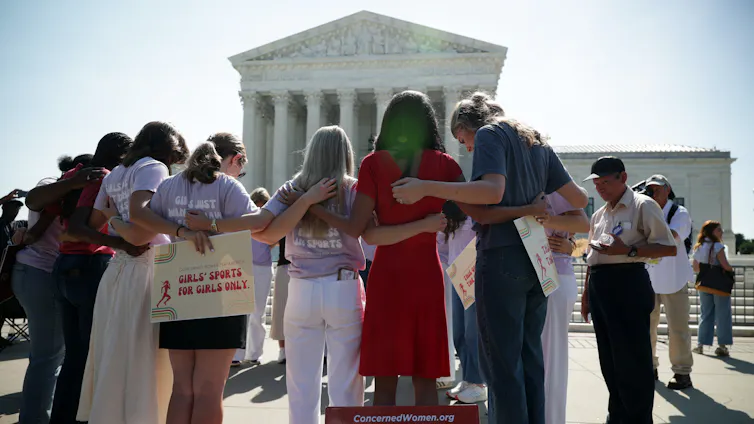
The U.S. Supreme Court ruled on June 30, 2026, that West Virginia and Idaho did not violate the Constitution by preventing transgender students from joining female sports teams, and that states can restrict who participates on women’s and girls sports teams based on a student’s sex assigned at birth.
Marie-Amelie George, Wake Forest University
The U.S. Supreme Court ruled on June 30, 2026, that West Virginia and Idaho did not violate the Constitution by preventing transgender students from joining female sports teams, and that states can restrict who participates on women’s and girls sports teams based on a student’s sex assigned at birth.
This ruling, focused squarely on transgender students participating on single-sex sports teams, does not resolve other major questions that are important to trans rights. These issues include what bathrooms transgender or nonbinary students can use at school, as well as whether transgender individuals can update their names and gender markers on identity documents.
The court folded two related cases that address sports team participation at the middle, high school and college levels – Little v. Hecox and West Virginia v. B.P.J. – into one single decision that resolved both. The justices ruled 6-3 on the cases.
This ruling backs 25 other states that, over the past few years, have passed new laws restricting transgender students from participating on female sports teams.
Twenty-one states also have some sort of restriction on transgender and nonbinary students using school bathrooms designated by sex.
As a legal scholar and expert on LGBTQ+ rights, I believe that based on the court’s reasoning, it is likely that the conservative majority on the court would uphold states’ right to restrict school bathroom use based on sex assigned at birth. However, this ruling leaves bigger questions regarding transgender students’ broader rights in school, at work and elsewhere unanswered.
A political flash point
There were estimated to be fewer than 10 transgender athletes who participated in collegiate athletics in 2024.
But the issue of transgender students participating on sports teams is a hot-button issue for the Trump administration and Republicans, who argue that transgender female students have a biological advantage in competitive sports over athletes assigned female at birth.
The issue is nuanced and depends on factors including the athletes’ age and whether they have undergone gender-affirming hormonal therapy.
Some recent research shows that transgender female athletes who have undergone gender affirming hormone therapy have a comparable level of strength to cisgender female athletes.
What the rulings covered
At issue in these two Supreme Court cases were what protections Title IX – which bars sex-based discrimination in education programs and activities that receive federal funding – as well as the equal protection clause of the 14th Amendment gave transgender students.
Little v. Hecox challenged Idaho’s 2020 law that allows only students whose sex was designated female at birth to participate on girls and women’s school sports team.
Lindsay Hecox, a transgender female student at Boise State University, alongside a cisgender student, filed a lawsuit against the state in 2020. Hecox, now 24, could not try out for the school’s track and cross country team because of the law. She instead ran at the club level.
In West Virginia v. B.P.J., a transgender middle school student athlete named Becky Pepper-Jackson similarly sued the state so she could continue participating in track and field. Pepper-Jackson won a state title in girls shot put in May 2026.
The state’s 2021 Save Women’s Sports Act requires public middle schools, high schools and colleges to designate all school athletic teams by biological sex.
Understanding Title IX and how it applies
The Supreme Court determined that states are permitted to restrict sports team participation under Title IX and its regulations, which explicitly permit schools to have separate male and female sports teams.
The opinion started by emphasizing there are “enduring” physical differences between males and females, and that if there were unified sports teams, females could be at a disadvantage.
“Separate sports teams for biological males and biological females are reasonable: Given the inherent physical differences between the sexes, allowing only biological females to play on women’s and girls’ teams can reduce the risk of physical injury and ensure fair competition,” the court ruled in its opinion on West Virginia v. B.P.J., authored by Justice Brett Kavanaugh. Chief Justice John Roberts and Justices Samuel Alito, Clarence Thomas, Neil Gorsuch and Amy Coney Barrett joined the ruling.
Pepper-Jackson argued that this part of Title IX did not have relevance to her case because she had taken puberty blockers and never gone through male puberty.
As a result, she argued, she did not have heightened levels of testosterone or other physical differences that could raise the concern of a competitive advantage over cis female students in sports. She also posed no physical safety concerns for her teammates.
The court’s majority rejected this argument, saying that the Title IX regulations did not speak to this issue. The court recognized that although the laws might produce unfair results for someone like Pepper-Jackson, this did not make the restrictions improper.
The court added that Pepper-Jackson and other students in her position need to take up their concerns with state legislatures.
The court’s liberal wing – Justices Sonia Sotomayor, Elena Kagan and Ketanji Brown Jackson – agreed with the conservative majority that the laws did not violate Title IX.
The role of the equal protection clause
The court also addressed the equal protection clause of the U.S. Constitution, which says that the government must apply its laws fairly and cannot treat people differently without a valid reason.
The court’s conservative majority ruled that the laws distinguished based on sex, and as a result they scrutinized the laws more carefully. However, the court concluded that the athletic restrictions nevertheless passed constitutional muster.
Here, too, the court’s majority cited the interests of safety and competitive fairness as important justifications for the laws.
The liberal justices disagreed with their colleagues’ analysis. In their view, the laws were too broad to satisfy the Constitution, because they banned transgender girls who had never experienced male puberty from female sports teams.
A side step
The decision is a narrow one. The court went to great lengths to emphasize that it was focused on sports, and that the court was not being asked about transgender people’s rights more broadly.
In the court’s telling, sports are unique because competition depends on the physiology and physical differences between those assigned male and female at birth. That is important, because there are few circumstances in which the physical differences between males and females continue to be relevant.
In the past, many occupations and schools were sex-segregated. Today, bathrooms, school sports teams, changing facilities, some college residence halls, juvenile detention centers and prisons are among the last places that remain segregated by sex.
Moreover, the court avoided ruling on the constitutional standard that should apply when transgender people are discriminated against. Under constitutional doctrine, courts will more closely scrutinize laws that discriminate against historically powerless minority groups, such as people of color and women.
One of the open questions in transgender rights litigation is whether transgender people qualify for that more searching review.
This case did not resolve that issue.
The court’s narrow ruling on transgender athletes ultimately did not resolve other key issues for transgender rights, which the court will likely be asked to address at a later date.
Marie-Amelie George, Associate Professor of Law, Wake Forest University
This article is republished from The Conversation under a Creative Commons license. Read the original article.
📰 Enjoying STM Daily News? Join the conversation!
💬 Leave a comment, share your thoughts, and subscribe to our newsletter for the latest stories, updates, and “News You Can Use This Moment!” delivered to your inbox.
Stay connected with STM Daily News!





