

Movie and television Reviews
Adam-12: The Groundbreaking Police Procedural That Set the Standard for Realism and Detail in TV Crime Dramas
Adam-12 is a classic American television police procedural crime drama series created by Robert A. Cinader and Jack Webb.

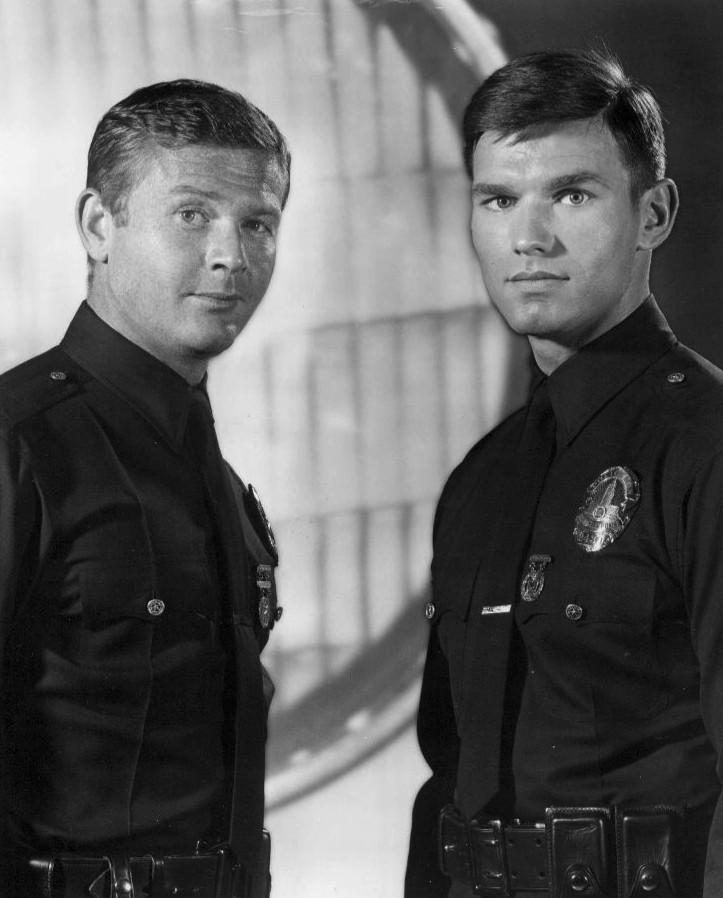
Adam-12 is a classic American television police procedural crime drama series created by Robert A. Cinader and Jack Webb. The show follows two Los Angeles Police Department (LAPD) officers, Pete Malloy and Jim Reed, as they patrol the streets of Los Angeles in their police cruiser, designated as “1-Adam-12.” The series was produced in cooperation with the real department it was based on, the LAPD, and aimed to be realistic in its depiction of police procedures and jargon.
Martin Milner and Kent McCord starred as Pete Malloy and Jim Reed, respectively, in the iconic police drama Adam-12, which became a cultural touchstone of the late 1960s and early 1970s. The show also featured many recurring co-stars, with the most frequent being William Boyett and Gary Crosby, who added depth and intrigue to various episodes, portraying a wide range of characters that enriched the series’ narratives. Throughout its impressive run of seven seasons, from September 21, 1968, to May 20, 1975, Adam-12 aired a total of 174 episodes, captivating audiences with its realistic portrayal of police work, the challenges faced by officers, and the importance of community relations. The series not only entertained viewers but also aimed to educate the public about law enforcement practices, making it a significant part of television history.
What set Adam-12 apart from other Cop shows?
Adam-12 was a groundbreaking show that aimed to showcase the reality of police work, and it helped to introduce police procedures and jargon to the general public in the United States. The show’s attention to detail and realism made it an instant hit, and it quickly became a fan favorite. Through its authentic depiction of daily police activities and the challenges faced by officers, Adam-12 not only entertained viewers but also educated them about the complexities of law enforcement. The characters, portrayed with depth and nuance, resonated with audiences, making them invest in the lives and struggles of the officers. Additionally, the series tackled various social issues of the time, shedding light on the relationship between the police and the communities they served. Its pioneering approach to storytelling set a standard for future police dramas, solidifying its legacy in television history.
The show’s creators, Robert A. Cinader and Jack Webb, also created other popular shows, such as Dragnet and Emergency!. Like Adam-12, these shows were produced in cooperation with the real departments they were based on, and they aimed to be as realistic as possible in their depictions of police and emergency services.
Despite its age, Adam-12 still holds up today as a classic of the police procedural genre. The show’s attention to detail, realism, and strong performances by its cast make it a must-watch for fans of crime dramas and police procedurals.
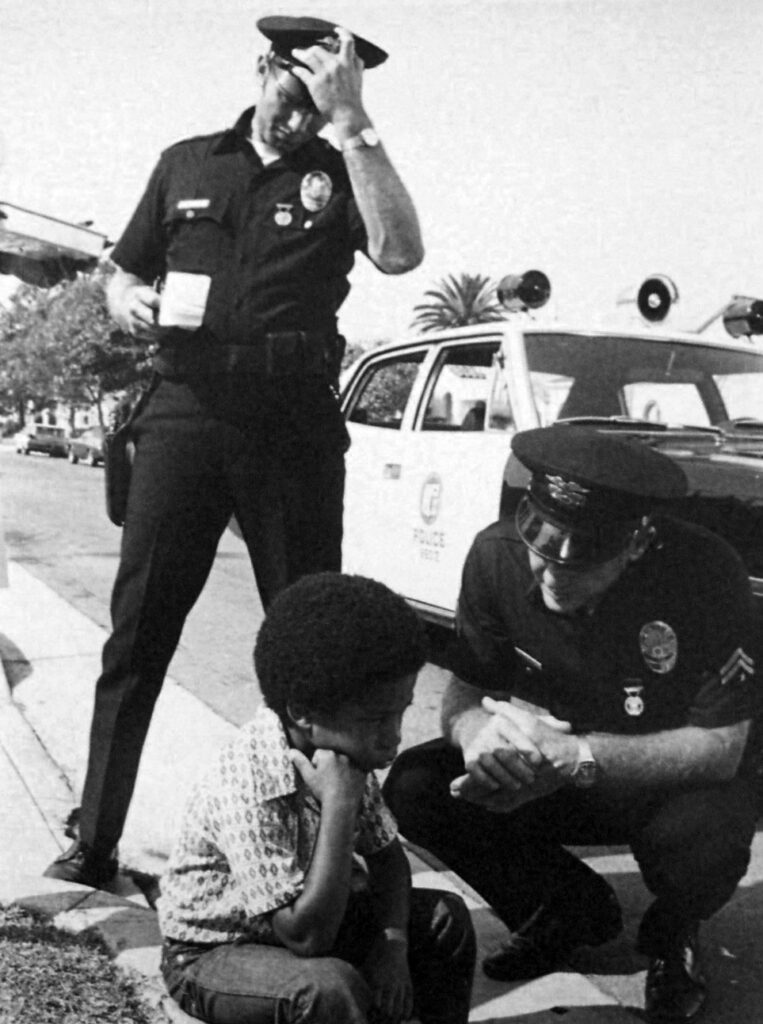
Adam-12 is a classic American television series that helped introduce police procedures and jargon to the general public in the United States. The show’s realistic portrayal of police work and attention to detail makes it a fan favorite and a must-watch for fans of the police procedural genre.
https://en.wikipedia.org/wiki/Adam-12
https://stmdailynews.com/category/entertainment/




Entertainment
‘Project Hail Mary’ demonstrates how intellectual humility can be a guiding force for scientists and astronauts


‘Project Hail Mary’ demonstrates how intellectual humility can be a guiding force for scientists and astronauts
Deana L. Weibel, Grand Valley State University
Early in Phil Lord and Christopher Miller’s science fiction blockbuster “Project Hail Mary,” middle school teacher Ryland Grace, played by Ryan Gosling, is tasked by an international coalition to uncover the biology of a strange microbe known as an “astrophage” that has been absorbing energy from an ever-dimming Sun.
Grace is a molecular biologist by training, but his controversial ideas and overconfident attitude have kept him out of academia. The viewer will see through flashbacks that as he’s matured, he’s developed a vital skill for solving the astrophage crisis: intellectual humility.
I’m an anthropologist who studies astronauts and space professionals to understand what space symbolizes to the people who experience it firsthand. Grace’s character in “Project Hail Mary” developed several of the traits that I’ve observed in the astronauts I’ve interviewed. These characteristics prove essential to success in high-stakes, uncertain situations. Warning: some plot points will be revealed ahead.
‘Project Hail Mary’ follows a middle school science teacher tasked with saving Earth from star-eating microbes.
Grace has been chosen as one of the first to study astrophage because of his Ph.D. dissertation on whether life can exist without water, a hot take in the world of science that, along with his rude response to peer reviewers, has gotten him banned from polite science conferences. The solar microbes eating the Sun seem to live without water, so Grace is the acknowledged expert.
Unfortunately, Grace can’t see into the mysterious, opaque little organisms until a dead one becomes translucent. Finally, Grace can see inside the microbe to study it, and he believes his hypothesis about life not needing water will be proven. However, chemical analysis reveals astrophage is made up of mostly water.
In a moment that undercuts both his expertise and his expectations, Grace is wrong. Crushed, he throws a tantrum, observed by a bemused assembly of international leaders.
What actually matters isn’t that Grace is wrong but what he does next. Only after Grace overcomes his frustration and need to be right is he able to move forward, returning to the problem with curiosity rather than defensiveness and the resolve to learn enough about astrophage to make saving the world a possibility.
Admitting what you don’t know
Perhaps the real hero of the story is not Ryland Grace himself but his intellectual humility. Intellectual humility, the admission of your own limited knowledge and a willingness to learn from others, sometimes seems to be undervalued, particularly by those in leadership positions.
People who are intellectually humble will say things like, “Tell me more,” or “I wish I had thought of that.” They don’t feel threatened when admitting vulnerability.
Some people, however, do feel threatened by the thought of admitting incomplete knowledge or appearing to have limitations. Instead of confessing what they don’t know, they may claim a kind of certainty that goes beyond their true expertise, shutting down further questioning. Intellectual humility, in contrast, encourages someone to remain engaged by highlighting how much they still have to learn.
Being contradicted by the facts can produce diverse reactions. For someone without intellectual humility, not knowing can feel like failure. It can lead to defensiveness, denial or a refusal to engage. With humility, however, not knowing is more interesting than scary. The defensiveness is gone, replaced by curiosity.
When Grace realizes his expectations about astrophage aren’t supported by scientific evidence, he goes from feeling sure to feeling unsure. Reality itself hasn’t changed, but Grace’s sense of reality shifts in an important way. He realizes that there is a great deal he still needs to learn about these microbes, without assumptions blocking new knowledge. His intellectual humility gives him a path forward, a way to reset and take in new information without shutting down.
Intellectual humility as a method
Ryland Grace is willing to learn, and this serves him well throughout the movie. His intellectual humility operates as a method, guiding how he approaches problems step by step.
For instance, once he realizes, to his dismay, that astrophage is made of water, Grace acknowledges this new truth. He doesn’t like it, but he accepts it. Moving forward, he avoids making assumptions about astrophage. Instead, he tests hypotheses using simple tools that have been cobbled together from items available in a big-box store.
His partner in this experiment is Carl, played by Lionel Boyce, who is there as a sort of half-“babysitter,” half-security guard, keeping an eye on Grace but also being irresistibly pulled into his scientific orbit.
Grace’s intellectual humility transforms Carl from a minder into a partner. Even though Carl isn’t a scientist himself, when Grace has to figure out how to make the lab’s astrophage experiment replicate the conditions causing the crisis in our solar system, it is Carl who suggests a solution.
Instead of being bothered that a nonscientist knew better than he did, Grace acknowledges the solution’s value, thanks Carl and uses Carl’s idea to reach a crucial discovery, proving himself to be open to ideas and feedback from others.
When Grace’s experiments struggle, he moves forward without defensiveness and instead displays increasing curiosity. His method of intellectual humility is to admit ignorance, test variables and revise working hypotheses based on new data, staying open to suggestions from others the whole time. To borrow a phrase from a different space story, “this is the way.”
Science fiction to real space exploration
Although “Project Hail Mary” is fictional, the attitude displayed by Ryland Grace is something I have seen in ethnographic interviews with astronauts and other space professionals, including engineers, astronomers and flight surgeons. Ethnography is a method of research, usually done in the long term, that combines interviews and participant observation.
When confronted with the reality of the universe – an enormous starry void we humans are only beginning to understand – scientists and space explorers are often stunned and humbled by the extent of their own ignorance. Although there are, without a doubt, less-than-humble people building rockets or going into space, intellectual humility is often a guiding force among many successful space researchers.

In my book, “The Ultraview Effect,” I trace the way a sense of cosmic awe can provoke feelings of humility and openness, which serve as catalysts for curiosity. This pattern, which I began to notice after an astronaut told me how seeing billions of stars with his own eyes made him realize how little he actually knew, is very similar to what Grace experiences in the movie.
Being open to awe and willing to be humbled by it isn’t weakness but strength. And in his embrace of intellectual humility, Grace lives up to his name.
Deana L. Weibel, Professor of Anthropology, Grand Valley State University
This article is republished from The Conversation under a Creative Commons license. Read the original article.
Looking for an entertainment experience that transcends the ordinary? Look no further than STM Daily News Blog’s vibrant Entertainment section. Immerse yourself in the captivating world of indie films, streaming and podcasts, movie reviews, music, expos, venues, and theme and amusement parks. Discover hidden cinematic gems, binge-worthy series and addictive podcasts, gain insights into the latest releases with our movie reviews, explore the latest trends in music, dive into the vibrant atmosphere of expos, and embark on thrilling adventures in breathtaking venues and theme parks. Join us at STM Entertainment and let your entertainment journey begin! https://stmdailynews.com/category/entertainment/
and let your entertainment journey begin!

small business
When TV Talks About Gentrification and Shopping Local — and Where It Gets It Right (and Wrong)
A closer look at how the TV show The Neighborhood tackles gentrification and shopping local—and where the reality of online sales and small business survival is more complex.

In our continuing look at how entertainment—television, movies, and streaming shows—grapples with real-world issues, this time we turn our attention to gentrification and the often-repeated call to “shop local.” Once again, we examine how popular culture frames these conversations, this time through the CBS sitcom The Neighborhood and the episode “Welcome Back to What Used to Be the Neighborhood.”
A Familiar Story: When the Neighborhood Changes
In the episode, Calvin’s favorite longtime restaurant closes its doors and is replaced by a flashy new pet spa. To Calvin, the change symbolizes something much bigger than a single business closing—it represents the slow erosion of the neighborhood he knows and loves. In response, he launches a campaign urging friends and neighbors to buy local in order to protect small businesses from disappearing.
Emotionally, the episode hits home. Many communities across the country have watched beloved neighborhood institutions vanish, replaced by businesses that feel disconnected from the area’s history and culture. In that sense, The Neighborhood gets something very right: gentrification often shows up one storefront at a time.
Where Television Simplifies a Complicated Reality
But, as is often the case with television, the episode also simplifies a much more complex economic reality.
The show frames “shopping local” as a direct alternative to shopping online, subtly suggesting that online platforms are inherently harmful to small businesses. In real life, however, the line between “local” and “online” is no longer so clear.
Many local and small businesses now survive precisely because they sell online—through their own websites, through Amazon, or through other platforms that support independent sellers. For some, online sales are not a threat to local commerce; they are a lifeline.
Why Brick-and-Mortar Isn’t Always Sustainable
Rising costs are a major factor driving these changes. Commercial leases, insurance premiums, utilities, staffing costs, and local fees have all increased dramatically in many cities. For small business owners, keeping a physical storefront open can become financially impossible—even when customer support remains strong.
As a result, some businesses choose to close their brick-and-mortar locations while continuing to operate online. Others scale back to pop-ups, shared spaces, or hybrid models. These businesses may no longer have a traditional storefront, but they are still local—employing local workers, paying local taxes, and serving their communities in new ways.
The Real Issue Behind “Shop Local”
Where The Neighborhood succeeds is in capturing the emotional truth of gentrification: the sense of loss, displacement, and cultural change that comes with rising rents and shifting demographics.
Where it misses the mark is in suggesting that consumer choices alone—simply avoiding online shopping—can solve the problem.
The real challenges facing local and small businesses go far beyond individual buying habits. They include zoning policies, commercial rent practices, corporate consolidation, and economic systems that increasingly favor scale over community presence.
A Conversation Worth Having—Even If TV Can’t Finish It
The Neighborhood deserves credit for bringing these issues into mainstream conversation. It sparks discussion, even if it wraps a complicated topic in a sitcom-friendly moral lesson.
The reality is messier. Supporting local businesses today often means rethinking what “local” looks like in a digital economy—and recognizing that survival sometimes requires adaptation, not nostalgia.
Further Reading & External Resources
- U.S. Small Business Administration: Marketing & Online Sales for Small Businesses
Explains how small businesses use websites, marketplaces, and digital tools to survive and grow. - Brookings Institution: Understanding Gentrification
A research-based overview of gentrification, its causes, and its impact on local communities. - National Main Street Center: Supporting Local Small Businesses
Resources focused on preserving local businesses while adapting to economic change. - SCORE: Why Going Online Is Critical for Small Business Survival
Mentorship-backed guidance on how digital sales help small businesses remain competitive. - Harvard Business Review: How Small Businesses Can Compete in an Online Economy
An analysis of how independent businesses adapt to large online platforms without losing identity.
At STM Daily News, our Local and Small Business coverage continues to explore these real-world dynamics beyond the TV screen, highlighting the challenges, innovations, and resilience of the businesses that keep communities alive—whether their doors are on Main Street or their storefronts live online.
📍 Read more Local and Small Business coverage at: STM Daily News
Entertainment
Home Alone’s ‘Wet Bandits’ are medical miracles
How did the Wet Bandits survive Home Alone? A trauma-focused breakdown of the head, neck, burn and electric injuries they’d actually face.

Last Updated on March 8, 2026 by Daily News Staff
Adam Taylor, Lancaster University
The festive movie season is upon us, and one of my perennial favourites is Home Alone 2: Lost in New York. I will die on this hill: it is better than the original. But rewatching it as an adult raises an awkward question. How on earth did the Wet Bandits survive the first film at all, let alone escape without lasting injuries?
Ten-year-old Kevin McCallister, the boy left home alone, sets up traps that are played for laughs, but many involve levels of force that would be catastrophic in real life. A 100lb (45kg) bag of cement to the head, bricks dropped from height, or heavy tools swung at the face are not things a human body can simply shrug off. High-impact trauma to the head and neck rarely ends well.
To understand why, it helps to know a little about skull anatomy. The skull has a protective “vault” that encases the brain, while the bones of the face contain hollow spaces called sinuses. These spaces reduce the weight of the skull but also act as a biological crumple zone, helping to absorb force and protect the brain during impacts. But that protection has limits.
A rough calculation of the forces involved when a 100lb bag of cement strikes the head suggests instant fatal injury. The neck simply cannot absorb that level of force. To put that in perspective, research shows that the cervical spine suffers severe damage above about 1,000 newtons of force. A 100lb (around 45kg) cement bag already exerts roughly 440 newtons under its own weight, and when falling, it decelerates over a very short distance on impact.
While the exact force depends on the height of the fall and how quickly the bag comes to a stop, even conservative assumptions place the impact well above 1,000 newtons, easily exceeding thresholds for catastrophic neck injury.
Beyond that, there is a high risk of brain herniation, where swollen brain tissue is forced into spaces it does not belong. This can compress areas that control breathing and movement, often leading to coma and death.
Head injuries are only part of the problem. Many of Kevin’s traps would also place enormous stress on the chest and major blood vessels. Falling forward from a height, being crushed by heavy objects, or being struck in the torso can cause severe internal injuries. These forces are commonly seen in high-speed, head-on car crashes. In extreme cases, the impact can rupture the aorta, the body’s main artery, which is almost always fatal.
Crush injuries elsewhere in the body can have serious and life-changing consequences. Even if they are not immediately deadly, they can cause internal bleeding that worsens over hours or days. Broken ribs, for example, can puncture the liver, kidneys or spleen, allowing blood to leak slowly into the abdomen. Damage to soft internal organs can also lead to infection, organ failure, or delayed death, depending on the severity.
Then there are the less obviously lethal moments. When Marv crashes into a shelf stacked with paint tins and the shelf falls on him, the impact alone could cause serious internal injury. And paint splashed into the eyes could cause chemical burns and blindness.
Simple slips and falls are not harmless either. The bones at the back of the skull are only about 6–7mm thick. A hard blow here can cause bleeding inside the skull. These brain bleeds do not always show symptoms immediately and may worsen over hours or days after what seemed like a minor bump.
Electricity is another recurring gag that would be anything but funny in reality. When Marv grabs the taps attached to an arc welder, he is exposed to electrical current that causes his muscles to contract uncontrollably. This is why people who touch live electrical sources often cannot let go. The current overrides the body’s normal nerve signals. Prolonged exposure increases the risk of disrupting the heart’s normal rhythm, potentially triggering cardiac arrest. https://www.youtube.com/embed/ZfuAyYoc94A?wmode=transparent&start=0
Despite what cartoons suggest, electricity does not make the skeleton visible – as we see happen to Marv. There is no X-ray radiation involved. To expose bone, you would need extremely high-voltage current, causing fourth-degree burns, which destroy skin, muscle and bone.
Piercing injuries also feature heavily. A nail through the foot is not just painful. It can damage nerves and soft tissues, fracture bones, and introduce bacteria deep into the wound. This raises the risk of serious infection, including tetanus.
Finally, there is Harry’s infamous blowtorch scene. Being set alight for 22 seconds is more than enough time to cause permanent nerve damage, potentially destroying pain sensation altogether. While scalp skin is among the thickest on the body, it has relatively little cushioning underneath. This makes the underlying tissue and bone more vulnerable to deep burns, reaching third or even fourth degree severity, which can be lethal.
Add combustible kerosene to the mix and the risks escalate further. Exposure is linked to kidney damage, heart problems, central nervous system depression and serious respiratory issues.
In short, Harry and Marv are walking medical impossibilities. Surviving a second round of Kevin McCallister’s festive booby traps would require extraordinary luck, immediate trauma care, and months of rehabilitation. Even if they appeared outwardly fine, the internal damage would probably be devastating. Perhaps those lingering injuries explain why the Wet Bandits never made it back for another sequel.
Adam Taylor, Professor of Anatomy, Lancaster University
This article is republished from The Conversation under a Creative Commons license. Read the original article.
Dive into “The Knowledge,” where curiosity meets clarity. This playlist, in collaboration with STMDailyNews.com, is designed for viewers who value historical accuracy and insightful learning. Our short videos, ranging from 30 seconds to a minute and a half, make complex subjects easy to grasp in no time. Covering everything from historical events to contemporary processes and entertainment, “The Knowledge” bridges the past with the present. In a world where information is abundant yet often misused, our series aims to guide you through the noise, preserving vital knowledge and truths that shape our lives today. Perfect for curious minds eager to discover the ‘why’ and ‘how’ of everything around us. Subscribe and join in as we explore the facts that matter. https://stmdailynews.com/the-knowledge/




