

Entertainment
Catherine O’Hara and the Late-Night TV That Stayed With Me
A personal reflection on watching Catherine O’Hara on SCTV during late-night television and how those early performances shaped a lifelong love of character-driven comedy.


Catherine O’Hara and the Late-Night TV That Shaped a Generation of Comedy Fans
From a personal point of view, one of my earliest memories of Catherine O’Hara doesn’t come from a movie theater or a prime-time sitcom. It comes from the quiet glow of late-night television, long after most of the house had gone to sleep.
As a youngster, I remember staying up late enough to catch Second City Television (SCTV), which aired after Saturday Night Live and Don Kirshner’s Rock Concert. That meant it didn’t come on until around 1:30 a.m. Pacific Time, deep into Saturday night and early Sunday morning. Even at that young age, I knew I was watching something different. The humor felt sharper, stranger, and somehow smarter — and Catherine O’Hara stood out immediately.
Even before I understood why it was funny, I understood that it mattered.
Late-Night Television as a Classroom
Looking back now, it’s clear that late-night television quietly shaped my taste in comedy. SCTV didn’t feel like it was aiming for the widest possible audience. It felt like it trusted the viewer to catch up. Catherine O’Hara’s performances weren’t just about delivering punchlines — they were about inhabiting characters completely, no matter how absurd, subtle, or offbeat they were.
That kind of comedy asks you to pay attention. And for a kid watching far past his bedtime, it was oddly captivating. I didn’t have the vocabulary for “character work” or “commitment to the bit,” but I recognized authenticity when I saw it. O’Hara had it in abundance.
Seeing the Through-Line Years Later
As the years went on, Catherine O’Hara kept showing up in new places — and each time, something clicked. In Beetlejuice, there was that same fearless weirdness. In Home Alone, she brought warmth and panic and humanity to what could have easily been a one-note role. She grounded the chaos without ever dulling it.

Then came Schitt’s Creek. By the time Moira Rose entered our cultural vocabulary, it felt less like a reinvention and more like a full-circle moment. The bold choices, the musicality of her voice, the unapologetic commitment — it all traced back to those SCTV performances from decades earlier.
Moira Rose didn’t come out of nowhere — she came from years of late nights, sharp instincts, and fearless comedy.
Why Those Early Moments Matter
What I didn’t realize at the time was that those 1:30 a.m. viewings were teaching me how to appreciate comedy that lingered. Not everything had to land immediately. Not every joke needed a laugh track. Some performances simply stayed with you.

Catherine O’Hara’s work did exactly that. It stayed. Through different decades, formats, and genres, her performances carried a consistency of intelligence and heart. For many of us who grew up sneaking glances at late-night television, she became a familiar presence — someone who trusted the audience enough to go all in.
A Personal Goodbye
With news of her passing, those memories feel closer than ever. Not just of Catherine O’Hara the icon, but of Catherine O’Hara the performer who helped shape how many of us learned to watch comedy. She wasn’t just funny — she was formative.
Late-night television doesn’t always get credit for the role it plays in shaping taste, curiosity, and imagination. But for those of us who were there, watching quietly while the rest of the world slept, it mattered. And Catherine O’Hara was a big part of why.
— STM Daily News
For more on her early career in comedy, see Forbes retrospective on Catherine O’Hara’s career history and influence. [oai_citation:3‡Forbes](https://www.forbes.com/sites/hannahabraham/2026/01/30/how-catherine-ohara-became-beloved-across-three-generations-from-sctv-to-home-alone-to-schitts-creek/?utm_source=chatgpt.com)
Learn about the cultural impact and awards for Schitt’s Creek Schitt’s Creek Wikipedia overview. [oai_citation:4‡Wikipedia](https://en.wikipedia.org/wiki/Schitt%27s_Creek?utm_source=chatgpt.com)
See a broad overview of her life and legacy from PBS NewsHour PBS retrospective. [oai_citation:5‡pbs.org](https://www.pbs.org/newshour/arts/catherine-ohara-emmy-winning-actor-and-comedian-of-schitts-creek-fame-dies-at-71?utm_source=chatgpt.com)
Looking for an entertainment experience that transcends the ordinary? Look no further than STM Daily News Blog’s vibrant Entertainment section. Immerse yourself in the captivating world of indie films, streaming and podcasts, movie reviews, music, expos, venues, and theme and amusement parks. Discover hidden cinematic gems, binge-worthy series and addictive podcasts, gain insights into the latest releases with our movie reviews, explore the latest trends in music, dive into the vibrant atmosphere of expos, and embark on thrilling adventures in breathtaking venues and theme parks. Join us at STM Entertainment and let your entertainment journey begin! https://stmdailynews.com/category/entertainment/
and let your entertainment journey begin!
Discover more from Daily News
Subscribe to get the latest posts sent to your email.









documentaries
Former Homeless Veteran’s “The Gutter Gospel” Film Aims to Spotlight Global Mental Health Crisis
A new feature film in development is set to bring The Gutter Gospel—a story rooted in veteran homelessness, survival, and spiritual awakening—to a wider audience.
Announced March 5 via PRNewswire, the project will document the life of a former homeless veteran whose “Gutter Gospel” message has grown from the streets of North Dakota into what the release describes as a global ministry with reach in more than 200 countries. The film is framed as a response to what the announcement calls an “unprecedented mental health epidemic,” with a focus on depression, PTSD, and isolation—issues that continue to affect veterans and civilians alike.

From rock bottom to a “divine setup”
The narrative centers on a biographical turning point: after “hitting rock bottom in the streets of North Dakota,” the film’s subject describes discovering that his lowest point became a catalyst for a broader mission—feeding “the hungry and the hopeless” while sharing a faith-based message aimed at people who feel overlooked.
The release positions the story as both local and universal: Fargo is the backdrop, but the core struggle—searching for purpose in the middle of pain—is presented as a global experience.
Theology as the film’s engine: John 3:16 vs. Luke 16
According to the announcement, the film is built around what it calls a “Gospel of Contrast,” drawing a line between John 3:16 and Luke 16 (the parable of the Rich Man and Lazarus). The project’s messaging emphasizes the tension between hope and warning—an invitation to grace alongside a sobering depiction of spiritual consequence.
“Most people see the gutter as a dead end, but I found it was a sanctuary where God finally got my attention,” the film’s subject says in the release. “We are living in a Luke 16 world where people are chasing comfort while their souls are starving.”
“Forever Damned” chapter described as emotional core
A key segment of the film, titled “Forever Damned,” is described as the project’s emotional and spiritual center. The release says the chapter is designed to depict “the terrifying reality of spiritual isolation,” focusing on the moment when the “great gulf” referenced in Luke 16 becomes personal rather than symbolic.
The intent, according to the announcement, is to create a “power-punch” moment for viewers—pushing them to consider the weight of choices and the idea of urgency before opportunities for change pass.
A film designed to reach beyond traditional audiences
The project is positioned as an outreach effort aimed at meeting “the un-churched” outside of traditional religious settings. The release says the film seeks to:
- Address the mental health crisis by mirroring the experience of people living with “invisible wounds”
- Highlight efforts to feed the hungry through the ministry’s work
- Deliver a “final warning” message tied to the film’s “Forever Damned” segment
More information is available at https://theguttergospel.com/, with donations directed to https://theguttergospel.com/donate.
“The Gutter Gospel” Movie
SOURCE The Gutter Gospel
Looking for an entertainment experience that transcends the ordinary? Look no further than STM Daily News Blog’s vibrant Entertainment section. Immerse yourself in the captivating world of indie films, streaming and podcasts, movie reviews, music, expos, venues, and theme and amusement parks. Discover hidden cinematic gems, binge-worthy series and addictive podcasts, gain insights into the latest releases with our movie reviews, explore the latest trends in music, dive into the vibrant atmosphere of expos, and embark on thrilling adventures in breathtaking venues and theme parks. Join us at STM Entertainment and let your entertainment journey begin! https://stmdailynews.com/category/entertainment/
and let your entertainment journey begin!
Author

Discover more from Daily News
Subscribe to get the latest posts sent to your email.
The Bridge
Scrappy, campy and unabashedly queer, public access TV series of the 1980s and 1990s offered a rare glimpse into LGBTQ+ life

Last Updated on March 10, 2026 by Daily News Staff
“Hello to all you lovely lesbians out there! My name is Debbie, and I’m here to show you a few things about taking care of your vaginal health.”
So opens the first “Lesbian Health” segment on “Dyke TV,” a lesbian feminist television series that aired on New York’s public access stations from 1993 to 2006.
The half-hour program focused on lesbian activism, community issues, art and film, news, health, sports and culture. Created by three artist-activists – Cuban playwright Ana Simo, theater director and producer Linda Chapman and independent filmmaker Mary Patierno – “Dyke TV” was one of the first TV shows made by and for LGBTQ women.
While many people might think LGBTQ+ representation on TV began in the 1990s on shows like “Ellen” and “Will & Grace,” LGBTQ+ people had already been producing their own television programming on local stations in the U.S. and Canada for decades.
In fact my research has identified hundreds of LGBTQ+ public access series produced across the country.
In a media environment historically hostile to LGBTQ+ people and issues, LGBTQ+ people created their own local programming to shine a spotlight on their lives, communities and concerns.
Experimentation and advocacy
On this particular health segment on “Dyke TV,” a woman proceeds to give herself a cervical exam in front of the camera using a mirror, a flashlight and a speculum.
Close-up shots of this woman’s genitalia show her vulva, vagina and cervix as she narrates the exam in a matter-of-fact tone, explaining how viewers can use these tools on their own to check for vaginal abnormalities. Recalling the ethos of the women’s health movement of the 1970s, “Dyke TV” instructs audiences to empower themselves in a world where women’s health care is marginalized.
Because public access TV in New York was relatively unregulated, the show’s hosts could openly discuss sexual health and air segments that would otherwise be censored on broadcast networks.
Like today’s LGBTQ content creators, many of the producers of LGBTQ+ public access series experimented with genre, form and content in entertaining and imaginative ways.
LGBTQ+ actors, entertainers, activists and artists – who often experienced discrimination and tokenism on mainstream media – appeared on these series to publicize and discuss their work. Iconic drag queen RuPaul got his start performing on public access in Atlanta, where “The American Music Show” gave him a platform to promote his burgeoning drag persona in the mid-1980s. https://www.youtube.com/embed/hab5HrnfEZk?wmode=transparent&start=0 RuPaul appears on a 1985 episode of ‘The American Music Show.’
The producers often saw their series as a blend of entertainment, art and media activism.
Shows like “The Gay Dating Game” and “Be My Guest” were tongue-in-cheek satires of 1950s game shows. News programs such as “Gay USA,” which broadcast its first episode in 1985, reported on local and national LGBTQ news and health issues.
Variety shows like “The Emerald City” in the 1970s, “Gay Morning America” in the 1980s, and “Candied Camera” in the 1990s combined interviews, musical performances, comedy skits and news programming. Scripted soap operas, like “Secret Passions,” starred amateur gay actors. And on-the-street interview programs like “The Glennda and Brenda Show” used drag and street theater to spark discussions about LGBTQ issues.
Other programs featured racier content.
In the 1980s and ‘90s, “Men & Films,” “The Closet Case Show” and “Robin Byrd’s Men for Men” incorporated interviews with porn stars, clips from porn videos and footage of sex at nightclubs and parties.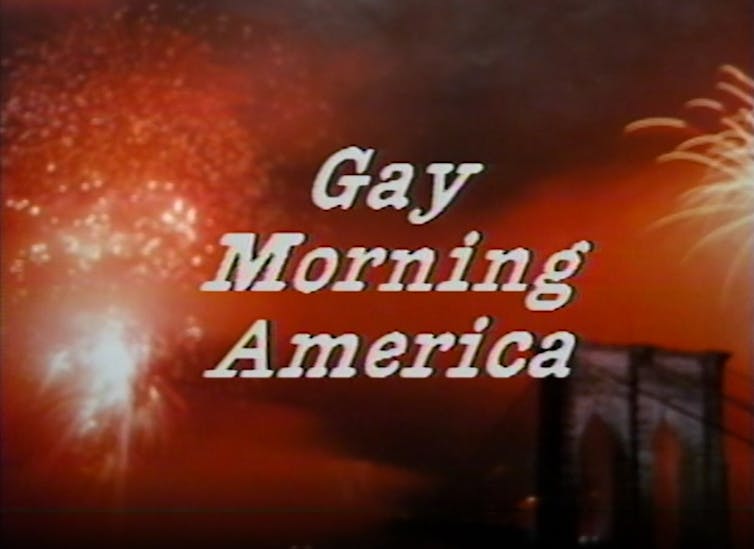
Skirting the censors
The regulation of sex on cable television has long been a political and cultural flashpoint.
But regulatory loopholes inadvertently allowed sexual content on public access. This allowed hosts and guests to talk openly about gay sex and safer sex practices on these shows – and even demonstrate them on camera.
The impetus for public access television was similar to the ethos of public broadcasting, which sought to create noncommercial and educational television programming in the service of the public interest.
In 1972, the Federal Communications Commission issued an order requiring cable television systems in the country’s top 100 markets to offer access channels for public use. The FCC mandated that cable companies make airtime, equipment and studio space to individuals and community groups to use for their own programming on a first-come, first-serve basis.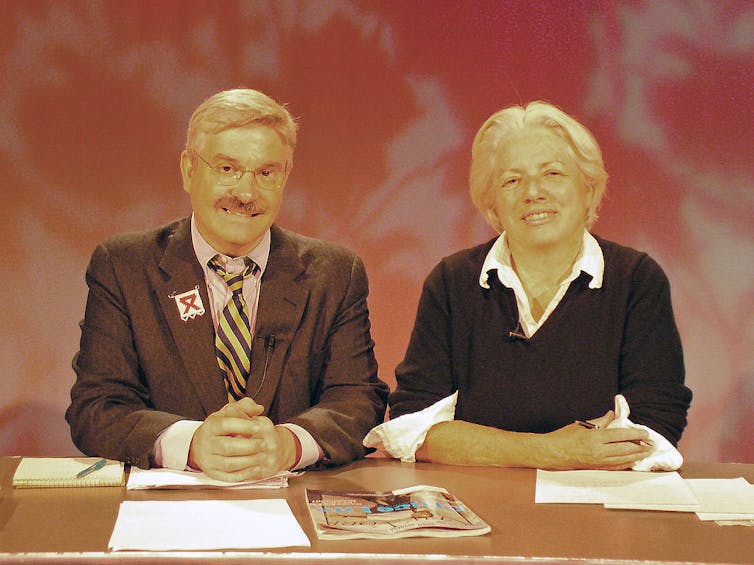
The FCC’s regulatory authority does not extend to editorial control over public access content. For this reason, repeated attempts to block, regulate and censor programming throughout the 1970s, 1980s and 1990s were challenged by cable access producers and civil liberties organizations.
The Supreme Court has continually struck down laws that attempt to censor cable access programming on First Amendment grounds. A cable operator can refuse to air a program that contains “obscenity,” but what counts as obscenity is up for interpretation.
Over the years, producers of LGBTQ-themed shows have fiercely defended their programming from calls for censorship, and the law has consistently been on their side.
Airing the AIDS crisis
As the AIDS crisis began to devastate LGBTQ+ communities in the 1980s, public access television grew increasingly important.
Many of the aforementioned series devoted multiple segments and episodes to discussing the devastating impact of HIV/AIDS on their personal lives, relationships and communities. Series like “Living with AIDS”, “HoMoVISIONES” and “ACT UP Live!” were specifically designed to educate and galvanize viewers around HIV/AIDS activism. With HIV/AIDS receiving minimal coverage on mainstream media outlets – and a lack of political action by local, state and national officials – these programs were some of the few places where LGBTQ+ people could learn the latest information about the epidemic and efforts to combat it.
The long-running program “Gay USA” is one of the few remaining LGBTQ+ public access series; new episodes air locally in New York and nationally via Free Speech TV each week. While public access stations still exist in most cities around the country, production has waned since the advent of cheaper digital media technologies and streaming video services in the mid-2000s.
And yet during this media era – let’s call it “peak public access TV” – these scrappy, experimental, sexual, campy and powerful series offered remarkable glimpses into LGBTQ+ culture, history and activism.
Lauren Herold, Visiting Assistant Professor of Gender & Sexuality Studies, Kenyon College
This article is republished from The Conversation under a Creative Commons license. Read the original article.
The Bridge is a section of the STM Daily News Blog meant for diversity, offering real news stories about bona fide community efforts to perpetuate a greater good. The purpose of The Bridge is to connect the divides that separate us, fostering understanding and empathy among different groups. By highlighting positive initiatives and inspirational actions, The Bridge aims to create a sense of unity and shared purpose. This section brings to light stories of individuals and organizations working tirelessly to promote inclusivity, equality, and mutual respect. Through these narratives, readers are encouraged to appreciate the richness of diverse perspectives and to participate actively in building stronger, more cohesive communities.
https://stmdailynews.com/category/the-bridge
Author

Discover more from Daily News
Subscribe to get the latest posts sent to your email.
Last Updated on March 9, 2026 by Daily News Staff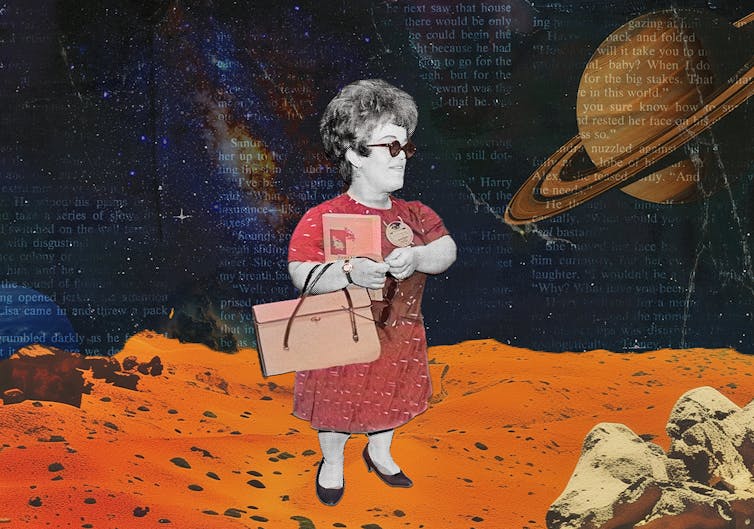
Dennis Wilson Wise, University of Arizona
Think of your favorite fantasy or science fiction novel. You’ll know the author and title, of course. But can you think of its editor or publisher?
In publishing, the people who work behind the scenes rarely get their due. But on Oct. 1, 2024, at least, one industry pioneer got the limelight. On that day, PBS aired “Judy-Lynn del Rey: The Galaxy Gal,” the first episode of its new documentary series “Renegades,” which highlights little-known historical figures with disabilities.
A woman with dwarfism, Judy-Lynn del Rey was best known for founding Del Rey Books, a science fiction and fantasy imprint that turned fantasy in particular into a major publishing category.
As a scholar of fantasy literature, I had the good fortune to serve as research consultant for the PBS project. Due to time constraints, however, the episode could tell only half of del Rey’s story, passing over how she affected science fiction and fantasy themselves.
Judy-Lynn del Rey, you see, had very clear notions on what kind of stories people wanted to buy. For some critics, she also committed the unforgivable sin of being right.
The Mama of ‘Star Wars’
Over the course of her career, del Rey earned a reputation as a superstar editor among her authors. Arthur C. Clarke, who co-wrote the screenplay for “2001: A Space Odyssey,” called her the “most brilliant editor I ever encountered,” and Philip K. Dick said she was the “greatest editor since Maxwell Perkins,” the legendary editor of Ernest Hemingway and F. Scott Fitzgerald.
She got her start, though, working as an editorial assistant – in truth, a “gofer” – for the most lauded science fiction magazine of the 1960s, Galaxy. There she learned the basics of publishing and rose rapidly through the editorial ranks until Ballantine Books lured her away in 1973.
Soon thereafter, Ballantine was acquired by publishing giant Random House, which then named del Rey senior editor. Yet her first big move was a risky one – cutting ties with Ballantine author John Norman, whose highly popular “Gor” novels were widely panned for their misogyny.
Nonetheless, del Rey’s mission was to develop a strong backlist of science fiction novels that could hook new generations of younger readers, not to mention adults. One early success was her “Star Trek Log” series, a sequence of 10 novels based on episodes of “Star Trek: The Animated Series.”
But del Rey landed an even bigger success by snagging the novelization rights to a science fiction film that, at the time, few Hollywood executives believed would do well: “Star Wars.”
This savvy gamble led to years of lucrative tie-in products for Ballantine such as calendars, art books, sketchbooks, the Star Wars Intergalactic Passport and, of course, more novels set in the Star Wars universe – so many different tie-ins, in fact, that del Rey dubbed herself the “Mama of Star Wars.”
Afterward, she became someone who, as reporter Jennifer Crighton put it, radiated “with the shameless glee of one of the Rebel forces, an upstart who won.”
A big player in big fiction
Del Rey’s tendencies as an editor were sometimes criticized – often by competitors who could not match her line’s success – for focusing too much on Ballantine’s bottom line. But she also chose to work within the publishing landscape as it actually existed in the 1970s, rather than the one she only wished existed.
In his book “Big Fiction,” publishing industry scholar Dan Sinykin calls this period the “Conglomerate Era,” a time when publishing houses – usually small and family run – were being consolidated into larger corporations.
One benefit of this shift, however, was greater corporate investment in the industry, which boosted print runs, marketing budgets, author advances and salaries for personnel.
Ballantine’s parent company, Random House, was also known as an industry leader in free speech, thanks to the efforts of legendary CEOs Bennett Cerf and Robert L. Bernstein.
Accordingly, Random House gave their publishing divisions, including Ballantine, immense creative autonomy.
And when del Rey was finally given her own imprint in 1977, she took her biggest risk of all: fantasy.
The Del Rey era
In prior decades, fantasy had a reputation for being unsellable – unless, of course, your name was J.R.R. Tolkien, or you wrote Conan-style barbarian fiction. Whereas the top science fiction magazines often had distinguished runs, fantasy magazines often folded due to lack of sales.
In 1975, though, del Rey hired her husband, Lester del Rey, to develop a fantasy line, and when Del Rey Books launched two years later, it landed major successes with bestsellers such as Terry Brooks’ “The Sword of Shannara” and Stephen R. Donaldson’s “The Chronicles of Thomas Covenant the Unbeliever.” Yet even though Lester edited the fantasy authors, Judy-Lynn oversaw the imprint and the marketing.
One lesser-known example of her prowess is “The Princess Bride.”
Today, most people know the 1987 film, but the movie originated as a much earlier novel by William Goldman. The original 1973 edition, however, sold poorly. It might have faded into obscurity had del Rey not been determined to revive Ballantine’s backlist.
She reissued “The Princess Bride” in 1977 with a dazzling, gate-folded die-cut cover and a new promotional campaign, without which the novel – and the film – might never have found its later success.
Accolades accumulate
Thanks to these efforts, Del Rey Books dominated genre publishing, producing more bestselling titles through 1990 than every other science fiction and fantasy publisher combined. Yet despite complaints that the imprint prioritized commercial success over literary merit, Del Rey authors earned their fair share of literary accolades.
The prestigious Locus Poll Award for best science fiction novel went to Del Rey authors Julian May and Isaac Asimov in 1982 and 1983. Other Locus awardees include Patricia A. McKillip, Robert A. Heinlein, Larry Niven, Marion Zimmer Bradley and Barbara Hambly.
Barry Hughart’s “Bridge of Birds” was one of two winners for the World Fantasy Award in 1985 and won the Mythopoeic Society Award in 1986. Even more impressively, Del Rey ran away with the Science Fiction Book Club Award during that prize’s first nine years of existence, winning seven of them. The imprint’s titles also won three consecutive August Derleth Fantasy Awards – now called the British Fantasy Award – from 1977 through 1979.
Yet despite these accolades, Del Rey’s reputation continued to suffer from its own commercial success. Notably, Judy-Lynn del Rey was never nominated for a Hugo Award for best professional editor while she was alive. When she died in 1986, del Rey was belatedly voted for a posthumous award, but her husband, Lester, refused to accept it, saying that it came too late.
Although the current narrative continues to be that Del Rey Books published mainly formulaic mass-market fiction in its science fiction and fantasy lines, the time may be ripe to celebrate the foresight and iconoclasm of a publisher who expanded speculative fiction beyond the borders of a small genre fandom.
Dennis Wilson Wise, Professor of Practice in English Literature, University of Arizona
This article is republished from The Conversation under a Creative Commons license. Read the original article.
Looking for an entertainment experience that transcends the ordinary? Look no further than STM Daily News Blog’s vibrant Entertainment section. Immerse yourself in the captivating world of indie films, streaming and podcasts, movie reviews, music, expos, venues, and theme and amusement parks. Discover hidden cinematic gems, binge-worthy series and addictive podcasts, gain insights into the latest releases with our movie reviews, explore the latest trends in music, dive into the vibrant atmosphere of expos, and embark on thrilling adventures in breathtaking venues and theme parks. Join us at STM Entertainment and let your entertainment journey begin! https://stmdailynews.com/category/entertainment/
and let your entertainment journey begin!
Discover more from Daily News
Subscribe to get the latest posts sent to your email.





