

Lifestyle
Ensuring Your Student Brings the Best Tools to School


(Family Features) The start of the new school year means it’s time to fill out those shopping lists with must-haves that help ensure your student’s transition back into the classroom is successful.
From the youngest students learning to write to the upperclassmen crafting analytical essays, writing instruments are proven to be a key driver of classroom success. These tools include wood case pencils and markers for younger students and mechanical pencils, pens and highlighters for older students. Pencils have not changed much over the last decade, but there are some new innovations in pens, along with some tried and true favorites, that are excellent choices for back-to-school.
Visit amazon.com/pilotpen to find more back-to-school must-haves.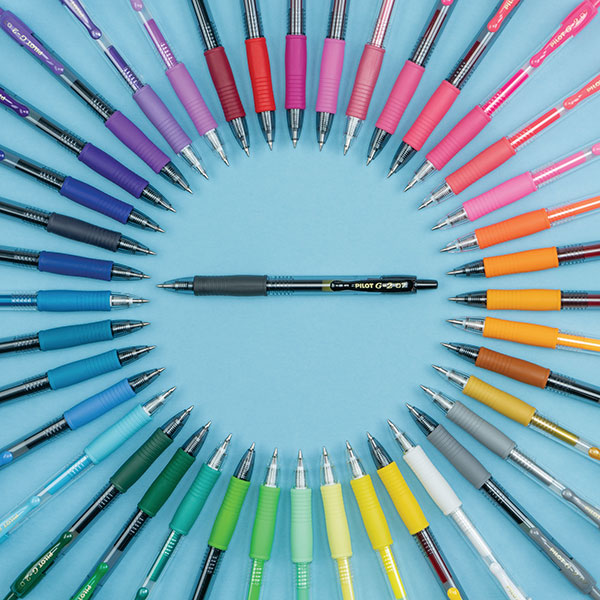
Stock Up on Your Student’s Favorite Study Buddy
Middle and high school students know the right tools are essential to achieving their goals. Providing a smooth, comfortable, long-lasting writing experience, G2 by Pilot is designed to keep up with the wide range of school tasks – from colorful study guides to memorable flash cards. Writing by hand and writing in color can have a wide range of positive benefits on learning. Blue can improve focus and problem solving, while purple can stimulate creativity.
Available in more than 40 colors, your students can find the perfect colors to power themselves for the task at hand. Part of the proceeds from the pens fund the annual G2 Student Overachievers Grant, designed to reward exceptional students who go above and beyond to make a difference in their communities. Go to G2Overachievers.com for more information.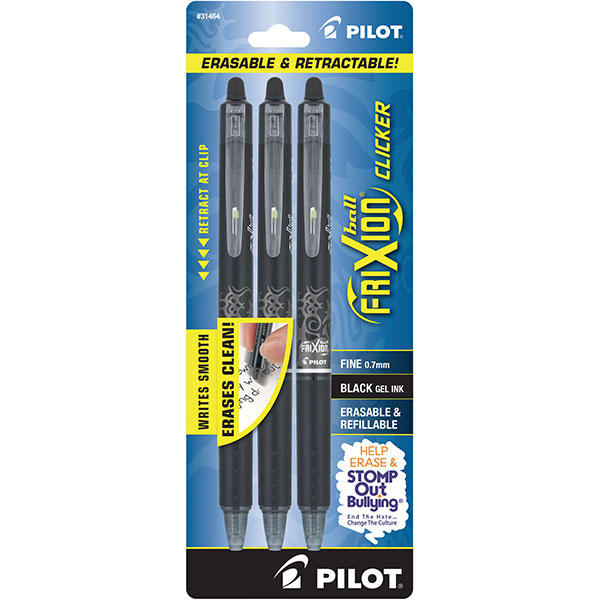
Help Students Erase Mistakes and School Stress
Innovative, thermo-sensitive ink technology enables FriXion Pens to write smoothly and erase cleanly, giving students the power to write, erase and rewrite without messy eraser crumbs or torn paper. For younger students, the Colors Markers are ideal for little hands learning to write and are great for science fair posters and school projects. The Clicker is ideal for middle and high school students. This revolutionary pen gives them the ability to have unlimited do-overs. This can help students tackle lessons with greater confidence and keep work neater, resulting in less school stress – something both students and parents can appreciate.
It is also the first and only STEM Pen, authenticated by STEM.org, as a STEM learning and teaching tool. This is because the science behind the erasable pens embodies the principles of STEM and enables both its erasability and STEM demonstrations. It puts the power of STEM, and mistake-free writing, in the palm of your student’s hands.
You Can Help Erase Bullying In U.S. Schools
Words are powerful, whether spoken or written. It’s important students choose them carefully, as unkind words can have devastating effects on school-aged children. To help students, parents and teachers write fearlessly and erase bullying for good, Pilot Pen partnered with Stomp Out Bullying – the leading national anti-bullying organization – for their Erase Bullying for Good initiative.
You can help too by checking out StompOutBullying.org to learn how to connect with your student about experiencing or witnessing bullying. You can also add FriXion Clicker erasable pens to your back-to-school shopping list. This pack helps students “write fearlessly” with part of the proceeds going to Stomp Out Bullying. Learn more at HelpEraseBullying.com and help erase bullying for good.
Photo courtesy of Shutterstock (students in classroom)
SOURCE:
Pilot Pen
Our Lifestyle section on STM Daily News is a hub of inspiration and practical information, offering a range of articles that touch on various aspects of daily life. From tips on family finances to guides for maintaining health and wellness, we strive to empower our readers with knowledge and resources to enhance their lifestyles. Whether you’re seeking outdoor activity ideas, fashion trends, or travel recommendations, our lifestyle section has got you covered. Visit us today at https://stmdailynews.com/category/lifestyle/ and embark on a journey of discovery and self-improvement.
Author




Food and Beverage
Ferrero Survey Says Adults Are Reclaiming Easter Candy Traditions
A new Ferrero survey finds adults are embracing Easter candy traditions, from building their own baskets to buying premium treats and raiding the kids’ stash.


Easter Is for Adults Now, Too
Ferrero’s latest survey suggests the holiday candy aisle is no longer just about kids. It is also about nostalgia, self-indulgence, and adults openly claiming a place in traditions they were once expected to outgrow.
At some point, adults stopped pretending they were only buying Easter candy for the kids.
Ferrero North America’s latest Easter Candy Survey leans hard into that reality, arguing that the “Adultoween” energy the company has been tracking around Halloween has now fully crossed into spring. According to the survey, 66% of North American adults say they deserve an Easter basket just as much as children do. If that sounds less like a shocking revelation and more like a formal acknowledgment of what has already been happening in grocery store checkout lines for years, that is probably because it is.
The bigger story here is not just that adults like candy. Of course they do. It is that brands are becoming much more comfortable marketing nostalgia, ritual, and seasonal indulgence directly to grown-ups. Easter, once framed mostly as a family holiday centered on children, is increasingly being recast as a shared cultural event where adults are not just participating politely. They are fully in it.
The Easter Bunny Has Entered the Group Chat
Ferrero’s survey of 1,000 adults in the United States and Canada paints a picture of Easter as a holiday that now comes with brunch plans, premium baskets, personal candy stashes, and a surprising amount of competitive behavior. Seventy percent of respondents said Easter is the best time of year for both adults and kids to indulge in candy together. Nearly half said they are likely to host or attend an adult Easter brunch, party, or gathering.
Then there are the confessions, which are really the heart of the whole thing. More than one in three adults said they have eaten their children’s Easter candy without telling them. More than one in four said they have competed with their own kids to find Easter eggs first. Eighteen percent admitted to cheating to win.
None of this is exactly noble, but it is revealing. The modern holiday experience is less about adults facilitating magic from the sidelines and more about everyone wanting in on the fun. Ferrero is smart to recognize that. Seasonal candy marketing has traditionally leaned on childhood wonder. What it is leaning on now is something slightly different: the idea that adulthood is stressful, nostalgia sells, and nobody really wants to age out of joy.
Candy as Culture, Not Just Confection
The survey also suggests that adults are not treating Easter candy as an afterthought. More than half of respondents said they would pay extra for a premium Easter basket, spending an average of $23 on a chocolate bunny or specialty treat. Dark chocolate, peanut butter candy, and chocolate eggs topped the wish lists. More than half also said Easter candy tastes better than Halloween candy, which feels like the kind of claim that could start arguments at a family gathering.
What matters more than the specific rankings, though, is what they signal. Holidays are increasingly being marketed as lifestyle moments rather than fixed traditions. The basket is no longer just for children. It is a seasonal self-care package, a joke, a nostalgic ritual, and a low-stakes luxury purchase all at once.
That shift says something broader about consumer culture. Adults are being invited to reclaim the symbols of childhood not because society has become less serious, but because modern life often feels serious all the time. A chocolate bunny is cheap therapy. A private stash of mini eggs is a coping mechanism with pastel packaging.
Why This Trend Matters
It would be easy to dismiss all of this as clever branding wrapped around survey data, and to be fair, Ferrero clearly knows how to turn consumer behavior into a seasonal narrative. But the company is tapping into something real. The line between kids’ traditions and adult participation has been softening for a while, whether that shows up in Halloween, themed merchandise, collectibles, or holiday food culture.
Easter now appears to be joining that list. Not because adults suddenly discovered candy in 2026, but because they are increasingly willing to admit that these rituals still mean something to them. Not everything has to be optimized, productive, or age-appropriate in the most boring sense of the phrase. Sometimes people just want the basket.
Ferrero’s Easter lineup this year includes products from Butterfinger, CRUNCH, Ferrero Rocher, Kinder, Nutella, Mother’s Cookies, Keebler, and Tic Tac, among others. The survey was conducted by Golin in partnership with Dynata between January 13 and January 27, 2026, among 1,000 respondents in the United States and Canada, with a margin of error of plus or minus 3%.
External Related Links
- Ferrero North America
- Ferrero Rocher Easter Products
- Kinder Easter Candy Collection
- Nutella Products and Brand Information
- PRNewswire Consumer Lifestyle News
Source: Ferrero North America via PRNewswire
The Food and Drink section at STM Daily News delivers fresh coverage on dining, drinks, recipes, and the food stories bringing communities together.
Community
Viewpoint Hosted by Dennis Quaid Brings Attention to a Little-Understood Condition Affecting Families Nationwide
A new Viewpoint hosted by Dennis Quaid segment with APFED raises awareness of eosinophilic esophagitis, its subtle symptoms, and its impact on families.
For more information, readers can visit viewpointproject.com and apfed.org.

For many families, health conditions do not always begin with a dramatic diagnosis. Sometimes they show up in small, everyday habits that seem easy to explain away. Cutting food into tiny bites. Drinking extra water with every meal. Quietly avoiding certain foods altogether. A new educational segment from Viewpoint hosted by Dennis Quaid is shining a light on those subtle warning signs through a collaboration with the American Partnership for Eosinophilic Disorders, helping more people recognize the realities of living with eosinophilic esophagitis, or EoE.
Viewpoint hosted by Dennis Quaid
The segment, distributed to Public Television stations across the country, focuses on making this chronic inflammatory condition easier for the public to understand. For viewers, that matters because EoE is often misunderstood or overlooked, even as it affects daily routines, family meals, and quality of life. By connecting medical information to real-life experiences, the program gives audiences a more human picture of what people with the condition may be facing.

When everyday habits tell a bigger story
Eosinophilic esophagitis occurs when eosinophils, a type of white blood cell, build up in the esophagus, causing inflammation that can lead to tissue damage and narrowing. But what stands out most in this story is not just the science. It is the way people often adapt without realizing it. Behaviors like chewing excessively, avoiding certain textures, or relying on liquids to help swallow can become so routine that they no longer feel unusual.
That is one reason the segment carries real community value. It encourages people to look more closely at symptoms that may have been normalized for years and to seek evaluation from specialists such as gastroenterologists or allergists. It also raises awareness among parents, caregivers, and primary care providers who may be the first to notice that something is not quite right.
More than awareness
The program also explores the emotional and social side of the condition, especially for people navigating dietary restrictions and the uncertainty of delayed diagnosis. In that sense, this is not only a story about medicine. It is also a story about advocacy, support, and the importance of helping people feel seen.
APFED Executive Director Mary Jo Strobel noted that many people with EoE do not realize they have adapted their lives around a medical condition. That message gives the segment its strongest human element: awareness can change lives, not only by leading to diagnosis, but by helping families better understand experiences that may have felt isolating or confusing.
Originally distributed in January 2025, the documentary will continue to be made available to stations through March 2027, extending its reach to more households nationwide.
Related Coverage
Read more from STM Daily News on community issues, public television, health awareness, and stories that connect national topics to everyday life.
For More Information
- Visit the official Viewpoint hosted by Dennis Quaid website
- Learn more about the American Partnership for Eosinophilic Disorders
STM Daily News is a vibrant news blog dedicated to sharing the brighter side of human experiences. Emphasizing positive, uplifting stories, the site focuses on delivering inspiring, informative, and well-researched content. With a commitment to accurate, fair, and responsible journalism, STM Daily News aims to foster a community of readers passionate about positive change and engaged in meaningful conversations. Join the movement and explore stories that celebrate the positive impacts shaping our world.
Authors

Last Updated on April 3, 2026 by Daily News Staff
(Feature Impact) Easter celebrations don’t need to be elaborate to feel special. A few thoughtful touches – from elegant decor to sweet seasonal treats – can instantly elevate baskets, brunch tables and spring gatherings.
Darling Decor
Few things capture the spirit of spring like a welcoming table. Creating an Easter-ready setting can be simple: pastel eggs nestled in woven baskets, floral runners, ribbons, paper napkins, egg-shaped votives and whimsical bunny accents instantly brighten the scene. Layering soft colors and natural textures helps create a table that feels festive yet effortless.
 Brunching with Bunnies
Easter is the perfect excuse to refresh your brunch menu. A signature dish – whether it’s a savory quiche, fluffy pancakes or a fresh fruit board – paired with playful mocktails can instantly set a celebratory tone.
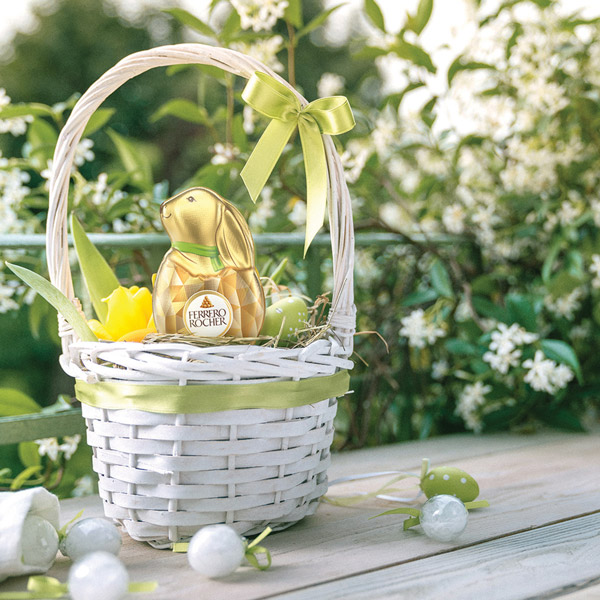
For a sweet finishing touch, add a bowl of Ferrero Rocher premium gold-wrapped chocolates to the table. They double as both a treat and eye-catching accent. Guests can also enjoy the brand’s first-ever hollow bunny candy, “Bunny and Egg,” a festive seasonal chocolate designed especially for Easter celebrations. These elegant treats work just as well tucked into Easter baskets as they do placed around the table for guests to enjoy.
Festive Florals
No spring table is complete without flowers. Seasonal favorites like tulips, daffodils, hyacinths and white lilies can brighten any gathering. Arrange them in rabbit-shaped planters or simple bud vases for a playful touch. For a creative twist, fill clear vases with colorful stones, craft gems or even jellybeans before adding blooms for a centerpiece that feels both festive and fresh.
Beyond Basic Baskets
Easter baskets have evolved beyond simple candy assortments. Today’s baskets often feature curated treats and small gifts for everyone at the table. For a premium addition, Ferrero Rocher Golden Eggs – individually wrapped white, milk and dark chocolates with a smooth, indulgent center – bring a touch of elegance to baskets, egg hunts or springtime place settings.
Sweet Moments to Share
Sometimes the most memorable Easter traditions are the simplest ones – sharing dessert after brunch, passing around chocolates at the table or sending guests home with a small sweet treat. Setting out a bowl of chocolates encourages everyone to pause, indulge and celebrate the moment together.
Find more elegant treat and decor ideas to elevate your Easter celebration at ferrerorocher.com.
Photo courtesy of Shutterstock (man and woman painting Easter eggs)

 SOURCE:
Our Lifestyle section on STM Daily News is a hub of inspiration and practical information, offering a range of articles that touch on various aspects of daily life. From tips on family finances to guides for maintaining health and wellness, we strive to empower our readers with knowledge and resources to enhance their lifestyles. Whether you’re seeking outdoor activity ideas, fashion trends, or travel recommendations, our lifestyle section has got you covered. Visit us today at https://stmdailynews.com/category/lifestyle/ and embark on a journey of discovery and self-improvement.





