









unknown
From Skepticism to Disclosure: The Ten Best UFO Documentaries (1970–2025)
Discover the evolution of UFO documentaries from 1970 to 2025. From Out of the Blue to The Age of Disclosure, explore ten of the best films that shaped how we see UFOs, UAPs, and the search for extraterrestrial life.


Aliens/ extraterrestrials, door with light – 3D rendering
For more than half a century, filmmakers have attempted to capture the mystery of unidentified flying objects. What began as fringe speculation in the 1970s has transformed into a global discussion about government secrecy, scientific inquiry, and the possibility of life beyond Earth. Across decades, documentaries have reflected society’s changing attitudes toward UFOs—sometimes skeptical, sometimes sensational, and sometimes startlingly credible.
Here’s a look at how UFO documentaries evolved from 1970 to 2025, told through ten of the best films to define the genre.
The 1970s–1990s: Seeds of Curiosity
The 1970s marked an era when UFO culture merged with television and documentary filmmaking. Programs like In Search Of… and BBC’s UFOs: The Real Story offered early treatments of the phenomenon, leaning heavily on speculation. While not as polished as modern films, these works laid the foundation for public interest in unexplained aerial phenomena.
By the 1990s, cases such as Roswell and Rendlesham Forest gained new traction, and UFO coverage began moving into mainstream documentary slots. This was the pre-internet era, when books and television specials shaped public belief.
The 2000s: UFOs Enter the Documentary Mainstream
1. Out of the Blue (2003)
Narrated by Peter Coyote, Out of the Blue became the benchmark for serious UFO documentaries. Featuring astronauts like Gordon Cooper and interviews with scientists, it reframed UFOs as worthy of rational investigation rather than tabloid material.
👉 Related: What We Know About ‘Oumuamua So Far
2. The Secret NASA Transmissions: The Smoking Gun (2001)
While more niche, this film dissected space shuttle footage that appeared to capture strange objects in orbit. It introduced the internet era’s fascination with raw “unexplained footage,” a trend that continues today.
The 2010s: Whistleblowers and Government Shadows
The 2010s were defined by growing distrust of institutions and increased interest in disclosure. Documentaries during this era reflected that climate—probing government secrecy, intelligence operations, and hidden archives.
3. I Know What I Saw (2009)
James Fox’s follow-up to Out of the Blue gathered credible testimonies from pilots, politicians, and military personnel. It helped legitimize eyewitness accounts and highlighted major incidents like the Phoenix Lights.
👉 Related: The Bertrand and Betty Hill UFO Encounter
4. Mirage Men (2013)
A darker, more sobering film, Mirage Men proposed that many UFO stories may have been planted or manipulated by U.S. intelligence to conceal classified projects. It asked viewers to question not only UFO sightings but also the very narratives surrounding them.
5. Unacknowledged (2017)
Fronted by Dr. Steven Greer, this documentary argued that the government has suppressed UFO-related technologies for decades. Controversial but widely viewed, it reignited debates about disclosure in the age of digital activism.
6. Witness of Another World (2018)
Shifting away from conspiracy, this moving film explored the lifelong impact of an alien encounter on an Argentine man. Rather than focusing on governments, it humanized the UFO phenomenon by emphasizing personal experience.
The 2020s: The Age of UAPs
The release of U.S. Navy “Tic Tac” videos and Congressional hearings on UAPs (Unidentified Aerial Phenomena) sparked a new wave of documentaries—ones rooted more in official testimony than speculation.
7. The Phenomenon (2020)
Often called the definitive UFO documentary of its time, The Phenomenon compiled over 70 years of cases with interviews from top officials, including former Senate Majority Leader Harry Reid. It offered a comprehensive and credible account of the UFO mystery.
👉 Related: NASA’s Search for Alien Life Reaches New Heights
8. Ariel Phenomenon (2022)
This haunting film revisited a 1994 event in Zimbabwe where schoolchildren reported a mass sighting. Decades later, the witnesses—now adults—recount the emotional and cultural weight of their experience.
9. Moment of Contact (2022)
Set in Brazil, this documentary examined the infamous Varginha Incident, where locals claimed to have seen and even interacted with non-human beings. Its cinematic approach brought an international dimension to the UFO conversation.
👉 Related: Are Blade Runner and Alien in the Same Universe?
10. The Age of Disclosure (2025)
Premiering at SXSW, this recent entry dives into what some call the modern “UFO disclosure era.” Featuring interviews with military and intelligence officials, along with political voices like Senator Marco Rubio, it suggests that an 80-year cover-up is unraveling before our eyes.
UFO Documentaries as a Mirror of Their Time
From grainy footage in the 1970s to today’s Pentagon reports, UFO documentaries mirror society’s shifting beliefs about authority, technology, and the unknown. Early films thrived on mystery, the 2010s questioned power structures, and the 2020s brought UFOs—now called UAPs—into serious policy discussions.
Whether one views these documentaries as entertainment, cultural history, or investigative journalism, together they chart humanity’s ongoing attempt to make sense of the skies.
✅ Final Thought: As the world enters what some call a disclosure era, UFO documentaries have moved from the fringes into mainstream dialogue. What was once mocked now sits at the intersection of science, politics, and philosophy—and the story is far from over.
Dive into “The Knowledge,” where curiosity meets clarity. This playlist, in collaboration with STMDailyNews.com, is designed for viewers who value historical accuracy and insightful learning. Our short videos, ranging from 30 seconds to a minute and a half, make complex subjects easy to grasp in no time. Covering everything from historical events to contemporary processes and entertainment, “The Knowledge” bridges the past with the present. In a world where information is abundant yet often misused, our series aims to guide you through the noise, preserving vital knowledge and truths that shape our lives today. Perfect for curious minds eager to discover the ‘why’ and ‘how’ of everything around us. Subscribe and join in as we explore the facts that matter. https://stmdailynews.com/the-knowledge/
Discover more from Daily News
Subscribe to get the latest posts sent to your email.
Blog
Why the chemtrail conspiracy theory lingers and grows – and why Tucker Carlson is talking about it
The chemtrail conspiracy theory has surged despite being thoroughly debunked. Learn why people believe contrails are chemical weapons, how Tucker Carlson amplified the theory, and what psychology reveals about conspiracy thinking and our need for control.

Last Updated on December 7, 2025 by Daily News Staff
Dive into “The Knowledge,” where curiosity meets clarity. This playlist, in collaboration with STMDailyNews.com, is designed for viewers who value historical accuracy and insightful learning. Our short videos, ranging from 30 seconds to a minute and a half, make complex subjects easy to grasp in no time. Covering everything from historical events to contemporary processes and entertainment, “The Knowledge” bridges the past with the present. In a world where information is abundant yet often misused, our series aims to guide you through the noise, preserving vital knowledge and truths that shape our lives today. Perfect for curious minds eager to discover the ‘why’ and ‘how’ of everything around us. Subscribe and join in as we explore the facts that matter. https://stmdailynews.com/the-knowledge/
Discover more from Daily News
Subscribe to get the latest posts sent to your email.
unknown
The Kingman UFO Crash of 1953: Fact, Fiction, or Cold War Legend?
Explore the mystery of the 1953 Kingman UFO crash. From rumors of wreckage taken to Area 51 to claims of an alien named “J-Rod,” this Cold War story remains one of UFO history’s most debated legends.
Last Updated on October 11, 2025 by Daily News Staff
In the spring of 1953, the quiet desert town of Kingman, Arizona, became the center of one of UFO history’s most debated mysteries. At the height of the Cold War, witnesses claimed that something unusual fell from the desert sky. What followed has fueled speculation for decades—connecting the small Arizona town to America’s most secretive base, Area 51.
The Crash in the Desert
According to reports, an unidentified craft was said to have crashed near Kingman in May 1953. Local accounts suggested that the U.S. military quickly secured the site, transporting the wreckage under tight secrecy. For years, however, this alleged event remained little more than rumor, blending into the larger backdrop of Cold War fears and secrecy.
Area 51 and the Alleged Cover-Up
The story took on new life when claims surfaced that the wreckage had been moved to Area 51, the highly restricted military base in Nevada long associated with UFO lore. At the time, the base itself was shrouded in secrecy, making it fertile ground for speculation about what the government might be hiding.
Bill Uhouse and “J-Rod”
The most astonishing claims didn’t appear until 1998, when retired military engineer Bill Uhouse stepped forward. Uhouse alleged that the U.S. government not only recovered alien technology but also encountered a living extraterrestrial being. He referred to this being as “J-Rod” and claimed it worked alongside American scientists to unlock the secrets of advanced propulsion systems.
If true, this collaboration would mark one of the most extraordinary events in modern history—bridging human science with extraterrestrial knowledge. Skeptics, however, point out the lack of verifiable evidence and suggest the story may be a product of Cold War imagination.
A Mystery That Endures
Like many UFO stories from the mid-20th century, the Kingman crash remains steeped in uncertainty. Did a spacecraft really come down in the Arizona desert? Was J-Rod a real extraterrestrial presence, or simply another chapter in the long saga of Cold War secrecy and speculation?
What is certain is that the Kingman UFO crash continues to spark curiosity, debate, and fascination—reminding us of how the lines between history, myth, and mystery can blur.
🔎 Related Topics
- The Roswell Incident of 1947 – History.com
- Inside Area 51 – National Geographic
- Cold War UFO Sightings – CIA Declassified Documents
- The Kingman UFO Crash – A Discreet Downed UFO That Slipped Under The Radar?
- Arizona UFO Crash – UFO Casebook
The science section of our news blog STM Daily News provides readers with captivating and up-to-date information on the latest scientific discoveries, breakthroughs, and innovations across various fields. We offer engaging and accessible content, ensuring that readers with different levels of scientific knowledge can stay informed. Whether it’s exploring advancements in medicine, astronomy, technology, or environmental sciences, our science section strives to shed light on the intriguing world of scientific exploration and its profound impact on our daily lives. From thought-provoking articles to informative interviews with experts in the field, STM Daily News Science offers a harmonious blend of factual reporting, analysis, and exploration, making it a go-to source for science enthusiasts and curious minds alike. https://stmdailynews.com/category/science/
Author

Discover more from Daily News
Subscribe to get the latest posts sent to your email.
Entertainment
Fire in the Sky vs. Travis Walton’s Testimony: What Really Happened?
Discover the truth behind Fire in the Sky vs. Travis Walton’s real testimony. Learn what really happened during the 1975 UFO abduction and what Hollywood changed for the movie.
Last Updated on October 6, 2025 by Daily News Staff
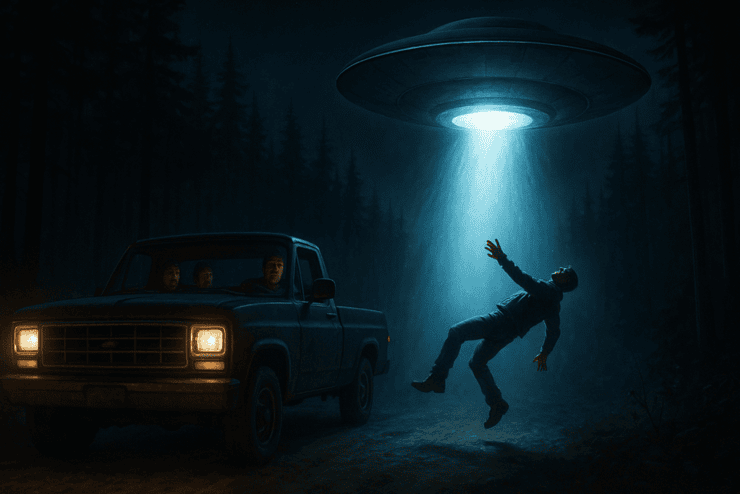
When Travis Walton vanished from an Arizona forest in 1975, the world was stunned. His story of being struck by a beam of light from a UFO and later reappearing after five days became one of the most famous alien abduction cases in history. Nearly two decades later, Hollywood brought his story to the big screen in the 1993 film Fire in the Sky.
But how much of the movie matched Walton’s actual testimony?
The Real Testimony: Travis Walton’s Experience
In Walton’s own words, detailed in his book The Walton Experience:
He and six coworkers saw a glowing disc-shaped UFO while driving through the Apache-Sitgreaves National Forest. Walton approached and was struck by a beam of light, vanishing before their eyes. He later recalled waking inside a clean, metallic room. He first encountered short, large-eyed beings — similar to the classic “greys.” After panicking, he was met by taller, human-like beings who guided him silently through the craft. He blacked out again and awoke days later on the roadside as the UFO departed.
Walton’s description was eerie and confusing, but not grotesque.
The Hollywood Version: Fire in the Sky (1993)
The film’s abduction sequence became infamous for its nightmarish visuals:
Walton awakens in a slimy cocoon-like environment, unlike the clean metallic room he described. He discovers corpses wrapped in membranes — a pure Hollywood invention. The aliens are depicted as grotesque, insect-like creatures rather than the greys or human-like beings Walton reported. Walton is violently restrained on a table while aliens perform invasive procedures, including a chilling needle-to-the-eye scene.
The movie leaned heavily into horror, turning Walton’s mysterious account into a terrifying cinematic ordeal.
What Was Real vs. Fiction
Accurate in the Film:
Walton struck by a beam of light and vanishing. His coworkers sticking to their story and passing polygraphs. Walton reappearing days later, shaken and disoriented.
Invented for Hollywood:
Cocoon-like interiors and human corpses. Alien torture and invasive experiments. Insect-like, monstrous alien designs. The extreme horror atmosphere.
Walton’s View
Travis Walton himself has stated that while Fire in the Sky captured the drama of his disappearance, it distorted the abduction itself. He called the film’s alien sequence “Hollywood horror” and emphasized that his real experience, though frightening, was not sadistic or grotesque.
The Lasting Legacy
Today, the Travis Walton UFO incident remains one of the most debated abduction cases ever. Fire in the Sky introduced the story to millions but also blurred the line between fact and fiction. For Walton, the truth was strange enough — and far less like a nightmare than Hollywood imagined.
🔗 Related External Reading
Skeptical Inquirer: The Travis Walton Abduction Revisited (searchable article, skeptical perspective)
STM Daily News is a vibrant news blog dedicated to sharing the brighter side of human experiences. Emphasizing positive, uplifting stories, the site focuses on delivering inspiring, informative, and well-researched content. With a commitment to accurate, fair, and responsible journalism, STM Daily News aims to foster a community of readers passionate about positive change and engaged in meaningful conversations. Join the movement and explore stories that celebrate the positive impacts shaping our world.
The Inspiring Legacy of Raymond E. Fowler: A Journey into the Unknown
Discover more from Daily News
Subscribe to get the latest posts sent to your email.





