


Connect with us

College Life

Gear Up for College

Published

on

Last Updated on September 20, 2025 by Daily News Staff

College

5 tech devices to make navigating campus life easier

(Family Features) College students are always on the move, which means they need the right gear and tools to keep up with their busy schedules. From the lecture hall to the dormitories and everywhere in-between, staying connected, focused and productive is crucial for success.

The right tech gadgets – like smartphones, wearables, headphones and laptops – can help get you one step closer to your degree and navigate both your coursework and social life with ease. Consider these essentials and find more options to inspire success in the classroom and beyond at Qualcomm.com/snapdragonbts.

16695 detail image embed1

Customize Your Sound Experience

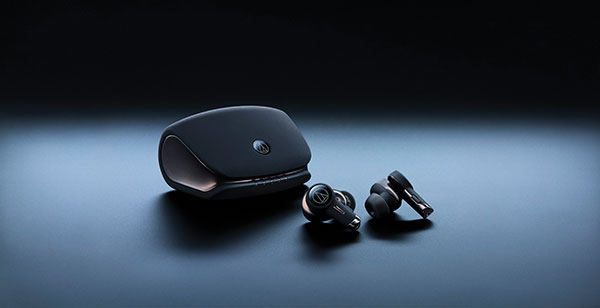
Made to connect people through sound, the Audio-Technica ATH-TWX9 Wireless Earbuds are equipped with advanced features, making these hybrid headphones optimal while working out or commuting back and forth to class. Featuring digital hybrid noise-canceling technology with five preset modes, these wireless earbuds offer the freedom to customize your sound space for an immersive audio experience. Utilizing Snapdragon Sound technology to provide higher quality music, video and calls, the non-slip, compact, ergonomic and splashproof headphones also include deep-UV sterilization and 360 Reality Audio for a realistic 3D sound stage.

16695 detail image embed2

Take Flexible, Portable Performance Anywhere

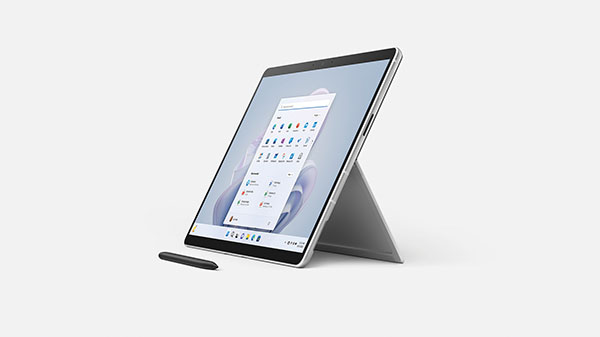
In the classroom, in the dorms or on the go – the Microsoft Surface Pro 9 5G provides tablet-style flexibility with the performance and battery life of a premium laptop – all in one ultra-portable device – to help you move through all the tasks of the day. Running the Snapdragon 8cx Gen 3 Compute Platform, this 2-in-1 offers an always on, always connected computing experience with up to 19 hours of battery life, optional 5G connectivity and advanced camera and audio technology that enables crisp video and crystal-clear audio.

16695 detail image embed3

Stay Connected on Campus

Whether you’re working hard, playing hard or doing both at the same time, the Samsung Galaxy S23 Ultra is equipped with Snapdragon 8 Gen 2 Mobile Platform for Galaxy to deliver accelerated performance, unparalleled connectivity, champion-level gameplay and ingenious capture. With Qualcomm FastConnect 7800, students can unlock intuitive experiences across AI, 5G, WiFi and Bluetooth, such as faster natural language processing with multi-language translation and transcription, AI cinematic video capture, direct voice command of apps and more.

16695 detail image embed5

Navigate the World from Your Wrist

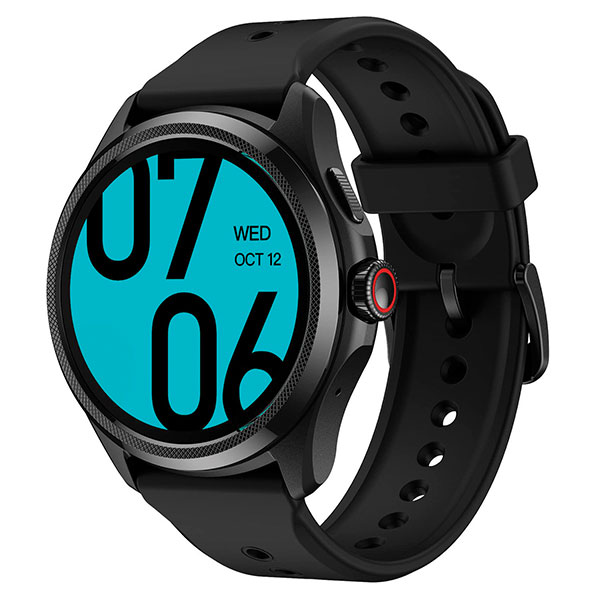
While many college students are used to having the world at their fingertips via smartphones, tablets and laptops, that same level of seamless connectivity and lightning-fast responsiveness can now be harnessed via the Mobvoi TicWatch 5 Pro. Featuring the Snapdragon W5+ Gen 1 Wearable Platform and the latest version of Wear OS by Google, this smartwatch opens up a world of cutting-edge apps and services, including maps, mobile wallet, music and more. With fast-charge technology, the water-resistant watch tracks real-time fitness and health data, includes one-tap measurements of multiple heart metrics and provides effortless yet versatile control via the rotating crown, complete with haptic feedback.

16695 detail image embed4

Enjoy Powerful Sound with Hands-Free Control

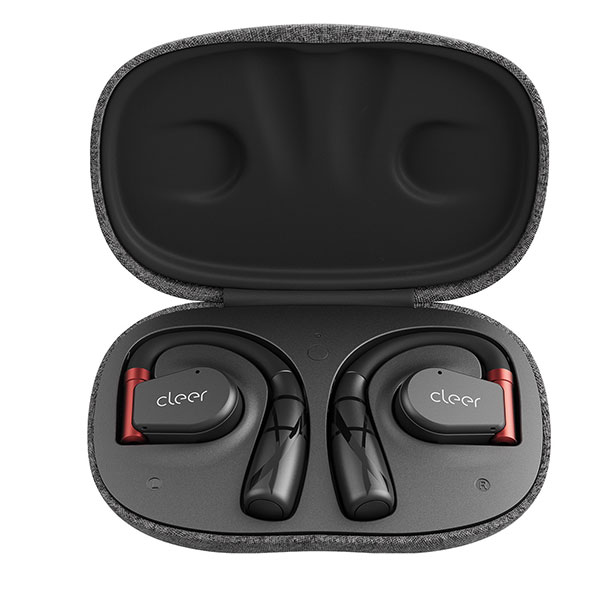
Designed for complete indoor and outdoor situational awareness while enjoying lossless audio, the Cleer Arc II Sport Open Ear Sport Earbuds powered by the Qualcomm S3 Gen 2 Sound platform feature multipoint connectivity, allowing you to seamlessly switch between devices so you can listen to a lecture on your computer and quickly answer a call on your phone. With an open-ear design and flexible hinge for a secure and comfortable all-day listening experience, the earbuds also feature head gesture controls for hands-free operations, IPX5 water and sweat resistance and improved battery life with an enhanced charging case with built-in UV-C light to reduce bacteria during charging.

Photo courtesy of Getty Images (college student)

collect?v=1&tid=UA 482330 7&cid=1955551e 1975 5e52 0cdb 8516071094cd&sc=start&t=pageview&dl=http%3A%2F%2Ftrack.familyfeatures
SOURCE:
Qualcomm


Discover more from Daily News

Subscribe to get the latest posts sent to your email.

Continue Reading
Advertisement SodaStream USA, inc
Click to comment
0 0 votes
Article Rating
Subscribe
Notify of
guest

0 Comments
Oldest
Newest Most Voted
Inline Feedbacks
View all comments

Lifestyle

Despite naysayers and rising costs, data shows that college still pays off for students – and society overall

College graduates earn significantly more than high school graduates, but rising costs and policy changes affect enrollment. The need for educated workers is increasing, necessitating reforms in higher education to align skills with job market demands and improve access.

Published

on

Despite naysayers and rising costs, data shows that college still pays off for students – and society overall
College graduates earn more immediately after graduation and later on in their careers than high school graduates. DBenitostock/Moment

Despite naysayers and rising costs, data shows that college still pays off for students – and society overall

Stanley S. Litow, Columbia University

No industry has perhaps felt the negative effect of a radical shift in federal policy under the second Trump administration more than higher education.

Many American colleges and universities, especially public institutions, have experienced swift and extensive federal cuts to grants, research and other programs in 2025.

Meanwhile, new restrictive immigration policies have prevented many international students from enrolling in public and private universities. Universities and colleges are also facing other various other challenges – like the threat to academic freedom.

These shifts coincide with the broader, increasingly amplified argument that getting a college degree does not matter, after all. A September 2025 Gallup poll shows that while 35% of people rated college as “very important,” another 40% said it is “fairly important,” and 24% said it is “not too important.”

By comparison, 75% of surveyed people in 2010 said that college was “very important,” while 21% said it was “fairly important” and 4% said it is “not too important.”

Still, as a scholar of education, economic development and social issues, I know that there is ample and growing evidence that a college degree is still very much worth it. Graduating from college is directly connected to higher entry-level wages and long-term career success.

A swirl of white papers hang from a ceiling in an ornate room with a chandelier.
College diplomas are seen on display as part of an art exhibition in Grand Central Terminal in New York in 2022. Timothy A. Clary/AFP via Getty Images

A growing gap

Some people argue that a college degree does not matter, since there might not be enough jobs for college graduates and other workers, given the growth of artificial intelligence, for example. Some clear evidence shows otherwise.

An estimated 18.4 million workers with a college degree in the U.S. will retire from now through 2032, according to Georgetown University’s Center on Education and the Workforce. This is far greater than the 13.8 million workers who will enter the workforce with college degrees during this same time frame.

Meanwhile, an additional 685,000 new jobs that require college degrees – spanning from environmental positions to advanced manufacturing – will be created from now through 2032.

The gap between those expected to leave and enter the workforce with college degrees creates a serious problem. One major question is whether there will be enough people to fill the available jobs that require a college degree.

In 2023, foreign-born people made up 16% of registered nurses in the U.S., though that percentage is higher in certain states, like California. But restrictions on immigration could limit the number of potential nurses able to fill open positions.

Advertisement
Get More From A Face Cleanser And Spa-like Massage

Nursing and teaching are two fields expected to grow over the next few decades, and they will require more workers due to retirements.

Other fields, like accounting, engineering, law and many others, are also expected to have more college-educated workers retire than there are new workers to fill their positions.

Worth the cost

The average annual salary of a college graduate from the class of 2023 was US$64,291 in 2024, according to the National Association of Colleges and Employers.

The overall average salary for this graduation class one year after they left school marked an increase from the average $60,028 that the class of 2022 earned in 2023, equivalent to $63,850 today.

While there is not available data that offers a direct comparison, full-time, year-round workers ages 25 to 34 with a high school diploma earned $41,800 in median annual earnings in 2022, or $46,100 today.

Overall lifetime earnings for those with college degrees is about about $1.2 million more than people with a high school make, according to the recent Georgetown findings.

People who earn more generally have more money to support their families and contribute to their immediate communities. Their higher taxes also contribute to the U.S. economy, supporting needed services like education, public safety and health care.

People with college degrees are also more likely than those who are not college graduates to vote, volunteer and make charitable donations to help others in need.

College matters for individuals, but it clearly also helps improve the economy.

With 64 public colleges across the state, the State University of New York system is the largest post-secondary network of higher education schools in the country. For every $1 the state of New York invests in SUNY, the SUNY system returns $8.70 to the state in terms of economic growth, according to 2024 findings by the Rockefeller Institute, an independent public policy research organization affiliated with SUNY. And that is only one state.

Advertisement
Get More From A Face Cleanser And Spa-like Massage
A gray building is seen with red signs hanging nearby that say 'Stony Brook University.'
The Stony Brook University campus, part of the State University of New York system, is shown in May 2022. Howard Schnapp/Newsday RM via Getty Images

A new way forward

It isn’t likely that the expected number of college-educated people who will soon retire will suddenly decrease, or that the anticipated number of people entering the workforce will unexpectedly increase.

There are practical reasons why some people do not want to go to college, or cannot attend. Indeed, the percentage of young people enrolled as college undergraduates fell almost 15% from 2010 through 2022.

For one, tuition and fees at private colleges have increased about 32% since 2006, after adjusting for inflation. And in-state tuition and fees at public universities have also grown about 29% since 2006.

The total of federal student loan debt for college has also tripled since 2007. It stood at about $1.84 trillion in 2024.

I believe that in order to ensure enough college-educated people can fill the anticipated work openings in the future, universities and the government should embrace needed changes to increase both enrollment and completion rates.

Artificial intelligence will transform work worldwide, for example, and that shift should be incorporated into higher education curriculum and degrees. Soft skills – like problem-solving, collaboration, presentation and writing skills – will become more important and should be prioritized in the learning process.

I believe that universities should also prioritize experiential education, including paid internships that offer students academic credit. This can help students gain experience that is both accredited and is connected to direct career pathways.

Universities and high schools could also expand how much they offer microcredentials – or short, focused learning programs that offer practical skills in a specific area – so students can connect their education with clear career pathways.

These reforms aren’t easy. They require a commitment to change, and all of this work will require deep partnerships with the government. While that might be a heavy lift currently at the federal level, it is both possible and achievable to make advances on these and other changes at the state level.

American universities and colleges have always been key to preparing the workforce for economic opportunity. At the end of World War II, for example, Columbia University and IBM worked together to help create the academic discipline now called computer science.

This action did more than help one university or one employer. It fueled change across higher education and across private companies and the government, leading to massive economic growth.

Advertisement
Get More From A Face Cleanser And Spa-like Massage

Universities have made countless other contributions to strengthen and expand the economy. Considering solutions to some of the challenges that stop students from going to college could help ensure that more students see the value in a college education – and a tangible way for them to connect it to a future career.

Stanley S. Litow, Adjunct Professor of International and Public Affairs, Columbia University

This article is republished from The Conversation under a Creative Commons license. Read the original article.

STM Daily News is a multifaceted podcast that explores a wide range of topics, from life and consumer issues to the latest in food and beverage trends. Our discussions dive into the realms of science, covering everything from space and Earth to nature, artificial intelligence, and astronomy. We also celebrate the amateur sports scene, highlighting local athletes and events, including our special segment on senior Pickleball, where we report on the latest happenings in this exciting community. With our diverse content, STM Daily News aims to inform, entertain, and engage listeners, providing a comprehensive look at the issues that matter most in our daily lives. https://stories-this-moment.castos.com/

https://stmdailynews.com/sinking-cities-why-parts-of-phoenix-and-much-of-urban-america-are-slowly-dropping/

Author

Want more stories 👋
“Your morning jolt of Inspiring & Interesting Stories!”

Sign up to receive awesome articles directly to your inbox.

STM Coffee Newsletter 1

We don’t spam! Read our privacy policy for more info.


Discover more from Daily News

Subscribe to get the latest posts sent to your email.

Continue Reading

Business and Finance

Companies haven’t stopped hiring, but they’re more cautious, according to the 2025 College Hiring Outlook Report

Published

on

College Hiring Outlook Report
Recent college grads face a tough job market in 2025, but employers are still hiring. sturti/E+ via Getty Images
Murugan Anandarajan, Drexel University

Companies haven’t stopped hiring, but they’re more cautious, according to the 2025 College Hiring Outlook Report

Every year, I tell my students in my business analytics class the same thing: “Don’t just apply for a job. Audition for it.” This advice seems particularly relevant this year. In today’s turbulent economy, companies are still hiring, but they’re doing it a bit more carefully. More places are offering candidates short-term work experiences like internships and co-op programs in order to evaluate them before making them full-time offers. This is just one of the findings of the 2025 College Hiring Outlook Report. This annual report tracks trends in the job market and offers valuable insights for both job seekers and employers. It is based on a national survey conducted in September 2024, with responses from 1,322 employers spanning all major industries and company sizes, from small firms to large enterprises. The survey looks at employer perspectives on entry-level hiring trends, skills demand and talent development strategies. I am a professor of information systems at Drexel University’s LeBow College of Business in Philadelphia, and I co-authored this report along with a team of colleagues at the Center for Career Readiness. Here’s what we found:

Employers are rethinking talent pipelines

Only 21% of the 1,322 employers we surveyed rated the current college hiring market as “excellent” or “very good,” which is a dramatic drop from 61% in 2023. This indicates that companies are becoming increasingly cautious about how they recruit and select new talent. While confidence in full-time hiring has declined, employers are not stepping away from hiring altogether. Instead, they’re shifting to paid and unpaid internships, co-ops and contract-to-hire roles as a less risky route to identify talent and “de-risk” full-time hiring. Employers we surveyed described internships as a cost-effective talent pipeline, and 70% told us they plan to maintain or increase their co-op and intern hiring in 2025. At a time when many companies are tightening their belts, hiring someone who’s already proved themselves saves on onboarding reduces turnover and minimizes potentially costly mishires. For job seekers, this makes every internship or short-term role more than a foot in the door. It’s an extended audition. Even with the general market looking unstable, interest in co-op and internship programs appears steady, especially among recent graduates facing fewer full-time opportunities. These programs aren’t just about trying out a job. They let employers see if a candidate shows initiative, good judgment and the ability to work well on a team, which we found are traits employers value even more than technical skills.

What employers want

We found that employers increasingly prioritize self-management skills like adaptability, ethical reasoning and communication over technical skills such as digital literacy and cybersecurity. Employers are paying attention to how candidates behave during internships, how they take feedback, and whether they bring the mindset needed to grow with the company. This reflects what I have observed in classrooms and in conversations with hiring managers: Credentials matter, but what truly sets candidates apart is how they present themselves and what they contribute to a company. Based on co-op and internship data we’ve collected at Drexel, however, many students continue to believe that technical proficiency is the key to getting a job. In my opinion, this disconnect reveals a critical gap in expectations: While students focus on hard skills to differentiate themselves, employers are looking for the human skills that indicate long-term potential, resilience and professionalism. This is especially true in the face of economic uncertainty and the ambiguous, fast-changing nature of today’s workplace.

Technology is changing how hiring happens

Employers also told us that artificial intelligence is now central to how both applicants and employers navigate the hiring process. Some companies are increasingly using AI-powered platforms to transform their hiring processes. For example, Children’s Hospital of Philadelphia uses platforms like HireVue to conduct asynchronous video interviews. HR-focused firms like Phenom and JJ Staffing Services also leverage technologies such as AI-based resume ranking, automated interview scheduling and one-way video assessments. Not only do these tools speed up the hiring process, but they also reshape how employers and candidates interact. In our survey, large employers said they are increasingly relying on AI tools like resume screeners and one-way video interviews to manage large numbers of job applicants. As a result, the candidate’s presence, clarity in communication and authenticity are being evaluated even before a human recruiter becomes involved. At the same time, job seekers are using generative AI tools to write cover letters, practice interviews or reformat resumes. These tools can help with preparation, but overreliance on them can backfire. Employers want authenticity, and many employers we surveyed mentioned they notice when applications seem overly robotic. In my experience as a professor, the key is teaching students to use AI to enhance their effort and not replace it. I encourage them to leverage AI tools but always emphasize that the final output and the impression it makes should reflect their own thinking and professionalism. The bottom line is that hiring is still a human decision, and the personal impression you make matters.

This isn’t just about new grads

While our research focuses on early-career hiring, these findings apply to other audiences as well, such as career changers, returning professionals and even mid-career workers. These workers are increasingly being evaluated on their adaptability, behavior and collaborative ability – not just their experience. Many companies now offer project-based assignments and trial roles that let them evaluate performance before making a permanent hire. At the same time, employers are investing in internal reskilling and upskilling programs. Reskilling refers to training workers for entirely new roles, often in response to job changes or automation, while upskilling means helping employees deepen their current skills to stay effective and advance in their existing roles. Our report indicates that approximately 88% of large companies now offer structured upskilling and reskilling programs. For job seekers and workers alike, staying competitive means taking the initiative and demonstrating a commitment to learning and growth.

Show up early, and show up well

So what can students, or anyone entering or reentering the workforce, do to prepare?
  • Start early. Don’t wait until senior year. First- and second-year internships are growing in importance.
  • Sharpen your soft skills. Communication, time management, problem-solving and ethical behavior are top priorities for employers.
  • Understand where work is happening. Over 50% of entry-level jobs are fully in-person. Only 4% are fully remote. Show up ready to engage.
  • Use AI strategically. It’s a useful tool for research and practice, not a shortcut to connection or clarity.
  • Stay curious. Most large employers now offer reskilling or upskilling opportunities – and they expect employees to take initiative.
One of the clearest takeaways from this year’s report is that hiring is no longer a one-time decision. It’s a performance process that often begins before an interview is even scheduled. Whether you’re still in school, transitioning in your career or returning to the workforce after a break, the same principle applies: Every opportunity is an audition. Treat it like one. Murugan Anandarajan, Professor of Decision Sciences and Management Information Systems, Drexel University This article is republished from The Conversation under a Creative Commons license. Read the original article.

Discover more from Daily News

Subscribe to get the latest posts sent to your email.

Continue Reading

Business and Finance

5 Steps Students Can Take Toward Entrepreneurial Careers

Published

on

Last Updated on July 28, 2025 by Daily News Staff

5 Steps Students Can Take Toward Entrepreneurial Careers (Family Features) Entrepreneurship is a career goal for many working adults. Autonomy and personal satisfaction are just a couple of the benefits of running your own business. It’s a professional path about 3 in 5 teens would prefer over a traditional job, according to a survey by Junior Achievement (JA). Running a successful company depends on multiple factors, including a solid business plan, adequate startup resources and a receptive market, as well as a strong sense of responsibility, work ethic and ability to persevere under pressure. Beginning to shape the skills and mindset necessary to flourish as an entrepreneur can begin well before entering the workforce. In fact, even students in junior high and high school can begin working toward entrepreneurial goals with these tips from JA, a nonprofit that inspires and prepares young people by delivering lessons in financial literacy, work and career readiness. 1. Select Electives Wisely Students don’t have to wait until they’re in college to begin developing business skills and knowledge. If they have the ambition and drive to become an entrepreneur, they may find it beneficial to complement the classes needed for graduation requirements with electives that allow them to explore their interest in the business world. Some examples include accounting, marketing, finance, economics, psychology and computer science. 2. Make Part-Time Work Meaningful Many students enter the workforce in high school to start practicing money management and contribute to expenses like gas and car insurance. While most jobs available to students are service oriented and fall outside the business world, it doesn’t hurt to explore options that put students closer to their entrepreneurial ambitions. For example, local small businesses may be willing to hire someone eager to learn. 3. Take Part in Programs Kids can challenge themselves by putting their knowledge into practice as real-world entrepreneurs. For example, JA’s Company Program is an immersive program that fosters creativity, critical thinking and business acumen, offering students unique opportunities to explore the world of business and economics by creating real companies. Participants learn to present their business plans and results during competitions that offer learning opportunities. Additionally, at the Future Bound competition (made possible through the support of businesses including Chick-fil-A, Delta Air Lines, Pacific Life Foundation and Staples), participants took part in seminars and mentorship. The event featured four programs that empower students with entrepreneurship and financial literacy skills – the Company of the Year National Competition, the Social Innovation Challenge, the Titan National Competition and the National Stock Market Challenge. 4. Seek a Strong Mentor Some of the best learning comes from emulating others who are successful in their fields. Meeting regularly with someone who serves as a role model can help students sharpen their vision for the future and learn from the experiences that propelled professionals into their current positions. 5. Define a Future Vision Creating an inspiration board can help motivated students compile and organize ideas. This board, whether physical or digital, can serve as a source of inspiration and help motivate students to identify and overcome obstacles while working toward bringing their visions for careers as entrepreneurs to life. Find more ideas to help students gain confidence and skills for future education and careers, and learn more about the competitions, at jausa.ja.org.   Photo courtesy of Shutterstock   collect?v=1&tid=UA 482330 7&cid=1955551e 1975 5e52 0cdb 8516071094cd&sc=start&t=pageview&dl=http%3A%2F%2Ftrack.familyfeatures SOURCE: Junior Achievement

Discover more from Daily News

Subscribe to get the latest posts sent to your email.

Continue Reading

Trending

0
Would love your thoughts, please comment.x
()
x
