How Buildings Contribute to Urban Heating during Heat Waves
Urban Heating: Researchers developed a model to analyze building heat emissions during heat waves, demonstrating a 20% increase in waste heat discharge significantly affecting urban microclimates, particularly in Los Angeles.
A bottom-up approach quantifies the contributions of human-caused heating from building energy use during extreme heat events.
Urban Heating
The Science
Previous research has found that heat waves and urban heat island effects reinforce each other’s effects. These heat islands are concentrations of buildings, paved areas, and other surfaces that absorb and retain heat. Emissions of heat from buildings are an important part of this heat island effect. Researchers therefore need to understand the interplay of urban microclimates and these building heat emissions. New research developed a method for modeling urban building energy and associated human-caused heat during city-wide heat waves. The researchers used the method to examine the variation over time and space in emissions of waste heat from buildings in Los Angeles. The study incorporated building type, urban microclimate, and large-scale climate conditions.
The Impact
The method provides a high-resolution representation of how buildings contribute to heat islands during heat waves. It details both the magnitude and distribution of these heating effects. The simulation indicates that heat dispersing from buildings to the urban environment increases by as much as 20 percent during a heat wave. Most of this heat is waste heat from air conditioning. The study’s results will serve as a fundamental step in continued investigations of the feedback between changes in building waste heat and urban microclimates during extreme heat events.
Summary
The world is experiencing more frequent and longer-duration heat waves. These heat waves are a serious threat to human health and the stability of electrical grids. Previous studies have identified positive feedbacks between heat waves and urban heat island effects. Heat discharges from buildings and associated energy use have significant effect on the urban environment, and researchers therefore need to understand the interactive effects of urban microclimate and building heat emissions on the urban energy balance. In this study, scientists developed a coupled-simulation approach to quantify these effects, mapping urban environmental data generated by the mesoscale Weather Research and Forecasting (WRF) model, coupled to the Urban Canopy Model (UCM), to simulate urban building energy flows. The scientists conducted a case study in Los Angeles, California, during a five-day heat wave event in September 2009.
Urban Heating
The researchers analyzed the surge in city-scale building heat emission and energy use during the extreme heat event. They first simulated the urban microclimate at high resolution (500 by 500 meters) using WRF-UCM. Next, they generated grid-level building heat emission profiles and aggregated them using prototype building energy models informed by spatially disaggregated urban land use and urban building density data. They analyzed the spatial patterns of anthropogenic heat discharge from the building sector. They also assessed the quantitative relationship with weather conditions and urban land-use dynamics at the grid level. The simulation results indicate that during a heat wave, a rise in building energy use follows, and the associated discharge of anthropogenic waste heat from the buildings to the environment increases by as much as 20 percent on average, varying significantly, both in time and space. Notably, air-conditioning use within buildings intensifies, and resulting waste heat discharges outside of the buildings contribute most (86.5 percent) of the total waste heat transferred to the surrounding urban environment. The study also found that the waste heat discharge in inland, dense urban districts is more sensitive to extreme events than it is in coastal or suburban areas. The generated anthropogenic heat profiles can be used in urban microclimate models to provide a more accurate estimation of urban air temperature rises during heat waves.
Funding
This research was supported by the Department of Energy Office of Science as part of research in the MultiSector Dynamics, Earth, and Environmental System Modeling Program.
STM Daily News is a multifaceted podcast that explores a wide range of topics, from life and consumer issues to the latest in food and beverage trends. Our discussions dive into the realms of science, covering everything from space and Earth to nature, artificial intelligence, and astronomy. We also celebrate the amateur sports scene, highlighting local athletes and events, including our special segment on senior Pickleball, where we report on the latest happenings in this exciting community. With our diverse content, STM Daily News aims to inform, entertain, and engage listeners, providing a comprehensive look at the issues that matter most in our daily lives. https://stories-this-moment.castos.com/
The science section of our news blog STM Daily News provides readers with captivating and up-to-date information on the latest scientific discoveries, breakthroughs, and innovations across various fields. We offer engaging and accessible content, ensuring that readers with different levels of scientific knowledge can stay informed. Whether it’s exploring advancements in medicine, astronomy, technology, or environmental sciences, our science section strives to shed light on the intriguing world of scientific exploration and its profound impact on our daily lives. From thought-provoking articles to informative interviews with experts in the field, STM Daily News Science offers a harmonious blend of factual reporting, analysis, and exploration, making it a go-to source for science enthusiasts and curious minds alike. https://stmdailynews.com/category/science/
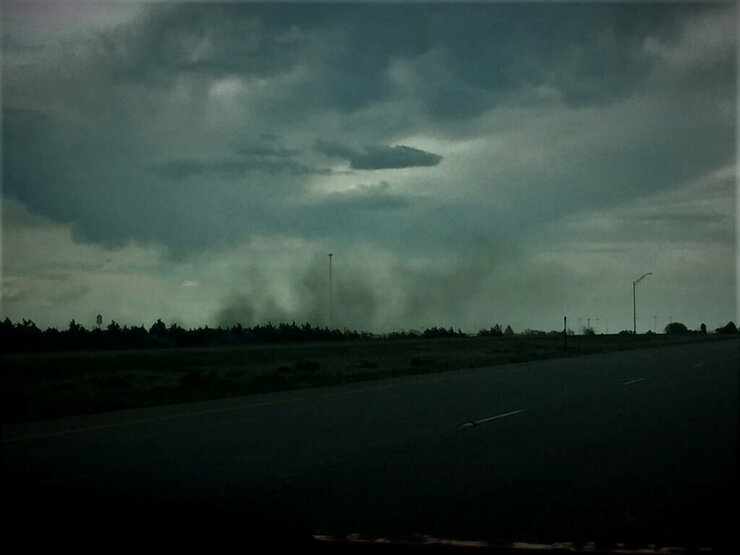
A gustnado east of Limon, Colorado. Image Credit: Jessica Kortekaas
Severe weather can produce dramatic sights—but not every spinning column of air is a tornado.
A [gustnado](chatgpt://generic-entity?number=0) is a brief, ground-level swirl of rotating air that forms along a thunderstorm’s gust front. Gustnadoes often appear suddenly, kicking up dust or debris, which can make them look more dangerous than they actually are.
Unlike tornadoes, gustnadoes do not connect to a storm’s rotating updraft. Because of this, they are usually weaker, short-lived, and difficult to detect on weather radar.
Gustnadoes typically last only seconds to a few minutes and are most commonly spotted in dry regions, where loose soil makes their rotation visible.
The takeaway: If it’s spinning near the ground ahead of a storm, it may look intense—but it’s not always a tornado.
Further Reading
Learn the differences between tornadoes, dust devils, and other rotating weather phenomena in our STM Daily News Knowledge Series.
Rod: A creative force, blending words, images, and flavors. Blogger, writer, filmmaker, and photographer. Cooking enthusiast with a sci-fi vision. Passionate about his upcoming series and dedicated to TNC Network. Partnered with Rebecca Washington for a shared journey of love and art. View all posts
When darkness shines: How dark stars could illuminate the early universe
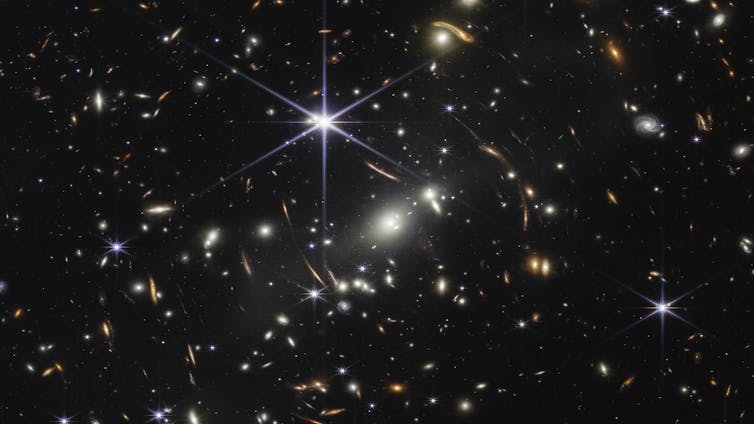
Scientists using the James Webb Space Telescope identified three unusual early-universe objects that may be “dark stars”—not dark, and not quite stars—powered by dark matter annihilation, potentially reshaping how we understand the first stars and the origins of supermassive black holes.
NASA’s James Webb Space Telescope has spotted some potential dark star candidates. NASA, ESA, CSA, and STScIAlexey A. Petrov, University of South Carolina Scientists working with the James Webb Space Telescope discovered three unusual astronomical objects in early 2025, which may be examples of dark stars. The concept of dark stars has existed for some time and could alter scientists’ understanding of how ordinary stars form. However, their name is somewhat misleading. “Dark stars” is one of those unfortunate names that, on the surface, does not accurately describe the objects it represents. Dark stars are not exactly stars, and they are certainly not dark. Still, the name captures the essence of this phenomenon. The “dark” in the name refers not to how bright these objects are, but to the process that makes them shine — driven by a mysterious substance called dark matter. The sheer size of these objects makes it difficult to classify them as stars. As a physicist, I’ve been fascinated by dark matter, and I’ve been trying to find a way to see its traces using particle accelerators. I’m curious whether dark stars could provide an alternative method to find dark matter.
What makes dark matter dark?
Dark matter, which makes up approximately 27% of the universe but cannot be directly observed, is a key idea behind the phenomenon of dark stars. Astrophysicists have studied this mysterious substance for nearly a century, yet we haven’t seen any direct evidence of it besides its gravitational effects. So, what makes dark matter dark?Despite physicists not knowing much about it, dark matter makes up around 27% of the universe.Visual Capitalist/Science Photo Library via Getty Images Humans primarily observe the universe by detecting electromagnetic waves emitted by or reflected off various objects. For instance, the Moon is visible to the naked eye because it reflects sunlight. Atoms on the Moon’s surface absorb photons – the particles of light – sent from the Sun, causing electrons within atoms to move and send some of that light toward us. More advanced telescopes detect electromagnetic waves beyond the visible spectrum, such as ultraviolet, infrared or radio waves. They use the same principle: Electrically charged components of atoms react to these electromagnetic waves. But how can they detect a substance – dark matter – that not only has no electric charge but also has no electrically charged components? Although scientists don’t know the exact nature of dark matter, many models suggest that it is made up of electrically neutral particles – those without an electric charge. This trait makes it impossible to observe dark matter in the same way that we observe ordinary matter. Dark matter is thought to be made of particles that are their own antiparticles. Antiparticles are the “mirror” versions of particles. They have the same mass but opposite electric charge and other properties. When a particle encounters its antiparticle, the two annihilate each other in a burst of energy. If dark matter particles are their own antiparticles, they would annihilate upon colliding with each other, potentially releasing large amounts of energy. Scientists predict that this process plays a key role in the formation of dark stars, as long as the density of dark matter particles inside these stars is sufficiently high. The dark matter density determines how often dark matter particles encounter, and annihilate, each other. If the dark matter density inside dark stars is high, they would annihilate frequently.
What makes a dark star shine?
The concept of dark stars stems from a fundamental yet unresolved question in astrophysics: How do stars form? In the widely accepted view, clouds of primordial hydrogen and helium — the chemical elements formed in the first minutes after the Big Bang, approximately 13.8 billion years ago — collapsed under gravity. They heated up and initiated nuclear fusion, which formed heavier elements from the hydrogen and helium. This process led to the formation of the first generation of stars.Stars form when clouds of dust collapse inward and condense around a small, bright, dense core.NASA, ESA, CSA, and STScI, J. DePasquale (STScI), CC BY-ND In the standard view of star formation, dark matter is seen as a passive element that merely exerts a gravitational pull on everything around it, including primordial hydrogen and helium. But what if dark matter had a more active role in the process? That’s exactly the question a group of astrophysicists raised in 2008. In the dense environment of the early universe, dark matter particles would collide with, and annihilate, each other, releasing energy in the process. This energy could heat the hydrogen and helium gas, preventing it from further collapse and delaying, or even preventing, the typical ignition of nuclear fusion. The outcome would be a starlike object — but one powered by dark matter heating instead of fusion. Unlike regular stars, these dark stars might live much longer because they would continue to shine as long as they attracted dark matter. This trait would make them distinct from ordinary stars, as their cooler temperature would result in lower emissions of various particles.
Can we observe dark stars?
Several unique characteristics help astronomers identify potential dark stars. First, these objects must be very old. As the universe expands, the frequency of light coming from objects far away from Earth decreases, shifting toward the infrared end of the electromagnetic spectrum, meaning it gets “redshifted.” The oldest objects appear the most redshifted to observers. Since dark stars form from primordial hydrogen and helium, they are expected to contain little to no heavier elements, such as oxygen. They would be very large and cooler on the surface, yet highly luminous because their size — and the surface area emitting light — compensates for their lower surface brightness. They are also expected to be enormous, with radii of about tens of astronomical units — a cosmic distance measurement equal to the average distance between Earth and the Sun. Some supermassive dark stars are theorized to reach masses of roughly 10,000 to 10 million times that of the Sun, depending on how much dark matter and hydrogen or helium gas they can accumulate during their growth. So, have astronomers observed dark stars? Possibly. Data from the James Webb Space Telescope has revealed some very high-redshift objects that seem brighter — and possibly more massive — than what scientists expect of typical early galaxies or stars. These results have led some researchers to propose that dark stars might explain these objects.The James Webb Space Telescope, shown in this illustration, detects light coming from objects in the universe.Northrup Grumman/NASA In particular, a recent study analyzing James Webb Space Telescope data identified three candidates consistent with supermassive dark star models. Researchers looked at how much helium these objects contained to identify them. Since it is dark matter annihilation that heats up those dark stars, rather than nuclear fusion turning helium into heavier elements, dark stars should have more helium. The researchers highlight that one of these objects indeed exhibited a potential “smoking gun” helium absorption signature: a far higher helium abundance than one would expect in typical early galaxies.
Dark stars may explain early black holes
What happens when a dark star runs out of dark matter? It depends on the size of the dark star. For the lightest dark stars, the depletion of dark matter would mean gravity compresses the remaining hydrogen, igniting nuclear fusion. In this case, the dark star would eventually become an ordinary star, so some stars may have begun as dark stars. Supermassive dark stars are even more intriguing. At the end of their lifespan, a dead supermassive dark star would collapse directly into a black hole. This black hole could start the formation of a supermassive black hole, like the kind astronomers observe at the centers of galaxies, including our own Milky Way. Dark stars might also explain how supermassive black holes formed in the early universe. They could shed light on some unique black holes observed by astronomers. For example, a black hole in the galaxy UHZ-1 has a mass approaching 10 million solar masses, and is very old – it formed just 500 million years after the Big Bang. Traditional models struggle to explain how such massive black holes could form so quickly. The idea of dark stars is not universally accepted. These dark star candidates might still turn out just to be unusual galaxies. Some astrophysicists argue that matter accretion — a process in which massive objects pull in surrounding matter — alone can produce massive stars, and that studies using observations from the James Webb telescope cannot distinguish between massive ordinary stars and less dense, cooler dark stars. Researchers emphasize that they will need more observational data and theoretical advancements to solve this mystery. Alexey A. Petrov, Professor of physics and astronomy, University of South Carolina This article is republished from The Conversation under a Creative Commons license. Read the original article.
If evolution is real, then why isn’t it happening now? An anthropologist explains that humans actually are still evolving
Humans are still evolving! From skin color to lactose tolerance and disease resistance, discover how our bodies keep adapting to changing environments and why evolution is an ongoing process—even in the modern world.
Inuit people such as these Greenlanders have evolved to be able to eat fatty foods with a low risk of getting heart disease. Olivier Morin/AFP via Getty Images
If evolution is real, then why isn’t it happening now? An anthropologist explains that humans actually are still evolving
If evolution is real, then why is it not happening now? – Dee, Memphis, Tennessee
Many people believe that we humans have conquered nature through the wonders of civilization and technology. Some also believe that because we are different from other creatures, we have complete control over our destiny and have no need to evolve. Even though lots of people believe this, it’s not true. Like other living creatures, humans have been shaped by evolution. Over time, we have developed – and continue to develop – the traits that help us survive and flourish in the environments where we live. I’m an anthropologist. I study how humans adapt to different environments. Adaptation is an important part of evolution. Adaptations are traits that give someone an advantage in their environment. People with those traits are more likely to survive and pass those traits on to their children. Over many generations, those traits become widespread in the population.
The role of culture
We humans have two hands that help us skillfully use tools and other objects. We are able to walk and run on two legs, which frees our hands for these skilled tasks. And we have large brains that let us reason, create ideas and live successfully with other people in social groups. All of these traits have helped humans develop culture. Culture includes all of our ideas and beliefs and our abilities to plan and think about the present and the future. It also includes our ability to change our environment, for example by making tools and growing food. Although we humans have changed our environment in many ways during the past few thousand years, we are still changed by evolution. We have not stopped evolving, but we are evolving right now in different ways than our ancient ancestors. Our environments are often changed by our culture. We usually think of an environment as the weather, plants and animals in a place. But environments include the foods we eat and the infectious diseases we are exposed to. A very important part of the environment is the climate and what kinds of conditions we can live in. Our culture helps us change our exposure to the climate. For example, we build houses and put furnaces and air conditioners in them. But culture doesn’t fully protect us from extremes of heat, cold and the sun’s rays.The Turkana people in Kenya have evolved to survive with less water than other people, which helps them live in a desert environment.Tony Karumba/AFP via Getty Images Here are some examples of how humans have evolved over the past 10,000 years and how we are continuing to evolve today.
The power of the sun’s rays
While the sun’s rays are important for life on our planet, ultraviolet rays can damage human skin. Those of us with pale skin are in danger of serious sunburn and equally dangerous kinds of skin cancer. In contrast, those of us with a lot of skin pigment, called melanin, have some protection against damaging ultraviolet rays from sunshine. People in the tropics with dark skin are more likely to thrive under frequent bright sunlight. Yet, when ancient humans moved to cloudy, cooler places, the dark skin was not needed. Dark skin in cloudy places blocked the production of vitamin D in the skin, which is necessary for normal bone growth in children and adults. The amount of melanin pigment in our skin is controlled by our genes. So in this way, human evolution is driven by the environment – sunny or cloudy – in different parts of the world.
The food that we eat
Ten thousand years ago, our human ancestors began to tame or domesticate animals such as cattle and goats to eat their meat. Then about 2,000 years later, they learned how to milk cows and goats for this rich food. Unfortunately, like most other mammals at that time, human adults back then could not digest milk without feeling ill. Yet a few people were able to digest milk because they had genes that let them do so. Milk was such an important source of food in these societies that the people who could digest milk were better able to survive and have many children. So the genes that allowed them to digest milk increased in the population until nearly everyone could drink milk as adults. This process, which occurred and spread thousands of years ago, is an example of what is called cultural and biological co-evolution. It was the cultural practice of milking animals that led to these genetic or biological changes. Other people, such as the Inuit in Greenland, have genes that enable them to digest fats without suffering from heart diseases. The Turkana people herd livestock in Kenya in a very dry part of Africa. They have a gene that allows them to go for long periods without drinking much water. This practice would cause kidney damage in other people because the kidney regulates water in your body. These examples show how the remarkable diversity of foods that people eat around the world can affect evolution.These bacteria caused a devastating pandemic nearly 700 years ago that led humans to evolve resistance to them.Image Point FR/NIH/NIAID/BSIP/Universal Images Group via Getty Images
Diseases that threaten us
Like all living creatures, humans have been exposed to many infectious diseases. During the 14th century a deadly disease called the bubonic plague struck and spread rapidly throughout Europe and Asia. It killed about one-third of the population in Europe. Many of those who survived had a specific gene that gave them resistance against the disease. Those people and their descendants were better able to survive epidemics that followed for several centuries. Some diseases have struck quite recently. COVID-19, for instance, swept the globe in 2020. Vaccinations saved many lives. Some people have a natural resistance to the virus based on their genes. It may be that evolution increases this resistance in the population and helps humans fight future virus epidemics. As human beings, we are exposed to a variety of changing environments. And so evolution in many human populations continues across generations, including right now.Hello, curious kids! Do you have a question you’d like an expert to answer? Ask an adult to send your question to CuriousKidsUS@theconversation.com. Please tell us your name, age and the city where you live.And since curiosity has no age limit – adults, let us know what you’re wondering, too. We won’t be able to answer every question, but we will do our best.Michael A. Little, Distinguished Professor Emeritus of Anthropology, Binghamton University, State University of New York This article is republished from The Conversation under a Creative Commons license. Read the original article.