

Blog
How VR and AI could help the next generation grow kinder and more connected
VR and AI: Technology can aid in developing empathy in children, particularly through virtual reality (VR) and artificial intelligence (AI). These tools can simulate emotional experiences and enhance social-emotional learning, fostering emotional connections and understanding among young learners.

How VR and AI could help the next generation grow kinder and more connected
Ekaterina Muravevskaia, Indiana University
Empathy is not just a “nice-to-have” soft skill – it is a foundation of how children and adults regulate emotions, build friendships and learn from one another.
Between the ages of 6 and 9, children begin shifting from being self-centered to noticing the emotions and perspectives of others. This makes early childhood one of the most important periods for developing empathy and other social-emotional skills.
Traditionally, pretend play has been a natural way to practice empathy. Many adults can remember acting out scenes as doctor and patient, or using sticks and leaves as imaginary currency. Those playful moments were not just entertainment – they were early lessons in empathy and taking someone else’s perspective.
But as children spend more time with technology and less in pretend play, these opportunities are shrinking. Some educators worry that technology is hindering social-emotional learning. Yet research in affective computing – digital systems that recognize emotions, simulate them or both – suggests that technology can also become part of the solution.
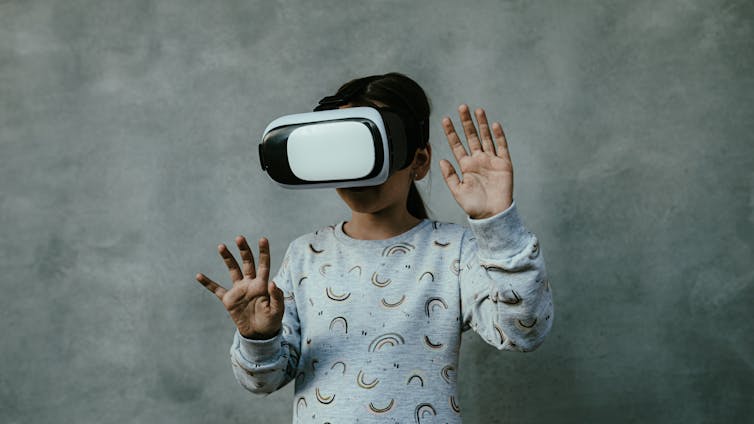
Virtual reality, in particular, can create immersive environments where children interact with characters who display emotions as vividly as real humans. I’m a human-computer interaction scientist who studies social-emotional learning in the context of how people use technology. Used thoughtfully, the combination of VR and artificial intelligence could help reshape social-emotional learning practices and serve as a new kind of “empathy classroom” or “emotional regulation simulator.”
Game of emotions
As a part of my doctoral studies at the University of Florida, in 2017 I began developing a VR Empathy Game framework that combines insights from developmental psychology, affective computing and participatory design with children. At the Human-Computer Interaction Lab at the University of Maryland, I worked with their KidsTeam program, where children of 7-11 served as design partners, helping us to imagine what an empathy-focused VR game should feel like.
In 2018, 15 master’s students at the Florida Interactive Entertainment Academy at the University of Central Florida and I created the first game prototype, Why Did Baba Yaga Take My Brother? This game is based on a Russian folktale and introduces four characters, each representing a core emotion: Baba Yaga embodies anger, Goose represents fear, the Older Sister shows happiness and the Younger Sister expresses sadness. https://www.youtube.com/embed/c6gMdx9zDFA?wmode=transparent&start=0 The VR game Why Did Baba Yaga Take My Brother? is designed to help kids develop empathy.
Unlike most games, it does not reward players with points or badges. Instead, children can progress in the game only by getting to know the characters, listening to their stories and practicing empathic actions. For example, they can look at the game’s world through a character’s glasses, revisit their memories or even hug Baba Yaga to comfort her. This design choice reflects a core idea of social-emotional learning: Empathy is not about external rewards but about pausing, reflecting and responding to the needs of others.
My colleagues and I have been refining the game since then and using it to study children and empathy.
Different paths to empathy
We tested the game with elementary school children individually. After asking general questions and giving an empathy survey, we invited children to play the game. We observed their behavior while they were playing and discussed their experience afterward.
Our most important discovery was that children interacted with the VR characters following the main empathic patterns humans usually follow while interacting with each other. Some children displayed cognitive empathy, meaning they had an understanding of the characters’ emotional states. They listened thoughtfully to characters, tapped their shoulders to get their attention, and attempted to help them. At the same time, they were not completely absorbed in the VR characters’ feelings.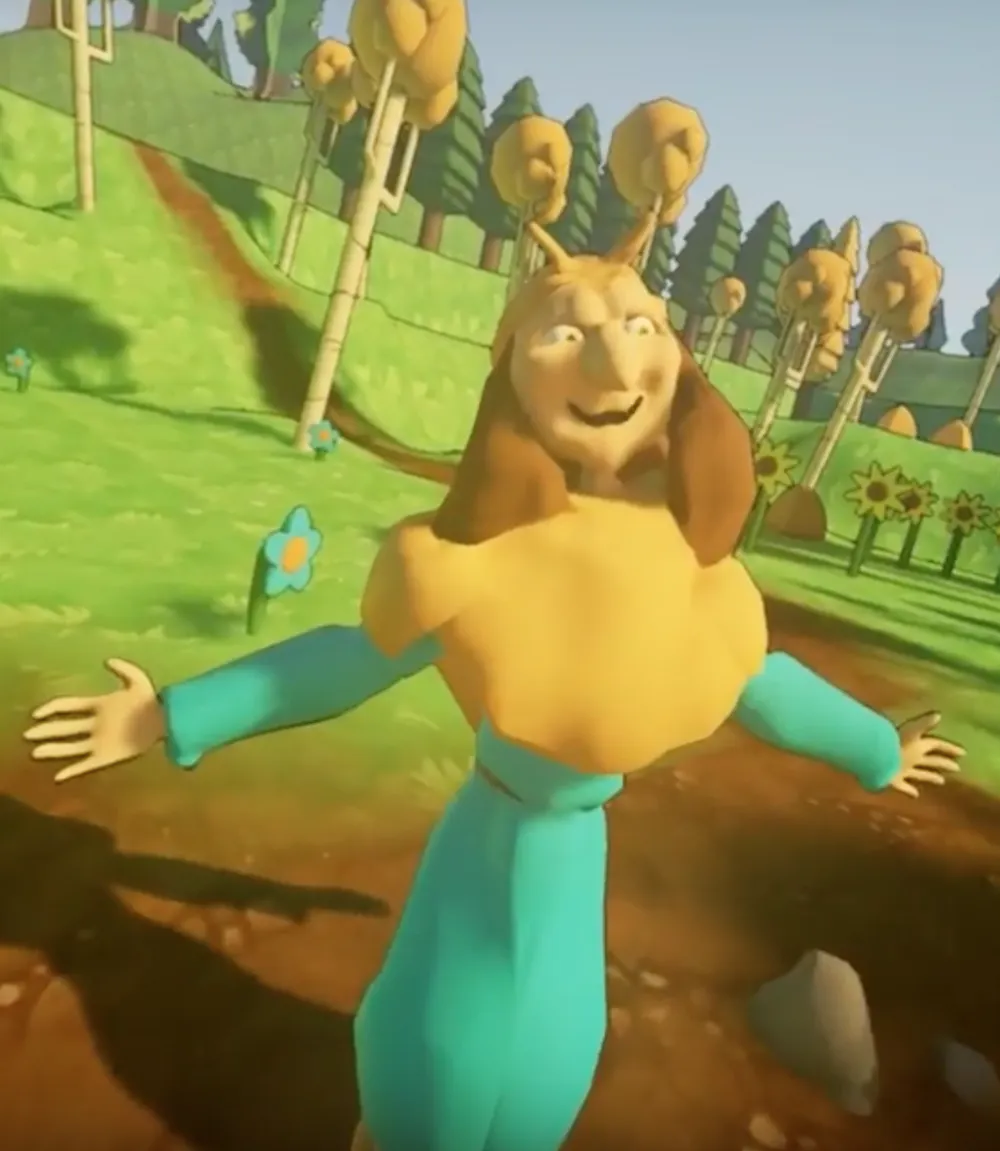
Others expressed emotional contagion, directly mirroring characters’ emotions, sometimes becoming so distressed by fear or sadness that it made them stop the game. In addition, a few other children did not connect with the characters at all, focusing mainly on exploring the virtual environment. All three behaviors can happen in real life as well when children interact with their peers.
These findings highlight both the promise and the challenge. VR can indeed evoke powerful empathic responses, but it also raises questions about how to design experiences that support children with different temperaments – some need more stimulation, and others need gentler pacing.
AI eye on emotions
The current big question for us is how to effectively incorporate this type of empathy game into everyday life. In classrooms, VR will not replace real conversations or traditional role-play, but it can enrich them. A teacher might use a short VR scenario to spark discussion, encouraging students to reflect on what they felt and how it connects to their real friendships. In this way, VR becomes a springboard for dialogue, not a stand-alone tool.
We are also exploring adaptive VR systems that respond to a child’s emotional state in real time. A headset might detect if a child is anxious or scared – through facial expressions, heart rate or gaze – and adjust the experience by scaling down the characters’ expressiveness or offering supportive prompts. Such a responsive “empathy classroom” could give children safe opportunities to gradually strengthen their emotional regulation skills.
This is where AI becomes essential. AI systems can make sense of the data collected by VR headsets such as eye gaze, facial expressions, heart rate or body movement and use it to adjust the experience in real time. For example, if a child looks anxious or avoids eye contact with a sad character, the AI could gently slow down the story, provide encouraging prompts or reduce the emotional intensity of the scene. On the other hand, if the child appears calm and engaged, the AI might introduce a more complex scenario to deepen their learning.
In our current research, we are investigating how AI can measure empathy itself – tracking moment-to-moment emotional responses during gameplay to provide educators with better insight into how empathy develops.
Future work and collaboration
As promising as I believe this work is, it raises big questions. Should VR characters express emotions at full intensity, or should we tone them down for sensitive children? If children treat VR characters as real, how do we make sure those lessons carry to the playground or dinner table? And with headsets still costly, how do we ensure empathy technology doesn’t widen digital divides?
These are not just research puzzles but ethical responsibilities. This vision requires collaboration among educators, researchers, designers, parents and children themselves. Computer scientists design the technology, psychologists ensure the experiences are emotionally healthy, teachers adapt them for curriculum, and children co-create the games to make them engaging and meaningful.
Together, we can shape technologies that not only entertain but also nurture empathy, emotional regulation and deeper connection in the next generation.
Ekaterina Muravevskaia, Assistant Professor of Human-Centered Computing, Indiana University
This article is republished from The Conversation under a Creative Commons license. Read the original article.
STM Daily News is a vibrant news blog dedicated to sharing the brighter side of human experiences. Emphasizing positive, uplifting stories, the site focuses on delivering inspiring, informative, and well-researched content. With a commitment to accurate, fair, and responsible journalism, STM Daily News aims to foster a community of readers passionate about positive change and engaged in meaningful conversations. Join the movement and explore stories that celebrate the positive impacts shaping our world.
Author


Last Updated on April 4, 2026 by Daily News Staff

Few transportation systems in the world are as instantly recognizable as the cable cars of San Francisco. Climbing steep hills with a steady hum and a nostalgic charm, these moving landmarks are more than just a tourist attraction—they’re a triumph of innovation born out of necessity.
🐎 A Problem on the Hills
In the mid-1800s, San Francisco was growing rapidly, but its geography posed a serious challenge. The city’s steep inclines made travel difficult, especially for horse-drawn streetcars, which were the primary form of public transportation at the time.
Horses often struggled to pull heavy loads uphill, and accidents were common. In some cases, animals collapsed under the strain. This dangerous and inefficient system needed a solution.
💡 The Vision of Andrew Hallidie
That solution came from Andrew Smith Hallidie, an engineer and entrepreneur who envisioned a safer, more reliable way to move people through the city.
Hallidie developed a system in which streetcars would be pulled by a continuously moving cable running beneath the street—eliminating the need for horses altogether.
⚙️ The First Cable Car Line
On August 2, 1873, Hallidie launched the world’s first cable car system: the Clay Street Hill Railroad.
This groundbreaking line proved that cable-powered transit could successfully navigate San Francisco’s steep terrain. Instead of relying on animal power, cars used a mechanical grip to latch onto a moving cable underground, allowing them to glide smoothly up and down hills.
The innovation quickly captured public attention—and demand.
🚀 A City Transformed
Following the success of the Clay Street line, cable car systems spread rapidly across San Francisco.
By the late 19th century:
- Dozens of routes crisscrossed the city
- Cable cars became the backbone of urban transportation
- The system helped shape the city’s growth and accessibility
For a time, San Francisco operated the largest and most advanced cable car network in the world.
⚡ The Rise of Electric Streetcars
Despite their success, cable cars faced competition from emerging electric streetcar systems in the early 20th century. Electric trolleys were cheaper to build and operate, and they didn’t require the complex underground cable infrastructure.
The turning point came after the devastating 1906 San Francisco earthquake, which destroyed much of the city—including large portions of the cable car network.
When rebuilding began, many lines were converted to electric systems instead of restoring the older cable technology.
San Francisco’s cable car system, first launched in 1873, remains the last manually operated system of its kind. According to the San Francisco Municipal Transportation Agency (SFMTA) , the system was designed to safely navigate the city’s steep terrain.
The cable cars are now designated as a National Historic Landmark, recognized for their cultural and engineering significance by the National Park Service .
Visitors can explore the history and mechanics of the system at the San Francisco Cable Car Museum , which preserves original equipment and archives.
🛑 Saving a Symbol
By the 1940s, cable cars were on the brink of extinction.
That’s when Friedel Klussmann stepped in. A passionate preservationist, Klussmann led a public campaign to protect the remaining lines from being dismantled.
Her efforts culminated in a successful 1947 voter referendum that ensured the survival of San Francisco’s cable cars—transforming them from everyday transit into a preserved cultural landmark.
🌉 Cable Cars Today
Today, San Francisco’s cable cars are:
- The last manually operated cable car system in the world
- A National Historic Landmark
- One of the most visited attractions in California
Three lines remain in operation:
- Powell–Hyde Line
- Powell–Mason Line
- California Street Line
While they still function as public transit, they now serve as a moving museum—connecting modern riders with the city’s past.
🎯 Why It Matters
San Francisco’s cable cars represent more than a mode of transportation. They tell a story of innovation, resilience, and community action.
From solving a practical problem to becoming a global icon, the cable car system reflects how cities adapt—and how people fight to preserve what makes them unique.
📌 “Now You Know”
San Francisco’s cable cars weren’t built for tourism—they were invented to solve a life-and-death problem on steep city streets. Today, they remain the last system of their kind anywhere in the world.
🔗 External Sources & Related Links
- SFMTA – Cable Cars Overview
- San Francisco Cable Car Museum
- National Park Service – Historic Landmark Info
- Britannica – Cable Car History
- History.com – Invention of Cable Cars
Explore the latest in innovation, AI, gadgets, startups, and digital trends in STM Daily News’ Techsection.
Last Updated on April 2, 2026 by Daily News Staff
🕒 [UPDATE] Orion Performs Translunar Injection Burn
The spacecraft has completed its critical engine burn, sending Artemis II on a trajectory toward the Moon. This marks the official start of its deep space journey.

Artemis II Successfully Launches
CAPE CANAVERAL, Fla. — NASA has successfully launched its Artemis II mission, marking the first crewed journey toward the Moon in more than 50 years.
The powerful Space Launch System (SLS) rocket lifted off from Kennedy Space Center on April 1, carrying four astronauts on a 10-day mission around the Moon and back.
On board are Commander Reid Wiseman, Pilot Victor Glover, Mission Specialist Christina Koch, and Canadian astronaut Jeremy Hansen. The mission is already being hailed as a major milestone in NASA’s effort to return humans to deep space.
Shortly after liftoff, the Orion spacecraft successfully reached orbit and deployed its solar arrays, beginning its journey that will eventually send the crew on a translunar trajectory toward the Moon. 
Artemis II is a lunar flyby mission, meaning astronauts will not land but will travel farther from Earth than any human mission in decades while testing critical systems needed for future landings.
The mission also marks several historic firsts, including the first woman and the first person of color—Victor Glover—to travel into lunar space.
NASA says the mission is a key step toward future lunar landings and long-term plans to establish a human presence on the Moon later this decade.
🛰️ Artemis II Mission Timeline
The 10-day Artemis II mission follows a carefully planned trajectory from Earth to the Moon and back:
- Day 1: Launch and Earth orbit
- Day 1–2: Translunar injection burn
- Days 2–4: Deep space travel
- Days 4–5: Lunar flyby
- Days 5–8: Return to Earth
- Days 9–10: Reentry and splashdown
For official updates and in-depth mission details, visit the following trusted sources:
- NASA: Artemis II Mission Overview
- NASA Artemis Program (Return to the Moon)
- Orion Spacecraft – Mission Details
- Space Launch System (SLS) Rocket Overview
- Kennedy Space Center – Launch Operations
- Watch NASA Live Coverage and Replays
🧾 Sources
- NASA official launch coverage and mission updates
- NASA Artemis II press materials and briefings
- NASA Kennedy Space Center launch operations updates
Stay with STM Daily News for live updates on Artemis II.

Feeding America is marking National Agriculture Day by recognizing farmers, ranchers, and producers as key partners in the fight against hunger.
In a March 24 press release, the organization said the agricultural community plays a vital role in helping food banks and pantries deliver fresh, nutritious food to families across the country. Feeding America noted that produce, dairy, and protein are among the most requested foods by neighbors facing hunger and make up half of all food distributed through its network.
The organization said that in 2025, its network worked with growers to rescue 971 million pounds of fresh produce, helping redirect surplus food to communities in need. Feeding America also pointed to federal nutrition and farm support programs, saying government purchases from U.S. growers provide more than 20% of the food distributed through its network.
Ami McReynolds, Feeding America’s chief advocacy and community partnerships officer, said supporting farmers is directly connected to helping families access healthy meals. The organization is also urging Congress to support additional farm aid and a Farm Bill that strengthens nutrition programs.
Feeding America said a recent poll found that 95% of voters view hunger as a nonpartisan issue, reinforcing support for collaborative solutions between agriculture, food banks, and policymakers.
Related Links
Source Links
The Bridge is a section of the STM Daily News Blog meant for diversity, offering real news stories about bona fide community efforts to perpetuate a greater good. The purpose of The Bridge is to connect the divides that separate us, fostering understanding and empathy among different groups. By highlighting positive initiatives and inspirational actions, The Bridge aims to create a sense of unity and shared purpose. This section brings to light stories of individuals and organizations working tirelessly to promote inclusivity, equality, and mutual respect. Through these narratives, readers are encouraged to appreciate the richness of diverse perspectives and to participate actively in building stronger, more cohesive communities.
https://stmdailynews.com/the-bridge






