

STM Blog
LAWA’s Sustainability Progress: Achieving Carbon Neutrality by 2045
LAWA’s latest annual report showcases sustainable progress towards carbon neutrality by 2045.

Last Updated on July 5, 2024 by Daily News Staff
Los Angeles World Airports (LAWA) has released its 2022 Sustainability Report, showcasing its ongoing commitment to sustainability and its progress towards achieving ambitious environmental goals. With a focus on transparency and accountability, LAWA’s report highlights the success of various initiatives that have generated sustainable and economic benefits for the airports and their surrounding communities. Spearheaded by the leadership of Mayor Bass and supported by partnerships with local agencies, organizations, and business partners, LAWA is determined to be a frontrunner in sustainable aviation, ultimately achieving carbon neutrality by 2045.
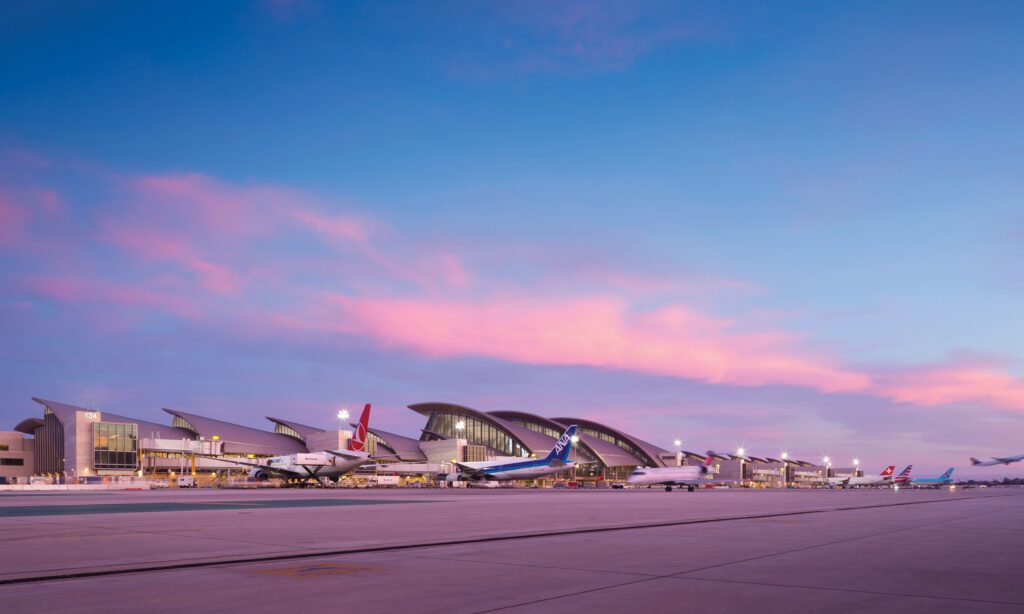
Building a Sustainable Future:
LAWA’s sustainability journey began in 2007 with the establishment of its Sustainability Vision and Principles. These values were further reinforced in 2017 with the adoption of the Sustainable Design and Construction Policy, which mandated LEED Silver or higher certification for new building construction. Additionally, in 2019, LAWA launched its Sustainability Action Plan, aligning with the City of Los Angeles’s objectives. The plan aims to achieve net zero in key areas by 2045, including 100% renewable electricity use, zero potable water for non-potable uses, and carbon neutrality for LAWA operations.
Notable Achievements in 2022:
The 2022 Sustainability Report highlights several key accomplishments that demonstrate LAWA’s commitment to sustainability and progress towards its goals. Some noteworthy achievements include:
- Early achievement of the 2025 goal of a 15% reduction in energy use per passenger.
- Increased usage of Sustainable Aviation Fuel at Los Angeles International Airport (LAX).
- Meeting the 2023 goal of a 20% zero-emissions bus fleet.
- Achieving the 2025 goal of 25% waste diversion.
- Introducing unleaded aviation fuel for general aviation aircraft at Van Nuys Airport (VNY).
- Incorporating fully recyclable aluminum shells in the train cars for the Automated People Mover (APM).
- Updating the Electric Vehicle (EV) Purchasing Policy to require a 25% EV sedan fleet by 2023 and 100% by December 2031.
- Obtaining Envision Gold certification for the APM.
- Launching the LAX Residential Sound Insulation Program (RSIP) to provide sound insulation for nearby communities.
- Expanding the use of reclaimed water for irrigation to 66.8% of all landscaped areas at LAX.
- Receiving awards for the innovative and sustainable design of LAX’s Economy Parking Facility.
- Hosting and sponsoring 65 community and employee engagement events.
Focus Areas and Partnerships:
While LAWA’s sustainability program encompasses various aspects, the report emphasizes specific topics of importance to LAWA, partner organizations, and stakeholders. These areas include energy management, water management, air emissions reduction, material resources management, noise management, natural resources conservation, and corporate responsibility. By addressing these issues proactively, LAWA aims to ensure a well-rounded approach to sustainability that benefits the environment, the community, and the airport’s operations.
LAWA’s 2022 Sustainability Report signifies its unwavering commitment to sustainability and showcases the remarkable progress made towards achieving its long-term environmental goals. With a focus on accountability, transparency, and collaboration with partners, LAWA is leading the way in sustainable aviation practices. By exceeding milestones and consistently meeting targets, LAWA is well on track to achieving carbon neutrality by 2045. As the organization continues to prioritize sustainable practices, it sets an example for the aviation industry and demonstrates the potential for large-scale environmental transformation
For more information about LAX, its transformation and its environmental, social and local workforce commitments, please visit flylax.com. Follow LAX on X (formally Twitter), Instagram, LinkedIn, Facebook and YouTube.
Visit STM Daily News for more stories about transportation: https://stmdailynews.com/category/the-bridge/urbanism/
Author


Last Updated on April 2, 2026 by Daily News Staff
🕒 [UPDATE] Orion Performs Translunar Injection Burn
The spacecraft has completed its critical engine burn, sending Artemis II on a trajectory toward the Moon. This marks the official start of its deep space journey.

Artemis II Successfully Launches
CAPE CANAVERAL, Fla. — NASA has successfully launched its Artemis II mission, marking the first crewed journey toward the Moon in more than 50 years.
The powerful Space Launch System (SLS) rocket lifted off from Kennedy Space Center on April 1, carrying four astronauts on a 10-day mission around the Moon and back.
On board are Commander Reid Wiseman, Pilot Victor Glover, Mission Specialist Christina Koch, and Canadian astronaut Jeremy Hansen. The mission is already being hailed as a major milestone in NASA’s effort to return humans to deep space.
Shortly after liftoff, the Orion spacecraft successfully reached orbit and deployed its solar arrays, beginning its journey that will eventually send the crew on a translunar trajectory toward the Moon. 
Artemis II is a lunar flyby mission, meaning astronauts will not land but will travel farther from Earth than any human mission in decades while testing critical systems needed for future landings.
The mission also marks several historic firsts, including the first woman and the first person of color—Victor Glover—to travel into lunar space.
NASA says the mission is a key step toward future lunar landings and long-term plans to establish a human presence on the Moon later this decade.
🛰️ Artemis II Mission Timeline
The 10-day Artemis II mission follows a carefully planned trajectory from Earth to the Moon and back:
- Day 1: Launch and Earth orbit
- Day 1–2: Translunar injection burn
- Days 2–4: Deep space travel
- Days 4–5: Lunar flyby
- Days 5–8: Return to Earth
- Days 9–10: Reentry and splashdown
For official updates and in-depth mission details, visit the following trusted sources:
- NASA: Artemis II Mission Overview
- NASA Artemis Program (Return to the Moon)
- Orion Spacecraft – Mission Details
- Space Launch System (SLS) Rocket Overview
- Kennedy Space Center – Launch Operations
- Watch NASA Live Coverage and Replays
🧾 Sources
- NASA official launch coverage and mission updates
- NASA Artemis II press materials and briefings
- NASA Kennedy Space Center launch operations updates
Stay with STM Daily News for live updates on Artemis II.

Feeding America is marking National Agriculture Day by recognizing farmers, ranchers, and producers as key partners in the fight against hunger.
In a March 24 press release, the organization said the agricultural community plays a vital role in helping food banks and pantries deliver fresh, nutritious food to families across the country. Feeding America noted that produce, dairy, and protein are among the most requested foods by neighbors facing hunger and make up half of all food distributed through its network.
The organization said that in 2025, its network worked with growers to rescue 971 million pounds of fresh produce, helping redirect surplus food to communities in need. Feeding America also pointed to federal nutrition and farm support programs, saying government purchases from U.S. growers provide more than 20% of the food distributed through its network.
Ami McReynolds, Feeding America’s chief advocacy and community partnerships officer, said supporting farmers is directly connected to helping families access healthy meals. The organization is also urging Congress to support additional farm aid and a Farm Bill that strengthens nutrition programs.
Feeding America said a recent poll found that 95% of voters view hunger as a nonpartisan issue, reinforcing support for collaborative solutions between agriculture, food banks, and policymakers.
Related Links
Source Links
The Bridge is a section of the STM Daily News Blog meant for diversity, offering real news stories about bona fide community efforts to perpetuate a greater good. The purpose of The Bridge is to connect the divides that separate us, fostering understanding and empathy among different groups. By highlighting positive initiatives and inspirational actions, The Bridge aims to create a sense of unity and shared purpose. This section brings to light stories of individuals and organizations working tirelessly to promote inclusivity, equality, and mutual respect. Through these narratives, readers are encouraged to appreciate the richness of diverse perspectives and to participate actively in building stronger, more cohesive communities.
https://stmdailynews.com/the-bridge
Author
Community
McDonald’s First Job Confessional Turns Career Stories Into Free Meal Opportunity
McDonald’s is launching First Job Confessional, a campaign inviting fans to share first job stories for a chance to receive a $15 gift card in select cities.

First Job Confessional
McDonald’s is putting first jobs in the spotlight with a new campaign that asks fans to share the real-world skills they gained early in their working lives. Launched on National Employee Appreciation Day, the brand’s First Job Confessional invites people to reflect on how those first roles helped shape their careers — and, in some cases, earn a free meal in the process.
The campaign is built around a simple idea: first jobs often teach lasting skills that deserve more recognition. Whether someone learned problem-solving while babysitting, communication during a lunch rush, or teamwork behind a counter, McDonald’s is framing those experiences as valuable career foundations. The company says those are the same kinds of skills employers continue to prioritize as workplace demands evolve.

How the First Job Confessional Works
In select cities, McDonald’s is setting up confessional booths designed to look like ordering kiosks. But instead of placing a meal order, participants can record a story about their first job and the skills they picked up along the way. Those who take part in person will have the opportunity to receive a $15 McDonald’s gift card, while supplies last.
Fans who cannot attend in person can still join online by posting their stories using #FirstJobConfessional. McDonald’s says selected videos may also be featured on its YouTube channel, extending the campaign beyond the live events.
External Related Links
- McDonald’s corporate article: McDonald’s is Asking Fans to Get Real About Their First Job Skills in Exchange for Free Meals
- McDonald’s 1 in 8: First Job Confessional
- McDonald’s 1 in 8 home page
- Marketing Dive coverage of the campaign
- Parade coverage of the First Job Confessional tour
Source Links
- Original PRNewswire press release from McDonald’s USA, LLC
- McDonald’s official corporate story
- McDonald’s 1 in 8 First Job Confessional page
- McDonald’s 1 in 8 official website
The Bridge is a section of the STM Daily News Blog meant for diversity, offering real news stories about bona fide community efforts to perpetuate a greater good. The purpose of The Bridge is to connect the divides that separate us, fostering understanding and empathy among different groups. By highlighting positive initiatives and inspirational actions, The Bridge aims to create a sense of unity and shared purpose. This section brings to light stories of individuals and organizations working tirelessly to promote inclusivity, equality, and mutual respect. Through these narratives, readers are encouraged to appreciate the richness of diverse perspectives and to participate actively in building stronger, more cohesive communities.
https://stmdailynews.com/the-bridge





