

Food and Beverage
Llene sus fiestas navideñas de sabor con uva fresca

Last Updated on July 17, 2024 by Daily News Staff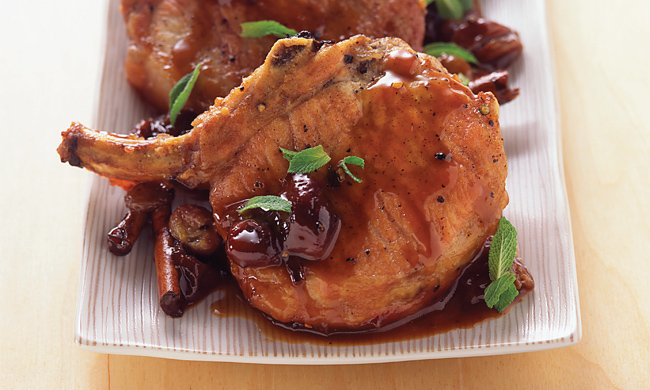
(Family Features) La elegancia de las fiestas comienza en la mesa con comidas, postres y bebidas compartidas con los seres queridos. Este año, deje que las uvas añadan una elegancia fácil a sus recetas de temporada como un ingrediente exclusivo y perfecto para ocasiones especiales.
Como una adición muy versátil a los aperitivos, refrigerios, platos principales, guarniciones y postres, las uvas son un ingrediente esencial para tener a mano. Gracias a su delicada dulzura y jugosa textura, las uvas de California pueden ser la estrella en el centro de la mesa acompañando comidas especiales y sabrosas, como las chuletas de cerdo estofadas con miel y uvas servidas con sidra de uva con especias para una refrescante bebida para adultos.
Termine la celebración compartiendo una tarta de queso con uvas al estilo vasco, donde se usa un delicioso jugo de uva fresco en la masa de la tarta de queso para darle una dulzura natural que rezalta el sabor. Decore la parte superior con uvas frescas y jugosas para darle un toque final festivo.
Encuentre más ideas dulces para celebrar las fiestas en GrapesfromCalifornia.com.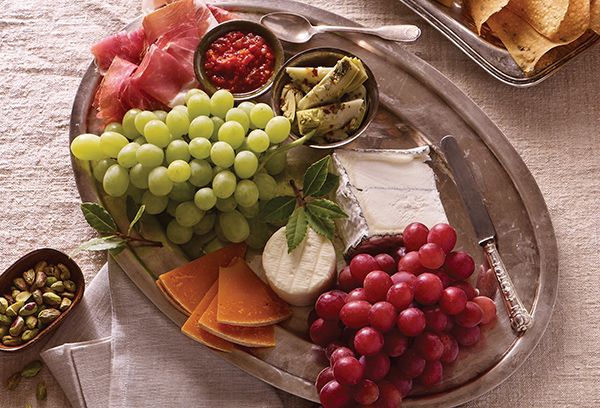
Un dulce aperitivo para la fiesta
Prepare el ambiente para una reunión deliciosa sirviendo un aperitivo fácil y atractivo como esta bandeja de fiesta de uvas, con uvas frescas, prosciutto, quesos, pistachos y otras delicias favoritas para las fiestas. Las uvas son fáciles de incluir, ya que ofrecen una variedad de diferentes colores, formas, tamaños y texturas, lo que las convierte en un refrigerio ideal y saludable o como ingrediente en sabrosas recetas.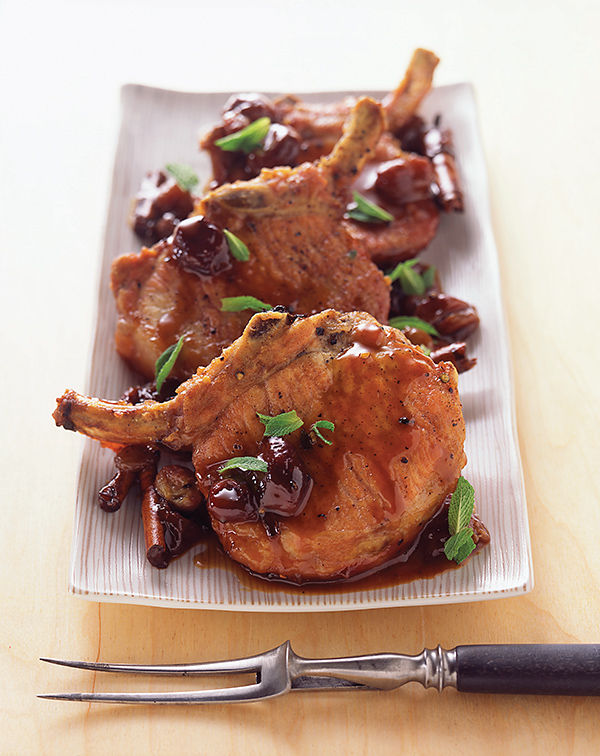
Chuletas de cerdo estofadas con miel especiada y uvas
Porciones: 4
- 4 chuletas de cerdo gruesas (alrededor de 3 libras)
- 4 cucharadas de harina
- 2 cucharadas de mantequilla o margarina, derretida
- 1 1/2 tazas de uvas de California, rojas o negras, enteras
- 1/3 taza de miel de abeja
- 2 palitos de canela pequeños, rotos
- 3-5 clavos de olor
- 1/2 cucharadita de jengibre molido seco
- 1/2 cucharadita de sal
- 1/4 cucharadita de pimienta negra
- 1 cucharada de menta fresca picada (opcional)
- Precaliente el horno a 325 F.
- Caliente una sartén o cazuela pesada con tapa a fuego medio-alto. Espolvoree las chuletas de cerdo con harina y dórelas lentamente en mantequilla derretida. No deje que la harina se queme.
- Retire la sartén del fuego y agregue las uvas, la miel, la canela, los clavos de olor, el jengibre, la sal y la pimienta. Cubra y coloque en el horno. Estofar lentamente de 50 a 60 minutos, o hasta que el cerdo esté tierno. Retire la carne de cerdo de la sartén y manténgala caliente. Retire la salsa de la sartén del exceso de grasa. Coloque las chuletas de cerdo en una bandeja de servir, vierta la salsa y espolvoree con menta picada, si lo desea.
Información nutricional por ración: 569 calorías; 54 g de proteína; 41 g de carbohidratos; 21 g de grasa (33% de calorías de grasa); 9 g de grasas saturadas (14% de calorías de grasas saturadas); 33% de calorías de grasa; 165 mg de colesterol; 407 mg de sodio; 1,6 g de fibra.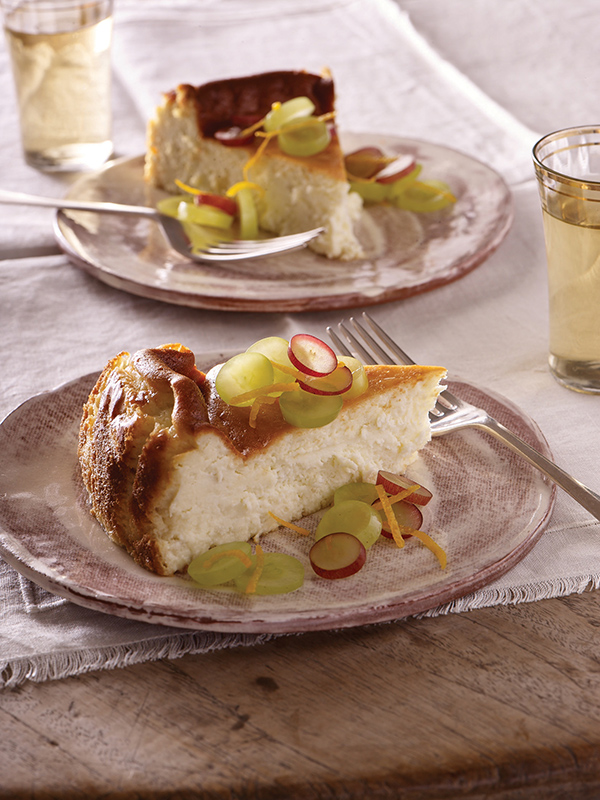
Tarta de queso con uvas al estilo vasco
Tiempo de preparación: 15 minutos, más enfriamiento y refrigeración
Tiempo de cocción: 40 minutos
Porciones: 12
- 2 tazas de uvas verdes de California, divididas
- 1/4 taza, más 2/3 taza, azúcar granulada, dividida
- 2 1/2 cucharadas de maicena
- 2 pizcas grandes de sal kosher
- 21 onzas de queso crema, a temperatura ambiente
- 1 taza de crema espesa o crema de leche, fría
- 4 huevos grandes, a temperatura ambiente
- 2 cucharadas de licor de naranja (opcional)
- Caliente el horno a 425 F con la rejilla en el centro. Use una hoja de papel pergamino de 12 por 16 pulgadas para forrar un molde desmontable de 9 pulgadas en el centro. Presione el papel en el borde inferior de molde y alise las arrugas alrededor de los lados. Coloque el molde en una bandeja para hornear poco profunda.
- En una mini licuadora o procesador de alimentos, mezcle 1 taza de uvas, 1/4 taza de azúcar, maicena y sal a velocidad alta hasta que quede suave, aproximadamente por 1 minuto.
- En un tazón de una batidora eléctrica equipada con paleta, bata el queso crema y el azúcar restante hasta que quede esponjoso, 1-2 minutos. Con la batidora a velocidad media, vierta gradualmente la crema espesa; raspar los lados y batir a alta velocidad hasta que la mezcla parezca crema batida suave, aproximadamente 1 minuto. Batir los huevos, uno a la vez, raspando cada vez que incorporas uno. A velocidad media, agregue gradualmente la mezcla de puré de uva; raspe y mezcle hasta que esté bien mezclado, por 1 minuto.
- Vierta la masa en el molde preparado, llévelo al horno y hornee de 38 a 40 minutos hasta que la tarta esté inflada y la parte superior esté dorada como caramelo. Aparecerán grietas alrededor de los bordes y la tarta se tambaleará cuando se toque suavemente con el dedo. Coloque el molde para tartas en una bandeja para hornear sobre una rejilla para que se enfríe. La tarta se hundirá a la mitad de su altura. Enfríe a temperatura ambiente, 1-2 horas, luego refrigere sin tapar. No saque la tarta del molde hasta que esté bien fría, al menos 5 horas o toda la noche.
- Corte las uvas restantes en mitades o en rodajas. En un tazón pequeño, combine las uvas con el licor de naranja, si lo desea, y reserve.
- Cuando esté listo para servir, retire el lado de la sartén. Retire con cuidado el papel pergamino arrugado del costado de la tarta de queso y luego pásela a un plato para servir quitando el papel del fondo de la tarta y debajo del molde mientras tira suavemente de la tarta hacia el plato y fuera del papel.
- Adorne la parte superior de la tarta de queso con la mezcla de licor de uva, si lo desea, o con uvas frescas. Corte la tarta en triángulos con un cuchillo delgado y afilado.
Nota: La tarta de queso se puede preparar hasta con 2 días de anticipación. Una vez que la tarta esté bien fría, cubra el recipiente con una envoltura de plástico hasta que esté lista para servir.
Información nutricional por ración: 350 calorías; 6 g de proteína; 25 g de carbohidratos; 26 g de grasa (67% de calorías de grasa); 15 g de grasas saturadas (39 % de calorías de grasas saturadas); 135 mg de colesterol; 200 mg de sodio; 0 g de fibra.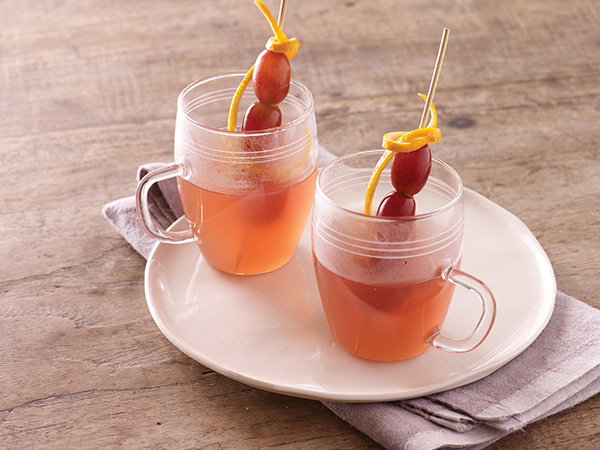
Sidra caliente de uva con especias
Tiempo de preparación: 20 minutos
Tiempo de cocción: alrededor de 1 hora
Porciones: 4
- 5 tazas de uvas rojas de California, más adicionales para decorar, cantidad dividida
- 3 tazas de agua
- 1 cucharada de miel de abeja
- 1 canela en rama
- 2 anís estrellado (opcional)
- 1 naranja grande
- 6 onzas de ron ámbar
- En una cacerola grande, mezcle 5 tazas de uvas con agua, miel, canela y anís estrellado, si lo desea. Lleve la mezcla a ebullición a fuego medio-alto, reduzca el fuego a medio-bajo, cubra y cocine a fuego lento hasta que las uvas estén tiernas, 50-60 minutos. Deje enfriar por 15 minutos.
- Coloque un colador de malla mediana sobre el tazón y vierta la mezcla de uvas. Presione suavemente sobre los sólidos para extraer el jugo de la fruta de aproximadamente 2 tazas de sidra de uva.
- Con el pelador, pelar una tira grande de cáscara de naranja y añadirla al zumo caliente. Dejar enfriar, tapar y refrigerar.
- Cuando esté listo para servir, caliente suavemente la sidra a fuego medio. Vierta 1/2 taza de sidra en cada taza. Agregue 1 1/2 onzas de ron y decore con un toque de naranja y una brocheta pequeña de uvas.
Información nutricional por ración: 170 calorías; 0 g de proteína; 18 g de carbohidratos; 0 g de grasa (0% de calorías de grasa); 0 g de grasas saturadas (0% de calorías de grasas saturadas); 0 mg de colesterol; 5 mg de sodio; 0 g de fibra.
SOURCE:
California Table Grape Commission
At our core, we at STM Daily News, strive to keep you informed and inspired with the freshest content on all things food and beverage. From mouthwatering recipes to intriguing articles, we’re here to satisfy your appetite for culinary knowledge.
Visit our Food & Drink section to get the latest on Foodie News and recipes, offering a delightful blend of culinary inspiration and gastronomic trends to elevate your dining experience.
https://stmdailynews.com/category/food-and-beverage
You can also find food and beverage-related videos on our YouTube channel, where we regularly post new content and share tips, recipes, and demonstrations. https://youtube.com/playlist?list=PLEhXBupt8tVynuUhpQZMxQt4lvPmOiAtQ&si=InDwc7YaB0KIwmxy
Author



recipes
Lighten Up: Fresh Spring Meals That Won’t Weigh You Down
Prepare your fresh spring menu with light, flavorful dishes like shrimp pearl couscous salad and chickpea couscous—perfect for easy, satisfying meals without the heaviness.
Lighten Up: Fresh Spring Meals That Won’t Weigh You Down
(Feature Impact) Put away the heavy coats and break out the rain jackets and rubber boots – spring is here, and with it comes more than just pop-up showers and sunshine. After months of comfort foods and curling up indoors, you may be ready for lighter meals that won’t weigh you down before splashing in the puddles.
Fresh produce may first come to mind, but spring bites can also mean swapping out ingredients like regular pasta for a solution such as pearl couscous. If you’re looking to complement greens, veggies, fish or meats with light yet filling flavor, consider Success Boil-in-Bag Pearl Couscous, a small, mediterranean-style pasta that always cooks right and is ready to eat in under 7 minutes once the water boils. The BPA-free boil-in-bag simplicity makes cooking easy and foolproof: no measure, no mess, no stress.
Made with high-quality semolina wheat, it features a slightly nutty flavor on its own while absorbing the flavors of salads while retaining its density and chewy texture. It’s distinguished from traditional Moroccan couscous by its slightly larger, rounder shape and less dense, firmer consistency.
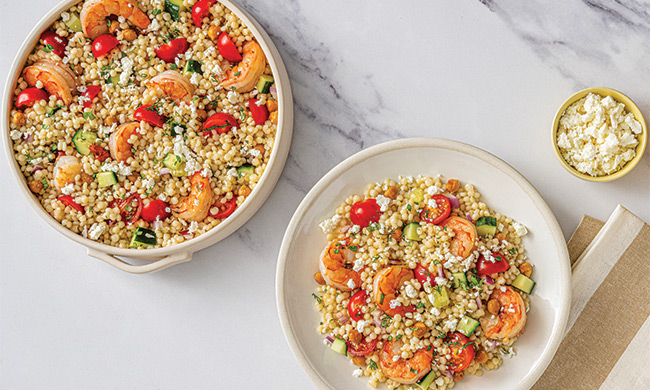
Try it with your next meal in this protein-forward Shrimp Pearl Couscous Salad, made using fresh herbs, citrus, seasoned shrimp and chickpeas for a jam-packed salad that screams spring. Never boring, the tender, seasoned couscous and shrimp, veggies and aromatic herbs can bring your family running to the kitchen after a day of play.
Or, for an even simpler dish that requires just 15 minutes in the kitchen, this Pearl Couscous and Chickpea Salad is light, bright and bursting with flavor. It brings together tender pearl couscous, crisp veggies and za’atar in every bite.
To find more light spring recipe ideas, visit SuccessRice.com.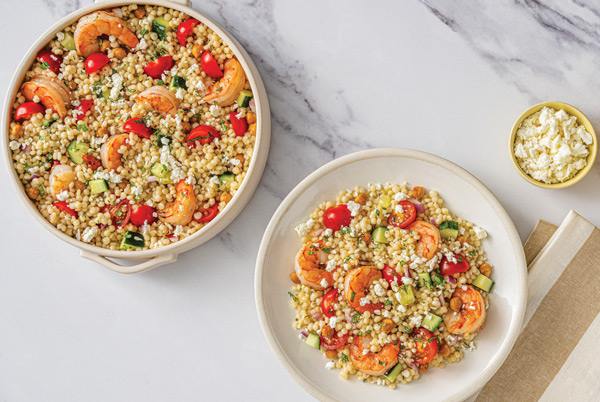
Shrimp Pearl Couscous Salad
Prep time: 10 minutes
Cook time: 15 minutes
Servings: 4
- 1 bag Success Pearl Couscous
- 1 pound large shrimp, peeled and deveined
- 1 tablespoon seasoned salt
- 4 tablespoons olive oil, divided
- 1 can (14 ounces) chickpeas, drained and rinsed
- 1/2 teaspoon garlic powder
- 1/2 teaspoon onion powder
- 1/2 teaspoon smoked paprika
- 1/4 teaspoon salt
- 1/2 English cucumber, diced
- 1 cup cherry tomatoes, halved
- 1/4 cup fresh basil, chopped
- 1/4 cup red onions, finely chopped
- 2 tablespoons fresh dill, chopped
- 1 tablespoon lemon juice
- 1/2 cup feta, crumbled
- Prepare pearl couscous according to package directions.
- In medium bowl, toss shrimp with seasoned salt.
- In large saucepan over medium-high heat, heat 1 tablespoon oil. Add shrimp and cook 5 minutes. If necessary, cook in batches to avoid overcrowding pan.
- In another large pan, heat 1 tablespoon oil over medium heat. Add chickpeas and cook 8 minutes until crispy and golden, tossing often. Add garlic powder, onion powder, paprika and salt. Toss to fully coat and cook 2 minutes.
- In large bowl, combine pearl couscous, shrimp, chickpeas, cucumbers, tomatoes, basil, red onion, dill, lemon juice and remaining olive oil. Toss to combine. Garnish with feta.
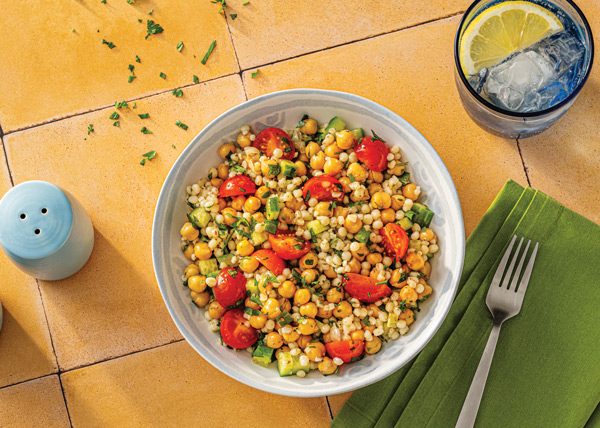
Pearl Couscous and Chickpea Salad
Prep time: 5 minutes
Cook time: 10 minutes
Servings: 4
- 1 bag Success Pearl Couscous
- 1 can (15 ounces) chickpeas, drained and rinsed
- 1 cup cherry tomatoes, halved
- 1/2 cup cucumber, diced
- 1/4 cup fresh parsley, chopped
- 1 tablespoon za’atar
- 2 tablespoons olive oil
- 1 tablespoon lemon juice, freshly squeezed
- 1/2 teaspoon salt
- 1/4 teaspoon pepper
- Prepare pearl couscous according to package directions.
- In large bowl, combine couscous, chickpeas, cherry tomatoes, cucumber, parsley and za’atar.
- Drizzle with olive oil and lemon juice. Season with salt and pepper. Toss until well combined.
- Serve warm or at room temperature.


SOURCE:
Hungry for what’s next? STM Daily News’ Food and Drink section dishes up the latest in restaurant news, beverage trends, seasonal recipes, culinary events, and food culture stories readers love to share.
Food and Beverage
Survey Finds Cooking Oil Now Influences Where Many Americans Choose to Eat
A new survey suggests cooking oil is no longer just a kitchen detail. Coast Packing found that 43% of Americans say a restaurant’s cooking oil influences where they choose to eat.

Last Updated on April 2, 2026 by Daily News Staff

New national survey data suggests cooking oil is becoming a visible factor in restaurant selection, with younger diners showing the strongest preferences.
A new national survey suggests that cooking oil is no longer just a back-of-house decision for restaurants. It is increasingly becoming part of how consumers decide where to eat.
According to new data released by Coast Packing Company, 43% of Americans say a restaurant’s cooking oil influences their dining choice. The survey, based on responses from 1,005 U.S. consumers, points to a clear shift in how ingredient decisions are perceived by the public.
The strongest signal comes from younger diners. Among adults ages 18 to 34, 52% say knowing whether a restaurant uses Beef Tallow or seed oils affects where they choose to eat. Among consumers 55 and older, that number falls to 33%.
The preference gap also shows up when diners are asked to choose between two otherwise identical restaurants. In that scenario, 31% of adults ages 18 to 34 say they would choose the restaurant using Beef Tallow, compared with 19% of adults 55 and older.
The survey also found that 24.7% of diners prefer restaurants to use traditional animal fats such as butter or Beef Tallow, while 15.6% prefer seed or vegetable oils. That suggests ingredient choices once treated mainly as operational decisions may now be influencing brand perception, menu appeal, and customer loyalty.
For restaurant operators, the findings point to a broader change in consumer behavior. Diners, especially younger ones, appear increasingly interested in how food is prepared and what ingredients are used behind the scenes. That shift aligns with wider food industry trends that emphasize transparency, flavor, and traditional preparation methods.
Coast Packing says the data builds on years of tracking consumer attitudes toward animal fats. Earlier research showed growing openness to ingredients such as Lard and Beef Tallow, particularly among younger consumers who associate them with flavor and old-school cooking. This latest survey goes a step further by suggesting those views are now influencing actual dining behavior.
The findings also match broader market signals. Whole Foods Market’s 2026 food trend forecast identified Beef Tallow as an emerging ingredient gaining visibility, while analysts continue to project growth in the global tallow sector through 2030.
Restaurants are unlikely to overhaul kitchen practices overnight. Still, the survey suggests cooking oil is becoming more than a technical ingredient choice. For a growing share of consumers, it is part of the dining experience itself.
For more information, visit Coast Packing Company.
External Links
- Back to Flavor, Back to Tallow white paper
- Email to request the full survey results
- Coast Packing Company official website
- Coast Packing TasteMap
- Healthy Fats Coalition
Visit the Food and Drink section on STM Daily News for the latest food news, beverage trends, restaurant stories, seasonal recipes, culinary events, and community-driven lifestyle coverage.
Food and Beverage
Purely Elizabeth Launches Purely Glow Granola, Its First Beauty-Inspired Limited Edition
Purely Elizabeth debuts Purely Glow Salted Vanilla Pistachio Granola, a limited-edition, beauty-inspired blend with collagen peptides and biotin, timed to New York Fashion Week.
Last Updated on April 1, 2026 by Daily News Staff
Purely Elizabeth is stepping beyond the breakfast bowl and into the “glow-from-within” conversation.
The Boulder-based natural foods brand announced the launch of Purely Glow Salted Vanilla Pistachio Granola, a limited-edition flavor that blends its signature crunchy clusters with beauty-inspired functional ingredients—including collagen peptides and biotin. The drop is timed to New York Fashion Week, signaling how quickly wellness brands are borrowing cues from beauty culture: trend-driven, ritual-focused, and built for social.
Why a “beauty granola” now?
If you’ve spent any time on TikTok lately, you’ve seen the shift: wellness content is increasingly framed like skincare—daily routines, “non-negotiables,” and ingredients people swear by.
Purely Elizabeth points to that momentum in the announcement, noting that TikTok posts featuring collagen increased by 70% over the past year compared to the previous two years. At the same time, pistachio has had its own breakout moment, with 55,000 pistachio-related TikTok posts in the most recent year—a 104% increase over the prior 24 months.
Translation: consumers aren’t just shopping for flavor anymore. They’re shopping for function, aesthetic, and ritual.
What’s inside Purely Glow Salted Vanilla Pistachio Granola
On the flavor side, Purely Glow is positioned as an elevated, dessert-leaning blend built around a salty-sweet profile:
- Organic oats
- Roasted pistachios
- Real vanilla bean
- A hint of sea salt
From a nutrition and formulation standpoint, the granola is:
- Gluten-free
- Sweetened with coconut sugar
- Baked with coconut oil
- A good source of fiber
- Enriched with collagen peptides, coconut water powder, and biotin
Founder and CEO Elizabeth Stein says the concept comes from a personal place—bringing together “nourishing food and daily beauty rituals,” and leaning into the idea that what you eat can be part of how you care for yourself.
A collab that takes it beyond the grocery aisle
To push the launch into lifestyle territory, Purely Elizabeth is partnering with Cha Cha Matcha for a limited-time “Purely Glow” menu at all locations.
The menu includes:
- Pistachio Matcha Lattes (hot or iced)
- A Purely Glow Yogurt Parfait layered with coconut yogurt, matcha chia pudding, and topped with Purely Glow Granola
The brand is also hosting “Glow Up” pop-up events to bring the product to life:
- Cha Cha Matcha Flatiron (NYC): February 12, 1:00 p.m. to 5:00 p.m., plus the weekend
- Cha Cha Matcha Beverly Hills: February 20–22
Availability and price
Purely Glow Granola launches February 12 for $7.99 and will be sold until it sells out. It’s available exclusively via:
- PurelyElizabeth.com
- TikTok Shop
- Cha Cha Matcha locations
A brand move that fits the moment
Purely Elizabeth has been around for 16 years and says it has remained the #1 granola brand in the natural channel for more than eight consecutive years—so this isn’t a reinvention as much as a strategic expansion.
The bigger takeaway: food brands are increasingly marketing like beauty brands. Limited editions. Ingredient storytelling. Collabs. Pop-ups. Social-first launches.
Purely Glow is a clean example of that playbook—built around a trending flavor (pistachio), a trending function (collagen/biotin), and a cultural moment (NYFW) that makes the product feel like more than breakfast.
For more details, visit purelyelizabeth.com.





