

News
Perseid Meteor Shower 2023: Best Time to See Shooting Stars
Witness the extraordinary Perseid Meteor Shower in 2023: August 11-13, the best time to see shooting stars. Don’t miss this celestial spectacle!

Last Updated on July 5, 2024 by Daily News Staff
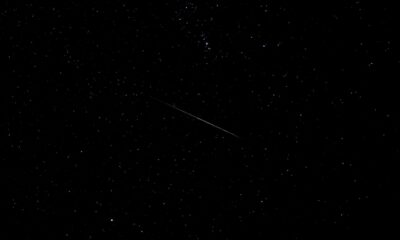
The Perseid Meteor Shower, one of the most anticipated astronomical events of the year, is set to dazzle sky gazers once again. From August 11 to 13, the Perseids will peak, offering a spectacular display of shooting stars streaking across the night sky. So, what makes this annual event so special, and how can you make the most of this celestial spectacle?
The Perseid Meteor Shower occurs when the Earth passes through the trail of debris left by the comet 109P/Swift-Tuttle. Though the comet approaches our planet only once every 133 years, we witness the Perseids every year because our planet crosses the comet’s trail annually. This year, the shower will be active from July 14 to August 24, with the peak occurring on August 13. During this time, the shower is expected to produce around 100 meteors per hour, making it one of the most prolific meteor streams.
To observe the Perseids, it’s important to know where to look. The radiant point, the location from which the meteors appear to originate, is in the constellation Perseus. You can easily find the radiant using stargazing apps like Star Walk 2 and Sky Tonight. These apps provide a user-friendly search system that allows you to track the current position of the radiant in the sky above you.
Timing is crucial for meteor gazing. The best time to view the Perseids is when the sky is dark, before the Moon rises. While the maximum number of meteors will be visible during the peak hours of August 13, it’s worth noting that the moonless sky around August 16 will also provide excellent conditions for observation. Find an open place with a dark sky, away from city lights, for optimal viewing. If possible, heading to the mountains will further enhance your experience by minimizing haze and cloud interference.
To fully enjoy the meteor shower, be prepared. Bring a comfortable chair or camp cot to lie on and give yourself at least an hour to witness as many meteors as possible. Remember not to look directly at the radiant, as most meteors will be short, and avoid looking low above the horizon where haze or clouds may obstruct your view. Using a red flashlight instead of a bright one will help your eyes adapt to the darkness without compromising your visibility.
So, get ready to be enthralled by nature’s firework display. The Perseid Meteor Shower 2023 is set to amaze with its celestial spectacle. Take advantage of the peak dates, find the radiant, and venture to a dark location for an unforgettable experience. As you lie under the starry sky, let the Perseids captivate your imagination and remind you of the grandeur of the universe we call home.
https://blogs.nasa.gov/Watch_the_Skies/2023/08/07/best-meteor-shower-of-the-year-peaks-this-weekend/
The science section of our news blog STM Daily News provides readers with captivating and up-to-date information on the latest scientific discoveries, breakthroughs, and innovations across various fields. We offer engaging and accessible content, ensuring that readers with different levels of scientific knowledge can stay informed. Whether it’s exploring advancements in medicine, astronomy, technology, or environmental sciences, our science section strives to shed light on the intriguing world of scientific exploration and its profound impact on our daily lives. From thought-provoking articles to informative interviews with experts in the field, STM Daily News Science offers a harmonious blend of factual reporting, analysis, and exploration, making it a go-to source for science enthusiasts and curious minds alike. https://stmdailynews.com/category/science/
Author




Last Updated on April 1, 2026 by Daily News Staff
🕒 [UPDATE] Solar Arrays Successfully Deployed
NASA confirms Orion’s solar arrays have deployed, providing power for the spacecraft as it prepares for its journey beyond Earth orbit.

Artemis II Successfully Launches
CAPE CANAVERAL, Fla. — NASA has successfully launched its Artemis II mission, marking the first crewed journey toward the Moon in more than 50 years.
The powerful Space Launch System (SLS) rocket lifted off from Kennedy Space Center on April 1, carrying four astronauts on a 10-day mission around the Moon and back.
On board are Commander Reid Wiseman, Pilot Victor Glover, Mission Specialist Christina Koch, and Canadian astronaut Jeremy Hansen. The mission is already being hailed as a major milestone in NASA’s effort to return humans to deep space.
Shortly after liftoff, the Orion spacecraft successfully reached orbit and deployed its solar arrays, beginning its journey that will eventually send the crew on a translunar trajectory toward the Moon. 
Artemis II is a lunar flyby mission, meaning astronauts will not land but will travel farther from Earth than any human mission in decades while testing critical systems needed for future landings.
The mission also marks several historic firsts, including the first woman and the first person of color—Victor Glover—to travel into lunar space.
NASA says the mission is a key step toward future lunar landings and long-term plans to establish a human presence on the Moon later this decade.
🚀 What’s Next:
A critical engine burn in the coming days will send Orion out of Earth orbit and toward the Moon, continuing humanity’s return to deep space exploration.
🔗 Related External Links & Sources
For official updates and in-depth mission details, visit the following trusted sources:
- NASA: Artemis II Mission Overview
- NASA Artemis Program (Return to the Moon)
- Orion Spacecraft – Mission Details
- Space Launch System (SLS) Rocket Overview
- Kennedy Space Center – Launch Operations
- Watch NASA Live Coverage and Replays
🧾 Sources
- NASA official launch coverage and mission updates
- NASA Artemis II press materials and briefings
- NASA Kennedy Space Center launch operations updates
Stay with STM Daily News for live updates on Artemis II.
Last Updated on April 1, 2026 by Daily News Staff
Published: April 1, 2026 | By: STM Daily News
Source: NASA/John Kraus
Artemis II countdown is underway
CAPE CANAVERAL, Fla. — The countdown has officially begun for Artemis II, NASA’s highly anticipated return to crewed lunar missions, marking a historic step toward sending humans back to the Moon for the first time in more than 50 years.
At precisely 4:44 p.m. EDT, the countdown clock started ticking at Kennedy Space Center, targeting a 6:24 p.m. launch on Wednesday, April 1. The mission will be the first crewed flight of NASA’s powerful Space Launch System (SLS) rocket and Orion spacecraft. The Artemis II mission marks NASA’s first crewed journey toward the Moon since the Apollo era, using the powerful Space Launch System (SLS) rocket and Orion spacecraft.
The mission is part of NASA’s broader Artemis program, which aims to return humans to the Moon and establish a sustainable presence for future Mars exploration.
Launch operations are being conducted at Kennedy Space Center in Florida, the historic site of previous Apollo and Space Shuttle missions.
🚀 Final Preparations Underway
Inside the Rocco Petrone Launch Control Center, engineers and launch teams are actively powering up flight systems, verifying communications, and preparing for one of the most complex fueling operations ever attempted.
The rocket will be loaded with hundreds of thousands of gallons of super-cooled liquid hydrogen and liquid oxygen, a delicate process requiring precise timing and coordination.
Meanwhile, at Launch Complex 39B, crews are filling the sound suppression system—a massive water tank designed to release a high-volume deluge at liftoff, protecting the rocket from extreme acoustic energy generated during launch.
Source: NASA / Bill Ingalls
👨🚀 Crew in Quarantine Ahead of Launch
The four-person crew remains in quarantine at the Neil A. Armstrong Operations and Checkout Building, undergoing final medical checks and mission briefings.
- Reid Wiseman – Commander
- Victor Glover – Pilot
- Christina Koch – Mission Specialist
- Jeremy Hansen – Mission Specialist (Canadian Space Agency)
Glover, a Southern California native and Ontario High School graduate, is set to make history as the first Black astronaut to travel to lunar space—bringing a powerful local connection to this global mission.
The crew is following a controlled sleep and nutrition schedule while receiving continuous updates on launch conditions and spacecraft readiness.
🌤️ Weather Conditions 80% Favorable
NASA and U.S. Space Force weather teams are closely monitoring conditions ahead of fueling operations. Current forecasts show an 80% chance of favorable weather, with concerns focused on potential cloud cover and high winds.
Weather will continue to be evaluated as the countdown progresses.
📺 How to Watch the Launch Live
NASA will provide live coverage throughout launch day:
- 7:45 a.m. EDT – Tanking operations coverage begins (NASA YouTube)
- 12:50 p.m. EDT – Full launch coverage begins on NASA+
Viewers can also follow along via NASA’s official social media platforms for real-time updates.
🚀 Artemis II Mission Snapshot
- Mission: Artemis II
- Agency: NASA
- Launch Vehicle: Space Launch System (SLS)
- Spacecraft: Orion
- Launch Site: Kennedy Space Center (LC-39B)
- Mission Duration: ~10 days
- Objective: Crewed lunar flyby (no landing)
- Commander: Reid Wiseman
- Pilot: Victor Glover
- Mission Specialists: Christina Koch, Jeremy Hansen
🌕 A Mission Decades in the Making
Artemis II will send astronauts on a 10-day journey around the Moon and back, serving as a critical test flight for future lunar landings under NASA’s Artemis program.
The mission is designed to validate deep space navigation, life support systems, and spacecraft performance—laying the groundwork for Artemis III, which aims to return humans to the lunar surface.
As the countdown continues, all eyes are now on Florida’s Space Coast for what could become one of the most significant spaceflight milestones of the 21st century.
🧾 Sources & References
- NASA – Artemis II Mission Updates and Press Materials
- NASA Kennedy Space Center Launch Operations Briefings
- NASA Artemis Program Overview
- Official NASA Broadcast and Launch Coverage
For more details on NASA’s Artemis II mission and live launch coverage, explore the official resources below:
🔗 Related External Links & Sources
- NASA: Artemis II Mission Overview
- NASA Artemis Program Explained
- Kennedy Space Center Official Site
- Orion Spacecraft Details
- Space Launch System (SLS) Rocket Overview
- Watch Artemis II Live on NASA YouTube
❓ Frequently Asked Questions
What is Artemis II?
Artemis II is NASA’s first crewed mission in its Artemis program, sending astronauts on a flight around the Moon to test systems for future lunar landings.
When is the Artemis II launch?
The mission is targeting a launch on April 1, 2026, from Kennedy Space Center in Florida.
Will Artemis II land on the Moon?
No, Artemis II is a lunar flyby mission designed to test spacecraft systems before a future landing mission.
Who is Victor Glover?
Victor Glover is a NASA astronaut and Artemis II pilot who will become the first Black astronaut to travel to lunar space.
Stay with STM Daily News for continuing coverage of Artemis II and NASA’s return to the Moon.
Stay ahead of the curve with STM Daily News’ Tech section, featuring the latest on innovation, consumer technology, digital trends, startups, AI, and the stories shaping how we live and work.
Travel Advisory
Traveling to Mexico this spring? Here’s what to know about current advisories
Traveling to Mexico this spring? Visitors should be aware of state-specific travel advisories, as safety concerns in one region do not affect major resort areas like Cancun and Los Cabos, currently rated Level 2, which encourages increased caution. Monitoring official updates is essential for informed travel decisions amidst evolving conditions.

Last Updated on March 30, 2026 by Daily News Staff
Traveling to Mexico this spring? Here’s what to know about current advisories
(Tiffany Miller for ALG Vacations) For some travelers counting down to spring break, recent headlines about violence in parts of Mexico have sparked a new question: Should I cancel my trip? Travel advisors say they are seeing a surge in calls and emails from clients trying to determine whether developments in one region affect major resort areas elsewhere.
The questions follow several days of unrest in parts of Mexico after security operations targeting organized crime leaders prompted temporary flight disruptions and shelter-in-place guidance for U.S. government personnel in areas including Puerto Vallarta and Guadalajara. In this article, ALG Vacations explains what current travel advisories mean for spring break travelers heading to Mexico.
The U.S. State Department evaluates Mexico state by state, not as a single destination, and advisory levels vary by region. Many major beach destinations, including Cancun, Riviera Maya, Tulum and Los Cabos, are currently under a Level 2 advisory, which encourages travelers to exercise increased caution. It does not discourage travel.
Part of the confusion stems from geography. Puerto Vallarta, on the Pacific coast, is roughly 1,300 miles from Cancun and the Riviera Maya on the Caribbean side, about the distance between New York and Miami. Because advisories are assigned state by state, developments in one region do not automatically alter another.
In recent days, that uncertainty has translated into additional inquiries about whether specific resort areas are experiencing disruptions. U.S. Embassy security alerts issued this week indicate that temporary shelter-in-place guidance affecting Puerto Vallarta was lifted and that flight operations resumed. The advisory level for the Mexican state of Quintana Roo remains unchanged.
Some clients are asking about alternatives, advisors say, but many are continuing with their plans after reviewing official updates. Travel patterns often shift in response to breaking headlines, they add, before stabilizing as clearer information becomes available.
The State Department assigns travel advisories on a four-tier scale ranging from Level 1, exercise normal precautions, to Level 4, do not travel. While Level 2 encourages increased awareness, Level 3 and Level 4 carry stronger language discouraging or restricting travel.
Advisories are reviewed regularly and can be updated as conditions evolve. The State Department’s Mexico advisory page breaks down conditions by state, reflecting the country’s federal structure rather than issuing a single national designation. Travelers can also enroll in the State Department’s Smart Traveler Enrollment Program, which provides real-time security updates and allows U.S. officials to contact citizens in an emergency.
Embassy notices state that airports, hotels and tourism services in Quintana Roo are operating normally. Security conditions across Mexico vary widely by state, with some regions carrying higher advisories and others designated Level 1. Most destinations popular with U.S. travelers are currently classified as Level 2.
As spring break approaches, advisors say informed decision-making depends on reviewing the advisories assigned to a specific destination and monitoring official updates, rather than reacting to national headlines alone. Travel decisions ultimately depend on individual comfort levels, they add, but advisory levels are assigned regionally and should be evaluated accordingly.
Photo courtesy of Shutterstock

SOURCE:
Welcome to the Consumer Corner section of STM Daily News, your ultimate destination for savvy shopping and informed decision-making! Dive into a treasure trove of insights and reviews covering everything from the hottest toys that spark joy in your little ones to the latest electronic gadgets that simplify your life. Explore our comprehensive guides on stylish home furnishings, discover smart tips for buying a home or enhancing your living space with creative improvement ideas, and get the lowdown on the best cars through our detailed auto reviews. Whether you’re making a major purchase or simply seeking inspiration, the Consumer Corner is here to empower you every step of the way—unlock the keys to becoming a smarter consumer today!





