Connect with us

The Earth

Solving the world’s microplastics problem: 4 solutions cities and states are trying after global treaty talks collapsed

Published

on

Solving the world’s microplastics problem
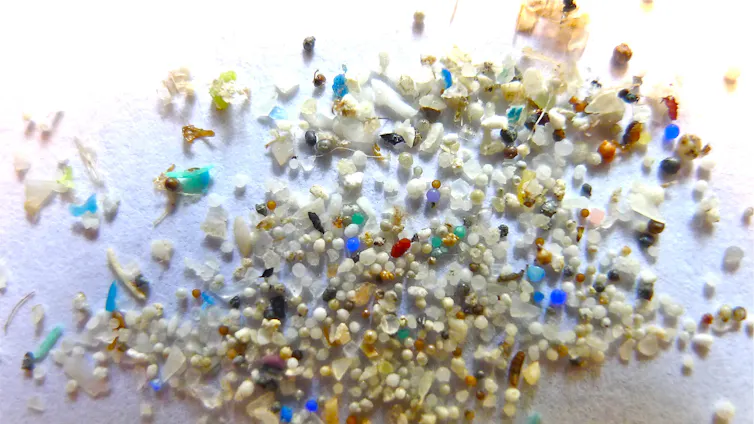
Microplastics are a growing concern in marine environments. As they break down, the particles can become microscopic. Oregon State University via Wikimedia Commons, CC BY-SA

Solving the world’s microplastics problem: 4 solutions cities and states are trying after global treaty talks collapsed

Sarah J. Morath, Wake Forest University Microplastics seem to be everywhere – in the air we breathe, the water we drink, the food we eat. They have turned up in human organs, blood, testicles, placentas and even brains. While the full health consequences of that exposure are not yet known, researchers are exploring potential links between microplastics and negative health effects such as male infertility, inflammation, liver disease and other metabolic problems, and heart attack or stroke. Countries have tried for the past few years to write a global plastics treaty that might reduce human exposure to plastic particles and their harm to wildlife and ecosystems, but the latest negotiations collapsed in August 2025. Most plastics are made with chemicals from fossil fuels, and oil-producing countries, including the U.S., have opposed efforts that might limit plastics production. While U.S. and global solutions seem far off, policies to limit harm from microplastics are gaining traction at the state and local levels.
A person holds a petri dish with microplastics and uses tweezers to pick them apart.
Marine animals ingest microplastics from the water and as they’re eating. These were found in marine animals at the Hellenic Centre for Marine Research near Athens, Greece, in 2025. Milos Bicanski/Getty Images
As an environmental lawyer and author of the book “Our Plastic Problem and How to Solve It,” I see four promising policy strategies.

Banning added microplastics: Glitter, confetti and turf

Some microplastics are deliberately manufactured to be small and added to products. Think glitter in cosmetics, confetti released at celebrations and plastic pellet infill, used between the blades in turf fields to provide cushion and stability. These tiny plastics inevitably end up in the environment, making their way into the air, water and soil, where they can be inhaled or ingested by humans and other organisms. California has proposed banning plastic glitter in personal care products. No other state has pursued glitter, however some cities, such as Boca Raton, Florida, have restricted plastic confetti. In 2023, the European Union passed a ban on all nonbiodegradable plastic glitter as well as microplastics intentionally added to products.
A young woman with heavy, glittery makeup on her eyes and cheeks.
Personal care products, particularly makeup, have added glitter in recent years. However, when that makeup is washed off, it often goes down drains and into wastewater, adding to plastics in the environment. Rich Fury/Invision/AP
Artificial turf has also come under scrutiny. Although turf is popular for its low maintenance, these artificial fields shed microplastics. European regulators targeted turf infill through the same law for glitter, and municipalities in Connecticut and Massachusetts are considering local bans.
A cloud of tiny particles rises from the turf from where a soccer player just jumped.
Infill flies up from artificial turf as a high school soccer player kicks the ball in 2022. Isaac Wasserman for The Washington Post via Getty Images
Rhode Island’s proposed law, which would ban all intentionally added microplastics by 2029, is broad enough to include glitter, turf and confetti.

Reducing secondary microplastics: Textiles and tires

Most microplastics don’t start small; rather, they break off from larger items. Two of the biggest culprits of secondary microplastics are synthetic clothing and vehicle tires. A study in 2019 estimated that textiles accounted for 35% of all microplastics entering the ocean – shed from polyester, nylon or acrylic clothing when washed. Microplastics can carry chemicals and other pollutants, which can bioaccumulate up the food chain. In an effort to capture the fibers before they are released, France will require filters in all new washing machines by 2029.
A man looks at a jar in the light. Tiny black filaments are visible at the bottom.
A scientist holds a sample showing microfibers captured during a washing machine cycle. Owen Humphreys/PA Images via Getty Images
Several U.S. states, including Oregon, Illinois, New York, New Jersey and Pennsylvania, are considering similar legislation. California came close in 2023, passing legislation to require microfiber filters for washing machines, but it was ultimately vetoed due to concerns about the cost of adding the filters. Even so, data submitted in support of the bill showed that such filters could cut microplastic releases from laundry by nearly 80%. Some states, such as California and New York, are considering warnings on clothing made with synthetic fibers that would alert consumers to the shedding of microplastics. Tires are another large source of microplastics. As they wear down, tires release millions of tons of particles annually, many of which end up in rivers and oceans. These particles include 6PPD-quinone, a chemical linked to mass die-offs of salmon in the Pacific Northwest.
A closeup of an SUV tire on a dirt road.
Synthetic rubber in vehicle tires shed particles into the environment as the tires wear down. Wenson Wei/Wikimedia Commons, CC BY
One approach would be to redesign the product to include safer alternatives. California’s Department of Toxic Substances Control recently added 6PPD-quinone to its priority product list, requiring manufacturers to explain how they will either redesign their product or remove it from the market.

Regulating disposal

Microplastics can also be dealt with at the disposal stage. Disposable wipes, for example, contain plastic fibers but are still flushed down toilets, clogging pipes and releasing microplastics. States such as New York, California and Michigan have passed “no-flush” labeling laws requiring clear warnings on packaging, alerting consumers to dispose of these wipes another way. Construction sites also contribute to local microplastic pollution. Towns along the New Jersey shore have enacted ordinances that require builders to prevent microplastics from entering storm drains that can carry them to waterways and the ocean. Such methods include using saws and drills with vacuums to reduce the release of microplastics and cleaning worksites each day. Oregon and Colorado have new producer responsibility laws that require manufacturers that sell products in plastic packaging to fund recycling programs. California requires manufacturers of expanded polystyrene plastic products to ensure increasing levels of recycling of their products.

Statewide strategies and disclosure laws

Some states are experimenting with broader, statewide strategies based on research. California’s statewide microplastic strategy, adopted in 2022, is the first of its kind. It requires standardized testing for microplastics in drinking water and sets out a multiyear road map for reducing pollution from textiles, tires and other sources. California has also begun treating microplastics themselves as a “chemical of concern.” That shifts disclosure and risk assessment obligations to manufacturers, rather than leaving the burden on consumers or local governments. Other states are pursuing statewide strategies. Virginia, New Jersey and Illinois have considered bills to monitor microplastics in drinking water. A Minnesota bill would study microplastics in meat and poultry, and the findings and recommendations could influence future consumer safety regulations in the state. State and local initiatives in the U.S. and abroad – be they bans, labels, disclosures or studies – can help keep microplastics out of our environment and lay the foundation for future large-scale regulation.

Federal ripple effects

These state-level initiatives are starting to influence policymakers in Washington. In June 2025, the U.S. House passed the bipartisan WIPPES Act, modeled on state “no-flush” laws, and sent it to the Senate for consideration. Another bipartisan bill was introduced in July 2025, the Microplastic Safety Act, which would direct the FDA to research microplastics’ human health impacts, particularly on children and reproductive systems. Proposals to require microfiber filters in washing machines, first tested at the state level, are also being considered at the federal level. This pattern is not new. A decade ago, state bans on wash-off cosmetic microbeads paved the way for the Microbead-Free Waters Act of 2015, the only federal law to date that directly bans a type of microplastic. That history suggests today’s state and local actions could again catalyze broader national reform.

Small steps with big impact

Microplastics are a daunting challenge: They come from many sources, are hard to clean up once released, and pose risks to our health and the environment. While global treaties and sweeping federal legislation remain out of reach, local and state governments are showing a path forward. These microsolutions may not eliminate microplastics, but they can reduce pollution in immediate and measurable ways, creating momentum for larger reforms. Sarah J. Morath, Professor of Law and Associate Dean for International Affairs, Wake Forest University This article is republished from The Conversation under a Creative Commons license. Read the original article.

The science section of our news blog STM Daily News provides readers with captivating and up-to-date information on the latest scientific discoveries, breakthroughs, and innovations across various fields. We offer engaging and accessible content, ensuring that readers with different levels of scientific knowledge can stay informed. Whether it’s exploring advancements in medicine, astronomy, technology, or environmental sciences, our science section strives to shed light on the intriguing world of scientific exploration and its profound impact on our daily lives. From thought-provoking articles to informative interviews with experts in the field, STM Daily News Science offers a harmonious blend of factual reporting, analysis, and exploration, making it a go-to source for science enthusiasts and curious minds alike. https://stmdailynews.com/category/science/

Author


Discover more from Daily News

Subscribe to get the latest posts sent to your email.

Continue Reading
Advertisement SodaStream USA, inc
Click to comment
0 0 votes
Article Rating
Subscribe
Notify of
guest

0 Comments
Oldest
Newest Most Voted
Inline Feedbacks
View all comments

podcasts

How China cleaned up its air pollution – and what that meant for the climate

How China cleaned up its air pollution: Beijing’s air quality went from hazardous to good while Delhi and Lahore still struggle. Discover how China dramatically reduced pollution since 2013—and why cleaner air may have unintended consequences for global warming and climate change.

Published

on

How China cleaned up its air pollution – and what that meant for the climate

How China cleaned up its air pollution – and what that meant for the climate

Gemma Ware, The Conversation
Delhi: 442. Lahore: 334. Beijing: 16. These are the levels of PM 2.5, one of the principle measures for air pollution, on November 19. As Pakistanis and Indians struggle with hazardous air quality, in Beijing – a city once notorious for its smog – the air quality is currently rated as good. Ahead of the 2008 Beijing Olympics, the Chinese government was so concerned about pollution that it introduced temporary restrictions on cars, shut down factories and stopped work on some construction sites. The measures worked and one study later found that levels of air pollution were down 30% during the period when the temporary Olympic restrictions were in place. It would take a few more years before the Chinese government implemented a clean air action plan in 2013. Since then, China has achieved a dramatic improvement in its air quality. In this episode of The Conversation Weekly podcast, we speak to Laura Wilcox, a professor at the National Centre for Atmospheric Science at the University of Reading in the UK, to understand how China managed to clean up its air pollution. But Wilcox’s recent research uncovered some unintended consequences from this cleaner air for the global climate: the pollution was actually helping to cool the atmosphere and by taking it away, it may have accelerated global warming. Wilcox explains:
 What we’re seeing is a removing of cooling that’s revealing warming that’s already there. So the air pollution isn’t the cause of the warming. It’s just letting us see stuff that we’ve already done.
Listen to the interview on The Conversation Weekly podcast. You can also read an article by Laura Wilcox and her colleague Bjørn H. Samset about their recent research on The Conversation. This episode of The Conversation Weekly was written and produced by Mend Mariwany, Gemma Ware and Katie Flood. Mixing by Michelle Macklem and theme music by Neeta Sarl. Newsclips in this episode from Voice of America, CBC, AP Archive, ABC (News) Australia, WFLA NBC Channel 8 and PBS. Listen to The Conversation Weekly via any of the apps listed above, download it directly via our RSS feed or find out how else to listen here. A transcript of this episode is available via the Apple Podcasts or Spotify apps.The Conversation Gemma Ware, Host, The Conversation Weekly Podcast, The Conversation This article is republished from The Conversation under a Creative Commons license. Read the original article.

Dive into “The Knowledge,” where curiosity meets clarity. This playlist, in collaboration with STMDailyNews.com, is designed for viewers who value historical accuracy and insightful learning. Our short videos, ranging from 30 seconds to a minute and a half, make complex subjects easy to grasp in no time. Covering everything from historical events to contemporary processes and entertainment, “The Knowledge” bridges the past with the present. In a world where information is abundant yet often misused, our series aims to guide you through the noise, preserving vital knowledge and truths that shape our lives today. Perfect for curious minds eager to discover the ‘why’ and ‘how’ of everything around us. Subscribe and join in as we explore the facts that matter.  https://stmdailynews.com/the-knowledge/

Want more stories 👋
"Your morning jolt of Inspiring & Interesting Stories!"

Sign up to receive awesome articles directly to your inbox.

STM Coffee Newsletter 1

We don’t spam! Read our privacy policy for more info.


Discover more from Daily News

Subscribe to get the latest posts sent to your email.

Continue Reading

The Knowledge

Fern Stems Reveal How Evolutionary Constraints Create New Forms in Nature

Evolutionary Constraints: New research on fern vascular systems reveals how developmental constraints don’t just limit evolution—they generate new forms. Discover how leaf placement determines stem structure and what this means for understanding biodiversity and plant breeding.

Published

on

evolutionary constraints in plants
The lacy frond of the intermediate wood fern (Dryopteris intermedia). Jacob S. Suissa, CC BY-ND

Fern Stems Reveal How Evolutionary Constraints Create New Forms in Nature

Jacob S. Suissa, University of Tennessee There are few forms of the botanical world as readily identifiable as fern leaves. These often large, lacy fronds lend themselves nicely to watercolor paintings and tricep tattoos alike. Thoreau said it best: “Nature made ferns for pure leaves, to show what she could do in that line.” But ferns are not just for art and gardens. While fern leaves are the most iconic part of their body, these plants are whole organisms, with stems and roots that are often underground or creeping along the soil surface. With over 400 million years of evolutionary history, ferns can teach us a lot about how the diversity of planet Earth came to be. Specifically, examining their inner anatomy can reveal some of the intricacies of evolution.

Sums of parts or an integrated whole?

When one structure cannot change without altering the other, researchers consider them constrained by each other. In biology, this linkage between traits is called a developmental constraint. It explains the limits of what possible forms organisms can take. For instance, why there aren’t square trees or mammals with wheels. However, constraint does not always limit form. In my recently published research, I examined the fern vascular system to highlight how changes in one part of the organism can lead to changes in another, which can generate new forms.
Close-up of a small, flat green circle with a brown outline, held between two fingers
Cross section of a stem of Adiantum in Costa Rica. If you zoom in, you can make out the radial arrangement of bundles in the stem – the darker dots in the circle at its center. Jacob S. Suissa, CC BY-ND
Before Charles Darwin proposed his theory of evolution by natural selection, many scientists believed in creationism – the idea that all living things were created by a god. Among these believers was the 19th-century naturalist Georges Cuvier, who is lauded as the father of paleontology. His argument against evolution was not exclusively based in faith but on a theory he called the correlation of parts. Cuvier proposed that because each part of an organism is developmentally linked to every other part, changes in one part would result in changes to another. With this theory, he argued that a single tooth or bone could be used to reconstruct an entire organism. He used this theory to make a larger claim: If organisms are truly integrated wholes and not merely sums of individual parts, how could evolution fashion specific traits? Since changes in one part of an organism would necessitate changes in others, he argued, small modifications would require restructuring every other part. If the individual parts of an organism are all fully integrated, evolution of particular traits could not proceed. However, not all of the parts of an organism are tethered together so tightly. Indeed, some parts can evolve at different rates and under different selection pressures. This idea was solidified as the concept of quasi-independence in the 1970s by evolutionary biologist Richard Lewontin. The idea of organisms as collections of individually evolving parts remains today, influencing how researchers and students think about evolution.

Fern vasculature and the process of evolution

Ferns are one of four lineages of land plants that have vascular tissues – specialized sets of tubes that move water and nutrients through their bodies. These tissues are composed of vascular bundles – clusters of cells that conduct water through the stem. How vascular bundles are arranged in fern stems varies substantially. Some have as many as three to eight or more vascular bundles scattered throughout their stem. Some are arranged symmetrically, while others such as the tobacco fern – Mickelia nicotianifolia – have bundles arranged in a whimsical, smiley-face pattern.
Cross-section of a roughly oblong stem with a smiley face shape towards one end
Cross section of the rhizome of Mickelia nicotianifolia, showing the smiley-face patterning of the vascular tissues. Each gap in the central system is associated with the production of a leaf. Jacob S. Suissa, CC BY-ND
For much of the 20th century, scientists studying the pattern and arrangement of vascular bundles in fern stems thought these broad patterns may be adaptive to environmental conditions. I set out in my own research to test whether certain types of arrangements were more resistant to drought. But contrary to my initial hypotheses – and my desire for a relationship between form and function – the arrangement of vascular bundles in the stem did not seem to correlate with drought tolerance. This may sound counterintuitive, but it turns out the ability of a fern to move water through its body has more to do with the size and shape of the water-conducting cells rather than how they’re arranged as a whole in the stem. This finding is analogous to looking at road maps to understand traffic patterns. The patterning of roads on a map (how cells are arranged) may be less important in determining traffic patterns than the number and size of lanes (cell size and number). This observation hinted at something deeper about the evolution of the vascular systems of ferns. It sent me on a journey to uncover exactly what gave rise to the varying vascular patterns of ferns.

Simple observations and insights into evolution

I wondered how this variation in the number and arrangement of vascular bundles relates to leaf placement around the stem. So I quantified this variation in vascular patterning for 27 ferns representing roughly 30% of all fern species. I found a striking correlation between the number of rows of leaves and the number of vascular bundles within the stem. This relationship was almost 1-to-1 in some cases. For instance, if there were three rows of leaves along the stem, there were three vascular bundles in the stem. What’s more, how leaves were arranged around the stem determined the spatial arrangement of bundles. If the leaves were arranged spirally (on all sides of the stem), the vascular bundles were arranged in a radial pattern. If the leaves were shifted to the dorsal side of the stem, the smiley-face pattern emerged. Importantly, based on our understanding of plant development, there was a directionality here. Specifically, the placement of leaves determines the arrangement of bundles, not the other way around.
Microscopy images of cross-section of fern stems in different shapes, one a cluster of spots, another concentric circles and another three separate segments
Vascular architectures of three different ferns. From left: Lygodium microphyllum, Sitobolium punctilobulum and Amauropelta noveboracensis. Jacob S. Suissa, CC BY-ND
This may not sound all that surprising – it seems logical that vasculature should link up between leaves and stems. But it runs counter to how scientists have viewed the fern vascular system for over 100 years. Many studies on fern vascular patterning have tended to focus on individual parts of the plant, removing vascular architecture from the context of the plant as a whole and viewing it as an independently evolving pattern. However, this new work suggests that the arrangement of vascular bundles in fern stems is not able to change in isolation. Rather, like Cuvier’s idealized organisms, vascular patterning is linked to and explicitly determined by the number and placement of leaves along the stem. This is not to say that vascular patterns could not be adaptive to environmental conditions, but it means that the handle of evolutionary change in the number and arrangement of vascular bundles is likely changes to leaf number and placement.

From parochial to existential

While this study on ferns and their vascular system may seem parochial, it speaks to the broader question of how variation – the fuel of evolution – arises, and how evolution can proceed. While not all parts of an organism are so tightly linked, considering the individual as a whole – or at least sets of parts as a unit – can help researchers better understand how, and if, observable patterns can evolve in isolation. This insight takes scientists one step closer to understanding the minutia of how evolution works to generate the immense biodiversity on Earth. Understanding these processes is also important for industry. In agricultural settings, plant and animal breeders attempt to increase one aspect of an organism without changing another. By taking a holistic approach and understanding which parts of an organism are developmentally or genetically linked and which are more quasi-independent, breeders may be able to more effectively create organisms with desired traits.
Slices of fern stem on a table
Researchers can learn much about evolution from the stems of Mickelia nicotianifolia Jacob S. Suissa, CC BY-ND
Constraint is often viewed as restricting, but it may not always be so. The Polish nuclear physicist Stanisław Ulam noted that rhymes “compel one to find the unobvious because of the necessity of finding a word which rhymes,” paradoxically acting as an “automatic mechanism of originality.” Whether from the literary rules of a haiku or the development of ferns, constraint can be a generator of form.The Conversation Fern stems reveal secrets of evolution – how constraints in development can lead to new forms Jacob S. Suissa, Assistant Professor of Plant Evolutionary Biology, University of Tennessee This article is republished from The Conversation under a Creative Commons license. Read the original article.

The science section of our news blog STM Daily News provides readers with captivating and up-to-date information on the latest scientific discoveries, breakthroughs, and innovations across various fields. We offer engaging and accessible content, ensuring that readers with different levels of scientific knowledge can stay informed. Whether it’s exploring advancements in medicine, astronomy, technology, or environmental sciences, our science section strives to shed light on the intriguing world of scientific exploration and its profound impact on our daily lives. From thought-provoking articles to informative interviews with experts in the field, STM Daily News Science offers a harmonious blend of factual reporting, analysis, and exploration, making it a go-to source for science enthusiasts and curious minds alike. https://stmdailynews.com/category/science/


Discover more from Daily News

Subscribe to get the latest posts sent to your email.

Continue Reading

Science

Thousands of genomes reveal the wild wolf genes in most dogs’ DNA

wild wolf genes in most dogs’ DNA: New research analyzing 2,693 dog genomes reveals most modern dogs carry wolf DNA from ancient hybridization. Discover how wolf genes helped dogs survive and what this means for breeds from Chihuahuas to sled dogs.

Published

on

wild wolf genes in most dogs’ DNA
Modern wolves and dogs both descend from an ancient wolf population that lived alongside woolly mammoths and cave bears. Iza Lyson/500px Prime via Getty Images

Thousands of genomes reveal the wild wolf genes in most dogs’ DNA

Audrey T. Lin, Smithsonian Institution and Logan Kistler, Smithsonian Institution Dogs were the first of any species that people domesticated, and they have been a constant part of human life for millennia. Domesticated species are the plants and animals that have evolved to live alongside humans, providing nearly all of our food and numerous other benefits. Dogs provide protection, hunting assistance, companionship, transportation and even wool for weaving blankets. Dogs evolved from gray wolves, but scientists debate exactly where, when and how many times dogs were domesticated. Ancient DNA evidence suggests that domestication happened twice, in eastern and western Eurasia, before the groups eventually mixed. That blended population was the ancestor of all dogs living today. Molecular clock analysis of the DNA from hundreds of modern and ancient dogs suggests they were domesticated between around 20,000 and 22,000 years ago, when large ice sheets covered much of Eurasia and North America. The first dog identified in the archaeological record is a 14,000-year-old pup found in Bonn-Oberkassel, Germany, but it can be difficult to tell based on bones whether an animal was an early domestic dog or a wild wolf. Despite the shared history of dogs and wolves, scientists have long thought these two species rarely mated and gave birth to hybrid offspring. As an evolutionary biologist and a molecular anthropologist who study domestic plants and animals, we wanted to take a new look at whether dog-wolf hybridization has really been all that uncommon.

Little interbreeding in the wild

Dogs are not exactly descended from modern wolves. Rather, dogs and wolves living today both derive from a shared ancient wolf population that lived alongside woolly mammoths and cave bears. In most domesticated species, there are often clear, documented patterns of gene flow between the animals that live alongside humans and their wild counterparts. Where wild and domesticated animals’ habitats overlap, they can breed with each other to produce hybrid offspring. In these cases, the genes from wild animals are folded into the genetic variation of the domesticated population. For example, pigs were domesticated in the Near East over 10,000 years ago. But when early farmers brought them to Europe, they hybridized so frequently with local wild boar that almost all of their Near Eastern DNA was replaced. Similar patterns can be seen in the endangered wild Anatolian and Cypriot mouflon that researchers have found to have high proportions of domestic sheep DNA in their genomes. It’s more common than not to find evidence of wild and domesticated animals interbreeding through time and sharing genetic material. That wolves and dogs wouldn’t show that typical pattern is surprising, since they live in overlapping ranges and can freely interbreed. Dog and wolf behavior are completely different, though, with wolves generally organized around a family pack structure and dogs reliant on humans. When hybridization does occur, it tends to be when human activities – such as habitat encroachment and hunting – disrupt pack dynamics, leading female wolves to strike out on their own and breed with male dogs. People intentionally bred a few “wolf dog” hybrid types in the 20th century, but these are considered the exception.
a wolfish looking dog lies on the ground behind a metal fence
Luna Belle, a resident of the Wolf Sanctuary of Pennsylvania, which is home to both wolves and wolf dogs. Audrey Lin

Tiny but detectable wolf ancestry

To investigate how much gene flow there really has been between dogs and wolves after domestication, we analyzed 2,693 previously published genomes, making use of massive publicly available datasets. These included 146 ancient dogs and wolves covering about 100,000 years. We also looked at 1,872 modern dogs, including golden retrievers, Chihuahuas, malamutes, basenjis and other well-known breeds, plus more unusual breeds from around the world such as the Caucasian ovcharka and Swedish vallhund. Finally, we included genomes from about 300 “village dogs.” These are not pets but are free-living animals that are dependent on their close association with human environments. We traced the evolutionary histories of all of these canids by looking at maternal lineages via their mitochondrial genomes and paternal lineages via their Y chromosomes. We used highly sensitive computational methods to dive into the dogs’ and wolves’ nuclear genomes – that is, the genetic material contained in their cells’ nuclei. We found the presence of wild wolf genes in most dog genomes and the presence of dog genes in about half of wild wolf genomes. The sign of the wolf was small but it was there, in the form of tiny, almost imperceptible chunks of continuous wolf DNA in dogs’ chromosomes. About two-thirds of breed dogs in our sample had wolf genes from crossbreeding that took place roughly 800 generations ago, on average. While our results showed that larger, working dogs – such as sled dogs and large guardian dogs that protect livestock – generally have more wolf ancestry, the patterns aren’t universal. Some massive breeds such as the St. Bernard completely lack wolf DNA, but the tiny Chihuahua retains detectable wolf ancestry at 0.2% of its genome. Terriers and scent hounds typically fall at the low end of the spectrum for wolf genes.
a dog curled up on the sidewalk in a town
A street – or free-ranging – dog in Tbilisi, Georgia. Alexkom000/Wikimedia Commons, CC BY
We were surprised that every single village dog we tested had pieces of wolf DNA in their genomes. Why would this be the case? Village dogs are free-living animals that make up about half the world’s dogs. Their lives can be tough, with short life expectancy and high infant mortality. Village dogs are also associated with pathogenic diseases, including rabies and canine distemper, making them a public health concern. More often than predicted by chance, the stretches of wolf DNA we found in village dog genomes contained genes related to olfactory receptors. We imagine that olfactory abilities influenced by wolf genes may have helped these free-living dogs survive in harsh, volatile environments.

The intertwining of dogs and wolves

Because dogs evolved from wolves, all of dogs’ DNA is originally wolf DNA. So when we’re talking about the small pieces of wolf DNA in dog genomes, we’re not referring to that original wolf gene pool that’s been kicking around over the past 20,000 years, but rather evidence for dogs and wolves continuing to interbreed much later in time. A wolf-dog hybrid with one of each kind of parent would carry 50% dog and 50% wolf DNA. If that hybrid then lived and mated with dogs, its offspring would be 25% wolf, and so on, until we see only small snippets of wolf DNA present. The situation is similar to one in human genomes: Neanderthals and humans share a common ancestor around half a million years ago. However, Neanderthals and our species, Homo sapiens, also overlapped and interbred in Eurasia as recently as a few thousand generations ago, shortly before Neanderthals disappeared. Scientists can spot the small pieces of Neanderthal DNA in most living humans in the same way we can see wolf genes within most dogs.
two small tan dogs walking on pavement on a double lead leash
Even tiny Chihuahuas contain a little wolf within their doggy DNA. Westend61 via Getty Images
Our study updates the previously held belief that hybridization between dogs and wolves is rare; interactions between these two species do have visible genetic traces. Hybridization with free-roaming dogs is considered a threat to conservation efforts of endangered wolves, including Iberian, Italian and Himalayan wolves. However, there also is evidence that dog-wolf mixing might confer genetic advantages to wolves as they adapt to environments that are increasingly shaped by humans. Though dogs evolved as human companions, wolves have served as their genetic lifeline. When dogs encountered evolutionary challenges such as how to survive harsh climates, scavenge for food in the streets or guard livestock, it appears they’ve been able to tap into wolf ancestry as part of their evolutionary survival kit.The Conversation Audrey T. Lin, Research Associate in Anthropology, Smithsonian Institution and Logan Kistler, Curator of Archaeobotany and Archaeogenomics, National Museum of Natural History, Smithsonian Institution This article is republished from The Conversation under a Creative Commons license. Read the original article.

Author


Discover more from Daily News

Subscribe to get the latest posts sent to your email.

Continue Reading

Trending

0
Would love your thoughts, please comment.x
()
x