Sunflowers make small moves to maximize their Sun exposure – physicists can model them to predict how they grow
Charles Darwin’s detailed observations of plant movements, such as sunflower circumnutation and self-organization, reveal how randomness helps plants optimize growth and adapt to their environments. Sunflowers!
Most of us aren’t spending our days watching our houseplants grow. We see their signs of life only occasionally – a new leaf unfurled, a stem leaning toward the window.
But in the summer of 1863, Charles Darwin lay ill in bed, with nothing to do but watch his plants so closely that he could detect their small movements to and fro. The tendrils from his cucumber plants swept in circles until they encountered a stick, which they proceeded to twine around.
“I am getting very much amused by my tendrils,” he wrote.
This amusement blossomed into a decadeslong fascination with the little-noticed world of plant movements. He compiled his detailed observations and experiments in a 1880 book called “The Power of Movement in Plants.”A diagram tracking the circumnutation of a leaf over three days. Charles Darwin
In one study, he traced the motion of a carnation leaf every few hours over the course of three days, revealing an irregular looping, jagged path. The swoops of cucumber tendrils and the zags of carnation leaves are examples of inherent, ubiquitous plant movements called circumnutations – from the Latin circum, meaning circle, and nutare, meaning to nod.
Circumnutations vary in size, regularity and timescale across plant species. But their exact function remains unclear.
I’m a physicist interested in understanding collective behavior in living systems. Like Darwin, I’m captivated by circumnutations, since they may underlie more complex phenomena in groups of plants.
Sunflower patterns
A 2017 study revealed a fascinating observation that got my colleagues and me wondering about the role circumnutations could play in plant growth patterns. In this study, researchers found that sunflowers grown in a dense row naturally formed a near-perfect zigzag pattern, with each plant leaning away from the row in alternating directions.
This pattern allowed the plants to avoid shade from their neighbors and maximize their exposure to sunlight. These sunflowers flourished.
Researchers then planted some plants at the same density but constrained them so that they could grow only upright without leaning. These constrained plants produced less oil than the plants that could lean and get the maximum amount of sun.
Advertisement
While farmers can’t grow their sunflowers quite this close together due to the potential for disease spread, in the future they may be able to use these patterns to come up with new planting strategies.
Self-organization and randomness
This spontaneous pattern formation is a neat example of self-organization in nature. Self-organization refers to when initially disordered systems, such as a jungle of plants or a swarm of bees, achieve order without anything controlling them. Order emerges from the interactions between individual members of the system and their interactions with the environment.
Somewhat counterintuitively, noise – also called randomness – facilitates self-organization. Consider a colony of ants.
Ants secrete pheromones behind them as they crawl toward a food source. Other ants find this food source by following the pheromone trails, and they further reinforce the trail they took by secreting their own pheromones in turn. Over time, the ants converge on the best path to the food, and a single trail prevails.
But if a shorter path were to become possible, the ants would not necessarily find this path just by following the existing trail.
If a few ants were to randomly deviate from the trail, though, they might stumble onto the shorter path and create a new trail. So this randomness injects a spontaneous change into the ants’ system that allows them to explore alternative scenarios.
Eventually, more ants would follow the new trail, and soon the shorter path would prevail. This randomness helps the ants adapt to changes in the environment, as a few ants spontaneously seek out more direct ways to their food source.Beehives are an example of self-organization in nature. Martin Ruegner/Stone via Getty Images
In biology, self-organized systems can be found at a range of scales, from the patterns of proteins inside cells to the socially complex colonies of honeybees that collectively build nests and forage for nectar.
Randomness in sunflower self-organization
So, could random, irregular circumnutations underpin the sunflowers’ self-organization?
My colleagues and I set out to explore this question by following the growth of young sunflowers we planted in the lab. Using cameras that imaged the plants every five minutes, we tracked the movement of the plants to see their circumnutatory paths.
We saw some loops and spirals, and lots of jagged movements. These ultimately appeared largely random, much like Darwin’s carnation. But when we placed the plants together in rows, they began to move away from one another, forming the same zigzag configurations that we’d seen in the previous study.
Advertisement
Tracking the circumnutations made by young sunflower plants. Chantal Nguyen
We analyzed the plants’ circumnutations and found that at any given time, the direction of the plant’s motion appeared completely independent of how it was moving about half an hour earlier. If you measured a plant’s motion once every 30 minutes, it would appear to be moving in a completely random way.
We also measured how much the plant’s leaves grew over the course of two weeks. By putting all of these results together, we sketched a picture of how a plant moved and grew on its own. This information allowed us to computationally model a sunflower and simulate how it behaves over the course of its growth.
A sunflower model
We modeled each plant simply as a circular crown on a stem, with the crown expanding according to the growth rate we measured experimentally. The simulated plant moved in a completely random way, taking a “step” every half hour.
We created the model sunflowers with circumnutations of lower or higher intensity by tweaking the step sizes. At one end of the spectrum, sunflowers were much more likely to take tiny steps than big ones, leading to slow, minimal movement on average. At the other end were sunflowers that are equally as likely to take large steps as small steps, resulting in highly irregular movement. The real sunflowers we observed in our experiment were somewhere in the middle.
We wanted our model sunflowers to do the same thing. So, we made it so that two plants that get too close to each other’s shade begin to lean away in opposite directions.
Finally, we wanted to see whether we could replicate the zigzag pattern we’d observed with the real sunflowers in our model.
First, we set the model sunflowers to make small circumnutations. Their shade avoidance responses pushed them away from each other, but that wasn’t enough to produce the zigzag – the model plants stayed stuck in a line. In physics, we would call this a “frustrated” system.
Then, we set the plants to make large circumnutations. The plants started moving in random patterns that often brought the plants closer together rather than farther apart. Again, no zigzag pattern like we’d seen in the field.
But when we set the model plants to make moderately large movements, similar to our experimental measurements, the plants could self-organize into a zigzag pattern that gave each sunflower optimal exposure to light.
So, we showed that these random, irregular movements helped the plants explore their surroundings to find desirable arrangements that benefited their growth.
Advertisement
Plants are much more dynamic than people give them credit for. By taking the time to follow them, scientists and farmers can unlock their secrets and use plants’ movement to their advantage.
STM Daily News is a vibrant news blog dedicated to sharing the brighter side of human experiences. Emphasizing positive, uplifting stories, the site focuses on delivering inspiring, informative, and well-researched content. With a commitment to accurate, fair, and responsible journalism, STM Daily News aims to foster a community of readers passionate about positive change and engaged in meaningful conversations. Join the movement and explore stories that celebrate the positive impacts shaping our world.
Hollywood Legend Rob Reiner and Wife Found Dead; Son in Custody
Renowned filmmaker Rob Reiner and his wife, Michele Singer Reiner, were found dead in their Los Angeles home in a reported homicide. Police have arrested their son in connection with the case, and tributes are pouring in.
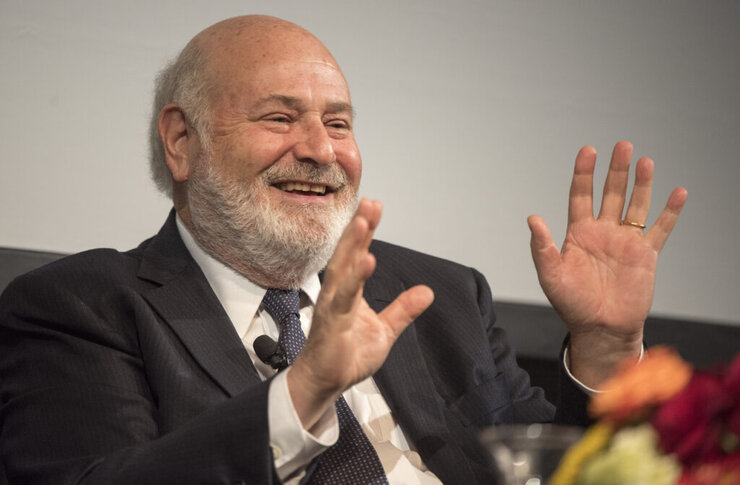
Director Rob Reiner participates in a discussion following a screening of the film LBJ at the LBJ Presidential Library in Austin, Texas on Saturday October 22, 2016 On Saturday evening October 22, 2016, the LBJ Presidential Library held a sneak peek of Rob Reiner’s new filmÊLBJ, starring Woody Harrelson as the 36th president. The film, which premiered at the Toronto International Film Festival in September, chronicles the life and times of Lyndon Johnson who would inherit the presidency at one of the most fraught moments in American history. Following the screening, director Rob Reiner, actor Woody Harrelson, and writer Joey Hartstone joined LBJ Library Director Mark Updegrove on stage for a conversation about the film. LBJ Library photo by Jay Godwin 10/22/2016
Hollywood Legend Rob Reiner and Wife Found Dead; Son in Custody
December 15, 2025
Renowned filmmaker and actor Rob Reiner, 78, and his wife Michele Singer Reiner, 68, were found dead in their Brentwood, Los Angeles home on Sunday, authorities say. Emergency responders were called to the residence Sunday afternoon, where both were discovered with fatal wounds consistent with a stabbing. Police are treating the case as a double homicide.
Los Angeles police arrested the couple’s 32-year-old son, Nick Reiner, in connection with the deaths. He is being held in custody as investigators continue to piece together the circumstances surrounding the incident.
2016 SAMHSA Voice Awards
Reiner was one of Hollywood’s most influential figures, known for his work as a director, producer and actor. His career spanned decades, from early television fame to directing beloved films that shaped American cinema.
Friends, colleagues and public figures have begun sharing tributes and reactions to the news as the investigation is ongoing.
More details will be updated as they become available.
FDA’s COVID-19 Vaccine Safety Claims Lack Solid Evidence—Why Overreaction Could Harm Public Health
COVID-19 vaccine safety: The FDA’s claims about COVID-19 vaccine deaths in children lack strong evidence and could restrict vaccine access. Learn why experts say VAERS reports aren’t proof, and how overreacting may harm public health and trust in vaccines.
The death of children due to an unsafe vaccine is a serious allegation. I am a pediatric cardiologist who has studied the link between COVID-19 vaccines and heart-related side effects such as myocarditis in children. To my knowledge, studies to date have shown such side effects are rare, and severe outcomes even more so. However, I am open to new evidence that could change my mind. But without sufficient justification and solid evidence, restricting access to an approved vaccine and changing well-established procedures for testing vaccines would carry serious consequences. These moves would limit access for patients, create roadblocks for companies and worsen distrust in vaccines and public health. In my view, it’s important for people reading about these FDA actions to understand how the evidence on a vaccine’s safety is generally assessed.
Determining cause of death
The FDA memo claims that the deaths of these children were directly related to receiving a COVID-19 immunization. From my perspective as a clinician, it is awful that any child should die from a routine vaccination. However, health professionals like me owe it to the public to uphold the highest possible standards in investigating why these deaths occurred. If the FDA has evidence demonstrating something that national health agencies worldwide have missed – widespread child deaths due to myocarditis caused by the COVID-19 vaccine – I don’t doubt that even the most pro-vaccine physician will listen. So far, however, no such evidence has been presented. While a death logged in VAERS is a starting point, on its own it is insufficient to conclude whether a vaccine caused the death or other medical causes were to blame. To demonstrate a causal link, FDA staff and physicians must align the VAERS report with physicians’ assessments of the patient, as well as data from other sources for monitoring vaccine safety. These include PRISM, which logs insurance claims data, and the Vaccine Safety Datalink, which tracks safety signals in electronic medical records. It’s known that most deaths logged only in VAERS of children who recently received vaccines have been incorrectly attributed to the vaccines – either by accident or in some cases on purpose by anti-vaccine activists.
Heart-related side effects of COVID-19 vaccines
In his Substack and Twitter accounts, Prasad has said that he believes the rate of severe cardiac side effects after COVID-19 vaccination is severely underestimated and that the vaccines should be restricted far more than they currently are. In a July 2025 presentation, Prasad quoted a risk of 27 cases per million of myocarditis in young men who received the COVID-19 vaccine. A 2024 review suggested that number was a bit lower – about 20 cases out of 1 million people. But that same study found that unvaccinated people had greater risk of heart problems after a COVID-19 infection than vaccinated people. In a different study, people who got myocarditis after a COVID-19 vaccination developed fewer complications than people who got myocarditis after a COVID-19 infection. Existing vaccine safety infrastructure in the U.S. successfully identifies dangers posed by vaccines – and did so during the COVID-19 pandemic. Today, most COVID-19 vaccines in the U.S. rely on mRNA technology. But as vaccines were first emerging during the COVID-19 pandemic, two pharmaceutical companies, Janssen and AstraZeneca, rolled out a vaccine that used a different technology, called a viral vector. This type of vaccine had a very rare but genuine safety problem that was detected.A report in VAERS is at most a first step to determining whether a vaccine caused harm. VAERS, the Vaccine Safety Datalink, clinical investigators in the U.S. and their European counterparts detected that these vaccines did turn out to cause blood clotting. In April 2021, the FDA formally recommended pausing their use, and they were later pulled from the market. Death due to myocarditis from COVID-19 vaccination is exceedingly rare. Demonstrating that it occurred requires proof that the person had myocarditis, evidence that no other reasonable cause of death was present, and the absence of any additional cause of myocarditis. These factors cannot be determined from VAERS data, however – and to date, the FDA has presented no other relevant data.
A problematic vision for future vaccine approvals
Currently, vaccines are tested both by seeing how well they prevent disease and by how well they generate antibodies, which are the molecules that help your body fight viruses and bacteria. Some vaccines, such as the COVID-19 vaccine and the influenza vaccine, need to be updated based on new strains. The FDA generally approves these updates based on how well the new versions generate antibodies. Since the previous generation of vaccines was already shown to prevent infection, if the new version can generate antibodies like the previous one, researchers assume its ability to prevent infection is comparable too. Later studies can then test how well the vaccines prevent severe disease and hospitalization. The FDA memo says this approach is insufficient and instead argues for replacing such studies with many more placebo-controlled trials – not just for COVID-19 vaccines but also for widely used influenza and pneumonia vaccines. That may seem reasonable theoretically. In practice, however, it is not realistic. Today’s influenza vaccines must be changed every season to reflect mutations to the virus. If the FDA were to require new placebo-controlled trials every year, the vaccine being tested would become obsolete by the time it is approved. This would be a massive waste of time and resources.Influenza vaccines must be updated for every flu season.Jacob Wackerhausen/iStock via Getty Images Plus Also, detecting vaccine-related myocarditis at the low rate at which it occurs would have required clinical trials many times larger than the ones that were done to approve COVID-19 mRNA vaccines. This would have cost at least millions of dollars more, and the delay in rolling out vaccines would have also cost lives. Placebo-controlled trials would require comparing people who receive the updated vaccine with people who remain unvaccinated. When an older version of the vaccine is already available, this means purposefully asking people to forgo that vaccine and risk infection for the sake of the trial, a practice that is widely considered unethical. Current scientific practice is that only a brand-new vaccine may be compared against placebo. While suspected vaccine deaths should absolutely be investigated, stopping a vaccine for insufficient reasons can lead to a significant drop in public confidence. That’s why it’s essential to thoroughly and transparently investigate any claims that a vaccine causes harm.
Tariffs 101: What they are, who pays them, and why they matter now
Learn what tariffs are, who pays them, and why they matter for the U.S. economy. Explore how import taxes impact prices, trade policy, and everyday consumers as the Supreme Court reviews Trump’s global tariffs.
Tariffs 101: What they are, who pays them, and why they matter now
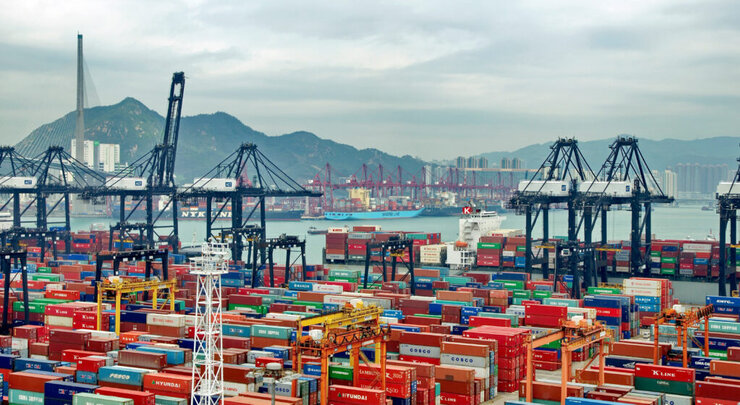
Kent Jones, Babson College The U.S. Supreme Court is currently reviewing a case to determine whether President Donald Trump’s global tariffs are legal. Until recently, tariffs rarely made headlines. Yet today, they play a major role in U.S. economic policy, affecting the prices of everything from groceriesto autosto holiday gifts, as well as the outlook for unemployment, inflation and even recession. I’m an economist who studies trade policy, and I’ve found that many people have questions about tariffs. This primer explains what they are, what effects they have, and why governments impose them.
What are tariffs, and who pays them?
Tariffs are taxes on imports of goods, usually for purposes of protecting particular domestic industries from import competition. When an American business imports goods, U.S. Customs and Border Protection sends it a tariff bill that the company must pay before the merchandise can enter the country. Because tariffs raise costs for U.S. importers, those companies usually pass the expense on to their customers by raising prices. Sometimes, importers choose to absorb part of the tariff’s cost so consumers don’t switch to more affordable competing products. However, firms with low profit margins may risk going out of business if they do that for very long. In general, the longer tariffs are in place, the more likely companies are to pass the costs on to customers. Importers can also ask foreign suppliers to absorb some of the tariff cost by lowering their export price. But exporters don’t have an incentive to do that if they can sell to other countries at a higher price. Studies of Trump’s 2025 tariffs suggest that U.S. consumers and importers are already paying the price, with little evidence that foreign suppliers have borne any of the burden. After six months of the tariffs, importers are absorbing as much as 80% of the cost, which suggests that they believe the tariffs will be temporary. If the Supreme Court allows the Trump tariffs to continue, the burden on consumers will likely increase. While tariffs apply only to imports, they tend to indirectly boost the prices of domestically produced goods, too. That’s because tariffs reduce demand for imports, which in turn increases the demand for substitutes. This allows domestic producers to raise their prices as well.
A brief history of tariffs
The U.S. Constitution assigns all tariff- and tax-making power to Congress. Early in U.S. history, tariffs were used to finance the federal government. Especially after the Civil War, when U.S. manufacturing was growing rapidly, tariffs were used to shield U.S. industries from foreign competition. The introduction of the individual income tax in 1913 displaced tariffs as the main source of U.S. tax revenue. The last major U.S. tariff law was the Smoot-Hawley Tariff Act of 1930, which established an average tariff rate of 20% on all imports by 1933. Those tariffs sparked foreign retaliation and a global trade war during the Great Depression. After World War II, the U.S. led the formation of the General Agreement on Tariffs and Trade, or GATT, which promoted tariff reduction policies as the key to economic stability and growth. As a result, global average tariff rates dropped from around 40% in 1947 to 3.5% in 2024. The U.S. average tariff rate fell to 2.5% that year, while about 60% of all U.S. imports entered duty-free. While Congress is officially responsible for tariffs, it can delegate emergency tariff power to the president for quick action as long as constitutional boundaries are followed. The current Supreme Court case involves Trump’s use of the International Emergency Economic Powers Act, or IEEPA, to unilaterally change all U.S. general tariff rates and duration, country by country, by executive order. The controversy stems from the claim that Trump has overstepped his constitutional authority granted by that act, which does not mention tariffs or specifically authorize the president to impose them.
The pros and cons of tariffs
In my view, though, the bigger question is whether tariffs are good or bad policy. The disastrous experience of the tariff war during the Great Depression led to a broad global consensus favoring freer trade and lower tariffs. Research in economics and political science tends to back up this view, although tariffs have never disappeared as a policy tool, particularly for developing countries with limited sources of tax revenue and the desire to protect their fledgling industries from imports. Yet Trump has resurrected tariffs not only as a protectionist device, but also as a source of government revenue for the world’s largest economy. In fact, Trump insists that tariffs can replace individual income taxes, a view contested by most economists. Most of Trump’s tariffs have a protectionist purpose: to favor domestic industries by raising import prices and shifting demand to domestically produced goods. The aim is to increase domestic output and employment in tariff-protected industries, whose success is presumably more valuable to the economy than the open market allows. The success of this approach depends on labor, capital and long-term investment flowing into protected sectors in ways that improve their efficiency, growth and employment. Critics argue that tariffs come with trade-offs: Favoring one set of industries necessarily disfavors others, and it raises prices for consumers. Manipulating prices and demand results in market inefficiency, as the U.S. economy produces more goods that are less efficiently made and fewer that are more efficiently made. In addition, U.S. tariffs have already resulted in foreign retaliatory trade actions, damaging U.S. exporters. Trump’s tariffs also carry an uncertainty cost because he is constantly threatening, changing, canceling and reinstating them. Companies and financiers tend to invest in protected industries only if tariff levels are predictable. But Trump’s negotiating strategy has involved numerous reversals and new threats, making it difficult for investors to calculate the value of those commitments. One study estimates that such uncertainty has actually reduced U.S. investment by 4.4% in 2025. A major, if underappreciated, cost of Trump’s tariffs is that they have violated U.S. global trade agreements and GATT rules on nondiscrimination and tariff-binding. This has made the U.S. a less reliable trading partner. The U.S. had previously championed this system, which brought stability and cooperation to global trade relations. Now that the U.S. is conducting trade policy through unilateral tariff hikes and antagonistic rhetoric, its trading partners are already beginning to look for new, more stable and growing trade relationships. So what’s next? Trump has vowed to use other emergency tariff measures if the Supreme Court strikes down his IEEPA tariffs. So as long as Congress is unwilling to step in, it’s likely that an aggressive U.S. tariff regime will continue, regardless of the court’s judgment. That means public awareness of tariffs – and of who pays them and what they change – will remain crucial for understanding the direction of the U.S. economy. Kent Jones, Professor Emeritus, Economics, Babson College This article is republished from The Conversation under a Creative Commons license. Read the original article.
STM Daily News is a vibrant news blog dedicated to sharing the brighter side of human experiences. Emphasizing positive, uplifting stories, the site focuses on delivering inspiring, informative, and well-researched content. With a commitment to accurate, fair, and responsible journalism, STM Daily News aims to foster a community of readers passionate about positive change and engaged in meaningful conversations. Join the movement and explore stories that celebrate the positive impacts shaping our world.