

News
The Landmark Milestone: U.S. Air Force’s B-21 Raider Stealth Bomber Begins Test Flights at Edwards Air Force Base
The U.S. Air Force’s B-21 Raider stealth bomber has commenced test flights, marking a pivotal step in its development.

Last Updated on March 4, 2025 by Daily News Staff

The U.S. Air Force’s much-anticipated B-21 Raider stealth bomber has achieved a significant milestone by commencing its test flights from Edwards Air Force Base in California. This development marks a crucial step forward in the evolution of this highly advanced aircraft, which took to the skies for the first time in November of the previous year.
An Air Force official, speaking to The War Zone, confirmed that the inaugural B-21, nicknamed Cerberus, conducted a sortie from Edwards, where it had arrived following its maiden flight from Northrop Grumman’s facilities at the Air Force’s Plant 42 in Palmdale, California. Despite the aircraft’s arrival at Edwards occurring without public fanfare, its significance is undeniable.
Flight testing, managed by the Air Force Test Center and 412th Test Wing’s B-21 Combined Test Force, aims to provide the U.S. and its allies with survivable, long-range, penetrating strike capabilities to deter aggression and strategic attacks. The Air Force has been notably tight-lipped about the B-21 activities, reflecting the highly sensitive nature of its development.
The 420th Flight Test Squadron, reactivated in 2019, serves as the centerpiece of the B-21 Combined Test Force, with Edwards having received substantial physical upgrades to support the test program. The base is expected to host all six pre-production B-21 jets in due course.
The B-21 Raider, set to replace the B-1B and B-2 bombers, is slated to enter service in the latter half of the decade. It will represent a central component of the U.S. military’s nuclear deterrent triad, while also providing crucial conventional long-range strike capabilities and intelligence gathering and battle management functions.
With Ellsworth Air Force Base, Whiteman Air Force Base, and Dyess Air Force Base all slated to receive Raider squadrons, the B-21’s role in bolstering the nation’s defense capabilities is already clearly outlined. As testing at Edwards progresses, the path towards operational service for the Raider is now well underway.
The B-21 Raider’s journey holds promise not only for the U.S. Air Force but also for the wider landscape of international security. As the aircraft’s capabilities unfold, it will undoubtedly shape the future of military aviation and strategic defense.
For further details, you can reach out to the author, Joe, at joe@thedrive.com.
This blogpost presents an overview of the U.S. Air Force’s B-21 Raider’s recent developments and its potential impact on military capabilities.
https://en.wikipedia.org/wiki/Northrop_Grumman_B-21_Raider
https://www.thedrive.com/the-war-zone/b-21-raider-flight-testing-now-underway
The science section of our news blog STM Daily News provides readers with captivating and up-to-date information on the latest scientific discoveries, breakthroughs, and innovations across various fields. We offer engaging and accessible content, ensuring that readers with different levels of scientific knowledge can stay informed. Whether it’s exploring advancements in medicine, astronomy, technology, or environmental sciences, our science section strives to shed light on the intriguing world of scientific exploration and its profound impact on our daily lives. From thought-provoking articles to informative interviews with experts in the field, STM Daily News Science offers a harmonious blend of factual reporting, analysis, and exploration, making it a go-to source for science enthusiasts and curious minds alike. https://stmdailynews.com/category/science/
Author

Discover more from Daily News
Subscribe to get the latest posts sent to your email.


Travel Advisory
Traveling to Mexico this spring? Here’s what to know about current advisories
Traveling to Mexico this spring? Visitors should be aware of state-specific travel advisories, as safety concerns in one region do not affect major resort areas like Cancun and Los Cabos, currently rated Level 2, which encourages increased caution. Monitoring official updates is essential for informed travel decisions amidst evolving conditions.

Last Updated on March 30, 2026 by Daily News Staff
Traveling to Mexico this spring? Here’s what to know about current advisories
(Tiffany Miller for ALG Vacations) For some travelers counting down to spring break, recent headlines about violence in parts of Mexico have sparked a new question: Should I cancel my trip? Travel advisors say they are seeing a surge in calls and emails from clients trying to determine whether developments in one region affect major resort areas elsewhere.
The questions follow several days of unrest in parts of Mexico after security operations targeting organized crime leaders prompted temporary flight disruptions and shelter-in-place guidance for U.S. government personnel in areas including Puerto Vallarta and Guadalajara. In this article, ALG Vacations explains what current travel advisories mean for spring break travelers heading to Mexico.
The U.S. State Department evaluates Mexico state by state, not as a single destination, and advisory levels vary by region. Many major beach destinations, including Cancun, Riviera Maya, Tulum and Los Cabos, are currently under a Level 2 advisory, which encourages travelers to exercise increased caution. It does not discourage travel.
Part of the confusion stems from geography. Puerto Vallarta, on the Pacific coast, is roughly 1,300 miles from Cancun and the Riviera Maya on the Caribbean side, about the distance between New York and Miami. Because advisories are assigned state by state, developments in one region do not automatically alter another.
In recent days, that uncertainty has translated into additional inquiries about whether specific resort areas are experiencing disruptions. U.S. Embassy security alerts issued this week indicate that temporary shelter-in-place guidance affecting Puerto Vallarta was lifted and that flight operations resumed. The advisory level for the Mexican state of Quintana Roo remains unchanged.
Some clients are asking about alternatives, advisors say, but many are continuing with their plans after reviewing official updates. Travel patterns often shift in response to breaking headlines, they add, before stabilizing as clearer information becomes available.
The State Department assigns travel advisories on a four-tier scale ranging from Level 1, exercise normal precautions, to Level 4, do not travel. While Level 2 encourages increased awareness, Level 3 and Level 4 carry stronger language discouraging or restricting travel.
Advisories are reviewed regularly and can be updated as conditions evolve. The State Department’s Mexico advisory page breaks down conditions by state, reflecting the country’s federal structure rather than issuing a single national designation. Travelers can also enroll in the State Department’s Smart Traveler Enrollment Program, which provides real-time security updates and allows U.S. officials to contact citizens in an emergency.
Embassy notices state that airports, hotels and tourism services in Quintana Roo are operating normally. Security conditions across Mexico vary widely by state, with some regions carrying higher advisories and others designated Level 1. Most destinations popular with U.S. travelers are currently classified as Level 2.
As spring break approaches, advisors say informed decision-making depends on reviewing the advisories assigned to a specific destination and monitoring official updates, rather than reacting to national headlines alone. Travel decisions ultimately depend on individual comfort levels, they add, but advisory levels are assigned regionally and should be evaluated accordingly.
Photo courtesy of Shutterstock

SOURCE:
Welcome to the Consumer Corner section of STM Daily News, your ultimate destination for savvy shopping and informed decision-making! Dive into a treasure trove of insights and reviews covering everything from the hottest toys that spark joy in your little ones to the latest electronic gadgets that simplify your life. Explore our comprehensive guides on stylish home furnishings, discover smart tips for buying a home or enhancing your living space with creative improvement ideas, and get the lowdown on the best cars through our detailed auto reviews. Whether you’re making a major purchase or simply seeking inspiration, the Consumer Corner is here to empower you every step of the way—unlock the keys to becoming a smarter consumer today!
https://stmdailynews.com/category/consumer-corner
Discover more from Daily News
Subscribe to get the latest posts sent to your email.
Community
McDonald’s First Job Confessional Turns Career Stories Into Free Meal Opportunity
McDonald’s is launching First Job Confessional, a campaign inviting fans to share first job stories for a chance to receive a $15 gift card in select cities.

First Job Confessional
McDonald’s is putting first jobs in the spotlight with a new campaign that asks fans to share the real-world skills they gained early in their working lives. Launched on National Employee Appreciation Day, the brand’s First Job Confessional invites people to reflect on how those first roles helped shape their careers — and, in some cases, earn a free meal in the process.
The campaign is built around a simple idea: first jobs often teach lasting skills that deserve more recognition. Whether someone learned problem-solving while babysitting, communication during a lunch rush, or teamwork behind a counter, McDonald’s is framing those experiences as valuable career foundations. The company says those are the same kinds of skills employers continue to prioritize as workplace demands evolve.

How the First Job Confessional Works
In select cities, McDonald’s is setting up confessional booths designed to look like ordering kiosks. But instead of placing a meal order, participants can record a story about their first job and the skills they picked up along the way. Those who take part in person will have the opportunity to receive a $15 McDonald’s gift card, while supplies last.
Fans who cannot attend in person can still join online by posting their stories using #FirstJobConfessional. McDonald’s says selected videos may also be featured on its YouTube channel, extending the campaign beyond the live events.
External Related Links
- McDonald’s corporate article: McDonald’s is Asking Fans to Get Real About Their First Job Skills in Exchange for Free Meals
- McDonald’s 1 in 8: First Job Confessional
- McDonald’s 1 in 8 home page
- Marketing Dive coverage of the campaign
- Parade coverage of the First Job Confessional tour
Source Links
- Original PRNewswire press release from McDonald’s USA, LLC
- McDonald’s official corporate story
- McDonald’s 1 in 8 First Job Confessional page
- McDonald’s 1 in 8 official website
The Bridge is a section of the STM Daily News Blog meant for diversity, offering real news stories about bona fide community efforts to perpetuate a greater good. The purpose of The Bridge is to connect the divides that separate us, fostering understanding and empathy among different groups. By highlighting positive initiatives and inspirational actions, The Bridge aims to create a sense of unity and shared purpose. This section brings to light stories of individuals and organizations working tirelessly to promote inclusivity, equality, and mutual respect. Through these narratives, readers are encouraged to appreciate the richness of diverse perspectives and to participate actively in building stronger, more cohesive communities.
https://stmdailynews.com/the-bridge
Discover more from Daily News
Subscribe to get the latest posts sent to your email.
Artificial Intelligence
As OpenAI attracts billions in new investment, its goal of balancing profit with purpose is getting more challenging to pull off

Last Updated on March 23, 2026 by Daily News Staff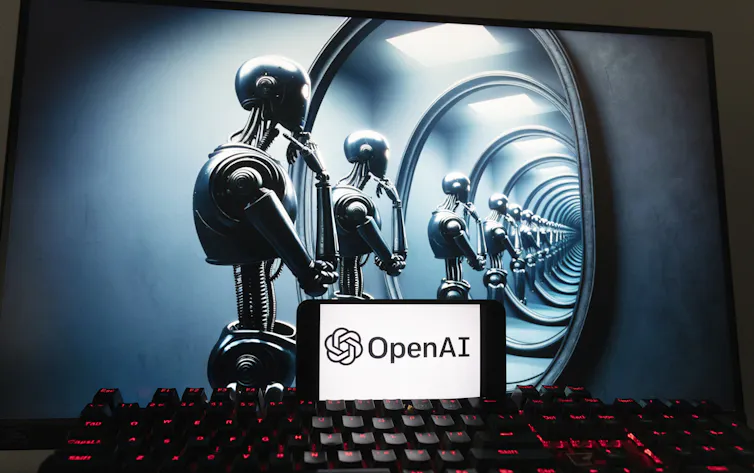
Alnoor Ebrahim, Tufts University
OpenAI, the artificial intelligence company that developed the popular ChatGPT chatbot and the text-to-art program Dall-E, is at a crossroads. On Oct. 2, 2024, it announced that it had obtained US$6.6 billion in new funding from investors and that the business was worth an estimated $157 billion – making it only the second startup ever to be valued at over $100 billion.
Unlike other big tech companies, OpenAI is a nonprofit with a for-profit subsidiary that is overseen by a nonprofit board of directors. Since its founding in 2015, OpenAI’s official mission has been “to build artificial general intelligence (AGI) that is safe and benefits all of humanity.”
By late September 2024, The Associated Press, Reuters, The Wall Street Journal and many other media outlets were reporting that OpenAI plans to discard its nonprofit status and become a for-profit tech company managed by investors. These stories have all cited anonymous sources. The New York Times, referencing documents from the recent funding round, reported that unless this change happens within two years, the $6.6 billion in equity would become debt owed to the investors who provided that funding.
The Conversation U.S. asked Alnoor Ebrahim, a Tufts University management scholar, to explain why OpenAI’s leaders’ reported plans to change its structure would be significant and potentially problematic.
How have its top executives and board members responded?
There has been a lot of leadership turmoil at OpenAI. The disagreements boiled over in November 2023, when its board briefly ousted Sam Altman, its CEO. He got his job back in less than a week, and then three board members resigned. The departing directors were advocates for building stronger guardrails and encouraging regulation to protect humanity from potential harms posed by AI.
Over a dozen senior staff members have quit since then, including several other co-founders and executives responsible for overseeing OpenAI’s safety policies and practices. At least two of them have joined Anthropic, a rival founded by a former OpenAI executive responsible for AI safety. Some of the departing executives say that Altman has pushed the company to launch products prematurely.
Safety “has taken a backseat to shiny products,” said OpenAI’s former safety team leader Jan Leike, who quit in May 2024.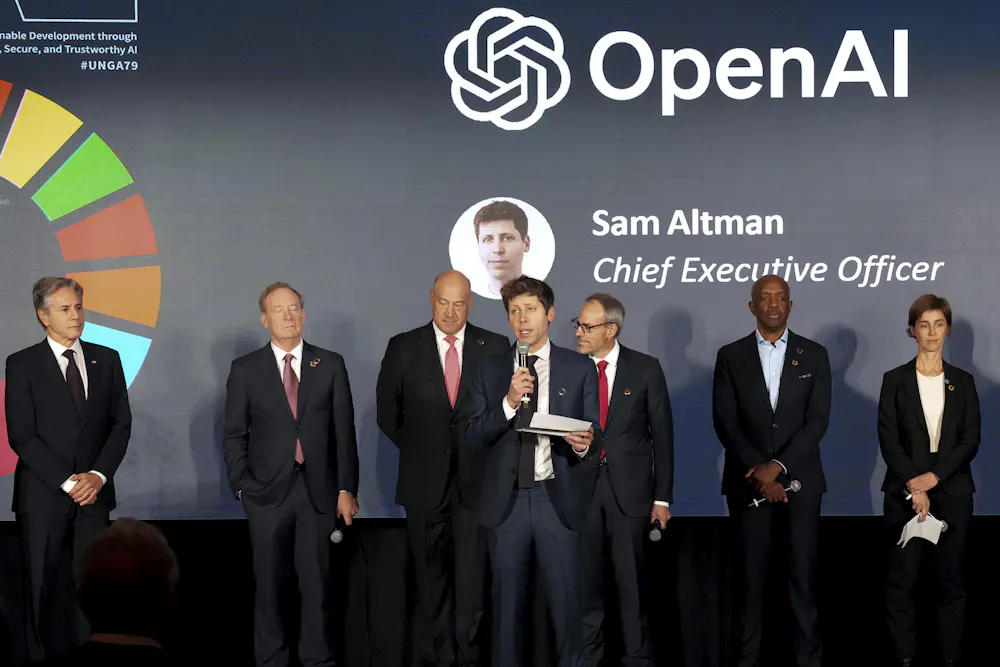
Why would OpenAI’s structure change?
OpenAI’s deep-pocketed investors cannot own shares in the organization under its existing nonprofit governance structure, nor can they get a seat on its board of directors. That’s because OpenAI is incorporated as a nonprofit whose purpose is to benefit society rather than private interests. Until now, all rounds of investments, including a reported total of $13 billion from Microsoft, have been channeled through a for-profit subsidiary that belongs to the nonprofit.
The current structure allows OpenAI to accept money from private investors in exchange for a future portion of its profits. But those investors do not get a voting seat on the board, and their profits are “capped.” According to information previously made public, OpenAI’s original investors can’t earn more than 100 times the money they provided. The goal of this hybrid governance model is to balance profits with OpenAI’s safety-focused mission.
Becoming a for-profit enterprise would make it possible for its investors to acquire ownership stakes in OpenAI and no longer have to face a cap on their potential profits. Down the road, OpenAI could also go public and raise capital on the stock market.
Altman reportedly seeks to personally acquire a 7% equity stake in OpenAI, according to a Bloomberg article that cited unnamed sources.
That arrangement is not allowed for nonprofit executives, according to BoardSource, an association of nonprofit board members and executives. Instead, the association explains, nonprofits “must reinvest surpluses back into the organization and its tax-exempt purpose.”
What kind of company might OpenAI become?
The Washington Post and other media outlets have reported, also citing unnamed sources, that OpenAI might become a “public benefit corporation” – a business that aims to benefit society and earn profits.
Examples of businesses with this status, known as B Corps., include outdoor clothing and gear company Patagonia and eyewear maker Warby Parker.
It’s more typical that a for-profit business – not a nonprofit – becomes a benefit corporation, according to the B Lab, a network that sets standards and offers certification for B Corps. It is unusual for a nonprofit to do this because nonprofit governance already requires those groups to benefit society.
Boards of companies with this legal status are free to consider the interests of society, the environment and people who aren’t its shareholders, but that is not required. The board may still choose to make profits a top priority and can drop its benefit status to satisfy its investors. That is what online craft marketplace Etsy did in 2017, two years after becoming a publicly traded company.
In my view, any attempt to convert a nonprofit into a public benefit corporation is a clear move away from focusing on the nonprofit’s mission. And there will be a risk that becoming a benefit corporation would just be a ploy to mask a shift toward focusing on revenue growth and investors’ profits.
Many legal scholars and other experts are predicting that OpenAI will not do away with its hybrid ownership model entirely because of legal restrictions on the placement of nonprofit assets in private hands.
But I think OpenAI has a possible workaround: It could try to dilute the nonprofit’s control by making it a minority shareholder in a new for-profit structure. This would effectively eliminate the nonprofit board’s power to hold the company accountable. Such a move could lead to an investigation by the office of the relevant state attorney general and potentially by the Internal Revenue Service.
What could happen if OpenAI turns into a for-profit company?
The stakes for society are high.
AI’s potential harms are wide-ranging, and some are already apparent, such as deceptive political campaigns and bias in health care.
If OpenAI, an industry leader, begins to focus more on earning profits than ensuring AI’s safety, I believe that these dangers could get worse. Geoffrey Hinton, who won the 2024 Nobel Prize in physics for his artificial intelligence research, has cautioned that AI may exacerbate inequality by replacing “lots of mundane jobs.” He believes that there’s a 50% probability “that we’ll have to confront the problem of AI trying to take over” from humanity.
And even if OpenAI did retain board members for whom safety is a top concern, the only common denominator for the members of its new corporate board would be their obligation to protect the interests of the company’s shareholders, who would expect to earn a profit. While such expectations are common on a for-profit board, they constitute a conflict of interest on a nonprofit board where mission must come first and board members cannot benefit financially from the organization’s work.
The arrangement would, no doubt, please OpenAI’s investors. But would it be good for society? The purpose of nonprofit control over a for-profit subsidiary is to ensure that profit does not interfere with the nonprofit’s mission. Without guardrails to ensure that the board seeks to limit harm to humanity from AI, there would be little reason for it to prevent the company from maximizing profit, even if its chatbots and other AI products endanger society.
Regardless of what OpenAI does, most artificial intelligence companies are already for-profit businesses. So, in my view, the only way to manage the potential harms is through better industry standards and regulations that are starting to take shape.
California’s governor vetoed such a bill in September 2024 on the grounds it would slow innovation – but I believe slowing it down is exactly what is needed, given the dangers AI already poses to society.
Alnoor Ebrahim, Thomas Schmidheiny Professor of International Business, The Fletcher School & Tisch College of Civic Life, Tufts University
This article is republished from The Conversation under a Creative Commons license. Read the original article.
The science section of our news blog STM Daily News provides readers with captivating and up-to-date information on the latest scientific discoveries, breakthroughs, and innovations across various fields. We offer engaging and accessible content, ensuring that readers with different levels of scientific knowledge can stay informed. Whether it’s exploring advancements in medicine, astronomy, technology, or environmental sciences, our science section strives to shed light on the intriguing world of scientific exploration and its profound impact on our daily lives. From thought-provoking articles to informative interviews with experts in the field, STM Daily News Science offers a harmonious blend of factual reporting, analysis, and exploration, making it a go-to source for science enthusiasts and curious minds alike. https://stmdailynews.com/category/science/
Discover more from Daily News
Subscribe to get the latest posts sent to your email.





