Connect with us

STM Blog

Trump isn’t cutting Pell Grants, after all − but other changes could complicate financial aid for some students

Pell Grants, crucial for college funding without repayment, face changes amid rising tuition and student debt. Recent policy shifts aim to limit borrowing and expand assistance for short-term training, impacting choices for prospective students regarding affordability and program selection.

Published

on

Pell Grants
Amid a complicated federal financial aid system, Pell Grants are the largest source of federal funds for college that students do not have to repay.
iStock/Getty Images Plus

Jennifer L. Steele, American University

As an education researcher who has studied the economic returns of higher education, I know that college degrees remain cost-effective investments for most students.

But college tuition has risen at roughly twice the rate of inflation during the past two decades, and federal student debt climbed 500% to US$1.6 trillion during that same period.

The Biden administration sought to address this problem with plans that accelerated student loan forgiveness for lower-income borrowers with small balances, allowing debt cancellation after 10 years of repayment, instead of 20 or 25.

However, the courts blocked those efforts, and the Trump administration has taken a sharply different approach.

Guided by evidence that higher borrowing limits contribute to tuition increases, the tax breaks and spending cuts bill that President Donald Trump signed into law in July 2025 brings changes to the federal financial aid system that prospective higher education students should understand.

The Pell Grant – a need-based higher education grant from the U.S. Department of Education that, unlike a loan, does not need to be repaid – lies at the heart of the federal financial aid system.

While the Trump administration is slightly expanding people’s eligibility for Pell Grants, the new policies also aim to reduce the national student loan spiral by reducing limits on how much some students can borrow for their educations.

A young Black man wearing a blue blazer holds a yellow sign that says 'Cancel student debt' and walks with other people who hold signs.
Wisdom Cole, the national director of the NAACP Youth and College Division, marches with others in Washington, D.C., after the Supreme Court struck down President Joe Biden’s student debt relief program in June 2023.
Kent Nishimura/Los Angeles Times via Getty Images

Rising college costs and government involvement

The average annual cost of tuition, fees, room and board for a student at a four-year college in the U.S. in the 2022-23 school year was $30,884, according to the latest available Department of Education data.

But the cost of tuition alone varies dramatically between in-state rates for public colleges, which receive state funding, and private nonprofit colleges, which do not.

While the average annual tuition was $9,750 per year for in-state students at public four-year colleges in 2022-23, it reached $38,421 at private nonprofit colleges, even if a student lived at home and did not pay for room and board.

These prices are roughly two to 200 times those of 42 other countries across six continents that have high-quality education data – not including seven countries, including Sweden and Saudi Arabia, that essentially have free tuition.

Advertisement
Get More From A Face Cleanser And Spa-like Massage

While many countries around the world subsidize tuition directly, the U.S. government focuses assistance toward individual students based on their financial need.

It does this through a combination of federal grants, loans and subsidies for campus jobs, all administered by the Department of Education.

In 2019-20, about 40% of the nation’s 17 million undergraduates received federal grants – mostly Pell Grants, according to the latest federal data.

Meanwhile, 34% of undergraduates and 39% of the country’s 3 million graduate students received federal loans during this same time period.

Roughly 5% of undergraduates received subsidized on-campus jobs through federal work study in the 2019-20 school year.

Changes ahead for Pell Grants

The U.S. government first awarded Pell Grants to students in 1973. They are designed to make college affordable for families, as determined by their income, family size and savings.

Historically, Pell Grants have focused just on undergraduates.

In 2022-23, about 75% of Pell funds went to students from families earning less than $40,000 per year.

Still, a family of four earning as much as $92,000 a year in 2024 would also qualify for a small Pell Grant in some circumstances.

A version of the Trump administration’s budget proposal for October 2025 through September 2026 called for reducing the maximum federal Pell Grant award to $5,710 a year from $7,395.

Advertisement
Get More From A Face Cleanser And Spa-like Massage

This caused some observers to worry that the Trump administration would try to scale back federal Pell Grants, which offer $740 to $7,395 per year to students in the 2025-26 school year.

Instead, the budget bill shores up overall Pell Grant funding and holds grant amounts level with those of previous years. It also creates a new type of Pell Grant to support workers seeking short-term retraining in a particular industry.

The budget bill also introduces another new grant called the Workforce Pell Grant. Starting July 1, 2026, this program will make small Pell Grants available for students pursuing career training programs of eight to 15 weeks toward recognized credentials in “in-demand industry sectors or occupations,” even if students already have bachelor’s degrees.

Controversially, a new House of Representatives appropriations bill proposes to rename the Workforce Pell Grants as
Trump Grants.”

But whether or not Congress approves the renaming, the grants will for the first time make Pell funds available to people who need short-term training to stay current in the labor market.

This is particularly important as long-term unemployment rises among the college-educated, driven by federal layoffs as well as the growth of artificial intelligence.

The role played by federal student loans

Despite some of their advantages, Pell Grants cover only about a quarter of the total cost of college attendance. As a result, 83% of Pell Grant recipients also receive other forms of aid – mostly through federal direct loans, which must be repaid.

The average undergraduate direct loan borrower graduated with about $26,000 in federal debt in 2019-20.

Assuming the 6.08% interest rate on federal loans at that time, it would have cost a graduate $290 a month to repay the loans under the standard 10-year payment plan.

Even so, about 10% of student loan borrowers default, meaning they stop paying on their loans entirely.

Advertisement
Get More From A Face Cleanser And Spa-like Massage

Loan default rates are higher among students who attended less-selective colleges and those who did not finish their degrees.

Under existing rules that are not changing under the Trump administration, undergraduates will still be able to borrow up to roughly $10,000 per year in federal direct loans, depending on how far along they are in school.

Graduate students, meanwhile, will still be able to borrow up to $20,500 per year.

New limits for part-time and graduate students

One important change following the Trump budget bill’s passage is that the Department of Education will pro-rate, or reduce, Pell Grant limits for students enrolled part time.

This means tuition at some higher-priced colleges may become unaffordable for part-time students.

This change will force some students to choose between enrolling part time in a low-tuition program or full time in a higher-tuition program.

The other change to federal borrowing limits pertains to graduate students.

The budget bill lowers the lifetime borrowing limit for graduate study from $138,500 to $100,000.

For students pursuing professional degrees such as law and medicine, the limit rises to $200,000.

But the law does away with a program for graduate students called PLUS Loans that now serves about 11% of graduate students, including about 40% of students seeking professional doctorates.

Advertisement
Get More From A Face Cleanser And Spa-like Massage

These changes may make it more expensive for graduate students to receive a degree, which could steer them toward lower-priced programs.

A woman with dark hair and a black graduation cap with yellow flowers is seen in front of a crowd of people seated also wearing black caps.
An MIT graduate lines up to get her diploma in May 2025 in Cambridge, Mass.
Suzanne Kreiter/The Boston Globe via Getty Images

The effect for prospective students

As prospective students weigh their options, they should remember that most facets of federal financial aid remain unchanged.

Key changes aim at limiting high debt levels, specifically for part-time and graduate students and those attending high-tuition colleges when lower-priced institutions are readily available.

These changes may reroute some students from private to in-state colleges and from part-time to full-time study. Faced with increased price competition, some colleges may feel pressure to scale back costs through cuts to programs, services and amenities. For prospective students, such moves could reduce colleges’ luxuries but improve their affordability in the long run.

Jennifer L. Steele, Professor of Education, American University

This article is republished from The Conversation under a Creative Commons license. Read the original article.

Dive into “The Knowledge,” where curiosity meets clarity. This playlist, in collaboration with STMDailyNews.com, is designed for viewers who value historical accuracy and insightful learning. Our short videos, ranging from 30 seconds to a minute and a half, make complex subjects easy to grasp in no time. Covering everything from historical events to contemporary processes and entertainment, “The Knowledge” bridges the past with the present. In a world where information is abundant yet often misused, our series aims to guide you through the noise, preserving vital knowledge and truths that shape our lives today. Perfect for curious minds eager to discover the ‘why’ and ‘how’ of everything around us. Subscribe and join in as we explore the facts that matter.  https://stmdailynews.com/the-knowledge/

Author


Discover more from Daily News

Subscribe to get the latest posts sent to your email.

Continue Reading
Advertisement Tool Tickets
Click to comment
0 0 votes
Article Rating
Subscribe
Notify of
guest

0 Comments
Oldest
Newest Most Voted
Inline Feedbacks
View all comments

STM Blog

Why people trust influencers more than brands – and what that means for the future of marketing

Why people trust influencers? Discover why people trust influencers over traditional brands and what it means for marketing’s future. Learn about parasocial relationships, the 5 types of value influencers provide, and why microinfluencers often outperform mega-creators.

Published

on

Last Updated on December 16, 2025 by Daily News Staff

Why people trust influencers more than brands – and what that means for the future of marketing

Why people trust influencers more than brands – and what that means for the future of marketing

Kelley Cours Anderson, College of Charleston Not long ago, the idea of getting paid to share your morning routine online would have sounded absurd. Yet today, influencers are big business: The global market is expected to surpass US$32 billion by the end of 2025. Rooted in celebrity culture but driven by digital platforms, the influencer economy represents a powerful force in both commerce and culture. I’m an expert on digital consumer research, and I see the rise of influencers as an important evolution in the relationship between companies, consumers and creators. Historically, brands leaned on traditional celebrities like musicians, athletes and actors to endorse their products. However, by the late 2000s, social media platforms opened the door for everyday people to build audiences. Initially, influencers were viewed as a low-cost marketing tactic. Soon, however, they became a central part of marketing strategies. In the 2010s, influencer marketing matured into a global industry. Agencies and digital marketplaces emerged to professionalize influencer-brand matchmaking, and regulators like the Federal Trade Commission started paying more attention to sponsored content. The rise of video and short-form content like TikTok and Reels in the mid-2010s and 2020s added authenticity and emotional immediacy. These dynamics deepened influencer-follower relations in ways that brands couldn’t easily replicate. Influencers are now recognized as not only content creators, but also as entrepreneurs and cultural producers.

Why people trust influencers

Social media influencers often foster what researchers call “parasocial relationships” – one-sided bonds where followers feel as if they personally know the influencer. While the concept has roots in traditional celebrity culture, influencers amplify it through consistent, seemingly authentic content. This perceived intimacy helps explain why consumers often trust influencers more than brands. Though the parasocial relationship isn’t mutual, it feels real. That emotional closeness cultivates trust, a scarce but powerful currency in today’s economy. The goal for many influencers may be financial independence, but the path begins with social and cultural capital, acquired through community connection, relatability and niche expertise. As an influencer’s following grows, so does their perceived legitimacy. Brands, in turn, recognize and tap into that legitimacy. Although risks exist, like algorithmic incentives and commercial partnerships that undercut authenticity, many influencers successfully navigate this tension to preserve their community’s trust.

The many ways creators add value

Like any economy, the influencer economy revolves around value exchange. Followers spend their valuable resources – time and attention – in return for something meaningful. Researchers have identified several forms of value that influencers’ content can take:
  • Connection, or what researchers call “social value”: Influencers often build tight-knit communities around shared interests. Through live chats, comments and relatable storytelling, they offer a sense of belonging.
  • Fun, or “hedonic value”: Many influencers provide enjoyment using entertainment, humor and a touch of allure in their content. Think cat videos, TikTok dances and random acts of kindness that deliver joy and distraction from the day-to-day.
  • Knowledge, or “epistemic value”: Creators offer informational or educational content to feed consumer curiosity. This can be through tutorials, product reviews or deep dives into niche topics.
  • Usefulness, or “utilitarian value”: From life hacks to product roundups, like “Amazon must-haves,” influencers provide utilitarian or practical value to help simplify consumer decisions and solve everyday problems.
  • Money, or “financial value”: People love finding a bargain. Discounts, affiliate links and deal alerts offer direct economic benefit to followers. Some influencers even launch their own products or digital courses, delivering long-term value through entrepreneurial spinoffs.
These forms of value often overlap, reinforcing trust, and can pay off financially for influencers. In fact, consumers are significantly more likely to trust user-generated content like influencer posts over brand-generated advertising.

Lessons for brands

First, there’s evidence that smaller is often stronger. Marketing researchers categorize influencers based on how many followers they have, and nano- and microinfluencers – defined as those with fewer than 10,000 and 100,000 followers, respectively – often generate stronger engagement than mega-influencers with more than 1 million. Influencers with smaller followings can interact with their communities more closely, making their endorsements feel more credible. This has driven brands to focus on mid-tier and microinfluencers, where return on investment is often stronger. As a result, influencer agencies, brokers, platforms and trade associations have sprung up to facilitate these partnerships. Second, brands should remember that influencers’ role in the market comes with new challenges. As the field continues to become more professionalized, it’s also become more complex. Like other entrepreneurs, influencers must keep up with shifting regulations – namely, FTC sponsorship guidelines – which can lead to hefty fines if violated. Many struggle to identify how to best file their taxes when they receive freebies they are expected to build content around. It can also be a challenge for influencers to keep up with continued algorithm tweaks from the multiple social media platforms where they publish. Influencers manage more than content creation. Their role includes quickly responding to followers’ comments and managing communities, as well as handling trolls, all of which is stressful. Personal brand management adds another layer of pressure. As influencers gain more brand partnerships, they run the risk of being seen as “selling out.” Because parasocial trust depends on being viewed as authentic, aligning with the wrong brand or being too promotional can damage the very connection that built an influencer’s following. A single misstep can trigger public backlash. While growing a following can bring brand recognition and financial independence, some influencers even fear that they will lose their own identity. Influencers can struggle with work-life balance, as this is not a nine-to-five job. It requires being “always on” and the constant blurred lines. Their lives become their livelihoods, with little separation between personal and professional identity. In short, when engaging with influencers, strategic brands will recognize that they operate within an intense, high-pressure environment. Organizations such as the American Influencer Council offer support and advocacy, but industry-wide protections are lacking. Influencers have earned a central place in consumer culture not just by selling products, but by offering emotional proximity, cultural relevance and value. They’re not just marketers – they’re creators, community leaders and entrepreneurs. As the creator economy continues to grow, trust will remain its cornerstone. However, the next chapter will require thoughtful navigation of issues like regulation, platform ethics and creator well-being. Understanding influencers means recognizing both their creative work and the evolving market that now depends on them. Kelley Cours Anderson, Assistant Professor of Marketing, College of Charleston This article is republished from The Conversation under a Creative Commons license. Read the original article.

Dive into “The Knowledge,” where curiosity meets clarity. This playlist, in collaboration with STMDailyNews.com, is designed for viewers who value historical accuracy and insightful learning. Our short videos, ranging from 30 seconds to a minute and a half, make complex subjects easy to grasp in no time. Covering everything from historical events to contemporary processes and entertainment, “The Knowledge” bridges the past with the present. In a world where information is abundant yet often misused, our series aims to guide you through the noise, preserving vital knowledge and truths that shape our lives today. Perfect for curious minds eager to discover the ‘why’ and ‘how’ of everything around us. Subscribe and join in as we explore the facts that matter.  https://stmdailynews.com/the-knowledge/

View recent photos

Unlock fun facts & lost history—get The Knowledge in your inbox!

We don’t spam! Read our privacy policy for more info.


Discover more from Daily News

Subscribe to get the latest posts sent to your email.

Continue Reading

Entertainment

Hollywood vs. Reality: How LA’s Wilshire Subway Was Really Built

Wilshire Subway: Did LA blast subway tunnels under Wilshire Boulevard? Hollywood says yes — engineers say no. Here’s how Metro safely tunneled beneath Miracle Mile.

Published

on

envato labs image edit

When the 1997 disaster film Volcano depicted lava erupting along Wilshire Boulevard and referenced blasting during Red Line subway construction, it delivered gripping cinema — but not accurate engineering.

In reality, Los Angeles Metro did not rely on large-scale blasting to construct subway tunnels beneath Wilshire Boulevard and the Miracle Mile. Instead, engineers used tunnel boring machines (TBMs) specifically to avoid the very risks Hollywood dramatized.

Why Blasting Was Avoided

The Wilshire Corridor sits atop historic oil fields, making methane gas pockets a known and serious concern. A deadly methane explosion near Fairfax Avenue in 1985 led to heightened scrutiny of underground construction in the area. Blasting in such conditions could have caused unpredictable gas releases, ground instability, or damage to surface structures.

As a result, Metro engineers chose pressurized, closed-face tunnel boring machines, which allow for:

  • Controlled excavation in dense urban environments

  • Continuous ground support to prevent settlement

  • Integrated gas detection and ventilation systems

These machines grind slowly through soil and rock while installing precast concrete tunnel linings, creating a sealed, gas-resistant structure as they advance. envato labs image edit

The Real Engineering Feat

Although Volcano took creative liberties for dramatic effect, the true story of tunneling under Wilshire is no less impressive. Advances in TBM technology and methane mitigation ultimately allowed the Metro D Line (formerly the Red Line/Purple Line) to safely pass through one of Los Angeles’ most geologically complex corridors — without explosions, collapsing streets, or cinematic chaos.

Bottom Line

Volcano remains a memorable piece of 1990s disaster cinema, but its portrayal of subway construction is fiction. The real achievement lies in decades of careful planning, modern tunneling technology, and engineering solutions that quietly reshaped Los Angeles beneath its busiest boulevard.

Related Links:

Dreambreaker: A Pickleball Story — A Closer Look at the Documentary and Its Uncredited Voice
Link: https://stmdailynews.com/dreambreaker-a-pickleball-story-a-closer-look-at-the-documentary-and-its-uncredited-voice/

Discover more from Daily News

Subscribe to get the latest posts sent to your email.

Continue Reading

Blog

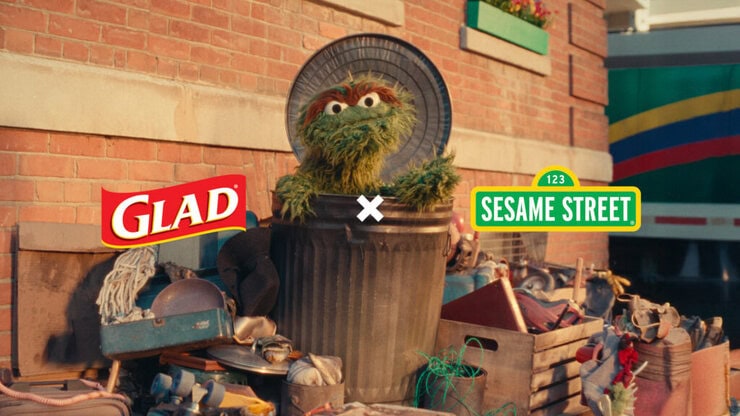
Glad and Oscar the Grouch Team Up for a Trashy, Toe-Tapping Campaign

Glad teams up with Oscar the Grouch for a playful revival of the “Don’t Get Mad. Get Glad.” campaign, featuring a musical number, limited-edition Oscar-inspired trash bags, and a fresh take on making trash day fun for all ages.

Published

on

Oscar the Grouch and Glad trash bags featured in a colorful musical campaign, celebrating their playful collaboration with limited-edition green Oscar-inspired totes.

Glad revives its most popular, decades-long, star-studded ad campaign, “Don’t Get Mad. Get Glad.”

What happens when the world’s most iconic grouch meets the nation’s go-to name in trash bags? You get a campaign that’s equal parts nostalgia, Broadway-style fun, and a reminder that even trash can bring a little joy to your day.

A Classic Campaign Gets a Grouchy Remix

Glad has officially revived its legendary “Don’t Get Mad. Get Glad.” campaign, but this time, they’re ditching the usual celebrity faces for a true original: Oscar the Grouch. For the first time, the campaign’s star is none other than Sesame Street’s resident trash enthusiast himself, and he’s bringing his signature tune “I Love Trash” back with a contemporary twist.
The musical number, directed by the award-winning duo Will Speck and Josh Gordon, opens with Oscar in his element—surrounded by trash and a little bit of grumpiness. But the real magic happens when Oscar imagines a world where everyone else shares his passion for trash. The result? A joyful, Broadway-inspired remix that transforms everyday frustration into a celebration of Glad’s dependable trash solutions.

Why Oscar? Why Now?

According to Glad’s Marketing Director, Kellie Li, the choice was simple: “No one feels more strongly about trash than Oscar the Grouch.” The campaign aims to flip the script on how we think about trash—turning a dreaded chore into something a little more lighthearted. With Glad’s reliable bags, there’s less to get mad about, and maybe, just maybe, a little more to sing about.

Nostalgia Meets New Audiences

If “Don’t Get Mad. Get Glad.” sounds familiar, you’re not imagining things. The campaign has been a staple since 1987, featuring everyone from TV stars to athletes. But this new chapter, featuring Oscar and a cast of trash-loving co-stars, is designed to connect with both longtime fans and a new generation discovering Sesame Street on Netflix and PBS KIDS.

Limited-Edition Oscar Goodies and Where to Find Them

To celebrate the campaign, Glad is releasing limited-edition Oscar-inspired trash bag totes—complete with green fur, of course. Fans can snag these playful bags through a social media giveaway this December (follow @gladproducts on Instagram and TikTok for details). And if you miss out, don’t worry: special Oscar-branded Glad ForceFlex with Gain bags will hit Walmart shelves this April, just in time for spring cleaning.

Where to Watch

The campaign is rolling out across the U.S. and Canada, with full-length videos, bite-sized social teasers, and everything in between. Look for it on TikTok, Instagram, Facebook, and Reddit (for our friends up north). Featured products include Glad ForceFlex with Gain and Glad Cherry Blossom.

Bringing the Campaign Home: Phoenix Community Clean-Up

Here in Phoenix, we know the value of coming together to keep our neighborhoods clean and vibrant. Glad’s collaboration with Oscar the Grouch isn’t just a fun national campaign—it’s a reminder that tackling trash can be a community effort, too.
With spring cleaning right around the corner and special Oscar-branded Glad bags hitting Walmart shelves this April, it’s the perfect time for local groups, schools, and neighbors to organize clean-up events across the Valley. Whether you’re sprucing up a park, refreshing a neighborhood, or just making your own block a little brighter, every bag makes a difference.
Ready to join the movement? Rally your friends, family, or local organization and plan a Phoenix clean-up day this spring. Snap a photo of your crew with your Glad or Oscar-inspired trash bags and share it on social media using #GladToCleanPHX and #OscarLovesTrash. Let’s show how Phoenix turns trash day into a reason to celebrate!
  • “Phoenix, let’s get grouchy about litter and Glad about clean streets! Join our community clean-up and share your photos with #GladToCleanPHX.”
  • “Spotted: Oscar the Grouch in Phoenix! Grab your Glad bags, clean up your neighborhood, and tag #OscarLovesTrash for a chance to be featured.”
  • “Spring cleaning in Phoenix just got a lot more fun—thanks to Glad and Oscar! Who’s joining our next clean-up day? #GladToCleanPHX”

About the Brands

Glad, a member of The Clorox Company, has long been a leader in household waste solutions, while Sesame Workshop continues to inspire and educate families worldwide. This collaboration is a perfect blend of dependable products and beloved characters—reminding us all that even the messiest moments can spark a little joy.
The collaboration between Glad and Sesame Workshop for the “Don’t Get Mad. Get Glad.” campaign marks a creative partnership that blends household dependability with beloved children’s entertainment. By bringing Oscar the Grouch into the spotlight, Glad not only revives a classic campaign but also highlights the importance of making everyday chores more enjoyable for families. This partnership leverages Glad’s reputation as the nation’s leading provider of kitchen and outdoor trash bags and food protection products—trusted solutions designed to handle life’s messes with ease (Glad.com). Sesame Workshop, the nonprofit behind Sesame Street, has spent over 50 years enriching families worldwide through educational media and community outreach, helping children grow smarter, stronger, and kinder (Sesame.org). Together, their collaboration aims to inspire a new generation to see the positive side of cleaning up, all while celebrating the joy of community and play.
Sources:
High Demand Marks “Veggies for Veterans” Event Amid SNAP Delays

Discover more from Daily News

Subscribe to get the latest posts sent to your email.

Continue Reading

Trending

0
Would love your thoughts, please comment.x
()
x